10 Best Nursery Rhymes for Kids

 Discover a Free Education Video App for Kids
Pastory uses AI to personalize educational video content based on your child’s interests and personality. Safe, engaging, and built for curious young minds. Sign up now to stay updated and enjoy early access with a free trial
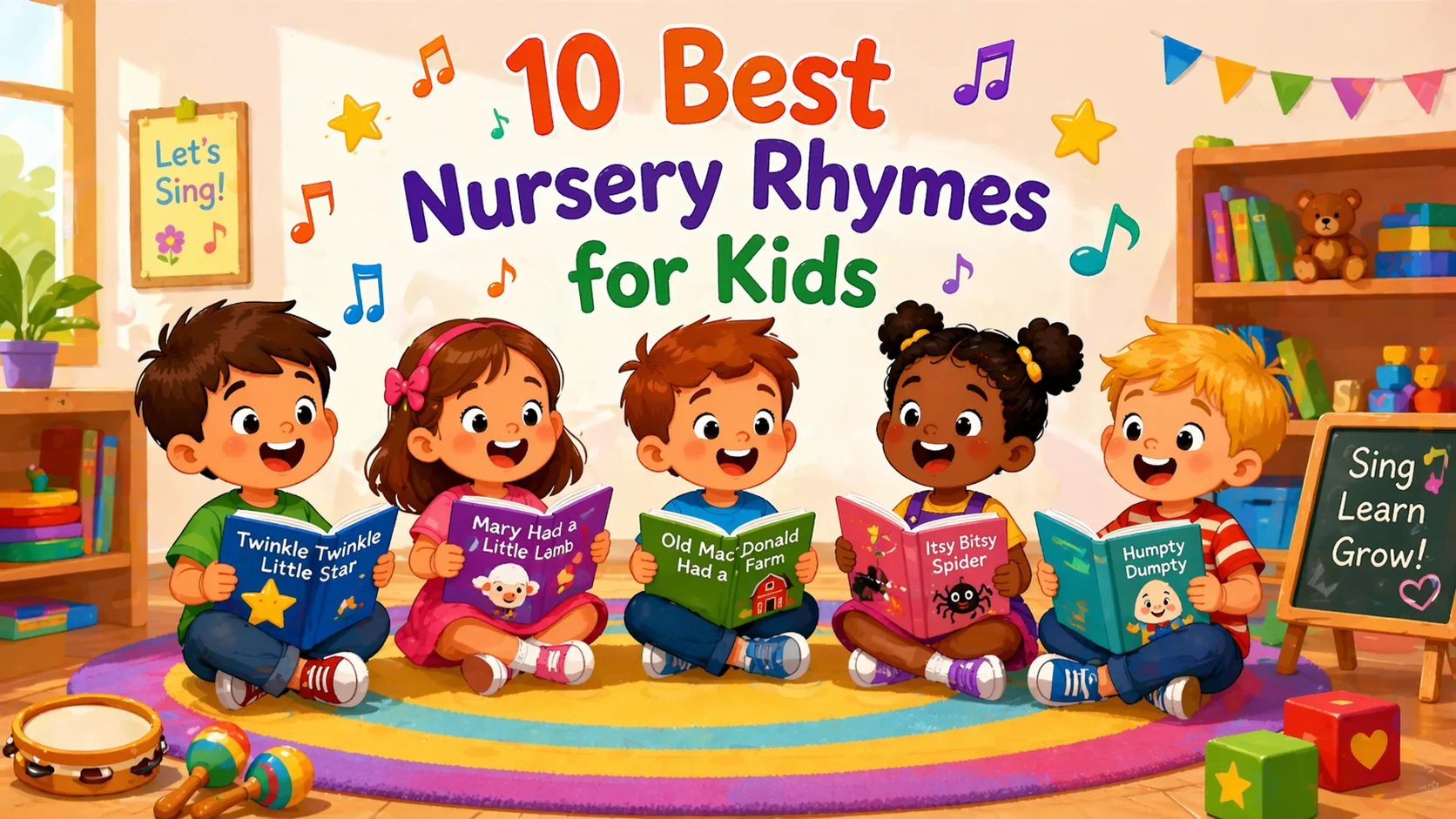
A curated collection of nursery rhymes gives parents and educators a reliable starting point for supporting early childhood development and choosing nursery rhyme songs for every sing along session. This selection brings together classic and popular nursery rhymes, well-known favorites, and timeless nursery songs that have remained staples in homes and classrooms for generations. By considering lyrics, age suitability, and learning value, this guide helps make each sing-along session both enjoyable and developmentally meaningful. These best-loved classics are chosen for their rhythmic simplicity, making them easy for babies and toddlers to learn by heart.
What Is a Nursery Rhyme?
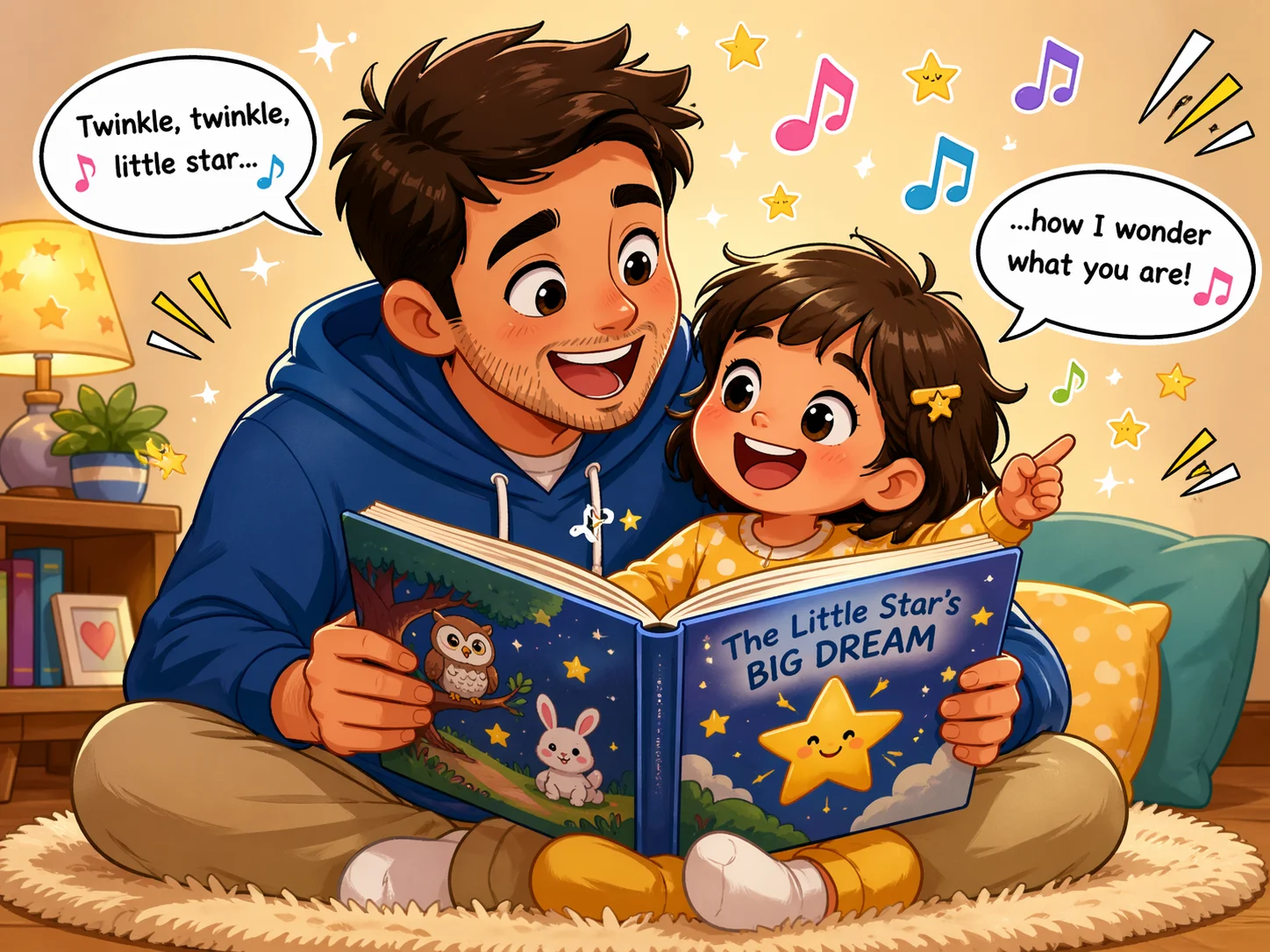
A nursery rhyme is a traditional poem or song specifically designed for young children, often originating from oral traditions. These short verses often provide an early introduction to literacy by using rhythm, repetition, and simple language to engage young children. Whether it is a classic English nursery rhyme, a translated version, or one of many nursery rhymes and songs shared across cultures, the form remains a valuable tool in early childhood education around the world.
Definition and Core Features
A traditional children’s rhyme is defined by its brevity, rhythmic structure, and repetition, all of which make it easy for preschoolers to remember. A classic nursery rhyme typically features a catchy melody, simple language, and sound patterns that encourage repetition. These features make nursery rhymes effective learning tools that capture a child’s attention while building early phonological awareness.
Difference Between Nursery Rhymes, Kids Songs, Action Songs
Nursery rhymes are traditional rhythmic verses, whereas kids songs encompass a broader category of contemporary music written for children. Action songs are a subset of children’s songs that involve specific movements, such as the hand motions used in Incy Wincy Spider. While all three types encourage engagement, nursery rhymes often have historical roots and a more recognizable metrical structure than general children’s songs.
Why Readers Look for a Top 10 Nursery Rhymes List
Readers usually look for a ready-to-use list of nursery rhymes they can use at home or in the classroom. Most readers want a practical shortlist of familiar rhymes that are easy to sing, teach, and remember. By providing a structured list of songs and rhymes, this article satisfies the need for high-quality, classic and popular selections that are easy to teach and perform.
Benefits of Nursery Rhymes for Babies and Kids
These rhyming songs for kids provide measurable developmental benefits that support long-term academic success. Research has long suggested a link between early familiarity with nursery rhymes and later reading development, although exact claims should be presented with care. This often-cited link helps explain why nursery rhymes are considered useful for early language and literacy development.
Language Growth and Vocabulary
Nursery rhyme lyrics expose babies and toddlers to a wide range of vocabulary and sentence patterns in a low-pressure setting. The repetitive lines found in a sweet children’s rhyme help children identify word boundaries and phonemes, which are critical for early reading. By singing traditional rhymes, children are exposed to words and phrasing they may not hear in everyday conversation, which can broaden their expressive language over time.
Memory, Rhythm, Sound Patterns
Nursery rhymes in English emphasize rhythm and sound patterns, which can support a child’s auditory memory and listening skills. The predictable rhythm of a lullaby or nursery rhyme helps children notice patterns and remember what they hear. Phonemic awareness, the ability to hear and manipulate sounds in words, is significantly strengthened through the alliteration and onomatopoeia common in popular rhymes.
Motor Skills, Bonding, Social Play
Children’s songs that incorporate gestures, such as The Grand Old Duke of York, directly improve motor skills and physical coordination. These activities also strengthen bonding, as parents and children make eye contact, move together, and share attention. In a preschool nursery setting, group participation in rhyming songs teaches social cues, turn-taking, and collective rhythm.
Exploring Types of Nursery Rhymes
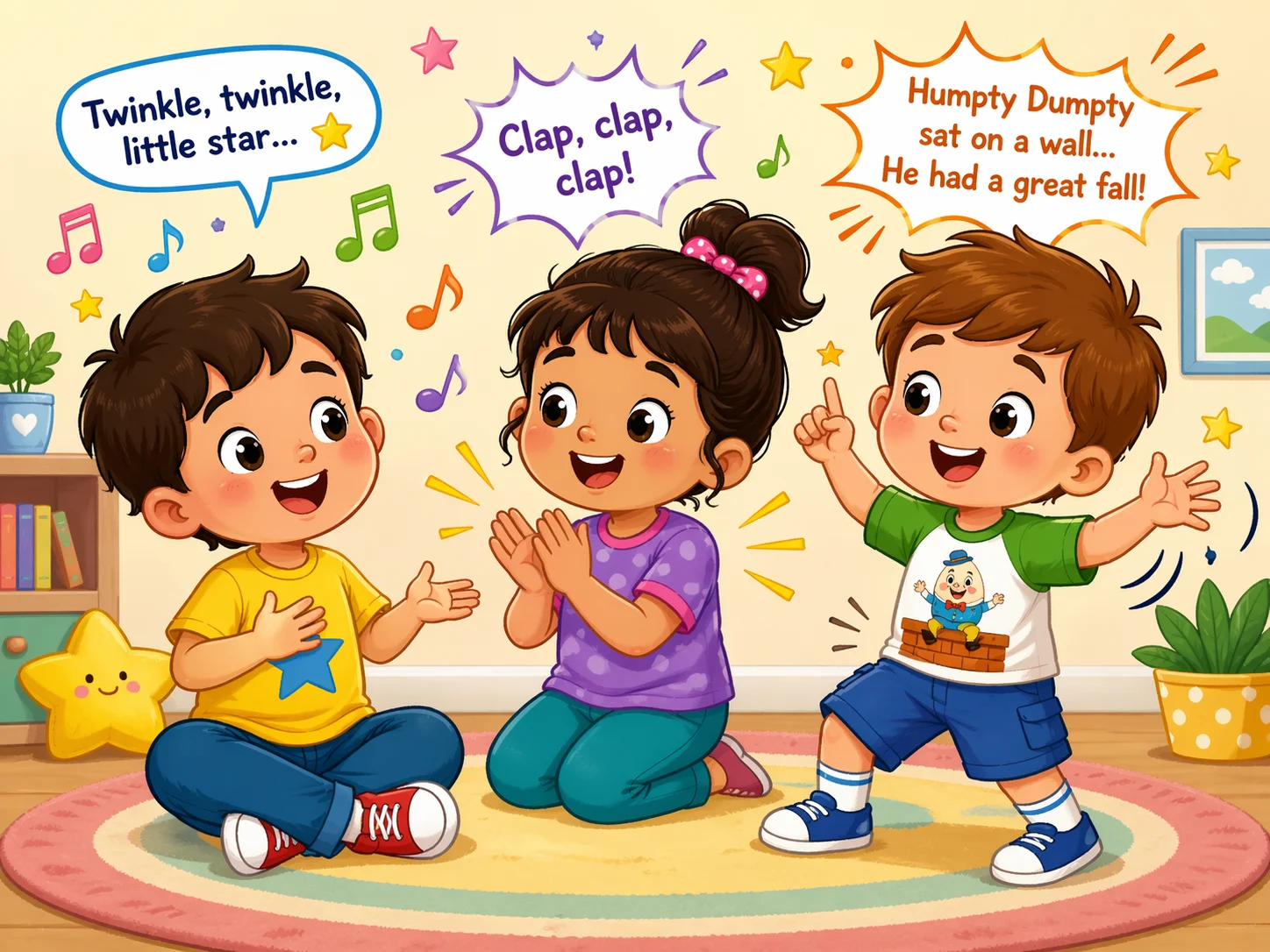
Nursery rhymes and children’s songs come in many forms and can support different developmental stages and interests. Understanding these categories helps caregivers choose songs that fit a child’s needs, whether that means calming a baby or energizing a group of toddlers.
Classic Nursery Rhymes
Classic nursery rhymes are timeless verses, such as Humpty Dumpty, that have been passed down through generations. Many of these classic rhymes have historical roots, and some were first published in the 18th century in collections such as Mother Goose’s Melody. They have endured because of their memorable structure and broadly appealing themes, which continue to resonate across cultures and family traditions.
Popular Nursery Rhymes
Popular nursery rhymes remain widely used because they appear regularly in preschool settings, children’s media, and digital content. Songs like Old MacDonald Had a Farm are widely recognized because they combine animal themes with easy-to-remember repetitive choruses. These are often among the first rhymes children recognize and try to sing on their own.
Finger Rhymes
Finger rhymes are specifically designed to be performed with small hand movements, making them ideal for developing fine motor skills. Incy Wincy Spider (or Itsy Bitsy Spider) is a prime example where children use their hands to imitate the climbing motion. These action-based rhymes work especially well for babies and toddlers who are just beginning to develop finer hand and finger control.
Action Nursery Rhymes
Action nursery rhymes involve whole-body movements such as jumping, marching, or spinning. The Grand Old Duke of York encourages children to march, which builds gross motor skills and physical stamina. These movement-based songs are excellent for expending energy while simultaneously practicing rhythmic synchronization and following multi-step directions.
Hand-Clapping Songs
Hand-clapping songs use repeated clapping patterns, either alone or with a partner, to reinforce a sense of rhythm. While often more popular with slightly older children, these traditional songs improve bilateral coordination – the ability to use both sides of the body together. They also encourage social interaction, since two participants have to coordinate their movements in time with the words of the song.
Number Songs
Number songs utilize rhyme and rhythm to introduce basic mathematical concepts such as counting and sequencing. Rhymes like Five Little Monkeys Jumping on the Bed provide a narrative framework for subtraction and numerical order. Songs that include numbers help children connect number words with quantities, building an important foundation for later math skills.
Spanish Nursery Rhymes
Spanish nursery rhymes, or canciones infantiles, offer a multilingual angle that can enhance cognitive flexibility in young learners. Integrating rhymes like Los Pollitos Dicen alongside English children’s songs exposes children to different phonetic structures. Early exposure to a second language can support later language learning and help children become more comfortable with linguistic and cultural differences.
Top 10 Popular Nursery Rhymes for Kids List
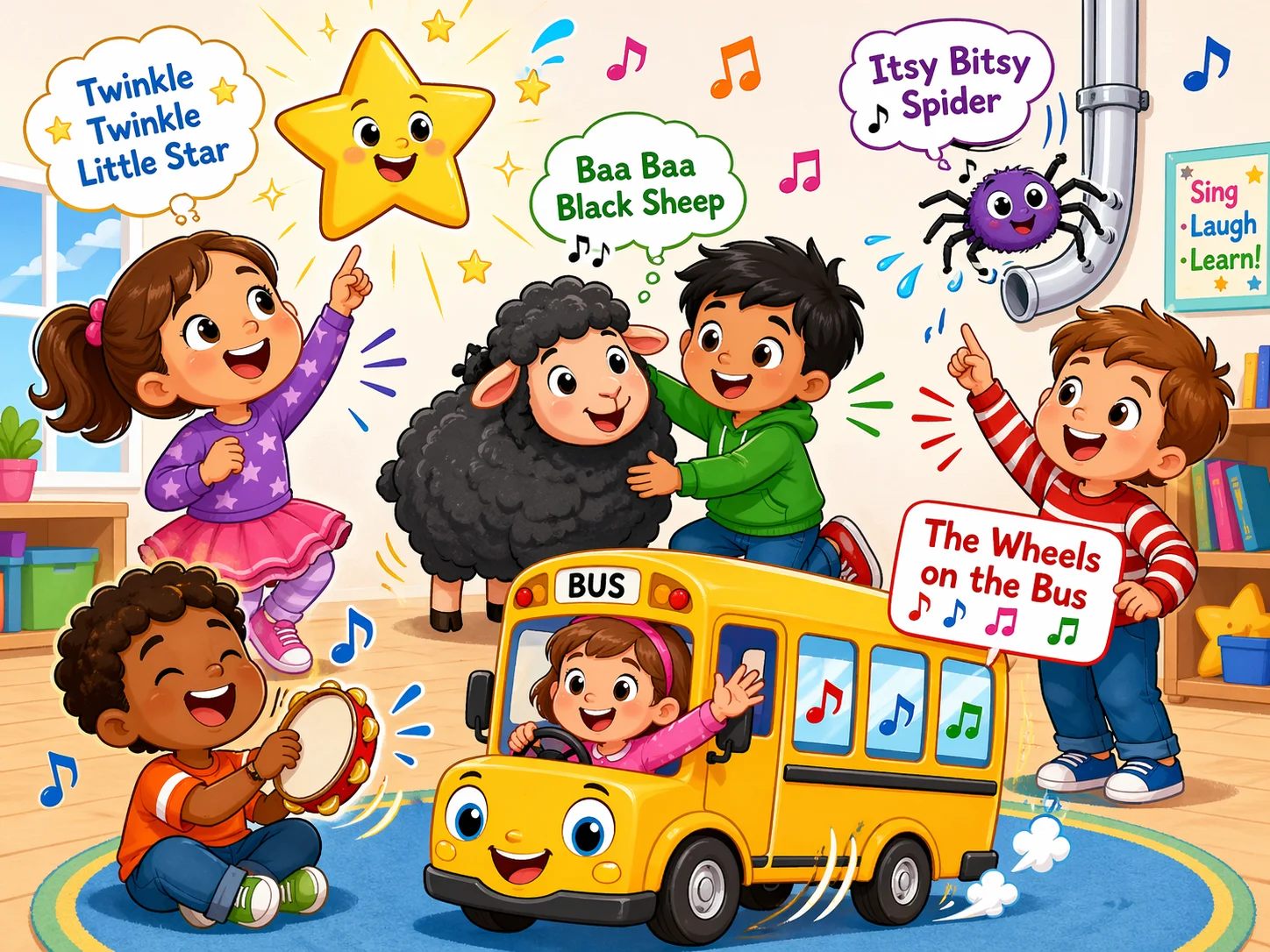
| Rank | Nursery Rhyme Title | Primary Learning Focus | Key Activity |
| 1 | Twinkle Twinkle Little Star | Calm & Soothing Rhythm | Gentle Hand Twinkling |
| 2 | Humpty Dumpty | Narrative Structure | Clapping/Falling Action |
| 3 | Baa Baa Black Sheep | Vocabulary & Counting | Rhythm Tapping |
| 4 | Jack and Jill | Sequencing & Rhyme Pairs | Role-play / Marching |
| 5 | Hey Diddle Diddle | Imagination & Absurdity | Listening for Rhymes |
| 6 | Frère Jacques | Bilingualism & Melody | Group Canon Singing |
| 7 | Hickory Dickory Dock | Time & Number Concepts | Arm Pendulum Motion |
| 8 | Incy Wincy Spider | Fine Motor Skills | Finger Climbing |
| 9 | Three Blind Mice | Auditory Discrimination | Fast-paced Clapping |
| 10 | London Bridge | Social Play & Cooperation | Arch Movement Game |
1. Twinkle Twinkle Little Star
Twinkle, Twinkle, Little Star is a timeless lullaby and bedtime favorite known for its gentle melody. The lyrics come from Jane Taylor’s poem “The Star,” first published in 1806, and are now commonly sung to the French melody “Ah! vous dirai-je, maman,” first published in 1761.
- Why kids love it: The simple imagery of a shining star and the calm rhythm create a sense of security and wonder.
- Age fit: Perfect for babies and toddlers as a first sing-along.
- Learning value: Introduces basic metaphors and visual vocabulary related to the night sky.
- Lyrics excerpt: “Twinkle, twinkle, little star, / How I wonder what you are!”
- Activity: Use hands to imitate stars by opening and closing fingers rapidly.
2. Humpty Dumpty
Humpty Dumpty is a classic children’s rhyme that functions as a short story verse with a memorable protagonist. While its origins are debated, many popular historical explanations remain speculative, so it is safer to present the rhyme as traditional rather than assign it a specific historical origin.
- Why kids love it: The vivid image of a character falling and the dramatic “great fall” creates excitement.
- Age fit: Ideal for preschool nursery children who enjoy cause-and-effect stories.
- Learning value: Teaches narrative sequencing and the concept of “broken” versus “repaired.”
- Lyrics excerpt: “Humpty Dumpty sat on a wall, / Humpty Dumpty had a great fall.”
- Activity: Children can sit on a low step and gently “fall” (lean forward) during the relevant line.
3. Baa Baa Black Sheep
Baa Baa Black Sheep is a popular children’s rhyme that uses a simple call-and-response structure. It is set to the same melody as Twinkle Twinkle Little Star, making it easy for children to learn the tune.
- Why kids love it: The animal theme and the rhythmic “Yes, sir, yes, sir” chorus are highly engaging.
- Age fit: Suitable for babies and toddlers learning to vocalize sounds.
- Learning value: Reinforces vocabulary related to colors and quantities (“three bags full”).
- Lyrics excerpt: “Baa, baa, black sheep, / Have you any wool?”
- Activity: Kids can hold up three fingers to represent the three bags of fleece.
4. Jack and Jill
Jack and Jill is a classic English children’s rhyme that introduces children to rhyme pairs and a clear story arc. It is one of the most recognizable nursery rhymes for introducing simple actions and story sequence.
- Why kids love it: The rhythmic “up the hill” and “down the hill” movement provides a natural physical flow.
- Age fit: Great for toddlers (ages 2-3) who are beginning to understand simple plots.
- Learning value: Demonstrates sequencing (going up, then falling down) and spatial prepositions.
- Lyrics excerpt: “Jack and Jill went up the hill / To fetch a pail of water.”
- Activity: Two children can hold hands and pretend to walk up and down an imaginary hill.
5. Hey Diddle Diddle
Hey Diddle Diddle is a classic nursery rhyme known for its playful nonsense and surreal imagery. It encourages imagination by presenting impossible scenarios like a cow jumping over the moon.
- Why kids love it: The funny images of animals doing human things are instantly entertaining.
- Age fit: Perfect for kids aged 2 to 5 who are developing a sense of humor.
- Learning value: Enhances phonological awareness through diverse and unexpected rhyming words.
- Lyrics excerpt: “The cow jumped over the moon; / The little dog laughed to see such sport.”
- Activity: Use puppets or toys to act out the dish running away with the spoon.
6. Frère Jacques
Frère Jacques provides a strong bilingual option for early learners, often sung in both French and English. It is traditionally sung as a round, which makes it a simple and effective introduction to singing in parts.
- Why kids love it: The repetitive “Ding, dang, dong” ending is satisfying to sing loudly.
- Age fit: Excellent for preschoolers and older kids who can handle singing in a round.
- Learning value: Introduces simple French vocabulary and the idea of singing in a round.
- Lyrics excerpt: “Are you sleeping? Are you sleeping? / Brother John, Brother John?”
- Activity: Divide the group into two sections to sing the rhyme as a canon.
7. Hickory Dickory Dock
Hickory Dickory Dock is a rhythmic children’s rhyme that uses clock imagery to teach time and numbers. The “tick-tock” sound provides a steady beat for children to follow.
- Why kids love it: The quick, rhythmic flow and the “running” motion of the mouse are exciting.
- Age fit: Suitable for toddlers who are beginning to connect numbers, sequence, and rhythm.
- Learning value: Links numbers to the concept of time and auditory rhythmic patterns.
- Lyrics excerpt: “The clock struck one, / The mouse ran down.”
- Activity: Swing one arm like a clock pendulum while reciting the lyrics.
8. Incy Wincy Spider
Incy Wincy Spider (also known as the Itsy Bitsy Spider) is a quintessential finger rhyme about resilience. It is perhaps the most famous action-based song for encouraging toddler engagement through hand gestures.
- Why kids love it: The “wash out” and “sunshine” elements provide a dramatic and happy resolution.
- Age fit: Ideal for babies and toddlers developing fine motor skills.
- Learning value: Teaches perseverance and basic weather concepts (rain and sun).
- Lyrics excerpt: “Down came the rain and washed the spider out.”
- Activity: Use the classic finger-climbing motion to show the spider going up the spout.
9. Three Blind Mice
Three Blind Mice is a fast-paced English nursery rhyme with an early printed version published in 1609 in Deuteromelia. It features strong sound repetition and a quick tempo.
- Why kids love it: The fast rhythm makes it a high-energy sing-along choice.
- Age fit: Best for older kids who have the verbal speed to keep up with the lyrics.
- Learning value: Challenges memory and improves the speed of auditory processing.
- Lyrics excerpt: “Three blind mice, three blind mice, / See how they run, see how they run.”
- Activity: Use clapping patterns that increase in speed with the music.
10. London Bridge Is Falling Down
London Bridge Is Falling Down is a popular nursery rhyme for group play. It combines a repetitive melody with a physical game that encourages group participation.
- Why kids love it: The suspense of being “caught” by the bridge at the end of the song is a classic childhood thrill.
- Age fit: Perfect for preschoolers and school-aged children.
- Learning value: Promotes social cooperation, physical coordination, and turn-taking.
- Lyrics excerpt: “London Bridge is falling down, / My fair lady.”
- Activity: Two children form an arch with their hands, and others walk under it until the “bridge” falls.
Nursery Rhymes for Babies, Preschoolers, and Older Kids
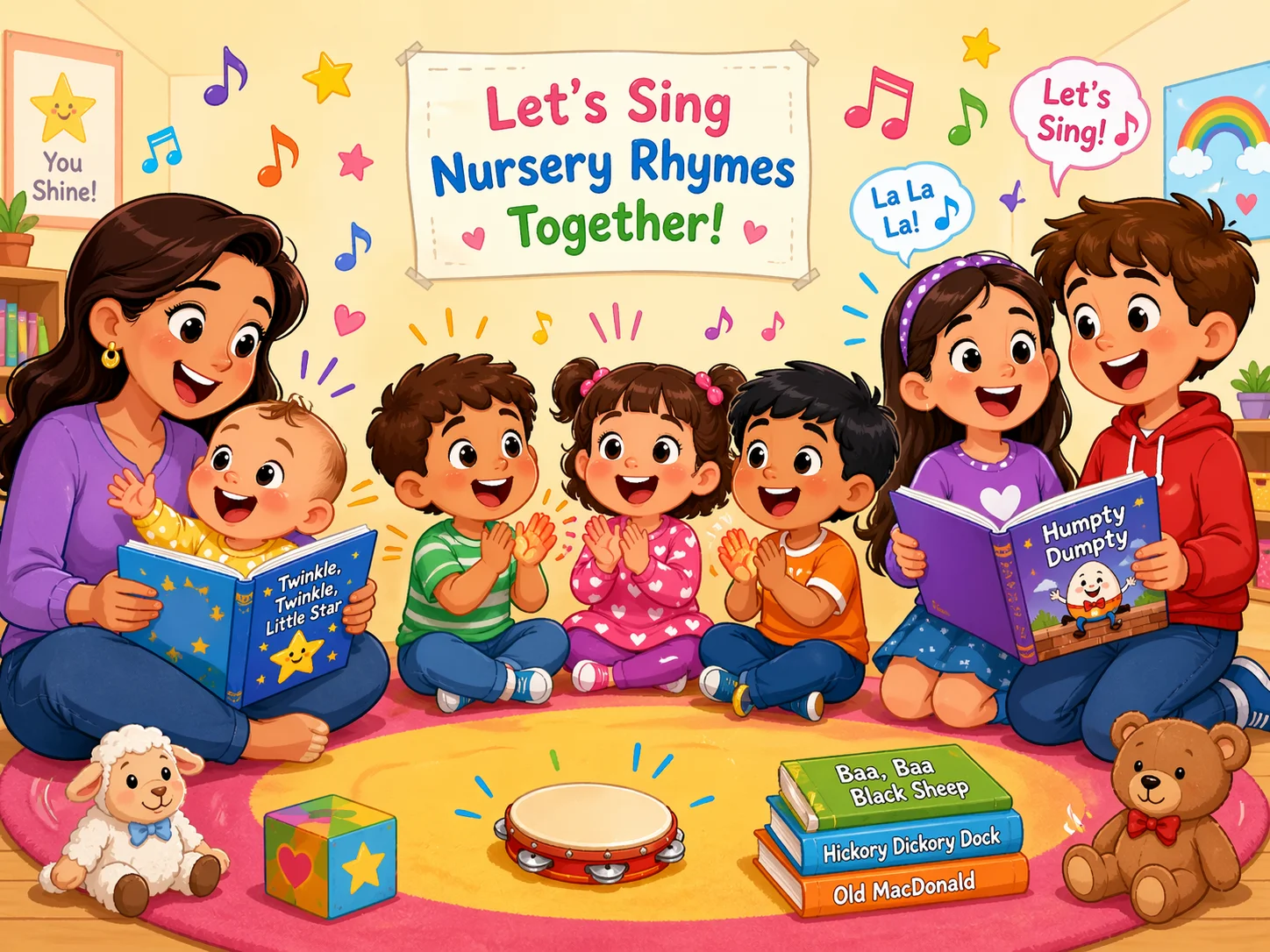
The choice of nursery rhymes and children’s songs should evolve as a child grows. While babies and toddlers often respond well to sensory-based songs, older children tend to stay engaged with richer narratives and more social interaction. Adapting your song choices helps keep the material engaging and developmentally appropriate across different stages.
Picks for Babies and Toddlers
For babies and toddlers, the most effective songs and rhymes are short, highly repetitive, and have a gentle tempo. Songs such as Twinkle, Twinkle, Little Star and Row, Row, Row Your Boat create a soothing atmosphere that can encourage early vocalization. These gentle songs help babies recognize familiar voices and encourage simple, comforting interaction with a caregiver.
- Top Pick: Twinkle Twinkle Little Star (Calmness)
- Top Pick: Row Row Your Boat (Rhythm)
- Top Pick: Pat-a-Cake (Tactile interaction)
Picks for Preschoolers
Preschoolers are ready for rhyming songs that involve more complex motor skills and action songs. Pieces like The Grand Old Duke of York or Five Little Monkeys Jumping on the Bed allow them to practice jumping, marching, and counting. At this age, children often enjoy songs with animals, repetition, and simple storylines, which can support imaginative play and early social development.
- Top Pick: Incy Wincy Spider (Fine motor)
- Top Pick: Old MacDonald Had a Farm (Animal sounds)
- Top Pick: Hickory Dickory Dock (Basic math)
Picks for Older Kids
Older children (ages 5–7) can enjoy rhymes with simple storylines and richer vocabulary. Songs such as Hey Diddle Diddle or London Bridge offer more complex linguistic challenges and opportunities for group singing. For this age group, strong choices include rhymes that can be sung in rounds, such as Frère Jacques, as well as songs with richer vocabulary and more developed storylines.
- Top Pick: Frère Jacques (Bilingual skills)
- Top Pick: London Bridge (Social game play)
- Top Pick: Three Blind Mice (Articulation speed)
Frequently Asked Questions
What Is the Most Famous Nursery Rhyme?
Twinkle, Twinkle, Little Star is one of the best-known nursery rhymes in the world. Its simple melody, which it shares with the “Alphabet Song,” and its universal night-sky imagery have made it a familiar bedtime song in many households. Humpty Dumpty follows closely as a highly recognizable classic English children’s rhyme due to its iconic character and simple narrative structure.
What Should You Sing to a Newborn?
When singing to a newborn, caregivers should choose calm, repetitive songs with a soft, melodic tone. A lullaby like Rock-a-bye Baby or a sweet traditional rhyme like Twinkle Twinkle Little Star is ideal for soothing an infant. Newborns often respond well to gentle, higher-pitched singing, which can support voice recognition and emotional regulation.
What Age Do Babies Sing Nursery Rhymes?
Babies often begin to respond to songs and rhymes through listening and simple physical reactions, such as smiling or kicking, between around 4 and 6 months. By around 12 months, many babies begin to imitate gestures or vocalize familiar sounds from songs they hear often. Many children begin joining in with familiar words or line endings between 18 and 24 months, and some learn favorite rhymes by heart by ages 3 or 4.
Is It Good to Sing to Newborns?
Yes, singing to newborns is highly beneficial for bonding and early brain development. Research suggests that singing can soothe infants and help regulate arousal, although physiological effects such as changes in heart rate or cortisol are not identical across all studies. The language and rhythm of children’s songs can support early auditory and language development, which is one reason singing is such a valuable early childhood practice.
Take a short quiz to find out what your everyday choices say about your parenting style
When your child is curious about something new, what’s your instinct?
Take a short quiz to find out what your everyday choices say about your parenting style
“Can I download this app?” What happens next?
Take a short quiz to find out what your everyday choices say about your parenting style
When it comes to rules at home, which sounds most like you?
Take a short quiz to find out what your everyday choices say about your parenting style
If you could give your child one life skill today, what would you pick?
Take a short quiz to find out what your everyday choices say about your parenting style
Your child gets to choose what to watch. What would your ideal setup look like?
Take a short quiz to find out what your everyday choices say about your parenting style
Pick your parenting superpower ✨