12 Reading Bulletin Board Ideas for Elementary Classrooms

 Discover a Free Education Video App for Kids
Pastory uses AI to personalize educational video content based on your child’s interests and personality. Safe, engaging, and built for curious young minds. Sign up now to stay updated and enjoy early access with a free trial
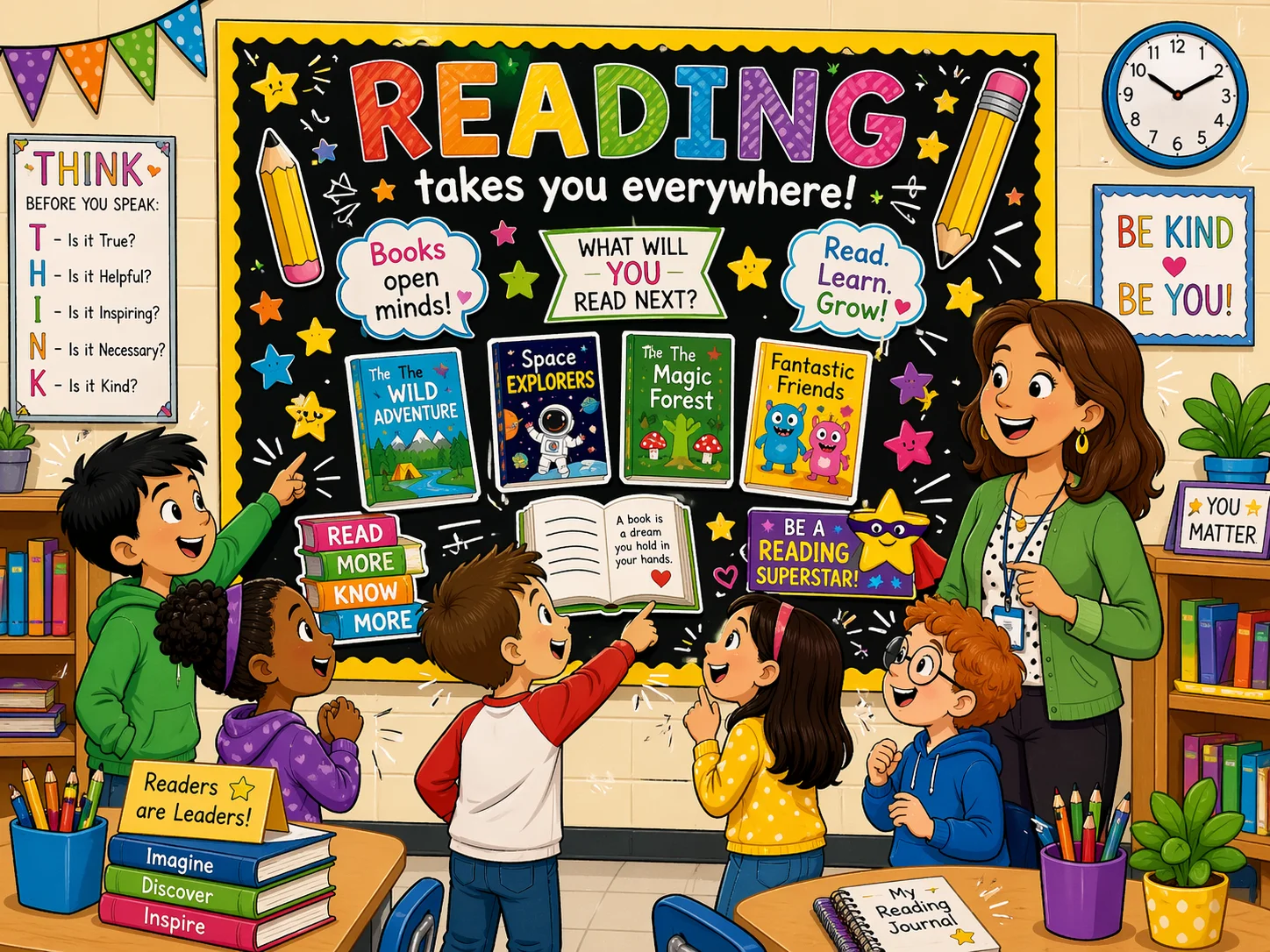
Creating an effective elementary classroom environment requires a balance between visual appeal and instructional purpose. A well-designed classroom bulletin board does more than decorate the room; it can serve as a visual scaffold that supports literacy development, engagement, and classroom community. Whether you’re planning a back-to-school bulletin board or refreshing your classroom library midyear, the right display can help foster a love of books.
Research and professional guidance consistently show that print-rich, text-rich environments support literacy development and help make reading materials more visible and inviting to students. By using creative bulletin boards, educators can encourage students to explore a wider range of reading materials and track their reading progress. This guide offers 12 bulletin board themes designed to spark interest in reading through interactive displays, student-centered visuals, and meaningful response activities.
1. Grab a Good Book Display
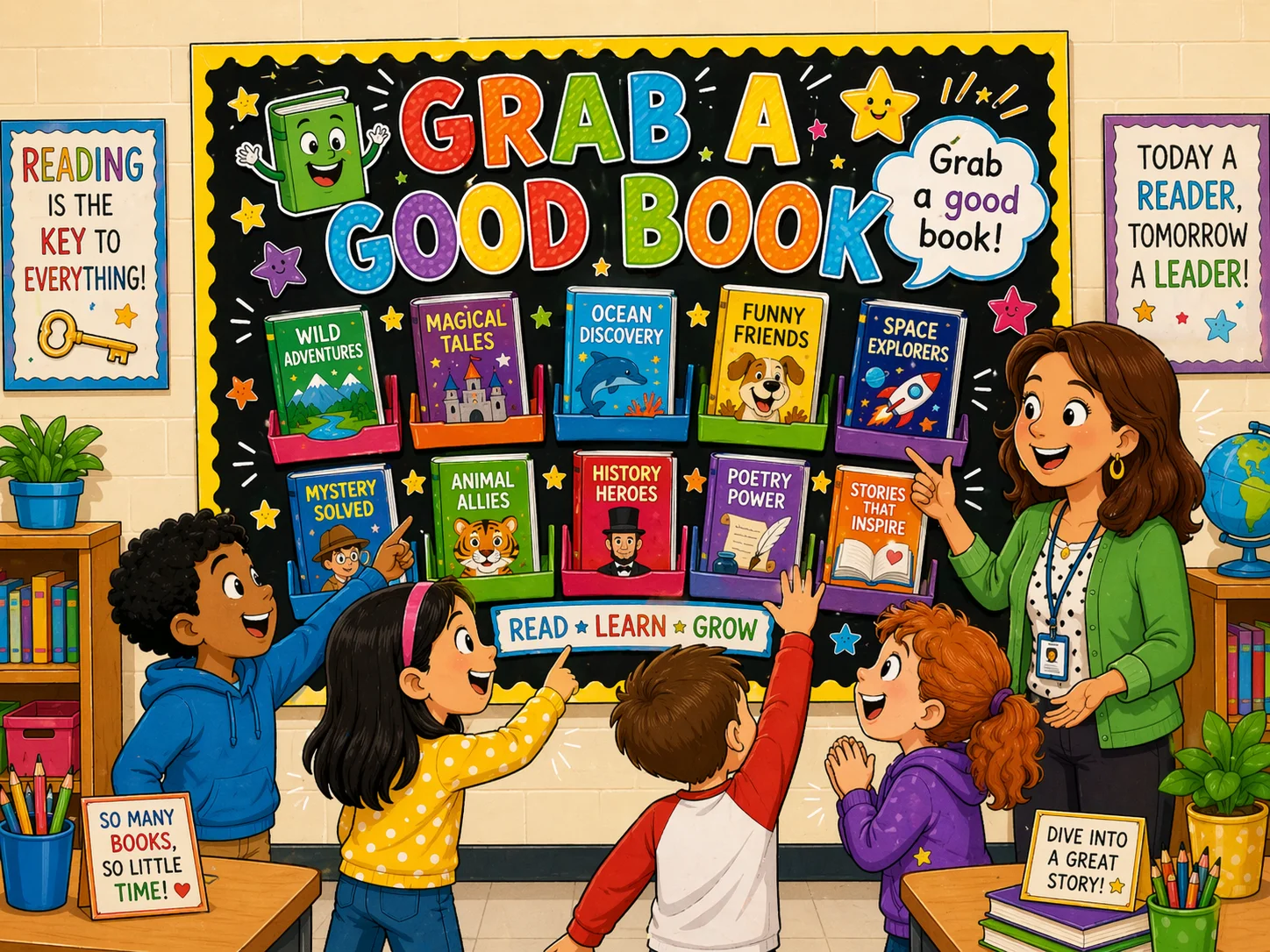
A “Grab a Good Book” display functions as a high-visibility marketing tool for your classroom library. Placed near a reading corner or the classroom entrance, this setup uses visual hooks to make book selection easier for elementary students. By highlighting favorite titles and new arrivals, teachers can help students navigate the many choices available throughout the school year.
Grab Good Book
The foundational version of this classroom display uses a bold, high-contrast title and a series of clear plastic pockets or sturdy clips. Create a bulletin board where each pocket contains a printed copy of a book cover paired with a “Why Read This?” card written by a peer. This format is easy to update, which keeps the display fresh and responsive to students’ changing interests.
Hungry for a Good Book
The “Hungry for a Good Book” theme applies a culinary metaphor to literacy, categorizing books as “Main Courses” (chapter books), “Sides” (picture books), or “Desserts” (graphic novels). This creative bulletin board often features a central “Menu of the Month” where students can post short “tasting notes” or reviews on paper plates. This approach encourages students to explore different genres by framing book choice as a sensory, enjoyable experience.
Feed Your Brain With Books
This bulletin board idea focuses on the cognitive benefits of literacy, such as vocabulary expansion and critical thinking. The display features a central brain graphic with “neural pathways” leading to various book categories, such as STEM or historical fiction. Educators can use this display to highlight how reading supports vocabulary growth, background knowledge, and critical thinking.
2. Class Reader Community Display
Building a classroom community is essential to a successful school year, and a shared reading identity can help students connect with one another. A community-focused classroom display shifts the emphasis from individual achievement to collective enthusiasm. These board ideas for your classroom prioritize student voice and peer-to-peer recommendation.
Class Loves Books
This display acts as a living record of the group’s shared literary journey. Use the wall space to feature a “Class Top 10” list that is updated monthly based on student votes. By allowing students to add their names next to titles they enjoyed, the display creates a visual map of shared interests that encourages students to discuss books during transition times.
Meet the Readers
“Meet the Readers” is a highly personalized back-to-school bulletin board idea that features a photo of each student holding a favorite book or their current read. This interactive display includes “Reader Profiles” where students can write about their favorite characters or settings. This format can also support classroom culture by helping students feel seen, included, and valued.
Team Readers and Shelfies
The “Shelfie” concept involves students taking photos of their home or classroom library stacks to share on the classroom wall. This creative bulletin board can become a “Reading Challenge” display in which the class works together to fill a giant paper bookshelf with 100 titles. Group-based reading goals promote collaboration over competition, a key principle in modern pedagogical approaches.
3. Travel and Adventure Book Display
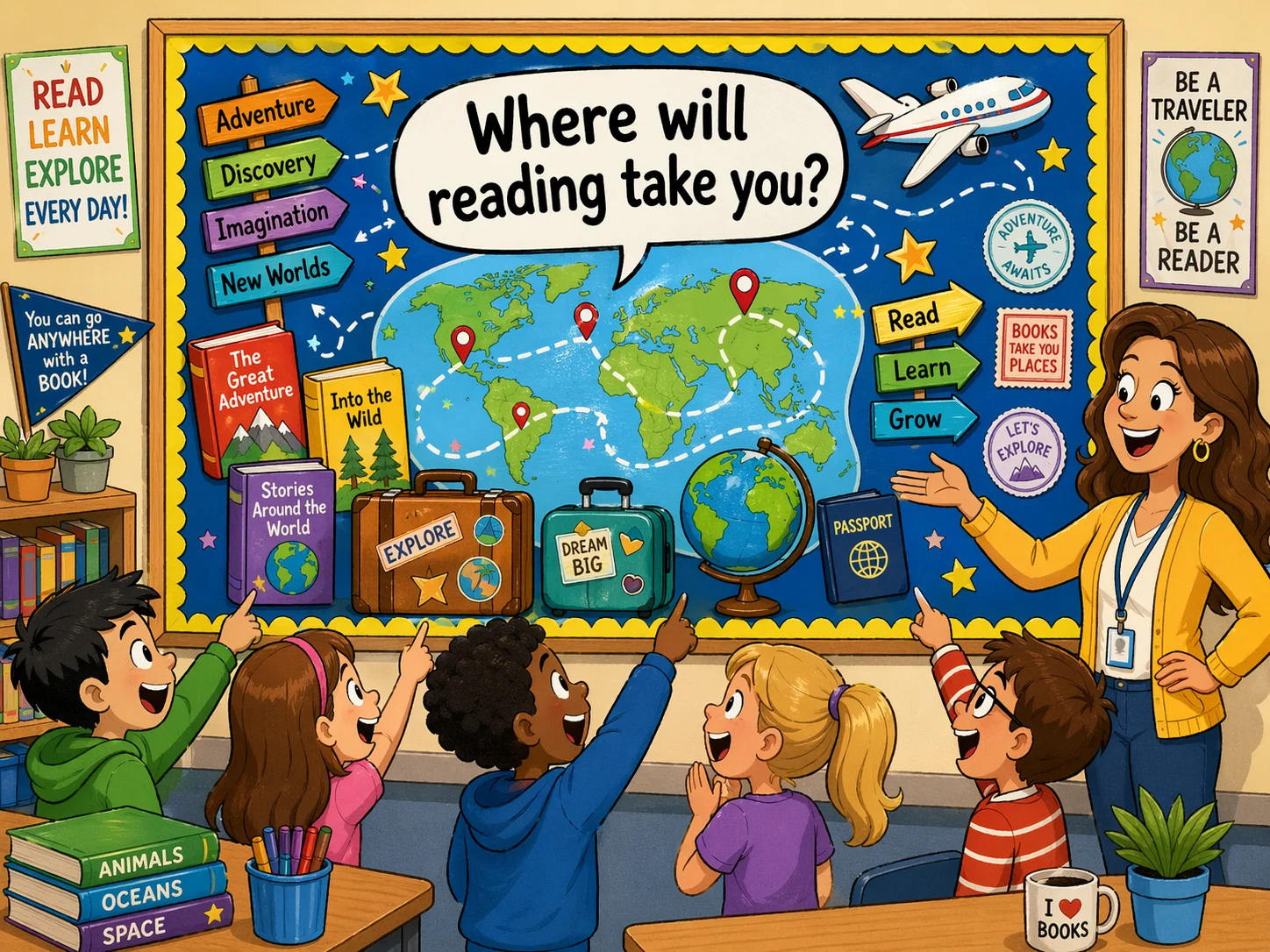
The metaphor of books as a journey is a staple in elementary classroom design because it aligns with a child’s natural curiosity. A travel-themed display provides a flexible visual structure for mapping out different genres and global perspectives.
Where Will Books Take You?
This bulletin board idea uses maps, compasses, and “travel tickets” to represent different titles. Each genre is assigned a “destination” – for example, Fantasy is “The Enchanted Forest” and Non-fiction is “The Information Station.” When students finish a book, they place a small paper suitcase labeled with the title in the corresponding area of the map. This helps students explore literature through both literal and imaginative geography.
Read Around the World
“Read Around the World” is an excellent diverse reading display that features a world map surrounded by book covers from various cultures and countries. This school library favorite often includes small “passports” where students can record the continents or countries they have “visited” through books. This setup supports global citizenship and empathy, core components of emotional intelligence.
Book Nook Passport
Transform your reading nook into a “Departure Gate” with this interactive setup. The board can include a “Passport Check” station where students receive a stamp each time they finish a book from a new genre. Using a game board style layout, this fun bulletin board turns the entire school year into a long-term quest, which significantly increases stamina and student engagement.
4. Reader Response Display
A reading response bulletin board moves beyond “what” students choose to “how” they are thinking about it. These bulletin board ideas are practical and instructionally focused, with an emphasis on skills such as citing text evidence and making inferences.
What Does the Text Say?
This section is designed to help students master the art of citing evidence. The display features clear prompts like “I know this because…” or “The author stated…” alongside student work bulletin board samples. By displaying strong examples of student responses, the board acts as a visual model that encourages students to write more thoughtfully.
Ask a Thought-Provoking Question
Interactive elements are key to engaging bulletin designs. This layout features a “Question of the Week” related to a current class read-aloud. Students can post their answers using sticky notes or pre-printed cards. This creative bulletin board format promotes classroom discussion and allows the teacher to gauge comprehension in an informal, low-stakes way.
QR Code Book Talks
For a modern elementary classroom, incorporating technology is a great bulletin board strategy. This setup features book covers with accompanying QR codes. When scanned, these codes can link to a short video or audio recording of a student giving a 30-second book talk. This interactive literacy display combines peer recommendations with technology in a format that is likely to feel highly engaging to students.
5. Growth and Garden Book Display
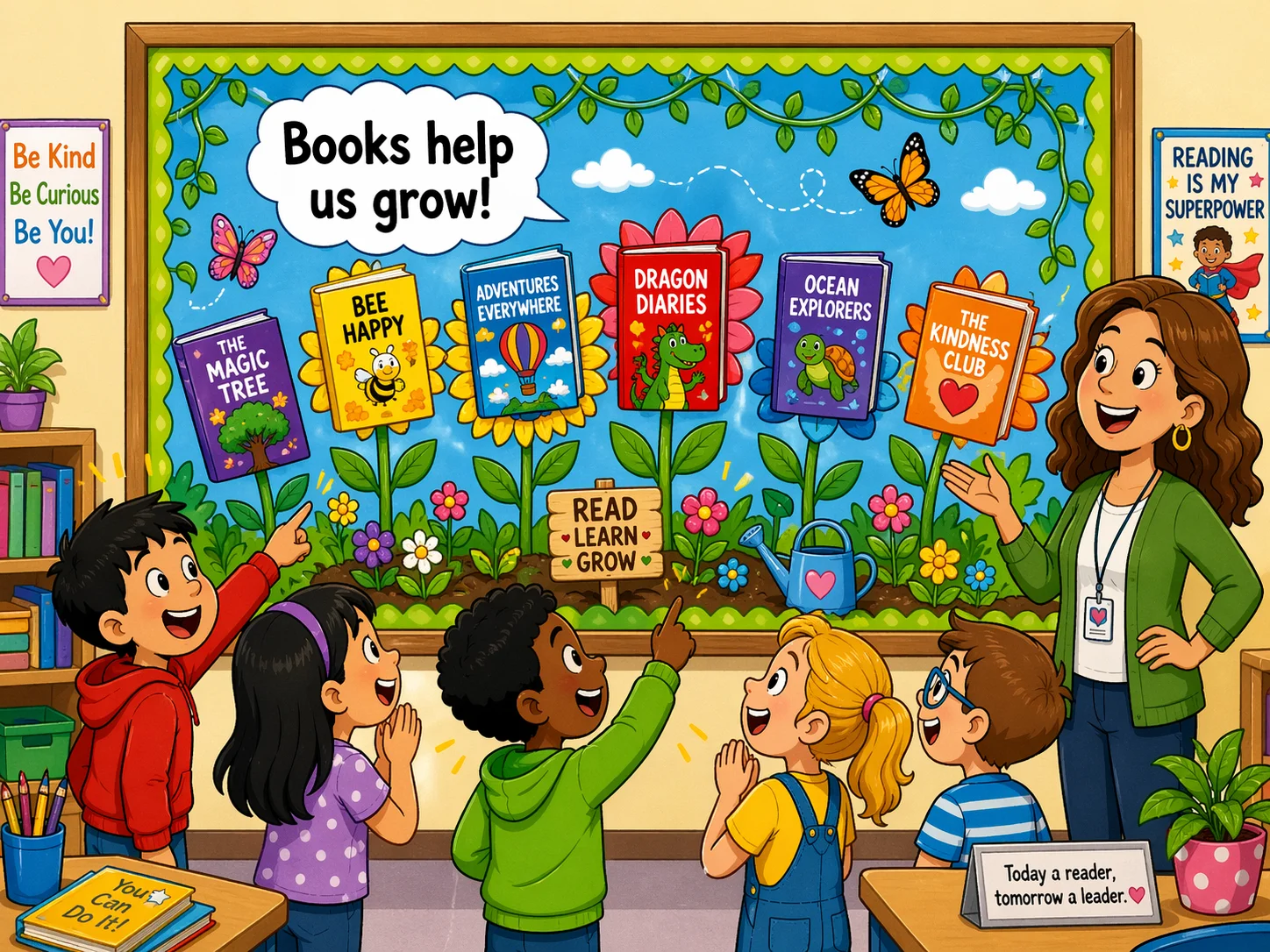
The “Growth” theme is a classic choice for spring or the start of the school year because it symbolizes a growing love of reading. These ideas are often among the most visually vibrant options for a classroom.
Books Are Blooming
In this bulletin board idea, the display features a garden where each completed title becomes a “petal” on a giant flower. As the school year progresses, the garden grows denser. This visual representation of progress is particularly effective for kindergarten and grade 1 students who need concrete evidence of their hard work and reading goals.
Genre Garden
A “Genre Garden” uses different types of plants to represent literary categories. For example, “Mystery” might be represented by “Hidden Ferns,” while “Biography” is shown as “Strong Oaks.” This display helps students visualize the range of books in the classroom library, making it easier to choose something outside their usual preferences.
Growing With Books
This classroom display focuses on individual reading goals. A “Growth Tracker” might feature a beanstalk that rises as the class hits specific milestones, such as “1,000 Minutes Read.” By using bulletin board ideas to encourage collective progress, teachers can foster a love for books without the pressure of individual competition.
6. Seasonal Book Displays
Seasonal visuals keep the learning environment fresh and aligned with the calendar. A seasonal reading bulletin board allows teachers to rotate classroom decor while maintaining a consistent focus on literacy.
| Season | Theme Title | Key Visual Elements |
| Fall | Harvest of Good Books | Pumpkins, falling leaves, cozy baskets |
| Winter | S’more Great Books | Marshmallows, campfires, snowy peaks |
| Spring | Dig Into a Story | Garden tools, flowers, umbrellas |
| Summer | Dive Into Reading | Ocean waves, snorkels, beach balls |
Dive Into Reading
The “Dive Into Reading” theme works well either as a back-to-school display that highlights summer reading or as an end-of-year board that promotes vacation reading. Using an underwater aesthetic, students add “fish” with their names and the titles of books they “caught” during the break. This board often includes a “Summer Reading List” to help students maintain their reading habits over the break.
Harvest of Good Reading
An autumnal book display can feature a “Book Harvest” where recommendations are written on paper apples or pumpkins. This clever display provides a natural way to transition the classroom theme into fall and midyear, while keeping students curious about what “crops” will appear next.
Season’s Readings and Countdown Themes
Countdown displays are excellent for classroom management. Whether counting down to a holiday break or the end of the school year, a classroom setup that reveals a “Mystery Book of the Day” creates daily excitement. This approach gives teachers bulletin board ideas to get students talking and eager to visit the reading corner each morning.
7. Color and Imagination Book Display
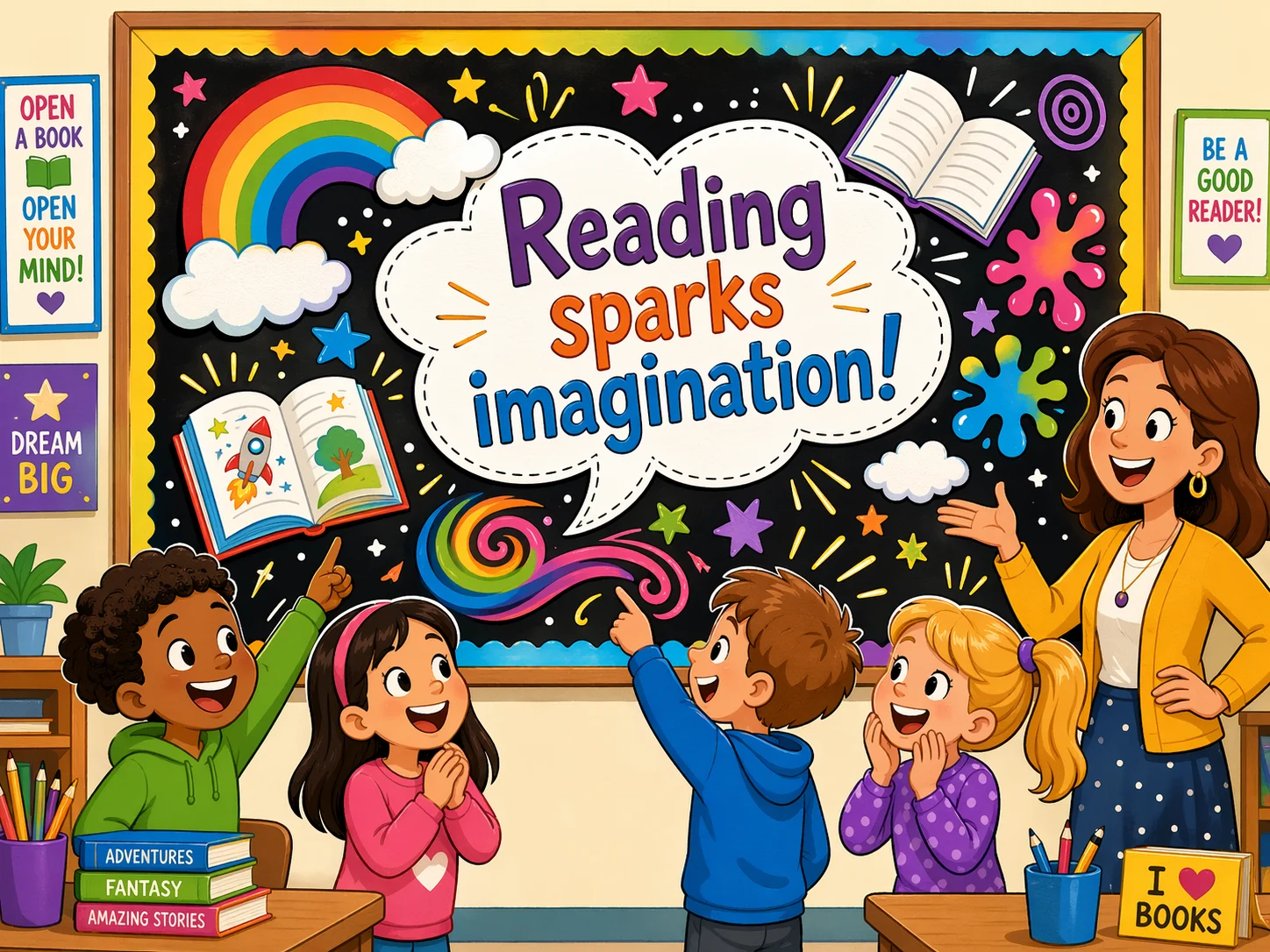
Visual appeal is a primary driver of engagement in an elementary classroom. A creative bulletin board that uses bold color intentionally can spark the imagination and make the reading nook a focal point of the room.
Reading Colors Your World
This bulletin board idea features a large grayscale world on one side that transitions into a vibrant, colorful landscape filled with book covers. The message is clear: books help students see the world in new ways and imagine it more vividly. This classroom display often includes a section where students can post drawings of the mental pictures they see while enjoying a story.
Reading Rainbow
The “Reading Rainbow” theme remains a favorite reading bulletin for many teachers. It can be used to organize the classroom library by level or genre, with each color of the rainbow representing a different category. This display also supports classroom routines by providing a clear visual system for organizing and returning books.
Books Paint Pictures in Your Mind
Focusing on the “Art of Literature,” this display showcases student work bulletin board pieces where children have illustrated a scene from their favorite title. By showing that books spark imagination, the setup supports the development of emotional intelligence and critical thinking.
8. Goals and Recognition Display
Motivation is the engine of literacy. A display dedicated to reading goals and student recognition provides the extrinsic spark that often leads to an intrinsic love for reading.
So Many Books, So Little Time
This display acts as a giant “Book Bucket List” for the class. It features a large “To-Read” list based on student suggestions and teacher-curated diverse reading titles. As books are finished, they are moved to the “Completed” side of the display, providing a sense of accomplishment for the entire school year.
Reading Goals Tracker
A high-quality reading goals tracker should be visual and easy to update. Use a “Class Thermometer” or a “Progress Ladder” to show the total number of titles completed by the class. Goal-setting with frequent feedback helps students see progress in a concrete and motivating way.
Bookworm of the Week and Reading Stars
Recognition should focus on effort and growth rather than just speed. A “Reading Star” classroom display might feature a student who tried a new genre or shared a particularly thoughtful recommendation. This positive showcase helps build a supportive classroom community where every child feels successful.
9. Back-to-School Book Display
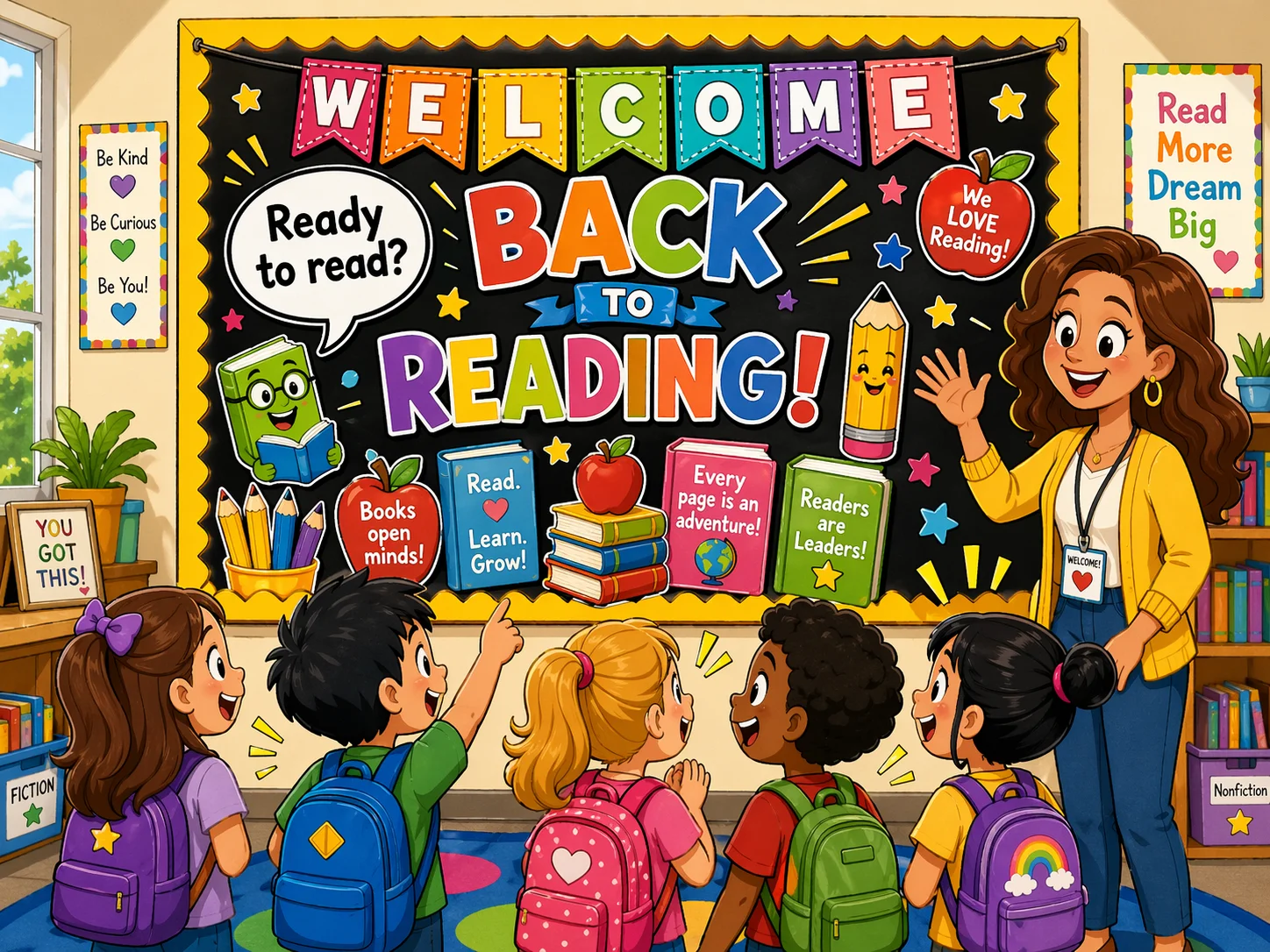
The start of the school year is the prime time to establish classroom rules and literacy routines. A back-to-school bulletin board should feel welcoming, lively, and easy for students to engage with from day one.
Ready to Read
“Ready to Read” is a simple yet effective back-to-school bulletin board that features a “backpack” for every student. Inside the backpack, students place a paper cutout of the first book they plan to read. This format offers practical bulletin board ideas to get students thinking about books from day one.
Start the Year With a Good Book
This display functions as an introduction to the classroom library. It can showcase popular titles from the previous year’s class and help new students feel part of the room’s reading culture. Features such as “Teacher’s Top Picks” can also help build rapport between the teacher and a new group of students.
Reading Resolutions
Similar to New Year’s resolutions, “Reading Resolutions” encourage your students to set specific, measurable aims for the semester. Students can write goals like “I will read 2 non-fiction books” or “I will read for 20 minutes every night.” This wall space becomes a point of accountability and encouragement.
10. Library and Book Corner Display
Specific zones like the school library or a reading nook require specialized visuals that emphasize organization and the magic of quiet spaces.
Library Quest
A “Library Quest” display turns the school library into an adventure. The setup features a list of “Missions,” such as “Find a book about an animal” or “Locate a biography of a scientist.” This interactive design encourages students to use and understand the library’s organization system while exploring new books.
Return to a Favorite
This literacy display focuses on the value of re-reading. It features a “Wall of Fame” for books that students have enjoyed more than once. By highlighting “comfort reads,” the display validates different reading habits and encourages deeper engagement with text.
Library Rules Are Cool
Every classroom library needs a clear set of expectations. However, instead of a list of “Don’ts,” this display uses positive language: “We treat books like treasures,” or “We keep our library tidy for friends.” This classroom management tool ensures the learning environment remains organized and respectful.
11. Quote and Message Display
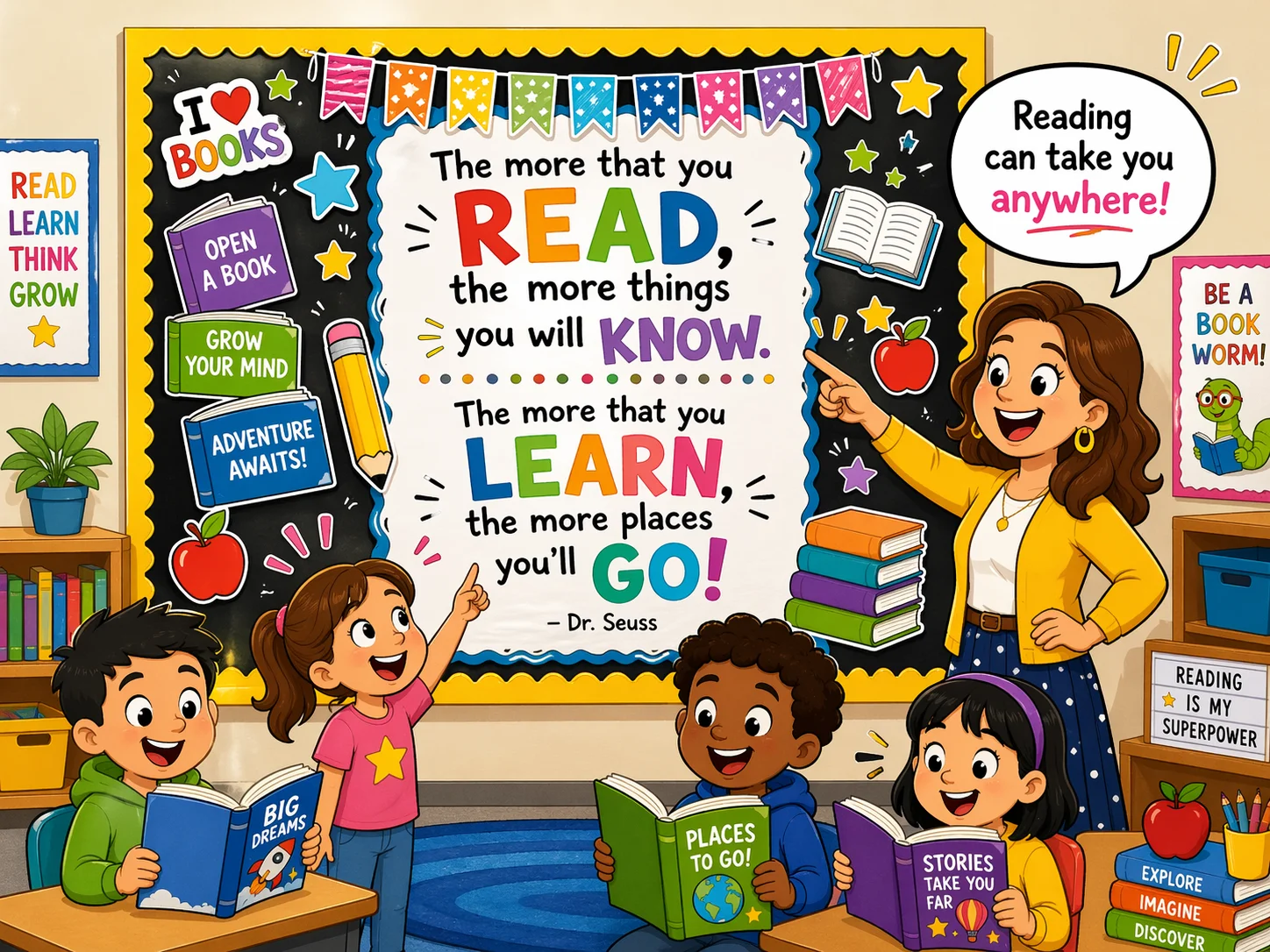
Sometimes, the most powerful bulletin board ideas are the simplest. A quote-based reading bulletin board uses strong visuals and short, inspiring language to motivate students.
Reading Can…
This display starts with the prompt “Reading Can…” and leaves the rest to the students. Students can post sticky notes with words like “Take you to Mars,” “Make you laugh,” or “Help you understand others.” This creative reading bulletin board idea is highly personalized and evolves throughout the school year.
Today a Reader, Tomorrow a Leader
This display connects literacy to future success and leadership. It can feature quotes from authors, educators, or community leaders about the value of reading. This inspirational setup links books to real-world outcomes and long-term growth, even at an elementary classroom level.
Open a Book, Open Your Mind
Focusing on diverse reading and empathy, this display features an open book with growth-mindset phrases flying out of it. It serves as a visual reminder that books are tools for understanding the world and expanding one’s perspective, supporting emotional intelligence and perspective-taking.
12. Tech, Pop Culture, and Interactive Book Display
To compete with digital distractions, classroom decor must sometimes borrow from the visual language of the internet and media. This section focuses on interactive bulletin boards that feel modern and relevant.
Bookflix, ReadBox, and iRead
These board ideas for your classroom mimic the interfaces of Netflix or YouTube. The “Trending Now” section features popular classroom titles, while “Because You Read…” sections provide genre exploration suggestions. This creative bulletin board is a game-changer for grades 4 and 5 students who are heavily engaged with digital platforms.
Emoji Reads and Text Message Themes
Ask students to summarize their favorite books using only three emojis. This interactive display is fun, fast, and culturally relevant. Similarly, a “Text Message” theme shows a conversation between two characters from a book, which encourages students to write creatively about plot and character development.
Brackets, Votes, and Book Recommendation Walls
A “March Madness” style book bracket is one of the best reading bulletin ideas for high engagement. Students vote on their favorite books weekly until a champion is crowned. This interactive format creates excitement around reading and can keep the class talking about books throughout the year.
How to Choose the Right Reading Bulletin Board by Grade Level
Selecting the perfect bulletin board depends heavily on the developmental stage of the students. What works for a 5-year-old may not engage a 10-year-old.
Kindergarten and Grade 1
For early readers, focus on color themes, character-based displays, and simple, repetitive text. The goal is to invite students into the space and make books feel accessible and fun. Large, high-contrast book covers and tactile elements like “Interactive Pockets” are most effective here.
Grades 2 and 3
At this stage, students are transitioning from “learning to read” to “reading to learn.” Use goal trackers, genre gardens, and passport themes. These bulletin board ideas help build reading stamina and introduce the idea that different books serve different purposes.
Grades 4 and 5
Older elementary students appreciate autonomy and social connection. Bookflix displays, QR code reviews, and student-curated sections are ideal. These boards should focus on peer recommendations and higher-level response prompts that support critical thinking.
Tips for Keeping Reading Bulletin Boards Fresh
The most common challenge for teachers is the time required to create a bulletin board and keep it updated. A stale display is often ignored by students.
- Rotation Plan: Change only 25% of the content every month. For example, keep the background and header but swap out the student work bulletin board pieces or the book covers.
- Student-Led Content: Let the children do the work. Use interactive bulletin boards where students can post their own reviews or drawings. This increases student ownership and reduces teacher prep time.
- Neutral Basics: Use high-quality, neutral borders and backgrounds that work for any season. This allows you to change the theme by simply swapping the bulletin board set lettering and images.
A successful reading bulletin board is a blend of visual marketing and instructional support. By focusing on diverse reading, student voice, and clear reading goals, educators can transform their elementary classroom into a thriving literacy hub that fosters a love for books that lasts a lifetime.
FAQ
How often should I refresh my reading bulletin board?
For maximum impact, a classroom bulletin board should be refreshed every 4–6 weeks. Interactive displays or “Question of the Week” features should be updated more frequently to maintain student engagement.
Which reading bulletin board works best for small spaces?
If you have limited bulletin board space, consider a classroom door display or a vertical “Book Ladder” on a narrow pillar. QR code displays are also highly space-efficient because they can link to a large amount of digital content.
How can I make a bulletin board more interactive?
Add elements like voting dots, flip cards, or “Secret Message” flaps. Any feature that requires a student to physically touch or move something will immediately make the display more engaging and memorable.

Take a short quiz to find out what your everyday choices say about your parenting style
When your child is curious about something new, what’s your instinct?
Take a short quiz to find out what your everyday choices say about your parenting style
“Can I download this app?” What happens next?
Take a short quiz to find out what your everyday choices say about your parenting style
When it comes to rules at home, which sounds most like you?
Take a short quiz to find out what your everyday choices say about your parenting style
If you could give your child one life skill today, what would you pick?
Take a short quiz to find out what your everyday choices say about your parenting style
Your child gets to choose what to watch. What would your ideal setup look like?
Take a short quiz to find out what your everyday choices say about your parenting style
Pick your parenting superpower ✨