
Best Reading Apps for Kids: Epic vs ReadingIQ Comparison

 Discover a Free Education Video App for Kids
Pastory uses AI to personalize educational video content based on your child’s interests and personality. Safe, engaging, and built for curious young minds. Sign up now to stay updated and enjoy early access with a free trial
Choosing the best reading app for your child can be overwhelming — especially when two popular platforms like Epic and Reading Eggs promise to build strong literacy skills. Each app takes a different approach: one focuses on a vast digital library, while the other emphasizes structured phonics instruction. So which one actually delivers for kids in 2026?
The short answer: it depends on what your child needs right now. This comparison breaks down both apps honestly — no hype, just what parents and educators need to know when deciding between these two educational apps for kids.
Overview of Epic vs Reading Eggs
What is Epic?
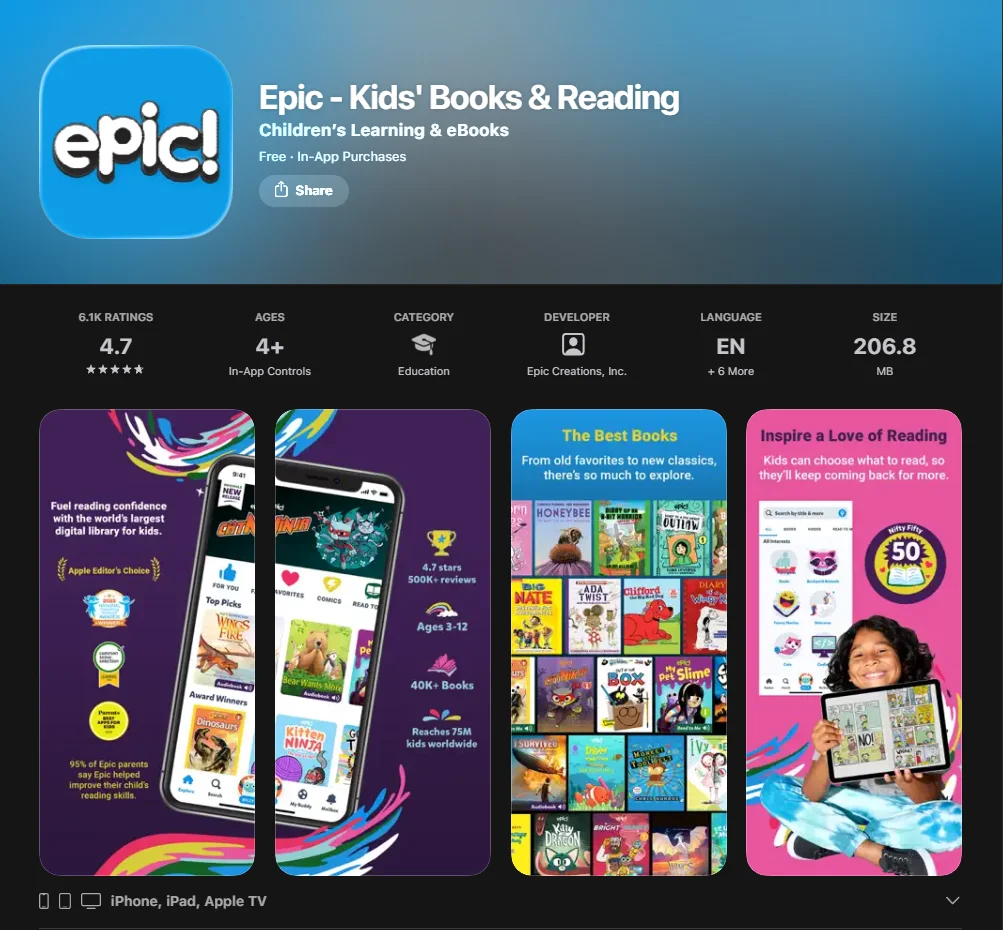
Epic is a digital library platform and one of the best learning apps for kids ages 2–12. It offers access to over 40,000 children’s books, audiobooks, read-alongs, and educational videos from well-known publishers. Think of it as a Netflix-style library for kids — vast, diverse, and endlessly browseable.
Epic doesn’t follow a prescribed curriculum. Instead, it lets children explore books at their own pace and reading level, with features like quizzes, badges, and a “Read to Me” mode for younger users. It’s completely free for educators, and parents can track what their child is engaging with through a clean dashboard. As of 2026, Epic remains one of the most widely used digital reading platforms in US elementary schools — a genuinely powerful learning tool for young readers.
What is Reading Eggs?
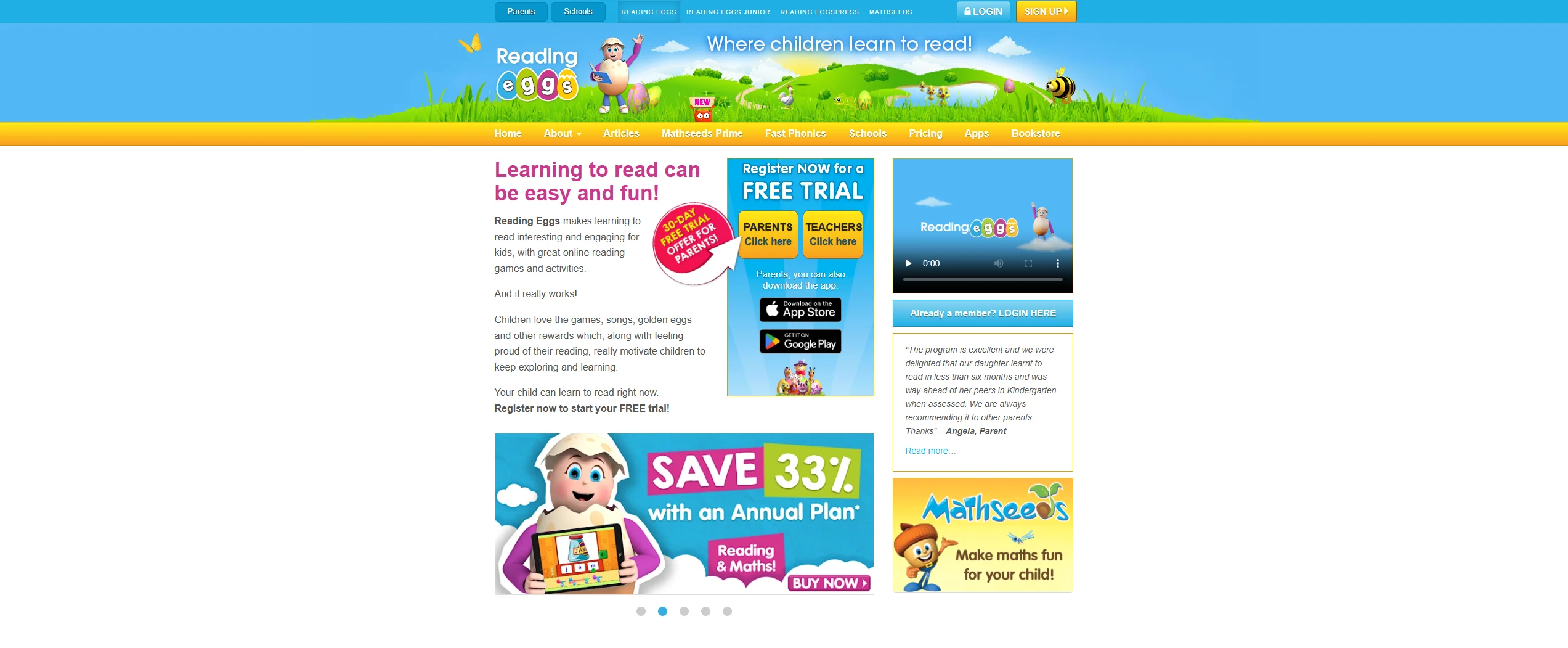
Reading Eggs is a structured literacy program built around systematic phonics instruction. Developed by Blake eLearning, it targets children ages 2–13 and guides them through a step-by-step reading program covering letter sounds, sight words, phonemic awareness, and reading comprehension.
The platform includes three connected programs: Eggs (for beginners learning to read), Eggspress (for more advanced readers), and Mathseeds (math, sold separately). Lessons are delivered through animated games, songs, and interactive reading activities — making the learning feel like play while following a carefully sequenced educational path. The program is used in schools across Australia, the US, and the UK, and follows evidence-based literacy frameworks, including systematic phonics instruction.
How These Reading Apps For Kids Cater to Their Learning Needs
Age Appropriateness
Both apps cover a wide span, but serve different developmental stages. They officially target children ages 2–13, though their real strengths land at different points:
| Age Group | Epic | Reading Eggs |
| 2–4 (Preschool) | Read-aloud picture books, videos | Pre-literacy games, letter recognition |
| 5–7 (Early readers) | Leveled books, “Read to Me” mode | Phonics lessons, sight words |
| 8–10 (Developing readers) | Independent books, quizzes | Reading Eggspress, comprehension |
| 11–13 | Chapter books, audiobooks | Advanced comprehension, vocabulary |
Epic is better suited for children who already read independently and want to explore at their own pace. Reading Eggs is better suited for preschoolers and early learners who are still figuring out letter sounds and word recognition — the structured curriculum gives beginners a clear path forward.
Learning Content & Structure
This is where the two apps diverge most clearly.
Epic is content-rich but not curriculum-driven in nature. A child can spend a week on dinosaur books or work through a leveled nonfiction series — but there’s no built-in sequence telling them what reading skill to develop next. This works well for motivated, independent learners, but may leave kids just starting out without enough instructional scaffolding.
Reading Eggs follows a defined learning path that systematically helps children learn to read. This path includes:
- Pre-literacy skills (letter recognition, phonemic awareness)
- Phonics and decoding (letter sounds, blending)
- Sight word mastery and word recognition
- Reading fluency and comprehension
- Vocabulary and writing (higher levels)
For kids who need systematic phonics instruction, Reading Eggs offers a scaffolded experience that Epic lacks. One app teaches children how to read; the other gives them books once they can.
Engagement & Motivation Features
Both apps use gamification, but in different ways.
Epic rewards kids with badges, points, and a tracking system for reading streaks. Children can build a personal bookshelf, receive recommendations based on their reading level and interests, and unlock new content as they explore. The experience feels like browsing a library rather than completing assignments — relaxed, self-directed, enjoyable.
Reading Eggs uses animated characters, a visual progress map, golden eggs as rewards, and interactive games to keep kids engaged during phonics instruction. Completing a lesson moves the child forward on the map and unlocks surprises. For preschoolers and kids ages 2 to 8 especially, this sense of visible progress can be highly motivating. They can see exactly how far they’ve come.
Independent, curious children tend to thrive with Epic’s open-ended format. Children who respond well to structure and clear goals — especially early readers — often engage more consistently with Reading Eggs.
User Experience and Interface
Navigation and App Design
Epic’s interface is colorful and easy to navigate, designed to feel like a welcoming bookstore. Older kids can navigate it independently with ease, though toddlers and preschoolers benefit from a parent nearby when getting started. The recommendation engine gets better at surfacing the right books over time, which helps kids practice reading content that matches their interests.
Reading Eggs uses a simpler, more guided layout. Children tap through a visual map of lessons in a set order. There’s less freedom to wander, which some older kids find limiting — but for early learners it removes confusion and keeps focus. Most children ages 3–6 can navigate it independently after a brief introduction, which matters when parents need hands-off screen time that still counts as early learning.
Device Compatibility
| Feature | Epic | Reading Eggs |
| iOS | ✅ | ✅ |
| Android | ✅ | ✅ |
| Web browser | ✅ | ✅ |
| Offline access | ✅ (limited) | ✅ (limited) |
| Amazon Kids | ✅ | ❌ |
| Chromebook | ✅ | ✅ |
Epic has a slight edge here. Its compatibility with Amazon Kids is particularly useful for families with Fire tablets, and it integrates seamlessly with Google Classroom — making it ideal for kids who bring school devices home.
Subscription and Pricing Comparison
| Plan | Epic | Reading Eggs |
| Free version | Free for educators; 30-day family trial | 30-day free trial |
| Monthly | ~$13.99/month | ~$9.99/month |
| Annual | ~$84.99/year (~$6.67/month) | ~$84.99/year (~$7.08/month) |
| Child profiles | Up to 3 | Up to 4 |
| Teacher access | Completely free | Free educator version available |
Both apps are priced similarly. Epic is slightly cheaper annually, while Reading Eggs includes support for one additional child profile. Neither charges per book or per lesson — flat-rate subscriptions with everything included.
Educational Approach and Effectiveness
Phonics Instruction and Early Literacy
Reading Eggs is built on systematic phonics — consistently identified by reading researchers as the most effective method for teaching children to decode text. The app’s phonics instruction follows a cumulative sequence, working through letter-sound relationships methodically. Research from Blake eLearning found measurable gains in phonics skills and reading confidence among children who used the program regularly. The approach aligns closely with what the science of reading recommends for early learners.
Epic does not offer phonics instruction. It supports literacy development through exposure to a huge library of children’s books — the premise being that kids who read widely and often build fluency and vocabulary naturally. This works well as a complement to formal instruction, but it’s not a substitute for systematic phonics in early readers. If your child is still sounding out words letter by letter, Epic alone won’t solve that.
That said, Epic’s read aloud feature and audiobooks genuinely help children build vocabulary and comprehension skills passively — especially useful for preschoolers who aren’t yet reading independently but benefit enormously from hearing rich language.
Cognitive Development and Skills Enhancement
Epic builds intellectual curiosity and a love of reading through variety. Children who engage across genres — fiction, nonfiction, graphic novels, poetry, science — develop broader vocabulary and background knowledge as a natural side effect. The platform’s comprehension questions provide light practice, though depth varies by title.
Reading Eggs focuses more narrowly on foundational skills, but the cognitive benefits go beyond phonics. Its games support phonemic awareness, working memory, and sequencing. The comprehension modules in Reading Eggspress introduce more analytical thinking as kids progress — main idea, inference, text evidence. These are skills that transfer directly into school performance.
Parent and Teacher Support Features
Both platforms give parents visibility into their child’s progress, but with different levels of detail:
- Epic: Shows titles completed, time spent, quiz scores, and reading level estimates. Clean and easy to interpret — good for parents who want a general picture.
- Reading Eggs: Provides a detailed breakdown of phonics skills mastered, lesson completion, placement test results, and printable activity sheets for offline reading practice. Far more granular, and aligned to school curricula in a way that’s easy to share with a teacher.
For homeschooling families or parents who want to actively support their child’s reading program, Reading Eggs’ reporting tools offer considerably more to work with.
Pricing and Value for Money
Free Trial and Subscription Details
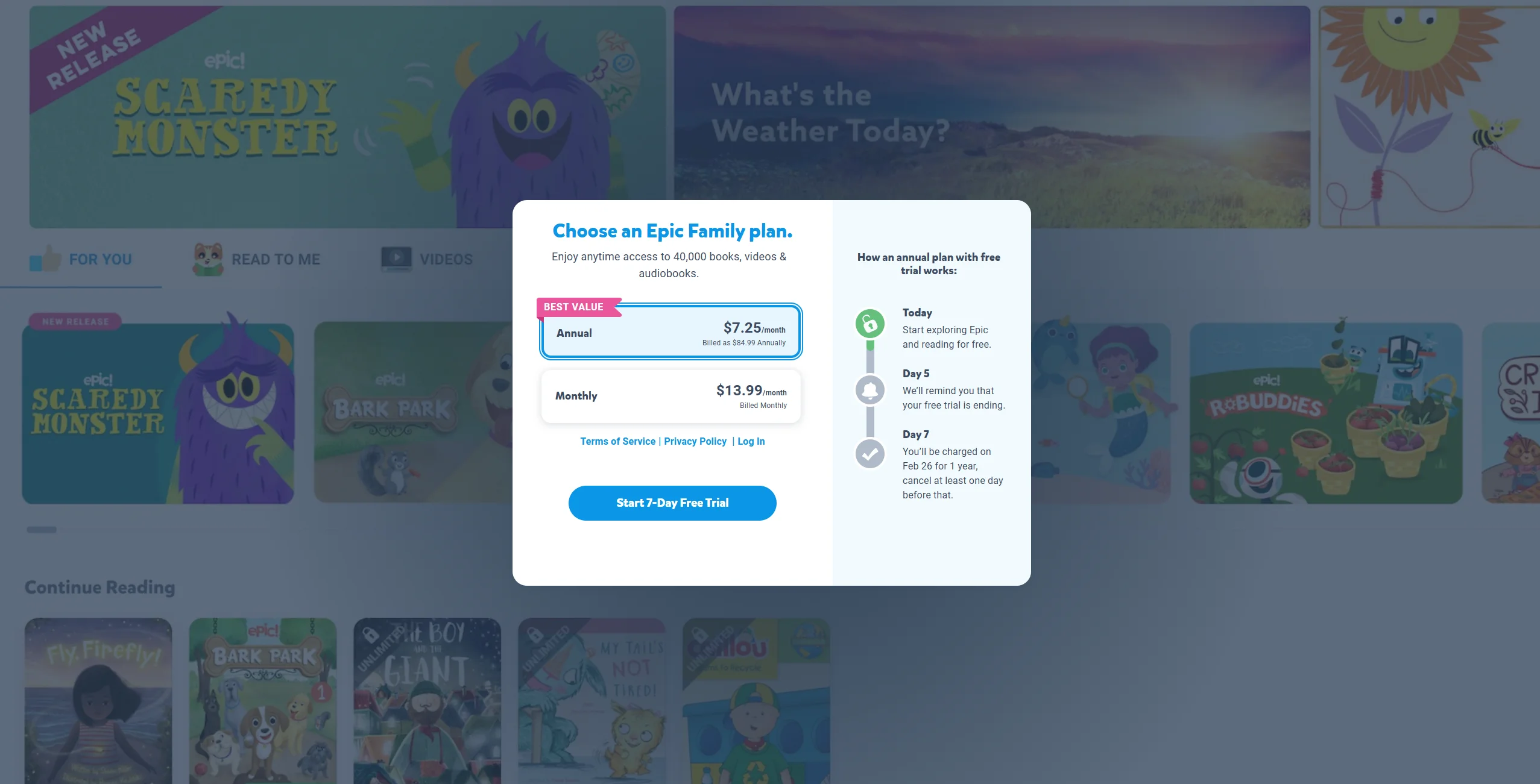
Both apps offer a 30-day free trial — long enough to genuinely assess whether the app fits your child. A month gives you time to spot engagement patterns, gauge the learning curve, and decide if the cost is justified.
Epic’s free educator account is a real advantage for school-age kids. If your child’s teacher already uses Epic, the classroom version may give you everything you need at no cost to the family — making it effectively a free alternative to a paid subscription for many households.
Reading Eggs occasionally offers promotional discounts around the back-to-school season. It’s worth checking the official website before subscribing at full price. Some families also find that starting with the free trial of Reading Eggs, then switching to Epic once foundational skills are in place, is a cost-effective approach.
Always verify current pricing directly with each app — rates and trial terms can vary by region and change over time.
Long-Term Value

If your child is a confident, independent reader aged 7+, Epic’s library offers years of content. With 40,000+ titles added regularly, it’s one of the best free digital library options available (via the educator account), and for families paying the subscription it represents excellent value per book engaged with.
For children aged 2–7 who are still developing foundational literacy, Reading Eggs offers more targeted long-term value. A child who completes the full program will have built the core skills needed for confident reading — skills that directly improve school performance. The cost, spread over a year, is modest compared to tutoring or physical book purchases.
Many families find the best approach is using both: Reading Eggs for structured skill-building during the week, Epic for free-choice, and enjoyable book time on weekends. Together, they cover both the instruction and the practice sides of early literacy.
Final Thoughts and Verdict
Neither app is objectively better — they serve different purposes. Epic is outstanding as a digital library that nurtures a genuine love of reading. Reading Eggs excels as a structured reading program that teaches children how to read from the ground up. The right choice depends on where your child is right now.
Who Should Choose Epic?
Epic is the stronger fit if your child:
- Already reads independently and enjoys choosing their own books
- Benefits from wide exposure to different genres, topics, and formats — from picture books to chapter books to audiobooks
- Is 7 or older and ready to explore a large digital library
- Has a teacher who uses Epic in the classroom (making free access available)
- Needs high-volume reading practice to build fluency and confidence
Who Should Choose Reading Eggs?
Reading Eggs is likely the better choice if your child:
- Is a preschooler or early learner who needs systematic phonics from scratch
- Is between 2 and 8 years old and just beginning their literacy journey
- Benefits from structured, step-by-step lessons with clear goals and rewards
- Struggles with letter sounds, sight words, or word recognition
- Has a parent or teacher who wants detailed progress reports aligned to a curriculum
Frequently Asked Questions
Which App is Better for Younger Kids?
For children under 5, Reading Eggs has a clear edge. Its pre-literacy games are designed specifically for toddlers and preschoolers, guiding them through letter recognition and early phonics in a structured, age-appropriate way. Epic’s picture books and read aloud mode are enjoyable at this age, but they don’t build foundational decoding skills as systematically. Between the two, Reading Eggs offers a more developmentally intentional experience for the youngest learners.
Are These Apps Suitable for All Age Groups?
Both apps officially cover children ages 2–13, but their real strengths differ. Reading Eggs is most effective for kids ages 2–8, while Eggspress extends value up to around 13 for comprehension and vocabulary. Epic is best for children aged 5 and up who are ready for independent exploration, and its library is especially strong for kids ages 7–12. For teenagers, neither app is an ideal fit — both are designed primarily for early childhood and middle elementary. Parents of older children might consider pairing either app with a library card for free access to digital books and audiobooks through services like Libby.
Can Both Apps Help Improve Reading Fluency?
Yes, but through different mechanisms. Reading Eggs builds fluency through structured, decodable texts and repeated phonics practice — children learn to decode accurately first, and speed follows naturally. Epic supports fluency through volume: the more children engage with books they enjoy, the more fluent they tend to become. For a child who struggles with decoding, Reading Eggs addresses the root cause more directly. For a child who can already decode but reads haltingly or lacks confidence, Epic’s vast library of engaging children’s books provides the high-volume practice they need. Ideally, kids benefit from both approaches working together.
How Do The Apps Compare in Terms of Cost?
Both apps run about $13.99/month or $80–$85/year. Epic comes in slightly cheaper annually and includes Amazon Kids support. Reading Eggs includes up to four child profiles and more detailed progress reporting. Epic is completely free for classroom use. Both offer 30-day free trials. The pricing difference is minimal — choose based on your child’s educational needs, not the $5-per-year cost gap.
Are These Apps Safe for Children?
Both Epic and Reading Eggs are COPPA-compliant and contain no third-party advertising. Epic’s content is curated by educators and librarians; Reading Eggs is built entirely around age-appropriate educational content with no social features. Neither app requires children to create public profiles or interact with strangers. Both give parents full control over account settings and usage. For managing overall screen time, both work alongside device-level parental controls — a good habit regardless of which educational apps for kids you choose.

Take a short quiz to find out what your everyday choices say about your parenting style
When your child is curious about something new, what’s your instinct?
Take a short quiz to find out what your everyday choices say about your parenting style
“Can I download this app?” What happens next?
Take a short quiz to find out what your everyday choices say about your parenting style
When it comes to rules at home, which sounds most like you?
Take a short quiz to find out what your everyday choices say about your parenting style
If you could give your child one life skill today, what would you pick?
Take a short quiz to find out what your everyday choices say about your parenting style
Your child gets to choose what to watch. What would your ideal setup look like?
Take a short quiz to find out what your everyday choices say about your parenting style
Pick your parenting superpower ✨



