
Lingokids vs Reading Eggs Comparison for Kids Learning Apps

 Discover a Free Education Video App for Kids
Pastory uses AI to personalize educational video content based on your child’s interests and personality. Safe, engaging, and built for curious young minds. Sign up now to stay updated and enjoy early access with a free trial

When it comes to early childhood education in the digital age, parents often find themselves navigating a sea of “educational” icons on their tablets. Two names consistently rise to the top: Lingokids and Reading Eggs. While both are well-established platforms in the world of children’s learning apps, they serve very different developmental purposes. One is a colorful, multi-subject playground designed for broad exploration, while the other is a laser-focused, systematic ladder leading toward literacy.
Choosing between them isn’t about which app is “better” in a vacuum, but rather which one aligns with your child’s current reading level, age, and specific learning goals. This guide examines the curriculum depth, engagement styles, and pricing models of both platforms to help families decide which app best fits their needs.
Should Apps Be Used for Teaching Reading?

The transition from “looking at pictures” to “decoding words” is a monumental milestone. In recent years, the role of a learning app has shifted from a mere distraction to a supplementary teaching tool. When used as part of a balanced learning routine, high-quality apps can support the development of foundational literacy skills.
Apps offer several unique advantages that traditional books cannot:
- Immediate Feedback: If a child misidentifies a letter sound, the app corrects them instantly, preventing the reinforcement of mistakes.
- Multisensory Engagement: Combining visual animations with auditory phonics cues helps cement the “alphabetic principle” in a child’s mind.
- Personalization: Most high-quality educational apps use algorithms to adjust difficulty based on a child’s performance.
However, experts emphasize that an app for kids should never replace human interaction. Many educators advocate for a balanced literacy approach that combines structured instruction with rich language exposure. Apps should provide the extra reading practice that frees up parents to focus on storytelling and verbal communication.
Role of Gamified Learning
Both Lingokids and Reading Eggs rely heavily on gamification. By turning reading games into a quest for “stars” or “golden eggs,” these apps tap into a child’s natural reward system. This makes learning fun and increases the likelihood that a child will return to the app daily, which is crucial for building long-term reading skills.
Screen Time Balance
Managing screen time is a top priority for modern parents. Lingokids and Reading Eggs are generally designed for kids to use in short bursts. Most experts recommend sessions of 15 to 20 minutes. Both apps include features to help parents monitor usage, ensuring that digital learning remains a healthy part of the day rather than an all-day event.
Parent Involvement Level
One major difference between these platforms is the “set it and forget it” factor.
- Lingokids is generally more exploratory, allowing children to use the app with minimal guidance as they move between songs and games.
- Reading Eggs often requires a bit more initial setup (like a placement test) and may require a parent to sit nearby to help with more complex phonics challenges in the early stages.
Lingokids Overview

Lingokids markets itself as a “Playlearning™” platform. It isn’t just a reading app; it is a comprehensive early learning app that covers English, math, science, and even socio-emotional skills.
What Is Lingokids?
Lingokids is a broad learning app designed for children aged 2 to 8. It was originally built with a focus on teaching English as a second language, but it has since expanded to serve both native and non-native speakers. It offers over 1,200 structured interactive activities along with thousands of additional content items (including videos, songs, and shows), with totals varying depending on how content categories are counted.
Curriculum Focus and Learning Goals
The curriculum in Lingokids is vast. It aims to provide a comprehensive learning experience by focusing on:
- Modern Skills: Creativity, collaboration, and critical thinking.
- Core Academics: Basic literacy, math, and science.
- Social-Emotional Learning (SEL): Lessons on empathy, hygiene, and mindfulness.
- Neurodiversity: Recently, Lingokids has expanded its content to be more inclusive, featuring activities specifically tailored for children with ADHD or Autism.
Learning Experience and Interface

The interface is vibrant and character-driven, featuring a cast of friends like Billy the Chick and Cowy the Cow. The interactive learning model is non-linear; children can often choose their own path through various themed “universes.”
Strengths
- Variety: Helps maintain children’s interest by switching between subjects.
- Engagement: The high-quality music and animations are world-class.
- Accessibility: Excellent for non-native speakers practicing English through play.
Limitations
If you are looking for a rigorous, step-by-step reading program, Lingokids might feel too “loose.” Its phonics instruction is integrated into games rather than presented as a strict, sequential curriculum.
Reading Eggs Overview
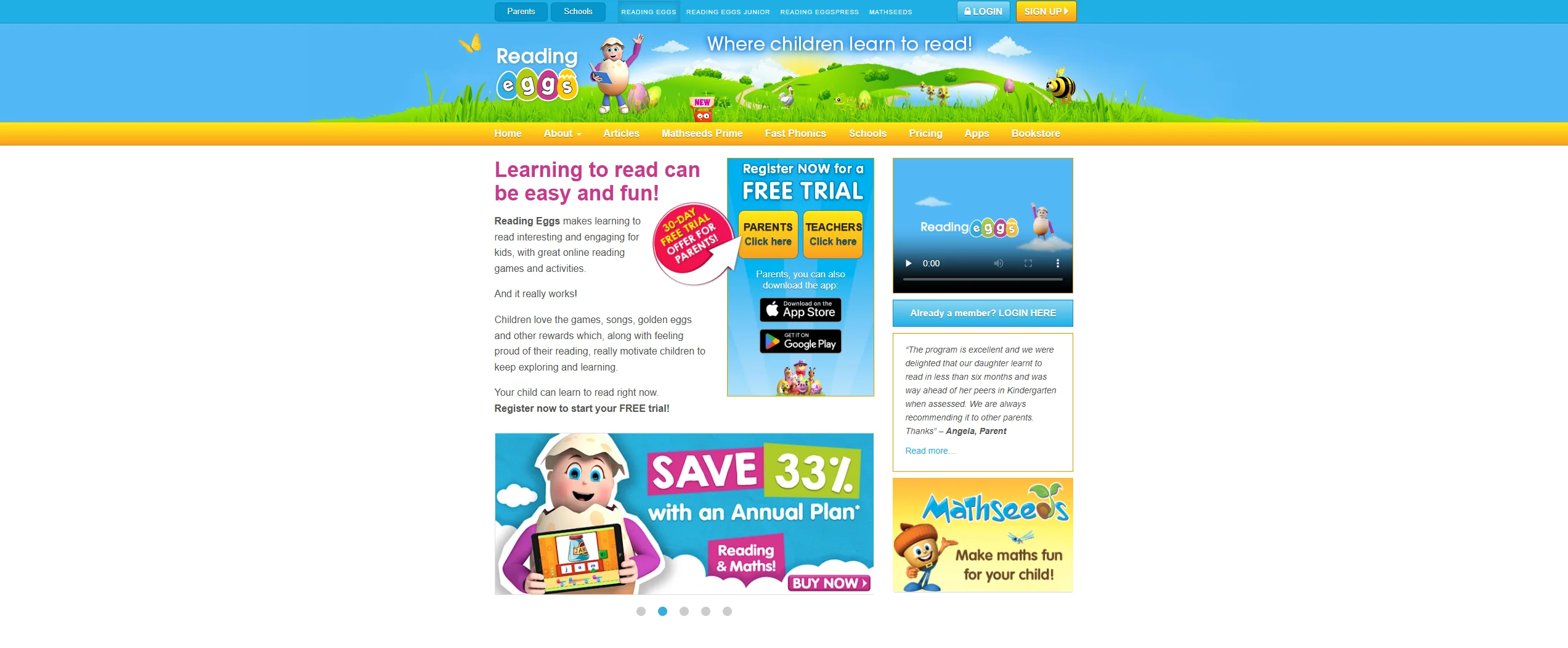
If Lingokids is a colorful sandbox, Reading Eggs is a well-paved highway leading directly to literacy. It is a highly structured reading program developed by experienced educators.
What Is Reading Eggs?
It is a multi-award-winning educational app specifically designed to help kids learn to read using the five pillars of literacy: phonemic awareness, phonics, fluency, vocabulary, and comprehension. It caters to kids from ages 2 all the way up to 13.
Curriculum Structure and Progression
The hallmark of the app is its structured learning paths. When a child starts, they take a placement test to determine their reading level. From there, they follow a map of lessons that must be completed in order. This ensures no gaps are left in their foundational reading skills.
Learning Experience and Interface
The interface feels like a classic board game. As kids learn, they move their character along a path, earning “Golden Eggs” that they can spend in a virtual shop to decorate their “house” or avatar.
Strengths
- Systematic Phonics: Probably the best learning app for kids who need a clear, logical progression.
- Massive Library: Includes over 4,000 digital titles for kids to explore.
- Research-Based Approach: Developed using established literacy instruction principles.
Limitations
The graphics and games can feel slightly “dated” or more academic compared to the flashy, modern animation found in Lingokids.
Lingokids vs Reading Eggs Curriculum Comparison

| Feature | Lingokids | Reading Eggs |
| Primary Focus | General Early Learning (Multi-subject) | Literacy & Phonics Mastery |
| Phonics Depth | Introductory / Integrated in play | Deep / Systematic & Sequential |
| Math Included? | Yes (Basic concepts) | Yes (Via “Mathseeds” sub-app) |
| Library Size | Hundreds of interactive stories | 4,000+ Digital books |
| Progression | Adaptive / Exploratory | Level-based / Map-based |
Phonics Instruction Depth
Reading Eggs provides more in-depth phonics instruction. It uses synthetic phonics, teaching kids to blend sounds into words in a very specific order. Lingokids provides phonics exposure, but it is more about word recognition and vocabulary than the mechanics of decoding.
Vocabulary and Language Development
Lingokids excels at conversational vocabulary and learning English in context. It’s a powerful learning tool for children to pick up phrases and “modern” life skills. Reading Eggs focuses more on “academic” vocabulary—words children will encounter in the literature they are learning to interpret.
Reading Comprehension Development
While Lingokids has “Read-Along” stories, Reading Eggs features a dedicated section called Reading Eggspress to help children improve their understanding of longer passages, making it more suitable for older children to read for meaning.
Age Range Suitability Comparison
Preschool Children (Ages 2–4)
- Lingokids: Perfect for this age. The “Playlearning” approach matches the short attention spans of toddlers.
- Reading Eggs Junior: Excellent for building “pre-literacy” skills like letter recognition and sound matching.
Kindergarten Learners (Ages 5–6)
This is the “sweet spot” for both. Reading Eggs is arguably more effective at getting them “school-ready” in terms of literacy, while Lingokids provides a more comprehensive learning foundation in other areas like STEM.
Early Elementary Students (Ages 7+)
Reading Eggs remains relevant longer for native speakers due to its advanced comprehension modules. Lingokids content tends to peak in engagement around age 8.
Pricing Comparison and Subscription Value

Note: Prices are based on standard 2026 rates and may vary by region or active promotions.
| Plan Type | Lingokids | Reading Eggs |
| Monthly | Typically around $13.49–$15.99 depending on region, promotions, and whether the subscription is purchased via the website or app store | ~$9.99 for the Reading-only plan and ~$13.99 for the Reading & Maths bundle (prices vary by region and platform) |
| Annual | Typically around $71.88–$89.99 depending on region, billing platform, and active promotions | ~$69.99 for the Reading-only plan and ~$99.99 for the Reading & Maths bundle (prices may vary by region and billing platform) |
| Free Trial | 7 Days | 30 Days (Typically) |
| Free Version | Basic (1 child profile and up to 10 activities per day, refreshed every 24 hours; limits may vary by region and platform) | Primarily available through a 30-day free trial, after which a paid subscription is required for continued access (limited promotional access may vary by region) |
| Profiles | 1 per sub (usually) | Up to 4 children |
Subscription Plans

Both apps offer a free trial that allows families to explore the platform before committing. Reading Eggs includes up to four child profiles under one subscription, and Lingokids Plus also allows up to four child profiles under a single subscription; pricing differences typically depend on region, platform (website vs app store), and promotional offers rather than per-profile fees.
Cancellation and Flexibility
Both platforms allow for easy cancellation via app store settings or their respective websites. Reading Eggs is known for offering a generous 30-day trial period, whereas Lingokids typically sticks to a shorter 7-day window.
Pros and Cons Summary
Lingokids Pros and Cons
Pros:
- Covers a wide range of subjects beyond just literacy.
- Superior animation and “modern” feel.
- Suitable for children who are new to learning apps.
Cons:
- Literacy instruction isn’t as systematic.
- Can feel “busy” or over-stimulating for some children.
Reading Eggs Pros and Cons
Pros:
- The most comprehensive learning experience for phonics.
- Includes a massive digital library.
- Very clear “end goal” for each lesson.
Cons:
- Visuals aren’t as flashy as modern competitors.
- Focused almost entirely on academic skills.
Who Lingokids Is For

Lingokids is the best educational app for parents who want their child to develop a love of reading while also learning about the world, science, and how to manage their emotions. It is the ideal learning app for kids who are in the “discovery” phase and need high-level engagement to stay focused.
Who Reading Eggs Is For
Reading Eggs may appeal to parents who prioritize structured literacy milestones, such as reading fluently by first grade. It is the best kids app for those who need a structured learning path and extra reading practice to master the difficult hurdles of phonics.
Safety, Ads, and Parental Controls
Both apps are completely free of third-party advertisements, which is a massive win for child safety.
- Progress Tracking: Reading Eggs provides detailed progress reports, including reading level and estimated “reading age” metrics rather than a general cognitive or “mental age” score. Lingokids offers a “Parental Dashboard” that shows which subjects your child is gravitating toward.
- In-App Purchases: The primary cost is the subscription itself; refund policies and billing management depend on whether the subscription is purchased via the company website, Apple App Store, or Google Play.
Alternatives to Consider
If neither option feels like the right fit, families may also consider these alternatives:
- ABCmouse: A massive, multi-subject curriculum that sits somewhere between Lingokids and Reading Eggs in terms of structure.
- Khan Academy Kids: A completely free app that is incredibly high quality and covers a broad range of subjects.
- Teach Your Monster to Read: A specialized, phonics-focused reading game that is highly engaging and often free on desktop.
Final Thoughts Lingokids vs Reading Eggs
Ultimately, the right choice depends on your child’s current needs. If you want a fun, all-in-one early learning app to introduce English and general knowledge, Lingokids is fantastic. If your primary goal is to help kids bridge the gap to independence through a structured phonics program, Reading Eggs is widely recognized for its structured phonics approach. Many parents actually use these apps together—using Lingokids for playtime and Reading Eggs for “school time.”
Frequently Asked Questions
Is Lingokids Better Than Reading Eggs for Preschoolers?
Lingokids is often more appealing to younger preschoolers because of its emphasis on music, movement, and variety. The “Playlearning” model is perfectly tailored to children who are still developing the fine motor skills and attention spans required for more formal lessons. Reading Eggs Junior is also excellent for this age, but it focuses much more narrowly on letter sounds and preparation for future academic tasks, whereas Lingokids offers a wider world of exploration.
Is Reading Eggs Suitable for Different Age Groups?
Yes, Reading Eggs is one of the most versatile apps because it spans a decade of development. It starts with Reading Eggs Junior for toddlers, moves into the core program for ages 3–7, and transitions into Reading Eggspress for ages 7–13. This allows the tool to grow with your child, moving from simple letter sounds to complex understanding and grammar.
Can Lingokids Replace Reading Eggs?
It depends on your goal. If your goal is specifically to teach a child to decode words and become a fluent book lover, Lingokids generally cannot replace the systematic phonics instruction found in Reading Eggs. Lingokids is a fantastic supplementary tool for vocabulary and general knowledge, but it lacks the rigorous, step-by-step roadmap that makes Reading Eggs so effective for literacy mastery.
Do Apps Support Children Learning at Different Speeds?
Both apps are designed with individual pacing in mind. Reading Eggs uses a placement test to ensure children start at exactly the right level, and they cannot move forward until they have mastered the current lesson. Lingokids uses an adaptive algorithm that suggests activities based on a child’s previous performance and age, ensuring they aren’t bored by content that is too easy or frustrated by tasks that are too hard.
Are Both Apps Worth the Price?
In the world of educational technology, both Lingokids and Reading Eggs are considered “premium” apps that justify their cost through high-quality, ad-free content and regular updates. Families often evaluate its value based on improvements in a child’s literacy skills over time. The value of Lingokids lies in its breadth of subjects and its ability to keep children engaged in productive exploration rather than passive entertainment.

Take a short quiz to find out what your everyday choices say about your parenting style
When your child is curious about something new, what’s your instinct?
Take a short quiz to find out what your everyday choices say about your parenting style
“Can I download this app?” What happens next?
Take a short quiz to find out what your everyday choices say about your parenting style
When it comes to rules at home, which sounds most like you?
Take a short quiz to find out what your everyday choices say about your parenting style
If you could give your child one life skill today, what would you pick?
Take a short quiz to find out what your everyday choices say about your parenting style
Your child gets to choose what to watch. What would your ideal setup look like?
Take a short quiz to find out what your everyday choices say about your parenting style
Pick your parenting superpower ✨



