Games Like Say The Same Thing: The Ultimate Guide to Word Games

 Discover a Free Education Video App for Kids
Pastory uses AI to personalize educational video content based on your child’s interests and personality. Safe, engaging, and built for curious young minds. Sign up now to stay updated and enjoy early access with a free trial
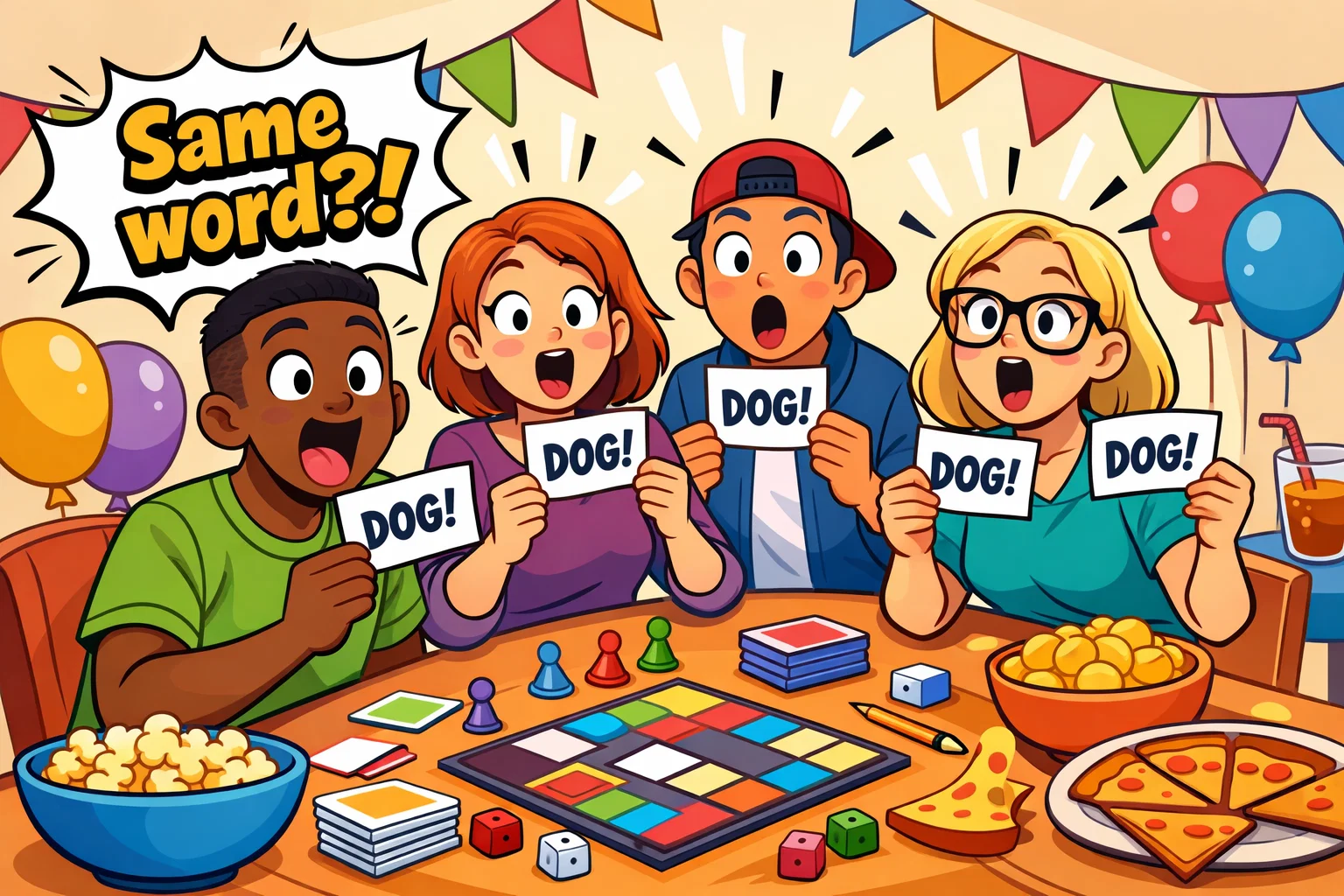
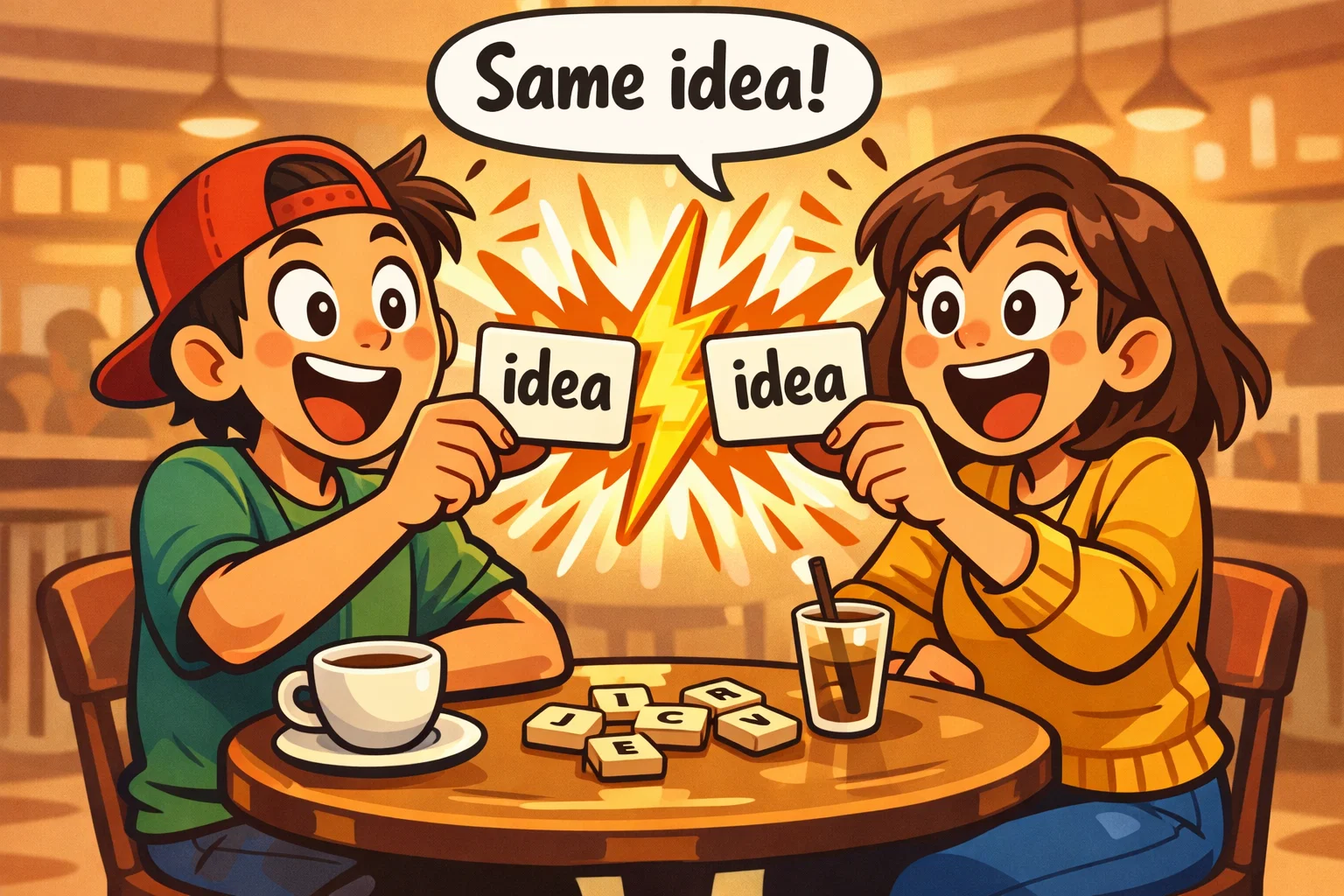
If you’ve ever sat across from a friend, counted to three, and shouted a random word only to find you both said “Pizza,” you know the sheer shot of dopamine that comes from being on the same wavelength. This phenomenon lies at the heart of Say The Same Thing, a viral activity that transforms a simple social quirk into a competitive challenge. Whether you are looking for party games to break the ice or a classic word game to challenge your spouse, the “matching answer” mechanic is a staple of modern entertainment.
People often search for alternatives to this specific challenge because they crave that “mind-reading” connection. These word-based games remove complex rules and focus on social alignment, making them ideal when you want high engagement without added stress. From BoardGameGeek favorites to daily word trends like Wordle, the world of linguistic guessing games is vast. In this guide, we will explore the best options that will have your group shouting in unison.
What Is Say The Same Thing Game?
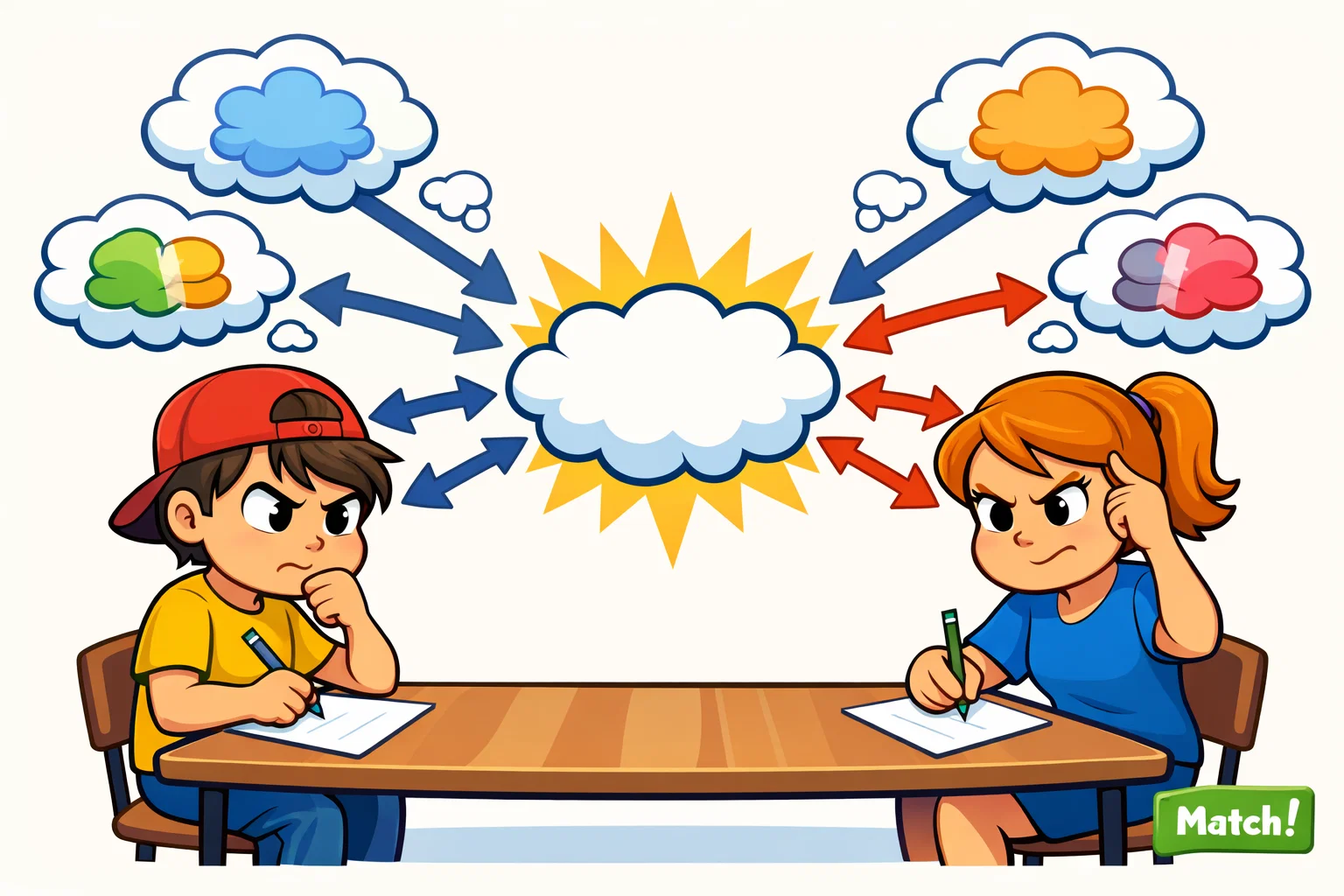
At its core, this activity is a guessing game built on the concept of convergence. Unlike a crossword puzzle where there is one objective truth, this play style relies on the subjective connection between two minds. Two players begin by each saying a first word. From there, the goal is to think of a word that bridges the gap between those two initial choices.
The gameplay loop creates a unique tension. If one player says “Sun” and another player says “Night,” they both try to guess what the middle ground is. On the next count of three, they might both say the word “Moon.” If they match, they win! If they don’t – say, one says “Stars” and the other says “Dusk” – they must then try to bridge those two new terms. It becomes a process of narrowing possibilities until both players arrive at the same connecting word.
How Say The Same Thing Works Step by Step
- The Starting Salvo: Two players (or two teams) simultaneously shout out a random word. There is no clue card or category; it’s pure spontaneity.
- The Synthesis: Both sides take a moment to come up with a word that connects the two previous utterances.
- The Countdown: On the count of three, both participants say the same word – or at least, they try to.
- The Iteration: If the answers don’t match, those two new entries become the starting point for the next round.
- The Win Condition: The round continues until both players guess the correct matching term at the exact same time.
Why Say The Same Thing Works for Parties
The beauty of this word guessing game lies in its simplicity. It requires no board, dice, or additional components. Because these games help lower social barriers, they make excellent icebreakers. Rounds are incredibly fast, often lasting less than a minute, which keeps the energy high. It’s a social activity where the spectators have just as much fun as the players, often shouting out their own “obvious” connections from the sidelines.
Skills Developed in Word Matching Games
While these might seem like simple games to play, they actually sharpen several cognitive and social skills:
- Social Alignment: Learning to think like another player rather than just focusing on your own logic.
- Rapid Association: The ability to quickly find a word that connects two different ideas.
- Predictive Thinking: Anticipating the most “common” choice in a given culture or friend group.
- Divergent Thinking: Coming up with a great word that acts as a bridge between two seemingly unrelated concepts.
Best Games Like Say The Same Thing
If you love this game, you’ll find that the tabletop world is full of options that are perfect for those who enjoy mental association. Here are the top-rated alternatives categorized by their playstyle.
Word Association Party Games
These titles focus on the “vibe” of a term and how it connects to a larger web of meanings.
Codenames
A modern board game classic. Two “Spymasters” give a one-word clue to help their team guess multiple words on a grid. It’s all about finding a clue word that connects three or four different objects without hitting the assassin word.
Just One
A cooperative session where players try to guess a secret word. Everyone else writes down a one-word clue. The twist? If two players write the same clue, those hints are discarded! You have to think of a new word that is helpful but not too obvious.
Wavelength
This is a “telepathy” challenge. One participant knows where a target lies on a spectrum (e.g., “From Hot to Cold”). They give a hint, and the other players have to guess where that pointer lands. It’s all about social alignment and “mental overlap.”
Anomia
This focuses on the pressure of fast talking. When the symbols on two players’ cards match, they must race to say a word that fits the category on the other person’s card. It’s a classic word game that tests how your brain functions under stress.
Matching Answers Party Games
In these formats, the goal isn’t just to be “right” – it’s to be “the same.”
| Title | Core Mechanic | Best For |
| Herd Mentality | Write the majority answer | Large Groups |
| Blank Slate | Match one other person | Families |
| Scattergories | Unique terms in categories | Competitive types |
| Apples to Apples | Match the judge’s vibe | Casual Play |
Scattergories
In this classic word challenge, you’re given a first letter and a list of categories. While the goal is usually to be unique, the pressure of choosing the right word under time constraints feels similar to the “bridge” logic described earlier.
Herd Mentality
The ultimate “think like the crowd” activity. You are asked a question like “What is the best topping for pizza?” You don’t write what you like; you write what you think another player will write. If you’re the odd one out, you get the “Pink Cow” and can’t win until you get back into the “herd.”
Blank Slate
Each round features a word that must be completed (e.g., “Foot______”). You write down a word that matches. You get the most points if you match exactly one other player. It’s a brilliant setup where participants have to balance being obvious with being slightly creative.
Fast Talking Games for Groups
Monikers
This card game is played in three rounds. First, you can say anything. In the second, you can only say one word. Third, you can only do charades. By the final round, the thing that comes to mind is a hilarious inside joke developed by the group.
Taboo
A classic game where you must get your team to guess a target without using a list of forbidden “taboo” terms. It forces you to come up with a word that is an unconventional clue.
Fishbowl
A DIY activity that combines elements of Taboo, Charades, and Password. It’s a team game where the secret word pool stays the same throughout, building a shared language between two players and their teammates.
Word Games Like Say The Same Thing Online
In the era of remote work and digital hangouts, daily word game options have exploded.
Browser Based Word Matching Games
- Wordle: The famous daily puzzle that started a revolution. While it’s a solo task, the social aspect of sharing your grid makes it a shared experience.
- Gartic Phone: While mostly a drawing activity, the “Secret Message” mode acts as a word guessing game that often leads to hilarious misunderstandings.
- Contexto: An online puzzle where you guess a word and the AI tells you how semantically close you are to the target.
Mobile Apps Similar to Say The Same Thing
Many apps replicate the two-player matching mechanic. Look for “Psych!” by Ellen DeGeneres or “Heads Up!” which brings the clue word and guessing game format to your smartphone.
Virtual Party Games for Remote Groups
Using platforms like Jackbox (specifically Quiplash or Dictionarium), you can recreate the game night feel. These games are perfect for Discord or Zoom because they rely on text input rather than physical boards.
Two Player Games Like Say The Same Thing
For couples or best friends, “head-to-head” matches can be a great way to bond.
- Cooperative Guessing: Codenames: Duet is specifically designed for two players to work together to find all their agents using one-word clues.
- Competitive Matching: Dordle or Nerdle (the math version) allow one player to challenge another to see who can guess the correct sequence faster.
Creative Word Driven Party Games
Sometimes you don’t need a box. No-materials word games are perfect travel companions.
- The Association Game: Players take turns saying a term. The next word must be related to the first word. “Apple” -> “Fruit” -> “Basket” -> “Picnic.”
- Trapwords: A more formal version where the opposing team writes down “trap” terms they think you will use as clues.
Psychological Twist Word Games
These sessions lean into how our brains categorize information.
- Mind Reading Style: In activities like The Mind, players must align their internal clocks. In linguistic versions, this manifests as trying to say the same word after only a single prompt.
- Prediction Based: People often rely on familiar mental patterns or “scripts” when thinking about common events. These word-based challenges exploit these scripts, showing us just how similar our cultural backgrounds make our thought patterns.
Large Group Party Games Like Say The Same Thing
When you have 10+ people, you need scalability.
- Icebreaker Association: Have everyone stand in a circle. Toss a ball; whoever catches it must say a word related to the previous one within 2 seconds.
- Team Building: Use one-word association to define a company’s goals – it’s a fun way to see if the team is “aligned” or if everyone has a different thing that comes to mind.
How to Choose the Right Game for Your Group
| Group Type | Recommended Activity | Why? |
| Families | Blank Slate | Simple vocabulary, high engagement. |
| Competitive Adults | Trapwords | High strategy and “trap” mechanics. |
| Quick Fillers | Say The Same Thing | Zero setup, 30-second rounds. |
| Remote Teams | Gartic Phone | Easy browser access, very funny. |
Final Thoughts on Games Like Say The Same Thing
Linguistic puzzles are more than just a way to pass the time; they are a window into how we communicate. Whether you are trying to guess the correct entry in Wordle or laughing because you and your best friend both shouted “Toaster” at the same time, these activities reinforce our social bonds. They remind us that we often associate words in similar ways to those around us.
Next time you have a game night, try a round of Say The Same Thing. You might be surprised at just how much you can read someone else’s mind.
Frequently Asked Questions
How many players are needed?
Most of these work best with two players up to groups of eight. However, “Herd Mentality” can handle 20+, while the original matching concept is perfectly optimized for just two people.
Can it be played without a board?
Absolutely! It is a “no-materials” play style. All you need is your voice and another player. You can use a notepad to track how many rounds it takes to match if you want to be competitive.
Are these activities good for kids?
Yes! Such games can help children develop vocabulary and empathy. Apples to Apples Junior or Blank Slate are excellent for ages 8 and up.
Take a short quiz to find out what your everyday choices say about your parenting style
When your child is curious about something new, what’s your instinct?
Take a short quiz to find out what your everyday choices say about your parenting style
“Can I download this app?” What happens next?
Take a short quiz to find out what your everyday choices say about your parenting style
When it comes to rules at home, which sounds most like you?
Take a short quiz to find out what your everyday choices say about your parenting style
If you could give your child one life skill today, what would you pick?
Take a short quiz to find out what your everyday choices say about your parenting style
Your child gets to choose what to watch. What would your ideal setup look like?
Take a short quiz to find out what your everyday choices say about your parenting style
Pick your parenting superpower ✨