
Raz-Kids vs. Bookflix: A Comprehensive Comparison of Children’s Learning Apps With Digital Library

 Discover a Free Education Video App for Kids
Pastory uses AI to personalize educational video content based on your child’s interests and personality. Safe, engaging, and built for curious young minds. Sign up now to stay updated and enjoy early access with a free trial
Choosing the right digital reading platform can feel like a daunting task. In an era where edtech solutions abound, two names consistently rise to the top: Raz-Kids (from Learning A-Z) and Bookflix (from Scholastic). While both aim to foster literacy skills, they approach the learner’s journey from very different pedagogical angles. One focuses on a structured, leveled reading climb, while the other prioritizes engagement through the marriage of cinema and text.
As we navigate these apps and websites, it’s important to remember that there is no “one size fits all” in child development. This comparison dives deep into each service’s digital library, comparing their comprehension quizzes, reading levels, and overall accessibility to help you decide which tool best fits your child’s or classroom’s unique needs.
Overview of Raz-Kids and Bookflix
Before diving into the technical details, let’s establish what these platforms actually are. Both are heavyweights in the K-12 digital space, but they serve different primary functions in a child’s independent reading journey.
What is Raz-Kids?
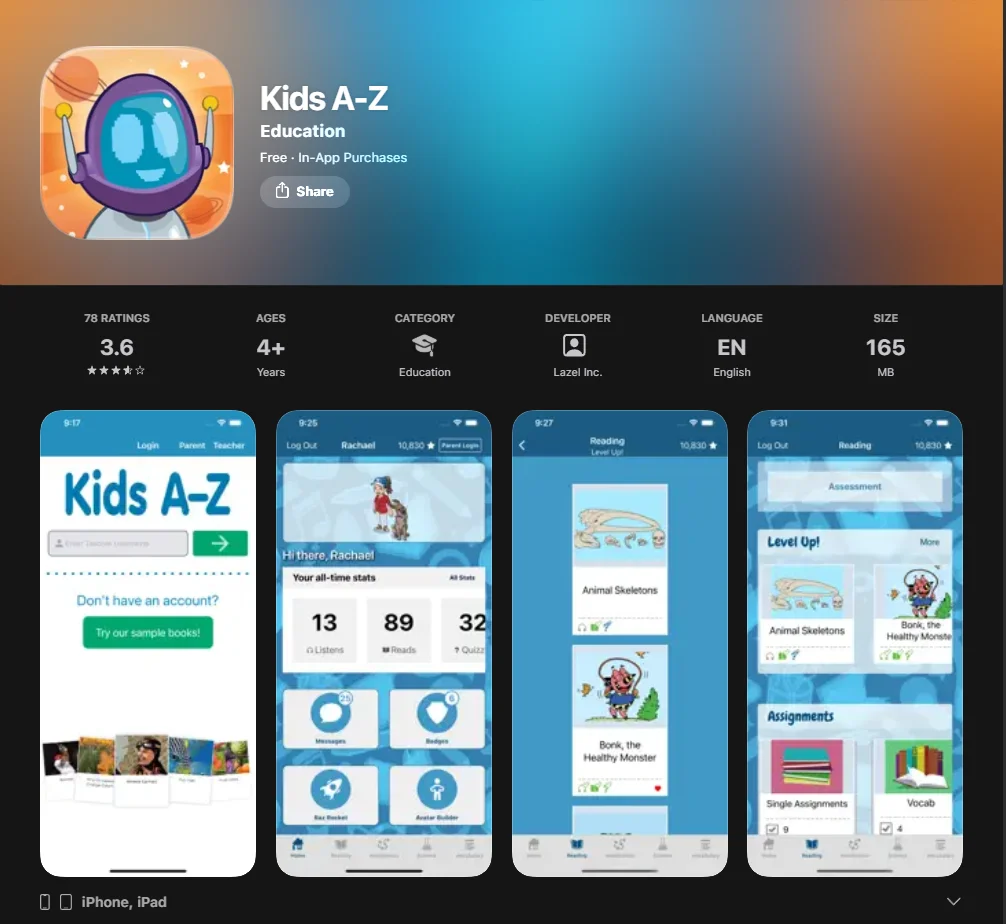
Raz-Kids is a comprehensive reading platform designed to offer a digital library of leveled books across 29 levels of difficulty. It is part of the Learning A-Z suite and is aligned with Common Core and other educational standards. The program helps students progress through reading levels, with quizzes to check comprehension at each stage. The platform is highly student-centered, allowing kids to read their books, listen to narration, and even record themselves reading to practice fluency.
The hallmark of Raz-Kids is its “level-up” system. To move to the next reading level, a learner must typically listen to the book, read it independently, and pass a quiz to demonstrate comprehension. It is a robust tool supporting educators and students that emphasizes measurable reading progress through detailed reports.
What is Bookflix?
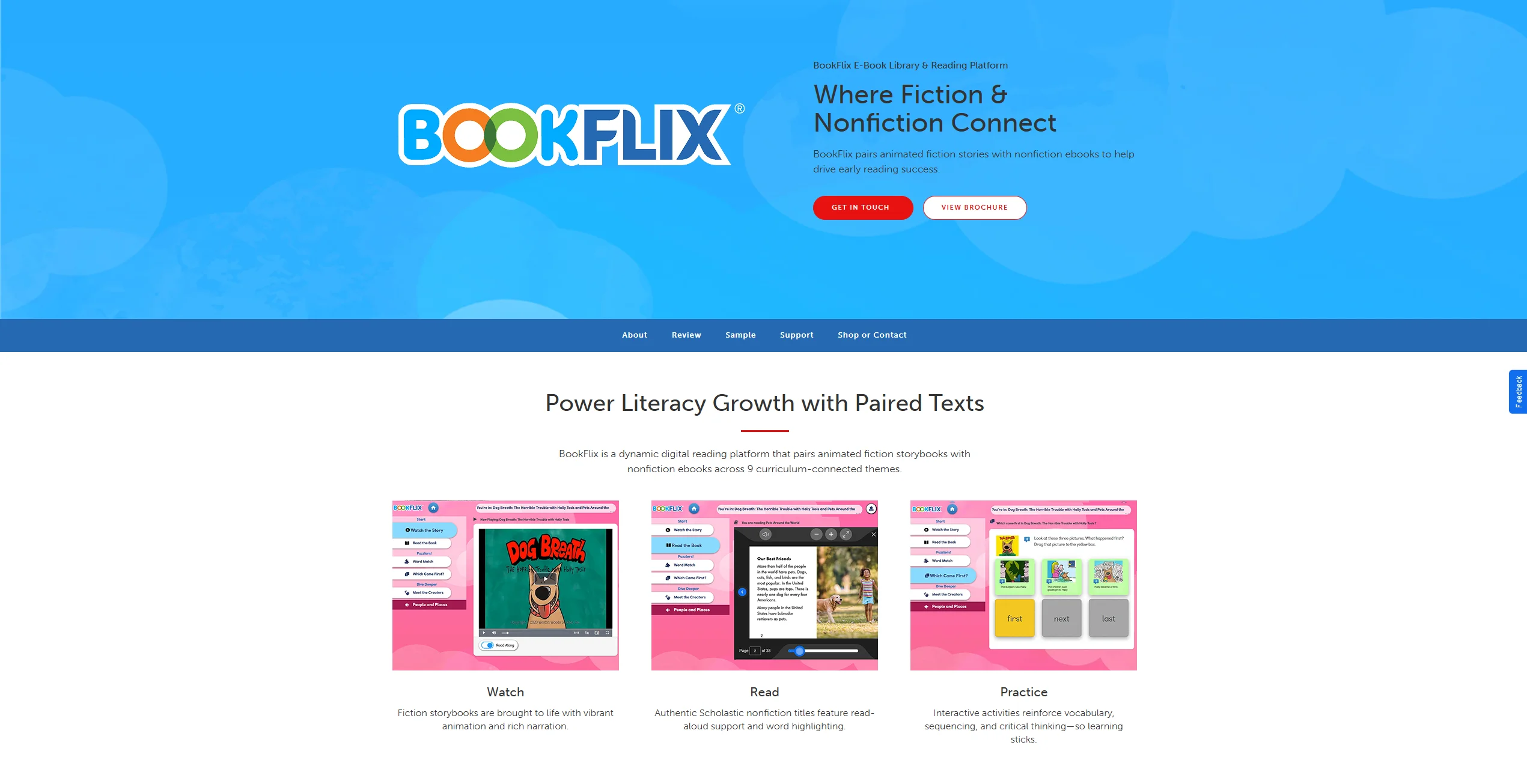
Bookflix, developed by Scholastic, is a unique digital reading resource that pairs animated fictional stories with related nonfiction e-books. This “paired” approach is designed to bridge the gap between “learning to read” and “reading to learn.” It targets a younger demographic, primarily PreK-3, focusing on building curiosity and love stories.
Rather than following the strict leveled reading structure found in Raz-Kids, Bookflix emphasizes thematic exploration. A child might watch an animated version of a classic story and then be prompted to read a non-fiction book about pet care. It is an instructional powerhouse making heavy use of narration and high-quality visuals to engage reluctant readers and ELLs.
Key Features Comparison
To help you see how these platforms stack up at a glance, we have broken down their core functionalities.
Interactive Learning Features in Raz-Kids
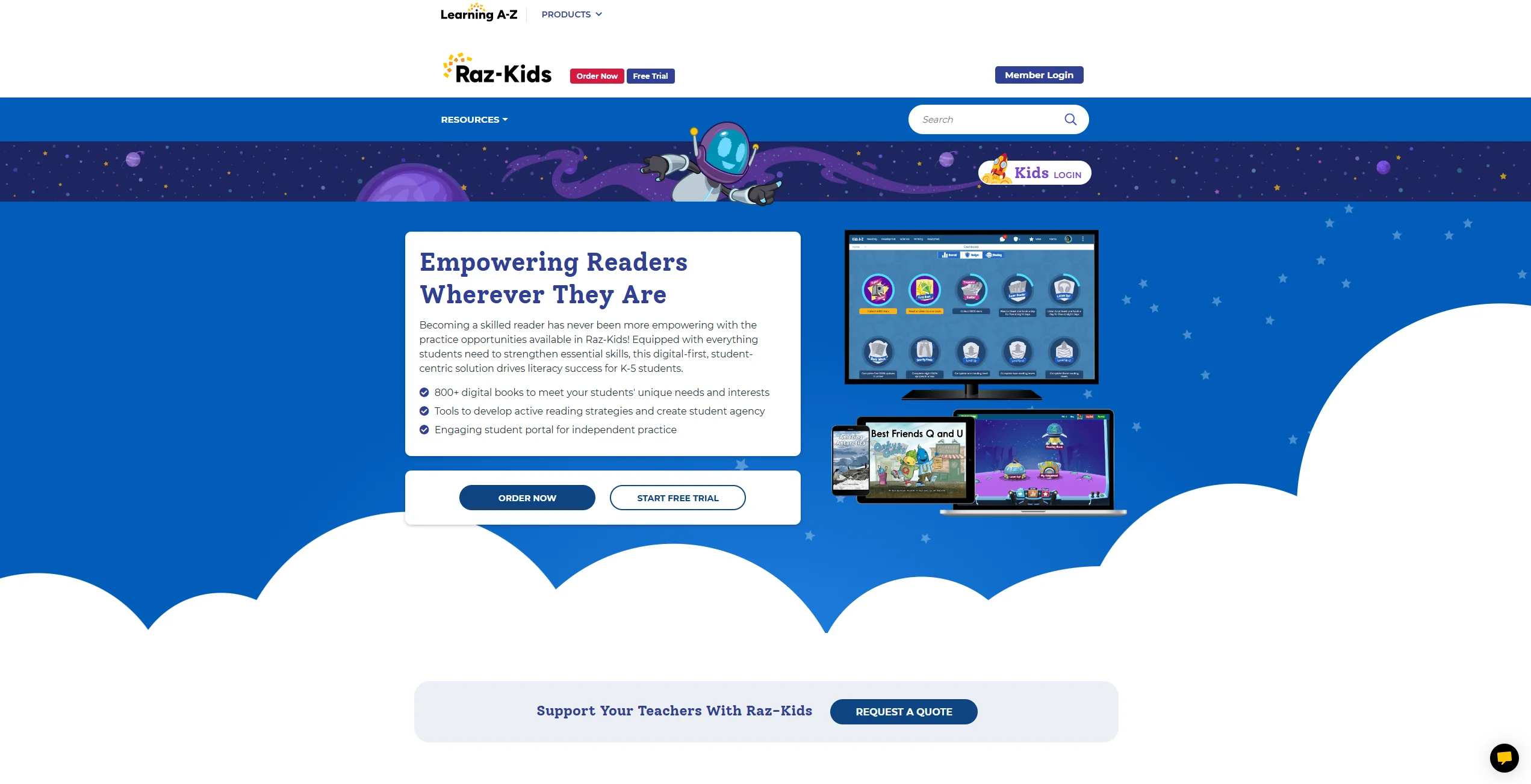
Raz-Kids is built on differentiation. It allows a teacher’s or parent’s classroom to be split into individual student profiles, where each child is assigned a specific reading level based on their reading ability.
- Raz‑Kids includes eQuizzes that students complete after reading to assess comprehension, including extended responses in some cases.
- Raz‑Kids allows students to listen to texts and record themselves reading aloud, which helps educators assess fluency and pronunciation.
- Gamification: The “Raz Rocket” and “Star Zone” allow students to spend earned stars on customizing a virtual room, which helps get kids excited about reading.
Interactive Learning Features in Bookflix
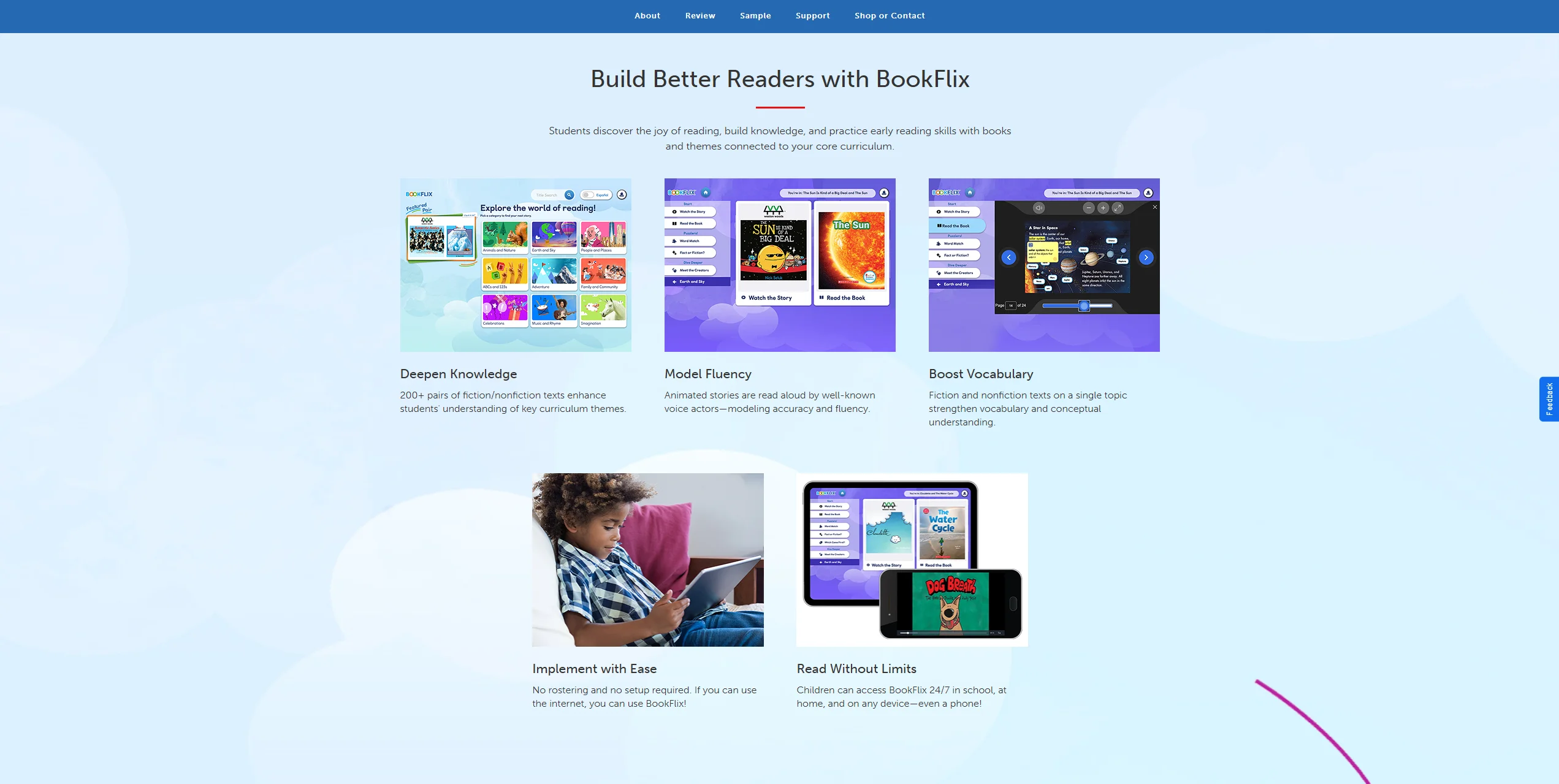
Bookflix is more about the “experience” of a story. Its features are designed to be intuitive even to young children who may not yet be reading independently.
- Watch the Story: High-quality animations of beloved children’s books.
- Read the Book: A digital flipbook with narration that includes word-by-word highlighting to support phonemic awareness.
- Puzzlers: Bookflix uses interactive games like “Word Match” and “Fact or Fiction” to engage students in literacy learning. These games are designed to be fun and non-pressured, reinforcing concepts from the stories in a playful way.
Accessibility and Platform Availability
| Feature | Raz-Kids | Bookflix |
| Primary Device | Web, iOS, Android, Kindle Fire | Web, Tablets (Mobile optimized) |
| Offline Access | Some content may be available offline depending on district or subscription settings | Generally requires active internet |
| Login Type | Student-specific login with icons | Often through school/library portal |
| Languages | English, Spanish, etc. | English and Spanish |
Age Appropriateness for Different Learning Stages
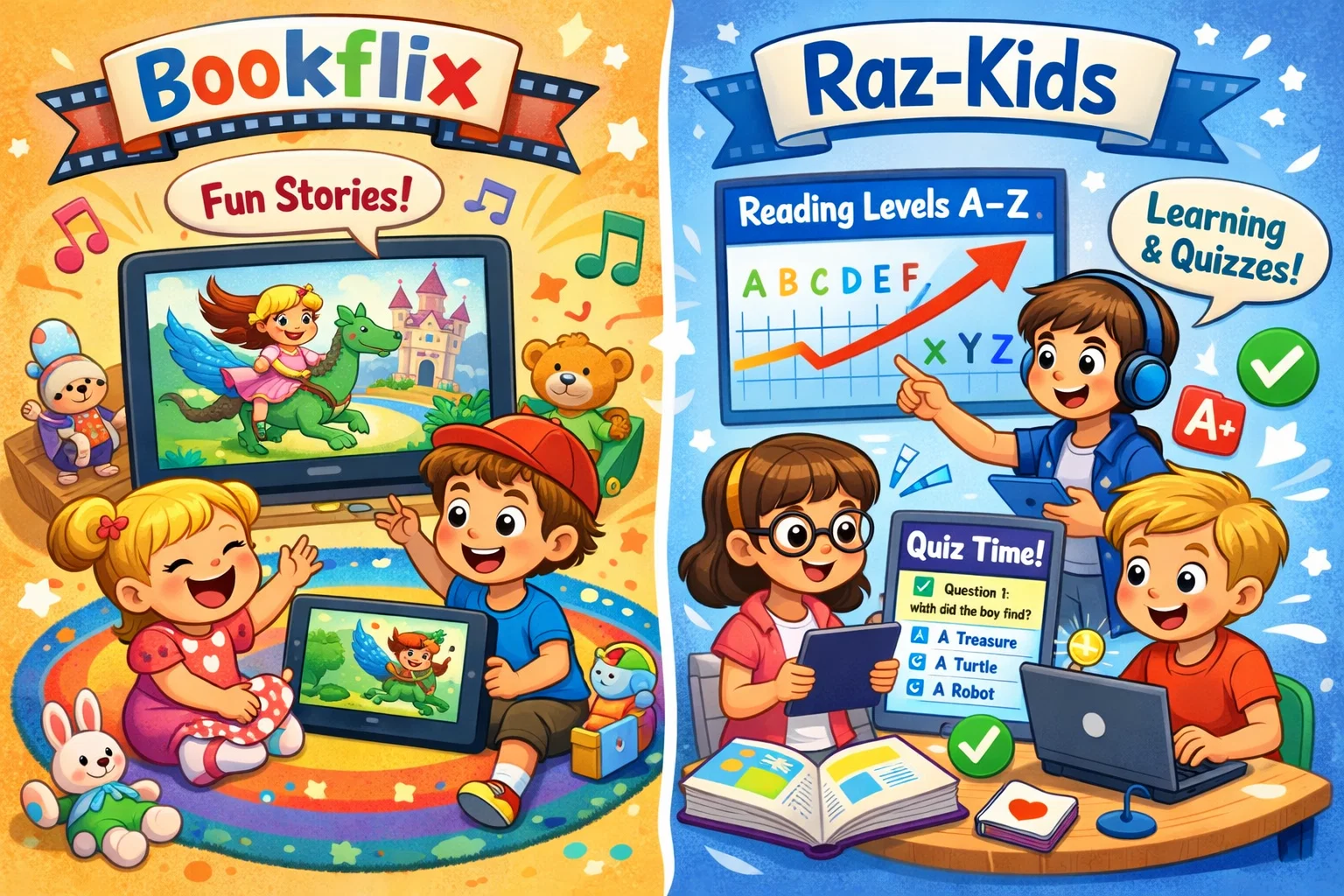
Best Age Group for Raz-Kids
Raz-Kids is most effective for K-5 students. Because the digital library spans 29 levels—from simple picture-based texts to complex non-fiction—it grows with the child. It is particularly strong independent reading practice in late kindergarten through 3rd grade, where children are transitioning from decoding to comprehension.
Best Age Group for Bookflix
Bookflix shines in the PreK to Grade 3 range. The heavy reliance on animated storybooks and read-aloud features makes it perfect early childhood environments. It helps younger children develop phonological awareness and background knowledge before they are ready for the more rigorous quizzes offered by Raz-Kids.
Pricing and Subscription Plans Comparison
Pricing Model for Raz-Kids
Raz-Kids is primarily sold as a classroom license. An individual educator’s subscription for up to 36 students typically costs around $130–$170 USD per year, depending on whether it is bundled with Reading A-Z (which provides printable versions of the books).
Note: They often offer a free trial (usually 14–30 days) to allow teachers and parents to explore specific books and student progress tools.
Pricing Model for Bookflix
Bookflix is available through school and library subscriptions, with many public libraries offering free access to patrons. The cost for schools or districts varies, and pricing for individual home access depends on local library partnerships. If purchasing a school building license, the cost is significantly higher than Raz-Kids, often requiring a direct quote from a Scholastic representative.
Value for Money
- Raz-Kids: High value families and teachers looking for a reading program that tracks every minute of reading progress and provides detailed reports.
- Bookflix: High value early literacy and engagement, especially if accessed through a library. It is less of a “tracking” tool and more of an “enrichment” tool.
Pros and Cons of Raz-Kids and Bookflix
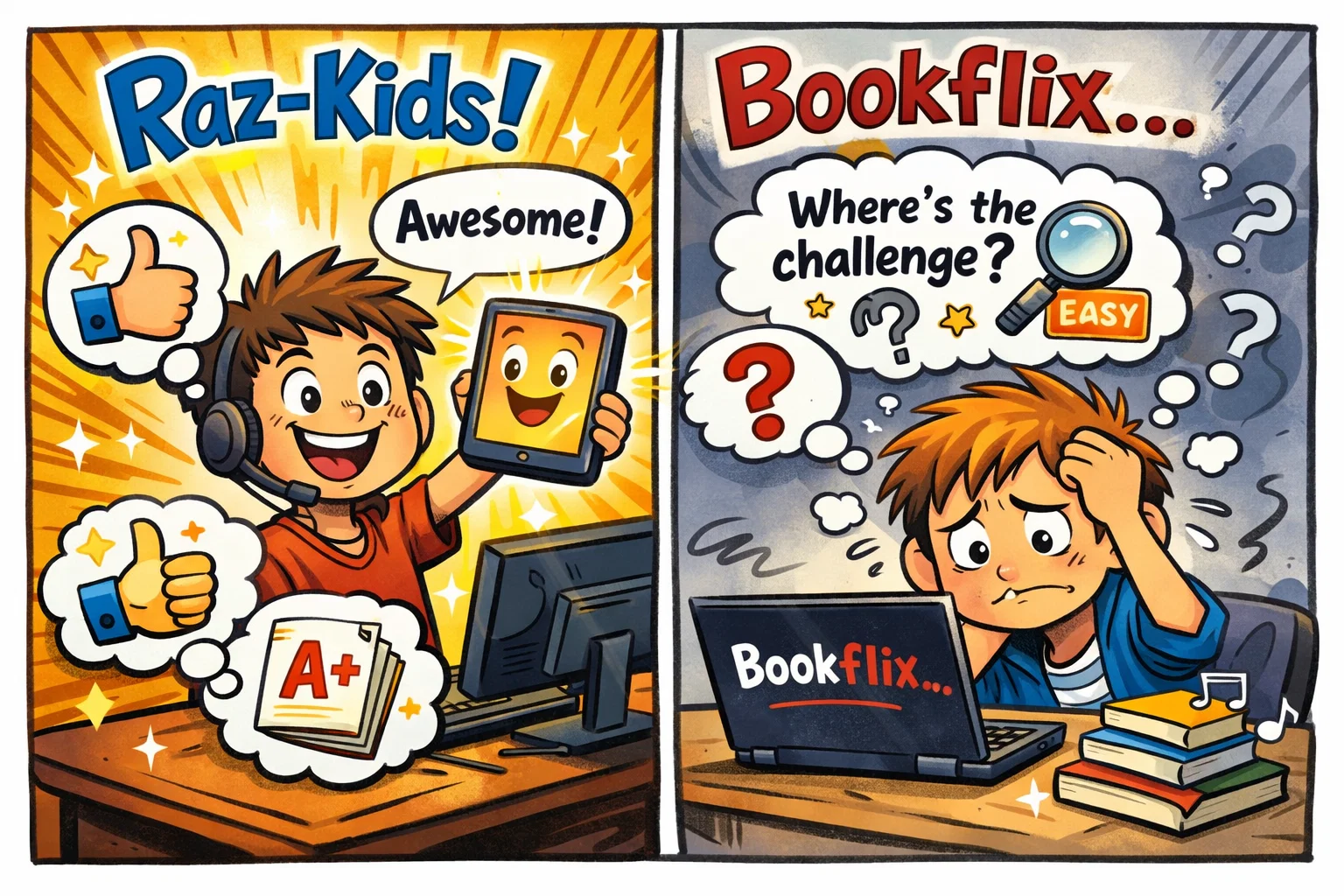
Advantages of Using Raz-Kids
- Raz‑Kids offers more than 800 interactive eBooks organized into around 29 reading levels that help guide students from simple to progressively complex texts.
- Accountability: Teachers can assign specific books and see exactly how a student performed on a quiz.
- Fluency Tracking: The recording tool is a research-backed way to improve oral reading.
Disadvantages of Using Raz-Kids
- Visual Style: The digital books are often functional rather than artistic; some kids find them “dry” compared to commercial picture books.
- Small Library at High Levels: Some parents feel the library is smaller or less engaging once students hit the highest reading level.
Advantages of Using Bookflix
- Engagement: The animation and professional narration are top-tier.
- Fiction/Non-fiction Pairing: Excellent building inference and critical thinking.
- Ease of Use: Very little “training” is needed to start reading a book.
Disadvantages of Using Bookflix
- Limited Assessment: Does not offer the same depth of comprehension data as Raz-Kids.
- Smaller Selection: Fewer “units” than the hundreds of books in the Raz-Kids classroom portal.
Educational Approach and Pedagogy
Raz-Kids Pedagogy
The pedagogical heart of Raz-Kids is the Science of Reading. It focuses on differentiation—ensuring every learner is met at their current reading ability. By using comprehension questions that align with Bloom’s Taxonomy, it pushes students to move beyond surface-level reading to deep instructional understanding.
Bookflix Pedagogy
Bookflix utilizes a “balanced literacy” approach with a heavy emphasis on background knowledge. Research suggests that children understand what they read better when they have context. By pairing a fictional story with a non-fiction book, Bookflix builds the vocabulary and schema necessary for future literacy skills.
Final Verdict: Which App Is Best for Your Child
Best Choice for Early Literacy Development
If you have a toddler, preschooler, or a child just beginning to learn to read, Bookflix is likely the winner. Its focus on the joy of storytelling and visual cues makes the transition into digital reading feel like a treat rather than a chore.
Best Choice for Building Independent Reading Skills
For an elementary school child who needs to improve their reading level, Raz-Kids is the superior choice. The ability to assign and assess ensures that the child is constantly challenged, and the progress reports provide a clear roadmap to the next level.
FAQs
Are Raz-Kids and Bookflix Suitable for Different Ages?
Yes. Raz-Kids is a broad-spectrum tool for K-5, whereas Bookflix is a specialized tool for PreK-3. Raz-Kids is better for building technical reading stamina, while Bookflix excels in early engagement and vocabulary development.
Can Both Apps Be Used for Homeschooling?
Absolutely. Raz-Kids offers “Home” versions of their subscriptions that allow parents to act as the educator. Bookflix is often accessible for free through local library websites, making it a staple for homeschoolers seeking high-quality media.
Do Both Apps Offer Free Trials or Discounts for Schools?
Both platforms offer a free trial. Raz-Kids is very transparent with their 14-day trials on the Learning A-Z website. Bookflix trials are usually coordinated through school districts or library systems, but they are available upon request from Scholastic.
Which App Is Better for Long-Term Learning?
Raz-Kids offers more long-term value because its 29 levels of difficulty can support a child during six years of schooling (K-5). Bookflix is a wonderful “starter” that children may eventually outgrow as they seek more complex independent reading material.

Take a short quiz to find out what your everyday choices say about your parenting style
When your child is curious about something new, what’s your instinct?
Take a short quiz to find out what your everyday choices say about your parenting style
“Can I download this app?” What happens next?
Take a short quiz to find out what your everyday choices say about your parenting style
When it comes to rules at home, which sounds most like you?
Take a short quiz to find out what your everyday choices say about your parenting style
If you could give your child one life skill today, what would you pick?
Take a short quiz to find out what your everyday choices say about your parenting style
Your child gets to choose what to watch. What would your ideal setup look like?
Take a short quiz to find out what your everyday choices say about your parenting style
Pick your parenting superpower ✨



