Straw Roller Coaster Challenge for Kids

 Discover a Free Education Video App for Kids
Pastory uses AI to personalize educational video content based on your child’s interests and personality. Safe, engaging, and built for curious young minds. Sign up now to stay updated and enjoy early access with a free trial
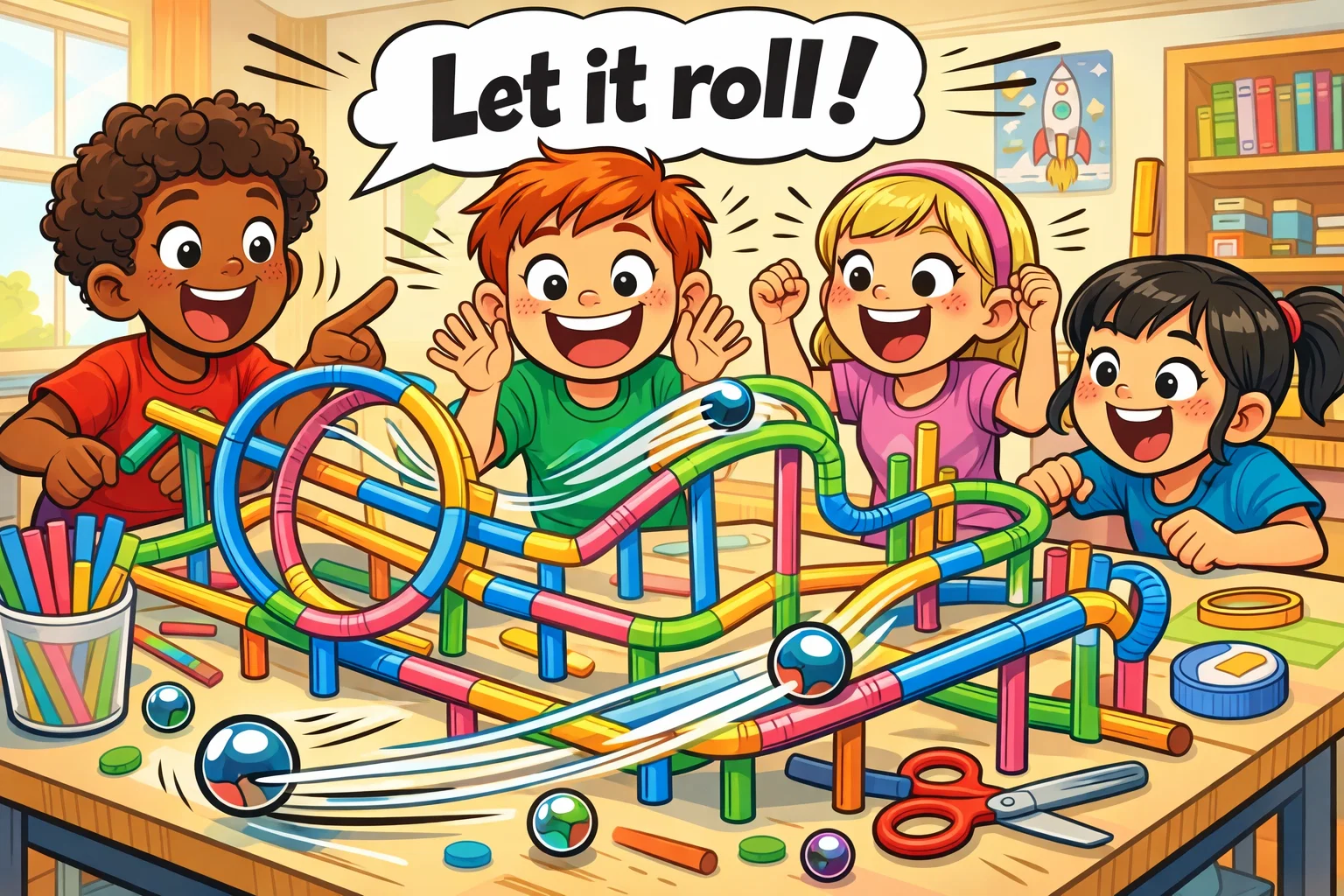
Building a straw roller coaster is one of the most engaging and accessible ways to introduce children to the world of engineering and physics. This straw roller coaster STEM challenge invites kids to transform ordinary household items into a high-speed, gravity-defying track for a marble or ping pong ball. By combining creativity, structural engineering, and hands-on experimentation, children aren’t just playing – they are stepping into the role of a junior engineer.
This activity has gained immense popularity in classrooms and homes alike because it bridges the gap between abstract scientific theories and physical reality. Whether you are using drinking straws or paper straws, the goal remains the same: to construct a sturdy path that can keep the ball moving from the starting point to the finish line. It is a brilliant example of how inexpensive materials can foster deep learning and hours of frugal fun for boys and girls.
Straw Roller Coaster Challenge Overview
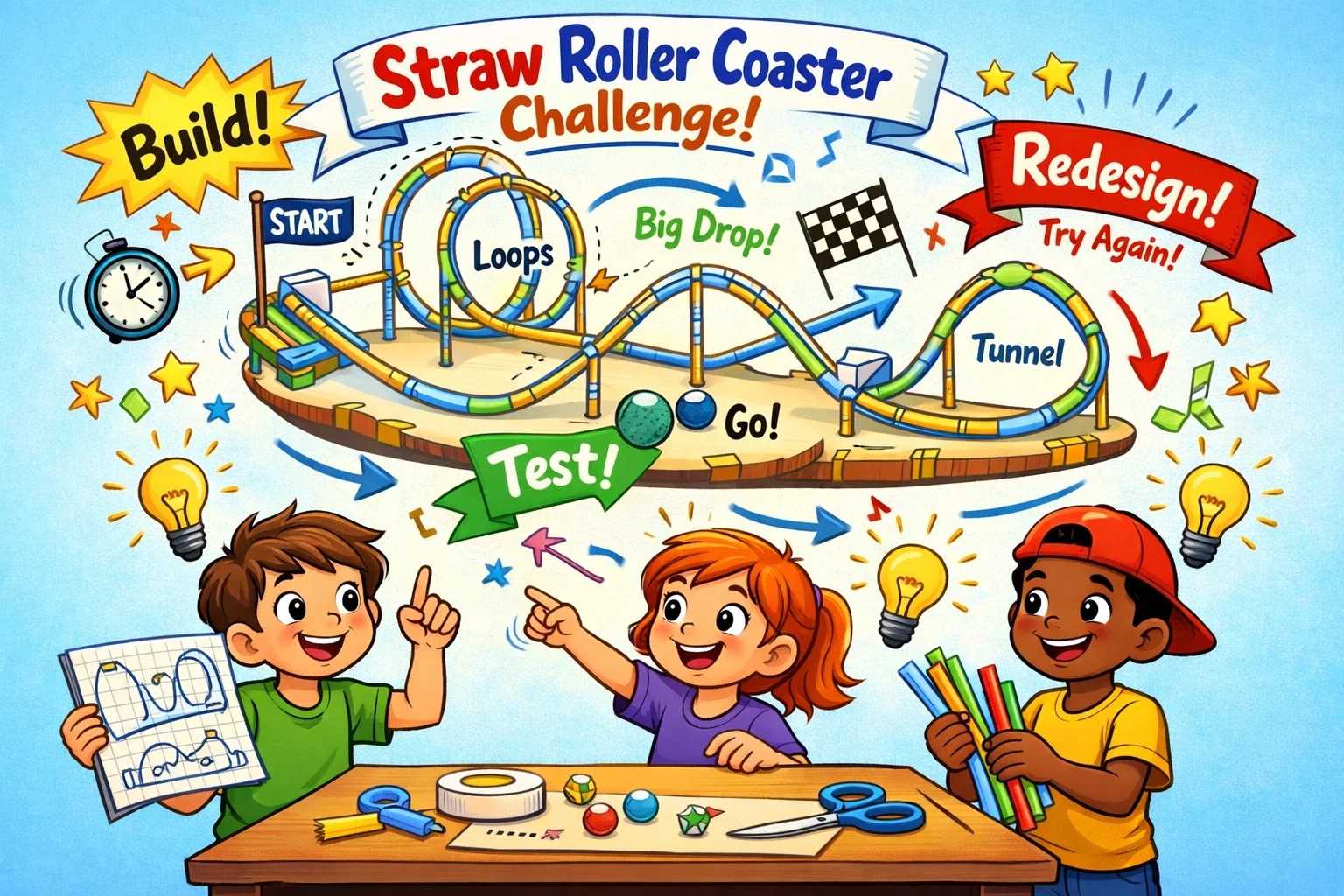
The core of the straw roller coaster challenge is simple: design and build a functional roller coaster track using straws as the primary material. Parents and educators love this project because it is “a ‘low floor, high ceiling’ activity” meaning it is easy to start but offers endless opportunities for complex refinement and creativity.
The expected outcome is a freestanding or wall-mounted structure where an object – usually a marble – can travel through twists and turns without falling off. For the child, the reward is the thrill of the “big drop.” For the adult, the reward is seeing the child adjust and rebuild after a failure, which is the cornerstone of the engineering mindset.
Straw Roller Coaster Challenge Definition
At its heart, this stem challenge is a construction project where participants use two or more straws placed in parallel to form a track. These tracks are supported by vertical “legs” and secured to a cardboard base or box. The challenge is to use gravity to move the ball through the course, navigating various obstacles designed by the builder.
STEM Focus and Learning Goals
This project hits all the marks of a high-quality STEM (Science, Technology, Engineering, and Math) activity.
- Engineering: Using the design-test-improve cycle.
- Physics: Understanding how starting height influences velocity.
- Mathematics: Measuring lengths and estimating angles needed for a successful roller coaster.
Recommended Age Groups
| Age Group | Difficulty Level | Skills Focused On |
| Early Elementary (Ages 5-7) | Beginner | Fine motor skills, basic gravity concepts. |
| Upper Elementary (Ages 8-10) | Intermediate | Potential energy, structural stability, simple turns. |
| Middle School (Ages 11-13) | Advanced | Velocity calculations, loops, and complex twists and turns. |
Materials for Straw Roller Coaster Challenge
You don’t need a specialized kit to build a roller coaster. Most of the items are likely already in your recycling bin, home or classroom.
Basic Materials List
To get started with a basic roller coaster for a ping pong ball or marble, you will need:
- Drinking straws (plastic or paper straws both work, though plastic is often more flexible).
- Masking tape or glue (a low-temperature hot glue gun is excellent for speed, but tape is better for younger kids).
- A cardboard box or a large flat piece of cardboard to serve as the sturdy base.
- Scissors for cutting straws to the correct length.
- A marble or ping pong ball.
- A small bowl or cup to catch the ball at the end of the track.
Optional Materials for Advanced Builds
If you want to take your creation to the next level, consider adding:
- Flexible tubing for smooth loops.
- Rulers for precise measurement of the roller coaster track.
- String and pulleys for a “manual lift” system.
- Foam boards for extra-tall support structures.
Safe Material Choices for Kids
Safety is paramount. For younger children, masking tape is the safest adhesive. If you choose to use a hot glue gun, ensure it is a “low-temp” model and provide constant supervision. Ensure that all material choices are age-appropriate; for instance, marbles should be kept away from toddlers as they are a choking hazard.
Straw Roller Coaster Construction Steps
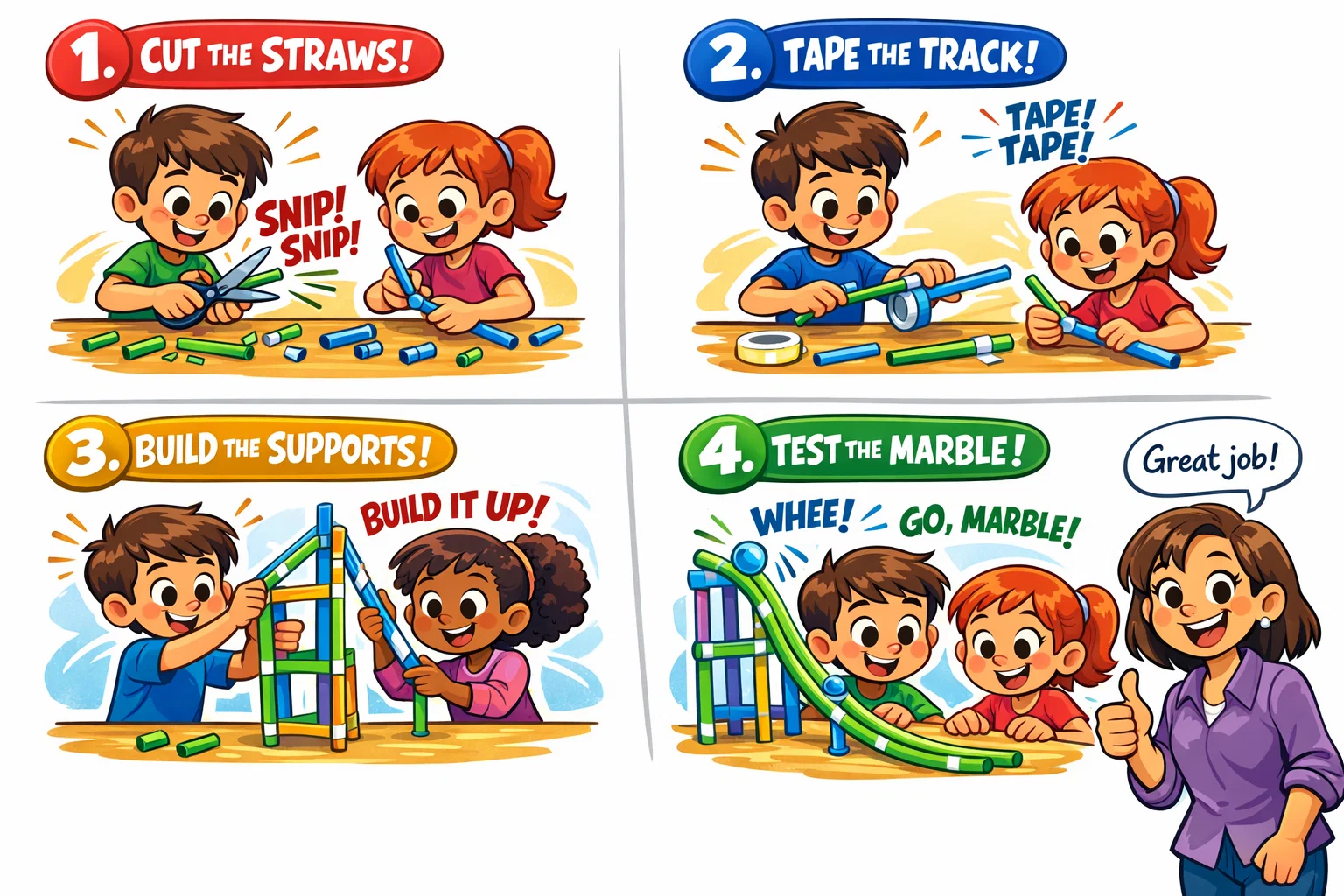
Building a rollercoaster requires patience. It is best to build a straw track in small sections rather than trying to finish the whole thing at once.
Workspace Setup and Base Preparation
Clear a flat, stable surface. Secure your cardboard box to the table using a little bit of tape if necessary. This base is your “ground zero.” Some builders prefer to use a wall as a vertical support, which can help in making a much taller coaster than would otherwise be possible.
Track Layout Planning
Before you reach for the glue, have the child sketch a rough plan. Where is the starting point? How many twists and turns will there be? Planning helps children visualize the speed needed to clear the track.
Building Track Sections with Straws
The most effective way to build a straw roller coaster is to use two straws taped parallel to each other. The gap between them should be slightly smaller than the diameter of your marble.
- Cut the straws to the desired length.
- Tape them together at the ends.
- Ensure the joints are smooth; a “bump” in the road can stop the ball in its tracks.
Support Structures and Stability
To construct a tall coaster, you need “legs.” Create an “H” frame by using two vertical straws with a small horizontal cross-brace. This makes the structure much more sturdy. Secure these legs firmly to the cardboard base using hot glue or heavy-duty tape.
Testing and Refinement Process
Kids learn best through trial and error. After every section you build a straw track for, test it! Drop the marble and see if it makes it to the next support. If it falls off, it’s time to adjust and rebuild. This experimentation is where the real science happens.
Physics Concepts in Straw Roller Coaster Challenge
This straw roller coaster stem challenge is a physical classroom. Hands-on models are widely used in physics education to improve understanding of force and motion.
Gravity and Motion
Gravity is the “engine” of your coaster. It is the constant force pulling the object toward the earth. Without a motorized chain to pull the ball up, the ball relies entirely on the starting height to finish the course.
Potential Energy and Height
When the marble is at the starting point, it has Potential Energy. As it begins to roll, that energy converts into Kinetic Energy (motion). The higher the start, the more energy the ball has to overcome friction.
Friction and Track Smoothness
Friction is the “enemy” of the roller coaster for a ping pong ball. Rough tape, uneven straw joints, or a track that is too wide will slow the ball down. To keep the ball moving, kids must refine their joints to be as smooth as possible.
Speed Control and Acceleration
The angle of the roller coaster track determines the velocity. A steep drop creates rapid acceleration, while a flat section causes the ball to maintain its motion until friction gradually slows it down.
Design Ideas for Straw Roller Coaster Builds
Curves, Turns, and Drops
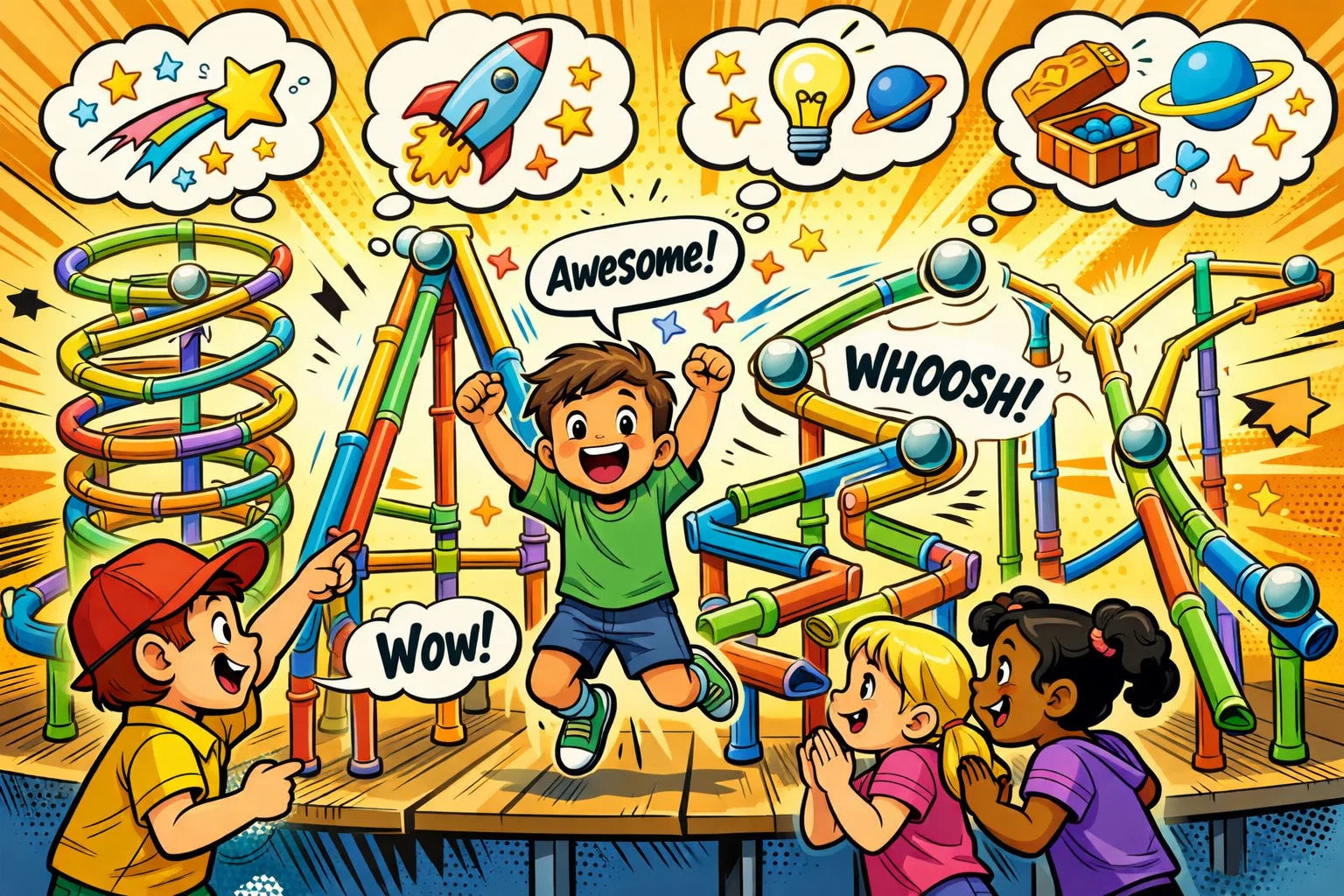
To create a turn, use several short segments of straw rather than one long one. This allows you to “bank” the turn, tilting the track slightly inward to prevent the marble from flying off due to its tendency to continue moving in a straight line.
Spirals and Helix Tracks
For advanced builders, a spiral is a great stem challenge. This requires many small support legs and very precise glue work. It’s a fantastic way to demonstrate how an object can change its state of direction while maintaining speed.
Multiple Paths and Split Tracks
Why have one track when you can have two? You can construct a “Y” split where the ball’s path is determined by its velocity or a small mechanical “switch” made of a straw scrap.
Themed Roller Coaster Designs
Encourage creativity by adding a theme!
- Space Adventure: Use black straws and silver glitter.
- Jungle Trek: Add green paper leaves and brown cardboard box “mountains.”
Common Problems and Solutions
| Problem | Potential Cause | Fix |
| Marble Falling Off | The track is too flat or the turn is too sharp. | Add “guardrails” using straw scraps; bank the turn. |
| Marble Getting Stuck | High friction at a joint or a “dip” in the track. | Smooth the tape; check for hot glue globs. |
| Track Collapsing | Weak support legs. | Add cross-bracing to the “H” frames. |
| Not Enough Speed | The starting height is too low. | Increase the height of the starting point. |
Skills Kids Develop Through Straw Roller Coaster Challenge
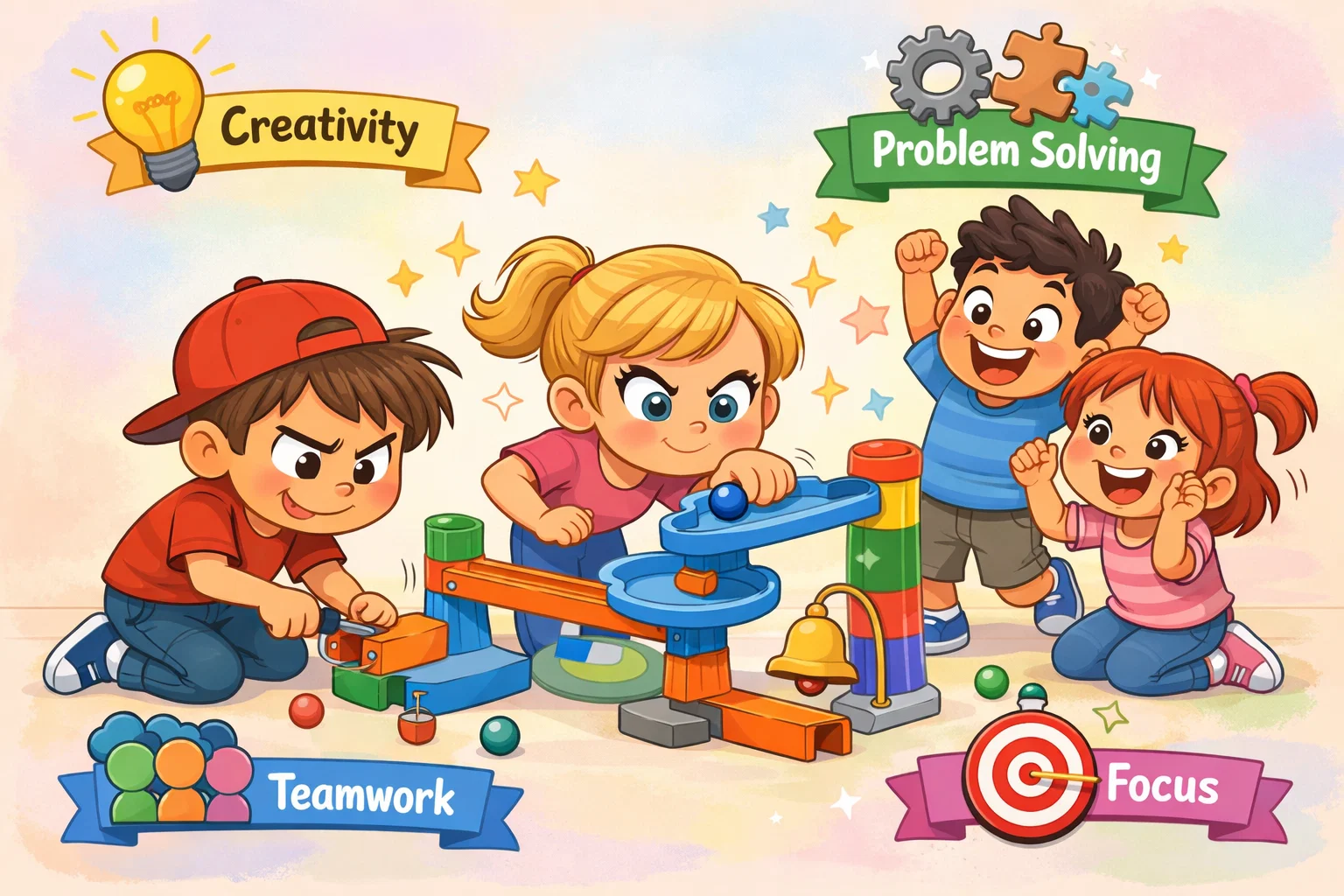
This project is often recommended because it targets executive function skills.
Problem Solving and Critical Thinking
When the marble doesn’t reach the bowl, the child must ask why. This represents a shift in thinking – moving from “it’s broken” to “how do I fix it?”
Creativity and Innovation
Because the challenge is open-ended, there is no single “correct” way to build a roller coaster. This freedom allows for genuine innovation.
Fine Motor Skills
Handling a hot glue gun, using scissors precisely, and placing masking tape on small surfaces are excellent for developing dexterity.
Collaboration and Communication
When done in a group, kids learn to negotiate. “Should we make the drop steeper?” “I think we need more straws here.” These are the foundations of teamwork.
Straw Roller Coaster Challenge for Classroom or Home
Classroom STEM Activity Ideas
In a classroom, you can turn this into a competition. Who can build the longest-running coaster (the one where the marble takes the most time to reach the end)? This forces students to manage velocity and friction creatively.
Home Learning and Family Activity
This is a wonderful screen-free experiment for a rainy afternoon. It’s fun for boys and girls and allows parents to engage in scientific ideas without needing advanced scientific training.
Challenge Variations by Age
- Ages 5-8: Focus on a simple straight ramp with one turn.
- Ages 9-12: Require at least one “special feature” like a tunnel or a jump.
- Ages 13+: Add constraints, such as “only using straws and no tape for the track itself.”
Safety Guidelines for Straw Roller Coaster Challenge
- Scissors: Always cut away from the body. Younger kids will enjoy building more if an adult pre-cuts some “standard” lengths.
- Adhesives: If using a hot glue gun, always place it on a silicone mat or a piece of scrap cardboard to catch drips.
- Small Objects: Ensure all marbles are collected and stored safely at the end of the session to prevent tripping or choking hazards.
Related Straw STEM Activities for Kids
If your child loved the straw roller coaster, try these:
- Straw Marble Maze: Build a 2D maze on a flat cardboard sheet.
- Straw Bridges: Test how much weight a bridge made of two straws can hold.
- Straw Rockets: Use lung power to launch paper-tipped straws!
Learning Takeaways
Why Straw Roller Coaster Challenge Works for Kids
It works because it is hands-on. It turns the laws of physics into a game. As Maria Montessori famously suggested, the hand is the instrument of intelligence. By building a roller coaster, the child is physically grasping the concept of acceleration and energy.
Encouraging Creative Experimentation
Don’t be afraid of the “crash.” Every time the ball falls off the roller coaster track, it is an opportunity to apply scientific thinking. Encourage your little engineer to experiment with different angles and material combinations.
FAQs
Best straws for a roller coaster challenge?
Plastic drinking straws are usually best because they have a slight “give” and can be easily bent. However, paper straws are more sturdy for vertical supports.
Best marble size for straw tracks?
A standard 14mm or 16mm marble is ideal. A ping pong ball is lighter and slower, which might be better for younger kids who want to watch the movement more closely.
Ways to make straw roller coasters taller?
To go high, you must go wide. Ensure your base is large enough to support the weight, or tape your starting point to a wall or a sturdy chair.
Duration of straw roller coaster challenge?
A basic build takes about 45–60 minutes. Advanced creation projects can provide frugal fun for several days as kids refine their tracks.
Straw roller coaster challenge without tape?
You can use small bits of hot glue or even playdough as connectors, though playdough is less sturdy and may cause the object to wobble.
Take a short quiz to find out what your everyday choices say about your parenting style
When your child is curious about something new, what’s your instinct?
Take a short quiz to find out what your everyday choices say about your parenting style
“Can I download this app?” What happens next?
Take a short quiz to find out what your everyday choices say about your parenting style
When it comes to rules at home, which sounds most like you?
Take a short quiz to find out what your everyday choices say about your parenting style
If you could give your child one life skill today, what would you pick?
Take a short quiz to find out what your everyday choices say about your parenting style
Your child gets to choose what to watch. What would your ideal setup look like?
Take a short quiz to find out what your everyday choices say about your parenting style
Pick your parenting superpower ✨