Lab Safety Rules for Kids at Home Experiments

 Discover a Free Education Video App for Kids
Pastory uses AI to personalize educational video content based on your child’s interests and personality. Safe, engaging, and built for curious young minds. Sign up now to stay updated and enjoy early access with a free trial
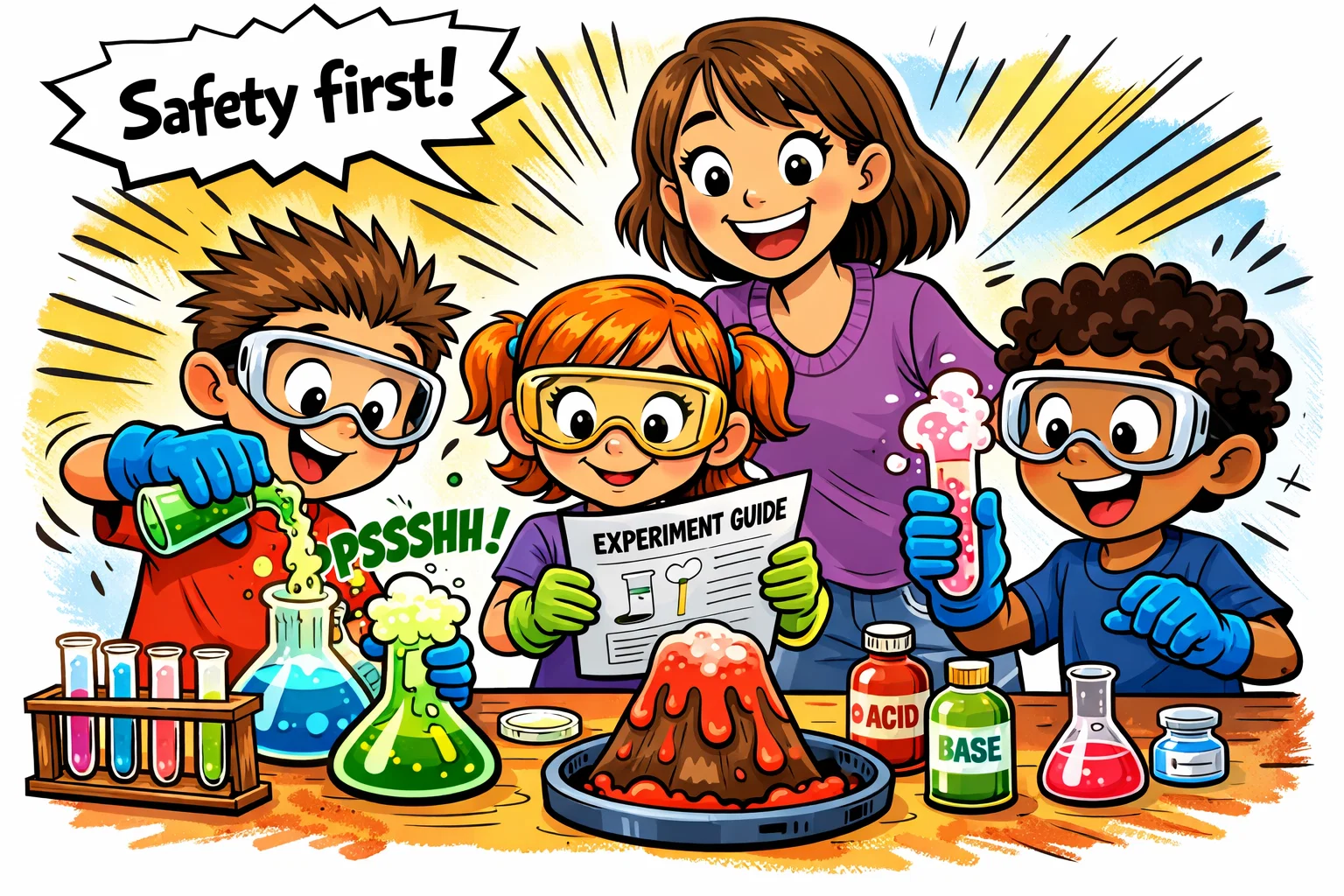
Sparking a child’s curiosity through a science experiment is one of the most rewarding experiences a parent or educator can provide. Whether you are a homeschooler turning your kitchen into a science lab or a parent looking for engaging at-home activities, hands-on learning helps foster a deep love for discovery. However, the transition from a controlled classroom to the kitchen table requires a shift in mindset. Safety isn’t just a checklist; it is the foundation upon which every successful science activity is built.
This guide is designed for parents, teachers, and caregivers who want to facilitate hands-on science without compromising on security. You will learn how to establish simple safety rules, select the right household items, and create a safe home environment where your little scientists can explore the wonders of a chemical reaction or the laws of physics. By prioritizing safety first, you ensure that the only “explosions” in your home are those of joy and wonder.
Importance of Home Science Safety
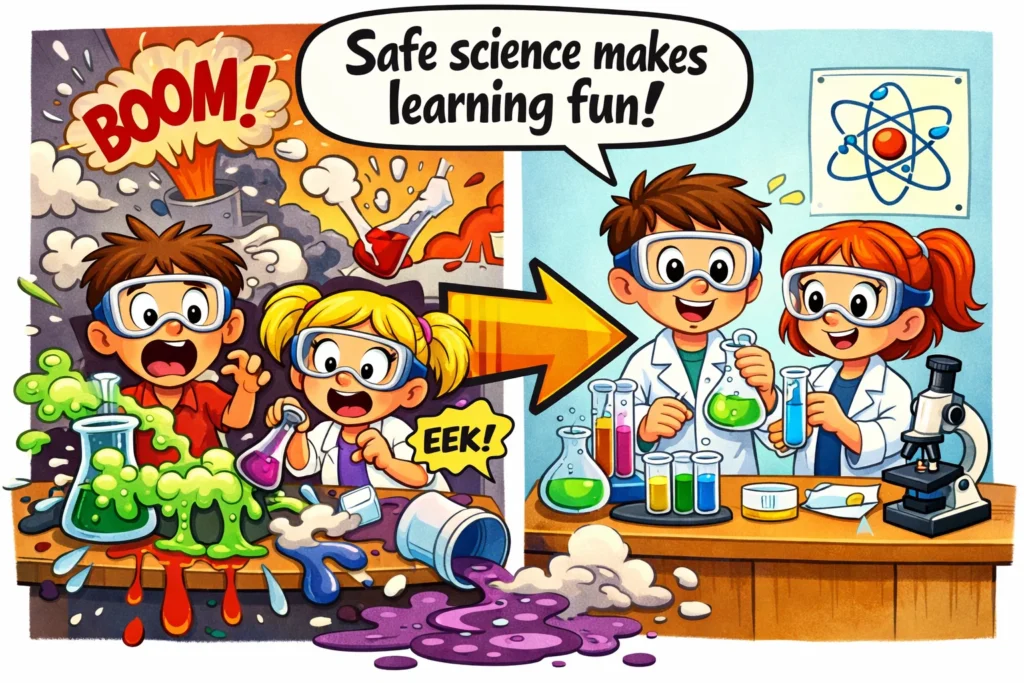
When we think of laboratory safety, we often picture high-tech facilities with specialized ventilation. In a home science setting, the risks are different but equally significant. Unlike a professional science lab, your home is filled with distractions – pets, younger siblings, and food preparation areas. Establishing lab safety rules at home is critical because the boundaries between play and science can easily blur.
Benefits of Safe Home Experiments
Implementing proper safety protocols doesn’t stifle curiosity; it empowers it. When children understand the safety guidelines, they feel more confident navigating the steps of a simple experiment. Safety provides a safe space where kids can fail and try again without the fear of getting hurt. This confidence is a cornerstone of hands-on learning, allowing children to focus on the “why” behind the baking soda and vinegar reaction rather than worrying about a splash in their eyes.
Risks of Uncontrolled Experiments
Without adult supervision, even simple experiments like mixing common household liquids can lead to a safety hazard. Common risks include:
- Spills: Slippery floors or stained furniture from food colouring.
- Ingestion: Children mistake experiment materials for snacks.
- Eye Injuries: A sudden splash from reactions that release gas, such as carbon dioxide.
- Skin Irritation: Sensitivities to certain household items or dish soap.
Role of Safety Rules in Learning Process
Safety rules are more than just a preventative measure; they are a pedagogical tool. By following lab safety rules for students, children develop scientific discipline. It teaches them that the process is just as important as the result. Learning to tie back long hair and wear gloves instills a sense of responsibility and professional habit-taking that will serve them well in future academic settings.
Science Safety Rules for Kids
To keep everyone safe, it is helpful to categorize rules into three phases: before, during, and after the lab activity.
Rules Before Starting Experiments
Preparation is the best defense against accidents.
- Get Permission: Never start a science project without an adult present.
- Read the Instructions: Go through every step of the science fair projects before touching any materials.
- Clear the Area: Remove food, electronics, and clutter from your workspace.
- Gather Supplies: Ensure you have paper towels and a tray to catch any potential spills nearby.
Rules During Experiments
- No Tasting or Smelling: Never eat or drink anything used in the experiment.
- Stay Focused: No running or horseplay in the designated science lab area.
- Work Safely: Follow the measurements exactly. Adding “extra” for a bigger reaction can lead to an uncontrolled splash.
- Always Supervise: A child should never be left alone with a chemical reaction in progress.
Rules After Experiments
- Clean Up Thoroughly: Wipe down all surfaces.
- Dispose of Chemicals: Follow the guide on how to dispose of chemicals safely (most home materials can go down the sink with plenty of water, but always check).
- Wash Hands: This is the most important rule to prevent chemical exposure or irritation.
Actions When Something Goes Wrong
If a spill occurs, stay calm. Stop the experiment immediately and alert an adult. If a substance gets in the eyes, rinse with water for at least 15 minutes. Make sure your child knows where the first-aid kit is located.
Personal Protective Equipment (PPE) for Kids
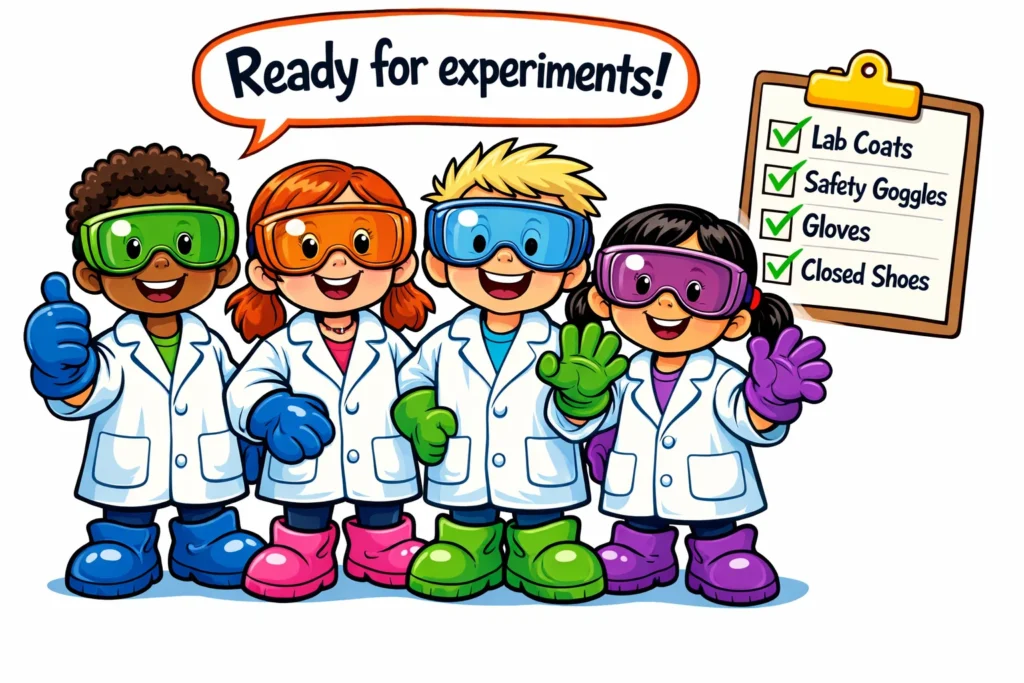
In a professional setting, we use PPE to mitigate risk. You can replicate this at home using affordable, child-friendly versions of laboratory equipment.
| Item | Purpose | Home Alternative |
| Safety Goggles | Protect eyes from splashes/gas | Safety glasses or snug swim goggles |
| Apron | Protect skin and clothing | An old oversized t-shirt or plastic bib |
| Gloves | Prevent skin irritation | Disposable nitrile or rubber kitchen gloves |
Eye Protection at Home
Goggles are non-negotiable for experiments involving liquids or gas. Even a “safe” reaction like baking soda and vinegar can produce a splash that stings the eyes. Ensure the safety goggles fit snugly and don’t fog up.
Hand Protection and Gloves
While most at-home activities use common household items, some kids have sensitive skin. Wear gloves when handling food colouring to prevent staining, or when using dish soap in high concentrations.
Clothing and Hair Safety
Long hair is a significant safety hazard. Always tie back long hair with a hair tie to prevent it from dipping into liquids or catching on equipment. Encourage kids to wear closed-toe shoes and avoid loose sleeves that could knock over a beaker or jar.
Safe Home Science Lab Setup
Creating a dedicated space helps children understand the purpose of the activity and stay in a “scientific” mindset.
Choosing Safe Experiment Location
A well-ventilated area like a kitchen with a window or a garage is ideal. Avoid carpeted areas where a spill could become permanent. If working outdoors, ensure the area is shielded from wind, which might blow lightweight materials away.
Organizing Materials and Tools
Use clear bins to store your science activity supplies. Label everything clearly. Keeping experiment supplies separate from “pantry” supplies prevents accidental ingestion.
Household Items Used in Experiments
Many safe experiments use household items. However, “household” doesn’t always mean “harmless.”
- Safe for kids: Vinegar, salt, sugar, cornstarch.
- Adult-only: Bleach, ammonia, strong adhesives, or sharp objects.
Approved Materials for Kids Experiments
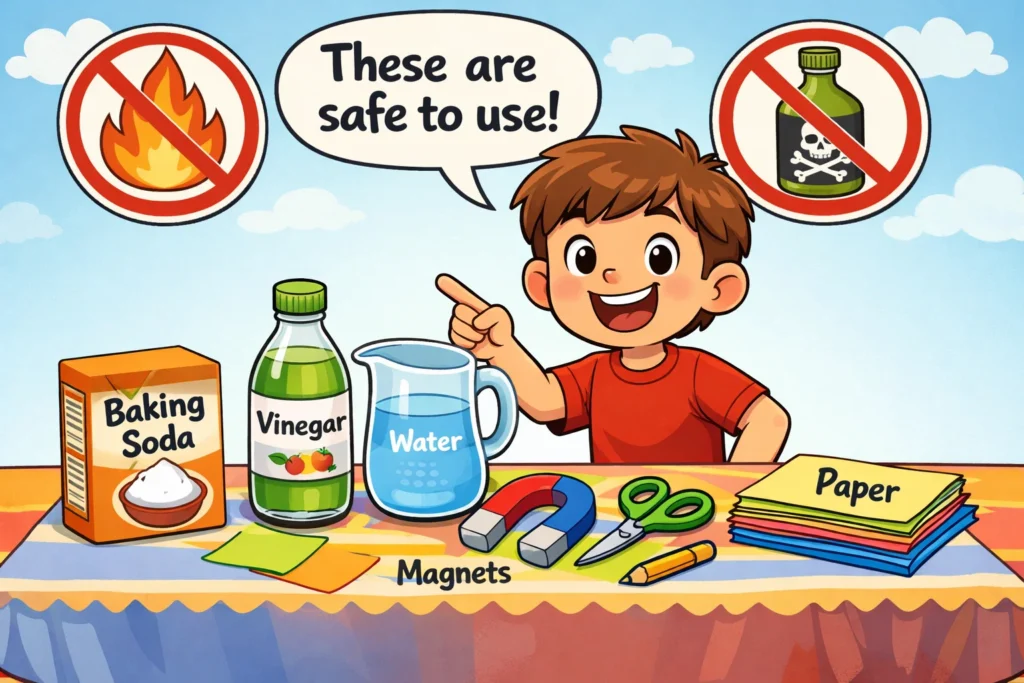
As a general safety guideline, the key to safe home science is limiting the “reagents” to non-toxic substances.
Safe Everyday Materials
These are generally safe for hands-on exploration:
- Baking soda (Sodium bicarbonate)
- Vegetable oil (for density towers)
- Food colouring (can stain, but non-toxic)
- Yeast (for “elephant toothpaste” variants)
Materials Requiring Adult Control
These items may be used in the laboratory at home but require you to supervise closely:
- Low-voltage batteries
- Sharp objects like scissors or pins
- Hydrogen peroxide (3% concentration)
- Rubbing alcohol
Materials Never Allowed
To keep everyone safe, the following should never be part of simple science at home:
- Strong acids or bases (Drain cleaner)
- Open flames (unless a parent is directly handling them)
- Toxic chemicals or unknown powders
- Mixing bleach with any other cleaner (this creates dangerous gases)
Supervision Role of Parents and Teachers
Your role is similar to that of a lab manager. While the child does the hands-on work, you manage the environment.
Active Adult Supervision
“Active” means being in the room and watching the process, not just being “nearby.” Always supervise your child during the mixing phase of any chemical reaction. Your presence allows you to catch a mistake before it becomes a spill.
Explaining Safety Rules to Kids
Use age-appropriate language. Instead of saying “Corrosive,” you might say, “This can make your skin itchy and red.” Consistency is key – repeat the simple safety rules every time you start.
Encouraging Questions and Communication
A safe lab is a communicative lab. Encourage your child to ask, “What happens if I add this?” before they actually do it. If they feel they can talk to you without getting in trouble for a mistake, they are more likely to report a splash or a broken glass immediately.
Safe Science Experiments for Home
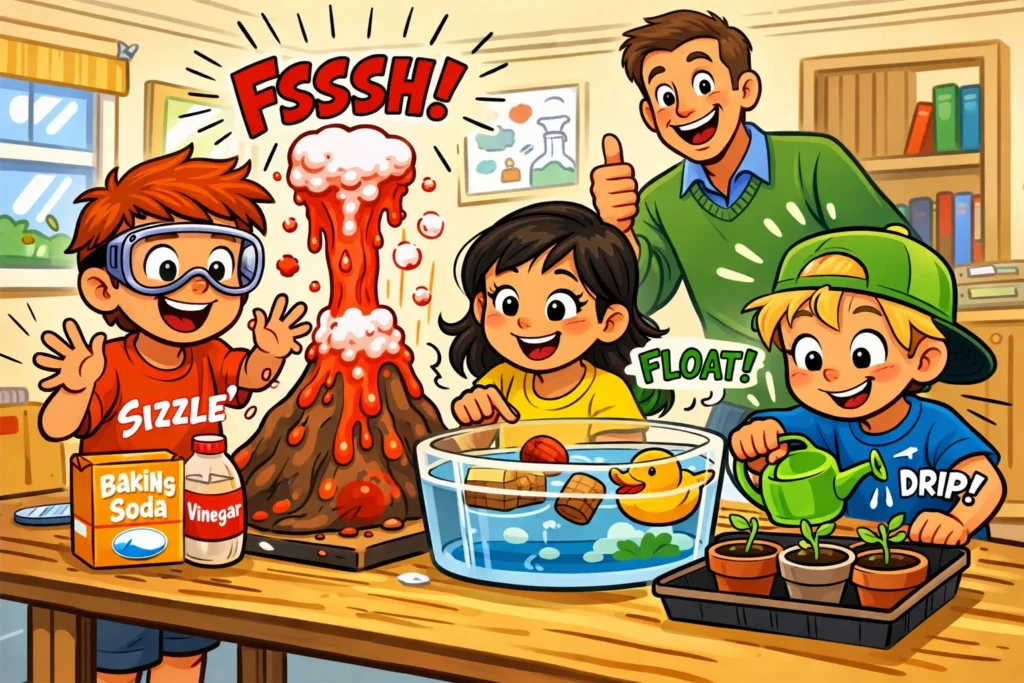
Kitchen Chemistry Experiments
One of the most fun and safe activities is the classic baking soda and vinegar volcano.
Safety Tip: Use a large tray to catch the overflow to make cleanup a breeze!
Physics and Motion Experiments
Static electricity experiments using balloons or building simple experiments with magnets are excellent ways to teach scientific concepts without chemical risks.
Biology and Nature Experiments
Growing seeds in wet paper towels or observing how celery absorbs food colouring are low-risk, high-reward hands-on activities.
Common Home Science Safety Mistakes
- Skipping Adult Supervision: Many parents think “it’s just vinegar” and walk away. But vinegar in the eye is painful and can cause distress.
- Using Wrong Materials: Substituting “clear glue” for “super glue” in a project can lead to skin being bonded together.
- Ignoring Cleanup: Leaving a spill of dish soap on the floor can lead to slips hours later. Clean up thoroughly as soon as you finish.
Conclusion
Mastering lab safety rules for kids at home experiments is the most important step in becoming a family that values science and safety. By treating your kitchen table with the same respect as a professional science lab, you protect your children while teaching them invaluable lessons in discipline and responsibility. Remember, safety always comes first. When you follow the instructions, wear goggles, and supervise closely, you create a world where learning has no limits.
Take a short quiz to find out what your everyday choices say about your parenting style
When your child is curious about something new, what’s your instinct?
Take a short quiz to find out what your everyday choices say about your parenting style
“Can I download this app?” What happens next?
Take a short quiz to find out what your everyday choices say about your parenting style
When it comes to rules at home, which sounds most like you?
Take a short quiz to find out what your everyday choices say about your parenting style
If you could give your child one life skill today, what would you pick?
Take a short quiz to find out what your everyday choices say about your parenting style
Your child gets to choose what to watch. What would your ideal setup look like?
Take a short quiz to find out what your everyday choices say about your parenting style
Pick your parenting superpower ✨