
Toddler Jealousy After New Baby Arrives: Practical Solutions

 Discover a Free Education Video App for Kids
Pastory uses AI to personalize educational video content based on your child’s interests and personality. Safe, engaging, and built for curious young minds. Sign up now to stay updated and enjoy early access with a free trial

The arrival of a new child is a landmark event for any family, but for a toddler or preschooler, it can feel like their entire world has been upended. While you are likely filled with joy and perhaps a bit of exhaustion, your older child may be navigating a complex mix of big emotions. It is entirely normal for a toddler to adjust with some resistance; after all, they have gone from being the center of your universe to sharing your lap, your time, and your attention with a new sibling who seems to do little more than cry and eat.
The good news is that sibling jealousy is not a sign of a “bad” child or a permanent rift in the making. It is a developmental hurdle. By understanding the root of these toddler behaviors and implementing consistent, empathetic strategies, you can help your older child navigate this transition. This guide provides practical, real-life solutions to avoid toddler jealousy where possible and manage it with grace when it inevitably surfaces, ensuring your new family dynamic thrives.
Toddler behavior changes after new baby arrives

When a new sibling arrives, parents often witness a sharp shift in their older child’s temperament. This is a form of communication. Because toddlers and preschoolers often lack the sophisticated vocabulary to say, “I feel insecure and miss our old life,” they use their behavior to signal their distress. You might notice your once-independent child suddenly becoming “clingy” or a usually calm child becoming prone to challenging behavior.
Signs of jealousy in toddlers
Jealousy when a new baby enters the home manifests in various ways. Some children become “velcro toddlers,” refusing to leave a parent’s side, while others may withdraw and become uncharacteristically quiet. Common signs include:
- Attention-seeking: Interrupting when you are caring for the newborn.
- Whining: Using a high-pitched voice to get a reaction.
- Clinginess: Especially during nappy changes or feeding times.
- Disinterest: Purposefully ignoring the new arrival.
Physical reactions and emotional outbursts
Aggressive behavior is one of the most distressing problems with emotional regulation parents witness. A toddler may try to be rough with the infant, or they might direct their frustration toward you. You might see:
- Screaming or intense tantrums when the baby cries.
- Hitting, pushing, or throwing toys when you are busy with the baby.
- Big feelings exploding over seemingly minor issues, like the wrong color cup.
Regression behaviors parents often notice
It is common for a young child to start acting like a baby themselves. This is a subconscious attempt to regain the level of care and attention the newborn is receiving. Parents often notice a temporary backslide in milestones after a new sibling is born:
- Toilet training setbacks (accidents in a previously dry child).
- Requests for a bottle or wanting to nurse.
- “Baby talk” or loss of clear speech.
- Sleep regressions or wanting to sleep in the parents’ bed.
Toddler emotions during family change
The arrival of a new sibling can feel like a significant loss for the older child. To them, it isn’t just a new sibling joining the house; it’s the loss of their exclusive relationship with their primary caregivers.
Loss of attention and routine disruption
Toddlers thrive on predictability. When the new arrival comes home, the established rhythm of the day – park trips, storytime, and unhurried meals – often vanishes. When you are busy with the baby, the older child feels the void of that lost one-on-one time. When one-on-one time and interaction decrease after a new baby arrives, older children often respond with increased jealousy.
Fear of replacement and competition
In the mind of a toddler or preschooler, love is sometimes viewed as a finite resource – a “pie” where every slice given to the baby brother or sister is a slice taken away from them. They see the newborn getting held, kissed, and catered to constantly, leading to a deep-seated fear of being replaced.
Toddler reactions based on age and speech ability
A child’s reaction is heavily influenced by their developmental stage.
| Age Group | Typical Reaction | Strategy |
| 18-24 Months | Primarily physical; regression behaviors and clinginess. | Focus on physical touch and maintaining nap routines. |
| 2-3 Years | Verbal protests, “I don’t like him,” and aggressive behavior. | Validate feelings: “It’s okay to feel sad that I’m holding the baby.” |
| 3-5 Years | Sophisticated attention-seeking; may try to “help” too much. | Give specific tasks like entertaining the baby. |
Preparation before baby arrival
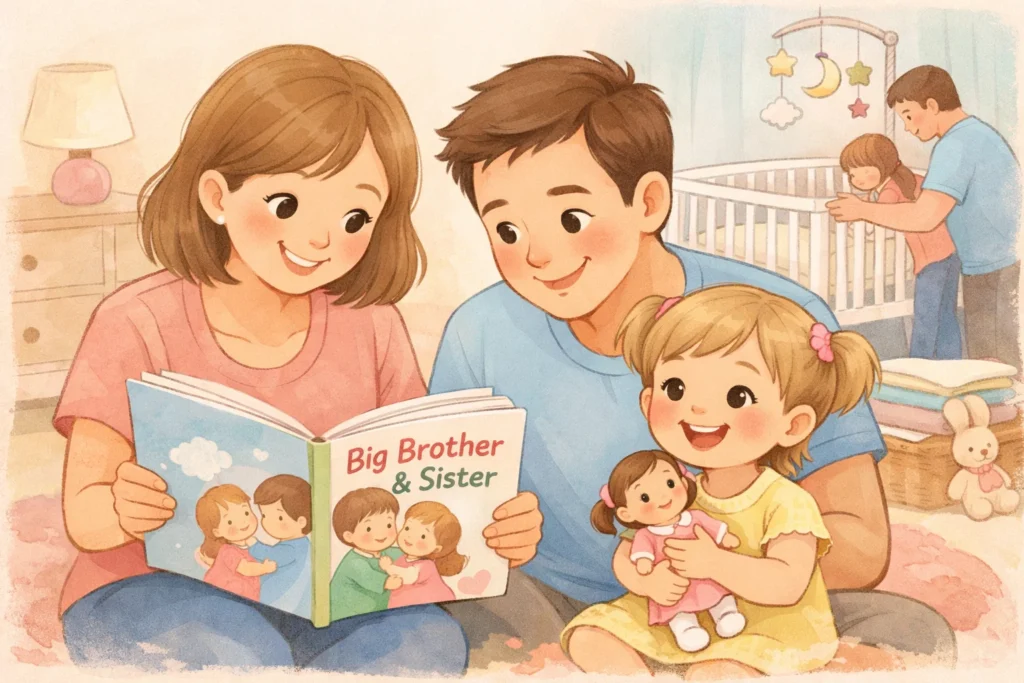
The months before the birth of a sibling are a critical window to lay the groundwork. You want to make your toddler feel like an insider in this big change rather than a bystander.
Talking about the new sibling in practical terms
Avoid abstract concepts. Instead of saying “You’ll have a new best friend,” focus on what life will actually look like. Tell them: “The baby needs to sleep a lot,” or “The baby will cry because that’s how they talk.” This manages expectations so they aren’t disappointed when the new sibling doesn’t immediately play tag.
Reading sibling stories and role-play
Use books about becoming a big brother or big sister to introduce the concept. . Role-play with a doll can be incredibly effective. Let your toddler practice how to hold the baby (with a doll), how to be gentle, and how to “help” with a nappy.
Building independence before birth
If you need to move your child to a “big kid bed” or start toilet training, do it several months before the birth. You want to avoid the older child associating these big changes with the arrival of a new baby. Strengthening their self-care skills now will also help you later when you are taking care of the baby.
First meeting with newborn sibling
The first interaction sets the tone. While it doesn’t dictate the future of their relationship, a calm first meeting can help your toddler adjust more smoothly.
Setting expectations for first meeting
If possible, have the new baby lying in a bassinet or being held by someone other than the mother when the older sibling enters the room. This allows the mother to greet the toddler with open arms first, reaffirming their bond before introducing the new arrival.
Managing first reactions and emotions
Your child might be ecstatic, or they might take one look and ask when the baby is going back to the hospital. Every child is different.
- If they are indifferent: Don’t force it.
- If they are upset: Validate them. “You look a bit worried. I’m still your mummy/daddy, and I love you so much.”
Avoiding comparisons and forced affection
Avoid saying things like, “Why can’t you be quiet like the baby?” or “Give your baby brother a big kiss.” Pressuring a jealous toddler to show love often leads to resentment. Let the affection grow naturally.
Daily solutions to toddler jealousy
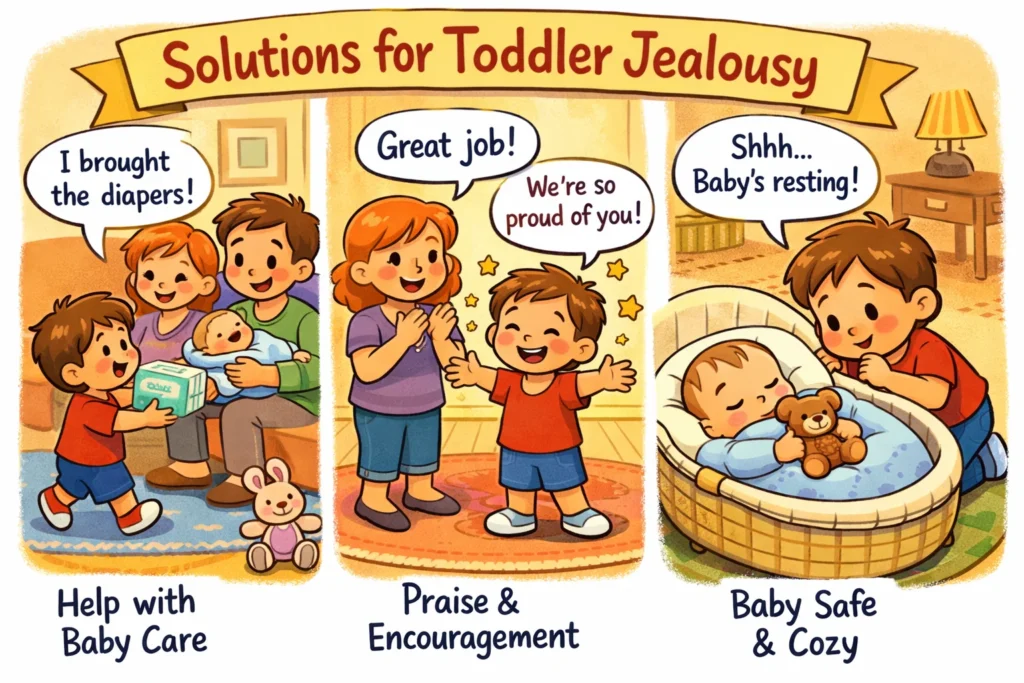
Actionable, daily habits are the most effective way to help minimise this increase in challenging behavior and foster a positive bond.
Involving toddler in new sibling care
Make your toddler feel like your partner. Instead of “Don’t touch the baby,” try “Can you help your toddler’s brother by picking out his socks?”
- Ask your toddler to bring you a clean diaper.
- Give them tasks like entertaining the baby by shaking a rattle or singing a song.
- Let your toddler help “wash” the baby’s feet during bath time.
Creating toddler-only time every day
This is the “magic pill” for sibling jealousy. Aim for at least 15-20 minutes of one-on-one time per day where the baby is not present (or at least not the focus). During this one-on-one, follow your child’s lead. No phones, no baby talk – just you and your big sibling.
Giving toddlers choice and control
Toddlers feel powerless when a new baby comes. Restore their sense of agency by offering “this or that” choices:
- “Do you want the blue shirt or the red shirt today?”
- “Should we read this book or that book while I hold the baby?”
- “Do you want to sit next to me or on the stool while I feed the baby?”
Positive language around baby care
Avoid making the new sibling the “villain.” Instead of saying, “We can’t go to the park because the baby needs a nap,” try “My hands are busy right now, but as soon as they are free, we will go to the park.” This prevents the child from starting to associate negatively with the baby.
Practical routines that reduce jealousy
Consistency is the antidote to the chaos that a second baby brings.
Shared routines and familiar schedules
Try to keep the older child’s bedtime and mealtime routines as identical as possible to the “pre-baby” era. If Dad always did bedtime, try to keep that consistent. If a change is necessary, transition into it slowly.
Special toddler rituals during newborn phase
Create “special” things that only the big brother or sister gets to do.
- Staying up 10 minutes later than the baby.
- A special “secret handshake” with Dad.
- A “big kid” snack that the baby isn’t allowed to have yet.
Managing attention during feeding and naps
The times you are most busy with the baby (like breastfeeding or bottle feeding) are often the times the toddler may act out. Prepare a “Nursing Basket” or “Special Toy Box” that only comes out when you are feeding the baby. This keeps them occupied and makes that time feel like a treat rather than a period of neglect.
Responding to difficult toddler behavior
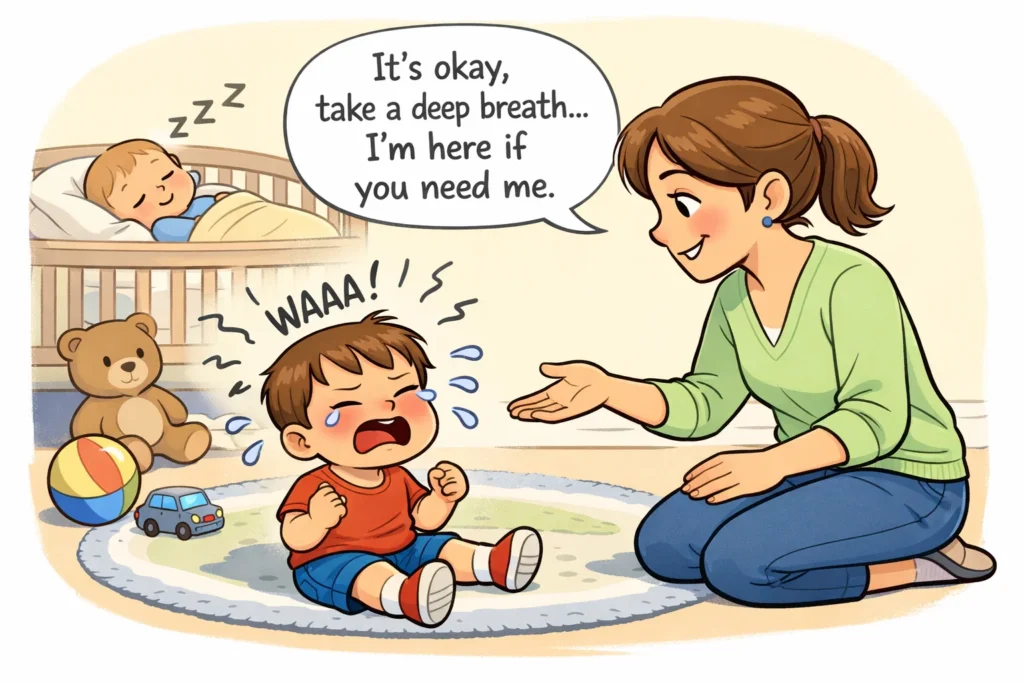
When challenging emotional regulation challenges occur, your response dictates how quickly the phase passes.
“Children need the most love when they act the least deserving of it.” — Common Parenting Wisdom
What to do during tantrums
When a jealous toddler has a meltdown:
- Stay Calm: Your calm is their anchor.
- Ensure Safety: If they are being rough with the baby, calmly move them away.
- Validate: “You are really mad that I’m caring for the baby right now. It’s hard to wait.”
- Reconnect: Once the storm passes, offer a hug.
Setting limits without blaming baby
Use “When/Then” phrasing. “When I finish changing the baby sister’s nappy, then I can help you with your puzzle.” This sets a firm boundary without making the baby the reason for the “No.”
Reinforcing positive behavior
Parents often find that after a new baby arrives, they spend most of their time correcting negative behavior. Flip the script. Notice when they are being gentle or playing quietly. “I saw how quietly you were playing while the baby sister slept. That was so helpful!”
Long-term adjustment timeline
How long toddler jealousy usually lasts
Most toddlers and preschoolers show significant improvement within 3 to 6 months. However, challenging behaviors often peak during the first 6–8 weeks when the “novelty” of the new arrival wears off and the reality of the permanent change sets in.
Signs adjustment is progressing well
- The toddler begins to show spontaneous affection (e.g., patting the baby).
- Regression behaviors (like toilet accidents) begin to decrease.
- The child returns to their usual play interests.
- They use the baby’s name and refer to them as “my baby.”
When extra support may help
If the aggressive behavior is dangerous, if the child becomes extremely withdrawn or stops eating, or if the challenging behaviour persists with no improvement after several months, it may be time to consult a pediatrician or a child psychologist.
Toddler jealousy support resources
Parenting tools and routines parents find helpful
- Visual Schedules: Help the older child see when their “special time” is coming.
- Calm-down corners: A safe space with pillows and books for when they feel overwhelmed.
- Baby pictures: Looking at photos of the older sibling as a baby to show them they were once cared for in the same way.
Professional support options
- Pediatricians: For checking on physical regressions or developmental stalls.
- Family Therapists: To help navigate the transition if the parents are feeling overwhelmed.
- Parenting Groups: Connecting with others who have a new baby and a toddler can provide immense emotional relief.
Related parenting topics
- Fostering Sibling Bonds in the Early Years
- Gentle Discipline for Toddlers
- Self-Care for Parents of Two Under Two
Key takeaways for parents
- Normalize the Jealousy: It is a natural reaction to a major life change.
- Prioritize Connection: 15 minutes of one-on-one time can prevent hours of tantrums.
- Involve, Don’t Exclude: Give them a role in caring for the baby.
- Watch Your Language: Avoid making the baby the reason for every “No.”
- Be Patient: Regression is temporary. Your older child still needs you – perhaps now more than ever.
The transition from one child to two is one of the most emotionally demanding periods of parenthood. By focusing on your relationship with your toddler and providing a stable, loving environment, you are building the foundation for a lifelong friendship between your children.

Take a short quiz to find out what your everyday choices say about your parenting style
When your child is curious about something new, what’s your instinct?
Take a short quiz to find out what your everyday choices say about your parenting style
“Can I download this app?” What happens next?
Take a short quiz to find out what your everyday choices say about your parenting style
When it comes to rules at home, which sounds most like you?
Take a short quiz to find out what your everyday choices say about your parenting style
If you could give your child one life skill today, what would you pick?
Take a short quiz to find out what your everyday choices say about your parenting style
Your child gets to choose what to watch. What would your ideal setup look like?
Take a short quiz to find out what your everyday choices say about your parenting style
Pick your parenting superpower ✨



