
Toddler Hits New Baby: Aggressive Behavior, Hitting Others and How to Make It Stop

 Discover a Free Education Video App for Kids
Pastory uses AI to personalize educational video content based on your child’s interests and personality. Safe, engaging, and built for curious young minds. Sign up now to stay updated and enjoy early access with a free trial
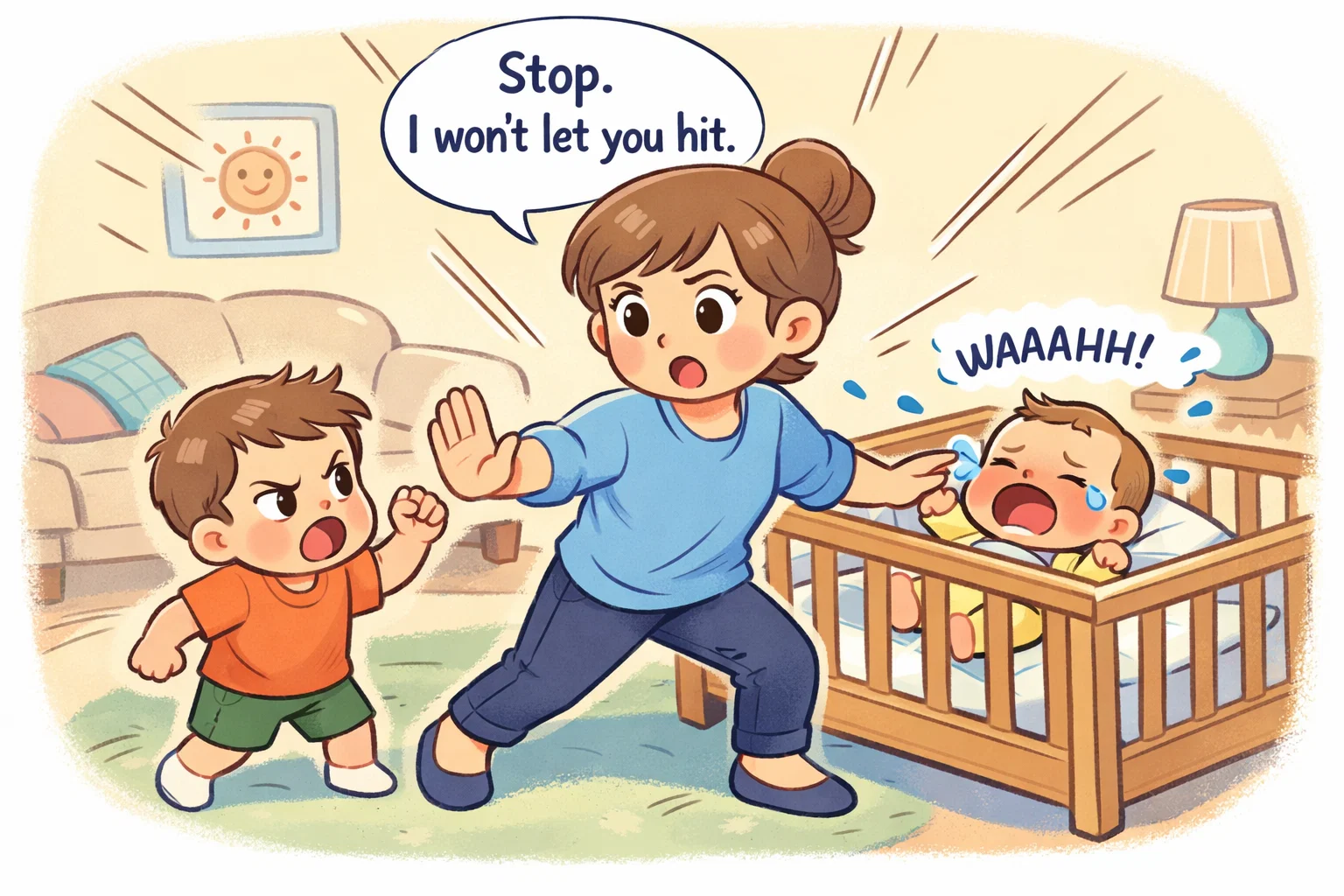
It is the moment every parent of two fears: you turn your head for a split second, and your little one reaches out and lashes out at the new baby. The sound of the infant’s cry, the sight of your toddler’s defiant or confused face, and the rush of adrenaline in your own chest create a whirlwind of panic. You might feel mortified by your child’s behaviour, wondering where you went wrong or if your two-year-old is becoming “aggressive.”
First, take a deep breath. Shocking as it may be, hitting directed at a new sibling is an incredibly common developmental hurdle in toddlers. This behavior is rarely about malice; it is about a tiny human with still-emerging language skills and undeveloped impulse control trying to navigate a massive life upheaval. This guide will provide the immediate clinical safety steps you need, alongside long-term strategies to help your child transition from “only child” to a gentle big sibling.
Crying Baby, Crying Toddler, Exhausted Parent
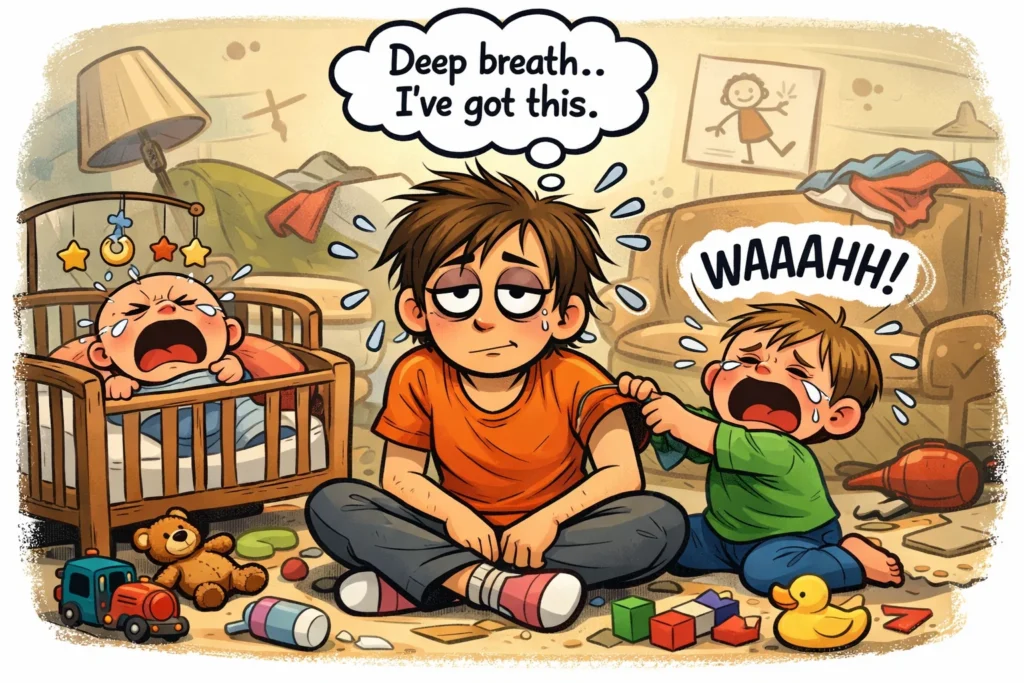
When your toddler gets aggressive, the environment usually feels like a pressure cooker. You are likely dealing with sleep deprivation, the physical recovery of childbirth, and the relentless demands of a newborn. When you see your child hit the baby, your “fight or flight” response kicks in. You might want to make it stop by yelling or reacting with equal intensity, but in these first seconds, your calm is the most powerful tool you have.
Emotional overload after new baby arrival
For a toddler, a new baby isn’t just a “gift”; it’s a competitor for their most precious resource: you. They see you nursing, holding, and shushing this new intruder, and their world feels tilted. This emotional overload often manifests as physical outbursts because they simply don’t have the words to say, “I’m scared you don’t love me as much anymore.”
Why immediate response matters
A fast, calmly delivered intervention is vital. It’s not about punishment; it’s about safety. By intervening quickly, you show your toddler that you are in control and that you will not let anyone get hurt—including them. This reinforces a sense of security for both children.
Common parental mistakes in heated moments
When we are pushed to the brink, parents may spank or lose control by screaming. However, physical discipline increases aggression. If you lash out, you are inadvertently teaching the toddler that hitting is a valid way to handle big feelings. Similarly, ignoring the behavior “to not give it attention” can be dangerous when a fragile newborn is involved.
Why Toddler Hits Newborn
Understanding the why is the first step to staying patient. Your toddler doesn’t wake up wanting to hurt the baby. Their actions are driven by a complex mix of biology and big emotions.
- Jealousy and loss of attention: Your little one is used to being the center of your universe. The new sibling has suddenly cut their one-on-one time in half.
- Limited impulse control: Even if they know hitting is wrong, the part of the brain that says “stop” isn’t fully wired yet. With undeveloped impulse control a thought becomes an action in milliseconds.
- Fierce desire to be independent: Being independent can lead to frustration when they realize they still need you for everything, yet you are busy with the baby.
- Sensory overload: Toddlers are easily overstimulated. The high-pitched cry of a newborn can be physically painful for a sensitive toddler, leading them to lash out to stop the noise.
| Driver | Description |
| Attention Seeking | Any attention (even a scolding) is better than being ignored. |
| Regression | Wanting to act like a baby to get “baby-level” care. |
| Curiosity | Wondering “What happens if I touch the baby?” |
What To Do Immediately When Toddler Hits Baby
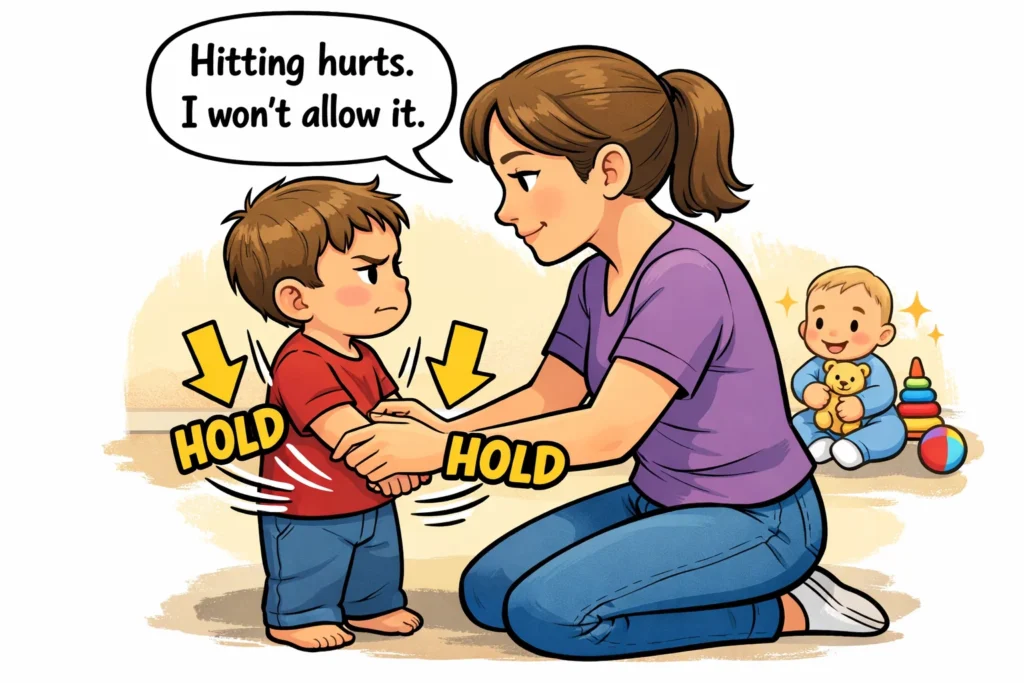
If the unthinkable happens and your toddler hits the infant, follow this protocol.
Respond quickly and ensure baby safety
Your first priority is the physical safety of the newborn. Physically separate them immediately. You can pick up the baby or place your body between them. If the baby was hit in the head, monitor the infant closely for any concerning symptoms.
Expert Note: If the baby is lethargic, vomiting, or has a bulging soft spot, seek emergency medical care immediately.
Keep voice calm and body language controlled
Your toddler might hit again if they see a “high-drama” reaction. Instead, use a “boring,” firm voice. Redirect your energy toward the baby’s comfort first, which shows the toddler that hitting results in less attention for them and more for the baby.
Name behavior clearly and briefly
Use simple phrases: “Gentle hands. I will not let you hurt the baby.” Avoid asking your toddler “Why did you do that?” They truly do not know why.
Stay present with toddler after intervention
Once the baby is safe in a bassinet or another room, stay near your toddler. They are likely scared by their own strong emotions. Let your child know that while the hitting was bad, they are still loved.
How To Stop Aggressive Behavior In Toddler After New Baby
To change their behaviour, you need a consistent strategy that focuses on positive reinforcement rather than fear.
- Set Clear Boundaries: Use a “No Hitting” rule that applies to everyone in the house.
- Avoid Spanking: Research from the American Academy of Pediatrics shows that physical punishment often makes aggressive behaviour worse in the long run.
- Model Empathy: Show them how to be gentle. Talk calmly about what happened after the toddler has settled.
- Safe Outlets for Anger: Encourage your toddler to stomp their feet or “growl like a lion” when they feel angry.
How To Prevent Toddler Aggression Toward Newborn
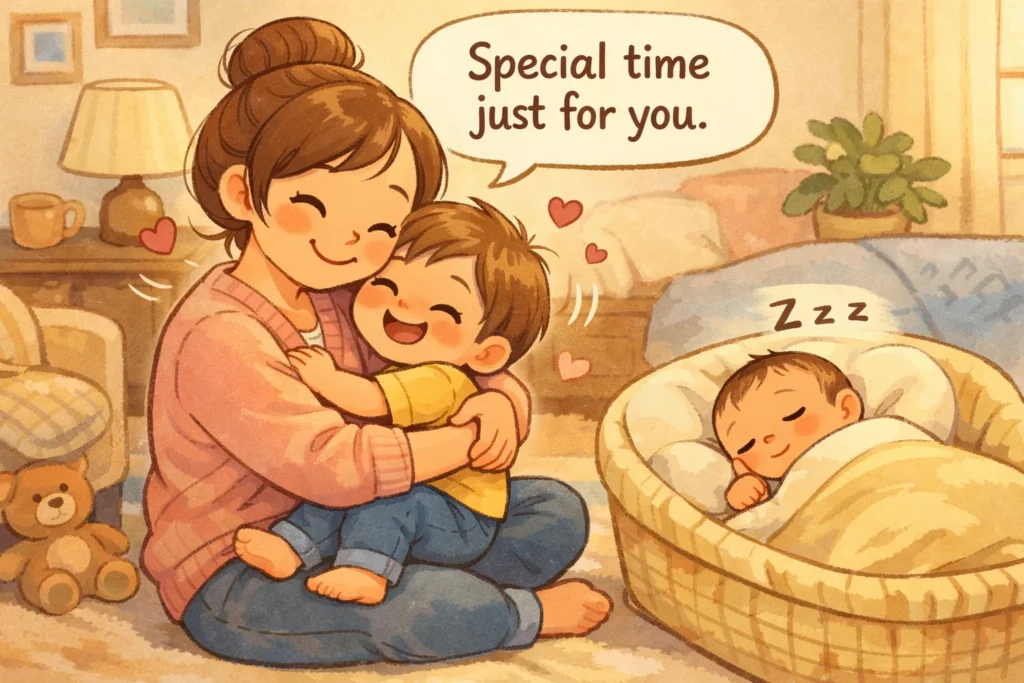
Prevention is about environment setup and emotional maintenance. You want to make it easy for your toddler to succeed.
Fill your child’s emotional cup before conflict
The best way to help your child is to provide preemptive attention. Aim for 15 minutes of one-on-one time daily where the baby is not mentioned or present. This reduces the fierce desire to act out for attention.
Identify triggers and patterns
Does your toddler get aggressive right before naptime? Or when you are nursing? Use a “Busy Box” filled with special toys that only come out when you are feeding the baby. This keeps them occupied so they can join the fun without hurting anyone.
Reward gentle interactions
Remember also to praise the small wins. “I saw how you brought the baby a diaper! That was so helpful.” Also praise their efforts when they choose to use words instead of hitting.
Positive Teaching After Incident
Once the “storm” has passed, use the quiet moments to build impulse control.
- Accept their feelings: Say, “It’s hard to share with Mommy, isn’t it?” Acknowledging and accepting their feelings helps them feel heard.
- Practice gentle touch: Use a doll to show how to “pet” the baby. Ready to join the fun? Let them try with your supervision.
- Encourage apologies without forcing: A forced “I’m sorry” doesn’t teach empathy. Instead, ask, “The baby is crying. What can we do to help her feel better?” This builds a genuine pattern that your toddler can follow.
What To Do If Toddler Hits Parent Instead
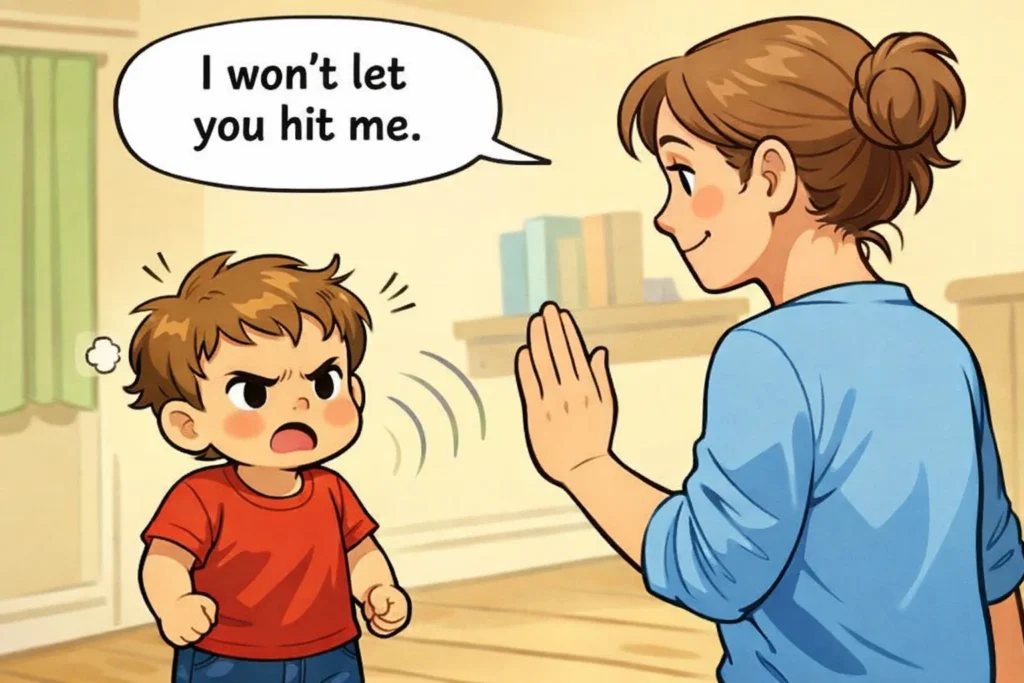
Sometimes, to avoid hitting the baby, a toddler will lash out at the parent. This is actually a sign of trust—they feel safe enough to vent their strong emotions on you.
Same boundaries apply consistently
Say calmly, “I cannot let you hit me. It hurts.” If they continue to hit and yell, you may need to remove yourself briefly if needed to stay calm. Say, “I’m going to step behind this gate for a minute to keep my body safe. I’ll be right here when you’re ready for a hug.”
When To Get Help for Toddler Aggression
While toddlers may hit others occasionally, certain signs suggest you need professional support from credible sources or a pediatrician.
- Frequency: They lash out multiple times a day despite consistent boundaries.
- Intensity: They seek out the baby specifically to cause harm (e.g., trying to hurt the baby while they sleep).
- Lack of Sleep: If the toddler doesn’t get enough sleep, they lose all ability to control their anger.
- No Empathy: They don’t seem bothered by the baby’s distress over time.
Consult your pediatrician or a qualified child behavior specialist if the aggressive behavior feels “driven” or uncontrollable.
Where To Go Next
Building a healthy sibling bond is a marathon, not a sprint. Your toddler learning boundaries is just the beginning of a lifelong relationship.
Consistency over perfection
You will have bad days. You might lose your temper. When you do, apologize to your toddler. “I’m sorry I yelled. I was frustrated, but I should have used my calm voice.” This models exactly the positive behaviour you want from them.
Support for you
Don’t hesitate to reach out to local support groups. You are not alone in this, and with time, your little one will learn to love their new sibling without the need to hit.
FAQ
Toddlers and preschoolers are prone to aggression because undeveloped impulse control is still very much into the mix. When a toddler is overwhelmed by angry feelings, frustration, or jealousy, tantrum reactions may include hitting or biting another child. You may notice your toddler struggles to control your temper not out of defiance, but because impulse control is still forming. This is common at the two year old stage and does not mean your child is aggressive by nature.
To help your toddler, limit screen time and offer plenty of unstructured play time, which supports emotional regulation. Time your toddler’s day to avoid hunger and fatigue, set up a pattern of calm responses, and name their emotions out loud so they can learn to communicate instead of hitting. Rather than giving your child attention only after misbehavior, also praise their efforts when they handle frustration well. These steps you can take are supported by peer-reviewed research on toddlers and preschoolers.
During a tantrum, stay close and calm, toddler and say simple phrases that help them feel heard. For example, asking the little girl if you could have a turn, or modeling how she could say “I want a turn,” helps build communication skills. If you know she didn’t answer or react physically, guide her to try again rather than punish. Helping children name their emotions and accept limits builds impulse control over time and reduces hitting or biting.

Take a short quiz to find out what your everyday choices say about your parenting style
When your child is curious about something new, what’s your instinct?
Take a short quiz to find out what your everyday choices say about your parenting style
“Can I download this app?” What happens next?
Take a short quiz to find out what your everyday choices say about your parenting style
When it comes to rules at home, which sounds most like you?
Take a short quiz to find out what your everyday choices say about your parenting style
If you could give your child one life skill today, what would you pick?
Take a short quiz to find out what your everyday choices say about your parenting style
Your child gets to choose what to watch. What would your ideal setup look like?
Take a short quiz to find out what your everyday choices say about your parenting style
Pick your parenting superpower ✨



