How to Prepare Your Toddler to Meet a New Baby and Adjust to a New Sibling at Hospital or at Home

 Discover a Free Education Video App for Kids
Pastory uses AI to personalize educational video content based on your child’s interests and personality. Safe, engaging, and built for curious young minds. Sign up now to stay updated and enjoy early access with a free trial
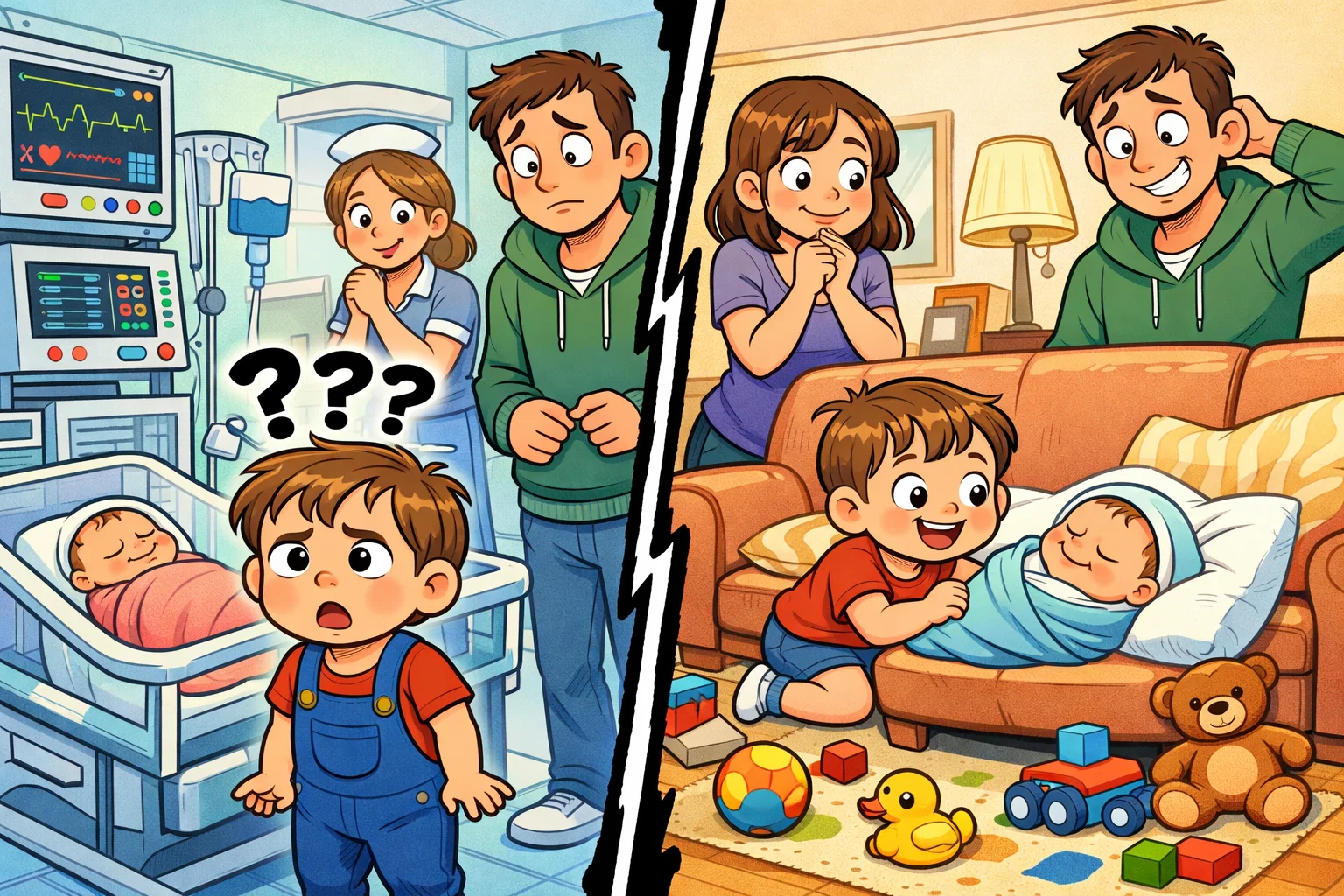
The expansion of your family from three to four is a profound milestone, but for a toddler, the arrival of a newborn often feels less like a celebration and more like a crisis of security. As a parent, you are likely weighing the pros and cons of the first meeting occurring in the hospital or at home. This decision involves balancing your own physical recovery with the emotional needs of your firstborn, who is about to experience the biggest change of their young life.
Whether you choose a clinical setting or your own living room, the goal is to make the arrival of their new sibling as smooth as possible. This guide provides a deep dive into the psychological and logistical strategies needed to help your toddler navigate this transition, helping ensure that the sibling relationship starts with trust rather than competition.
Preparing Toddler Before New Baby Sibling Arrival
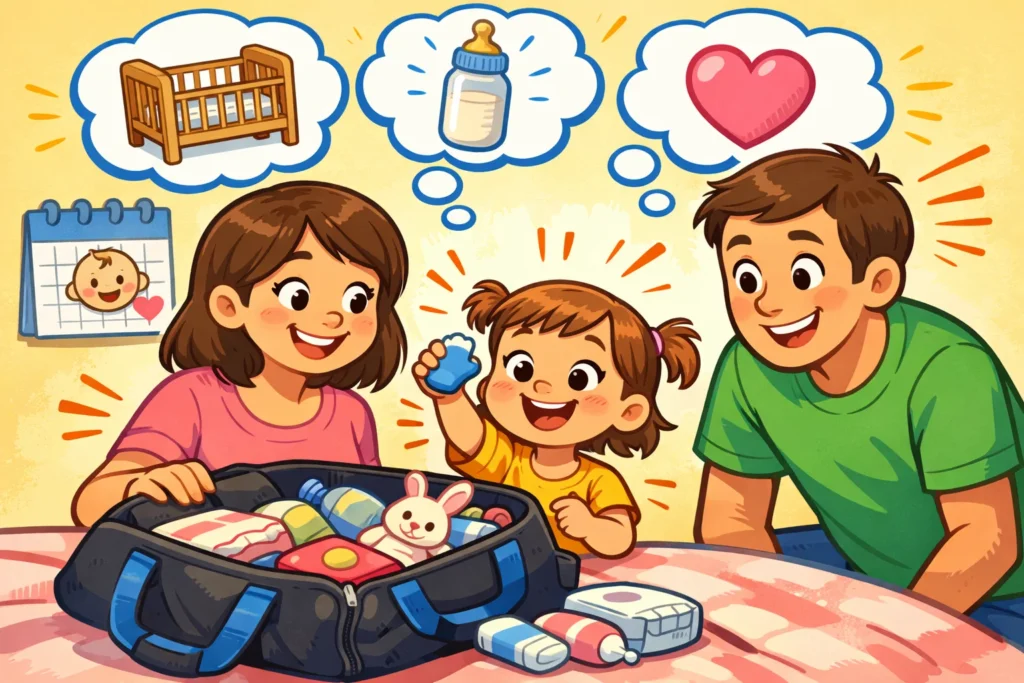
Preparation is the bedrock of a successful introduction. Long before the baby arrives, your little one needs to be eased into the idea of a new family member. Without preparation, a toddler may feel blindsided by the sudden appearance of a “permanent guest.”
When to Tell Toddler About New Baby
Timing is everything. For a toddler, time is an abstract concept. If you tell your child too early, the months of waiting can lead to frustration.
- Ages 1-2: Wait until the physical changes are obvious or until you are setting up the bassinet.
- Ages 3+: You can tell your toddler earlier, perhaps after the first trimester, using milestones like “when the weather gets cold” or “after your birthday” to help them track time.
- Signs of Awareness: Maybe your toddler has already noticed you are more tired or that your lap is shrinking. If they start patting your belly or becoming more clingy, it is time for a gentle conversation.
How to Talk About New Sibling
Keep explanations concrete. Instead of saying “you’ll have a new best friend,” explain that the new baby will cry, sleep, and poop a lot. Use terms like “baby brother” or “baby sister” to help the toddler see the newcomer as a person.
“The baby is growing in mommy’s tummy. When the baby is born, they will need a lot of help, but you will always be my big girl/boy.”
Involving Toddler in Baby Preparations
Give your older child a sense of agency. Let them help pick out a coming-home outfit or choose which drawer the newborn socks go in. If you are moving the older sibling to a toddler bed to free up the crib, do this month in advance so they don’t feel “kicked out” by the new baby sibling.
Encouraging Independence Before Birth
To prevent jealousy later, work on skills like independent play or self-feeding now. If your toddler is already comfortable spending 15 minutes playing nearby while you sit, they will handle the times you are feeding the baby much better.
First Meeting Toddler and Newborn at Hospital
For many, the hospital to meet the baby is a rite of passage. However, the clinical environment can be overwhelming for a small child.
Hospital Environment Impact on Toddler
From a young child’s perspective, a hospital can feel dirty, dangerous, and scary. The sight of Mom in a medical bed attached to IV lines can trigger separation anxiety. They may see their secure base (you) as injured or unavailable, which can be distressing.
Timing First Introduction at Hospital
Don’t rush the first meeting. Wait until you have recovered enough to sit up or stand. The best time for the toddler to meet the baby is after the mother has had a nap and a meal, and when the newborn is calm.
Baby Placement During Hospital Meeting
Crucial Tip: When the toddler comes into the room, do not be holding the baby. Place the newborn in the hospital bassinet. This allows you to have your arms wide open to see the baby later, after you have first hugged and greeted your older child. This prevents the feeling that the baby has “stolen” their spot.
Managing Hospital Visit Length
Keep it short—15 to 30 minutes is usually plenty. Toddlers may become overstimulated by the monitors and hushed voices. Have a “go-bag” for the toddler with snacks and a new toy to keep them occupied.
Gift Exchange During Hospital Introduction
A “gift from the baby” is a classic strategy. A baby doll for the toddler to care for while you care for the newborn, or a “Big Brother” shirt, can create a positive first association.
First Meeting Toddler and Newborn at Home

Many parents prefer bringing the baby home before the introduction to keep the environment controlled and familiar.
Familiar Home Environment Benefits
Home offers emotional safety. Your little one has their own toys, their own bed, and familiar smells. This reduces the sensory load, allowing them to focus on the new baby brother or sister.
Preparing Home for First Introduction
Keep the house quiet. Limit visitors for the first few hours so the older child first gets your undivided attention.
Toddler Greeting Before Baby Introduction
When bringing the baby through the door, have someone else carry the car seat. Walk in first, crouch down to your toddler’s level, and spend five minutes just reconnecting.
Managing Sibling Curiosity at Home
Let your toddler help by bringing a diaper or choosing a blanket. Narrate what the baby is doing: “Look, the baby starts to wiggle his toes! Can you see?” Use “soft touches” only on the baby’s feet to keep germs away from the face.
Hospital vs Home: Key Differences for First Meeting
| Feature | Hospital Introduction | Home Introduction |
| Territory | Neutral Ground | Toddler’s Territory |
| Mother’s State | May be restricted by IVs/Pain | More mobile/Relaxed |
| Routine | Highly disrupted | Maintained |
| Goodbye | Harder (Toddler leaves Mom) | No goodbye needed |
| Sensory Load | High (Beeps, smells) | Low (Familiar) |
Emotional Safety Comparison
Many parents and clinicians observe that hospital visits can be distressing for toddlers due to the stress of seeing a parent in a medical setting. Home introductions generally result in lower acute stress, though they may trigger more immediate territorial jealousy.
Parental Stress and Control
At the hospital, you have less control over timing (nurses coming in, loud roommates). At home, you can time the first meeting right after the toddler’s nap, when they are at their best.
Helping Toddler Adjust After First Meeting
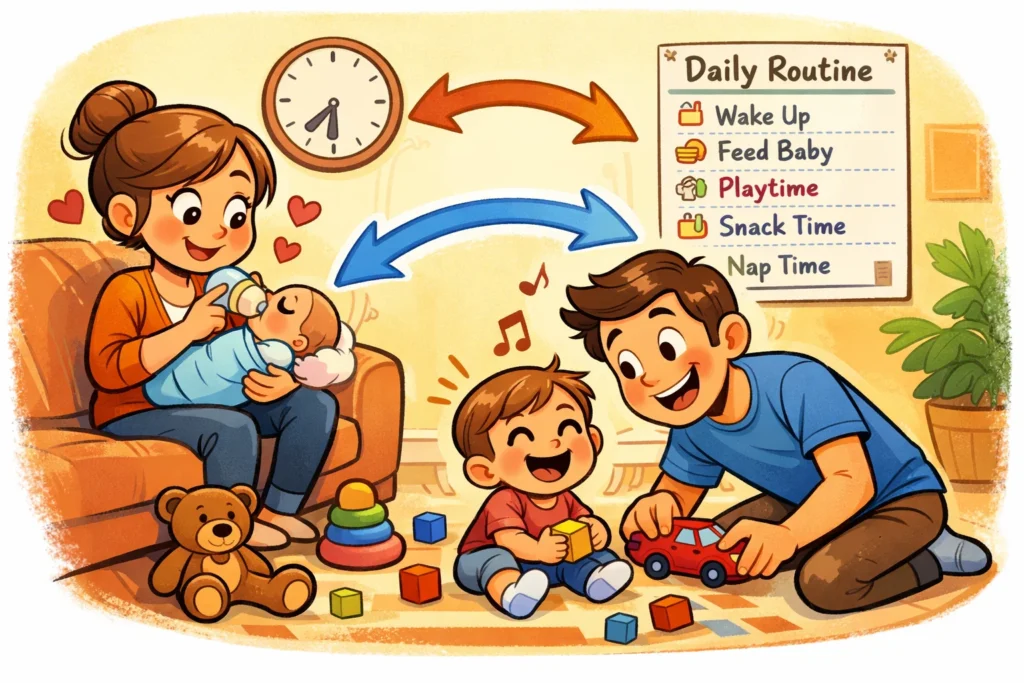
The first meeting is just the beginning of life with a new sibling. The weeks following bringing the baby home are when the real work of adjusting to a new sibling happens.
Maintaining Routine After Baby Arrival
Consistency is the antidote to anxiety. If Saturday was always “pancake day,” keep making pancakes. Predictability tells the older child that while there is a new sibling, their world isn’t falling apart.
Involving Toddler in Baby Care
Give them a new role. They can be the “official burp cloth fetcher” or the “lullaby singer.” When they feel like a helper, they feel included in the baby’s needs rather than sidelined by them.
One-on-One Time Strategies
Aim for 15 minutes of “Special Time” daily where the baby is not mentioned and not present. This reassures your firstborn that they are still a priority.
Handling Jealousy or Emotional Reactions
It is completely normal for a toddler to wait for a few days and then decide they want the baby to “go back.”
Recognizing Jealousy Signals
- Regression: Wanting a bassinet or a bottle again.
- Aggression: Poking the baby or “rough” patting.
- Withdrawal: Ignoring the parent or the baby entirely.
Responding Without Blaming Baby
Avoid saying, “We can’t go to the park because the baby is sleeping.” This makes the baby the “villain.” Instead, say, “My hands are busy right now, but I can go in five minutes.”
Narrating Needs of Both Children
Talk to the baby while the toddler is listening: “Baby, you have to wait a second, I’m helping your big brother right now!” This shows the toddler that the baby also has to wait sometimes.
Age Gap Considerations for First Meeting
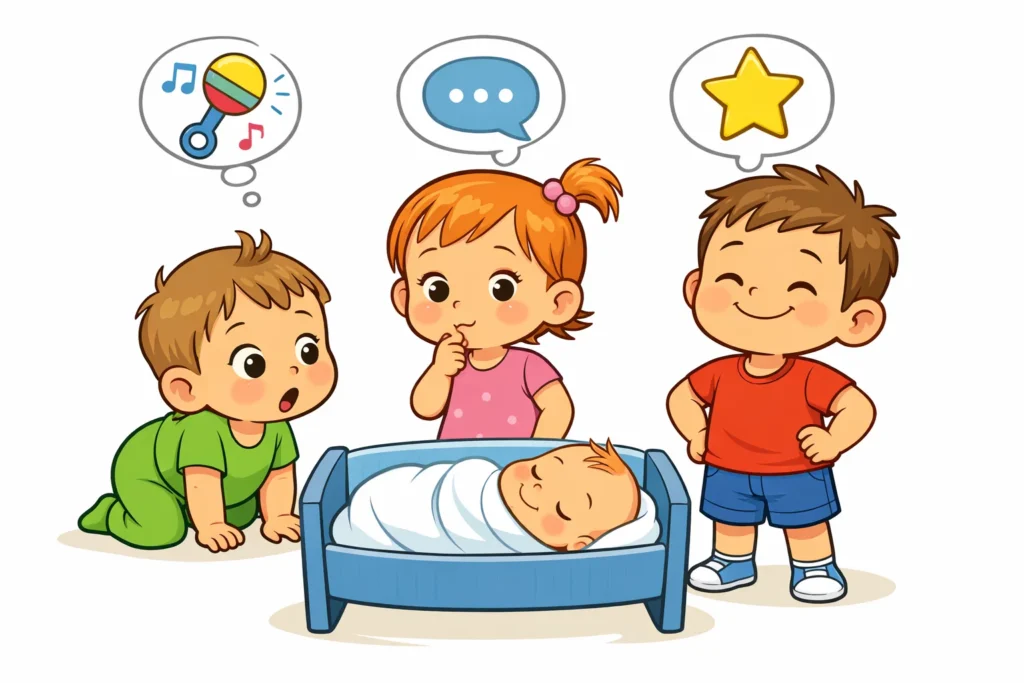
The toddler stage spans a wide range of development. Your approach should vary based on birth order and age gap.
Under Two Years Apart
At this age, the toddler may not truly know the baby is a permanent fixture. Focus on physical safety and sensory exploration. They likely won’t understand “big brother” concepts yet.
Two to Three Years Apart
This is the “prime” age for jealousy. They have enough language to express anger but not enough to regulate it. Use lots of baby doll play to practice “gentle hands.”
Four Years or More Apart
An older child can understand the arrival of a new baby more logically. They can be genuine helpers, but be careful not to give them too much responsibility. They still need to be the “child,” not a third parent.
Practical Tips for Smooth Transition
- Keep it calm: Your energy dictates theirs. If you are anxious, they will be too.
- Limit visitors: Don’t let a crowd of relatives overshadow the older sibling.
- Ask for help: Have a partner or grandparent take the toddler for a “special outing” after the first meeting to burn off nervous energy.
Common Mistakes During First Meeting
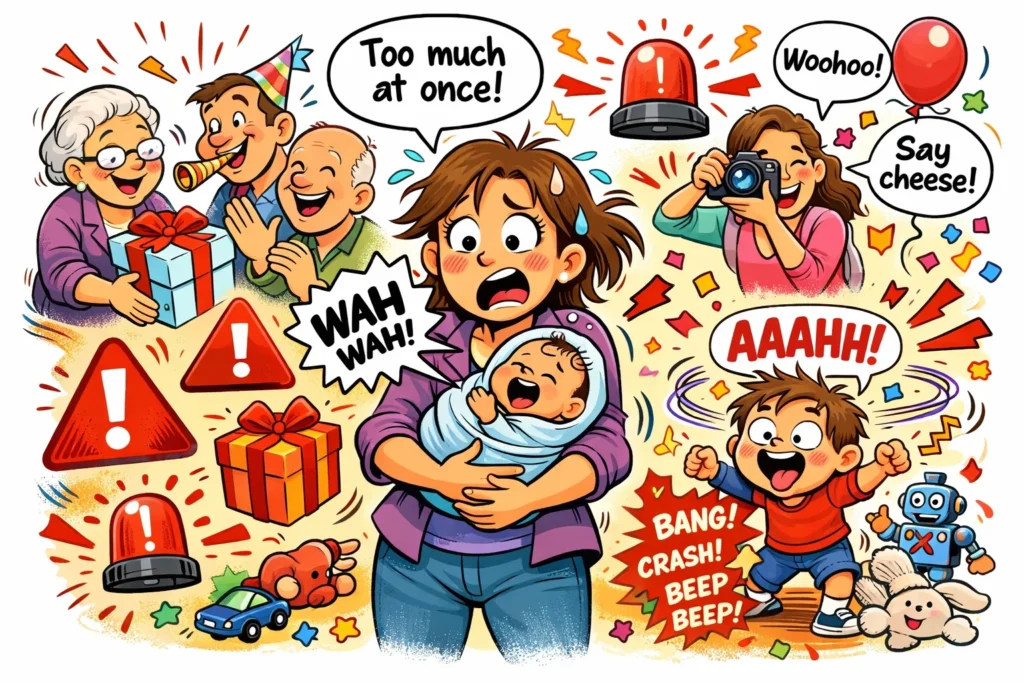
- Forcing Physical Interaction: Never force a toddler to hold the baby or kiss them. Let them observe from a distance until they are ready.
- Overloading with Visitors: A room full of adults cooing over a newborn while ignoring the toddler is a recipe for a meltdown.
- Ignoring Emotions: If they say they don’t like the baby, don’t say “Yes you do!” Validate it: “It’s a big change, isn’t it? It’s okay to feel sad sometimes.”
Pediatric Health and Sibling Germs
While it’s important for the sibling relationship to bloom, we must protect the newborn’s immune system. Pediatricians recommend a “cocooning” phase for the first 12 weeks.
| Infection Risk | Prevention Strategy |
| RSV/Flu | Sibling washes hands upon entering the house. |
| Pertussis | Ensure the older child is up to date on vaccines. |
| General Germs | Teach the “Kiss the Feet” rule—no kissing the baby’s face or hands. |
The American Academy of Pediatrics (AAP) notes that a fever in a newborn under three months 100.4°F (38°C) is a medical emergency. Keeping the toddler’s germs at bay is essential during the early weeks of life with a new.
Final Thoughts on Hospital vs Home First Meeting
Ultimately, whether your toddler meets their new brother or sister at the hospital or at home matters less than the emotional support you provide. Adjusting to life as a family of four takes time.
Focus on being “hands-free” for that first hug, validating your older child’s big feelings, and maintaining the routines that make them feel safe. With patience and preparation, the arrival of their new sibling will eventually transition from a “big disruption” to the start of a lifelong friendship.
FAQ
To help your child prepare for a new baby, start talking early about the baby’s arrival and what it means to be a big brother or sister. Explain that sibling is a big change, but there will still be time with your toddler and time for your older child. Let the toddler help with small tasks, introduce your toddler to baby items, and help the older child feel involved before baby number two arrives.
A new sibling at the hospital works well for some families, especially if the toddler can come to the hospital briefly to see the baby and meet the baby calmly. Others prefer new baby home introductions, when the baby comes home from the hospital and everyone is home together. Both options can help your older child adjust, as long as the older child feels secure and supported during the baby’s arrival.
After bringing the baby home, help your toddler adjust by keeping routines, protecting special time with your toddler, and reminding them they are still important. Talk openly so the child feels like the baby’s arrival does not replace them. When the baby gets attention, narrate what is happening so the toddler can understand that the baby may need help now, but there is also time to adjust and time for your older child.

Take a short quiz to find out what your everyday choices say about your parenting style
When your child is curious about something new, what’s your instinct?
Take a short quiz to find out what your everyday choices say about your parenting style
“Can I download this app?” What happens next?
Take a short quiz to find out what your everyday choices say about your parenting style
When it comes to rules at home, which sounds most like you?
Take a short quiz to find out what your everyday choices say about your parenting style
If you could give your child one life skill today, what would you pick?
Take a short quiz to find out what your everyday choices say about your parenting style
Your child gets to choose what to watch. What would your ideal setup look like?
Take a short quiz to find out what your everyday choices say about your parenting style
Pick your parenting superpower ✨