Make a Rain Gauge at Home: DIY Weather Science Experiment for Kids

 Discover a Free Education Video App for Kids
Pastory uses AI to personalize educational video content based on your child’s interests and personality. Safe, engaging, and built for curious young minds. Sign up now to stay updated and enjoy early access with a free trial
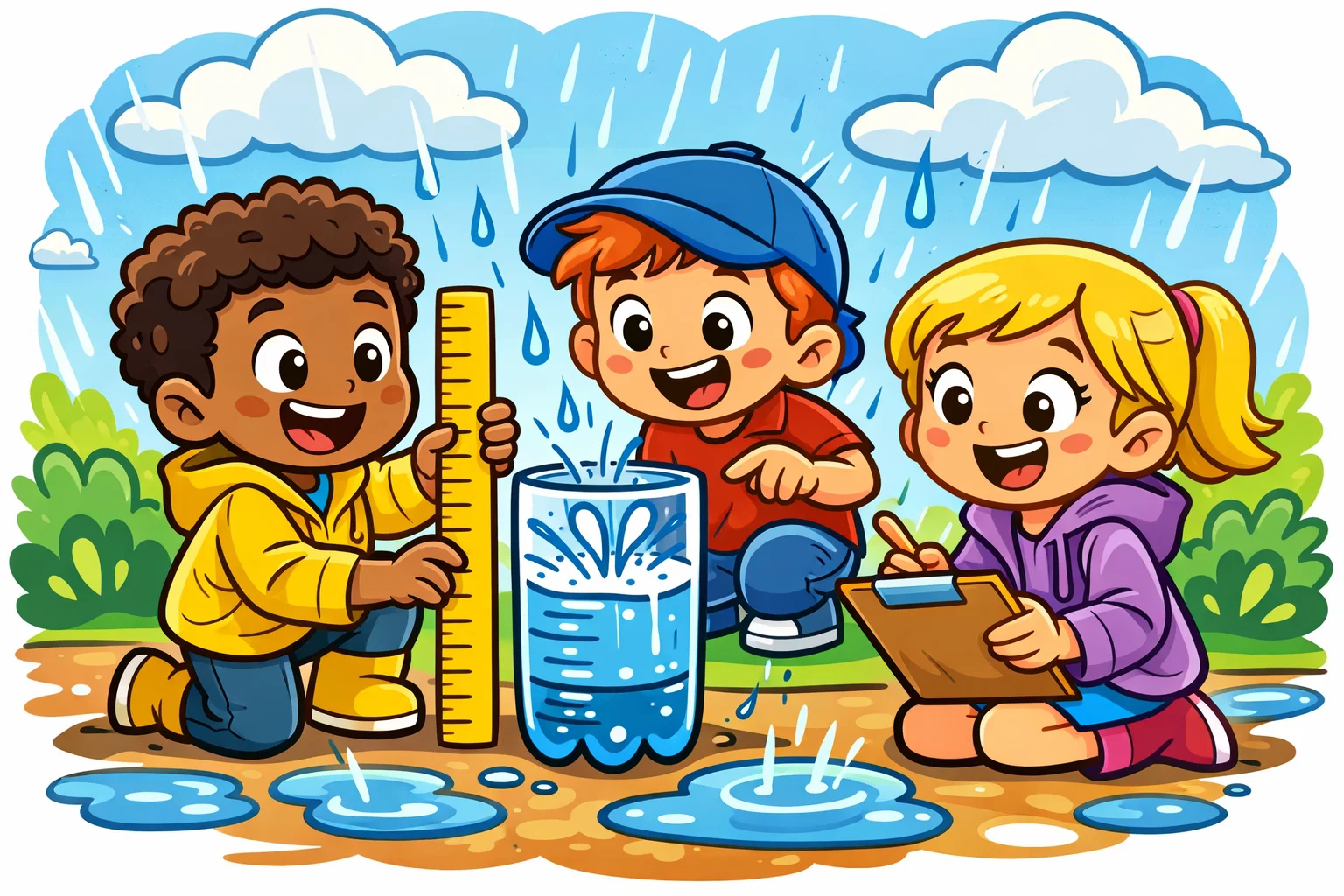
Have you ever looked out the window during a heavy downpour and wondered just how much water is actually hitting the pavement? For children, the atmosphere is one of the most accessible ways to explore STEM concepts. By learning how to make a rain gauge, kids transition from being passive observers of the clouds to active junior scientists. This hands-on science experiment turns a gray afternoon into a data-collection mission, helping children understand the water cycle and the importance of precipitation in our ecosystem.
This guide walks you through a step-by-step process to make your own collector using common household items. The activity goes beyond building a tool and exploring the weather science behind it, learning how to measure the amount of rainfall accurately, and discovering how to check the rain gauge like a professional meteorologist. Whether you are a parent looking for activities for kids or a teacher planning a science project, this DIY project provides a way to help kids connect with nature through math and observation.
Rain Gauge Experiment Overview
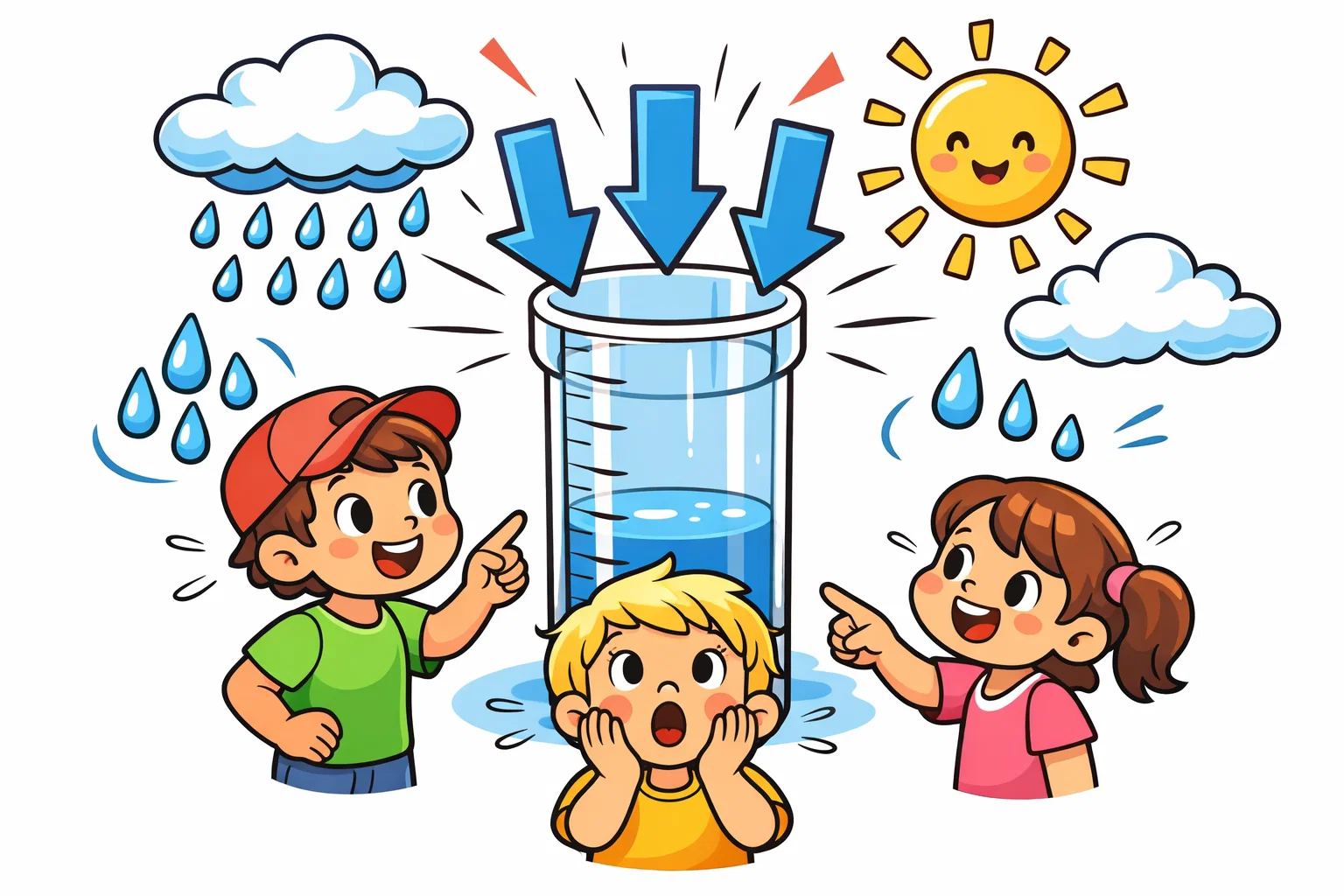
A rain gauge is an instrument used by meteorologists to measure the amount of liquid falling from the sky over a set period of time. This DIY rain gauge project is a simple science activity that combines basic crafting with environmental observation. By using a clear bottle, children can see the liquid collected in real-time, making the abstract concept of “weather patterns” something they can hold in their hands.
Rainfall Measurement Concept for Kids
To a child, a storm is often just “wet stuff” that cancels recess. However, in weather science, we define it as the depth of water that reaches the ground. Imagine if the ground were a giant tray that didn’t let any liquid soak in; the height of the moisture in that tray is what we are measuring. Understanding how much water falls is vital because it affects everything from the food we eat to the safety of our roads. Precipitation plays a central role in the planet’s freshwater cycle.
Science Skills Developed During Experiment
Participating in a science experiment like this builds a diverse toolkit of skills:
- Observation: Noticing the difference between a light drizzle and a massive cloudburst.
- Data Recording: Using a worksheet or journal to track daily changes.
- Comparison: Analyzing why one week had more rainfall than another.
- Mathematics: Learning to use a ruler and permanent marker to make a scale in centimeters or millimeters.
Age Range and Learning Settings
This science activity is incredibly versatile. For younger children (ages 5–8), the focus is on the “fun weather” aspect – watching the levels rise. Older children (ages 9–12) can dive deeper into the accuracy of their rainfall measurements and even calculate averages. It is a perfect fit for:
- Homeschooling curriculum.
- School science topics and STEM clubs.
- Weekend outdoor projects in the backyard.
Materials for Rain Gauge Experiment
One of the best parts of this science project is that you don’t need expensive laboratory equipment. You can make your own weather station tool using items found in your recycling bin.
Household Items for Rain Gauge Build
To make a rain gauge, gather these items:
- A plastic bottle (a 2-liter soda bottle works best).
- A ruler and permanent marker.
- Small rocks or pebbles (to stabilize the base).
- A piece of tape (masking or duct tape).
- Scissors or a utility knife (for adult use).
Optional Measurement Tools
| Tool | Purpose |
| Weather Journal | To record the amount of water collected daily. |
| Funnel | If not using the top part of the bottle as a collection cone. |
| Food Coloring | A single drop makes the water level easier to see. |
Safety Tips for Kids During Build
Safety is paramount when you learn how to make tools. Always ensure an adult handles the cutting of the plastic bottle. When you place it inside the garden, ensure the area is free of tripping hazards. If you bury your rain gauge slightly to keep it upright, watch out for underground wires or pipes!
Steps to Build Rain Gauge
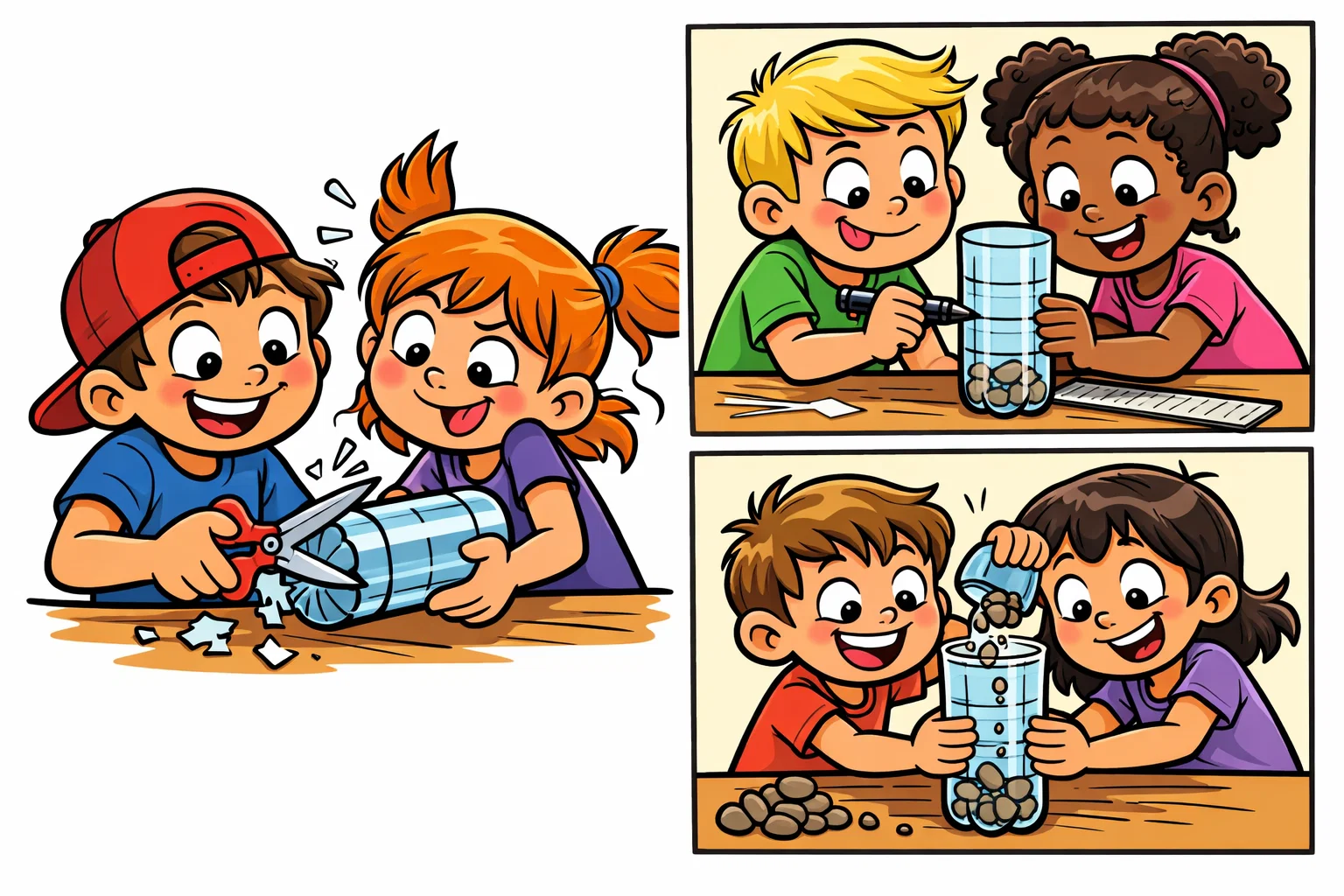
Here’s how to make a functional, reliable homemade rain gauge. Follow these rain gauge instructions carefully to ensure your measurements are as accurate as possible.
Preparing Bottle for Rain Gauge
First, take your empty bottle and remove any labels so it is a clear bottle. An adult should cut off the top section – roughly the top third where the container begins to narrow. This part of the bottle will later be flipped to act like a funnel for the incoming moisture.
Marking Measurement Scale
This is where you make a scale. Because the bottom of the bottle is often curved, you cannot start measuring from the very bottom.
- Fill the bottom part with small rocks to weigh it down.
- Add water until it just covers the rocks. This is your “zero” point.
- Use a ruler to mark every centimeter starting from that water line up the side of the bottle.
- Use a permanent marker to mark the lines clearly.
Assembling Rain Gauge Correctly
Turn the top part of the bottle upside down and place it inside the bottom part. It should look like a cone sitting inside a cup. This inverted top helps reduce evaporation and keeps bugs out of the collected liquid. Use a piece of tape to fix it in place so it doesn’t blow away in the wind.
Measuring Rainfall Using Rain Gauge
Building the simple rain gauge is only half the fun; now you need to use the data to understand your local climate and weather patterns.
Correct Placement for Rain Gauge Outdoors
To see how much water actually falls, you must place it inside an open area. Do not put your gauge outside under a tree or right next to a building, as these can block the falling droplets or cause extra runoff to drip into the bottle, giving you a false reading. A flat, open space in the middle of a lawn is ideal.
Daily Rainfall Measurement Process
You should check the rain gauge every day at the same time, such as 8:00 AM. This consistency is how real meteorologists measure the amount of rainfall. Look at the liquid level against your scale and record the measurement. Once you have your reading, empty the bottle back down to your “zero” line (the top of the rocks).
Recording Rainfall Data
Keep a simple table like the one below to track your weather science findings:
| Date | Time | Measurement (cm) | Sky Conditions |
| Oct 12 | 8:00 AM | 0.5 | Overcast/Mist |
| Oct 13 | 8:00 AM | 1.2 | Heavy Storm |
| Oct 14 | 8:00 AM | 0.0 | Sunny |
Rain Gauge Experiment Activities for Kids
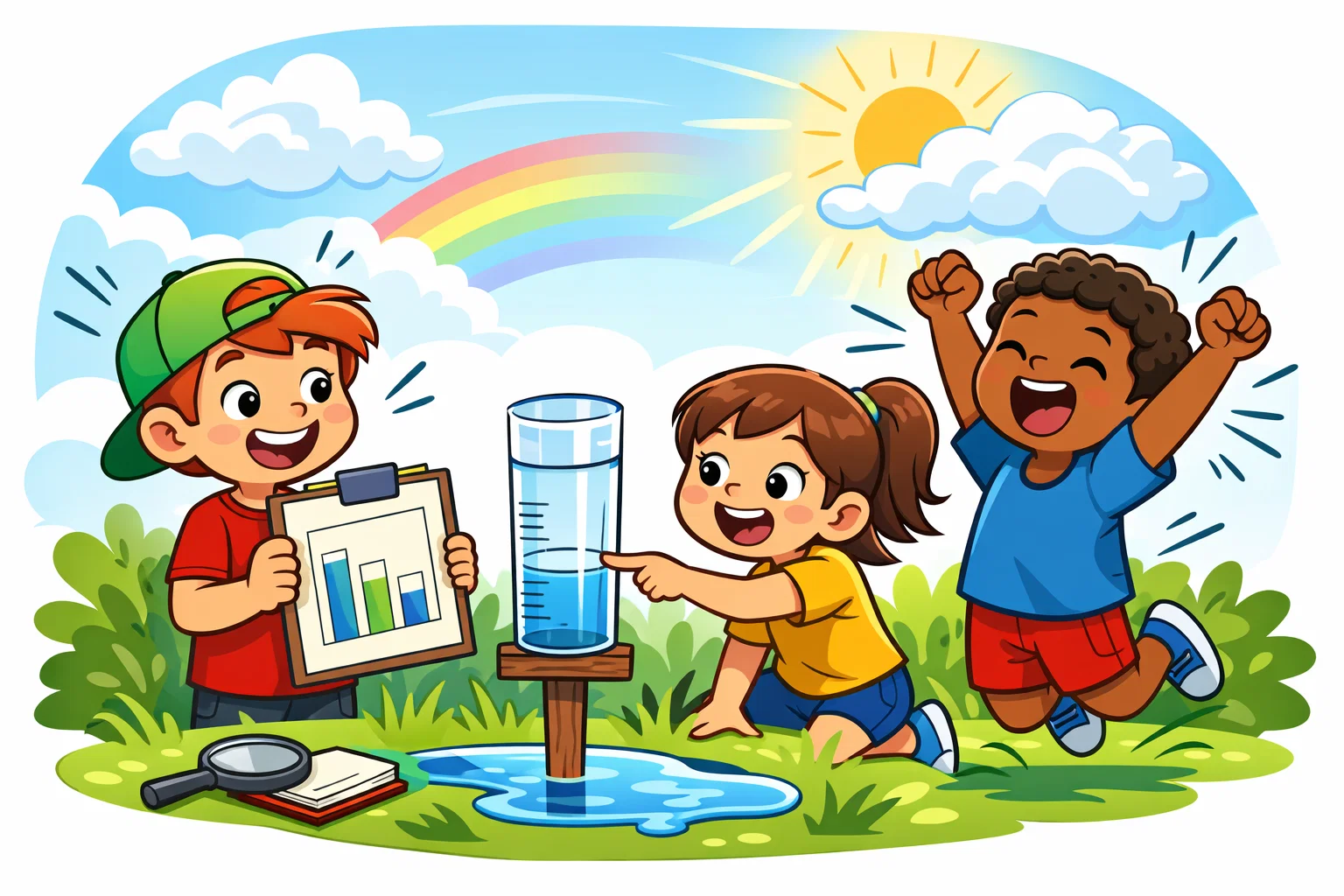
To keep the science activity engaging, try these extended tasks.
Rainfall Comparison Over Time
After a month, look back at your data. Which week had the highest rainfall? Comparing seasons is a great way to help kids understand why the garden is greener in the spring than in the autumn.
Rainfall and Weather Patterns
Encourage your child to predict the amount of water collected based on the clouds they see. “Those clouds look very dark; do you think we will find more than one centimeter tomorrow?” This develops curiosity and critical thinking.
Simple Math Activities with Rain Data
For older children, you can calculate the “average daily precipitation.” Add up all the moisture collected in a week and divide it by seven. This integrates science topics with practical math and graphing.
How Rain Gauge Works
A rain gauge is a simple but effective tool. But how does it actually measure the amount correctly without fancy sensors?
Rain Collection Process
The funnel (the top part of the bottle) has a wide mouth that catches falling drops. In this simple design, the opening is the same diameter as the collection area. This ensures that the height of the liquid in the bottle directly corresponds to the total depth that hit the ground across your neighborhood.
Measurement Principle Explained Simply
When precipitation occurs, it falls everywhere equally. By catching it in a container with straight sides, we can measure the amount of liquid by simply looking at the height. If the water is 1cm deep in your bottle, it means 1 cm of water fell evenly across the ground surface!
Common Measurement Mistakes
- Evaporation: If you don’t check the rain gauge promptly, some water might turn into vapor and disappear in the sun.
- Tipping: If the bottle isn’t weighted with small rocks, the wind might knock it over.
- Debris: Leaves or twigs can clog the funnel, preventing the liquid from entering the bottom part.
History of Rain Gauge
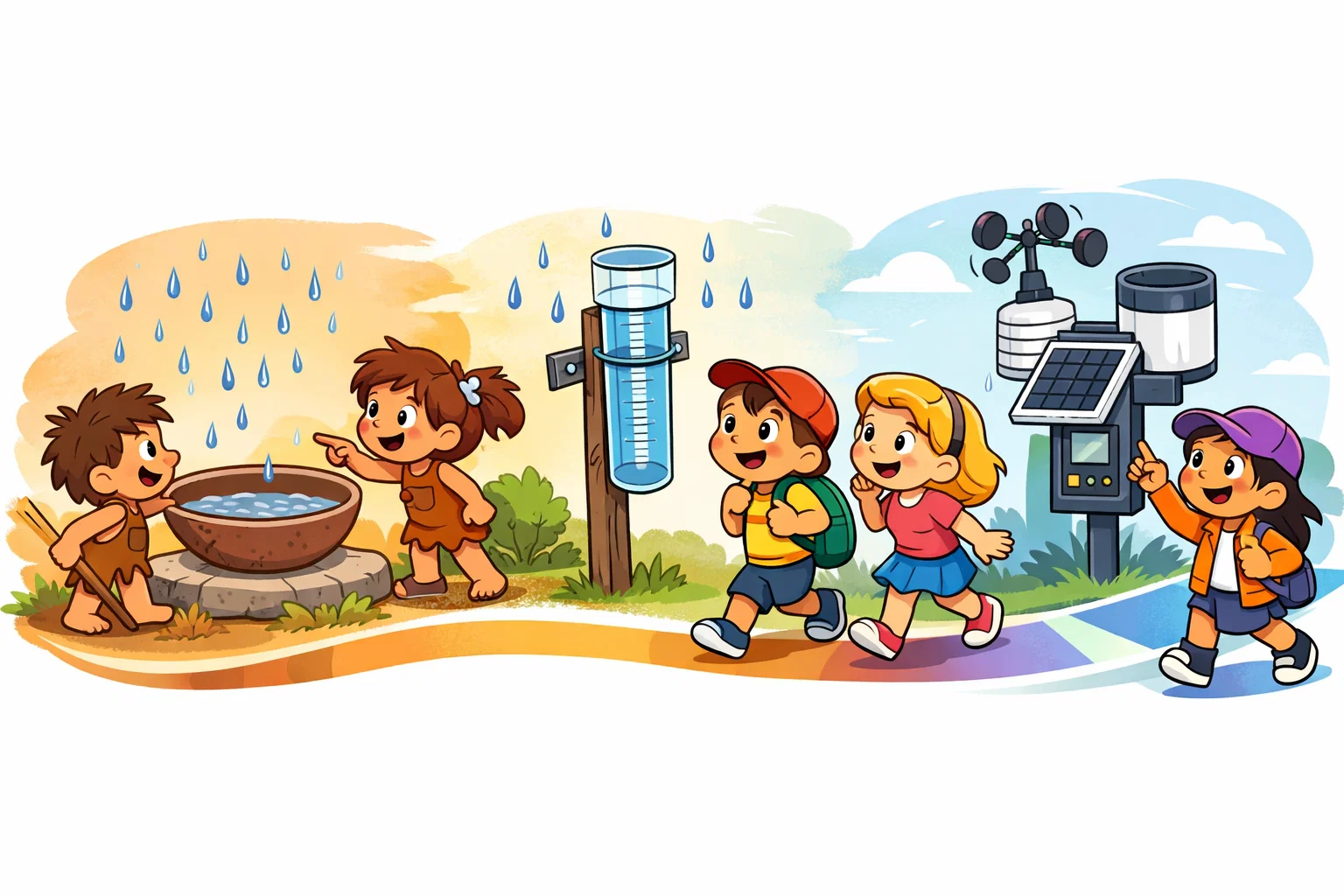
Modern rain gauge measurement has roots going back thousands of years.
Early Rainfall Measurement Methods
The first recorded use of these tools was in India around 500 BC to help determine how much tax farmers should pay based on their expected crop yield. Later, in the 1440s, King Sejong of Korea developed a standardized rain gauge to measure rainfall across the kingdom to help farmers manage their water resources.
Modern Rain Gauge Use Today
Today, a professional weather station uses electronic sensors. Some use a “tipping bucket” mechanism where a tiny bucket tips over every time a set amount of rainfall is collected, sending a digital signal to a computer for real-time tracking.
Why Rainfall Measurement Matters
Measuring rainfall is critical for:
- Agriculture: Farmers need to know if crops have enough moisture.
- Flood Warning: Cities check the levels to predict if rivers will overflow.
- Water Supply: Reservoirs are filled by storms, providing our drinking water.
Benefits of Rain Gauge Experiment for Kids
Hands-On Science Learning
Instead of just reading about the water cycle in a textbook, kids see it in action. They witness precipitation and understand that the liquid in their bottle came from the clouds they saw earlier.
Outdoor STEM Engagement
In an age of screens, a weather science project gets kids outside. They have to physically go to the garden, check the rain gauge every day, and interact with their environment.
Curiosity and Critical Thinking Development
When a child asks, “Why did the amount of water change today?” They are thinking like a scientist. This experiment encourages them to look for causes and effects in the natural world.
Extensions and Related Weather Experiments
Once you have mastered the diy rain gauge, why not expand your weather station?
- Water Cycle Activities: Place a bowl of water in the sun to see how fast it evaporates compared to the liquid in your plastic bottle.
- Wind Vane: Make your own weather tools to see which direction the wind blows when the clouds arrive.
- Seasonal Science: In winter, you can use the same bottle to measure snow – though you’ll need to melt the flakes to see the “liquid equivalent” of the precipitation.
Rain Gauge Experiment Summary
Key Steps Recap
To make a rain gauge, simply cut the top of a clear bottle, create a base with small rocks, make a scale using a ruler and permanent marker, and turn the top part upside down. Place it inside an open area and check the rain gauge daily.
Learning Outcomes Recap
Kids will learn about weather, become comfortable using centimeters for measurement, and develop a habit of scientific observation. They will understand that a rain gauge is an instrument vital for tracking weather patterns.
Encouragement for Continued Observation
Don’t stop after one week! The most interesting science experiment data comes from long-term tracking. See if you can find out how much water falls over an entire school year.
Common Questions About Rain Gauge Experiments
How Accurate Can a Homemade Rain Gauge Be?
While a homemade rain gauge from a plastic bottle might not be as precise as a $100 professional sensor, it is remarkably accurate for learning. To improve it, ensure the side of the bottle is as straight as possible to avoid volume distortion.
How Long Should a Rain Gauge Stay Outside?
You can leave your gauge from a plastic bottle outside indefinitely! Just make sure to empty the bottle after each reading to prevent algae growth or mosquito breeding in the collected liquid.
Best Units for Measuring Rainfall?
In the scientific community, rainfall is measured in millimeters or centimeters. However, if you are in the US, you might prefer inches. Using centimeters is often easier for kids because the metric system is simpler for calculating totals and understanding decimals.
Take a short quiz to find out what your everyday choices say about your parenting style
When your child is curious about something new, what’s your instinct?
Take a short quiz to find out what your everyday choices say about your parenting style
“Can I download this app?” What happens next?
Take a short quiz to find out what your everyday choices say about your parenting style
When it comes to rules at home, which sounds most like you?
Take a short quiz to find out what your everyday choices say about your parenting style
If you could give your child one life skill today, what would you pick?
Take a short quiz to find out what your everyday choices say about your parenting style
Your child gets to choose what to watch. What would your ideal setup look like?
Take a short quiz to find out what your everyday choices say about your parenting style
Pick your parenting superpower ✨