
Fun Friction Experiments for Kids

 Discover a Free Education Video App for Kids
Pastory uses AI to personalize educational video content based on your child’s interests and personality. Safe, engaging, and built for curious young minds. Sign up now to stay updated and enjoy early access with a free trial
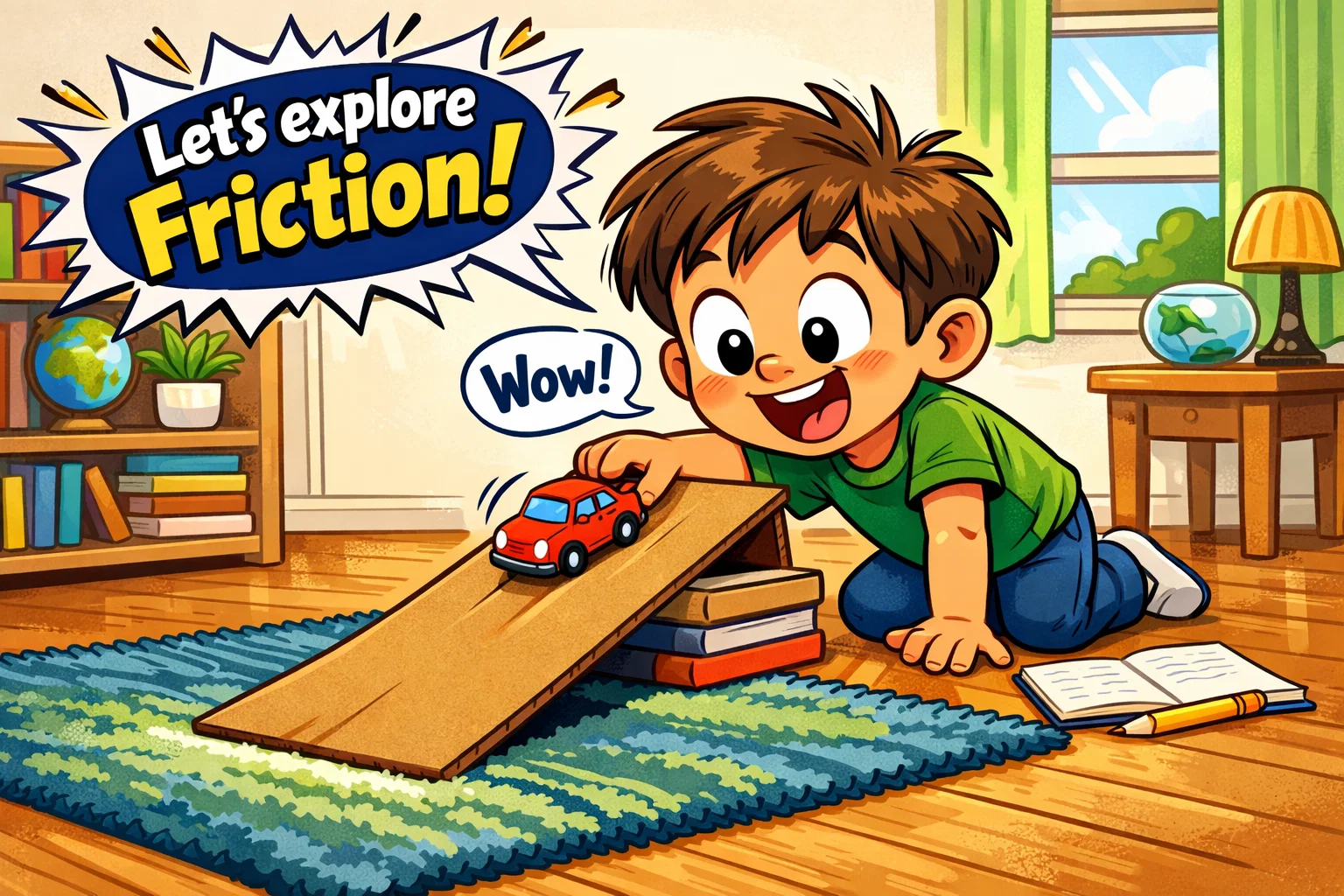
Exploring the physical world through a hands-on experiment offers children a unique window into how the universe functions. One of the most fundamental forces they encounter daily is friction—the resistance that one surface or object encounters when moving over another. By engaging in a friction experiment at home, young learners can transform abstract concepts into tangible experiences. Whether it is sliding a toy car across a rug or trying to lift a bottle of rice with a pencil, these activities foster curiosity and critical thinking.
Benefits of Early Science Exposure
Introducing science to children during their formative years is about much more than teaching them facts. It is about nurturing a “scientific habit of mind.” When kids participate in a science experiment, they learn to:
- Observe natural phenomena in their immediate environment.
- Predict outcomes based on previous experiences.
- Analyze results to understand cause-and-effect relationships.
This proactive engagement helps them move from being passive recipients of information to active “knowledge-makers.” This shift is essential for building a long-term scientific identity. Providing kids with a hands-on activity using common materials like PET plastic bottles or cardboard makes the subject matter accessible and meaningful.
Early exposure to these concepts offers several advantages:
- It bridges the gap between theoretical physics and everyday objects.
- It creates a foundational comfort with the principles of force and motion.
- It prepares students for more complex schooling by establishing core intuition.
Safe Science Experiments at Home
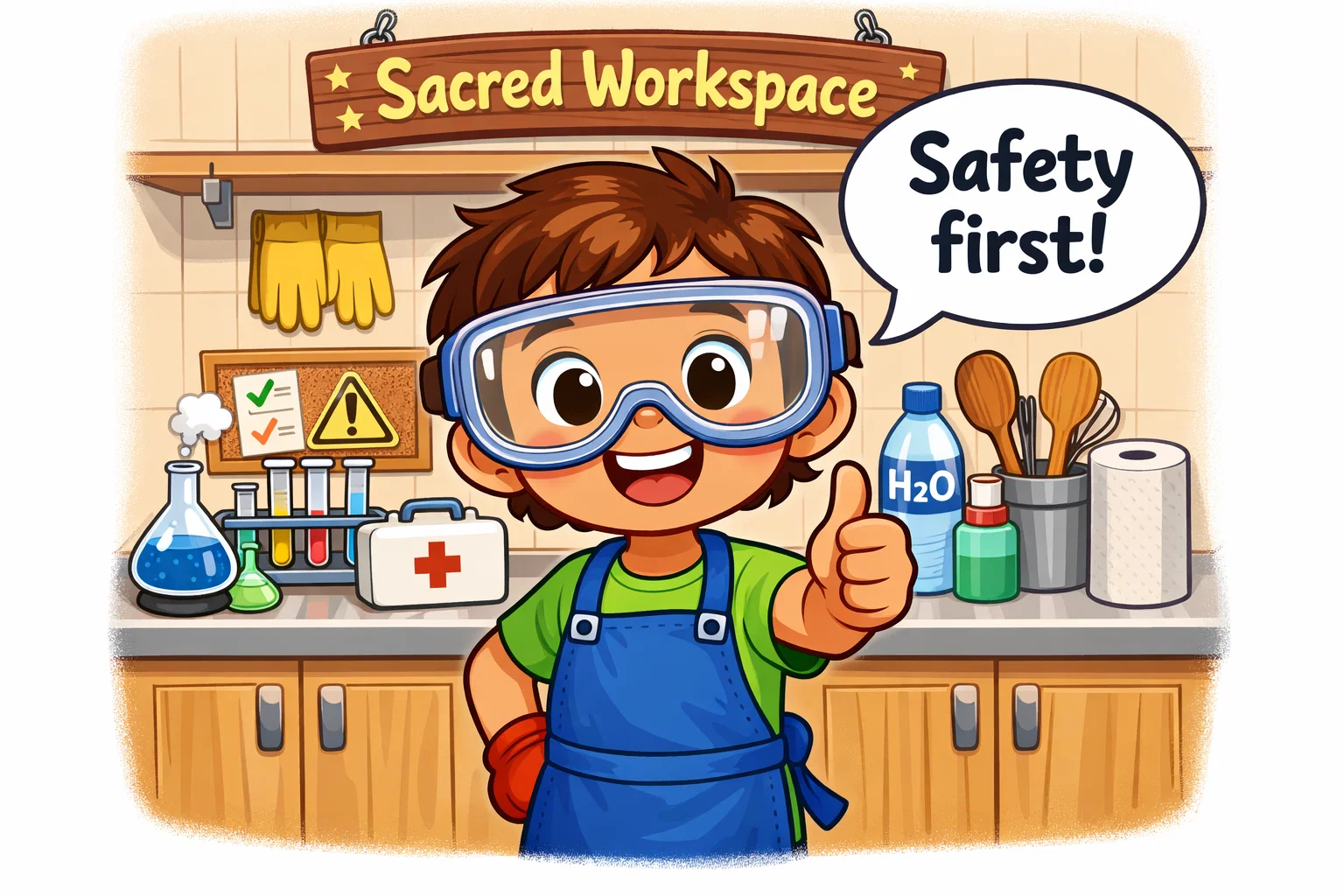
Safety is the cornerstone of any home-based science project. Expert recommendations suggest creating a “Sacred Workspace” — a dedicated, organized area where the experiment takes place. This approach provides several safety benefits:
- Prevents the accidental mixing of household items with science materials.
- Ensures the focus remains entirely on the experimental task.
- Minimizes distractions that could lead to accidents.
Proactive supervision is vital, especially when dealing with potential choking hazards like small rice grains or physical risks like snapping balloons. For any activity involving tension or small parts, using basic protective gear is a wise habit.
Key safety considerations include:
- Using simple safety goggles, as standard glasses are often insufficient to prevent injuries.
- Protecting eyes during tasks like building a hovercraft or using elastic bands.
- Maintaining a clean and structured environment to foster professional discipline.
Easy Friction Tray and Slide Setup
The “Friction Tray” is an excellent introductory experiment because it visualizes how different surfaces affect movement in real-time. By creating a simple slide, you can demonstrate why some objects move faster than others based purely on what they are touching.
Essential Household Supplies
To set up this activity, you will need:
- A flat tray or a piece of stiff cardboard (the slide).
- Various materials to cover the slide (sandpaper, aluminum foil, a towel, plastic wrap).
- A small object to slide (a wooden block or a plastic toy).
- Tape to secure the materials.
Step-by-Step Activity Instructions
- Secure a strip of aluminum foil to one section of the tray and a piece of sandpaper to another.
- Prop one end of the tray up on a stack of books to create an incline.
- Place your object at the top of the foil strip and release it without pushing.
- Repeat the process on the sandpaper strip.
- Record how long it takes for the object to reach the bottom of each surface.
Expected Results and Observations
You will likely observe that the object moves much slower, or perhaps not at all, on the sandpaper compared to the foil. This happens because the “rough” texture of the sandpaper creates more resistance. This tactile feedback is the first step in helping kids recognize that surfaces dictate the speed of motion.
Floating Rice Friction Experiment
The “Floating Rice” challenge is a classic experiment that seems like a magic trick but is actually a brilliant demonstration of compaction and force. It shows how friction can become strong enough to defy gravity.
Necessary Materials for Rice Challenge
- A clean, dry 16 oz. PET plastic bottle.
- Plenty of uncooked long-grain or short-grain rice.
- A funnel (or a rolled-up piece of paper).
- A pencil or a sturdy wooden chopstick.
Detailed Procedure for Success
- Use the funnel to fill the bottle with rice all the way to the top.
- Tap the bottle firmly on the table several times to let the rice settle.
- Add more rice to fill the newly created space, leaving only about 1-2 centimeters of gap at the top.
- Push the pencil into the bottle. At first, it will slide in easily.
- Remove the pencil, tap the bottle again, and re-insert the pencil. Repeat this until the pencil feels very “stiff” inside the rice.
- Try to lift the bottle by only holding the pencil.
Troubleshooting Common Execution Issues
If the bottle falls, it usually means the rice is too loosely packed. The “real learning” occurs when an experiment fails; encourage the child to ask “why” it didn’t work. Often, the grains have too much “free volume” or air gaps. Tapping the bottle more or using a plastic bottle instead of glass (to allow for slight squeezing) can help achieve the “jamming transition” needed to lift the weight.
Best Science Experiments with Ramps and Slopes
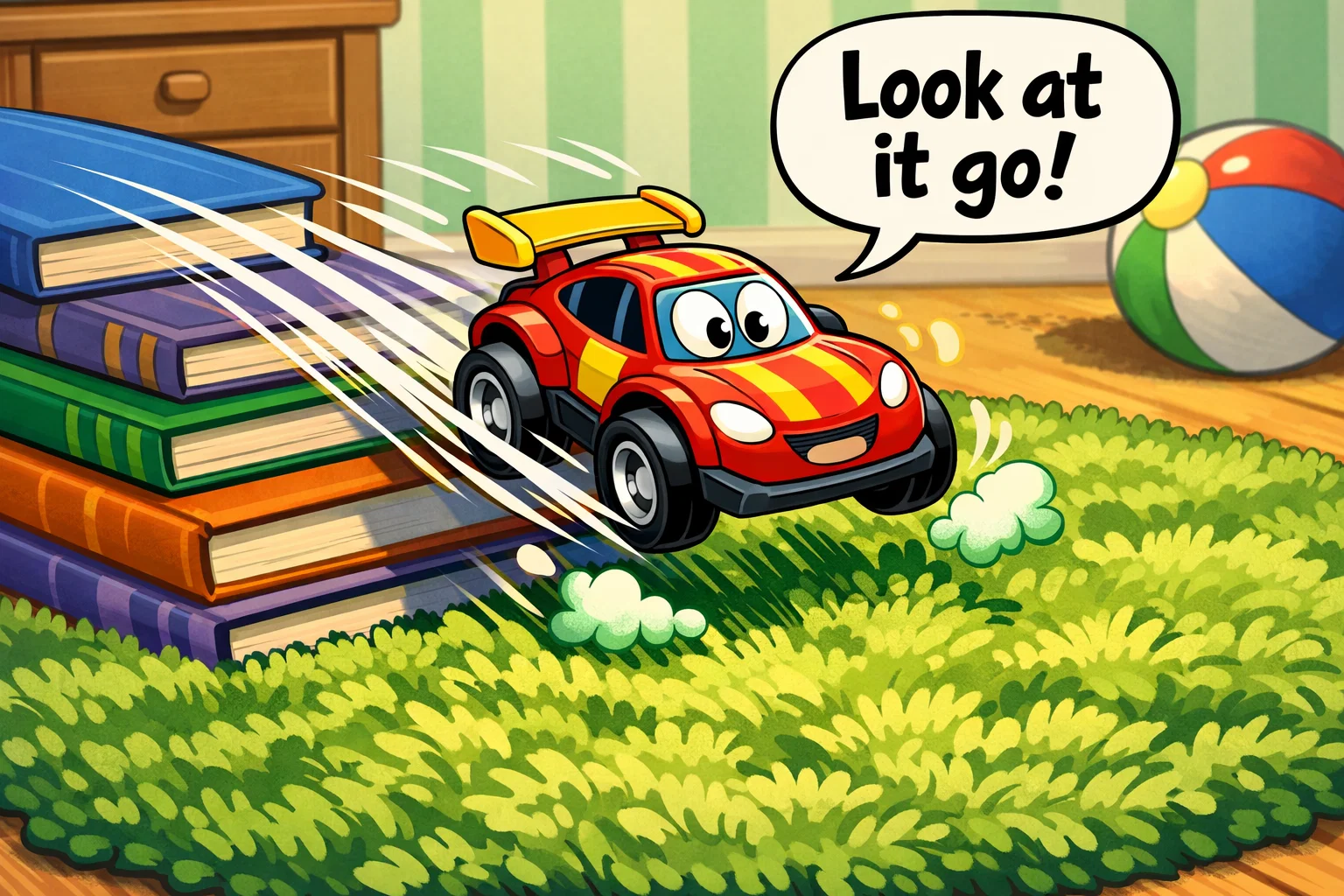
Working with a ramp allows you to measure exactly how force and motion change based on the angle of the slope and the materials used.
Building Simple Ramps with Books
A rigid material like heavy cardboard or a wooden plank makes the best ramp. By stacking books, you can change the incline. For most home experiments, an angle between 15 and 30 degrees is ideal. This ensures that gravity provides enough force to overcome the initial resistance without making the object tumble or flip.
Testing Different Surface Textures
You can expand this by placing different household items at the end of the ramp. What happens when a toy car rolls off a smooth ramp onto a plush carpet versus a tile floor? The deceleration on the carpet is a direct manifestation of kinetic friction. The microscopic “peaks and valleys” of the carpet fibers catch the wheels more effectively than the smooth tile.
Measuring Travel Distance and Speed
Use a measuring tape to see how far a car travels on each surface. This introduces basic data collection and observation skills. By recording these distances, children begin to understand how to quantify their scientific findings and look for patterns in the way different materials interact.
Power of Wind and Air Resistance
Friction does not just happen between solid objects; it also occurs in fluids like air. This is known as drag or air resistance.
DIY Hovercraft Construction Guide
- Glue a pop-top bottle lid to the center of an old CD or DVD. Ensure the seal is airtight using low-temperature hot glue.
- Blow up a balloon and stretch the neck over the closed pop-top lid.
- Place the craft on a very smooth floor and “open” the valve.
- Watch as the craft glides effortlessly across the room.
Air Pressure and Movement Basics
The air escaping the balloon creates a thin cushion between the CD and the floor. This illustrates Newton’s Third Law: the downward thrust of air creates an upward lift. NASA’s Jet Propulsion Laboratory (JPL) notes that understanding these forces helps engineers design vehicles that can be controlled at high speeds.
Friction Reduction Through Air Cushions
The hovercraft moves so well because the air cushion significantly reduces the contact between the CD and the floor. By replacing sliding friction with a layer of gas, the resistance becomes almost zero. This is the same principle used in high-speed maglev trains and commercial hovercrafts.
Core Friction Principles for Kids
To understand why these experiments work, we must look at the scientific laws governing them. While these might seem complex, they can be broken down into simple ideas.
Simple Friction Definition
It is the force that opposes motion between two surfaces that are touching. It acts in the opposite direction of the way the object wants to slide. If you push a book to the right, it pushes to the left.
Primary Causes of Surface Resistance
Even surfaces that look smooth, like glass, are covered in microscopic irregularities called asperities. Think of them as tiny mountains and valleys. When two surfaces touch, these mountains interlock, making it hard for them to slide past each other.
Factors Influencing Friction Strength
The strength of this force is governed by Amontons’ Laws. The first law states that friction is directly proportional to the normal force (the weight pressing the surfaces together). If you put a heavy brick on a tray, it is much harder to slide than an empty tray. Interestingly, Amontons’ Second Law tells us that the apparent area of contact doesn’t change the friction — only the weight and the materials matter.
Essential Physics Facts for Students
| Parameter (friction) | Description |
| Static | The force needed to start an object moving. |
| Kinetic | The force acting on an object that is already moving. |
| Coefficient | A number that describes how “grippy” two materials are together. |
| Normal Force | The perpendicular force pressing two surfaces together (often weight). |
Research from the New York Academy of Sciences indicates that students participating in active STEM learning show a 77% increase in acquiring new knowledge. This shows that understanding these “facts” is much easier when you’ve seen them in action through a ramp or a rice bottle.
Real-World Friction Examples
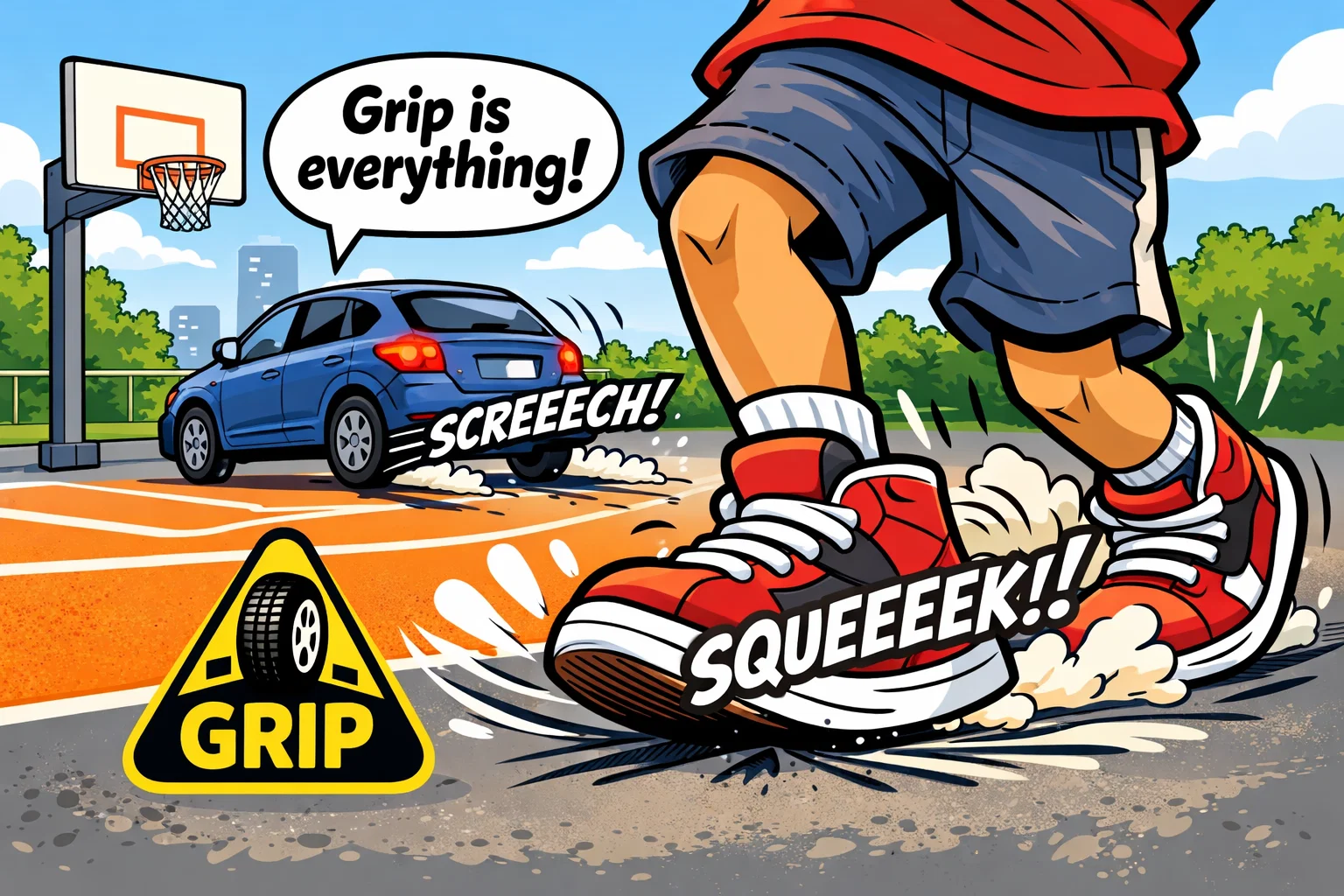
Isn’t just a classroom topic; it’s a constant part of our lives. Without it, we couldn’t function.
Friction in Daily Transportation
Every time a car brakes, friction between the brake pads and the wheels — and between the tires and the road — brings the vehicle to a stop. On rainy days, thin films of water can create “liquid bridges” that reduce this grip, which is why roads become slippery.
Role of Friction in Sports and Play
Think about soccer cleats or basketball shoes. They are designed with specific textures to increase the coefficient of friction, allowing players to stop and turn quickly without sliding. Conversely, ice skaters want as little as possible to glide across the rink.
Importance of Friction for Movement and Safety
We need friction even to walk. Our shoes “grip” the floor to push us forward. This is why safety experts at the National Science Teaching Association emphasize that hands-on science must include a hazard analysis; understanding where friction might fail (like a slippery floor) is a key safety skill.
Advanced Physics Concepts for Older Kids
For older students, we can introduce the mathematical side of these forces using Coulomb’s Law of Friction.
Static Versus Kinetic Friction
It is a near-universal physical constant that static friction is greater than kinetic. This means it takes more force to get an object started than it does to keep it moving. This is because the microscopic asperities have time to “settle” into each other when an object is still.
Effects of Weight on Surface Resistance
As mass increases, the gravitational force — and therefore the normal force — rises. This directly increases the frictional force. This is why pushing a full laundry basket is much harder than pushing an empty one. Mathematically, this is expressed as F = mu * N, where F is the friction force, N is the normal force, and mu is the coefficient of friction.
Methods for Reducing Friction with Lubricants
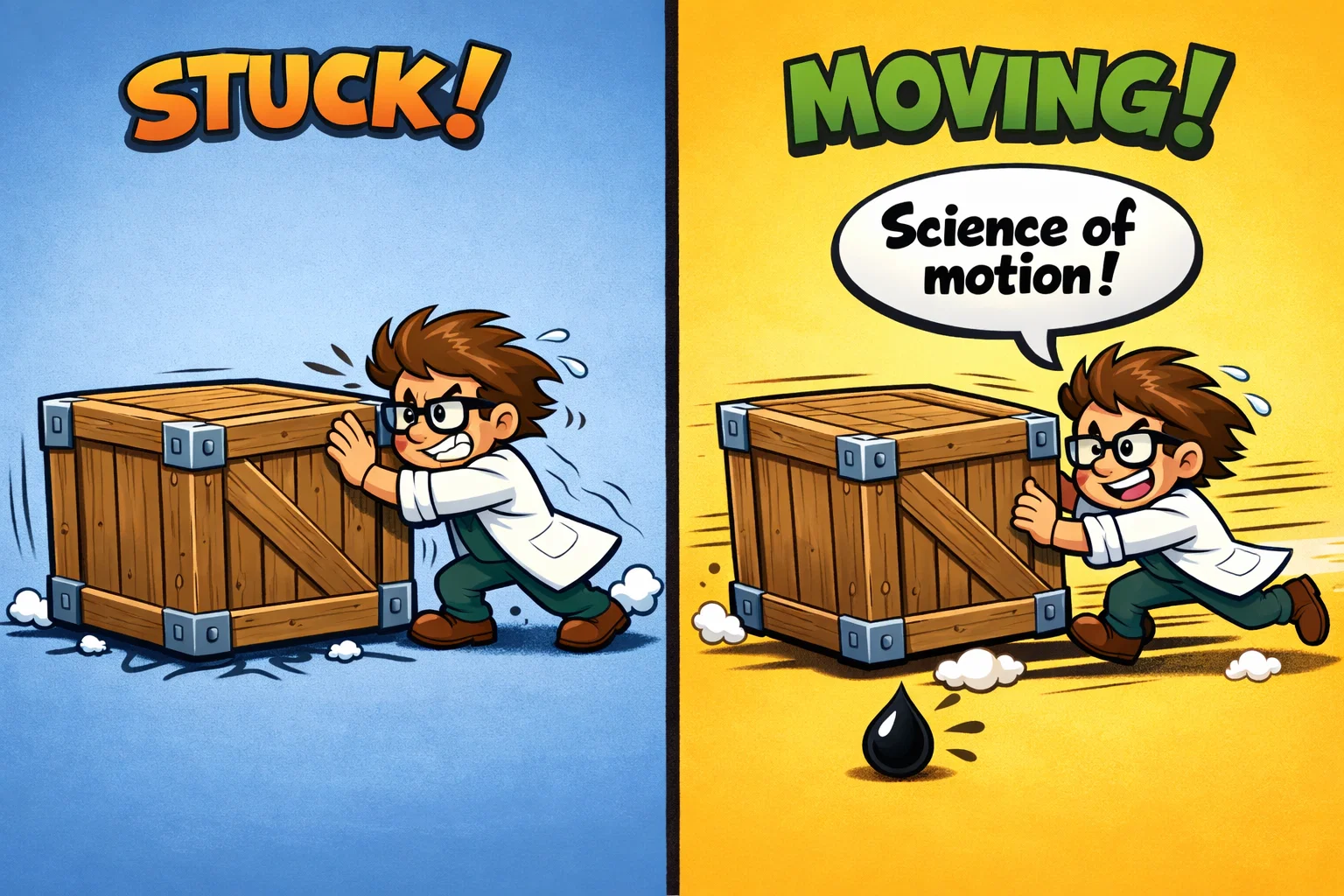
In engineering, we often want to reduce wear and tear. Lubricants like oil or water fill the “valleys” between surface asperities, allowing them to glide over each other. However, in some cases, too much moisture can lead to “stiction” — a state of high adhesion that can cause parts to stick unexpectedly.
Frequently Asked Questions About Friction
Why do shoes have rubber soles?
Rubber has a high coefficient of friction against most surfaces like wood, concrete, and tile. This provides the “grip” necessary to walk or run without sliding, especially when surfaces are smooth.
How does ice make surfaces slippery?
Ice often has a very thin layer of liquid water on top, or it is so smooth that there are very few asperities for your shoes to “catch” on. This reduces the friction significantly, making it hard to find balance.
Can friction produce heat between objects?
Yes. When asperities rub against each other, the energy of motion is converted into thermal energy. This is why rubbing your hands together on a cold day makes them feel warm.
Why is it harder to push heavy boxes?
According to Amontons’ First Law, friction is proportional to the normal force. A heavier box presses down harder on the floor, causing the microscopic surface bumps to interlock more tightly.
Which household materials create most resistance?
Materials with rough, uneven textures like sandpaper, carpet, or rubber mats usually create the most resistance. Smooth materials like glass, waxed paper, or oiled surfaces create the least.

Take a short quiz to find out what your everyday choices say about your parenting style
When your child is curious about something new, what’s your instinct?
Take a short quiz to find out what your everyday choices say about your parenting style
“Can I download this app?” What happens next?
Take a short quiz to find out what your everyday choices say about your parenting style
When it comes to rules at home, which sounds most like you?
Take a short quiz to find out what your everyday choices say about your parenting style
If you could give your child one life skill today, what would you pick?
Take a short quiz to find out what your everyday choices say about your parenting style
Your child gets to choose what to watch. What would your ideal setup look like?
Take a short quiz to find out what your everyday choices say about your parenting style
Pick your parenting superpower ✨



