
Middle Childhood (7–11 Years)

Inclined Plane Experiments for Kids
Fostering a sense of curiosity in children often begins with the simplest of objects found around the home. A piece of cardboard leaned against a stack of books or a wooden plank resting on a porch step is not just a ramp; it is a fundamental scientific tool. By engaging in inclined plane experiments, kids can explore the invisible forces that...
10.02.2026

Simple Pulley Experiments for Kids at Home: Build and Explore
Discovering how to move heavy objects with just a string and a wheel is a moment of scientific magic for children. Pulleys are essential simple machines found everywhere, from construction cranes to school flagpoles.
10.02.2026
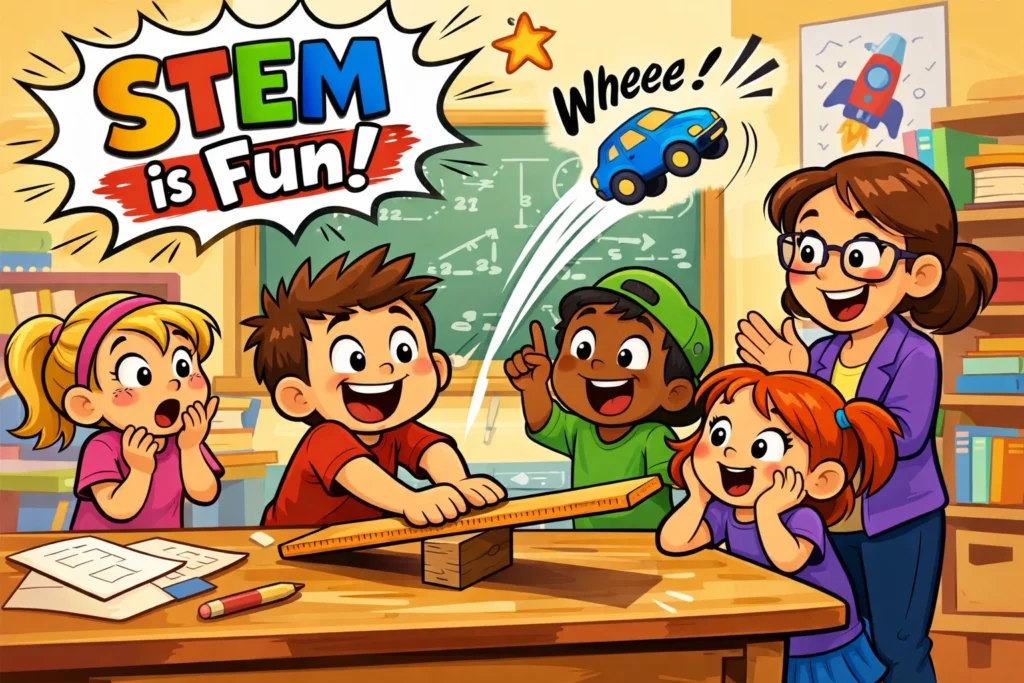
9 Lever Experiments for Kids: Hands-On STEM Activities
Introducing children to physics begins with the lever, a fundamental intersection of classical mechanics and engineering. As a non-motorized simple machine, it provides mechanical advantage by altering force magnitude or direction.
10.02.2026

Best Simple Machines Experiments for Kids to Master Force and Engineering
Simple machines are fundamental mechanical devices that change the direction or magnitude of a force. Unlike complex electronic gadgets, these tools use geometry and physical laws to perform work—moving an object over a distance—more efficiently. The six standard types include the lever, pulley, wheel and axle, inclined plane, wedge, and screw....
10.02.2026
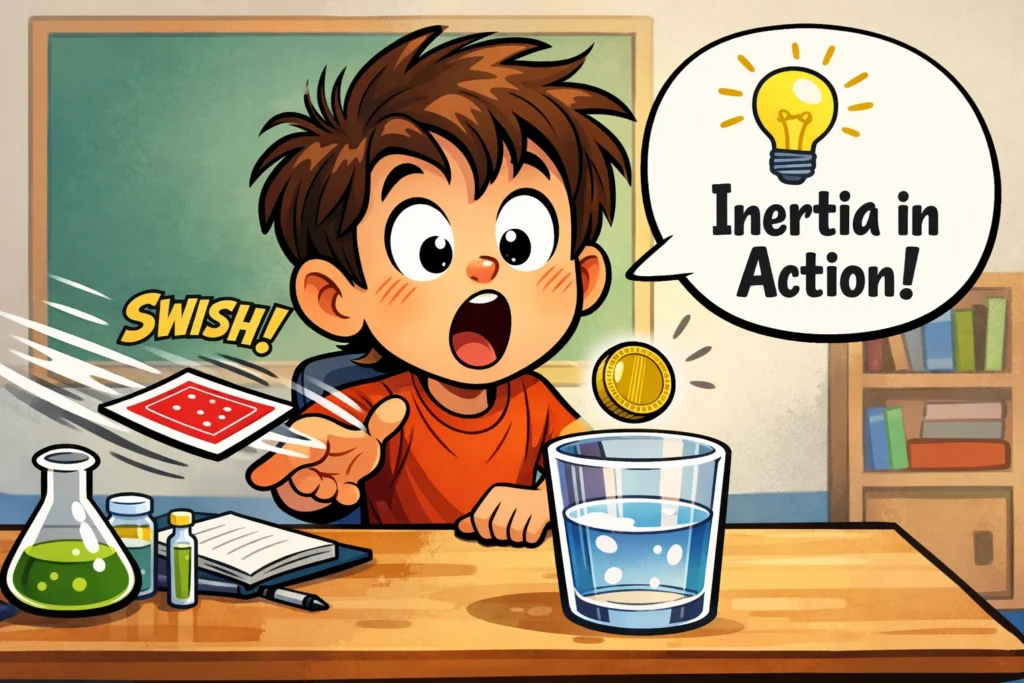
Easy inertia experiments for kids to learn the first law of motion
The magic of science often hides in plain sight, using nothing more than household items to challenge our perceptions of the physical world. For parents and educators, the inertia coin card trick is a classic demonstration that rarely fails to spark curiosity in children. By flicking a simple card out from under a coin, you are not just performing...
10.02.2026

Gravity Experiments for Kids at Home
Gravity is the invisible force that keeps our feet on the ground and the planets in their orbits. To kids, it often seems like magic, but this pull follows very specific rules of mass and motion.
10.02.2026
