

World Book Day is a cherished annual event designed to celebrate the joy of reading and encourage every child to own their own book. As a parent or educator, you’re constantly seeking ways to boost literacy and nurture a habit of reading for fun. This comprehensive guide is your go-to resource, packed with practical, creative ideas, including fun activities, simple DIY costume inspiration, classroom projects for KS1 and KS2, and brilliant World Book Day ideas for schools and families to create a memorable celebration of books.
The core mission of the World Book Day charity is impactful: to see more children and young people, especially those from disadvantaged backgrounds, develop a lifelong love of reading and the improved life chances that come with it. By embracing this day with engaging activities and ideas, you help make that mission a reality for the children in your life, transforming an annual event into the first step on an exciting reading journey.
What Is World Book Day
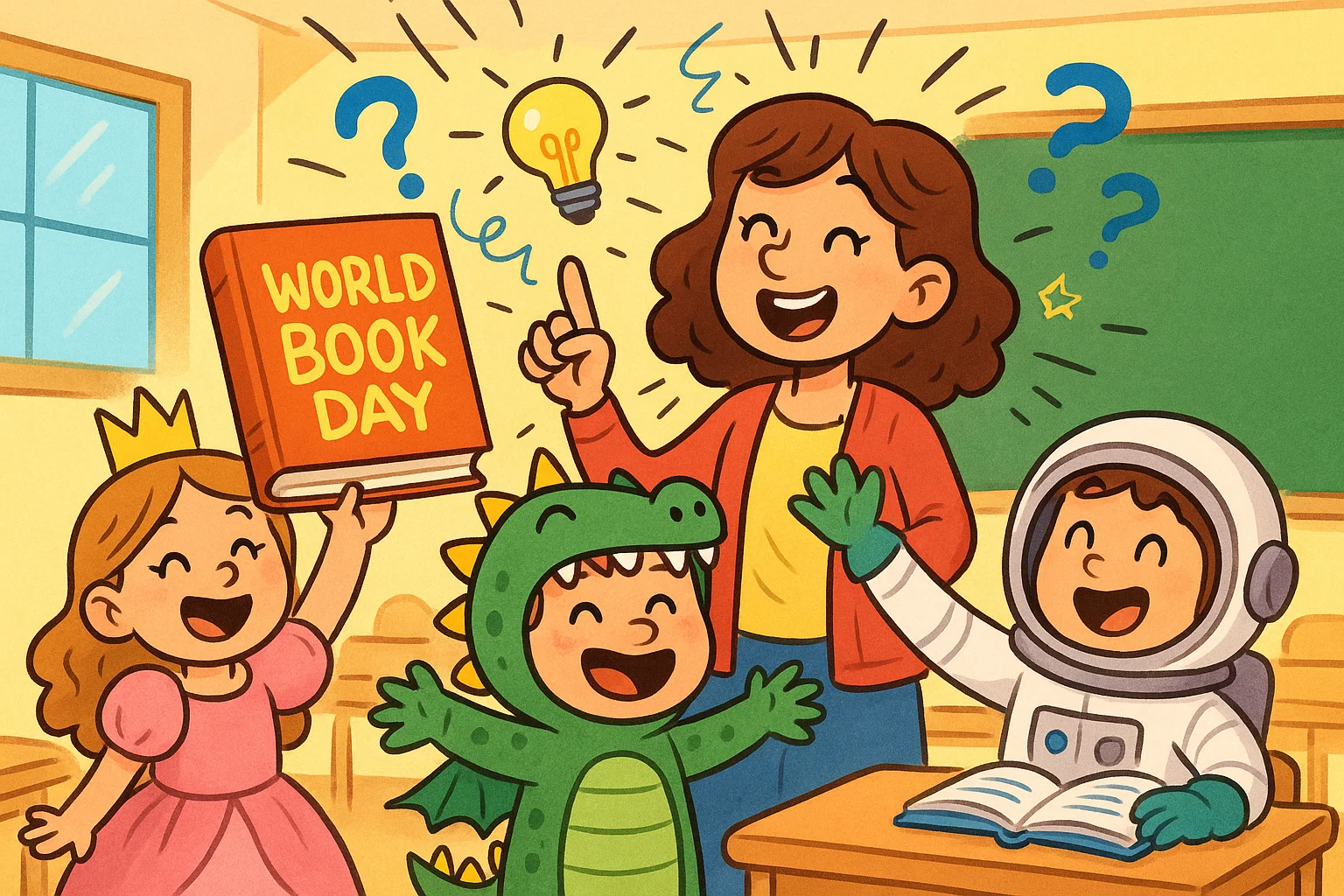
World Book Day is more than just a dress-up event; it’s a powerful global movement and a registered charity, often observed in the UK and Ireland on the first Thursday in March. Its fundamental goal is to promote reading for pleasure, providing every child and young person with a £1 World Book Day book token, which they can exchange for a specially-produced £1 publication or use to get £1 off another of their choice. This simple mechanism ensures that, regardless of a family’s circumstances, every child has the opportunity to choose and own a reading title—for many, this is their very first children’s book of their own.
Key Goals of the Celebration
The celebration is strategically designed to combat declining reading enjoyment levels and improve long-term outcomes for children.
- Boosting Reading Motivation: The excitement and fanfare of the day help children associate titles and reading with a positive, social, and fun experience. Children who take part in World Book Day often become more motivated to read afterwards.
- Encouraging Storytelling and Imagination: Activities like creative roleplay, writing about their favourite books, or designing new characters directly support creative development and verbal skills.
- Supporting Literacy Development: Immersing children in a literary theme naturally supports vocabulary acquisition and comprehension. The focus on ownership and choice encourages a sense of autonomy in their reading journey.
How Kids Typically Join the Day
Participation traditions vary but generally involve a whole-school or whole-family focus on reading material.
- Costume Parade: Children dress as their favourite characters, leading to fun discussions about the story’s plot, setting, and character traits. (Think Paddington’s duffle coat or Mary Poppins’s umbrella).
- Themed Lessons and Storytime: Schools integrate the literary theme across the curriculum, with older KS1 and KS2 children focusing on book review writing, while EYFS groups might participate in sensory reading sessions.
- The £1 Volume Exchange: The highlight for many children is visiting their local bookshop or supermarket to use their token, empowering them to choose a free book that genuinely interests them.
Role of Schools, Libraries, and Families
Each stakeholder plays a vital role in maximising the day’s impact.
| Stakeholder | Key Contribution to World Book Day |
| Schools | Organise events like character parades, host an author visit, provide classroom activity sheets, and distribute the £1 title tokens. They create an immersive, whole-school celebration. |
| Libraries | Host special storytime sessions, free world book day events, provide resources, and offer a safe, encouraging space for children to explore a wide range of books. |
| Families | Encourage love of reading at home, support costume creation, engage in family reading for pleasure time, and take children to exchange their token for their volume. |
When Is World Book Day 2026
For children in the UK and Ireland, World Book Day 2026 will be celebrated on Thursday, March 5, 2026. Globally, UNESCO’s World Day is celebrated on April 23rd, but the UK/Ireland date is set specifically to avoid Easter holidays and school exams, ensuring maximum participation.
How Schools Prepare for the Day
Schools often begin planning several weeks in advance to ensure a smooth, impactful day.
- Six Weeks Before: Schools and early years settings decide on their theme (e.g., traditional tales, celebrating authors and illustrators, or a focus on non-fiction titles). Communication with parents begins, outlining the plan and the purpose of the event.
- Four Weeks Before: £1 title tokens are ordered and a schedule for events, including cross-curricular activities, is finalised. Teachers select printable resources or create their own.
- Two Weeks Before: Tokens are distributed to children. Reminders for costumes and any required props are sent home, allowing parents time for planning and crafting simple World Book Day ideas.
Common Deadlines for Costumes and Activities
Parents usually receive announcements about the costume requirements and any class-based projects (like a book review competition) about a month ahead of time. This lead time is crucial for busy parents who may opt for easy world book day costumes or need to source materials for a DIY project.
How Early Years Settings Approach the Day
Nurseries and EYFS groups focus on sensory engagement and keeping the activities simple and fun, rather than complex projects. The emphasis is on building positive associations with stories and reading material. Costumes are encouraged but often kept very simple, like animal ears for a character from a Julia Donaldson story (The Gruffalo, for instance) or a simple hat for Peppa Pig.
Why We Celebrate World Book Day
The celebration offers profound developmental and societal benefits that extend far beyond a single day. The impact of reading for pleasure is a greater indicator of a child’s future success than their parents’ income or education level.
Impact on Early Literacy
The buzz around the day provides a powerful, engaging context for literacy skill development.
- Vocabulary Growth: Hearing stories, discussing favourite characters, and learning about new worlds exposes children to a broader and richer vocabulary than everyday conversation alone.
- Comprehension and Empathy: Exploring the motivations and feelings of story characters significantly strengthens comprehension and fosters empathy, a crucial life skill.
- Phonics and Word Recognition: Even a simple activity like creating a “Wanted Poster” for a villain involves practising letter formation and spelling.
Encouraging Reading for Pleasure
By making the day a fun, celebratory experience, World Book Day helps children form an emotional connection with literature.
“It helped me because I used to dislike reading, but when World Book Day happened, I LOVED IT.” — a child’s comment featured in an impact report.
This shift in perception—seeing reading as an entertaining and social activity—is what cultivates a love of reading and the habit of reading. It encourages children to be excited about titles.
Family Engagement in Reading
The day serves as a catalyst for strengthening home reading routines. When a child brings home their free volume and talks about their favourite characters, it creates a natural opening for meaningful discussions and shared storytime experiences, reinforcing the value of reading as a shared family activity.
World Book Day Activities for Kids
These activities for kids are adaptable for both the classroom and the home, ensuring a truly immersive and fun experience.
Dress-up and Character Roleplay
The beloved costume tradition is an excellent way to deepen engagement with the story.
- Classroom Character Parade: Have children walk around the school/classroom showing off their costumes. Ask them to give a two-sentence “elevator pitch” about their character’s main struggle or goal in the story.
- Simple DIY Costumes: Encourage low-cost options. A blue top, jeans, and a sign that says “The Boy Who Read Too Much” work perfectly. For a classic, Roald Dahl’s characters are often simple: A brown sack for the BFG or a yellow dress for Matilda.
Creative Storytelling Games
Encourage budding authors and illustrators to write a story or invent new adventures for their favourite characters.
| Activity | Description | KS1/EYFS Adaptation |
| Book Trailers | Children work in groups to film a short, one-minute “trailer” for a fiction book. Use simple props and dramatic voices. | Draw a storyboard (3-4 panels) instead of filming. |
| Story Dice | Use dice (with drawings of a character, setting, object, action) to prompt an original, improvised story. Use fun ideas to get creative! | EYFS can use sensory props (e.g., a twig, a feather, a toy animal) as the story prompts. |
| Wanted Posters | Create wanted posters for a story villain. Include a description, the reward, and the character’s “crimes.” | Use a worksheet template with a picture of the villain (like the Wolf from ‘Little Red Riding Hood’) and ask children to draw a simple mugshot. |
Themed Crafts and Art
Crafts are an excellent way to practice fine motor skills and get creative while thinking creatively about reading.
- DIY Bookmarks: Create personalised bookmarks using card, wool, or lolly sticks. Children can draw mini portraits of their favourite characters.
- Paper Plate Masks: Use a simple paper plate as a base to make masks for characters like the Gruffalo, a tiger, or a fox (Fantastic Mr Fox).
- Volume Cover Redesign: Challenge KS2 children to redesign the cover of a famous publication, considering the target audience, theme, and colour palette.
Reading Challenges and Literacy Games
Turn reading into a fun, competitive activity.
- Reading Bingo: Create a Bingo card with reading challenges (e.g., “read a title by an author you’ve never heard of,” “read a non-fiction volume,” “read to a pet”).
- Scavenger Hunts: Hide clues around reading and literature (e.g., “Where does the boy who won a golden ticket live?”). The final clue could lead to a free volume or a special reading session.
Food and Cooking Inspired by Stories
Bring the pages to life with edible treats!
- Mad Hatter’s Tea Party: Serve un-birthday cake and odd-sized teacups for a themed snack based on the classic story.
- Gruffalo Crumble: A delicious apple or berry crumble, named after the famous story character. This can be a great way to talk about recipes and sequencing.
Community and School Events
These whole-school or neighbourhood ideas and activities help celebrate the joy of reading on a grand scale.
- Literature Swaps: A charity world book event where children bring in an old volume and swap it for a ‘new’ one, promoting sustainability and access to reading material.
- Classroom Door Decoration: Challenge each class to decorate their classroom door as the cover of their favourite publication. The level of detail and artistic flair can be judged in a fun, non-competitive way to celebrate.
World Book Day Activities for EYFS
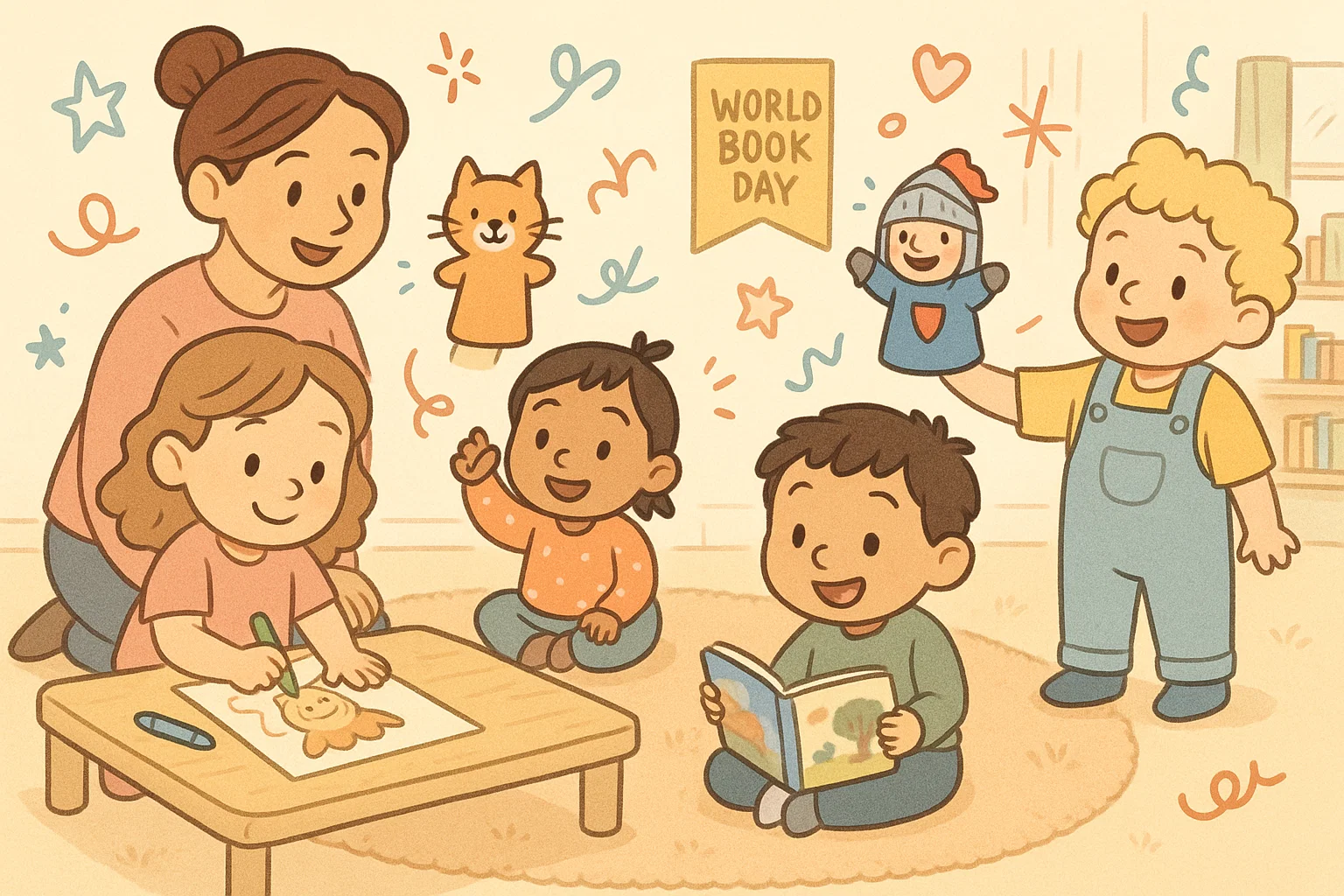
Activities for kids in this age group (Nursery, Reception) must be highly sensory, short, and focused on play-based learning to build early literacy. These are perfect for World Book Day in early years settings.
Sensory Storytelling
Use simple props, textures, and sounds to bring picture stories alive.
- Story Bag Exploration: Use a fabric bag filled with items related to a single story (e.g., a small plastic pig, a straw, a brick, and a fan for ‘The Three Little Pigs’). Children reach in and predict which story it is.
- Movement-Based Exploration: After reading a story about animals, have the children act out the sounds and movements of the favourite characters. This encourages physical development and comprehension.
Early Phonics Play
Weaving phonics into play is an excellent way to support the development of literacy.
- Initial Sound Treasure Hunt: Hide objects in a sand or water tray. Ask the children to find objects starting with the sound of the day, e.g., ‘m’ for a monkey or ‘c’ for a car.
- Rhyming Basket: Fill a basket with pairs of rhyming objects (e.g., a cat and a hat). Children match the rhyming words, supporting the foundation of phonological awareness.
Simple Crafts for Fine Motor Skills
Crafts should be easy, low-prep, and help develop essential skills.
- Character Colouring Sheets: Simple colouring pages featuring beloved children’s book favourite characters like Peppa Pig or Paddington.
- Play-Doh Story Mats: Provide activity packs with Play-Doh and mats with an open-ended theme, e.g., “Build the Very Hungry Caterpillar’s dinner.”
Teaching Resources and Classroom Activity Ideas
For teachers, having ready-to-go, free world book day resources is invaluable for a successful event.
Printable Packs for Teachers
Many organisations offer free printable World Book Day activity sheets that include:
- Book Review Templates: Differentiated templates for KS1 and KS2 children to summarise a fiction book and give it a star rating.
- Quizzes and Worksheets: Ready-to-use worksheets focusing on comprehension, vocabulary, or authors and illustrators.
- Printable Bookmarks: Fun, cut-out designs for children to colour and use as a memorable keepsake.
Whole-school Activity Suggestions
- The Masked Reader: Teachers (or even the headteacher) record themselves reading a passage from a book while disguised in a mask. The children must guess the reader and the publication!
- Reading Speed Dating: For older children and young people, each child takes a different title and, for three minutes, must “pitch” it to their partner, encouraging them to pick up the volume next.
Using Author Visits Effectively
An author visit can be a game-changer for inspiring children to read and write. Help children by reading the author’s publications beforehand and preparing specific questions about their writing process, where they get their fun ideas, and their journey to becoming an illustrator or writer.
World Book Day Ideas for Schools
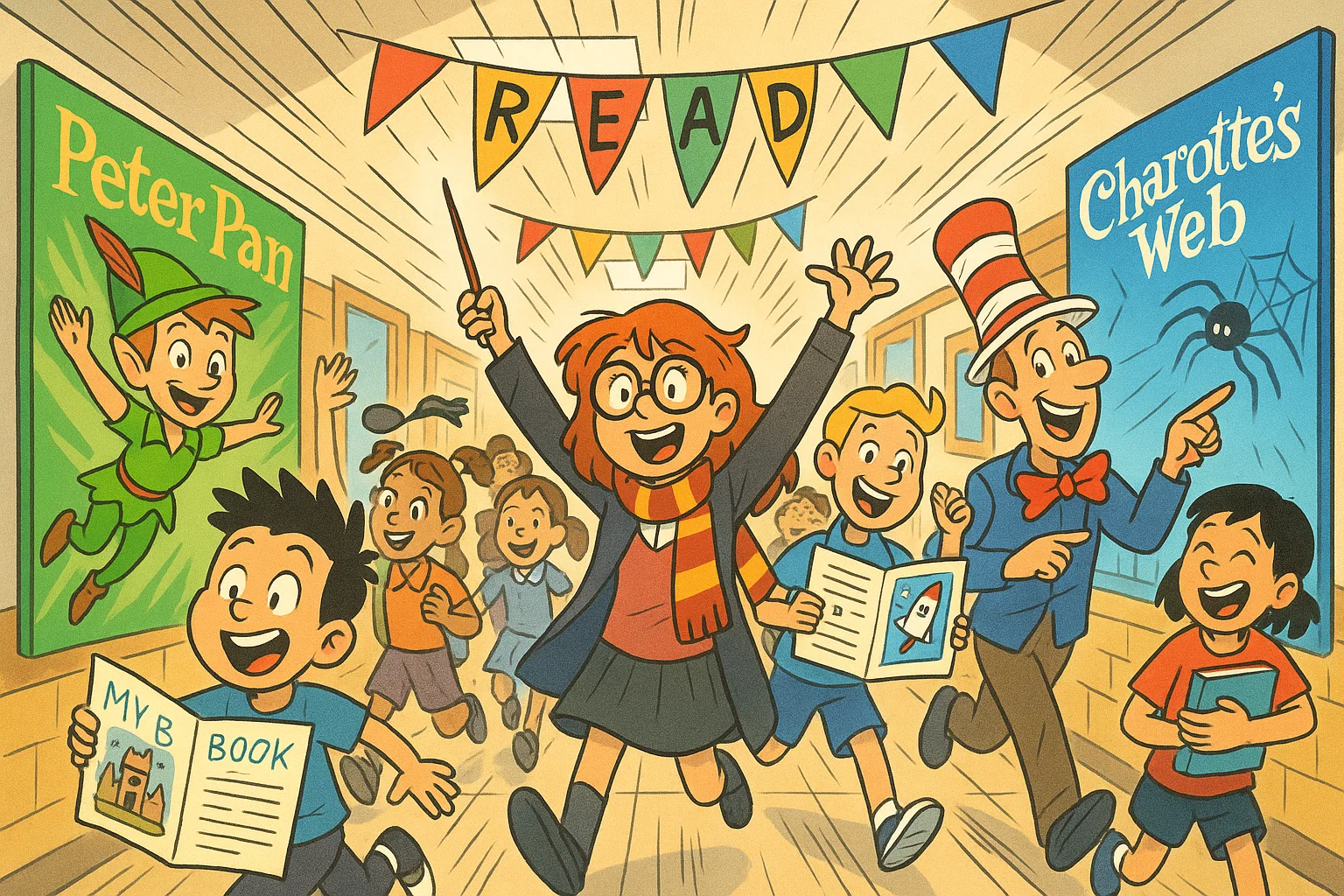
Focusing on school-wide projects encourages collaboration and creates a lasting literary theme.
Literacy Projects for Primary Classes
- Character Diaries: Challenge students to write a diary entry from the perspective of their favourite characters, describing an event that happened just outside the main story.
- Poetry Anthologies: Dedicate the day to poetry. Each child can write a poem about their favourite title or a specific literary theme.
Collaborative Activities
- Reading Mural: Create a large wall display where each student contributes a drawing or written passage about their favourite volume, creating a shared, visual celebration of books.
- Create a Class Story: The entire class works together to write a story (fiction or non-fiction), with the older KS2 children focusing on the writing, and KS1 children doing the illustration.
Competition Ideas
Competitions add a fun, high-energy element to the day.
- Six-Word Story Challenge: Inspired by Hemingway, challenge students to write a complete story in exactly six words.
- Volume Cover Recreation: Students recreate a famous cover scene using themselves and props, then take a photo.
World Book Day Ideas for Families
Bringing the joy of reading home is the most important component of developing a lifelong love.
Home Storytelling Activities
- The Reading Corner: Designate a comfy, special area in the house as the “reading corner.” Keep it stocked with blankets and a basket of reading material to encourage independent reading.
- Bedtime Reading Games: Instead of just reading, ask your child to predict what will happen next, or ask them, “If you were that character, what would you do?”
Family-Friendly Crafts and Printables
- DIY Bookmarks: Create unique bookmarks together. A simple rectangle of card with a character drawn on it is a low-prep, fun activity.
- Character Mood Boards: Cut out pictures, words, and colours from old magazines that you think represent a favourite story character.
Simple Low-Prep Ideas for Busy Parents
For parents facing a last-minute costume panic or a busy schedule, keep it simple:
- The Bookworm: Dress your child in a green top and trousers. Cut out some circles from brightly coloured cards, write different titles on them, and pin them down their back like segments of a worm.
- £1 World Book Day Books Focus: Focus entirely on the £1 title token. Use the evening to visit the bookshop or supermarket together to choose the free volume, making the choice and ownership the main event.
Free Printable World Book Day Activity Sheets
The internet is full of fantastic, free world book day resources. These printable resources make it easy to manage the day with minimal prep.
Colouring Pages and Doodle Sheets
Printable colouring pages featuring popular children’s book characters are an excellent way to keep EYFS and KS1 children engaged in a quiet, focused activity. Look for options featuring Paddington or characters from the current £1 World Book Day books.
Printable Bookmarks and Reading Trackers
A simple yet highly effective resource is a printable reading tracker. Children can log the title and author of every volume they read throughout the celebration week and beyond, helping to cement the habit of reading.
World Book Day Costumes for Kids
The costume parade is often the most anticipated part of the day.
DIY Last-Minute Costume Ideas
Sometimes the most brilliant costumes are the simplest, saving parents time and stress.
- Charlie Bucket (Charlie and the Chocolate Factory): Scruffy clothes and a handmade “Golden Ticket” made from yellow paper.
- Mr. Bump: Blue t-shirt, blue trousers, and toilet roll or white bandage wrapped around the torso.
- The Boy Who Cried Wolf: Normal clothes, but the child carries a picture of a wolf on a stick, or wears a small badge with a picture of a wolf on it.
- Wally/Waldo: A red and white striped top, a bobble hat, and glasses.
Character-Inspired Costume List
- Classics: Mary Poppins (black skirt, white blouse, umbrella), Roald Dahl characters (Matilda, BFG), or a character from Beatrix Potter publications.
- Modern Heroes: Harry Potter (school uniform, cape, glasses), The Gruffalo (simple mask, brown clothes), or a superhero from a comic book.
School-Friendly Costume Tips
The best costume is one that is comfortable, safe, and allows the child to participate in all the day’s activities and ideas.
- Comfort is Key: Avoid overly cumbersome outfits or masks that restrict vision. Children will be in it all day.
- Inclusivity: Encourage non-traditional costumes. Dressing up as an abstract concept, like a ‘word’ or a ‘colour’ from a story, or even their favourite illustrator, is a great way to celebrate and ensure children who can’t do a full character costume can still take part.
World Book Day Quizzes and Games
Quizzes are an excellent way to wrap up the day and assess reading comprehension in a fun activities format.
Literacy Quizzes for Classrooms
- The Opening Line Challenge: Read out the first line of a famous children’s publication (e.g., “Where the Wild Things Are…”). Students must guess the title and the author/illustrator.
- Character Guessing Games: The teacher gives three clues about a favourite character (e.g., “I wear a blue coat,” “I love marmalade,” “I live in London”). Students guess Paddington.
Literature-themed Scavenger Hunts
A great whole-school or classroom activity. The clues should be themed around reading and the content of stories. For example, a clue hidden on a map of a fantastical world (literary theme) could lead to the next riddle. This is a brilliant way to encourage older KS2 children to work collaboratively.
Reading for Pleasure
Sustaining the enthusiasm generated by World Book Day is key to building a lifelong love of reading.
How to Nurture Daily Reading
- Consistency: Set aside a non-negotiable storytime slot every day, even for just ten minutes.
- Lead by Example: Let your children see you enjoy reading. A parent or teacher reading their own fiction volume sends a powerful message that this is a valued adult activity.
Choosing Titles Kids Love
- The Power of Choice: The most effective strategy is allowing children to choose what they read. It doesn’t always have to be a classic. If they are excited about titles about dinosaurs, comics, or even annuals, that’s still reading!
- Exploring Genres: Encourage them to look beyond just one genre. If they love reading fantasy, suggest a non-fiction book about real-world mythology next.
Encouraging Independent Reading
For children and young people aged 5–12, providing comfortable space and time is essential. A great tactic is the “Super-Silent Reading Session” where everyone in the family (or class) reads a self-chosen volume at the same time for 20 minutes. The peace and focus can be surprisingly effective.
Latest World Book Day News and Updates
To ensure you have the most up-to-date resources and can take advantage of the latest campaigns, stay connected to the World Book Day charity.
New Resources and Title Releases
Each year, the charity releases a brand new list of £1 world book day books and accompanying activity packs and worksheets. Always check the official website for the latest free World Book Day printables and the newest £1 titles before planning your activities and ideas.
Support for Teachers, Parents and Communities
World Book Day is a charity world book event that seeks to make a difference year-round, not just on the day itself.
Literacy Support for Communities
Many local libraries and community hubs host free world book day workshops, particularly in areas of low literacy. These programs provide vital support and often run book drives to get books into the hands of more children and young people.
How Families Can Help with Literacy
- Home Reading Habits: The single most important thing a family can do is make storytime a regular, cherished ritual, not a chore.
- Affordable Title Access: Utilise your local library. Encourage your child to get their own library card and visit regularly to explore new titles and authors.
School Funding and Donation Ideas
If you want to help your school fund a literary resource or an author visit, consider simple, community-based fundraising. A whole-school literature swap can be turned into a fundraising event by asking for a small donation to participate. You can then use those funds to create a fun, new reading nook in the school library or purchase new children’s publications for the classrooms. Making a donation to the charity world book organisation is another way to celebrate and ensure the mission continues to support literacy across the nation, year after year, and beyond World Book Day.