

Have you ever wondered why some plants grow taller than others, or why certain brands of paper towels seem to soak up spills faster? To find the real answer, scientists don’t just guess; they conduct a fair test. A fair test is the backbone of the scientific method, ensuring that the results of an experiment are reliable and not just a product of luck or hidden influences. For young learners, mastering the art of investigation is like becoming a detective—you learn to spot clues, identify variables, and prove your case with evidence.
In this guide, we’ll explore how to ensure your science experiment is truly “fair.” We will dive deep into the world of variables, explain how bias can sneak into your work, and provide a clear lesson plan for parents and teachers to help students navigate the National Curriculum (including KS2 and beyond). By the end, you’ll know exactly how to conduct a fair test that stands up to scrutiny, whether it’s for a primary school project or a home science adventure.
Fair Test Concept in Science
At its heart, scientific enquiry is about curiosity and finding systematic ways to answer questions. A fair test is a specific type of enquiry where we look for cause and effect. It allows us to say with confidence, “Because I changed this, that happened.” Without the structure of a fair test, science would just be a series of random observations where we couldn’t be sure which factor caused the result.
Fair Test Definition for Kids
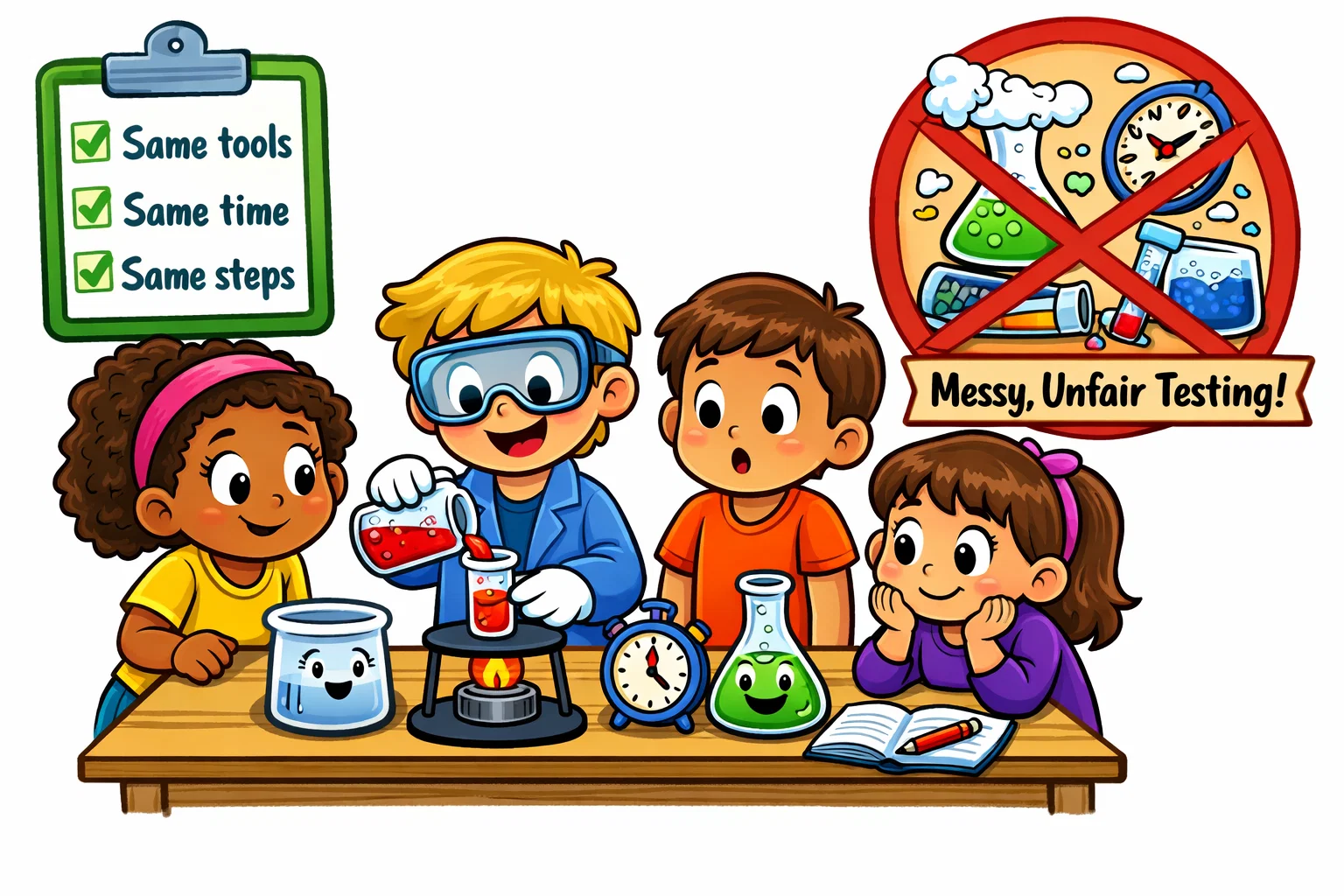
To put it simply, a fair test is an experiment where you only change one variable at a time while keeping everything else exactly the same. Imagine you are measuring the time it takes for two different runners to finish a race. If one runner is wearing sneakers and the other is wearing heavy boots, and the runner in boots also has to run uphill while the other runs on flat ground, is that a fair test? Of course not! To make it fair, both runners must have the same track, the same weather, and the same starting signal. The only thing we should change is their footwear.
Purpose of Fair Testing in Experiments
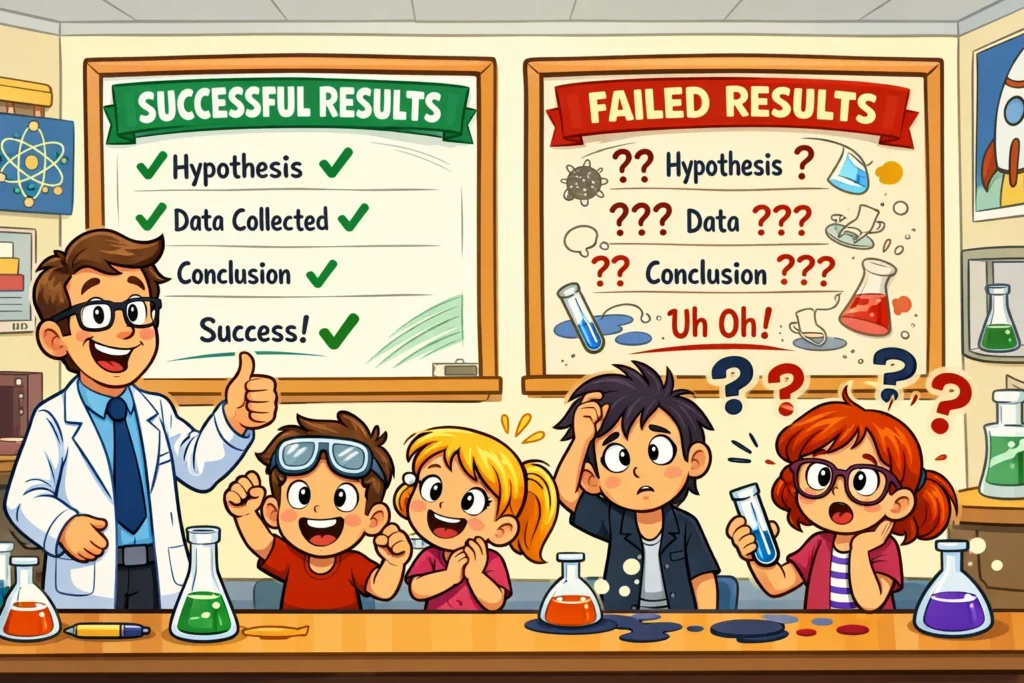
The main goal of conducting fair tests is to ensure that the results are accurate and repeatable. If another experimenter follows your method and gets similar results, your experiment is considered “reliable.” This process helps us make connections between ideas and builds a solid foundation for a science curriculum. When we ensure fairness, we avoid making “false conclusions”—like thinking a plant grew because of a “magic” fertilizer when, in reality, it just happened to get more sunlight than the others.
Fair Test vs Unfair Test Comparison
Understanding the difference between a fair and unfair investigation is crucial for children’s learning. Here is a quick comparison table to help young learners visualize the concept:
| Scenario | Fair Test (Reliable) ✅ | Unfair Test (Unreliable) ❌ |
| Testing ball bounce | Dropping the type of ball from the same height onto the same floor. | Dropping a tennis ball from your waist and a golf ball from your head. |
| Melting ice | Putting one ice cube in the sun and one in the shade (same size cubes). | Putting a large ice block in the sun and a small ice cube in the fridge. |
| Plant growth | Giving two identical plants different amounts of water but the same light. | Giving one plant water and sun, and the other no water and no light. |
Variables in Fair Test Experiments
To conduct a successful science experiment, you need to be able to identify variables. A variable is anything that can change or be deliberately changed in an experiment.
Independent Variable in Kids Experiments
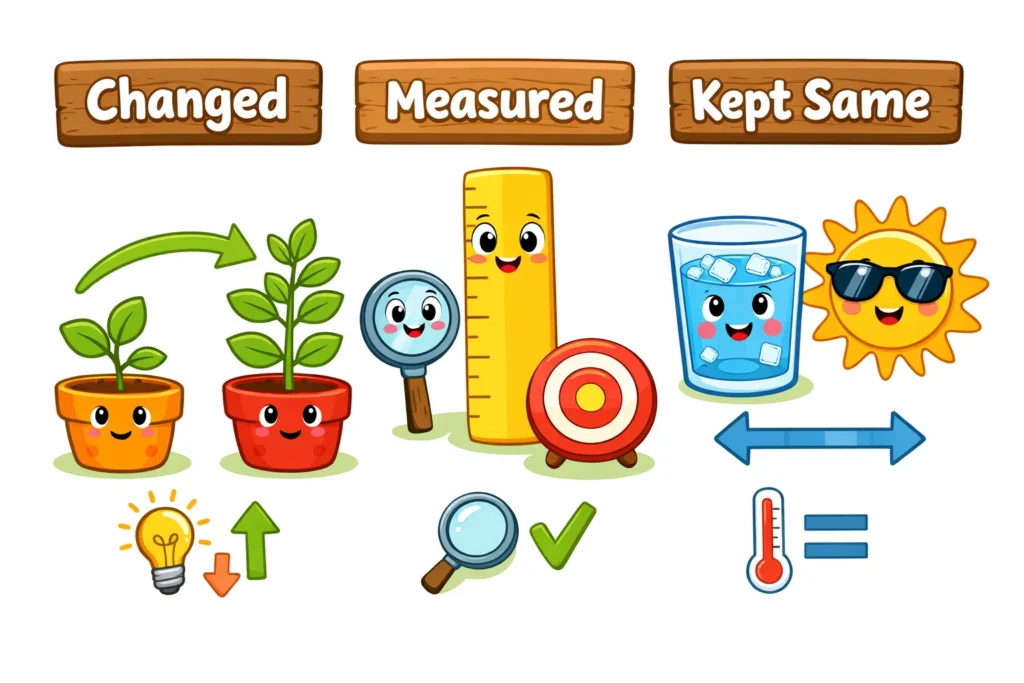
The independent variable is the “changer.” It is the one variable that the experimenter chooses to change on purpose to see what happens. If you are testing the height of the ramp to see how far a toy car rolls, the height is your independent variable. Remember: changing one thing at a time is the golden rule!
Dependent Variable and Measurement
The dependent variable is the “result.” It is what you measure or observe. In the car example, the distance the car travels is the dependent variable. We use tools like rulers or thermometers to measure these changes accurately.
Controlled Variables and Constants
These are the “stayers.” Variables must stay the same to ensure the test is fair. If you are testing ramp height, you must use the same car, the same surface, and the same way of releasing the car every single time. These are your controlled variables.
Controls in Fair Test Experiments
In many high-level scientific experiments, scientists use a control group. This is a part of the experiment that doesn’t receive the “treatment” so you have a baseline to compare against.
Control Group Meaning for Kids
Think of a control group as the “normal” version. If you are testing if a new plant food works, the control group consists of plants that get only plain water. The “experimental group” gets the special food. Without the control group, you wouldn’t know if the plants grew because of the food or just because plants naturally grow over time!
Control Setup for Home Experiments
You can easily conduct a control setup at home. If you are testing how different liquids affect how ice melts, your control would be an ice cube in a different environment (like a plain empty bowl at room temperature) to see how fast it melts without any liquid added.
Mistakes When Controls Missing
When students skip the control, they often fall into the trap of assuming a result was caused by their independent variable when it might have happened anyway. This leads to bias and incorrect conclusions, making the scientific enquiry invalid.
Bias in Science Experiments
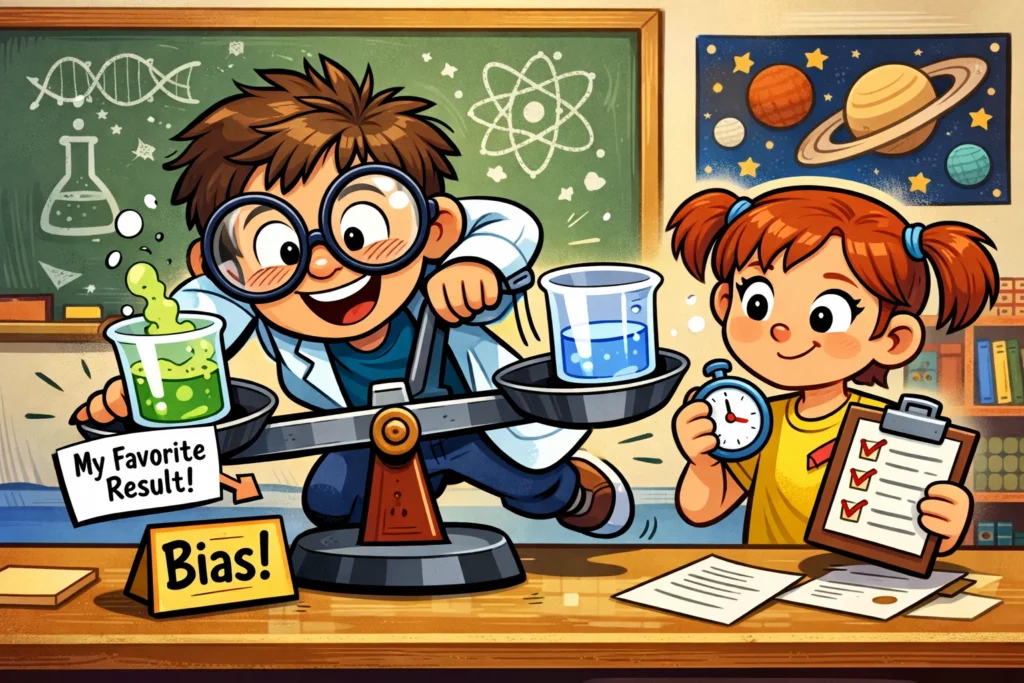
Bias occurs when the results of an experiment are influenced by something other than the independent variable. It often happens unintentionally, but it always makes the experiment “unfair.”
Bias Definition in Kids Science
In a simple experiment, bias is like having a “favorite.” If you want your favorite toy car to win the race, you might accidentally push it a little harder. That is bias! It prevents a fair test because the experimenter is influencing the outcome.
Sources of Bias in Experiments
- Human Bias: Hoping for a specific result.
- Measurement Bias: Using a ruler that is broken or not taking measurements carefully.
- Sample Bias: Only testing one type of ball instead of a variety.
- Expectation Bias: Seeing what you expect to see rather than what actually happened.
Ways to Reduce Bias
To ensure a systematic and fair investigation, scientists use several strategies:
- Randomization: Picking samples in a random order.
- Blind Experiment: A blind or single-blind experiment is when the person testing doesn’t know which item is which (like a taste test where the cups are unlabelled).
- Repeated Trials: Doing the test many times to make sure the result wasn’t a fluke.
Planning Fair Test Experiments
Before you start using equipment, you need a plan. A good lesson plan helps students to identify exactly what they are doing.
Choosing a Scientific Question
A good scientific question for a fair test usually starts with “How does… affect…?” For example: “How does the type of ball affect how high it bounces?” This clearly points to what you will change and what you will measure.
Identifying Variables Before Testing
Before conducting the test, write these down:
- Change: (Independent Variable)
- Measure: (Dependent Variable)
- Keep the same: (Controlled Variables)
Writing Fair Test Prediction
A prediction is your “best guess.” Use the “If… then…” format. “If I increase the height of the ramp, then the car will roll further.” This keeps your inquiry focused.
Conducting Fair Test Experiments at Home
You don’t need a lab to be a scientist. Most scientific concepts can be explored with safe materials and tools found in your kitchen.
Materials and Setup Tips
Consistency is key. If you are measuring the time it takes for something, use the same stopwatch every time. If you use a thermometer, make sure it has reset to room temperature before the next trial.
Step-by-Step Testing Process
- Set up your control group.
- Change your one variable for the first trial.
- Measure the result and record it.
- Reset everything and repeat the test at least three times.
- Change the variable for the next trial and repeat.
Recording Results Properly
Don’t rely on memory! Use a table to keep your data organized. Later, you can turn this into a graph to see patterns.
| Trial Number | Independent Var (e.g., Water Temp) | Dependent Var (Time to Melt) |
| 1 | 20°C | 120 seconds |
| 2 | 20°C | 125 seconds |
| 3 | 20°C | 122 seconds |
Fair Test Experiment Examples for Kids
Here are three real-world examples that perfectly fit the science curriculum for young learners.
Plant Growth Experiment with Controls
- Question: Does liquid fertilizer make plants grow taller?
- Independent Variable: Type of liquid (Water vs. Water + Fertilizer).
- Controlled Variables: Same type of plant, same amount of sunlight, same type of soil, same pot size.
- Measurement: Height of the plant in centimeters over two weeks.
Sugar Dissolving Speed Experiment
- Question: Does the temperature of water affect how fast sugar dissolves?
- Independent Variable: Water temperature (Cold, Room Temp, Hot).
- Controlled Variables: Same amount of water, same amount of sugar, same stirring speed.
- Measurement: Time in seconds using a stopwatch.
Paper Towel Absorption Test
- Question: Which brand of paper towel is the most absorbent?
- Independent Variable: Brand of paper towel.
- Controlled Variables: Same size sheet, same liquid (water), same amount of time soaking.
- Measurement: Amount of water left in the beaker after the towel is removed.
Randomization and Repetition in Fair Tests
Role of Randomization in Experiments
Randomization helps ensure that the order of your tests doesn’t affect the result. For example, if you always test the “hot water” first, the thermometer might stay warm for the “cold water” test. Swapping the order prevents this bias.
Importance of Repeated Trials
One test is a “maybe,” but three tests is “data.” Fair tests involve doing the same thing multiple times. This helps you spot “outliers”—results that look weird because someone bumped the table or misread the timer.
Averaging Results for Accuracy
To get the most systematic result, add the scores from your three trials and divide by three. This “average” is much more reliable than any single measurement.
Teaching Fair Test Experiments to Kids
Explaining Fair Tests in the Classroom
Teachers could use the “Mismatched Race” analogy to explain fairness. Use simple visuals like a graph to show how changing one thing makes the data easy to read, while changing three variables at once makes a messy, confusing graph.
Common Student Mistakes
- Changing more than one variable: “I changed the soil and put it in a darker room!”
- Inconsistent measuring: Using a “hand span” instead of a ruler.
- Biased recording: Rounding numbers up because they want their prediction to be right.
Assessment and Reflection Questions
To check for children’s learning, ask:
- “What would happen to our assessment if we changed two things at once?”
- “How did we ensure that no bias crept into our measurements?”
- “Why was the control group important for this scientific experiment?”
Fair Test Experiments in School Curriculum
Fair Tests in Primary Science
In primary school (KS2), the focus is on “observing over time” and conducting fair tests with obvious variables. Students could explore things like which surface a toy car travels furthest on.
Fair Tests in Middle School Science
As students progress, the science curriculum introduces more complex ideas like independent variable vs. dependent variable terminology and the use of randomization to combat bias.
Skill Development Through Fair Testing
Beyond science, fair tests involve logic and critical thinking. It teaches kids to be skeptical of “miracle claims” and to ask for the data. This approach to learning builds lifelong analytical skills.
Safety Rules for Kids Science Experiments
Adult Supervision Guidelines
Always have an adult nearby, especially when using equipment involving heat (like testing how ice melts using hot water) or sharp objects.
Safe Materials and Tools
Stick to household items. Avoid mixing chemicals unless specified in a trusted lesson plan. Use simple tools like plastic beakers rather than glass if you’re worried about breakage.
Clean-Up and Hygiene Rules
A good experimenter always leaves the lab clean! Wash your hands after handling soil or plants and wipe down surfaces to prevent cross-contamination for your next investigation.
Summary of Fair Test Experiments for Kids
Key Fair Test Principles Recap
To conduct a fair test, you must identify variables, keep one variable as the changer, and ensure all controlled variables stay the same. Always include a control group to provide a baseline for comparison.
Why Fair Testing Builds Science Skills
By conducting fair tests, kids learn the value of accuracy and precision. They learn that science isn’t about being “right”—it’s about finding the truth through a systematic and unbiased process.
Next Steps for Practice
Ready to try it yourself? Pick a scientific question today! Start with a simple experiment, like seeing which color of construction paper fades fastest in the sun. Remember: keep it fair, keep it fun, and keep exploring!