Best Alphabet and ABC Games Online for Preschoolers

 Discover a Free Education Video App for Kids
Pastory uses AI to personalize educational video content based on your child’s interests and personality. Safe, engaging, and built for curious young minds. Sign up now to stay updated and enjoy early access with a free trial
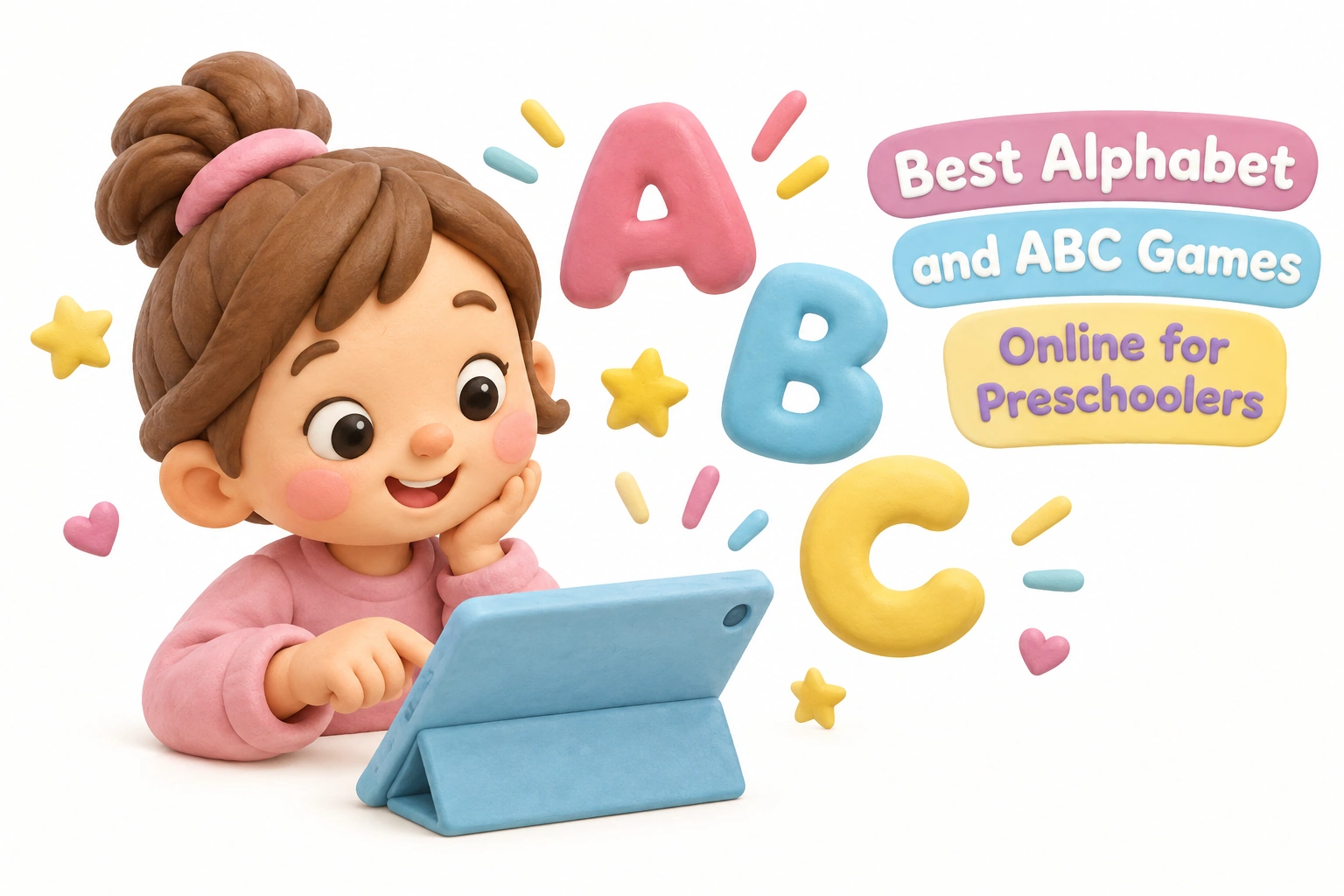
Free online alphabet games can give preschoolers a playful, low-pressure way to practice letter recognition, beginning sounds, and early literacy skills — but not all games are equally well-designed, and the sheer number of options makes choosing genuinely useful ones harder than it looks. This guide reviews the strongest platforms and game types available, organizes them by learning skill and age range, addresses screen time and safety considerations, and helps parents and educators identify which ABC games are most likely to support their child’s current stage of development.
Key Takeaways
- The most effective alphabet games online combine letter recognition with letter-sound connections and provide immediate, positive feedback rather than passive watching.
- Free, no-download options from platforms such as Starfall, Khan Academy Kids, ABCya, and PBS Kids cover the core skills most preschoolers need without requiring subscriptions.
- Learning sequence matters: children typically benefit most from letter naming before letter sounds, and letter sounds before tracing or alphabetical order activities.
- The American Academy of Pediatrics recommends limiting screen time to around 60 minutes per day of high-quality content for children ages 2–5, making short, focused game sessions of 5–10 minutes more developmentally appropriate than extended play.
- Online games work best as a supplement to offline activities — magnetic letters, alphabet puzzles, and sensory play — rather than as a standalone literacy program.
Why Interactive ABC Games Can Support Early Literacy
Letter recognition is one of the strongest early predictors of later reading success, and research in early childhood education consistently identifies phonemic awareness and letter-sound correspondence as foundational reading skills that benefit from repeated, varied practice. Interactive ABC games can provide that repetition in a format that feels rewarding to young children, using animation, sound effects, and instant feedback to reinforce correct responses. Unlike passive video content, well-designed interactive games require the child to make a choice — tapping the correct letter, matching uppercase and lowercase pairs, or identifying the beginning sound of a pictured word — which engages active processing rather than simple observation.
That said, the developmental benefit of any digital game depends heavily on content quality, session length, and caregiver involvement. A game that rewards random tapping as readily as correct answers, or that buries letter learning inside unrelated entertainment, is unlikely to build genuine phonics skills. Parents and educators should look for games that name letters clearly, model letter sounds accurately, and give children enough time to respond before moving on. Co-playing with a child — asking questions, repeating letter names aloud, and connecting game content to physical letters — consistently produces better outcomes than independent screen use alone.
A Learning Progression Roadmap: Which Skill Comes First?
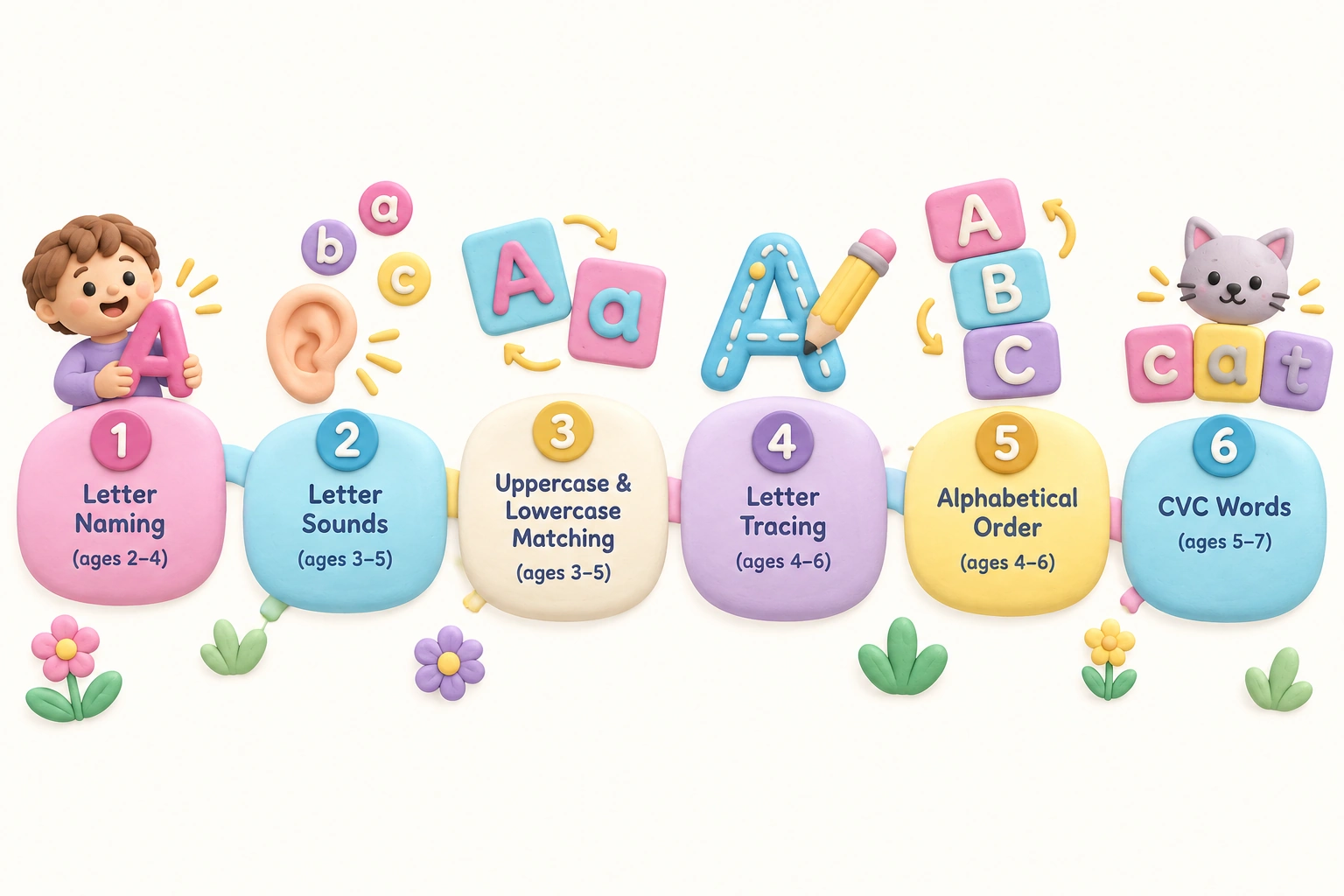
One gap in most online alphabet game roundups is a clear explanation of the order in which skills typically develop. Understanding this sequence helps parents choose the right game for their child’s current stage rather than jumping ahead or revisiting skills already mastered.
- Letter naming (ages 2–4): Children learn to recognize and name individual letters, usually starting with the letters in their own name and high-frequency uppercase letters. Games that show a large letter, say its name aloud, and ask the child to tap or identify it are appropriate here.
- Letter-sound connections (ages 3–5): Once children can reliably name most letters, they begin connecting each letter to its primary sound. Beginning sounds and initial sound identification games support this stage. Phonemic awareness — the ability to hear and manipulate individual sounds in spoken words — develops alongside this skill.
- Uppercase and lowercase matching (ages 3–5): Children learn that each letter has two forms. Letter matching games that pair Aa, Bb, Cc visually reinforce this concept.
- Letter tracing and formation (ages 4–6): Pre-writing skills develop as fine motor control improves. Digital letter tracing games can introduce correct stroke direction, though physical writing on paper or a whiteboard remains the most effective medium for building actual handwriting.
- Alphabetical order (ages 4–6): Understanding that letters follow a fixed sequence supports dictionary skills and early reading fluency. Alphabet sequencing games and ABC order puzzles address this skill.
- CVC words and sight words (ages 5–7): Once foundational letter knowledge is secure, children begin blending sounds into simple words. This stage moves beyond alphabet games into early phonics and reading games.
Knowing where a child sits on this progression allows a parent or teacher to select games that are genuinely challenging without being frustrating — the zone of proximal development that produces the most meaningful learning.
Best Free Online Alphabet Games by Skill Type
Letter Recognition Games
Starfall ABCs is one of the most widely recommended free platforms for letter recognition, particularly for children ages 3–6. Each letter section introduces the uppercase and lowercase form, models the letter sound with an animated character, and offers a short interactive activity. Starfall is browser-based, requires no download or login, and is largely ad-free, making it a practical choice for both home and classroom use. It is also frequently recommended for ELL and ESL learners because its multisensory approach — combining visual, auditory, and interactive elements — supports children who are learning English alongside their home language.
SplashLearn’s alphabet game library offers letter recognition activities organized from A to Z, with drag-and-drop mechanics that suit touchscreen tablets as well as desktop browsers. The platform uses a game-world format with characters and rewards, which tends to sustain engagement for preschool-aged children. A free account provides access to a meaningful portion of the content, though some features require a subscription.
Khan Academy Kids is a fully free, award-winning app and browser platform covering ages 2–8. Its alphabet section includes letter recognition, letter sounds, and early reading activities within a structured curriculum. Khan Academy Kids collects minimal data, carries no advertising, and requires no in-app purchases, making it one of the most parent-trusted options available for educational games for preschoolers.
Phonics and Letter Sound Games
EnglishForKiz offers 26 individual interactive letter sound games — one for each letter of the alphabet — organized by phonics skill level. Each game focuses on a specific beginning sound and uses picture-matching mechanics to reinforce the grapheme-phoneme connection. The games are browser-based and require no download, which makes them easy to use in a classroom center or on a home tablet. The platform is particularly useful for structured phonics practice once children have basic letter naming in place.
PBS Kids hosts a range of alphabet-themed activities tied to familiar characters from shows such as Sesame Street. The Sesame Street Alphabet Kitchen game, for example, uses a cookie-making theme to explore vowel sounds and vocabulary building in a context that feels playful rather than instructional. PBS Kids content is generally considered kid-safe and is free to access without login on most devices.
ABCya is a long-established educational games platform popular in both home and classroom settings. Its alphabet section includes letter sound games, beginning sounds activities, and phonics-based puzzles suitable for pre-K and kindergarten children. ABCya’s free tier includes advertising, which parents should be aware of; a paid subscription removes ads. The platform works on desktop browsers and tablets, though some older Flash-based games may not function on all devices.
Uppercase and Lowercase Letter Matching Games
Wonjo Kids offers a clean, distraction-free alphabet matching game in which children pair uppercase and lowercase letter cards, with a hidden picture revealed as matches are completed. The game is free, browser-based, and requires no login, making it one of the more straightforward letter matching game options for young children. The simple mechanic suits children in the early stages of uppercase and lowercase letter differentiation.
Alphabetimals takes an animal-themed approach to letter matching, pairing each letter with a distinctive animal character. The platform includes both a matching game and a basic typing game, which introduces keyboard familiarity alongside letter recognition. Alphabetimals is free to use online and works on desktop browsers; the animal associations can serve as memorable hooks for children who struggle to retain abstract letter forms.
Turtle Diary’s alphabet game library includes color-by-letter activities, letter cloud games, and matching exercises covering both uppercase and lowercase letters. The platform is free to access and browser-based, with a wide enough variety of game types to maintain interest across multiple sessions. Some games on Turtle Diary include advertising, so parental supervision during use is advisable.
Letter Tracing Games Online
Tiny Steps Learning offers a free, no-login letter tracing game designed specifically for pre-writing skill development. The game guides children through correct stroke direction for each letter using on-screen prompts, which can help establish good formation habits before children begin writing on paper. The platform is browser-based and works on touchscreen tablets, where the tracing mechanic feels most natural. It is worth noting that digital tracing on a smooth screen does not replicate the fine motor resistance of pencil on paper, so physical writing practice remains important alongside any online tracing activity.
KidsGameLand hosts a collection of free browser-based ABC games including letter tracing, alphabet runner games, and letter identification activities. The variety of game formats on the platform suits children who lose interest quickly in repetitive mechanics, though parents should preview individual games as quality and educational focus vary across the collection.
Alphabetical Order and Sequencing Games
ABCmouse is a subscription-based platform that offers a comprehensive curriculum including alphabetical order games, letter sequencing activities, and a broad range of phonics and early reading content. It is one of the most feature-rich platforms available for pre-K and kindergarten learners, with a structured learning path that adapts to a child’s progress. ABCmouse offers a free trial period, after which a monthly subscription is required. Parents considering ABCmouse should weigh the cost against the breadth of content, particularly if their child is already accessing free platforms that cover the same foundational skills.
Little Kids Games supports alphabet activities in multiple languages including English, Spanish, French, and Portuguese, making it a useful option for bilingual families or multilingual classrooms. The platform’s multilingual support is rarely highlighted in standard alphabet game roundups but represents a meaningful differentiator for families where English is not the primary home language.
Platform Comparison: Key Facts at a Glance
| Platform | Cost | Key Skills | Age Range | No Login Required | Ad-Free | Device Compatibility |
|---|---|---|---|---|---|---|
| Starfall ABCs | Free (core content) | Letter recognition, phonics, letter sounds | 3–6 | Yes | Yes | Desktop, tablet |
| Khan Academy Kids | Free | Letter recognition, letter sounds, early reading | 2–8 | No (free account) | Yes | Desktop, tablet, mobile app |
| ABCya | Free (with ads) / Paid (ad-free) | Phonics, beginning sounds, letter matching | 3–6 | Yes | Paid only | Desktop, tablet |
| PBS Kids | Free | Letter sounds, vocabulary, phonemic awareness | 2–6 | Yes | Yes | Desktop, tablet, mobile |
| ABCmouse | Subscription (free trial) | Full curriculum: letters, phonics, alphabetical order | 2–8 | No | Yes | Desktop, tablet, mobile app |
| Starfall / EnglishForKiz | Free | Phonics by letter, beginning sounds | 3–6 | Yes | Yes | Desktop, tablet |
| Wonjo Kids | Free | Uppercase/lowercase matching | 3–5 | Yes | Yes | Desktop, tablet |
| Tiny Steps Learning | Free | Letter tracing, pre-writing | 4–6 | Yes | Yes | Tablet (touchscreen preferred) |
| Little Kids Games | Free | Letter recognition, multilingual support | 3–6 | Yes | Mostly | Desktop, tablet |
| SplashLearn | Free (limited) / Subscription | Letter recognition, A–Z exploration | 3–6 | No (free account) | Yes | Desktop, tablet |
What to Look for When Choosing an Alphabet Game
Not every game labeled “educational” delivers meaningful learning. When evaluating free online alphabet games for a preschool-aged child, the following criteria are worth applying before committing to regular use.
- Clear letter naming and accurate phonics: The game should pronounce letter names and sounds correctly and consistently. Mispronounced or inconsistent phonics can create confusion that takes time to correct.
- Active response required: The child should need to make a meaningful choice — identifying, matching, or tracing — rather than simply watching animation play out.
- Appropriate pacing: Young children need time to process and respond. Games that move too quickly or penalize slow responses can increase frustration rather than build confidence.
- Positive reinforcement without excessive distraction: Reward animations and sounds should celebrate correct answers without becoming so elaborate that they overshadow the learning content itself.
- Kid-safe environment: Look for platforms that are ad-free or have clearly separated advertising, do not link to external sites, and do not collect unnecessary personal data from children.
- No download required: Browser-based games are generally easier to access and supervise than downloaded apps, particularly in classroom settings.
- Age-appropriate difficulty: A game designed for kindergarten readers may frustrate a two-year-old who is just beginning to notice letters. Match the game’s skill level to the child’s current stage, not their age alone.
Screen Time Guidance for Alphabet Game Sessions
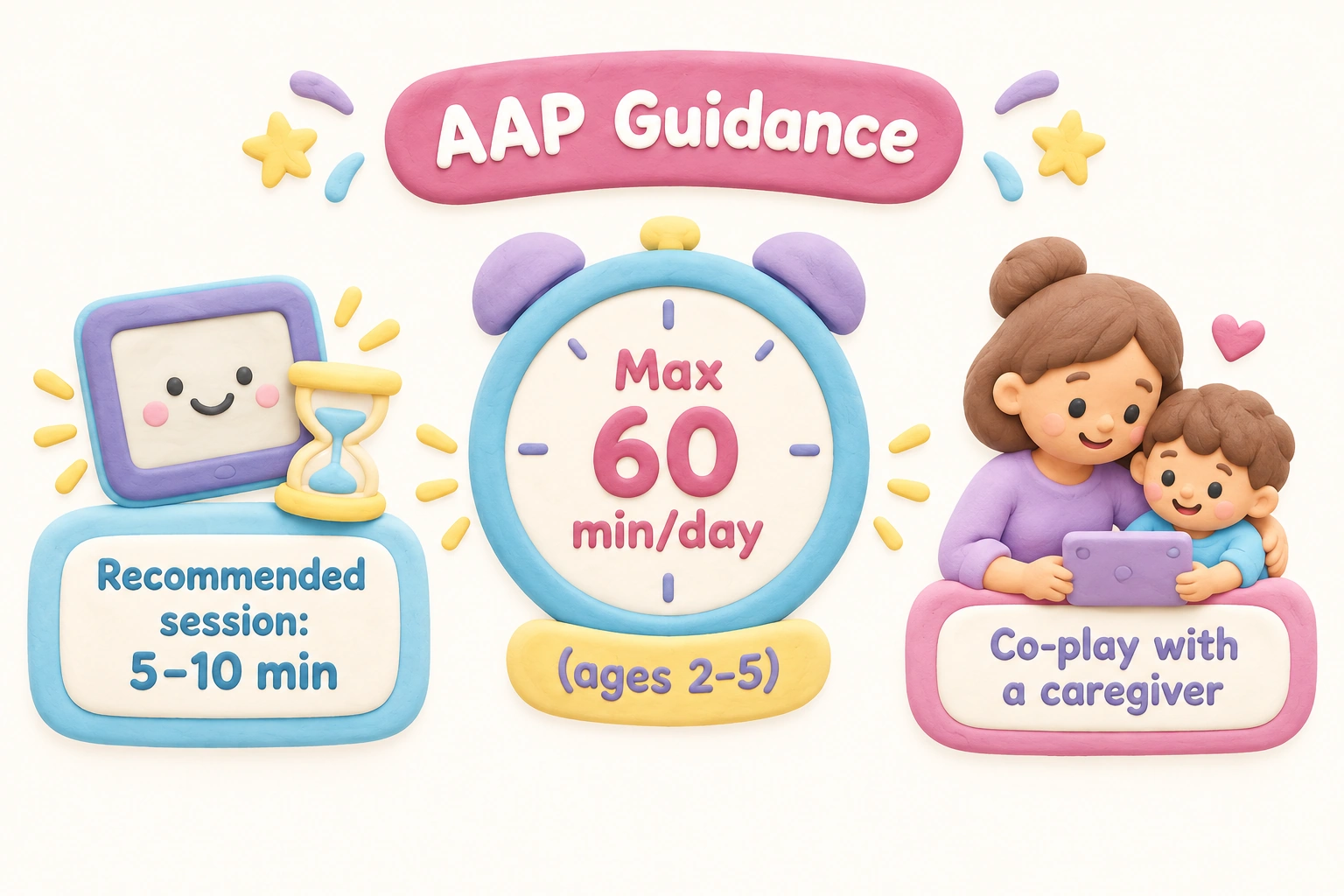
The American Academy of Pediatrics recommends that children ages 2–5 have no more than approximately 60 minutes per day of high-quality digital content, and that caregivers watch or play alongside children to help them connect screen content to the real world. For alphabet game sessions specifically, short focused periods of 5–10 minutes tend to be more productive than extended play, because preschool-aged children’s attention and working memory are still developing and fatigue sets in quickly.
Screen time concerns are legitimate, but the quality and context of digital use matter as much as the quantity. A 10-minute co-play session on Starfall ABCs, followed by a caregiver pointing out the same letters on a cereal box or book cover, is likely to produce more durable learning than 30 minutes of unsupervised game play. Parents who are managing overall screen time should count alphabet game sessions as part of the daily total rather than treating educational content as exempt from time limits.
Children under age 2 are generally not developmentally ready for independent screen-based learning, and the AAP advises avoiding screen use for this age group outside of video calls. For toddlers ages 1–3 who show interest in letters, physical alphabet toys, board books, and caregiver-led singing of the alphabet song are more developmentally appropriate starting points than online games.
Balancing Online Games with Offline Alphabet Activities
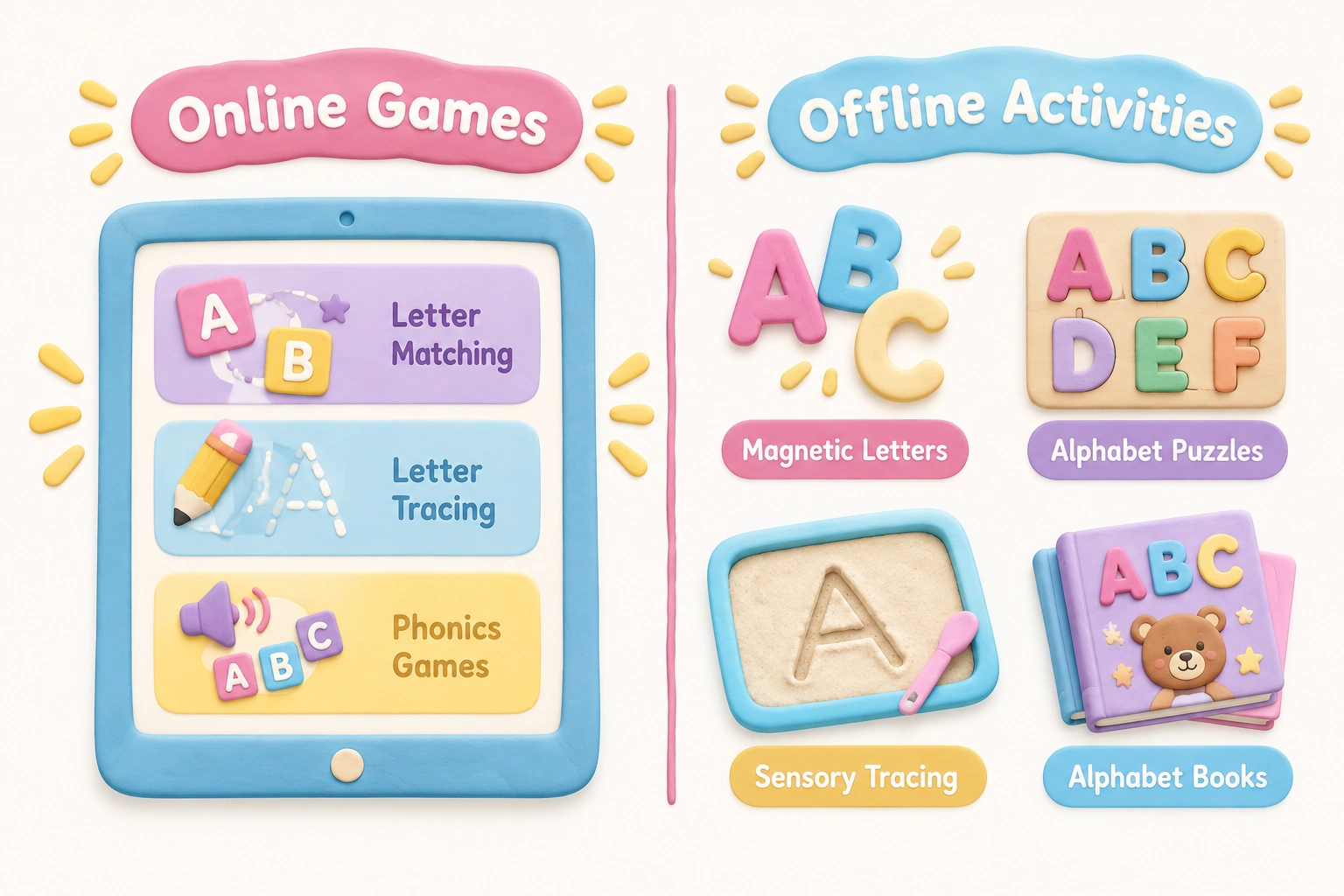
Online alphabet games are most effective when they complement rather than replace hands-on, physical engagement with letters. Offline activities reinforce the same foundational reading skills through different sensory channels, which supports more robust memory formation in young children.
- Magnetic letters on a refrigerator or whiteboard allow children to physically manipulate letter forms, which supports spatial understanding of letter shapes in a way that tapping a screen does not.
- Alphabet puzzles build letter recognition and fine motor skills simultaneously, and the physical act of fitting a piece into place provides tactile feedback that digital games cannot replicate.
- Sensory letter tracing — tracing letters in sand, shaving cream, or playdough — engages proprioceptive and tactile memory pathways that strengthen letter formation learning.
- Alphabet books and picture books connect letters to meaningful vocabulary and narrative context, supporting vocabulary building alongside letter knowledge.
- Alphabet scavenger hunts in the home or outdoors encourage children to notice letters in their environment, reinforcing that letters are functional tools rather than abstract symbols.
A balanced approach — perhaps two or three short online game sessions per week alongside daily offline letter activities — is likely to produce more well-rounded early literacy development than heavy reliance on any single medium.
Signs Your Child May Be Ready for the Next Stage
Knowing when to move a child from one type of alphabet game to the next can be difficult to judge. The following informal indicators may suggest that a child is ready to progress, though individual development varies considerably and these are not diagnostic criteria.
- The child can name most uppercase letters without hesitation when shown them individually.
- The child begins to associate letters with their sounds spontaneously — for example, saying “B makes the buh sound” without prompting.
- The child can match most uppercase letters to their lowercase equivalents correctly in a matching game.
- The child shows interest in writing letters or asks how to spell words.
- The child finds current alphabet games too easy and loses interest quickly.
If a child is consistently completing letter recognition games without errors and without apparent effort, introducing beginning sounds games or simple letter matching activities at a higher level is a reasonable next step. If a child is struggling with basic letter naming after extended practice, it may be worth speaking with a preschool teacher or early childhood specialist to rule out any underlying learning differences.
Frequently Asked Questions
What age should children start playing alphabet games online?
Most developmental guidance suggests that interactive screen-based learning is most appropriate from around age 2–3, and only with caregiver involvement. Children under 2 generally benefit more from physical play, books, and face-to-face interaction with caregivers than from screen-based games. For children ages 3–5, short supervised sessions with high-quality alphabet games can complement other early literacy activities.
Are there truly free alphabet games with no download and no login?
Yes. Starfall ABCs, Wonjo Kids, EnglishForKiz, PBS Kids, Tiny Steps Learning, and most ABCya games are browser-based and require no download or login. Khan Academy Kids requires a free account but has no cost. Always check the current platform terms before use, as features and access levels can change.
How long should a preschooler play alphabet games in one session?
Short sessions of 5–10 minutes are generally more appropriate for preschool-aged children than extended play. The AAP recommends no more than approximately 60 minutes of total high-quality screen time per day for children ages 2–5. Alphabet game sessions should count toward this daily total.
Which platform is best for children learning English as a second language?
Starfall ABCs is frequently recommended for ELL and ESL learners because of its clear, slow-paced phonics instruction and multisensory format. Little Kids Games supports content in English, Spanish, French, and Portuguese, which may suit bilingual families. Khan Academy Kids also uses clear visual and audio cues that can support non-native English speakers.
Do alphabet games actually help children learn to read?
Well-designed interactive ABC games may support the development of letter recognition, phonemic awareness, and letter-sound connections — all of which are foundational reading skills. However, no single digital tool can teach a child to read independently. Reading development requires sustained instruction, caregiver involvement, exposure to books, and practice across multiple contexts. Online games are best understood as one useful component of a broader early literacy environment.
Are subscription platforms like ABCmouse worth the cost?
ABCmouse offers a structured, comprehensive curriculum that goes well beyond alphabet games, which may justify the subscription cost for families seeking a single platform covering multiple subjects. However, for parents whose primary goal is alphabet and phonics practice, the combination of free platforms — Starfall, Khan Academy Kids, PBS Kids, and EnglishForKiz — covers the same foundational skills at no cost. The decision depends on how much breadth and structure a family needs.
Can alphabet games replace preschool or structured literacy instruction?
No. Online alphabet games are a supplementary tool, not a substitute for structured early childhood education, caregiver interaction, or play-based learning. Preschool programs and kindergarten classrooms provide social learning, physical activity, language-rich environments, and individualized teacher feedback that no digital platform can replicate.
Choosing the Right Alphabet Games for Your Child’s Stage
The most useful alphabet games online are those that match a child’s current developmental stage, require active engagement rather than passive watching, and are used in short supervised sessions alongside offline letter activities. For most preschool-aged children, a combination of free platforms — Starfall for phonics, Khan Academy Kids for structured progression, PBS Kids for familiar characters, and Wonjo Kids or EnglishForKiz for targeted matching and sound practice — provides comprehensive coverage of early literacy skills without any subscription cost.
Parents and educators who understand the learning sequence — letter naming, then letter sounds, then uppercase and lowercase matching, then tracing, then alphabetical order — are better positioned to select games that genuinely challenge a child at their current level rather than reinforcing skills already mastered or introducing concepts too early. Checking that a platform is kid-safe, largely ad-free, and accessible without unnecessary downloads or logins reduces friction and keeps the focus on learning rather than navigation.
If a child shows consistent enthusiasm for a particular game format — animal themes, puzzle mechanics, or character-based stories — leaning into that preference is a reasonable strategy, provided the underlying content is educationally sound. The goal is not to find the single best platform but to build a small, curated set of games that support different skills, complement physical letter play, and fit naturally into a manageable daily routine. A child who spends 10 minutes matching letters on screen and then arranges magnetic letters on the refrigerator with a caregiver is engaging with foundational reading skills in a way that is both developmentally appropriate and genuinely enjoyable.

Take a short quiz to find out what your everyday choices say about your parenting style
When your child is curious about something new, what’s your instinct?
Take a short quiz to find out what your everyday choices say about your parenting style
“Can I download this app?” What happens next?
Take a short quiz to find out what your everyday choices say about your parenting style
When it comes to rules at home, which sounds most like you?
Take a short quiz to find out what your everyday choices say about your parenting style
If you could give your child one life skill today, what would you pick?
Take a short quiz to find out what your everyday choices say about your parenting style
Your child gets to choose what to watch. What would your ideal setup look like?
Take a short quiz to find out what your everyday choices say about your parenting style
Pick your parenting superpower ✨