Best Board Games for 12-Year-Olds: Strategy and Family Game Night

 Discover a Free Education Video App for Kids
Pastory uses AI to personalize educational video content based on your child’s interests and personality. Safe, engaging, and built for curious young minds. Sign up now to stay updated and enjoy early access with a free trial
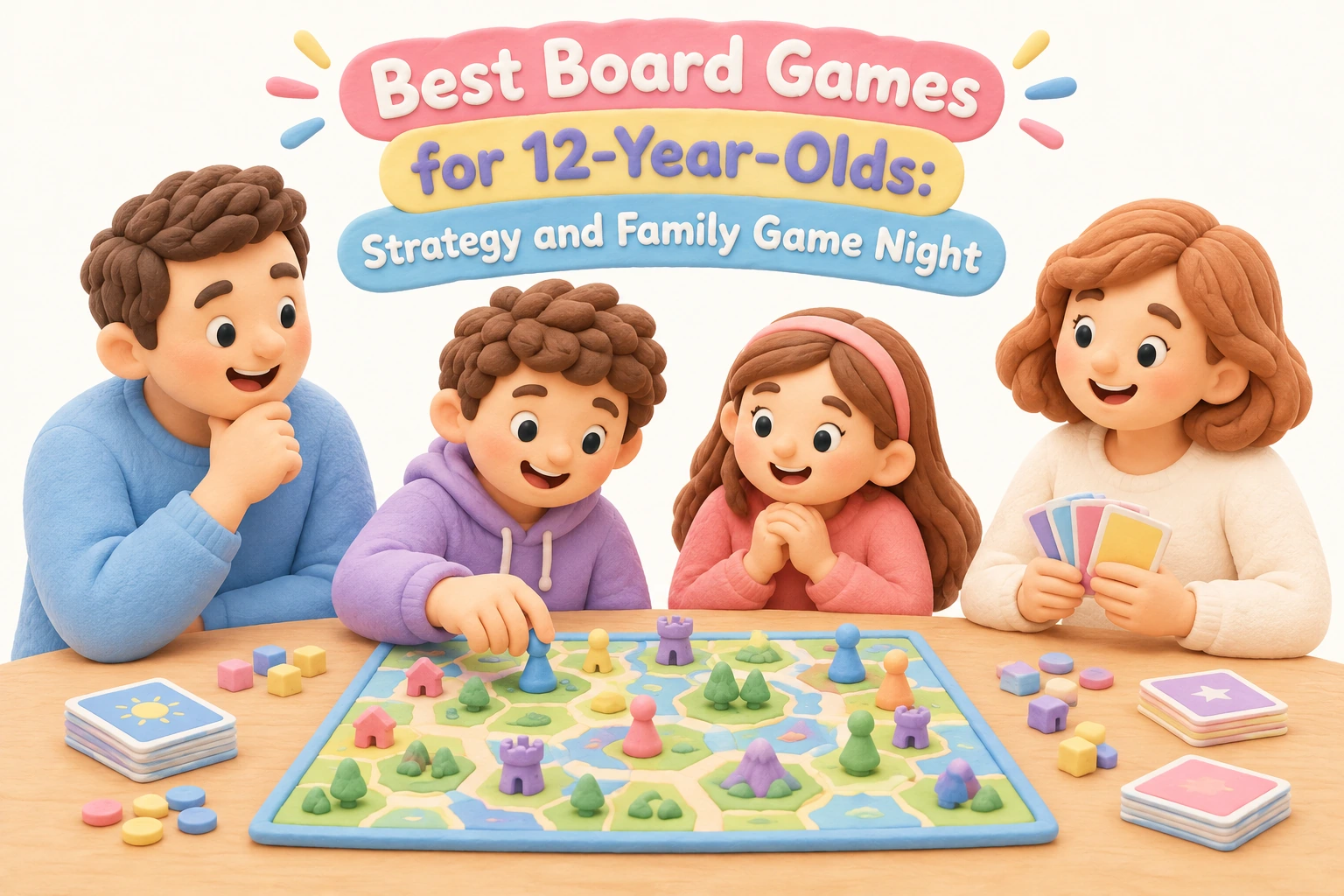
Twelve is a genuinely interesting age for board games. Tweens at this stage have the attention span, abstract reasoning, and social awareness to engage with games that have real strategic depth — yet they still want something fun enough to pull everyone away from their screens on a Friday evening. The challenge for parents and gift-buyers is finding games that feel age-appropriate without feeling childish, and complex enough to be satisfying without requiring a two-hour rules tutorial. This guide covers the best board games for 12-year-olds, explains what to look for when choosing, and offers practical advice for making family game night a regular success.
Key Takeaways
- At age 12, children are developmentally ready for games with genuine strategic depth, resource management, and multi-step planning — not just luck-based mechanics.
- Board games at this age may support critical thinking skills, emotional regulation, and social communication, though outcomes vary by child and context.
- The best games for tweens balance easy-to-learn rules with enough replay value to stay interesting over months or years.
- Choosing between competitive vs. cooperative formats matters: some children thrive with collaborative play, while others prefer head-to-head strategy.
- A small selection of well-chosen games beats a large collection of titles that never get played — start with a gateway strategy game and build from there.
Why Board Games Matter at Age 12
Around age 12, children enter a phase of cognitive development sometimes described as formal operational thinking — the ability to reason hypothetically, consider multiple outcomes simultaneously, and plan several steps ahead. Board games that involve resource management, probability, or social deduction are particularly well-matched to this stage because they require exactly these skills in a low-stakes, enjoyable context.
A 2019 meta-analysis published in the journal Thinking Skills and Creativity found that board game interventions were associated with meaningful improvements in mathematical reasoning, literacy, and executive function in children up to age 12. While that research focused on younger age groups, the underlying mechanisms — practice with planning, working memory, and flexible thinking — remain relevant for tweens. Board games also offer something that most digital entertainment does not: genuine face-to-face social interaction, turn-taking, and the experience of losing gracefully and trying again.
Screen-free family time is increasingly cited by child development researchers as valuable for maintaining family connection and supporting emotional regulation in adolescents. A well-chosen board game can serve as a reliable anchor for that kind of shared time, particularly during the tween years when children begin to pull away socially.
What Makes a Board Game Right for a 12-Year-Old?
Not every game marketed as “ages 12+” is equally suitable or engaging. When selecting board games for tweens and teens, several practical factors are worth weighing carefully.
Strategic Depth Without Overwhelming Complexity
The best games for this age group offer meaningful decisions on every turn without requiring players to memorise a rulebook before they can start. A gateway strategy game — one that introduces core mechanics like resource management or tile placement in an accessible way — is often the right entry point. Games like Ticket to Ride and Carcassonne are widely recommended as gateway games precisely because the rules can be explained in under ten minutes, yet the strategic decisions remain genuinely interesting across dozens of plays.
Replay Value
Replay value is one of the most important buying criteria for this age group. A game that plays differently each session — because of variable setup, randomised elements, or the shifting strategies of different players — will hold a 12-year-old’s interest far longer than one with a fixed optimal strategy. Games with expansion packs or legacy mechanics (where the game evolves over multiple sessions) offer additional longevity and grow with the child over time.
Player Count and Playtime
Consider who will actually be playing. A game designed for 3–6 players may not work well for a parent-child duo, while a 2-player game may leave siblings out. Similarly, a game with a 90-minute playtime may be perfect for a dedicated game night but impractical for a school evening. Most games well-suited to 12-year-olds fall in the 30–60 minute range, which aligns reasonably well with tween attention spans and family schedules.
Competitive vs. Cooperative Format
The competitive vs. cooperative distinction matters more than many buyers realise. In a cooperative board game, all players work together against the game itself — this format tends to reduce conflict, encourage communication, and make losing feel less personal. Games like Pandemic and Forbidden Island are popular cooperative choices. Competitive games, by contrast, can sharpen strategic thinking and teach children to handle winning and losing with grace, but they may not suit every family dynamic or every child’s temperament. Knowing your child’s personality is genuinely useful here.
Theme and Tone
Twelve-year-olds are acutely aware of what feels “babyish.” Games with mature-enough themes — exploration, civilisation-building, ecological strategy, mystery — tend to land better than games with overtly young aesthetics. This is one reason titles like Wingspan, Azul, and Splendor appeal strongly to tweens: they look and feel sophisticated without being inaccessible.
A Gateway Game Progression Path
One of the most useful things a parent or gift-buyer can do is think about board games as a progression rather than isolated purchases. Starting with an accessible gateway strategy game and gradually introducing more complex mechanics helps 12-year-olds build confidence and genuine enthusiasm for the hobby.
A practical progression might look like this: begin with Ticket to Ride, which teaches route-building and basic resource management through a simple card-drafting mechanic. Once that feels comfortable, introduce Catan, which adds negotiation, trading, and more dynamic resource management. From there, games like Wingspan or Everdell introduce worker placement and engine-building mechanics that reward longer-term planning. For players who enjoy social dynamics, Codenames or One Night Ultimate Werewolf offer social deduction in a fast, replayable format.
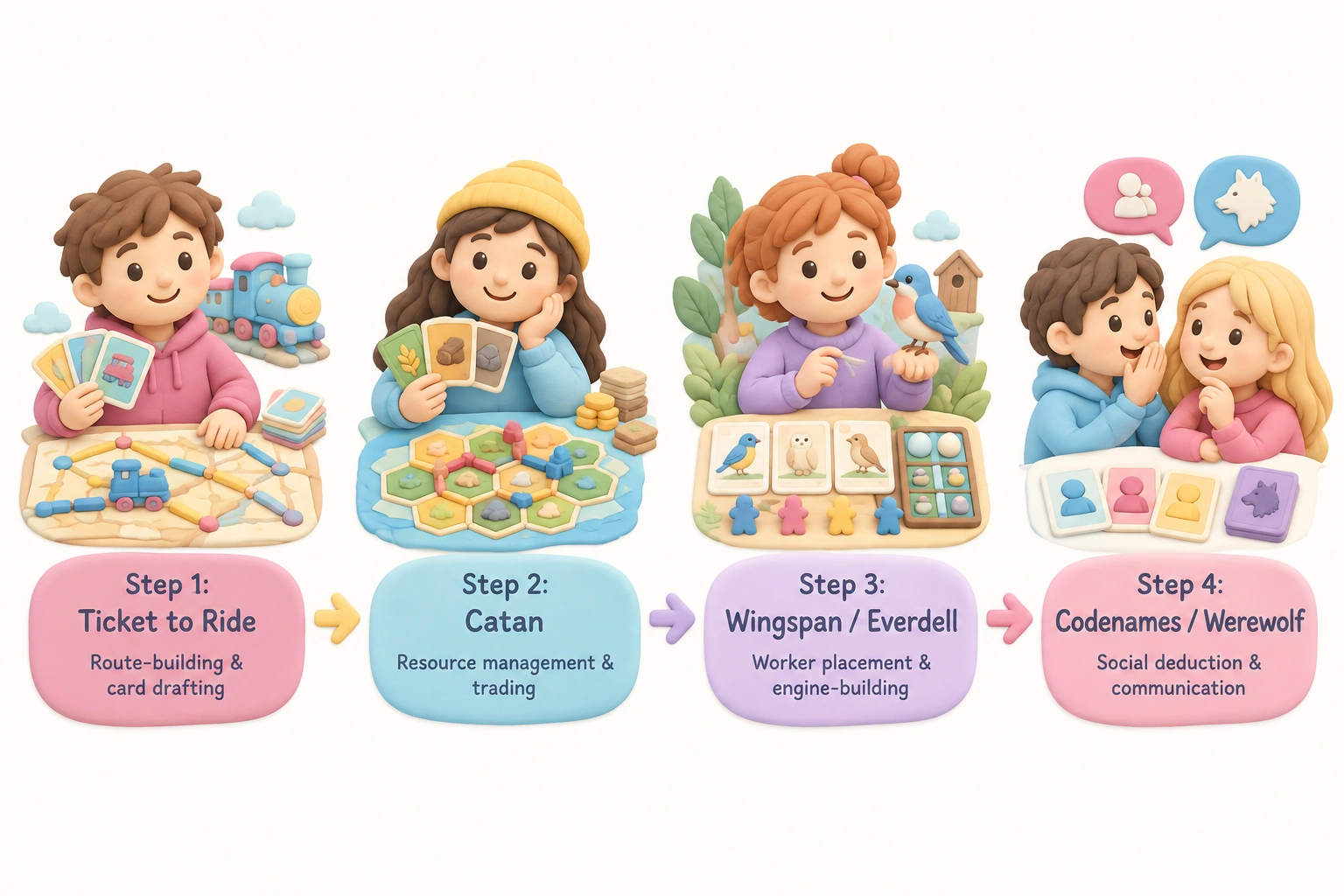
This kind of progression serves two purposes: it prevents the frustration of jumping into an overly complex game too early, and it gives children a genuine sense of growth and mastery as they move through increasingly sophisticated titles.
Recommended Board Games for 12-Year-Olds
The following games are consistently well-regarded for this age group across multiple criteria: strategic depth, replay value, age-appropriate theme, and suitability for family play. They are grouped by play style to help match the right game to your child’s preferences and your family’s dynamic.
Gateway Strategy Games
Ticket to Ride remains one of the most recommended gateway strategy games for tweens. Players collect coloured train cards and use them to claim railway routes across a map, connecting cities to complete destination tickets. The rules are genuinely easy to learn, the decisions become increasingly strategic as the board fills up, and the game scales well across 2–5 players. It plays in roughly 45–75 minutes and has strong replay value thanks to variable destination cards and different map expansions.
Catan (formerly Settlers of Catan) introduces resource management, trading, and negotiation in a way that feels genuinely engaging for 12-year-olds. Players collect resources — wood, brick, grain, ore, and wool — to build roads, settlements, and cities on a randomly generated island. The social element of trading makes every game feel different, and the competitive dynamic is balanced enough that luck and skill both play meaningful roles. Catan supports 3–4 players in the base game, with expansions for up to 6.
Azul is a tile placement game in which players draft colourful tiles to complete patterns on their personal boards. It is visually striking, plays in around 30–45 minutes, and has a satisfying mix of tactical decision-making and light competition. Azul is particularly well-suited to 2–4 players and works well as a parent-child game.
Cooperative Board Games
Pandemic is the benchmark cooperative board game for this age group. Players work together as disease-control specialists trying to prevent global outbreaks before a cure can be found. Every player has a unique role with special abilities, which encourages communication and collaborative problem-solving. Pandemic also has a solo mode, making it one of the few games that a 12-year-old can genuinely enjoy alone. The difficulty is adjustable, which extends its lifespan considerably.
Forbidden Island is a slightly simpler cooperative game from the same designer as Pandemic, making it an excellent starting point for families new to cooperative play. Players work together to collect treasures from a sinking island before it disappears entirely. It plays in around 30 minutes and supports 2–4 players, making it practical for smaller families.
Zombie Kidz Evolution deserves mention as a cooperative legacy game — one where the game itself changes and evolves across multiple sessions, with new rules, characters, and story elements unlocking over time. This grows with the child in a very literal sense and provides exceptional replay value for families who commit to playing through the full campaign.
Strategy Games with Greater Depth
Wingspan is a card-driven engine-building game in which players attract birds to their wildlife preserves. It has become one of the most celebrated modern board games for good reason: the artwork is beautiful, the theme is genuinely engaging for a wide age range, and the strategic depth rewards repeated play. Wingspan is best suited to players who have some experience with strategy games, making it a natural step up from Ticket to Ride or Catan. It plays in 40–70 minutes for 1–5 players and includes a solo mode.
Splendor is a deck-building adjacent game in which players collect gem tokens to purchase development cards, building an economic engine that generates points and resources. It is fast (around 30 minutes), elegant, and has a satisfying strategic depth that makes it highly replayable. Splendor works particularly well as a 2-player game, making it a strong choice for a parent and child playing together.
7 Wonders Duel is specifically designed for two players and offers a rich civilisation-building experience in around 30 minutes. Players draft cards representing scientific discoveries, military advances, and commercial buildings to develop their ancient civilisation. It has significant strategic depth and is widely considered one of the best 2-player board games available — an excellent gift for a 12-year-old who wants a game to play with a parent or sibling.
Social and Party-Style Games
Codenames is a social deduction word game in which two teams compete to identify their agents using one-word clues. It is fast, endlessly replayable, and works brilliantly across a wide age range — making it one of the best choices for mixed-age family game nights where an 8-year-old sibling and grandparents need to play alongside a 12-year-old. It supports 2–8+ players and plays in around 15–30 minutes.
One Night Ultimate Werewolf is a rapid social deduction game that plays in around 10 minutes per round. Players are secretly assigned roles — villagers, werewolves, or special characters — and must deduce who the werewolves are before time runs out. It is excellent for groups of 3–10 players and works well at sleepovers or larger family gatherings. The short playtime means multiple rounds can be played in a single evening.
Sushi Go! is a fast card-drafting game with simple rules and a charming theme. Players pass hands of cards around the table, selecting dishes to score points. It plays in around 15 minutes, supports 2–5 players, and is genuinely enjoyable across a wide age range. It is also one of the most affordable options on this list, making it a practical choice for budget-conscious buyers.
Board Games by Budget
Budget is a practical consideration that most recommendation lists overlook. The following tiers can help narrow down choices when buying a gift for a 12-year-old.
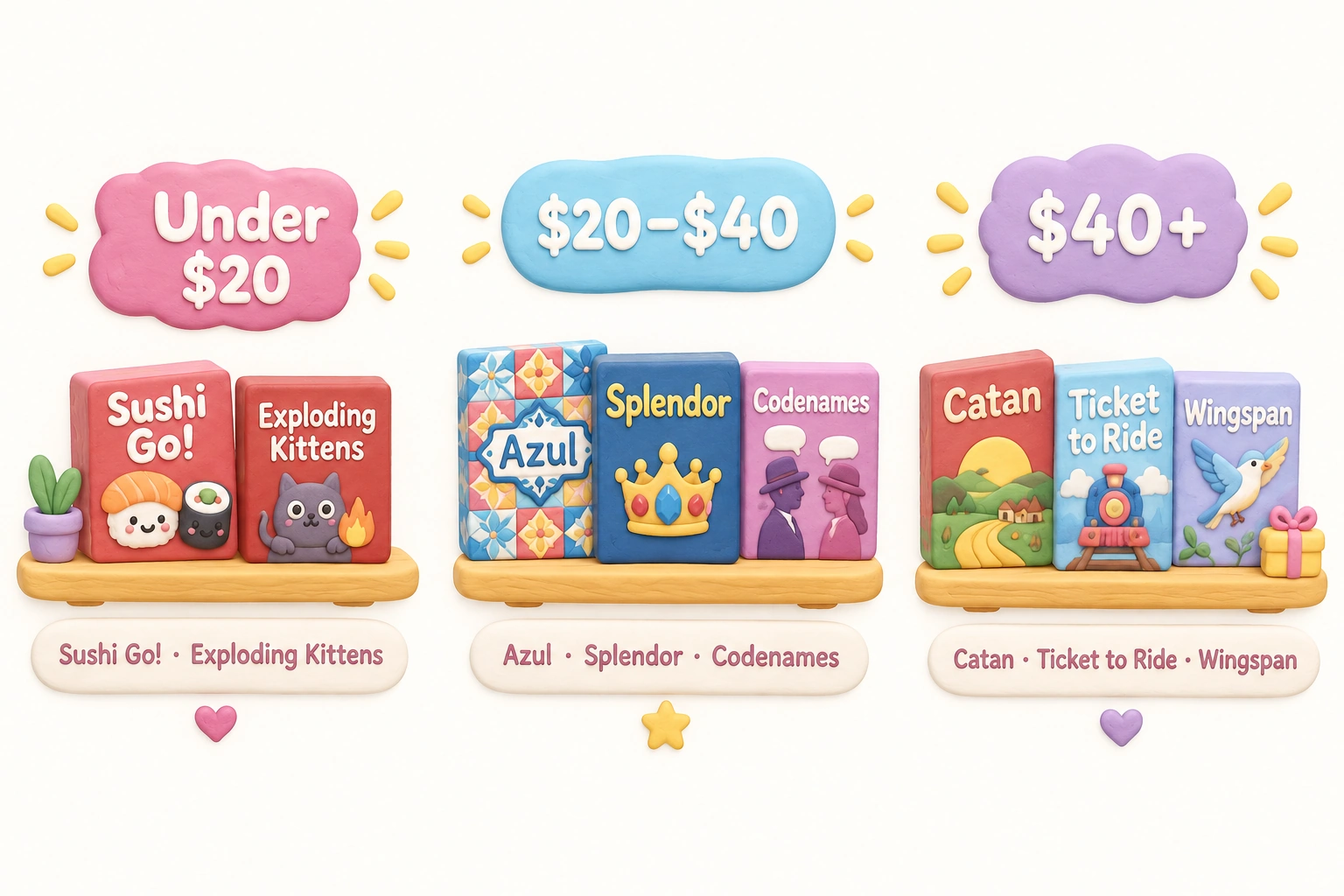
| Budget Tier | Recommended Games | Notes |
|---|---|---|
| Under £20 / $20 | Sushi Go!, Exploding Kittens, Taco Cat Goat Cheese Pizza | Fast, fun, great for groups; lower strategic depth |
| £20–£40 / $20–$40 | Azul, Splendor, Codenames, Forbidden Island, Qwirkle | Strong replay value; good balance of depth and accessibility |
| £40+ / $40+ | Catan, Ticket to Ride, Pandemic, Wingspan, 7 Wonders Duel, Everdell | Higher component quality; greatest strategic depth and longevity |
Playing Across Age Gaps: Mixed-Family Game Night
One of the most common challenges for family game night is finding games that genuinely work when players range from a younger sibling (perhaps 7 or 8) to parents or grandparents. Most recommendation lists treat this as a minor footnote, but it is a real practical concern.
Games that tend to work well across a wide age gap share a few characteristics: simple core rules that younger players can grasp, enough strategic depth to keep adults and tweens engaged, and a player count that accommodates the whole family. Codenames, Ticket to Ride, Sushi Go!, and Forbidden Island all perform well in this context. Cooperative games are particularly useful here because younger players can be guided by older ones without feeling excluded or patronised.
For families with a significant age gap between children, it is worth considering whether a game can be played in teams — pairing a younger child with an adult or older sibling — rather than requiring every player to compete independently.
Solo Play Options for 12-Year-Olds
Solo play is rarely discussed in board game recommendations for this age group, but many 12-year-olds genuinely want to play alone — whether because friends are unavailable, they want to practise before a group session, or they simply enjoy the focused challenge. Several games on this list include official solo modes worth highlighting.
Pandemic and Wingspan both include well-designed solo modes that offer a genuine challenge without requiring another player. Forbidden Island can also be played solo with minor rule adjustments. For parents looking specifically for a gift that a child can enjoy independently as well as with others, these titles offer the best value.
Tips for a Successful Family Game Night
Choosing the right game is only part of the equation. How game night is structured can make the difference between a session everyone wants to repeat and one that ends in frustration.
- Read the rules in advance. Nothing derails a game night faster than a 20-minute rules explanation that turns out to be incomplete. One adult reading the rulebook beforehand — and perhaps watching a short tutorial video — makes the first session significantly smoother.
- Start with a shorter game. If the group is new to a particular title, begin with a faster game to warm up before moving to something longer. Sushi Go! or Codenames work well as openers.
- Set expectations about winning and losing. For tweens who are competitive, it helps to frame the session around enjoying the experience rather than the outcome. This is especially important when introducing a new game where experienced players have an advantage.
- Keep snacks simple. Greasy or sticky snacks and card games are a poor combination. Light snacks that don’t damage components keep the evening running smoothly.
- Agree on a finish time. Knowing when the session will end prevents the frustration of an unfinished game on a school night. Many games have natural stopping points that can be used if time runs short.
- Rotate who chooses the game. Giving each family member a turn to select the evening’s game builds buy-in and ensures that no single player’s preferences dominate every session.
Developmental Benefits: What the Research Suggests
Board games for 12-year-olds are not just entertainment — they may actively support several areas of development, though it is important to be realistic about what the evidence shows and what it does not.
Strategic board games that involve resource management, planning, and probabilistic thinking may support the development of executive function skills — the cognitive processes that govern planning, flexible thinking, and impulse control. These skills are particularly important during early adolescence, when the prefrontal cortex is still developing. Games that require players to hold multiple strategies in mind simultaneously, adapt to changing board states, and anticipate opponents’ moves provide meaningful practice for these cognitive processes.
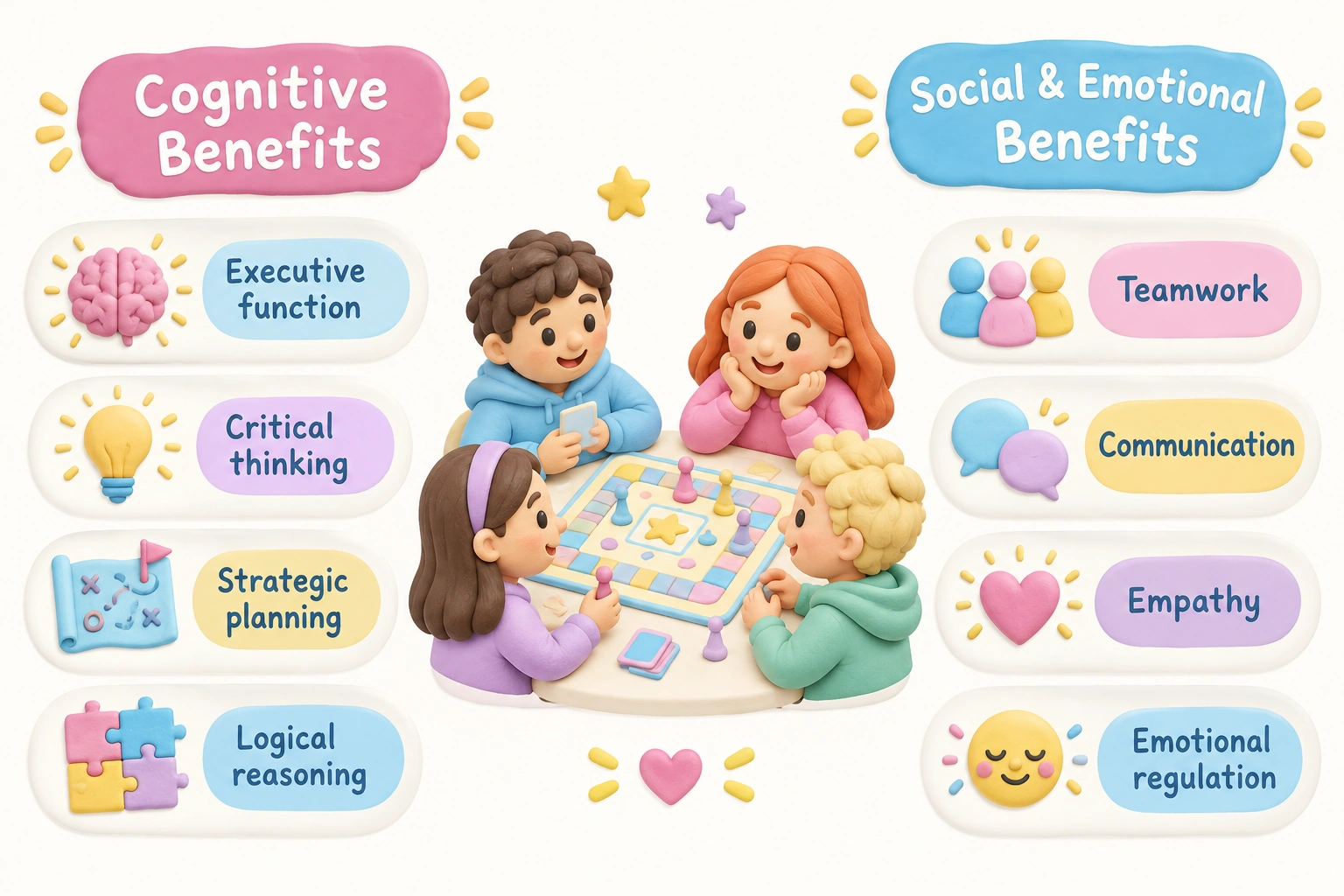
Cooperative board games may support social and emotional development by requiring genuine communication, shared decision-making, and collaborative problem-solving. For tweens navigating the social complexities of early adolescence, the structured social environment of a cooperative game can offer a low-pressure context for practising teamwork and empathy.
It is worth noting that these benefits are not automatic or guaranteed. The quality of the social interaction around the game — whether adults model good sportsmanship, whether the atmosphere is genuinely enjoyable, and whether the game is well-matched to the child’s current ability — all influence how much developmental value a session provides. Board games are a complement to a rich developmental environment, not a substitute for it.
Frequently Asked Questions
What is a gateway strategy game, and why does it matter for 12-year-olds?
A gateway strategy game is a title designed to introduce players to strategic board game mechanics — such as resource management, route-building, or tile placement — through easy-to-learn rules. For 12-year-olds new to strategy games, starting with a gateway game like Ticket to Ride or Catan prevents the frustration of jumping into an overly complex title and builds the foundational skills needed to enjoy more advanced games later.
Are cooperative board games better than competitive ones for tweens?
Neither format is universally better. Cooperative board games tend to reduce interpersonal conflict and encourage communication, which can make them a better fit for families where competitive tension causes friction. Competitive games can sharpen strategic thinking and teach children to handle winning and losing constructively. The best approach is to have at least one of each type in your collection and choose based on the mood and group composition of a given evening.
How long should a board game session be for a 12-year-old?
Most 12-year-olds can comfortably sustain focus for 45–75 minutes on a game they are genuinely engaged with. Games in the 30–60 minute range are practical for most family evenings. Longer games — 90 minutes or more — are better reserved for weekends or holidays when there is no time pressure.
Can board games genuinely help with critical thinking skills?
Board games that involve planning, probability, and multi-step decision-making may support the development of critical thinking skills, including logical reasoning, flexible thinking, and strategic planning. Research suggests these benefits are real, though they depend on the quality of the game, the child’s engagement, and the social context of play. Board games are one useful tool among many, not a guaranteed developmental intervention.
What are the best 2-player board games for a parent and 12-year-old?
7 Wonders Duel, Azul, Splendor, and Ticket to Ride (with the 1v1 variant) are all well-suited to two players. Pandemic can also be played as a two-player cooperative game. These titles offer enough strategic depth to be genuinely engaging for both a tween and an adult without requiring a larger group.
Are there board games that a 12-year-old can play alone?
Yes. Pandemic and Wingspan both include official solo modes that are well-designed and genuinely challenging. Forbidden Island can also be adapted for solo play. Solo modes are worth considering if the child often wants to play independently or wants to practise a game before playing with others.
What should I look for when buying a board game as a gift for a 12-year-old?
The most important factors are: strategic depth appropriate to the child’s experience level, replay value, a player count that matches who they will play with, a playtime that fits their schedule, and a theme that feels age-appropriate rather than childish. If you are unsure of their experience level, a gateway strategy game like Ticket to Ride or a cooperative game like Pandemic is a reliable choice that works for most 12-year-olds.
Choosing the Right Game for Your Child and Family
The best board game for a 12-year-old is ultimately the one that gets played — repeatedly, enthusiastically, and ideally with other people in the room. That means matching the game to the child’s personality (competitive or collaborative), the family’s available time (30 minutes or 90), the likely player count (two players or six), and a budget that makes sense for the occasion.
For most families starting out, a single well-chosen gateway strategy game — Ticket to Ride, Catan, or Azul — will provide more value than a shelf full of titles that never quite fit the moment. From there, adding a cooperative game like Pandemic and a fast social game like Codenames gives you a versatile collection that covers most family game night scenarios, including mixed-age groups and varying energy levels.
Board games at this age are genuinely worth the investment. They offer screen-free family time, meaningful cognitive challenge, and the kind of shared experience that tends to become a lasting family tradition. The tween years are an ideal window to establish that habit — before the competing demands of secondary school and social life make it harder to gather everyone around the same table.

Take a short quiz to find out what your everyday choices say about your parenting style
When your child is curious about something new, what’s your instinct?
Take a short quiz to find out what your everyday choices say about your parenting style
“Can I download this app?” What happens next?
Take a short quiz to find out what your everyday choices say about your parenting style
When it comes to rules at home, which sounds most like you?
Take a short quiz to find out what your everyday choices say about your parenting style
If you could give your child one life skill today, what would you pick?
Take a short quiz to find out what your everyday choices say about your parenting style
Your child gets to choose what to watch. What would your ideal setup look like?
Take a short quiz to find out what your everyday choices say about your parenting style
Pick your parenting superpower ✨