Best Switch Games for 8-Year-Olds: Learning and Adventure

 Discover a Free Education Video App for Kids
Pastory uses AI to personalize educational video content based on your child’s interests and personality. Safe, engaging, and built for curious young minds. Sign up now to stay updated and enjoy early access with a free trial
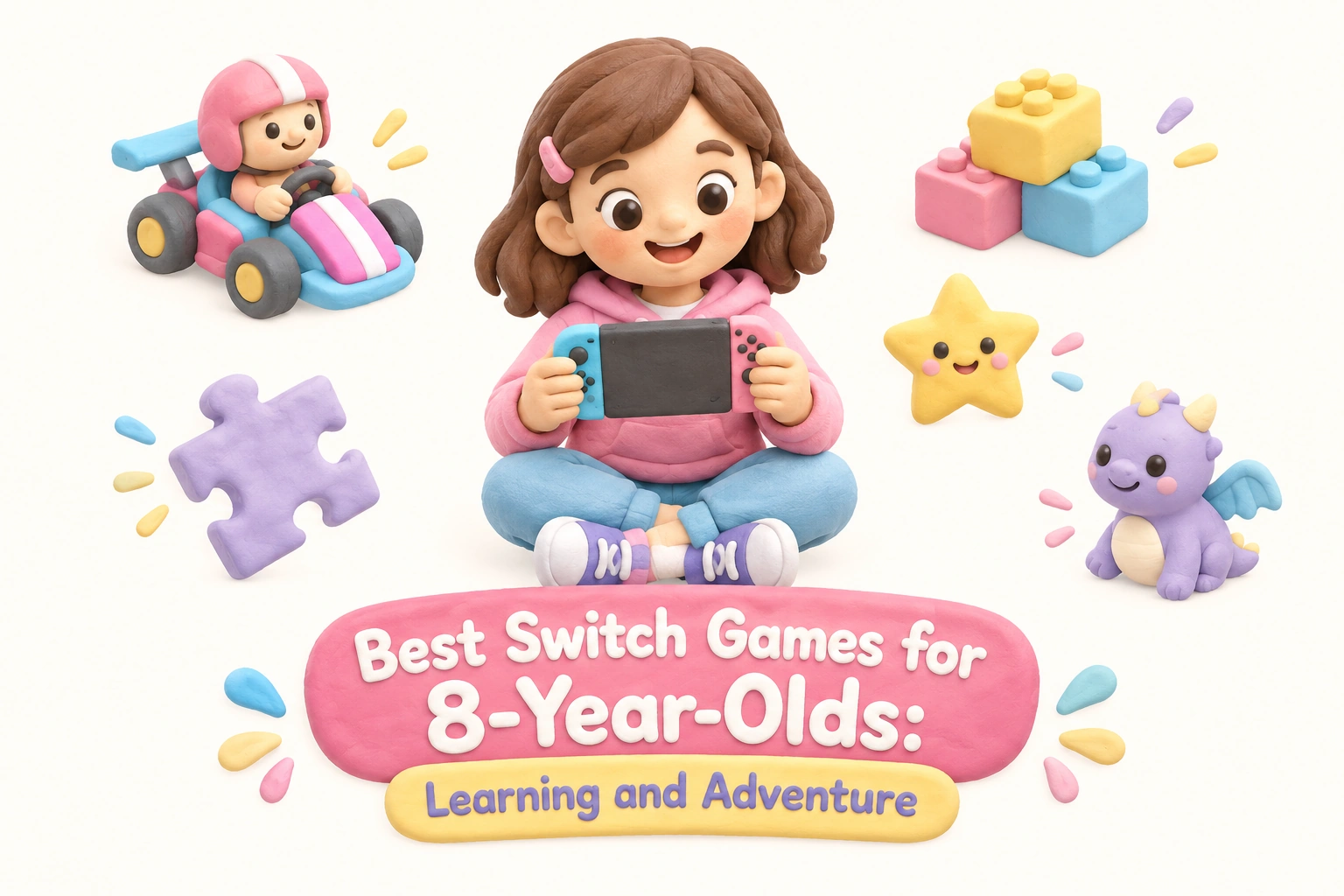
Eight-year-olds occupy a genuine sweet spot in gaming: they have enough reading ability, patience, and hand-eye coordination to enjoy complex games, yet they still benefit most from titles that are forgiving, imaginative, and rich in problem-solving. The Nintendo Switch library is unusually well-suited to this age group, but the sheer number of options can make choosing feel overwhelming. This guide cuts through the noise with curated picks organized by what children actually learn and experience, alongside honest notes on difficulty, content ratings, multiplayer options, and how parents can set sensible boundaries.
Key Takeaways
- The best Switch games for 8-year-olds combine forgiving difficulty with genuine problem-solving challenges that match the cognitive stage of middle childhood.
- ESRB ratings of E and E10+ are the most appropriate starting points, though content within those ratings still varies widely in complexity and reading demand.
- Several top picks — including Minecraft, Snipperclips, and Mario Kart 8 Deluxe — offer strong local co-op modes that make them excellent for family game night.
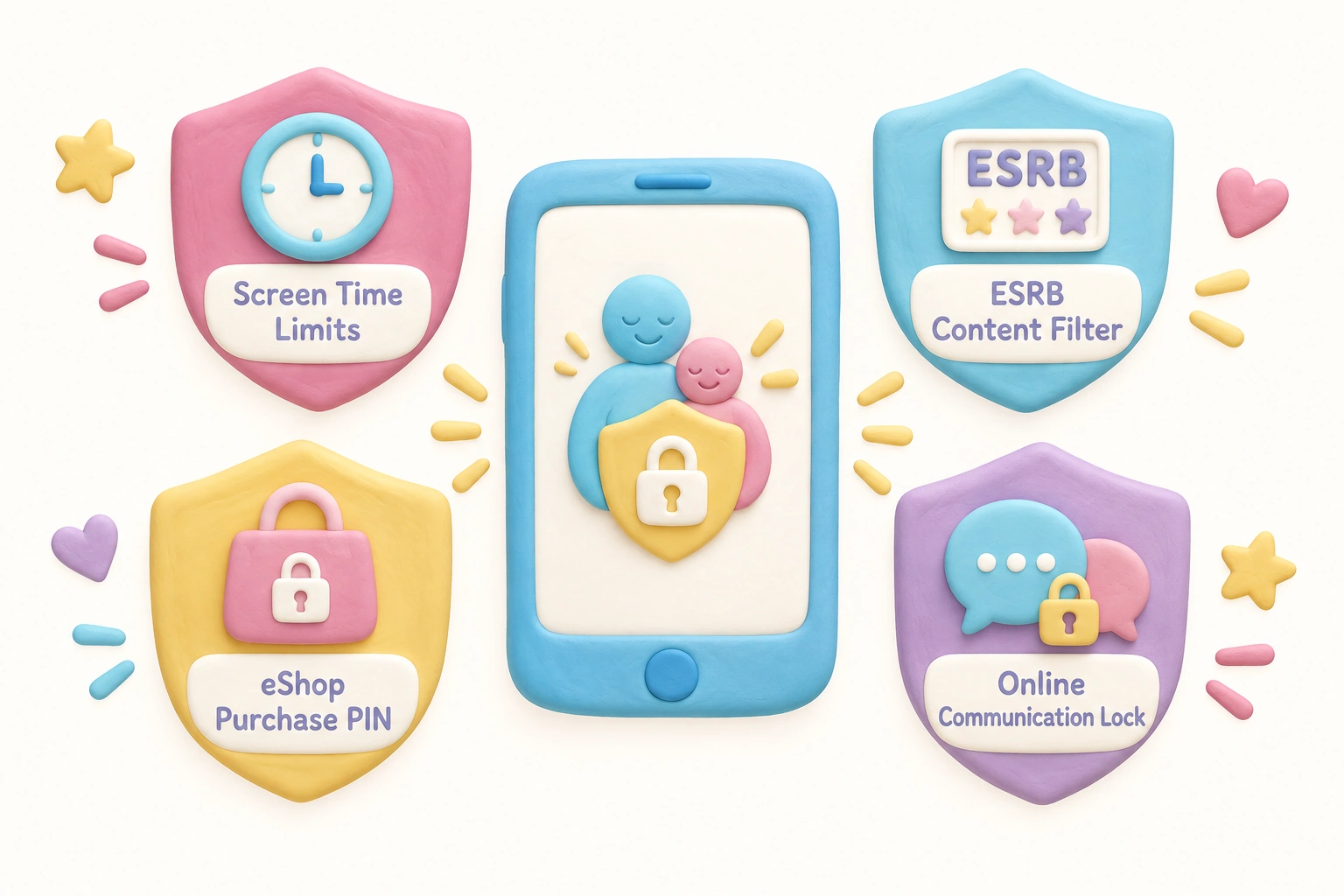
- Nintendo Switch Parental Controls allow parents to set daily screen time limits, restrict online communication, and manage Nintendo eShop purchases independently of the games themselves.
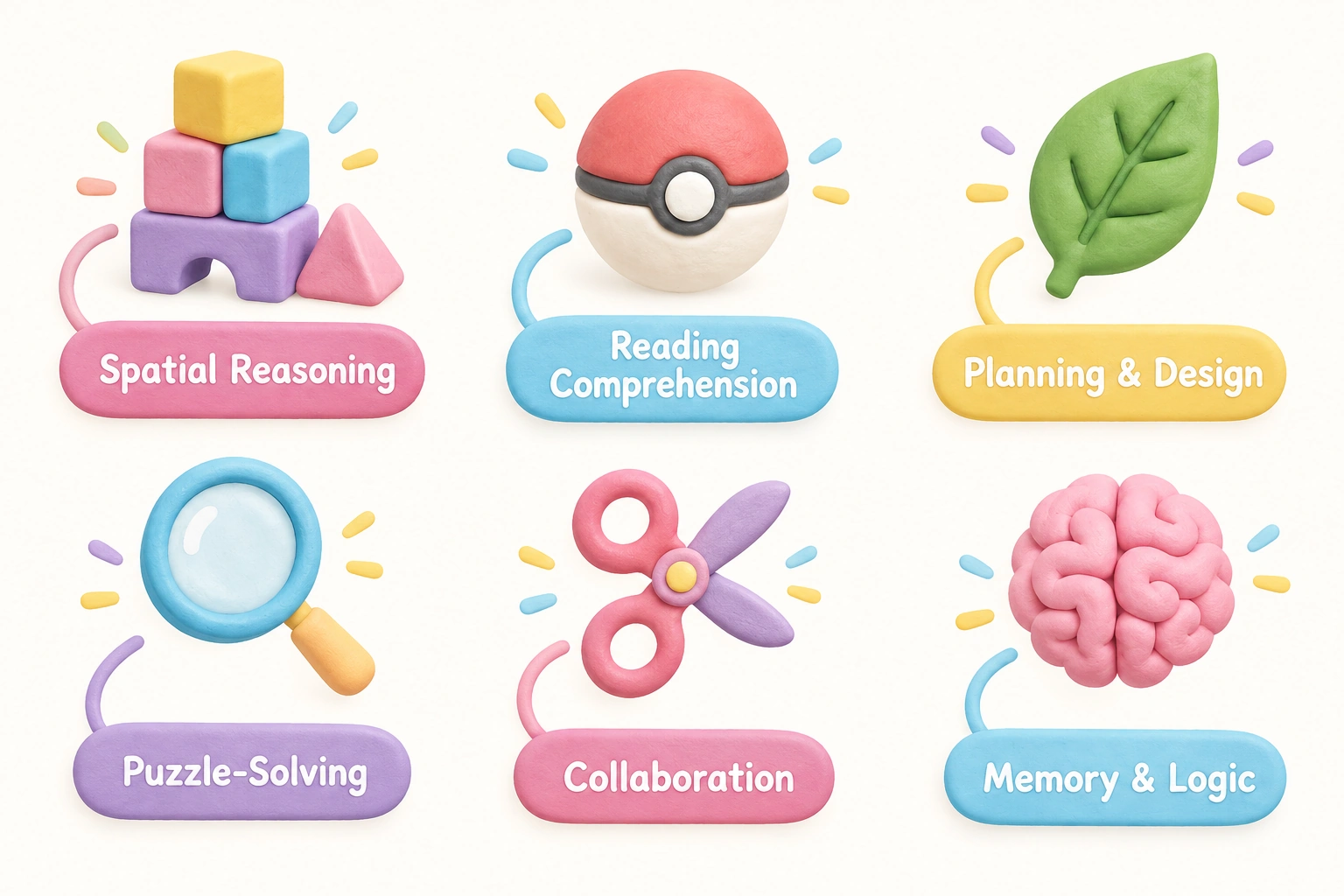
- Educational value is real but indirect: games build spatial reasoning, reading comprehension, planning, and persistence through play rather than through formal instruction.
Why 8-Year-Olds Are at a Gaming Sweet Spot
Child development research consistently identifies middle childhood — roughly ages 6 through 11 — as a period of rapid growth in logical thinking, sustained attention, and the ability to follow multi-step rules. At age 8 specifically, most children can read well enough to follow in-game dialogue, hold a strategy in working memory across multiple sessions, and tolerate a moderate level of challenge without becoming overwhelmed. They are also beginning to enjoy collaborative and competitive play with peers and family members, which makes local multiplayer titles particularly valuable at this stage.
This developmental profile means that the best Switch games for 8-year-olds are not simply the easiest games available. A game that is too simple will lose a child’s interest quickly, while one that is too demanding can erode frustration tolerance and turn play into stress. The titles below are selected because they sit in that productive middle ground: accessible enough to start, deep enough to sustain engagement over weeks or months.
Top Switch Games for 8-Year-Olds: Curated by Learning Value
Mario Kart 8 Deluxe — Racing, Reflexes, and Resilience
Mario Kart 8 Deluxe is the most universally recommended Switch game for this age group, and for good reason. The game’s auto-steer and auto-accelerate options make it genuinely accessible to newer players, while the higher difficulty cups and 200cc speed class provide a real challenge for experienced ones. Its split-screen multiplayer mode is one of the best local co-op experiences on the platform, making it a natural anchor for family game night. From a developmental standpoint, the game builds reaction time, spatial awareness, and the ability to manage setbacks — losing a race and choosing to try again is a small but meaningful exercise in frustration tolerance and persistence.
Super Mario Odyssey — Exploration, Creativity, and Collectibles
Super Mario Odyssey is a 3D platformer that rewards curiosity above all else. Its open-world exploration structure means children are not funneled through a linear path; instead, they discover Power Moon collectibles at their own pace, which supports intrinsic motivation and a sense of agency. The two-player hat mode — where one player controls Mario and a second controls Cappy — makes it a surprisingly effective co-op experience for a parent and child to share. The game carries an E10+ rating, primarily for mild cartoon violence, and requires no significant reading ability, making it accessible to a wide range of 8-year-olds regardless of reading level.
Kirby and the Forgotten Land — The Most Forgiving Platformer for This Age
Kirby and the Forgotten Land is frequently cited as the single best starting point for 8-year-olds who are newer to gaming. Its Spring Breeze-style forgiving difficulty means children rarely feel stuck for long, and the copy ability mechanic — where Kirby absorbs enemies’ powers — introduces a form of strategic thinking without demanding it. The game’s 3D environments are visually rich and encourage exploration, while its two-player local co-op mode allows a more experienced player to support a less confident one. The ESRB E10+ rating reflects mild cartoon action, and the game requires minimal reading to progress.
Minecraft (Bedrock Edition) — Spatial Reasoning and Creative Problem-Solving
Minecraft on Switch is arguably the most educationally dense game on this list. In creative mode, children design and build structures that require spatial reasoning, planning, and an intuitive understanding of scale and proportion. In survival mode, resource management and basic engineering thinking come into play as players gather materials, craft tools, and construct shelters. Research in educational contexts has found that Minecraft-style sandbox environments may support spatial reasoning skills, though outcomes vary considerably by how the child engages with the game. The split-screen multiplayer option allows siblings or parents to build together, and the game’s ESRB E10+ rating reflects mild fantasy violence in survival mode. Parents should note that online multiplayer through Nintendo Switch Online introduces contact with unknown players, which warrants a conversation about online safety before enabling it.
Animal Crossing: New Horizons — Planning, Design, and Time Management
Animal Crossing: New Horizons operates on a real-time clock, meaning the game world changes with the actual time of day and season. This design naturally encourages planning, delayed gratification, and a sense of responsibility — a child who wants to catch a specific fish or attend a seasonal event needs to think ahead. The game’s design tools, from furniture arrangement to island landscaping, support creative expression and spatial design thinking. Animal Crossing carries an E rating and requires moderate reading ability for dialogue and crafting menus, making it better suited to 8-year-olds who are confident readers. It is a solo experience by default, though visiting friends’ islands via Nintendo Switch Online is possible with appropriate parental supervision.
Pokémon Scarlet and Violet — Reading Comprehension and Turn-Based Strategy
The Pokémon series has long been recognized as an unexpectedly effective tool for building reading comprehension, as children are motivated to read dialogue, item descriptions, and move explanations in order to progress. Pokémon Scarlet and Violet introduce open-world exploration across a large region, which adds a layer of navigational thinking and self-directed goal-setting. The turn-based battle system introduces strategic thinking — type advantages, move selection, and team composition — in a low-stakes, reversible context. The games carry an E rating and are best suited to 8-year-olds who read at approximately a third- or fourth-grade level, as the text volume is substantial. Parents should be aware that online trading and battling features require Nintendo Switch Online and appropriate supervision.
Super Mario Bros. Wonder — Imaginative 2D Platforming
Super Mario Bros. Wonder is a side-scrolling platformer that reinvents familiar mechanics through Wonder Flower events — unpredictable transformations that change the rules of each level in surprising ways. This design keeps experienced young players engaged while remaining accessible to beginners. The game supports up to four players in local co-op, making it one of the best options for families with multiple children of different ages. Its ESRB E rating and minimal reading requirement make it broadly appropriate, and its adjustable difficulty through character selection (some characters offer more protection) means parents can tailor the experience to their child’s current skill level.
Captain Toad: Treasure Tracker — Puzzle-Solving and Spatial Reasoning
Captain Toad: Treasure Tracker is a puzzle game built around rotating three-dimensional dioramas to find hidden paths and collectibles. Because Captain Toad cannot jump, every level requires the player to think spatially and plan routes carefully before acting — a direct exercise in spatial reasoning and sequential problem-solving. The game is gentle, carries an E rating, and has no time pressure in most levels, making it an excellent choice for children who prefer thinking over reflexes. A two-player cooperative mode is available, where a second player can assist by stunning enemies, which makes it a good option for a parent and child to work through together.
Snipperclips — Collaborative Puzzle-Solving
Snipperclips is a cooperative puzzle game in which two players control paper characters who must cut each other into specific shapes to solve each puzzle. It is one of the purest examples of collaborative puzzle-solving on the Switch: neither player can succeed alone, and the game actively rewards communication, experimentation, and creative thinking. Snipperclips carries an E rating, requires no reading ability to play, and is available at a lower price point than most first-party Nintendo titles, making it a strong budget-friendly pick. It is exclusively a multiplayer experience, so it requires at least two players.
Luigi’s Mansion 3 — Adventure, Humor, and Persistence
Luigi’s Mansion 3 is an action-adventure game with a strong comedic tone and a hotel setting that children find genuinely funny. Each floor of the hotel functions as a self-contained puzzle environment, requiring players to use Luigi’s vacuum and flashlight tools in creative ways to defeat ghosts and progress. The game’s structure is forgiving — Luigi can be revived, and puzzles can be attempted multiple times without penalty — which supports persistence without excessive frustration. The E10+ rating reflects mild cartoon scares and some spooky imagery, which most 8-year-olds handle comfortably. A two-player co-op mode using Gooigi, Luigi’s slime double, is available and works well for parent-child play.
Big Brain Academy: Brain vs. Brain — Explicitly Educational Play
Big Brain Academy: Brain vs. Brain is one of the few Switch titles that is explicitly designed around cognitive skill-building. Its mini-games target memory, logic, number skills, and visual processing, and the game’s adjustable difficulty allows players of different ages and abilities to compete fairly on the same screen. It carries an E rating and is one of the most accessible options for family game night across a wide age range. While its educational framing is more direct than most games on this list, it is also less narratively engaging, which means some children may find it less compelling for extended solo play.
Nintendo Switch Sports — Active Play and Physical Engagement
Nintendo Switch Sports uses Joy-Con motion controls to simulate sports including tennis, bowling, soccer, volleyball, badminton, and golf. For 8-year-olds, the physical engagement is a meaningful benefit: the game encourages movement, coordination, and gross motor activity in a way that most Switch titles do not. It carries an E rating and works well as a family activity, particularly for children who are less drawn to traditional controller-based gaming. Parents should note that online play is available and carries the same supervision considerations as other online-enabled titles.
Games Suited to Different 8-Year-Old Profiles
Not all 8-year-olds are at the same gaming stage, and the best choice depends on the individual child’s experience, reading level, and preferred play style. The table below offers a practical starting framework.
| Child Profile | Recommended Starting Point | Why It Fits | ESRB Rating |
|---|---|---|---|
| Newer gamer, any reading level | Kirby and the Forgotten Land | Forgiving difficulty, visual gameplay, co-op support | E10+ |
| Experienced gamer, confident reader | Pokémon Scarlet/Violet or Super Mario Odyssey | Open-world exploration, strategic depth, collectibles | E / E10+ |
| Creative, prefers building | Minecraft (creative mode) | Sandbox design, spatial reasoning, no fail states | E10+ |
| Prefers thinking over action | Captain Toad or Snipperclips | Puzzle-focused, no time pressure, spatial reasoning | E |
| Family play / multiple ages | Mario Kart 8 Deluxe or Super Mario Bros. Wonder | Local co-op, adjustable difficulty, broad appeal | E / E10+ |
| Active child, prefers movement | Nintendo Switch Sports | Motion controls, physical engagement, family-friendly | E |
What These Games Actually Teach: A Skills Breakdown
The educational value of video games is real but often misunderstood. Games do not teach in the way a classroom lesson does; instead, they create conditions in which children practice specific cognitive and social skills repeatedly and in a context they find motivating. The table below maps each recommended game to its primary developmental benefit.
| Game | Primary Skill Supported | How the Game Builds It |
|---|---|---|
| Minecraft | Spatial reasoning, creative problem-solving | 3D building, resource planning, engineering in creative mode |
| Pokémon Scarlet/Violet | Reading comprehension, turn-based strategy | Text-heavy dialogue, type-advantage decision-making |
| Animal Crossing | Planning, time management, design thinking | Real-time calendar, island design, resource goals |
| Captain Toad | Spatial reasoning, sequential problem-solving | Rotating 3D dioramas, route planning without jumping |
| Snipperclips | Collaborative problem-solving, communication | Co-op shape-cutting puzzles requiring joint strategy |
| Big Brain Academy | Memory, logic, number skills | Targeted mini-games with adjustable difficulty |
| Mario Kart 8 Deluxe | Reaction time, frustration tolerance | Fast-paced racing with repeated attempts and improvement |
| Super Mario Odyssey | Exploration, intrinsic motivation | Non-linear collectible discovery, creative hat mechanics |
Nintendo Switch 2: What Parents Need to Know
The Nintendo Switch 2 introduces new titles alongside the existing library. Donkey Kong Bananza and Mario Kart World are among the early releases aimed at family audiences, with Donkey Kong Bananza carrying an E10+ rating and featuring destructible environments that add a new layer of physical problem-solving. Importantly, the Nintendo Switch 2 is backward compatible with the vast majority of original Switch titles, meaning families who already own games from the list above can continue playing them on the new hardware. Parents considering the Switch 2 should verify backward compatibility for specific titles before purchasing, as a small number of original Switch games may have limitations on the newer platform.
Setting Up Nintendo Switch Parental Controls
The Nintendo Switch Parental Controls app — available for iOS and Android — allows parents to manage their child’s gaming experience independently of the games themselves. Key features include daily screen time limits with automatic suspension, content restriction by ESRB rating (so E10+ or Teen-rated games can be blocked entirely if preferred), restrictions on online communication and social features, and a PIN-protected Nintendo eShop purchase lock to prevent unauthorized downloads or purchases.
For 8-year-olds, the American Academy of Pediatrics recommends that parents prioritize consistent limits and co-engagement over rigid time caps, though many families find a daily limit of 45 to 60 minutes on school days to be a practical starting point. The Suspend Software feature, which can be triggered remotely through the app, gives parents a reliable way to end a session without a confrontation. Setting these controls before a child begins playing — rather than after a problem arises — is consistently more effective and reduces conflict around screen time.
Physical vs. Digital: Buying Considerations for Parents
Games purchased as physical cartridges can be resold, lent, or returned, which makes them a lower-risk option for titles a child may not enjoy. Digital downloads from the Nintendo eShop are convenient and cannot be lost or damaged, but they are tied to the account and cannot be resold. The Nintendo eShop regularly runs sales on older titles, and Nintendo Switch Online subscribers gain access to a library of classic Nintendo and Sega games at no additional per-game cost — a useful low-cost supplement for families exploring the platform for the first time. Parents should also note that some games, such as Snipperclips, are available at significantly lower price points than flagship titles, making them strong value picks.
Frequently Asked Questions
Is Mario Kart 8 Deluxe appropriate for an 8-year-old?
Yes. Mario Kart 8 Deluxe carries an E rating and is one of the most age-appropriate racing games available. Its auto-steer and auto-accelerate options make it accessible to children who are new to gaming, while the higher difficulty settings keep experienced players engaged. The local co-op and split-screen multiplayer modes make it particularly well-suited to family play.
Do Switch games for 8-year-olds require a lot of reading?
It varies significantly by game. Mario Kart, Kirby and the Forgotten Land, Nintendo Switch Sports, and Snipperclips require minimal reading. Pokémon Scarlet and Violet, Animal Crossing: New Horizons, and Luigi’s Mansion 3 involve moderate to substantial text. Parents of children who are still developing their reading skills should prioritize the more visual, icon-driven titles first.
What ESRB rating is right for an 8-year-old?
ESRB E (Everyone) and E10+ (Everyone 10 and older) are the most appropriate starting points. E10+ titles may include mild cartoon violence or slightly more complex themes, which most 8-year-olds handle comfortably. Teen-rated games are generally not recommended for this age group without careful parental review of the specific content descriptors listed on the ESRB website.
Can my 8-year-old play Switch games online safely?
Online play is possible through Nintendo Switch Online, but it introduces contact with unknown players in some games. Nintendo Switch Parental Controls allow parents to restrict online communication, disable voice chat, and limit social features independently for each user profile. For most 8-year-olds, local co-op with known family members or friends is a safer and often more enjoyable starting point than open online play.
Are there Switch games that are genuinely educational for 8-year-olds?
Several titles support specific cognitive skills in meaningful ways. Minecraft may support spatial reasoning and creative problem-solving. Pokémon games build reading comprehension and strategic thinking. Captain Toad and Snipperclips develop puzzle-solving and spatial logic. Big Brain Academy is the most explicitly educational option. That said, no game replaces structured learning, and educational benefits depend on how a child engages with the content and whether a caregiver is involved in the experience.
What is the best Switch game for a child who has never played before?
Kirby and the Forgotten Land is the most consistently recommended starting point for 8-year-olds who are new to gaming. Its forgiving difficulty, visual gameplay, and two-player co-op mode allow a parent or sibling to play alongside and provide support without the child feeling frustrated or left behind.
Choosing the Right Switch Game for Your 8-Year-Old
The best Switch game for any individual 8-year-old depends on three practical factors: their current gaming experience, their reading level, and whether they will primarily play alone or with others. A newer gamer benefits most from a forgiving platformer like Kirby and the Forgotten Land or a creative sandbox like Minecraft in creative mode. A more experienced child may be ready for the open-world exploration of Pokémon Scarlet and Violet or the collectible depth of Super Mario Odyssey. Families who want a shared experience should prioritize local co-op titles — Mario Kart 8 Deluxe, Super Mario Bros. Wonder, and Snipperclips are all strong choices that work across a range of ages and skill levels.
Setting up Nintendo Switch Parental Controls before play begins is a straightforward step that gives parents meaningful oversight without restricting the genuine developmental and entertainment value these games offer. The Switch library at this age group is genuinely rich, and most children who engage with age-appropriate titles in reasonable daily amounts will find the experience both enjoyable and, in meaningful if indirect ways, developmentally worthwhile. If you are unsure where to start, Common Sense Media and the ESRB website both offer detailed, independently reviewed content information for every title mentioned here.

Take a short quiz to find out what your everyday choices say about your parenting style
When your child is curious about something new, what’s your instinct?
Take a short quiz to find out what your everyday choices say about your parenting style
“Can I download this app?” What happens next?
Take a short quiz to find out what your everyday choices say about your parenting style
When it comes to rules at home, which sounds most like you?
Take a short quiz to find out what your everyday choices say about your parenting style
If you could give your child one life skill today, what would you pick?
Take a short quiz to find out what your everyday choices say about your parenting style
Your child gets to choose what to watch. What would your ideal setup look like?
Take a short quiz to find out what your everyday choices say about your parenting style
Pick your parenting superpower ✨