Movement Activities for Preschoolers: Fun Ideas for Indoor, Outdoor, and Music-Based Play

 Discover a Free Education Video App for Kids
Pastory uses AI to personalize educational video content based on your child’s interests and personality. Safe, engaging, and built for curious young minds. Sign up now to stay updated and enjoy early access with a free trial
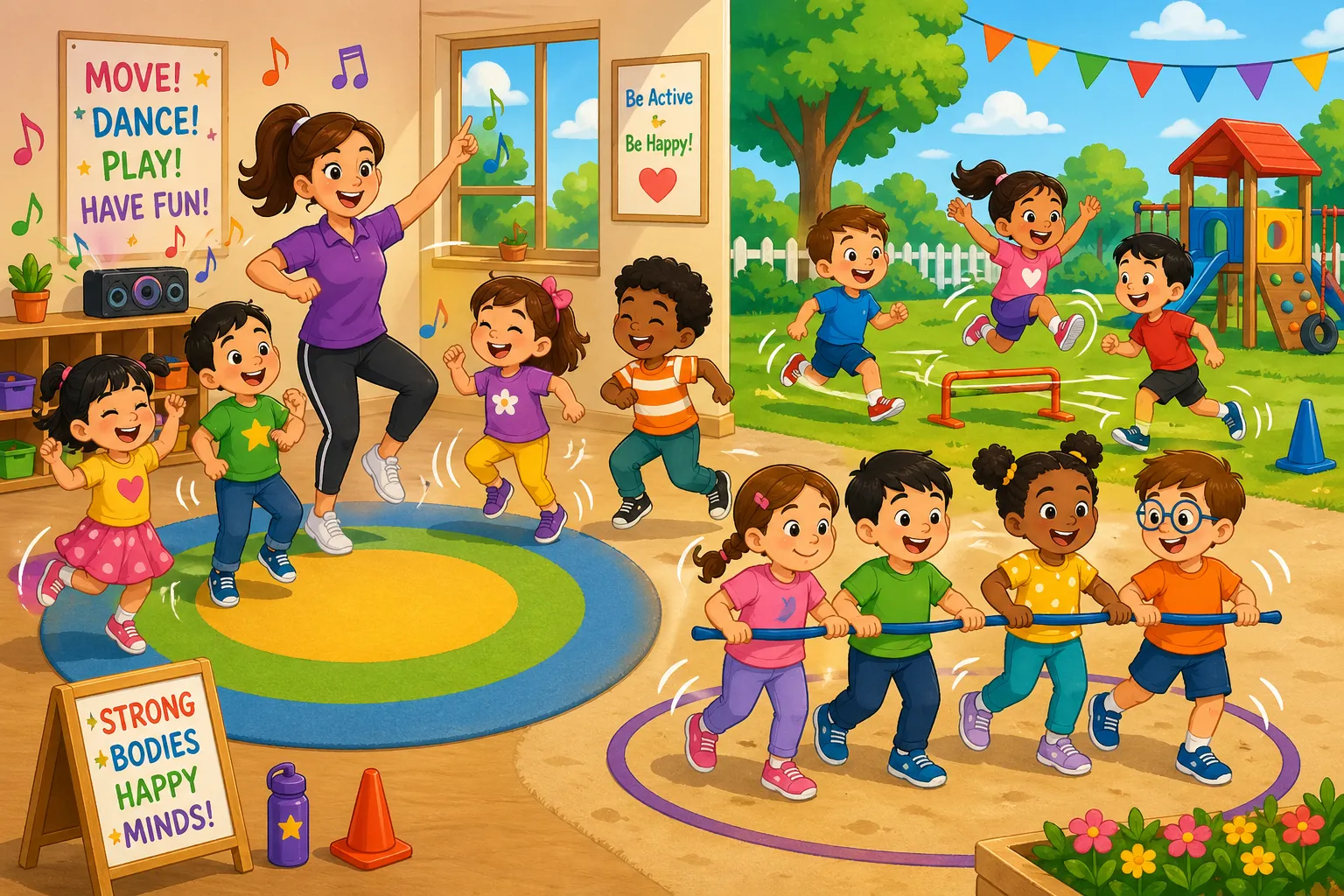
Movement is one of the most powerful learning tools available to young children. For preschoolers aged 2–5, physical play is not simply recreation — it is how they build strength, develop coordination, process emotions, and begin to understand the world around them. Whether running through an outdoor obstacle course, dancing to a favorite song, or crawling like a bear across the living room floor, these experiences lay the groundwork for cognitive growth, social skills, and lifelong healthy habits.
This guide covers fun, practical movement activities for preschoolers across four key settings: indoors, outdoors, music-based play, and gross motor development — with tips for parents and educators to make every session effective and enjoyable.
Fun Movement Activities for Preschoolers
There is no shortage of ways to get preschoolers moving. The best activities combine physical challenge with imagination and are flexible enough to work in a classroom or at home. Below is a collection of engaging, no-prep movement games and structured play ideas that support physical development while keeping children genuinely entertained.
Animal Walks and Animal Parade
Animal walks are a classic, no-prep movement game that preschoolers love. Children bear crawl like a bear, hop like a frog, waddle like a penguin, or slither like a snake — each action working different muscle groups while sparking creative thinking. These movements build upper body strength, coordination, and spatial awareness without requiring any equipment.
Obstacle Course Challenges
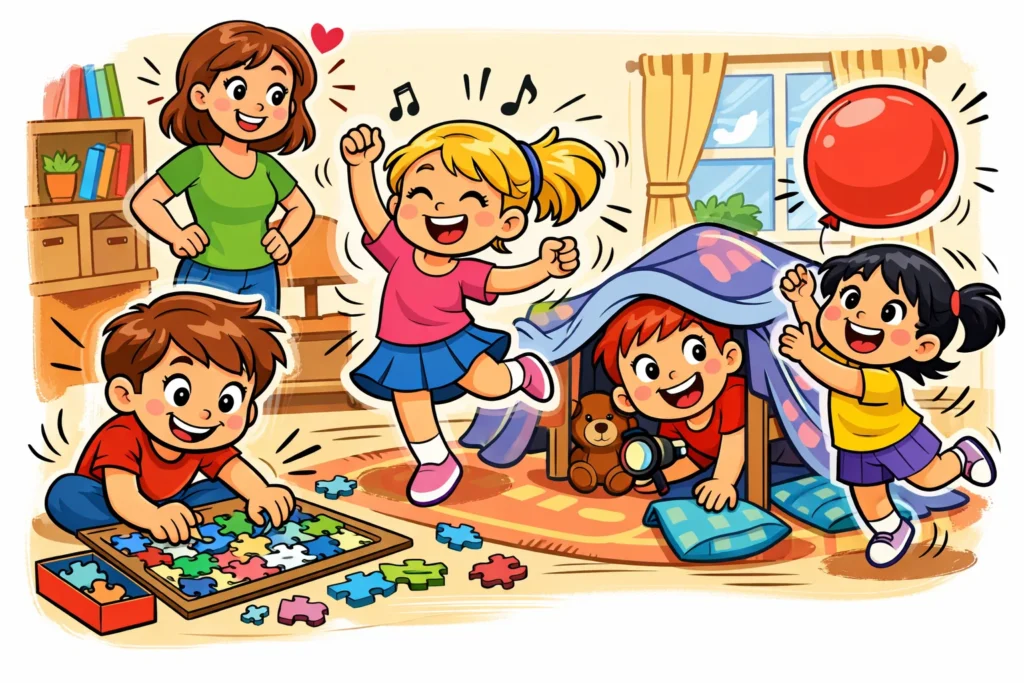
An indoor or outdoor obstacle course turns gross motor skill development into an adventure. Use pillows, chairs, tape lines, and hula hoops to create a simple circuit that children crawl under, jump over, and balance across. Obstacle courses build motor planning skills, problem-solving skills, and body awareness as preschoolers figure out how to navigate each challenge.
Freeze Dance and Musical Statues
Freeze dance is one of the most effective music and movement activities for preschoolers because it combines rhythm, listening skills, and self-control in one energetic game. Children dance freely until the music stops — then hold perfectly still. This stop-and-go format strengthens impulse control and auditory processing in a genuinely fun way.
Balloon Toss and Balloon Volleyball
Balloon games are gentle, slow-paced activities that make hand-eye coordination practice accessible even for younger preschoolers. Tossing and volleying a balloon back and forth requires focus and body coordination without the frustration of a fast-moving ball. Balloon play also naturally encourages teamwork as children work together to keep the balloon in the air.
Simon Says and Follow the Leader
Imitation games like Simon Says build listening skills, body awareness, and the ability to follow multi-step instructions. These whole-group games also develop social skills, as children take turns leading and following. Simon Says is particularly effective in classroom management, giving educators a playful way to transition between activities.
Bean Bag Toss and Target Games
Throwing bean bags at targets develops accuracy, hand-eye coordination, and fine motor control. Targets can be as simple as hula hoops on the floor or buckets of different sizes. These activities are easy to adapt for different skill levels — moving targets closer or farther based on each child’s ability.
Duck, Duck, Goose and Circle Games
Classic circle games like Duck, Duck, Goose encourage preschoolers to sit in a circle, listen carefully, and burst into action at the right moment. These games build anticipation, turn-taking, and physical coordination while creating a strong sense of group participation and shared fun.
The Floor is Lava and Imaginative Play
Imaginative movement games like The Floor is Lava blend physical activity with creative thinking. Children hop from cushion to cushion, problem-solving on the fly and developing quick reaction times. This type of play supports both physical coordination and emotional regulation as children navigate excitement and challenge together.
Music Activities for Preschoolers
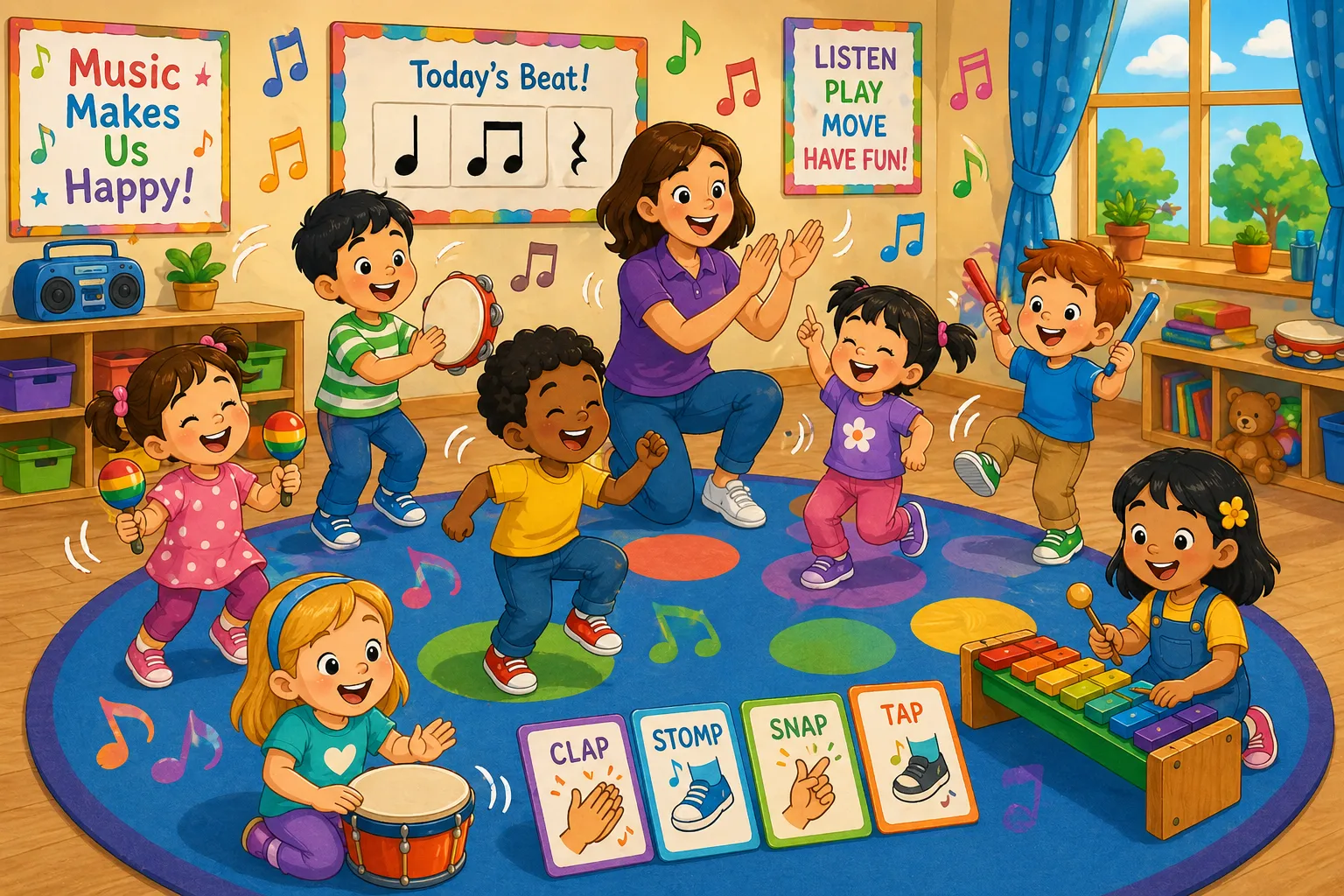
Music transforms movement into a multisensory learning experience. When preschoolers dance, sing, and play along with rhythm, they develop coordination, language skills, memory, and emotional expression simultaneously. Music and movement activities are among the most research-supported approaches to early childhood development.
Action Songs and Rhymes
Songs with repeated actions — like “Head, Shoulders, Knees and Toes” or “If You’re Happy and You Know It” — support memory, language development, and body coordination at the same time. Each sing-along reinforces vocabulary, sequencing, and the connection between words and physical movement. These are ideal for classroom transitions or circle time.
Dancing with Props and Free Movement
Giving preschoolers scarves, ribbons, or simple percussion instruments during free dance encourages creative expression and body awareness. Props extend the movement experience by adding a visual and tactile dimension. Free movement sessions allow children to interpret music in their own way, building confidence and emotional intelligence.
Rhythm Sticks and Percussion Play
Clapping, tapping, and playing simple percussion instruments helps preschoolers develop timing, auditory processing, and fine motor skills. Even tapping two sticks together in time to a beat requires focus and coordination. Regular rhythm exercises support the neural pathways involved in both music and early math learning.
Musical Chairs and Educational Variations
Musical chairs can be adapted to include early literacy or numeracy elements — for example, Musical Letters, where children sit on a letter card and must name it when the music stops. These variations keep the beloved format of a classic music game while adding meaningful learning opportunities aligned with preschool curricula.
Indoor Movement Activities for Preschoolers
Rainy days, small spaces, and cold winters do not have to mean sedentary afternoons. There are many effective ways for preschoolers to play indoors that build gross motor skills, burn energy, and support physical development without needing outdoor space.
Effective indoor movement ideas include:
- Indoor obstacle courses using pillows, cushions, tape lines, and furniture tunnels
- Dance party breaks — short, high-energy sessions that release tension and refocus attention
- Jumping challenges such as jumping jacks, hopscotch drawn with tape, and two-footed jumping over low obstacles
- Indoor scavenger hunts that combine searching, crawling, and running with early literacy clues
- Pillow fort adventures that merge imaginative play with climbing, crawling, and physical exploration
The key to successful indoor play is a safe, cleared space and clear boundaries. Even a modest living room or classroom corner can become an effective movement space with minimal preparation.
Outdoor Movement Activities for Preschoolers
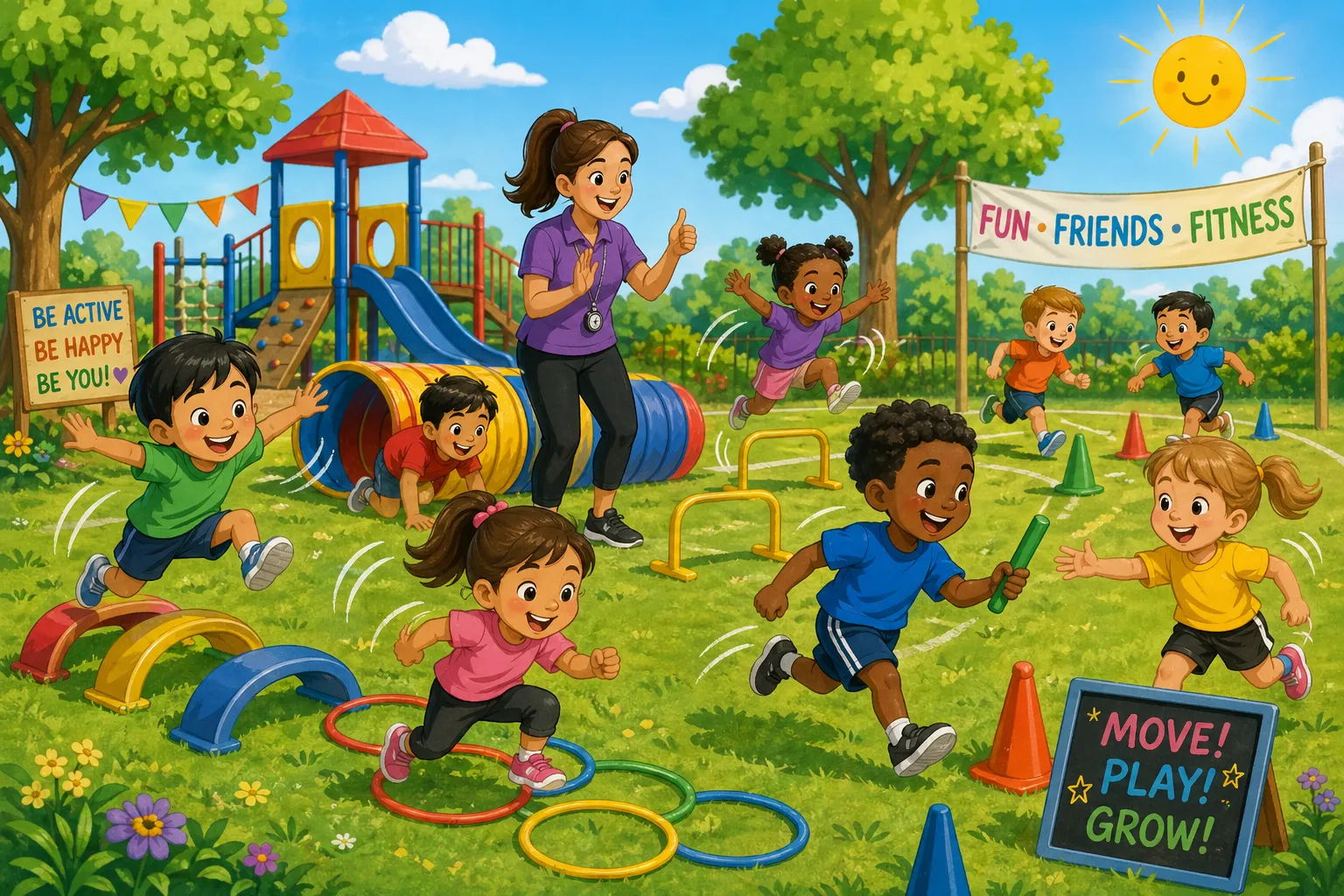
Outdoor play offers preschoolers access to natural terrain, open space, and sensory-rich environments that indoor settings simply cannot replicate. Research from the American Academy of Pediatrics consistently emphasizes that unstructured outdoor play supports whole-child development, from physical health to social competence.
Outdoor Games for Coordination and Confidence
Running games, chasing games, and simple ball play give preschoolers the chance to test and expand their physical limits in a low-stakes environment. Games like Tag, Red Light Green Light, and simple races build speed, coordination, and the confidence that comes from mastering physical challenges. These activities also naturally develop problem-solving skills and spatial awareness.
Nature-Based Movement Activities
The outdoor environment itself is a movement resource. Jumping over sticks, throwing leaves, balancing on stepping stones, and exploring uneven terrain all engage preschoolers’ gross motor skills in authentic, unpredictable ways. Nature-based play encourages children to move their bodies and minds in response to a real, changing environment rather than a predetermined set of instructions.
Playground and Open-Space Activities
Climbing, sliding, swinging, and free play on a playground develop upper and lower body strength, balance, and risk assessment skills. The CDC recommends that preschool-aged children engage in at least 3 hours of physical activity per day, spread across a variety of intensity levels — and playground time is one of the most effective ways to meet that target.
Safe Outdoor Play Guidelines
Before outdoor sessions, parents and educators should:
- Check the play area for hazards such as sharp objects, unstable surfaces, or extreme weather conditions
- Ensure appropriate supervision based on group size and age
- Match activity intensity to weather conditions — avoiding prolonged outdoor play in extreme heat or cold
- Apply sunscreen and provide water during warm weather sessions
Gross Motor Activities for Preschoolers
Gross motor development refers to the growth of large muscle groups involved in whole-body movements such as running, jumping, climbing, and balancing. These foundational movement skills underpin nearly every physical activity a child will encounter throughout their life.
Core Gross Motor Skills for Preschoolers
Between ages 3 and 5, preschoolers typically develop the ability to:
- Run with increasing speed and control
- Jump with both feet and begin hopping on one foot
- Climb stairs and playground equipment with confidence
- Throw and kick a ball with basic accuracy
- Balance on one foot for short periods
Motor skill development progresses at different rates for each child, but consistent, varied physical activity supports steady improvement across all these areas.
Indoor and Outdoor Gross Motor Games
Indoor gross motor games include jumping challenges, movement circuits, and structured imitation games. Outdoor options expand to include running races, obstacle courses, and ball games. Seasonal adaptations — such as snow play, puddle jumping, or indoor yoga during cold months — keep gross motor development consistent year-round.
Benefits of Movement Activities for Preschoolers
Regular physical activity during the preschool years produces benefits that extend well beyond physical health. Movement shapes how young children think, feel, and relate to others.
- Physical health: Regular activity strengthens muscles, improves coordination, supports healthy weight, and builds cardiovascular fitness
- Cognitive growth: Research published in Pediatric Exercise Science suggests that physical activity is associated with improved attention, working memory, and academic readiness in young children
- Social and emotional development: Group movement activities build teamwork, empathy, turn-taking, and emotional regulation
- Sensory and motor integration: Spinning, jumping, balancing, and crawling help preschoolers process sensory input and develop body awareness
Tips for Implementing Movement Activities
How to Keep Preschoolers Engaged
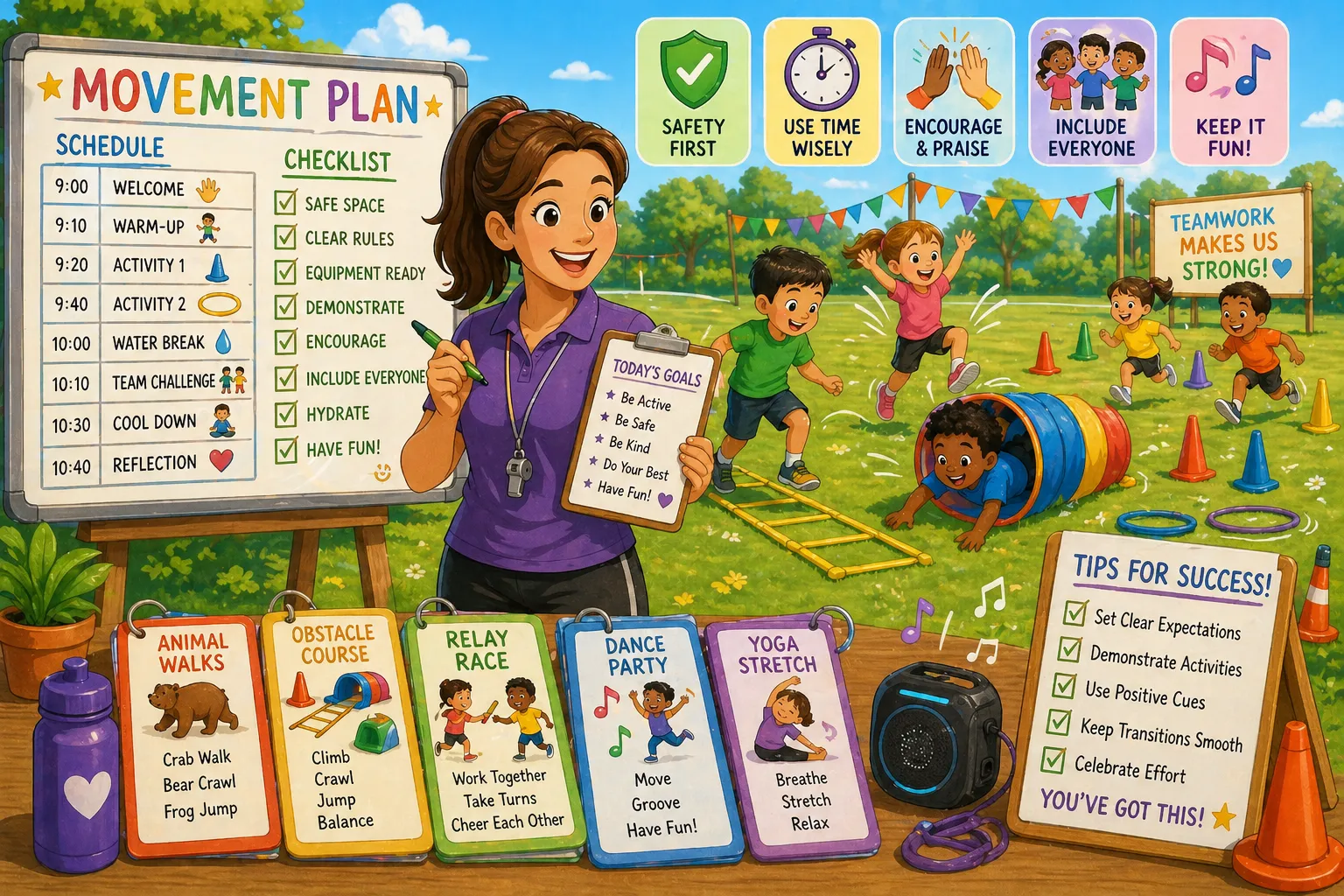
Preschoolers have short attention spans, so variety and novelty are essential. Rotate activities every 10–15 minutes, use music to signal transitions, and offer choices where possible. Framing activities as games rather than exercises consistently improves participation and enthusiasm.
Adapting Activities for Different Skill Levels
Not all preschoolers develop at the same pace. Modifications make movement accessible for every child:
- Move targets closer for children still developing throwing accuracy
- Offer hand-holding support during balance activities
- Allow children to choose between easier and harder versions of an obstacle course
- Pair less confident children with patient peers for cooperative activities
Incorporating Movement into Daily Routine
Movement does not need to be a separate scheduled event. Brain break dances between tasks, walking to collect materials, active transitions between lessons, and outdoor time after lunch all count. Integrating short bursts of physical activity throughout the day supports focus, emotional regulation, and learning retention.
Conclusion: Movement as Foundation for Early Learning
Movement is not a break from learning — it is learning. For preschoolers, physical activity builds the body and the brain simultaneously, supporting development across cognitive, emotional, social, and physical domains. Whether through music and movement activities, outdoor adventures, or creative indoor play, consistent engagement with purposeful movement gives young children the foundation they need for school and life.
Frequently Asked Questions
What is a movement activity?
A movement activity is any structured or unstructured physical experience that engages a child’s body in purposeful action — such as jumping, dancing, crawling, or throwing. Examples include freeze dance, obstacle courses, and animal walks.
What are the types of movement for preschoolers?
Movement for preschoolers falls into three main categories: gross motor (large muscle movements like running and jumping), fine motor (small muscle movements like gripping and drawing), and sensory movement (activities that engage the sensory system, such as spinning and balancing).
What are movement patterns in early childhood?
Movement patterns are foundational physical actions that form the building blocks of all physical activity. These include locomotor patterns (walking, running, hopping, skipping) and non-locomotor patterns (bending, twisting, stretching, and swaying).
What are sensory movement activities?
Sensory movement activities are experiences that stimulate the sensory system while engaging the body. Examples include spinning, jumping on cushions, crawling through tunnels, and balancing on uneven surfaces. These activities support sensory processing and body awareness.
How often should preschoolers do movement activities?
The CDC recommends that preschool-aged children accumulate at least 3 hours of physical activity daily, including a mix of light, moderate, and vigorous activity. This can be spread across indoor play, outdoor time, and structured movement sessions throughout the day.
Take a short quiz to find out what your everyday choices say about your parenting style
When your child is curious about something new, what’s your instinct?
Take a short quiz to find out what your everyday choices say about your parenting style
“Can I download this app?” What happens next?
Take a short quiz to find out what your everyday choices say about your parenting style
When it comes to rules at home, which sounds most like you?
Take a short quiz to find out what your everyday choices say about your parenting style
If you could give your child one life skill today, what would you pick?
Take a short quiz to find out what your everyday choices say about your parenting style
Your child gets to choose what to watch. What would your ideal setup look like?
Take a short quiz to find out what your everyday choices say about your parenting style
Pick your parenting superpower ✨