
Teaching Plan Guide: Steps, Templates, Strategies for Effective Lesson Planning

 Discover a Free Education Video App for Kids
Pastory uses AI to personalize educational video content based on your child’s interests and personality. Safe, engaging, and built for curious young minds. Sign up now to stay updated and enjoy early access with a free trial
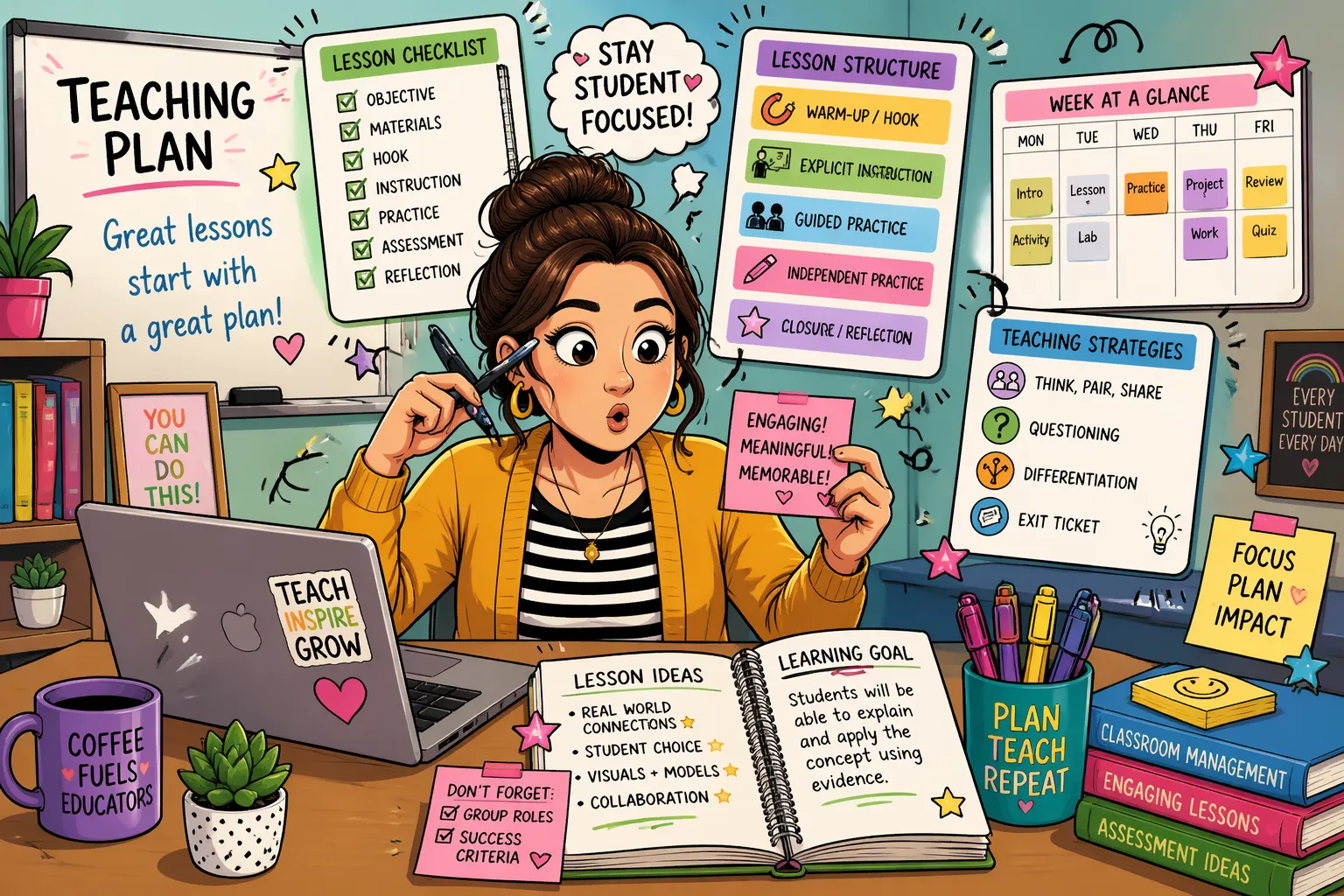
A well-structured teaching plan is one of the most powerful tools an educator can have. Whether you are a classroom teacher preparing for a new semester, a tutor working one-on-one, or a parent supporting learning at home, knowing how to write a lesson plan — and how to do it well — makes a measurable difference in student outcomes.
This guide walks you through the complete process of creating an effective teaching plan, from setting clear learning objectives to assessing student progress, with practical strategies, useful templates, and expert-backed advice along the way.
Teaching Plan Definition and Core Concepts
A teaching plan is a structured roadmap that guides an educator through the delivery of instruction over a defined period. It outlines what students should learn, how the educator will teach it, and how both parties will know when learning has occurred. Unlike a casual outline, a formal plan ensures that instruction is intentional, organized, and aligned with learning goals.
Teaching Plan vs Lesson Plan: Key Differences
A teaching plan and a lesson plan are related but not the same thing. A teaching plan typically covers a broader scope — a unit, a term, or an entire course — mapping out the progression of topics, skills, and assessments over time. A lesson plan, by contrast, focuses on a single class session and details the specific activities, timing, and materials for that one meeting.
Think of the teaching plan as the blueprint and the lesson plan as the daily work order. Both are essential parts of effective teaching, and strong educators use them together.
Key Elements of a Teaching Plan
Every effective teaching plan, regardless of subject or grade level, shares a set of core components:
- Learning objectives and outcomes — what students will know or be able to do
- Instructional methods — how content will be delivered (lecture, group work, hands-on activities)
- Teaching materials and resources — textbooks, worksheets, digital tools
- Timeline and lesson flow — how time is allocated across sessions
- Assessment strategy — how student learning will be measured
When these elements work together, the result is an organized, student-centered plan that keeps instruction on track and supports every learner in the classroom.
Step-by-Step Teaching Plan Creation Process
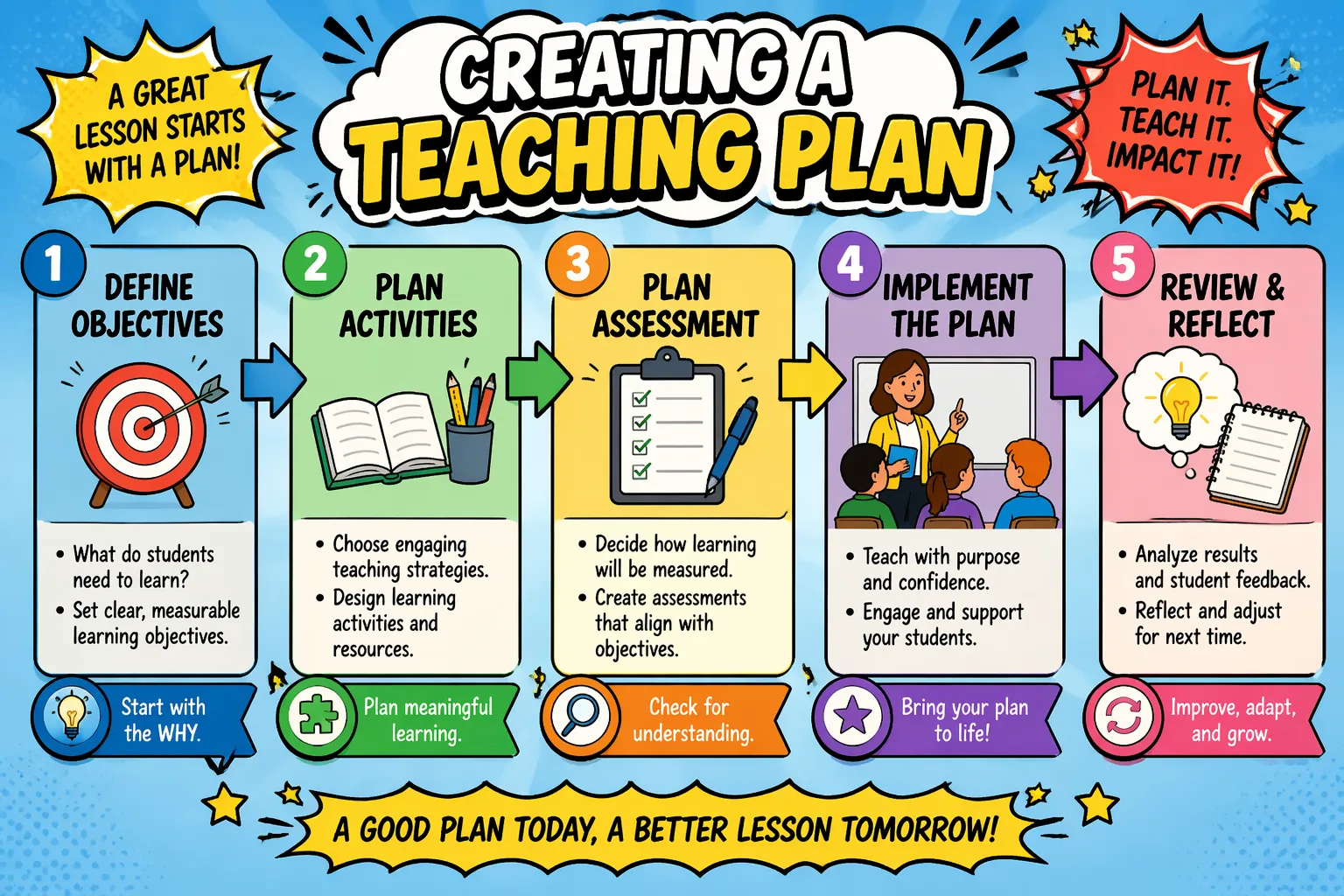
Creating a teaching plan does not have to be overwhelming. Breaking the process into clear, sequential steps makes it manageable — even for educators new to formal planning. The following step-by-step guide to creating an effective plan covers everything from setting goals to reflecting on outcomes.
Each step builds on the last, forming a coherent system that supports consistent, high-quality instruction.
Define Objectives and Learning Goals
The first step is to define what students should learn. Strong learning objectives are SMART — Specific, Measurable, Achievable, Relevant, and Time-bound. For example, rather than writing “students will understand fractions,” a measurable objective reads: “students will be able to add two fractions with unlike denominators with 80% accuracy by the end of the unit.”
Clear learning goals give both the educator and the student a shared target to work toward, and they make it easier to design instruction and evaluate success.
Select Teaching Materials and Resources
Once objectives are set, educators choose the materials that will support instruction. This may include a textbook, printed worksheets, digital apps, manipulatives, or video content. The key is alignment — every resource should directly support the stated learning goals.
When selecting materials, consider the diverse learning styles and knowledge and skills already present in the classroom. A mix of visual, auditory, and hands-on resources tends to engage students more effectively than a single format.
Design Teaching and Learning Activities
Effective learning activities give students the opportunity to apply their knowledge, not just receive it. This step involves designing a mix of direct instruction, guided practice, and independent or small group tasks. For example, a science lesson might begin with a brief lecture, move into a group discussion, and close with a hands-on experiment.
Activities should be sequenced to build on one another, gradually increasing in complexity as students develop new skills.
Create Lesson Structure and Timeline
Time management is one of the most practical challenges in teaching. A well-planned lesson structure divides the session into a clear beginning, middle, and end — introduction, core instruction, and closure — with realistic time allocations for each. Experienced educators often build in a few minutes of buffer for transitions or unexpected questions.
Mapping out the timeline within the broader teaching plan also ensures that all content is covered before summative assessments, preventing the common pitfall of rushing at the end of a unit.
Plan Assessment and Evaluation Methods
Assessment should be planned alongside instruction, not added as an afterthought. A balanced plan includes both formative assessments — such as exit tickets, quizzes, and class discussions — and summative assessments like unit tests or projects. Formative assessments allow educators to make adjustments mid-unit based on how students are performing.
Regular, low-stakes feedback helps students stay on track and gives teachers actionable data to improve future instruction.
Practice Delivery and Preparation
Before delivering a lesson, educators benefit from reviewing their plan with fresh eyes. Reading through the sequence, checking that materials are prepared, and mentally rehearsing key transitions all contribute to smoother delivery. This step is especially valuable for new educators or when introducing unfamiliar content.
Preparation also means anticipating where students might struggle and having clarifying examples or backup explanations ready.
Adapt the Teaching Plan for Flexibility
Even the most carefully crafted plan needs room to flex. Students learn at different speeds, and unexpected situations — a fire drill, a technology failure, a particularly rich class discussion — can disrupt the timeline. Building flexibility into the plan means identifying which elements are essential and which can be shortened or moved.
Experienced educators often annotate their plans with notes like “extend if time allows” or “simplify if students struggle,” making it easier to adapt in the moment without losing sight of the learning goals.
Evaluate Results and Improve the Plan
After instruction is complete, the final step is reflection. What worked well? Where did students’ attention wander? Which activities produced the strongest learning outcomes? Taking time to reflect on what worked — and documenting those insights — allows educators to continually improve their plans over time.
This iterative process is what separates good teaching plans from great ones. Each cycle of planning, teaching, and reflecting builds a stronger foundation for the next.
Essential Components of an Effective Teaching Plan
Going deeper into the structure of a teaching plan reveals how each component contributes to student success. A plan is only as strong as its individual parts, and each element deserves careful attention.
Strong plans share a common architecture, regardless of the subject, grade level, or setting.
Learning Objectives and Outcomes
Learning objectives are the foundation of the entire plan. When written in SMART format, they give the educator a clear benchmark for success and help students understand what is expected of them. Objectives should be visible to students at the start of each lesson — research consistently shows that students perform better when they know the learning goals in advance.
Teaching Activities and Instructional Methods
Instructional methods should be varied and matched to the nature of the content. A grammar lesson might call for direct instruction followed by independent practice, while a history unit might use group discussions, primary source analysis, and project-based learning. Blending different approaches keeps students engaged and supports a wider range of learning styles.
Effective methods to consider include:
- Direct instruction for introducing new concepts clearly
- Guided practice for scaffolding complex skills
- Group work and peer discussion for deepening understanding
- Hands-on activities for experiential, applied learning
Time Management and Lesson Flow
Every lesson should have a clear arc: an engaging opening that activates prior knowledge, a focused instructional core, and a closing that consolidates learning. Time management within that arc is critical. Spending too long on the introduction leaves too little time for practice; rushing through closure means students leave without consolidating what they have learned.
Educators who plan time allocations in advance — and review them after each lesson — tend to develop stronger pacing instincts over time.
Assessment and Feedback Strategy
A well-designed assessment strategy uses both formative and summative tools. Formative assessments happen throughout the teaching process — a quick quiz, a thumbs-up/thumbs-down check, a brief written response. Summative assessments evaluate cumulative learning at the end of a unit or course.
Feedback should be timely, specific, and constructive. Generic comments like “good work” or “needs improvement” do not give students enough information to act on. Specific feedback — “your explanation of the concept is clear, but your example does not quite fit” — supports meaningful growth.
Teaching Strategies and Methods for Better Planning
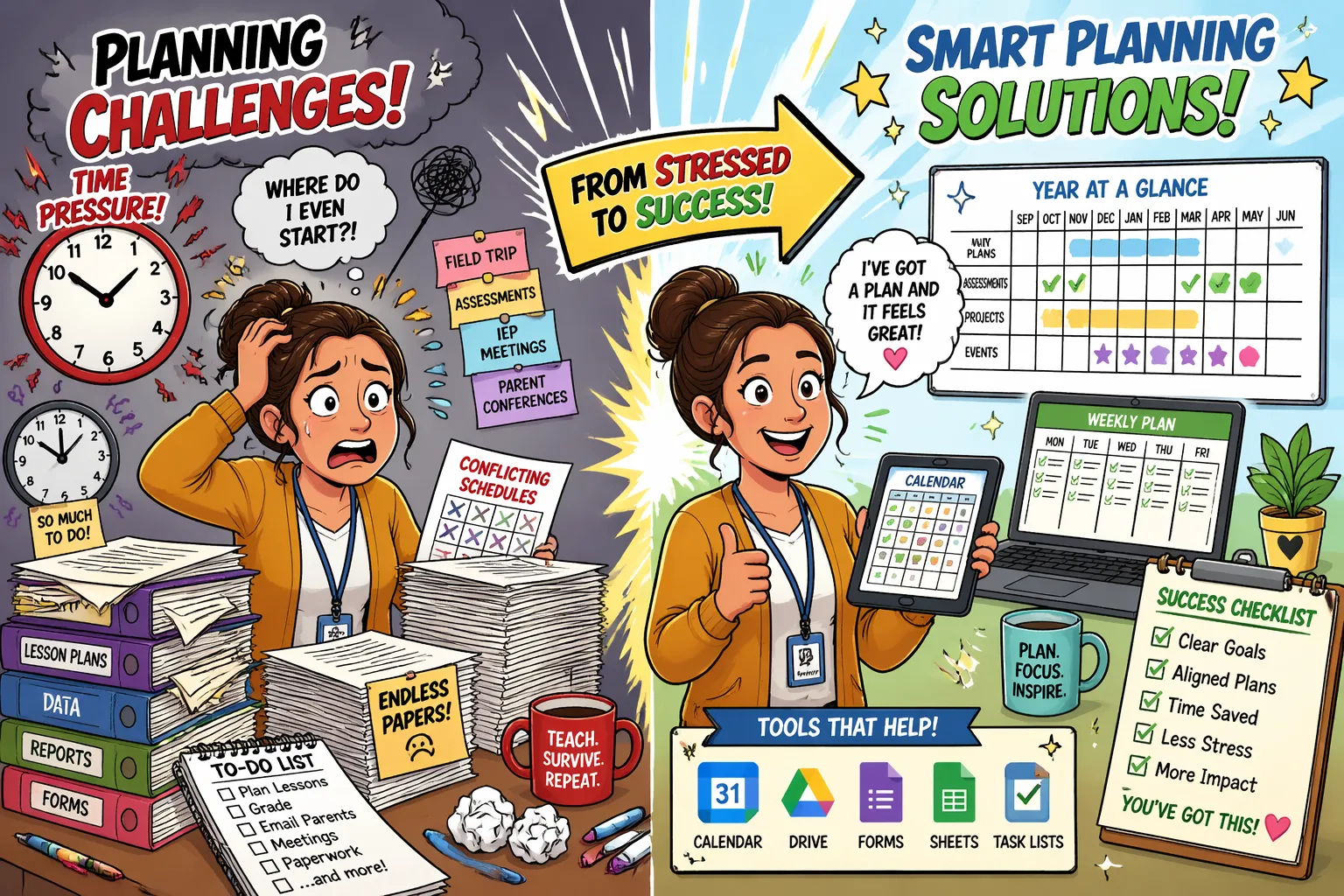
Strong instruction is built on intentional strategy, not just good instincts. The methods an educator chooses to engage students and organize content have a direct impact on how much learning actually takes place.
Creative Teaching Approaches
Student-centered and project-based learning approaches consistently show strong outcomes for engagement and retention. In project-based learning, students apply their knowledge to a real-world problem or challenge over an extended period, developing both content knowledge and critical thinking skills simultaneously.
Interactive methods — debates, simulations, role-playing, collaborative problem-solving — activate higher-order thinking and give students the chance to practice skills in authentic contexts.
Using Student Input in Planning
Incorporating student feedback into the planning process improves both relevance and engagement. Simple strategies include end-of-lesson reflection cards, brief surveys at the start of a new unit, or open class discussions about what is working and what is not. When students feel heard, their investment in the learning process increases.
Organizing Teaching Materials Efficiently
A well-organized educator is a more effective one. Digital folders organized by unit, labeled physical materials, and a consistent filing system for lesson plans and assessments all reduce the time spent searching for resources and increase the time available for teaching.
Tools like shared drives, planning notebooks, or dedicated apps can help educators keep all materials in one accessible place.
Planning Ahead for Long-Term Success
Long-term planning — mapping out a week, a month, or an entire semester in advance — allows educators to see the full arc of learning and identify potential gaps or overlaps. It also makes it easier to tailor instruction to upcoming events, school-wide assessments, or curriculum requirements.
Educators who plan ahead consistently report less stress and more confidence in their day-to-day teaching.
Tools and Software for Teaching Plan Creation
Technology has made it easier than ever to create, store, and share teaching plans efficiently. A range of digital tools now supports educators at every stage of the planning process.
Digital Apps for Lesson Planning
Several platforms are specifically designed to help educators write a lesson plan quickly and effectively:
- Planboard — a free lesson plan template tool with calendar integration
- Google Classroom — supports plan sharing, assignment distribution, and student feedback
- Common Curriculum — allows collaborative planning across teaching teams
- Lessonpaths — curates online resources into structured learning playlists
Using Templates in Word and PDF Tools
For educators who prefer working offline, a free lesson plan template in Word or PDF format provides a practical starting point. Templates reduce the time spent on formatting and ensure that all key components — objectives, activities, materials, assessment — are included in every plan.
Many school districts provide their own standardized lesson plan templates to ensure consistency across classrooms.
Automation and AI in Teaching Plans
AI-powered tools are increasingly being used to support lesson planning. These tools can generate draft outlines based on a topic and grade level, suggest differentiation strategies, and even flag potential gaps in coverage. While AI does not replace educator judgment, it can significantly speed up the early stages of planning — particularly for overextended teachers managing many lesson plans simultaneously.
Common Challenges in Teaching Planning and Solutions
Even experienced educators run into obstacles when planning instruction. Recognizing common challenges — and having strategies ready — makes it easier to stay on track.
Lack of Ideas for Lesson Activities
When creativity runs low, it helps to draw on a range of sources: peer collaboration, subject-specific professional communities, curated online resources, and student interests. Keeping a running list of activities that have worked well in the past also provides a reliable starting point when time is short.
Time Constraints and Overplanning
Overplanning — trying to fit too much into a single lesson — is one of the most common pitfalls. A more effective approach is to identify the one or two core learning goals for each session and build the entire lesson around those, cutting anything that does not directly serve them.
Handling Unexpected Classroom Situations
Flexibility is a professional skill. Educators who build backup plans into their structure — a shorter version of the activity, an alternative task if technology fails, a discussion prompt if the lesson ends early — are better equipped to maintain productive learning even when things do not go as planned.
Tips for Creating Effective Teaching Plans
A few practical principles can elevate any teaching plan from functional to genuinely effective.
Start with Clear Basics
Begin every plan by clearly stating the learning objectives, the materials needed, and the rough time allocation. These three elements form the skeleton of any great lesson. Everything else builds from there.
Keep the Teaching Plan Organized
A plan that is hard to read is hard to follow. Use consistent formatting, clear headings, and concise language. An organized plan also makes it easier to hand off to a substitute teacher or share with a colleague.
Balance Creativity and Structure
Structure provides direction; creativity provides energy. The best plans contain both — a clear sequence and timeline, paired with activities that spark curiosity and invite participation. Creativity without structure can lead to engaging but unfocused lessons. Structure without creativity can produce technically correct but disengaged classrooms.
Review and Improve Regularly
Set aside time at the end of each unit to review what worked and what did not. Keep brief notes on your plans — even a few sentences — so that next time you teach the same content, you have a head start on improvement.
Simplifying the Teaching Plan Process
A strong teaching plan is not about perfection — it is about intention. When educators take the time to define clear learning goals, select purposeful activities, manage time thoughtfully, and build in meaningful assessment, they create the conditions for real student learning.
Start simple: clear objectives, well-chosen activities, a realistic timeline, and a plan for checking understanding. Refine from there. Every lesson taught is an opportunity to learn as an educator, and every plan revised is a step toward more effective, confident teaching.
Frequently Asked Questions
Do Teachers Need to Plan Every Lesson?
Not every lesson requires the same level of detail, but some form of planning is always beneficial. Routine practice sessions may need only a brief outline, while new content, complex skills, or high-stakes lessons warrant a more thorough plan. The key is matching the depth of planning to the demands of the instruction.
How Detailed Should a Teaching Plan Be?
A teaching plan should be detailed enough to guide instruction without becoming so rigid that it cannot adapt. For most lessons, a one-page document covering objectives, activities, timing, and assessment is sufficient. More complex units or unfamiliar topics may benefit from additional detail.
What Should I Do If a Lesson Does Not Go as Planned?
Treat it as data, not failure. Note what went differently from what was expected — was it pacing, student understanding, a disruption, or unclear instructions? Use those observations to adjust the next session. Adaptability is one of the most valuable skills a teacher can develop.
Are There Tools to Simplify Teaching Planning?
Yes. Platforms like Planboard, Google Classroom, and Common Curriculum offer digital planning tools that streamline the process. Free templates in Word or PDF format are also widely available and provide a solid starting structure for educators at any level.
What Are the Main Parts of a Teaching Plan?
The core components of an effective teaching plan are: learning objectives, instructional methods and activities, required materials and resources, a timeline and lesson flow, and an assessment and feedback strategy. Together, these elements form a complete, functional framework for intentional instruction.

Take a short quiz to find out what your everyday choices say about your parenting style
When your child is curious about something new, what’s your instinct?
Take a short quiz to find out what your everyday choices say about your parenting style
“Can I download this app?” What happens next?
Take a short quiz to find out what your everyday choices say about your parenting style
When it comes to rules at home, which sounds most like you?
Take a short quiz to find out what your everyday choices say about your parenting style
If you could give your child one life skill today, what would you pick?
Take a short quiz to find out what your everyday choices say about your parenting style
Your child gets to choose what to watch. What would your ideal setup look like?
Take a short quiz to find out what your everyday choices say about your parenting style
Pick your parenting superpower ✨



