
How to Teach Time the Fun Way: Activities for Kids

 Discover a Free Education Video App for Kids
Pastory uses AI to personalize educational video content based on your child’s interests and personality. Safe, engaging, and built for curious young minds. Sign up now to stay updated and enjoy early access with a free trial
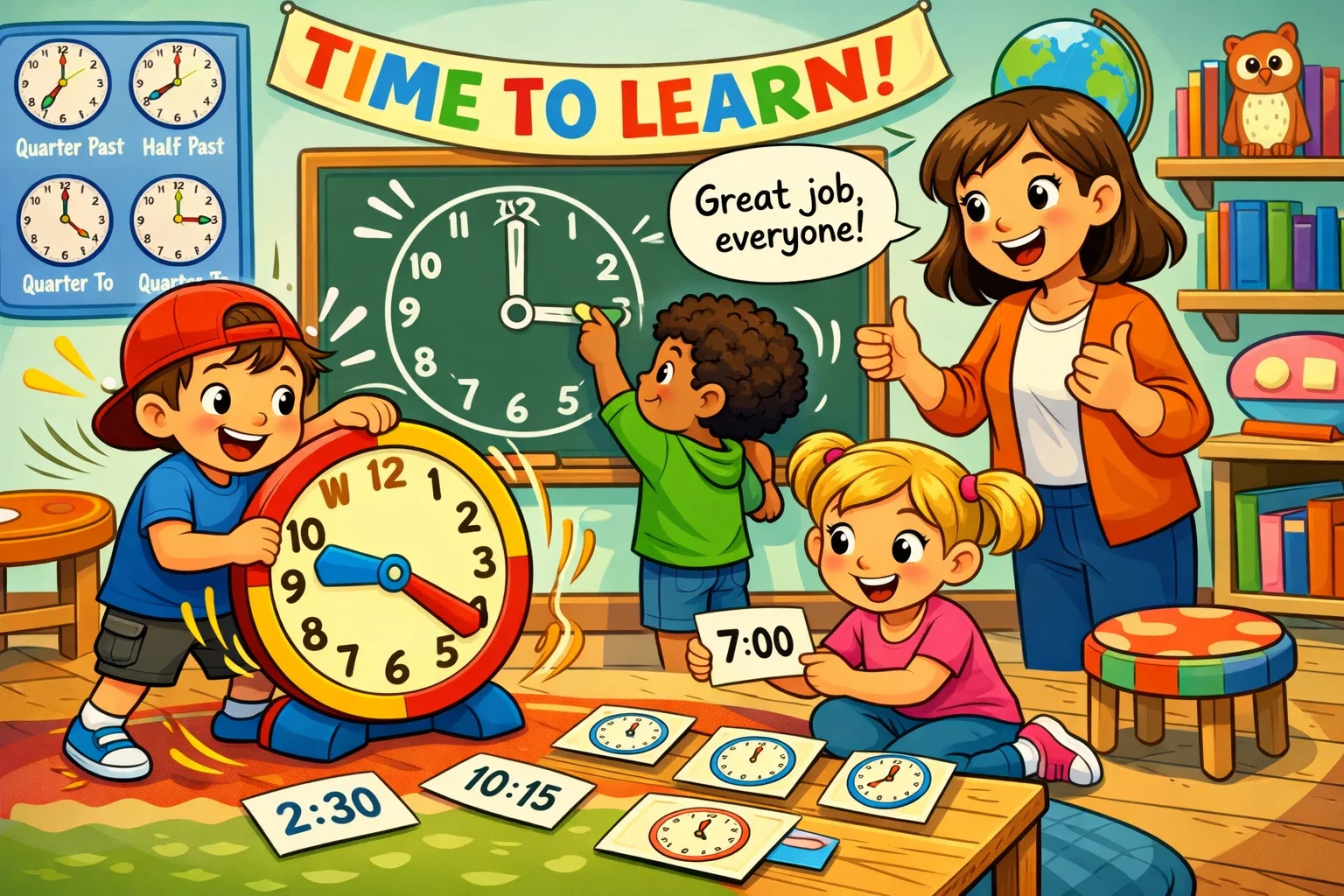
Helping kids to tell time turns a basic life skill into an engaging learning experience. With the right approach, parents, teachers, and any homeschooler can create a fun way to get children interested.
This guide focuses on practical and creative methods for teaching kids to tell time while keeping the process natural and enjoyable.
A Simple Way to Teach Telling Time
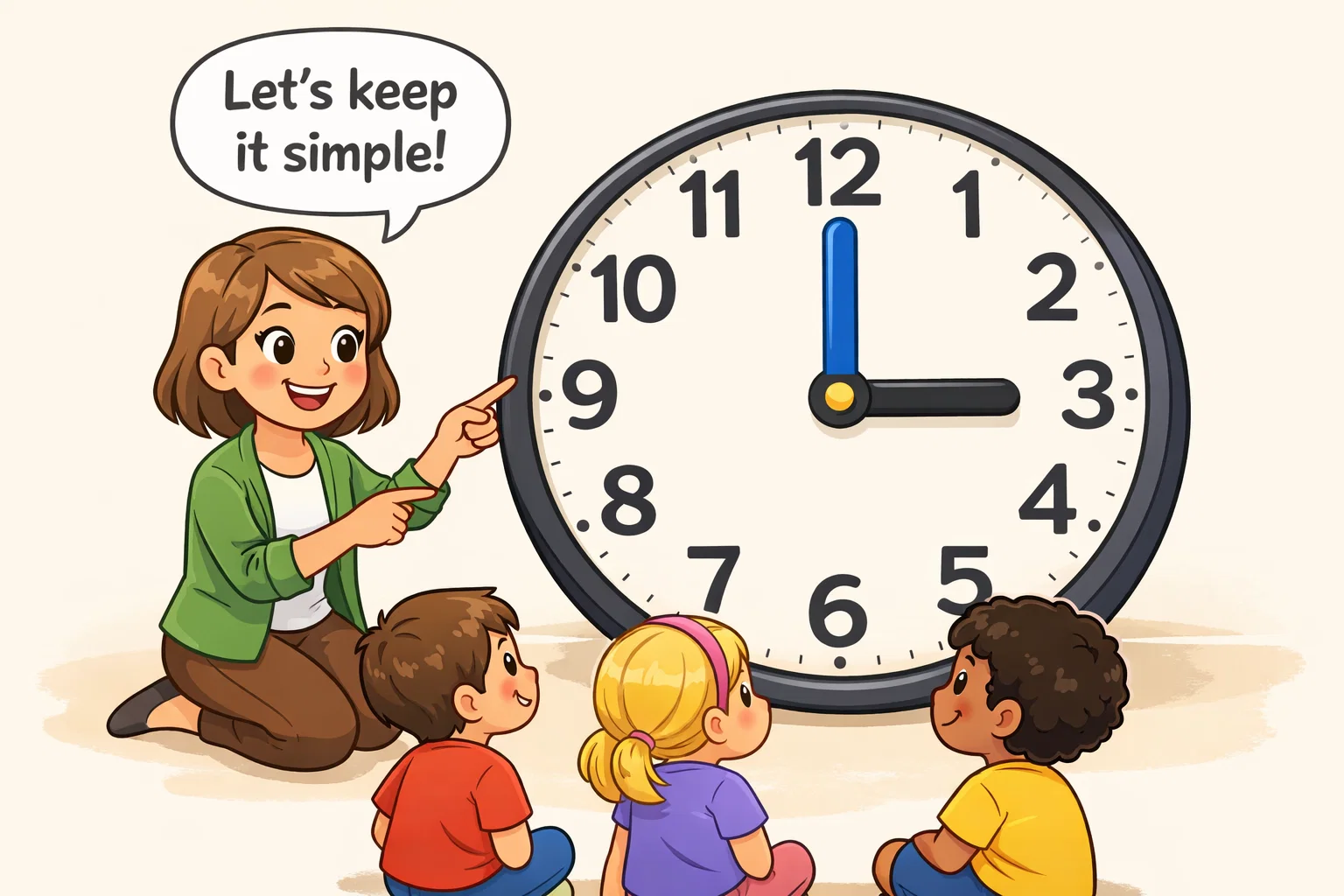
A step-by-step method is the best way to teach children how to read clocks. Start with basics and gradually increase complexity.
Understanding the Analog
An analog clock has numbers from 1 to 12 arranged in a circle. Encourage children to write the numbers and observe how the hands move.
Parts of the Clock
Explain clearly:
- Hour hand → shows the hour
- Minute hand → shows minutes
- Second hand → tracks seconds
Let children assemble the clock themselves using a manipulative to reinforce learning.
Time Vocabulary
Teach expressions such as:
- “O’clock”
- “Half past”
- “Quarter past”
- “Quarter to”
Use examples like “3 o’clock” to connect language with visuals.
Hands-On Manipulative Activities
Interactive learning is a powerful way to teach. Using a manipulative helps make teaching more engaging and effective.
Paper Plate Clock Template
This fun activity is simple and easy:
- Use paper plates as a base
- Write the numbers clearly
- Attach movable hands using a brad
- Let children move the hands to show various hours
This reusable template allows students to practice repeatedly.
Human Clock Activity
In this game to play, children take turns acting as clock hands. Others call out times, and participants position themselves correctly.
Students love the movement and teamwork involved.
Outdoor Games
Using sidewalk chalk, draw large analog clocks around the playground. Children move to represent hours physically.
This is a fun spin and one of the best ways to make teaching active.
Activities by Skill Level
Progress gradually, depending on your child’s level. This structured approach supports steady development.
Skill Progression
- Whole hours
- Half hours
- Quarter hours
- 5-minute intervals
- Exact minutes
Matching Time for Beginners
Use matching activities where children connect daily routines with clock readings. This helps them read the time confidently.
Half and Quarter Hour Practice
Encourage children to:
- Place the minute hand at 6 for half past
- Use positions like 3 and 9 for quarters
Students can use a recording sheet to track progress.
Five-Minute Intervals
Teach counting by fives as children move around the clock. This reinforces number patterns.
Exact Minutes
Once students have learned the basics, they can practice reading precise minutes. Ask students to record the time.
Games: A Fun Way to Teach Your Child to Tell Time
Games are a highly effective way to teach because they make repetition enjoyable.
Telling Time Bingo
Create cards with clock faces and call out different times. Players mark the correct answer.
Kids enjoy this game, and many want to learn more after playing.
Matching and Puzzle Games
These activities connect analog and digital formats, improving matching skills and helping students read the time accurately.
Charades
Children act out routines they do at specific hours while others guess. This adds a fun spin to learning.
Time Hunt Activities
Place analog clocks around the room. Students walk around, observe, and record the hour and minutes on a recording sheet.
Teachers can ask students questions to reinforce learning.
Digital Activities for Teaching Time
Technology offers additional ways to teach time and supports independent learning.
Useful Tools:
- Interactive websites
- Educational apps
- Visual timers
These kid-friendly tools allow students to practice at their own pace.
Teaching Through Stories
Storytelling is a creative way to teach abstract concepts.
Reading and Creating Stories
Read books that include schedules and hour references. Then ask students questions about events and timing.
Encourage children to create their own stories using specific hours of the day. This strengthens sequencing and supports time learning.
Everyday Ways to Teach Time
Daily routines provide natural opportunities for practice. This is one of the most effective ways to teach.
Practical Ideas
- Check clocks during the day
- Follow a consistent daily schedule
- Use timers and reminders
Real-Life Practice
Say things like:
“It’s 3 o’clock—time for a snack.”
These moments help children understand that time is a crucial part of life and reinforce their ability to read the clock.
Common Challenges in Teaching Kids to Tell Time
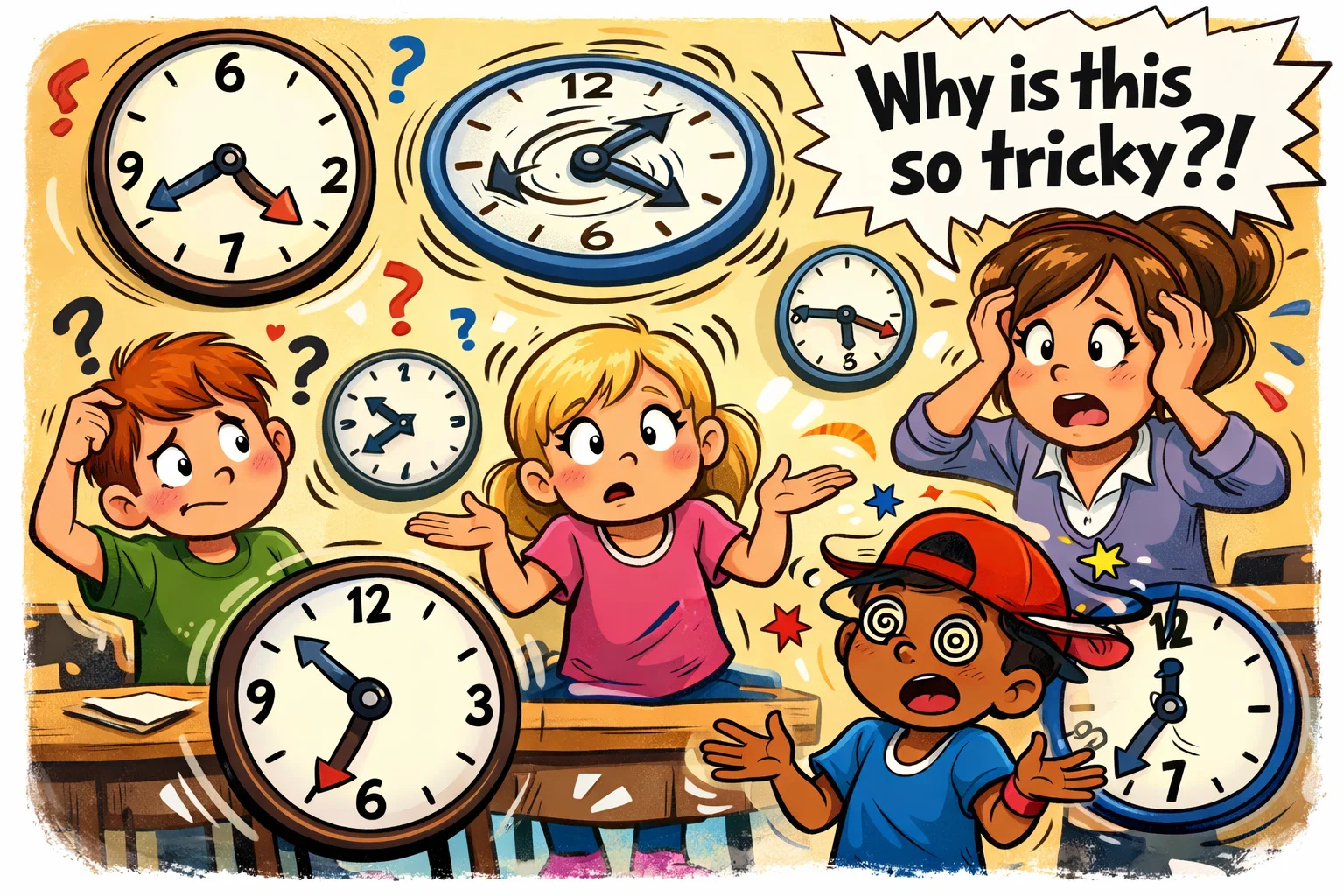
It’s important to understand the common obstacles. These are a natural part of the process.
Understanding Clock Hands
Many children struggle with the difference between the two hands. It is important to emphasize that:
- The hour hand moves slowly
- The minute hand moves faster and completes full rotations
Using a manipulative tool where children can move the minute and hour hands helps students understand the concept more effectively.
Analog and Digital
Analog clocks require interpretation, while digital clocks display exact numbers. Comparing both formats side by side helps children understand how they relate to each other.
A.M. and P.M.
Because the clock face looks identical for morning and evening, children may struggle with this concept. Associating a.m. and p.m. with daily routines—like waking up or eating dinner—helps clarify the difference.
Conclusion
Teaching kids to tell time is a valuable process that builds independence and practical skills. By using creative activities, structured lessons, and engaging games, you can do so in a fun way that keeps children motivated.
With patience and consistent practice, kids not only learn how to read analog clocks but also develop a lasting understanding of time. This makes teaching both meaningful and enjoyable for everyone involved.
Frequently Asked Questions
What age should kids learn to tell time?
Most children begin understanding basic hours between ages 5 and 7. A more complete understanding typically develops by ages 8–9, depending on exposure and individual readiness.
How can I teach time in a fun way?
Use a mix of hands-on activities, games, storytelling, and real-life practice. Keeping the experience playful and low-pressure increases engagement.
What are the best tools for teaching time?
Effective tools include:
- Analog clocks with movable hands
- DIY paper clocks
- Educational apps
- Printable worksheets
- Everyday items like chalk or hula hoops
How can kids practice time at home?
Encourage regular, short practice sessions. Check clocks during routines, play matching games, and use a family-made clock for hands-on learning.
Why is learning time difficult for children?
Time-telling involves multiple skills, including number sequencing, spatial awareness, and interpreting abstract concepts like a.m. and p.m. These develop gradually with age and practice.

Take a short quiz to find out what your everyday choices say about your parenting style
When your child is curious about something new, what’s your instinct?
Take a short quiz to find out what your everyday choices say about your parenting style
“Can I download this app?” What happens next?
Take a short quiz to find out what your everyday choices say about your parenting style
When it comes to rules at home, which sounds most like you?
Take a short quiz to find out what your everyday choices say about your parenting style
If you could give your child one life skill today, what would you pick?
Take a short quiz to find out what your everyday choices say about your parenting style
Your child gets to choose what to watch. What would your ideal setup look like?
Take a short quiz to find out what your everyday choices say about your parenting style
Pick your parenting superpower ✨



