Best Negative Reinforcement Examples for Students in Classroom and Daily Life

 Discover a Free Education Video App for Kids
Pastory uses AI to personalize educational video content based on your child’s interests and personality. Safe, engaging, and built for curious young minds. Sign up now to stay updated and enjoy early access with a free trial
Behavioral strategies play a central role in how children learn, grow, and respond to expectations — both at school and at home. Among these strategies, negative reinforcement is one of the most widely used yet frequently misunderstood concepts in education and parenting.
Understanding negative reinforcement examples for students can help teachers and parents apply this approach more intentionally, creating environments where children are motivated to develop positive habits and meet expectations.
What Is Negative Reinforcement?
Negative reinforcement is a behavioral concept from operant conditioning — a learning theory developed by psychologist B.F. Skinner — in which the removal of an unpleasant stimulus increases the likelihood of a desired behavior occurring again. In simple terms, it involves taking something away that a student finds uncomfortable or unwanted in order to encourage positive behavior.
It’s important to note that “negative” in this context does not mean harmful or bad. The word refers to the subtraction of a stimulus, not the introduction of something unpleasant.
How Negative Reinforcement Works in Behavior Shaping
The psychological mechanism follows a clear pattern:
- A student experiences or anticipates an aversive stimulus (such as extra homework, reminders, or chores).
- The student performs a desired behavior in response.
- The unpleasant stimulus is removed as a direct result of that behavior.
- Because removal feels rewarding, the student becomes more likely to repeat the behavior in the future.
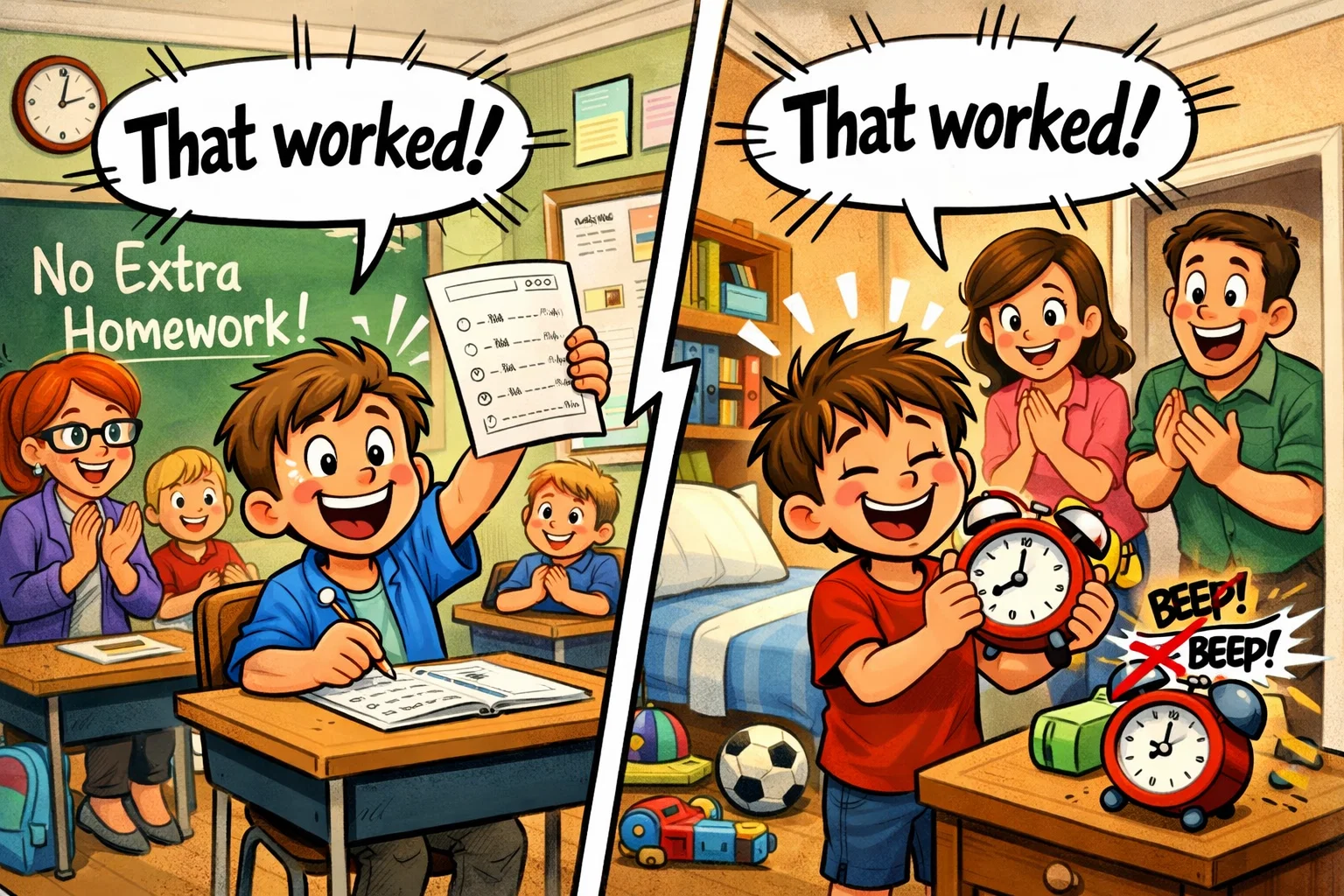
For example, a teacher might tell students that completing their homework on time means no additional review exercises on Friday. The anticipation of removing the unpleasant task motivates students to meet the deadline consistently.
Negative Reinforcement: Overview and Effects
Negative reinforcement is used across educational and home settings to shape behavior in a targeted, goal-oriented way. Research in applied behavior analysis (ABA) confirms that the removal of an aversive stimulus can effectively motivate students to repeat desirable behaviors, particularly when applied consistently and clearly.
The effects of negative reinforcement on students include improved task completion rates, greater punctuality, and stronger self-discipline. However, it should be used thoughtfully. Overreliance on avoidance learning — where students act primarily to escape discomfort rather than out of genuine motivation — can sometimes reduce intrinsic engagement with learning over time.
Why Teachers and Parents Use Negative Reinforcement
Teachers and parents use negative reinforcement to motivate students without relying solely on rewards or consequences. It is particularly effective for encouraging responsible behavior and building consistent routines. When a child understands that completing tasks leads to the removal of something unpleasant — like extra assignments, strict supervision, or nagging — they develop a stronger connection between effort and outcome.
Negative reinforcement in the classroom is also valued because it reinforces the child’s sense of competence. When students see that their behavior directly influences their environment, they develop greater confidence and autonomy.
Benefits and Potential Drawbacks
| Aspect | Detail |
| Primary benefit | Increases desired behavior by linking it to relief from an unpleasant stimulus |
| Motivational impact | Encourages students to work on time and maintain positive habits |
| Risk of overuse | May lead to avoidance behavior or stress if students only act to escape consequences |
| Best applied with | Positive reinforcement strategies for a balanced approach |
10 Negative Reinforcement Examples in the Classroom
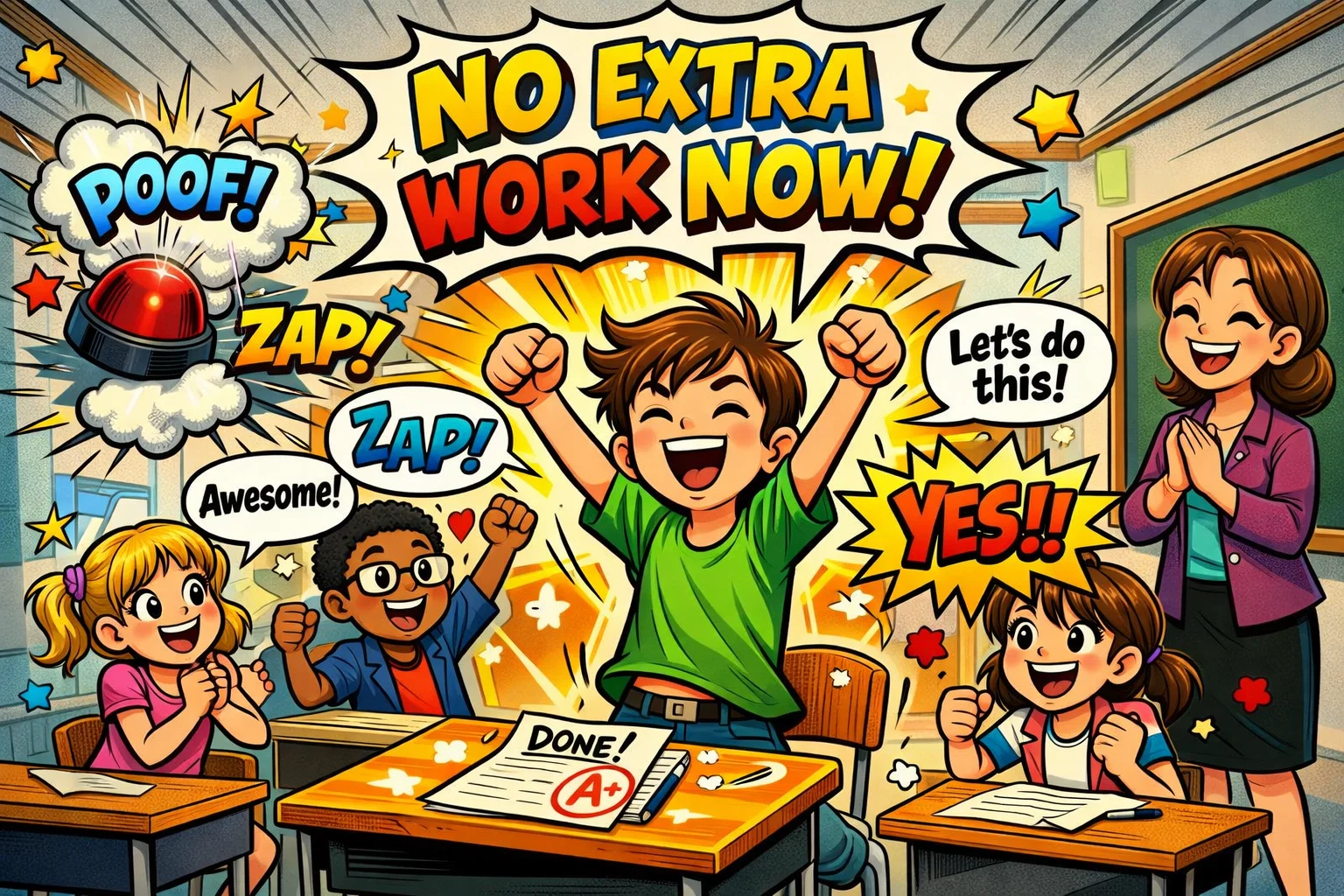
The following 10 examples of negative reinforcement for students illustrate how this strategy works in real educational contexts, from classrooms to study routines.
1. No Homework on the Weekend After Completing Assignments
When a student consistently completes their homework on time throughout the week, the teacher removes the unpleasant stimulus of weekend assignments. The removal of an unpleasant task reinforces punctuality and task completion, making the student more likely to maintain their punctuality going forward.
2. Skipping Extra Practice After Strong Performance
A teacher allows a student who scores well on a quiz to skip additional practice problems. Removing this extra workload serves as a negative reinforcer, increasing the likelihood that the student will prepare thoroughly for future assessments.
3. Leaving Class Early After Finishing Work
Students who complete their work ahead of schedule are permitted to leave class or transition to free time earlier. The removal of remaining class time as an undesirable situation reinforces efficient, focused work habits.
4. Removing Chores After Good Grades
A parent tells their child that achieving a set grade average means being excused from dishes for that evening or a specific chore for the week. Giving children this type of relief from an undesirable task connects academic effort with tangible home-based rewards.
5. Reducing Reminders When a Student Shows Responsibility
When a student consistently completes tasks without being prompted, a teacher or parent stops issuing regular reminders. The removal of nagging — which most students find unpleasant — reinforces independent and responsible behavior.
6. Allowing a Break After Task Completion
A student who finishes a difficult assignment is allowed a short break before the next task. The removal of unpleasant ongoing academic pressure serves as a reinforcer, motivating the student to maintain focus and complete work efficiently.
7. No Detention If Classroom Rules Are Followed
Students who follow classroom rules throughout the week are not assigned detention. The avoidance of detention — an unwanted outcome — reinforces rule-following behavior, as students learn that responsible behavior leads to the removal of a negative consequence.
8. Removing Strict Supervision During Study Time
A teacher reduces close monitoring of a student who has demonstrated focused, independent work habits. Removing the uncomfortable feeling of being constantly observed reinforces self-directed study behavior and promotes greater autonomy.
9. No Extra Assignments When Behavior Improves
When a student’s conduct and participation in class improve noticeably, the teacher removes the threat of additional tasks or assignments. This example encourages students to sustain improved behavior over time.
10. Allowing a Student to Skip a Difficult Activity After Genuine Effort
If a student attempts a challenging task and demonstrates real effort, a teacher may allow them to skip a particularly difficult follow-up activity. This should be applied carefully — the goal is to reinforce effort and resilience, not to reward avoidance of difficulty.
5 Negative Reinforcement Examples at Home
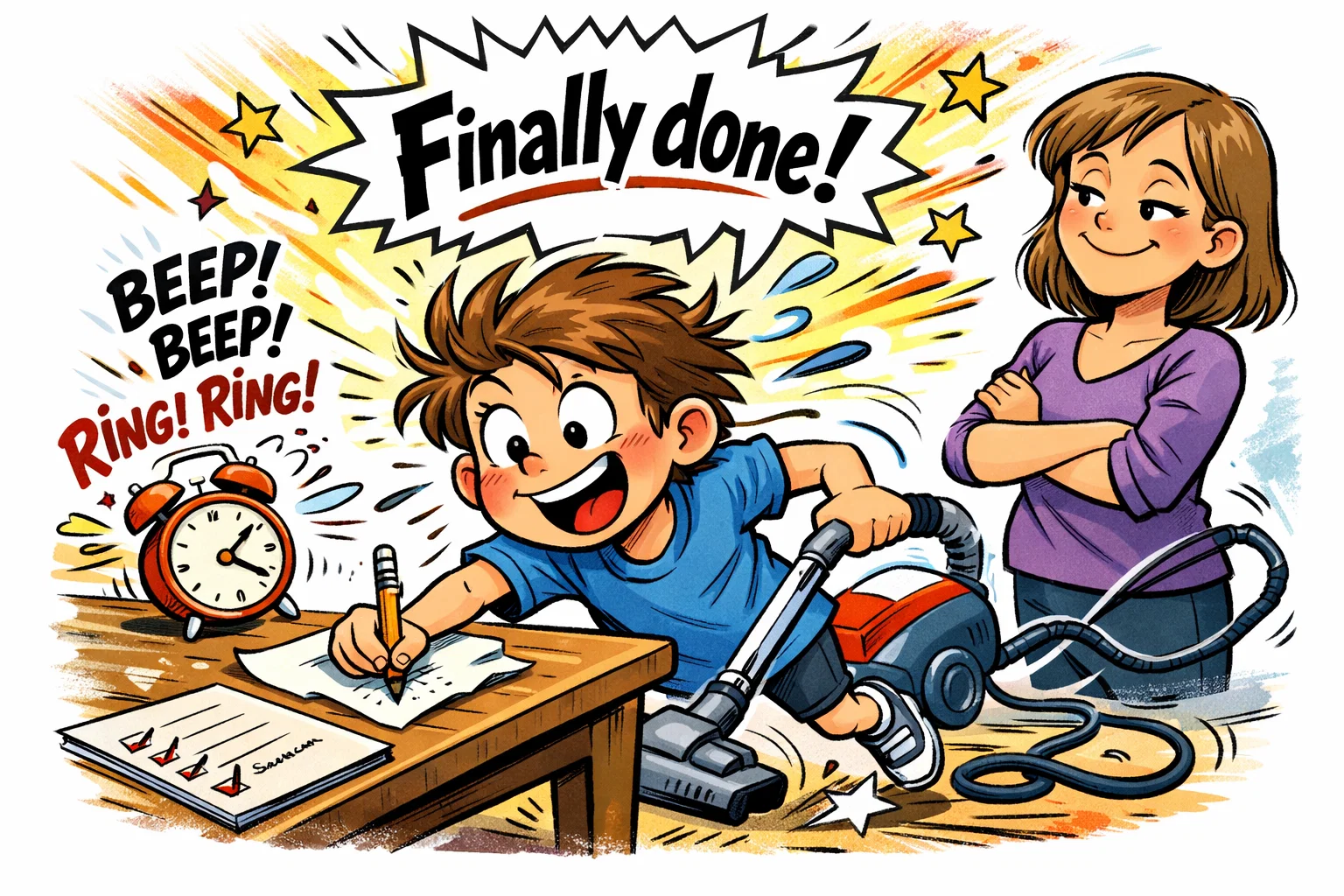
Negative reinforcement is equally relevant outside the classroom. These examples show how parents can apply the concept to encourage positive behavior at home.
1. Removing Chores After Completing Homework
A parent tells their child that finishing homework before dinner means being excused from setting the table or washing dishes for that evening. Removing the chore acts as a negative reinforcer that motivates the child to prioritize schoolwork.
2. No Curfew Restrictions After Responsible Behavior
A teenager who consistently comes home on time and communicates openly with parents is given a later or more flexible curfew. The removal of a restrictive rule reinforces trustworthy, responsible behavior in older students.
3. Stopping Nagging When Tasks Are Done
When a child completes their tasks — such as packing their school bag or tidying their room — without being reminded repeatedly, the parent stops issuing reminders entirely. Removing the unpleasant experience of being nagged reinforces the child’s self-initiated habits.
4. Removing Screen Time Limits After Good Habits Are Established
A parent relaxes screen time restrictions once a child consistently completes schoolwork, reads daily, and follows bedtime routines. The removal of the limit serves as a reinforcer, encouraging the child to maintain positive habits independently.
5. Canceling a Consequence After Improved Behavior
If a child had a consequence put in place — such as reduced playtime — due to a behavioral issue, and they show clear improvement, the parent removes the consequence early. Timing and consistency are essential here; the cancellation should directly follow sustained positive behavior to effectively reinforce the child.
Negative Reinforcement vs. Punishment
Negative reinforcement is often misunderstood because the word “negative” implies something harmful, when it actually refers to the removal — or subtraction — of a stimulus. Many people mistakenly equate negative reinforcement and punishment, but the two concepts work in opposite directions.
Key Differences Between Reinforcement and Punishment
The core difference lies in the outcome: negative reinforcement increases a behavior, while punishment decreases a behavior. The first involves removing an unpleasant stimulus to make a desired behavior more likely to occur. The second, by contrast, either adds an unpleasant stimulus (positive punishment) or removes something desirable (negative punishment) to discourage a behavior.
| Concept | Mechanism | Effect on Behavior |
| Negative reinforcement | Removes unpleasant stimulus | Increases desired behavior |
| Positive punishment | Adds unpleasant stimulus | Decreases unwanted behavior |
| Negative punishment | Removes pleasant stimulus | Decreases unwanted behavior |
Examples Comparing Both Approaches
Consider two responses to a student who submits work late. A punitive approach adds a consequence — marking the work down or assigning extra tasks. A negative reinforcement approach removes a future unpleasant stimulus — for example, a student who begins submitting on time is no longer required to check in with the teacher after every class. Both approaches aim to shape behavior, but through different mechanisms.
Negative Reinforcement vs. Positive Reinforcement
Both negative and positive reinforcement seek to increase desired behavior — but they work through different means.
Core Differences in Approach
Positive reinforcement adds a desirable stimulus after a behavior (such as praise, a reward, or extra privileges) to increase the likelihood of the behavior recurring. Negative reinforcement, by contrast, removes an unpleasant stimulus to achieve the same goal. Both are forms of reinforcement, meaning both are designed to encourage positive behavior rather than suppress unwanted behavior.
When to Use Each Method With Students
Choosing between positive and negative reinforcement depends on the situation and the student’s needs:
- Positive reinforcement works best when introducing new behaviors, building enthusiasm, or rewarding younger children who respond well to praise and tangible rewards.
- Negative reinforcement is more effective for maintaining already-established behaviors, encouraging independence, and helping students meet consistent expectations over time.
- A combined approach — using both strategies in parallel — tends to produce the most balanced, sustainable outcomes in classroom and home environments.
Effectiveness in Classroom Settings
Research in educational psychology suggests that a classroom environment incorporating both positive reinforcement and appropriately applied negative reinforcement supports stronger behavioral and academic outcomes than one relying on punishment alone. According to the American Psychological Association, reinforcement-based strategies are consistently more effective than punitive approaches for developing long-term positive habits in children.
Signs That Negative Reinforcement Is Working
When the approach is applied correctly and consistently, certain behavioral changes tend to emerge over time. Teachers and parents can look for the following indicators that the strategy is having a positive effect:
- The student begins completing tasks without being reminded or prompted
- Behavior improvements are maintained over several days or weeks, not just immediately after the stimulus is removed
- The student shows increased confidence and willingness to take on challenging work
- Avoidance behaviors — such as making excuses or delaying tasks — decrease noticeably
- The student begins to self-regulate, adjusting their behavior proactively rather than reactively
If these signs are absent after consistent application, it may be worth reassessing whether the removed stimulus is genuinely aversive to that particular student, or whether a different reinforcement approach would be more effective.
Final Thoughts on Using Negative Reinforcement in Education
Negative reinforcement is a valuable and widely applicable behavioral strategy when used correctly. Across the examples of negative reinforcement for students explored in this article — from removing homework to reducing supervision — the common thread is clear: removing something unpleasant in response to a desired behavior increases the likelihood that behavior will continue.
For teachers and parents, the key is consistency, clarity, and balance. Negative reinforcement works best when students understand the connection between their behavior and the removal of the unpleasant stimulus, and when it is paired with positive reinforcement to create a genuinely motivating environment. Used thoughtfully, negative reinforcement can help students build responsibility, develop skills, and grow into confident, independent learners.
Frequently Asked Questions
What Is Negative Reinforcement in Simple Terms?
Negative reinforcement involves removing something unpleasant to encourage a desired behavior. For example, a student who completes their homework on time is excused from extra review work on the weekend. The removal of the unpleasant task motivates the student to keep completing assignments on time.
What Are Examples of Negative Reinforcement for Students?
Common examples include removing homework after consistent task completion, canceling detention when rules are followed, and reducing reminders when a student demonstrates responsibility. Each example involves the removal of an unpleasant stimulus to reinforce positive, desirable behaviors in academic or home settings.
Is Negative Reinforcement Effective in the Classroom?
Negative reinforcement can be an effective tool in the classroom when applied consistently and paired with positive reinforcement. Research suggests it improves motivation and encourages responsible behavior. However, balance is essential — over-reliance on avoidance-based strategies may reduce students’ intrinsic motivation over time.
What Is the Difference Between Negative Reinforcement and Punishment?
Negative reinforcement increases a desired behavior by removing an unpleasant stimulus. Punishment decreases unwanted behavior by either adding something unpleasant or removing something enjoyable. For example: removing extra chores after good grades is negative reinforcement; assigning extra chores after poor behavior is punishment.
Can Negative Reinforcement Be Harmful for Students?
Negative reinforcement is generally not harmful when applied correctly. However, overuse may lead to avoidance behavior, where students act only to escape discomfort rather than out of genuine motivation. Proper application — clear expectations, consistent follow-through, and a combination with positive reinforcement — supports healthy habit development without causing stress.

Take a short quiz to find out what your everyday choices say about your parenting style
When your child is curious about something new, what’s your instinct?
Take a short quiz to find out what your everyday choices say about your parenting style
“Can I download this app?” What happens next?
Take a short quiz to find out what your everyday choices say about your parenting style
When it comes to rules at home, which sounds most like you?
Take a short quiz to find out what your everyday choices say about your parenting style
If you could give your child one life skill today, what would you pick?
Take a short quiz to find out what your everyday choices say about your parenting style
Your child gets to choose what to watch. What would your ideal setup look like?
Take a short quiz to find out what your everyday choices say about your parenting style
Pick your parenting superpower ✨