

Do you ever wish you knew the secrets to help your child develop strong writing skills? Are you looking for fun writing activities for kids that go beyond simple worksheets and ignite a genuine love for literacy? As a parent or educator, you understand that effective reading and writing are the bedrock of academic success and professional communication. But let’s be honest, getting kids to learn and practice composition can often feel like pulling teeth. The good news is that by transforming writing practice into engaging games and creative challenges, you can foster a passion for language that will help your child write like a pro.
This comprehensive guide is designed for anyone seeking to boost their child’s literacy skills from the early years right through the teens. We’ll explore an array of expert-vetted, fun writing activities and creative writing prompts that seamlessly blend learning with play. Each section offers practical, easy-to-implement strategies to develop specific writing abilities, from crafting a simple sentence to mastering complex narrative and persuasive writing. Get ready to discover innovative ways to help your young writers and make the journey to excellent composition both effective and incredibly fun for kids!
Story Cards & Creative Sparks
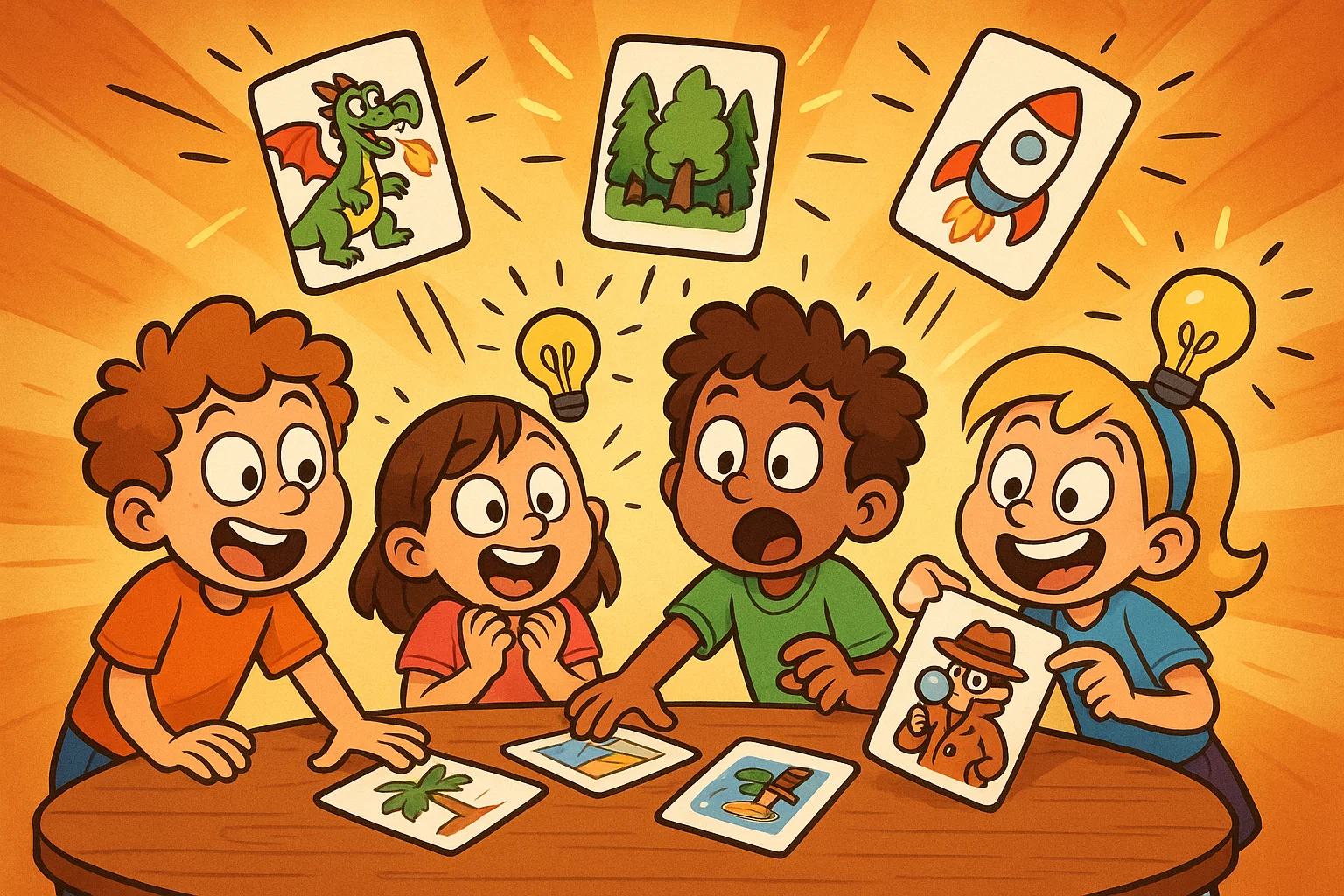
Visual and tactile tools are a phenomenal way to get kids to love expressing themselves by externalizing the daunting task of staring at a blank page. Using prompts in a visual or game-like format can dramatically reduce anxiety and unlock creative thinking. These techniques help children of all ages, from younger kids to an older child, understand that stories are built from distinct, manageable parts.
Story Cards for Plot Building
Instead of asking your child to just “compose a story,” which can feel overwhelming, break the narrative down. You can create or buy sets of cards featuring:
- Characters: A grumpy pirate, a talking cat, a space explorer.
- Settings: A foggy swamp, a bustling city market, inside a tiny clock.
- Conflict: A lost key, a secret message, a race against time.
The activity involves drawing one card from each category to create a foundation. This provides the structure and limits necessary to encourage creative writing. Ask your child:
- Who is the main character?
- Where and when does the story take place?
- What is the central problem they need to solve?
Story Dice for Quick Ideas
Story dice are oversized dice with various symbols on their faces—a house, a key, a question mark, a sun, etc. The random nature of the symbols acts as a surprise plot generator. Rolling three to nine dice gives fun writing prompts that can instantly suggest unexpected turns in a plot. This exercise is great for daily writing practice and encouraging fluency, helping your child develop their writing voice without the pressure of a major assignment.
Character & Setting Mixers
This is an excellent tool for developing descriptive writing skills. Create two separate lists or sets of index cards:
| Character Trait (Column A) | Setting Detail (Column B) |
| Brave but terribly afraid of heights | Dusty attic on a stormy night |
| Super-smart but constantly losing their glasses | Loud and crowded train station |
| Mysterious and speaks only in riddles | Sparkling, hidden underwater cave |
Have your child pick one item from Column A and one from Column B and then craft a story connecting those two elements. The unusual combinations force the young writers to use their imagination to bridge the gap, leading to truly original tales.
Classroom & Home Story Games
These simple games are a great fun activity for groups.
- Round-Robin Story: One person starts the narrative with one simple sentence, and each subsequent person adds a sentence or two, folding over the previous text so only their new addition is visible. This promotes listening, quick thinking, and narrative flow.
- “What If?” Scenarios: Introduce a major, unexpected event (“What if all the dogs in the world suddenly started talking in opera voices?”) and have the children brainstorm and then draft the consequences. This develops creative thinking and logical consequence in their composition practice.
Mad Libs & Word Play Games
Language games like Mad Libs are a super fun way to teach essential grammatical concepts and vocabulary without it feeling like a dry lesson. These writing games help children understand the function of different parts of speech and improve their stylistic awareness.
Parts of Speech Challenges
Before starting a Mad Lib-style activity, review the different parts of speech, perhaps creating a colorful anchor chart. Then, use simple sentences and challenge your child to substitute specific words with others of the same type.
Original Sentence: The sleepy dog barked loudly at the mailman.
Challenge: Replace the adjective, noun, and verb.
Result: The gigantic cat whispered sweetly at the television.
This improves grammatical accuracy and expands their vocabulary for better descriptive text.
Humor-Based Creativity Boosters
The core of Mad Libs is silliness. By focusing on creating the funniest, most absurd outcome, you remove the pressure of “correct” text creation. This technique effectively breaks down the common fear of the blank page and allows kids and teens to enjoy writing simply for the fun of it. The resulting laughter is a powerful positive reinforcement for writing abilities.
Collaborative Mad Lib Sessions
Doing Mad Libs as a group activity is a wonderful way to boost communication and introduce the concept of editing. One child asks for the parts of speech (without revealing the story context), and the other provides them. Reading the finished, hilarious story together provides an immediate, engaging reward. This is a subtle yet effective way to get kids used to revising and seeing how word choices impact the entire text.
Story Maps & Narrative Structure
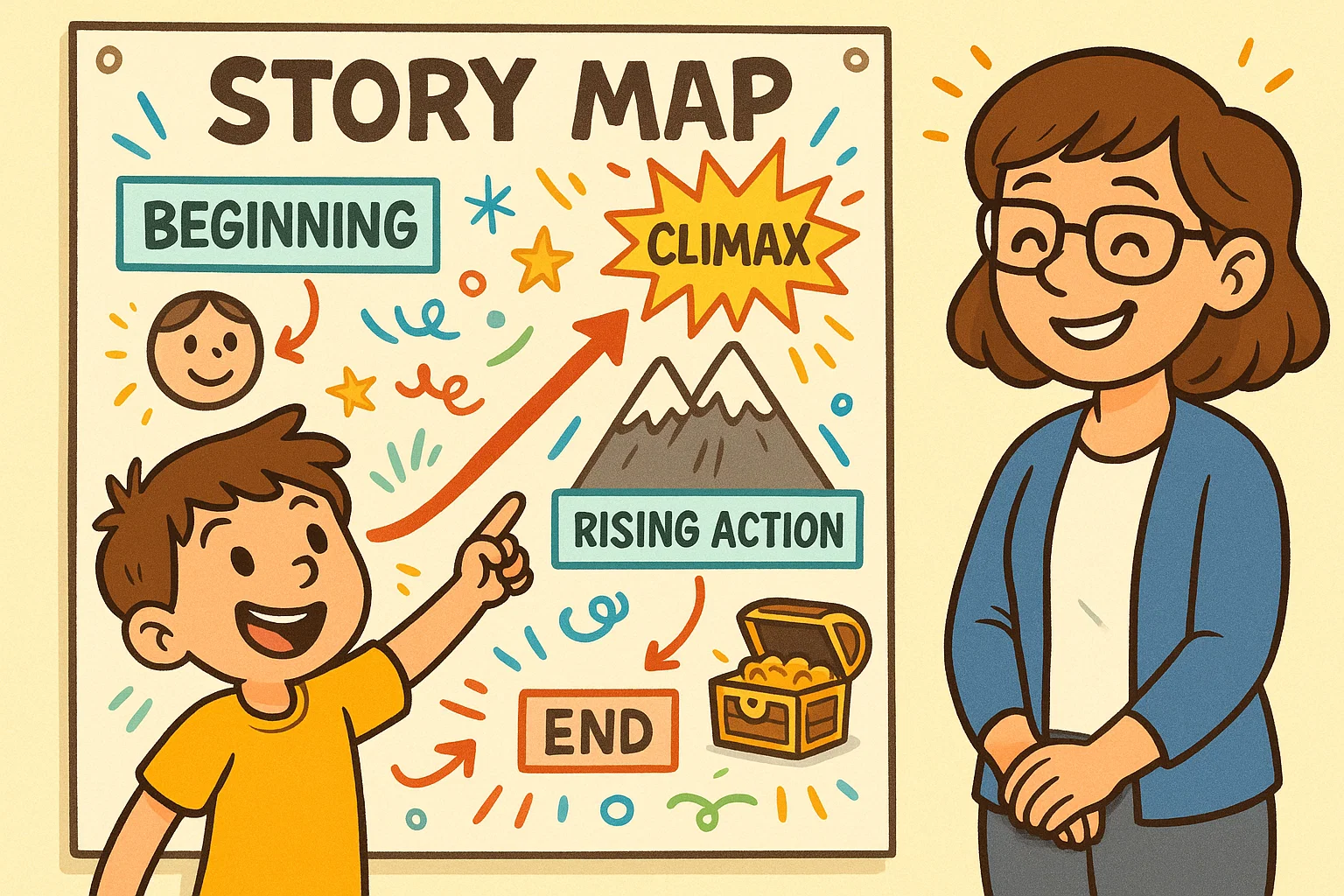
Even professional writers use outlining tools. Story maps and visual organizers are crucial for teaching children the underlying architecture of a well-constructed narrative, preparing them to write like a pro. They help young writers organize their thoughts before they dive into the actual writing projects.
Story Flow Diagrams
A basic diagram helps to structure the beginning, middle, and end. You can use a simple mountain visual:
- Exposition (The Climb): Introduce the characters and setting.
- Rising Action (Steeper Climb): Introduce the problem/conflict.
- Climax (The Peak): The highest point of tension.
- Falling Action (The Descent): Events that lead to the solution.
- Resolution (The Bottom): The problem is solved; the narrative concludes.
Teaching this structure provides a roadmap, making it much easier for a child to compose a story that is coherent and engaging.
Hero & Journey Maps
For older kids, introduce the concept of the “Hero’s Journey.” This helps them focus on character development. Use a circular or path diagram to track:
- The hero’s normal world.
- The call to adventure.
- The challenges and trials faced.
- The transformation/return.
This teaches them that the character arc is as important as the plot.
Conflict–Resolution Mapping
A simple T-chart can be incredibly effective for planning persuasive and narrative pieces:
| Conflict/Problem | Resolution/Solution |
| The main character is unfairly accused. | The character finds a key piece of evidence. |
| The town is running out of water. | The community works together to find a new source. |
Visualizing the cause and effect helps improve writing skills by ensuring a logical and satisfying conclusion.
Picture Prompts & Visual Writing
Visual stimuli are powerful catalysts for descriptive writing. By using images, you encourage children to focus on sensory details—the hallmark of strong, engaging text.
Photo-Based Scene Creation
Use interesting, evocative photographs—a crumbling castle, a mysterious forest path, a busy street in a foreign country. Ask your child to look at the photo and draft a story about what happens just before or after the picture was taken. This is a great way to practice building scenes.
Art-to-Text Activities
Have your child create their own drawing, then challenge them to turn their drawing into a narrative. Since they created the image, they have ownership and deep familiarity with the subject, which makes the composition process easier and more fun. This activity connects their visual creative activities with their writing abilities.
Sensory Detail Prompts
Effective descriptive writing appeals to the five senses. Provide a photograph and use a guided prompt list:
- Sight: What colors, shapes, and textures do you see?
- Sound: What noises would you hear if you were there?
- Smell: What are the dominant scents?
- Taste: What food or drink might be present? (Even if it’s just the taste of the air).
- Touch: How would things feel (smooth, rough, cold, warm)?
This structured approach helps kids learn to move beyond simple visual descriptions when they compose.
Sentence Scrambles & Language Skills
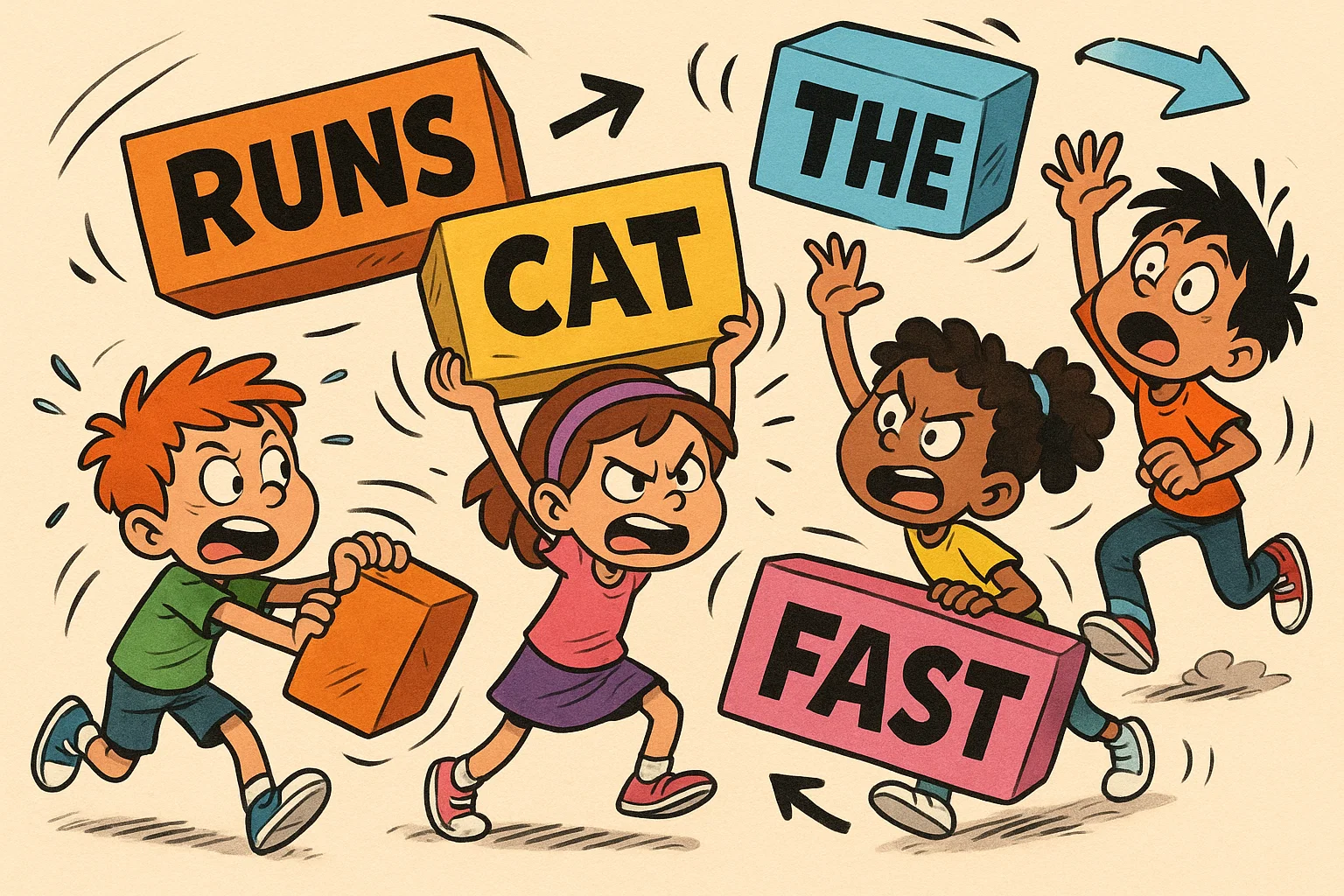
These writing games are quick, easy and fun ways to drill down into syntax and logical sentence structure, which is essential for developing a strong writing voice.
Reordering Mixed Sentences
Draft a well-formed sentence, then cut it up into individual words or small phrases (e.g., “The little dog,” “chased,” “the big cat,” “up the tree.”). Challenge your child to put the pieces back together correctly. For an older child, include multiple ways the sentence could be structured to emphasize stylistic choices. This develops an intuitive understanding of sentence flow and logic.
Grammar Repair Mini-Games
Present a paragraph that is deliberately riddled with common grammatical errors (run-ons, misplaced modifiers, simple punctuation errors). The child’s job is to act as the “Sentence Surgeon” or “Grammar Detective” to fix the errors. This makes learning grammar an interactive games session rather than a boring editing task.
Paragraph Assembly Challenges
Provide three to five well-written but completely randomized sentences that belong in a single paragraph. The challenge is to assemble them in an order that makes logical sense, ensuring that the transitions create a coherent flow. This exercise directly addresses the construction of strong paragraphs, a critical skill for all writing styles.
Pen Pal Letters & Real-World Writing
Letter writing connects the academic skill of text creation to its real-world purpose: communication. This makes writing practice meaningful and highly motivating.
Friendly Letters Practice
Teach the basic structure of a friendly letter (date, salutation, body, closing, signature). Compose letters to family members, friends, or even their favorite fictional characters. This practical, structured writing exercise is an excellent way for younger kids to master the fundamentals of communication.
Letter Writing for Social Skills
Encourage your child to draft letters of thanks, sympathy, or congratulations. This activity fosters emotional intelligence by requiring them to consider the recipient’s feelings and adopt an appropriate tone. This helps them understand different contexts and the nuances of different writing styles.
Digital Pen Pal Options
If physical pen pals aren’t feasible, explore safe, monitored online writing platforms or programs that connect children for structured communication exchanges (always with parental supervision). This helps children develop their ability to communicate effectively in the modern world.
Online Writing Programs & Guided Tools
The digital landscape offers a wealth of resources that can make learning fun and provide scaffolded support for developing their writing. These tools often use gamified writing challenges to maintain high engagement.
Interactive Courses for Skill Building
Many reputable online writing programs offer structured lessons on everything from basic grammar and punctuation to advanced essay structure and literary devices. These programs often provide immediate feedback, which can be far more encouraging than waiting days for a teacher’s grade.
Gamified Writing Challenges
Look for online writing games that turn writing assignments into quests, battles, or point-scoring challenges. When children are motivated by a score, badge, or virtual reward, they are more likely to put in the necessary daily composition effort to improve writing skills.
Daily Writing Practice Tools
Simple apps or websites designed for free writing or journaling can provide daily writing prompts. These are a great way to get children into the habit of creating text regularly, strengthening their writing muscles just like any physical exercise.
More Writing Activities for All Ages
Poetry Activities for Kids & Teens
Poetry is a fantastic way to develop an understanding of rhythm, word choice, and emotional expression. Introduce forms like Haiku (5-7-5 syllables) or Acrostic poems. These structured composition activities help kids learn to be concise and impactful with their language.
Comic Book Creation
Creating a comic book or graphic novel is a superb way to practice narrative economy. Children must condense their story into dialogue and limited captions, forcing them to use strong verbs and precise language. This also integrates art, making it a highly creative activity.
Accordion Stories
This collaborative activity involves a piece of paper folded into an accordion. The first person puts down the opening, the second adds the middle, and the last crafts the ending, all without seeing the previous sections. It’s a hilarious way to see how context and plot can evolve and is fun for your kids to share.
Scavenger Hunt Writing
Hide a few unusual objects around the house or yard. Once found, the child must incorporate all the objects into a single story or descriptive passage. This exercise forces creativity and integration of disparate ideas.
Writing Prompts for Different Age Groups
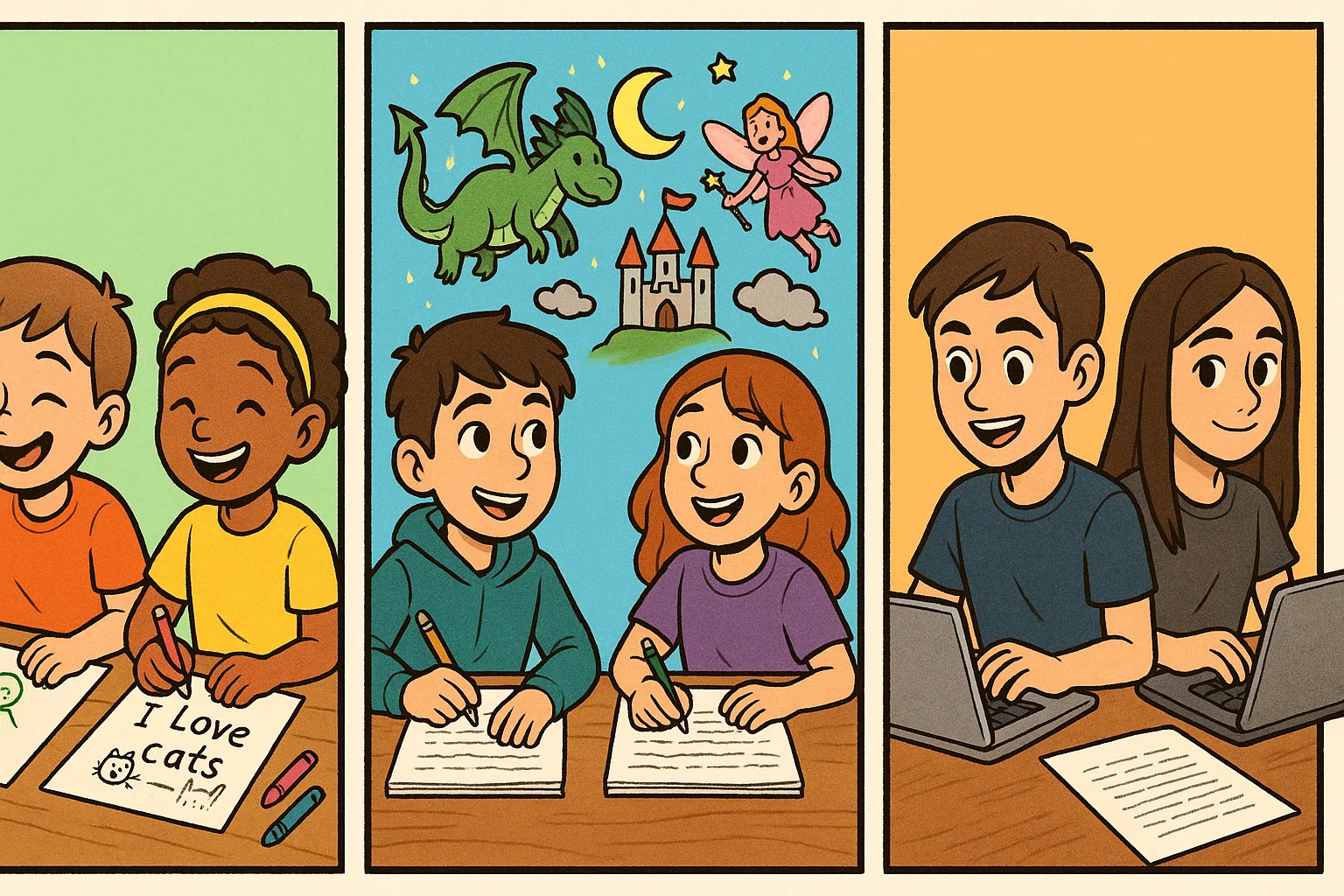
Providing age-appropriate writing prompts is key to keeping children engaged and challenged.
Grade School Prompts
These should be light, plot-focused, and based on familiar concepts.
- If your favorite toy could talk for one day, what would it say?
- You find a secret door in your bedroom closet. Where does it lead?
- Draft a letter to a pet store convincing them to sell a new, imaginary animal. (Early persuasive text creation)
Middle School Prompts
Topics can introduce more complex emotional, adventurous, and argumentative elements.
- Draft a scene where a character has to choose between doing the right thing and the easy thing.
- The Internet suddenly stops working worldwide. Compose a journal entry describing the first 24 hours.
- Argue whether or not school uniforms are a good idea. (Developing persuasive writing skills)
High School Prompts
Prompts can be more abstract, analytical, and require deeper reflection.
- Craft a short story told entirely from the perspective of an inanimate object (e.g., a park bench).
- Develop a character who possesses a superpower but never uses it. Why?
- Analyze the relationship between technology and creativity in the modern world. (Higher-level creative thinking)
Poetry Fun & Expression
Poetry helps improve writing skills by focusing on word economy and imagery.
List Poems & Cinquains
- List Poems: Simply list a series of related ideas or images about a single topic (e.g., “The Forest Sounds: crunching leaves, a snap of a twig, a whispered secret of the wind”).
- Cinquains: A five-line poem with a specific word/syllable pattern (Line 1: 1 noun; Line 2: 2 adjectives; Line 3: 3 verbs; Line 4: 4-word phrase; Line 5: 1 synonym for the noun). This is a structural composition activity that is fun for kids.
Poetry Challenges
Give your child a “word bank” of ten unrelated, evocative words (e.g., velvet, shimmer, echo, whisper, emerald). Their challenge is to create a poem that incorporates every single word. This is a great way to build their vocabulary and find creative connections.
Sensory-Based Poems
Focus on one sense at a time. Compose a short poem entirely about the “Taste of Summer” or the “Feel of a Winter’s Night.” This reinforces the use of vivid imagery for descriptive text.
Nature, Journals & Real-Life Writing
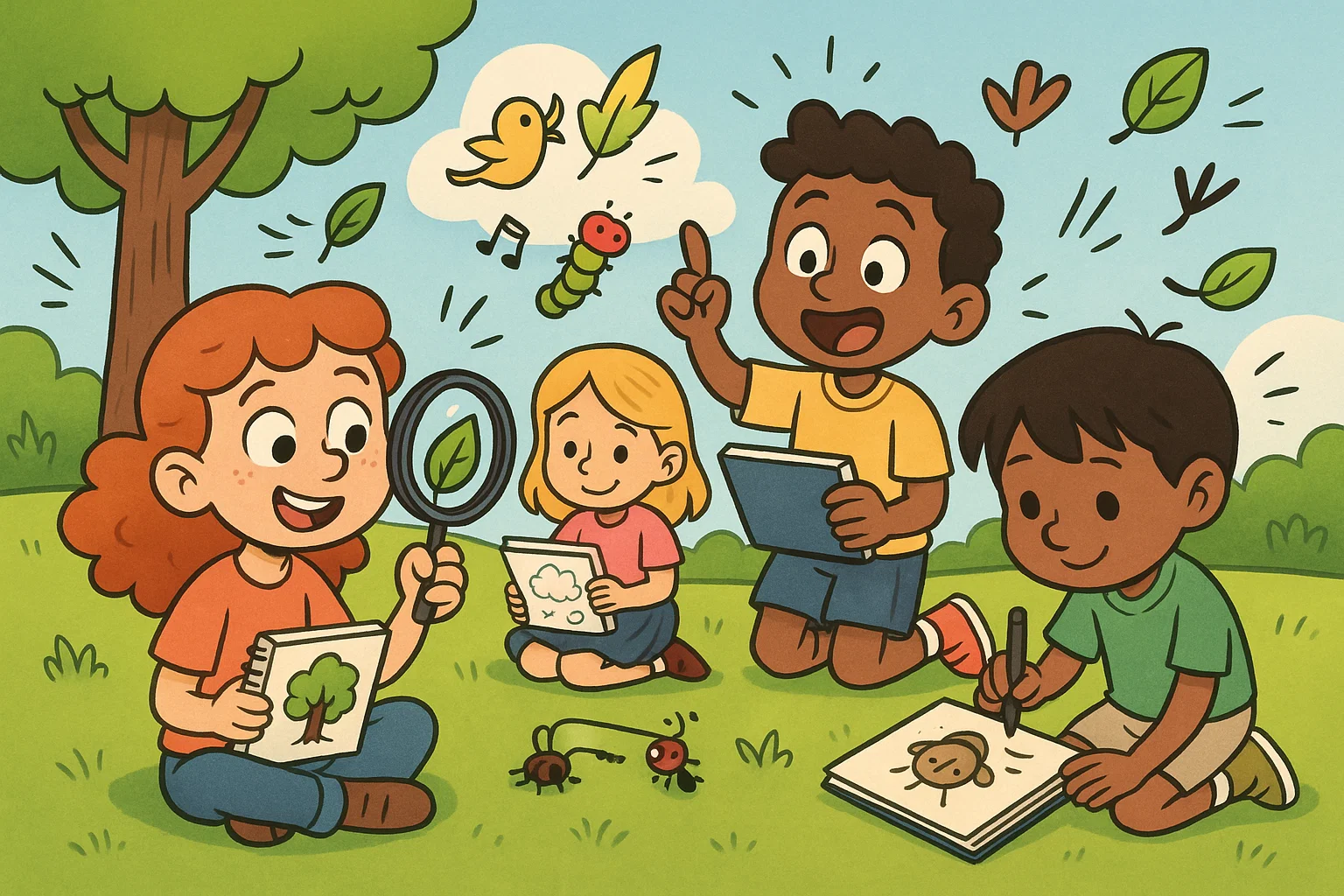
Connecting composition to observation helps children develop skills like a journalist—factual, objective, and keenly observant.
Outdoor Journaling Exercises
Take a walk and encourage your child to keep a nature journal. They should record what they see, hear, and even sketch. This is not only a fantastic fun activity but also strengthens their ability to transcribe observations into detailed, accurate descriptive writing.
Daily Journal Prompts
Regular, free composition in a journal builds fluency and emotional literacy. Prompts can be simple:
- Three things I learned today.
- The funniest thing that happened.
- If I could instantly solve one problem in the world, what would it be?
This low-stakes, daily composition is one of the best ways to build their confidence.
Review & Recipe Writing
Ask your child to draft a review of a movie, a book, or a restaurant they visited. They must use clear, persuasive language to defend their opinion. Similarly, preparing a recipe requires clear, sequential, and concise instruction, which is a powerful skill.
Write Like a Journalist
Journalistic composition emphasizes structure, clarity, and factual reporting, which are crucial for professional communication.
Interview-Based Assignments
Have your child interview a family member, neighbor, or teacher about their job, a hobby, or a life event. Then, challenge them to turn that interview into a short newspaper-style article, focusing on presenting information accurately and engagingly.
Event Reporting Activities
Have your child draft a brief report on a family event (a birthday party, a trip to the store, a sports game). Focus on the “Five Ws and H” (Who, What, Where, When, Why, and How) for the opening paragraph (the “lead”). This teaches them to get to the point quickly, a fundamental of professional text creation.
Opinion & Editorial Pieces
Introduce a simple topic with two clear sides (e.g., “Should children have a later bedtime?”). Have your older child compose a short editorial that clearly states their position and supports it with at least three reasoned arguments. This is essential persuasive writing practice.
Tips for Helping Young Writers
Setting Up Writing Space
Designate a special spot—a corner, a small desk—that is solely for writing projects or text creation. Ensure it’s quiet, well-lit, and stocked with fun tools like colorful pens, interesting paper, and notebooks. A positive environment makes the activity more appealing.
Modeling Professional Writing
The best way to teach is to demonstrate. Compose text like your child is watching! Draft a grocery list out loud, explaining why you chose certain words. Develop a short story alongside them, sharing your creative process. Joint composition is a powerful instructional tool.
Building Confidence with Small Wins
Praise effort, not just the result. Focus on one element at a time (e.g., “I love the vivid description you used here!” or “Your sentences are so clear!”). Display their work proudly. Providing genuine, targeted praise is the best way to encourage your child and build the confidence necessary to improve writing skills.