

Every child has stories to tell and ideas to share. As children move into their older grade-school years (roughly ages 9-12), their thoughts become more complex, but often, their writing skills struggle to keep pace with their vibrant imaginations. This stage is crucial for cementing the foundational abilities that will serve them through high school and beyond. This comprehensive guide outlines a structured program designed not only to teach children how to write like a pro but also to instill creative confidence, strengthen clarity, and introduce them to the powerful techniques used by professional writers.
Learning to communicate effectively in writing is more than just grammar and punctuation; it’s about learning how to truly communicate your unique ideas in a way that captures the reader’s attention. This program provides the scaffold for students to transition from amateur writers to confident communicators who can organize their thoughts logically, craft compelling sentences, and make their writing impactful, regardless of the assignment.
Core Secret Behind Writing Like Pro in Grade-School Program
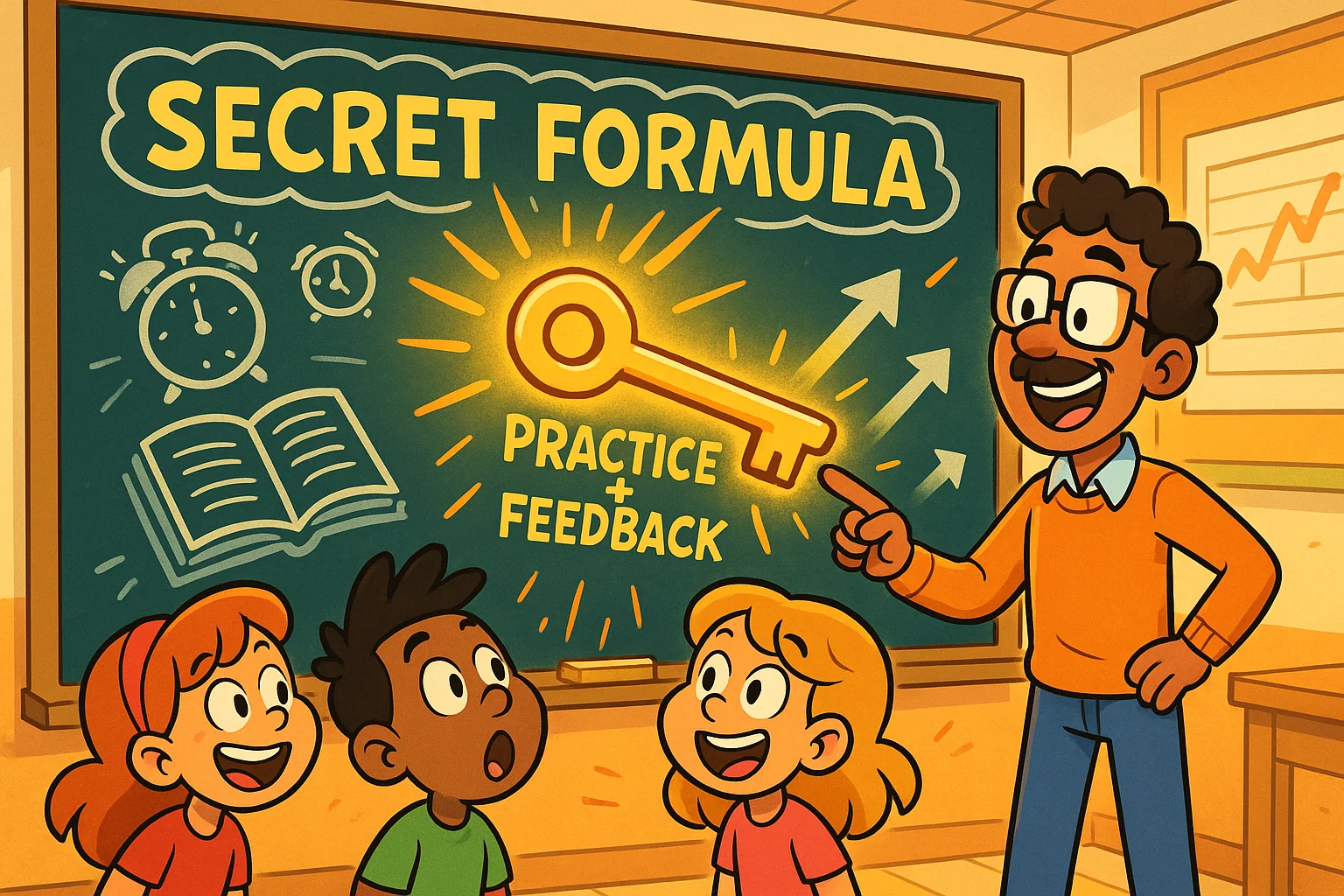
The true “secret” to helping a young writer improve their writing skills isn’t a single trick or a magic app; it’s a solid, research-backed pedagogical principle: consistent, high-quality practice combined with expert-modeled exposure and constructive feedback. While some programs rely on buzzwords or focus only on rudimentary editing tools, this approach mirrors how genuine pro writers learn—by doing, observing, and refining. The program focuses on building a robust writing process from start to finish.
Role of Daily Writing Routines
Short, frequent, and low-stakes drafting is the engine of skill development. Just like practicing a musical instrument, brief professional writing sessions help students internalize new techniques and build fluency. The program recommends 10-15 minutes of focused writing daily.
Modeling Pro Techniques for Young Learners
Students need to see what excellence looks like. This involves showcasing “mentor texts”—examples of strong narratives, clear reports, or engaging written communication. By analyzing these models, students learn to notice effective tone, purposeful structure, interesting vocabulary, and smooth transitions, allowing them to consciously apply these techniques to improve their own writing.
Feedback Loop Inside Program
Feedback is the compass of improvement. The program emphasizes rubric-based, actionable feedback rather than simple critiques. Students engage in structured revision cycles where the goal is mastery of a specific skill (e.g., using stronger verbs, achieving greater clarity). This process reinforces mastery and turns the editing phase into a meaningful learning step.
Learning Path: How Close Students Can Get to Professional Level
The right structured system can take older grade-schoolers much further than most parents realize. We’re not aiming for Pulitzer Prizes, but for a level of competence and confidence where the child can consistently produce well-written, clear, and organized work.
Milestones for Skill Growth
Measurable achievements provide motivation and structure. By the program’s end, students should achieve:
- Clearer Sentences: Using subject-verb-object structures effectively.
- Stronger Narrative Flow: Logical sequencing of events in stories or descriptive writing.
- Stronger Arguments: Presenting evidence and conclusions that convey a clear point.
- Reduced Grammatical Errors: Applying learned rules consistently.
Stretch Tasks for Ambitious Students
For the students who want to write more, advanced assignments offer a challenge:
- Persuasive Editorials: Researching a school issue and presenting a structured argument.
- Mini Research Projects: Writing short, citable reports using multiple sources.
- Short Stories: Developing complex characters and plot arcs.
Peer Review Exercises
Learning to give and receive constructive criticism brings students closer to the rigorous standards expected of skilled writers. Structured peer-review sessions focusing on one element at a time (e.g., “Is the opening paragraph clear?”) help students develop an editor’s eye, which is essential for improving their own work’s readability.
Balanced Approach: Professional Yet Engaging Writing for Children
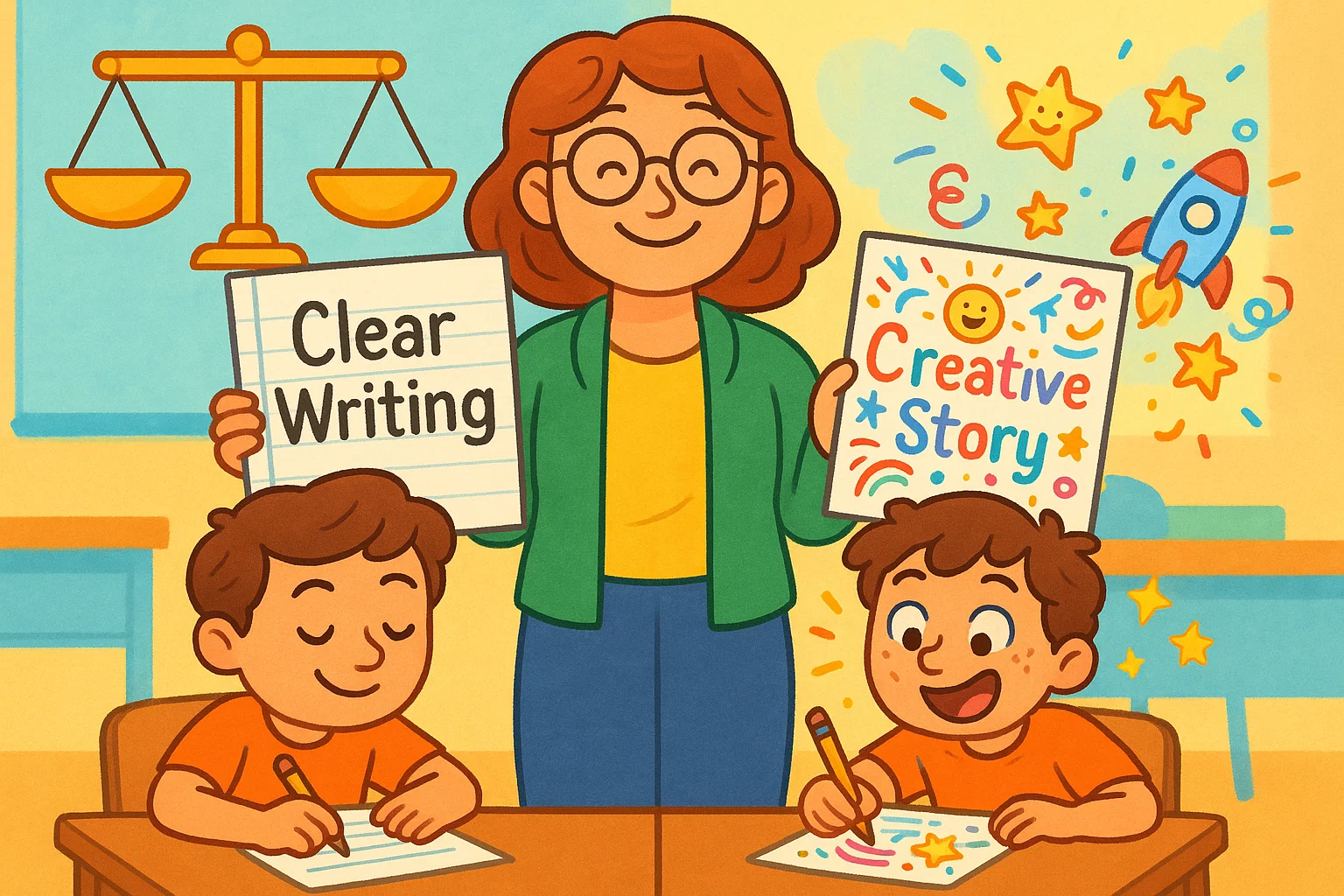
The goal is to teach children to write with authority and clarity while preserving their personal voice and vibrant creativity. Writing professionally shouldn’t mean writing robotically.
Mixing Precision and Creativity
Students are taught to be concise—getting straight to the point—but still expressive. They learn that a single, well-chosen descriptive phrase is often more powerful than a long, rambling description. Guided tasks help them practice balancing precision with creativity.
Tone Control for Different Assignments
A key skill is adapting tone. The program includes practice assignments that require shifting styles:
- Storytelling: An energetic, descriptive tone.
- Reports: An objective, informative tone (often using the present tense).
- Personal Reflections: An honest, conversational tone.
Motivation Through Topics That Matter
Children engage deeper and produce better writing outcomes when the theme is relevant. Assignments are often centered on topics they care about: pets, technology, school issues, or personal heroes. This increases intrinsic motivation to begin writing and strengthen their skills.
Practice Component of Program
Continuous practice is the absolute center of the curriculum, reinforcing the idea that writing skills are built, not born.
Structured Weekly Practice Tasks
Weekly tasks are designed to isolate and strengthen key skills:
- Sentence Construction: Rewriting weak sentences to be stronger and more concise.
- Transitions: Practice using transitional elements like furthermore, however, and in contrast to connect paragraphs.
- Idea Development: Expanding a single topic sentence into a fully formed paragraph.
Writing Drills for Speed and Clarity
- 5-Minute Freewriting: Focusing on idea output without self-editing.
- Summarizing Drills: Reading a long article and summarizing its main points in one clear paragraph—a technique essential for writing professionally.
Long-Form Projects for Confidence
Longer projects build stamina and confidence:
- Class Magazine: Contributing reports, editorials, and interviews.
- Short Stories: Taking a single idea from outline to polished final draft.
- Persuasive Essays: Developing a sustained argument over several pages.
Top Foundational Writing Skills for Older Grade-Schoolers
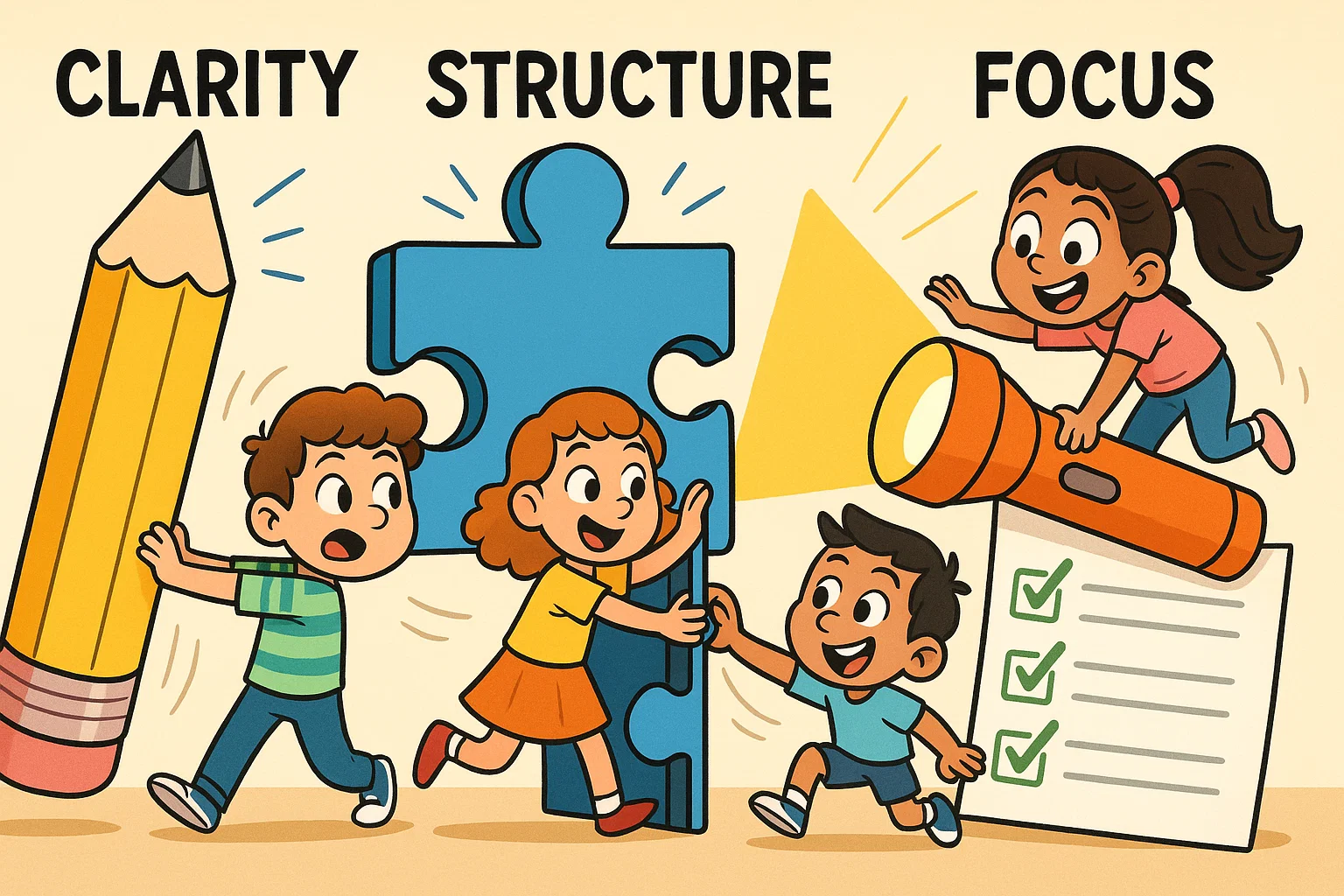
Before students can write like a pro, they need a rock-solid foundation. These are the simple steps that make the biggest difference.
Getting Straight to Point
Students learn to write direct, purposeful openings that immediately tell the reader what the text will be about, whether it’s a narrative hook or a clear thesis statement.
Keeping Sentences Simple and Clear
Complex ideas are best introduced through simple sentences. The program teaches students to break down long, confusing sentences into two or three concise ones. This significantly improves readability and helps them convey their message without confusion.
Managing Length of Texts
Grade-appropriate expectations are set for text length. Students practice identifying and trimming unnecessary details or repetitive phrases that clutter their draft.
Writing for Reader Perspective
Students are trained to put themselves in the reader’s shoes. Exercises include asking: “What background information does my reader need?” and “Is this clear to someone who doesn’t know what I’m talking about?” This shifts their focus from writer-centric output to clear written communication.
Advanced Writing Skills for Older Grade-Schoolers
Once the basics are mastered, the program moves into more sophisticated techniques to help students become a better writer.
Vocabulary Development Through Creative Tasks
Students expand their vocabulary by learning new words in context, often through imagery-focused or sensory-description tasks. The focus is on using the right word, not just a big word.
Strengthening Flow and Transitions
This is critical for moving beyond choppy paragraphs. Key techniques include:
- Transition Word Lists: Categorized by function (comparison, contrast, sequence).
- Logic Connectors: Ensuring each sentence logically follows the one before it.
Balancing Simplicity and Expressiveness
Students practice “showing, not telling” by adding vivid imagery and descriptive details without becoming overly verbose.
Learning to Accept and Apply Criticism
The program teaches the mindset that critique is a path to improvement, not a judgment on the writer. The program uses a simple steps approach for revision, making it less overwhelming: “Focus only on fixing the sentence structure in this draft.”
Toolset for Writing Like Pro (Child-Friendly Edition)

In the modern age, a pro writer uses tools to enhance productivity. Students learn to use age-appropriate tools under supervision.
Digital Writing Platforms for Students
Tools like Google Docs or kid-friendly word processors are used to teach basic formatting, saving, and sharing—fundamental writing professional skills.
Proofreading Assistants for Learning
Simplified grammar checkers (like a basic version of Grammarly) are used as learning tools. The focus is not on letting the tool correct the work, but on using it to notice where the student consistently makes errors, such as misuse of semicolons or comma splices.
Visual Tools for Story Planning
- Mind Maps: To visually organize ideas and character traits.
- Storyboards: To outline the sequence of events in a narrative.
Safe Typing and Note Apps for School Use
Learning to structure ideas digitally through organized note-taking is a skill that helps a better writer create strong, clear first drafts.
Program Tips: Make Writing Habit Fun and Effective
To ensure the program is effective, we integrate these high-impact tips.
Building a Healthy Reading Habit
The best writers who want to write like a pro are avid readers. Reading exposes students to different styles, structures, and vocabulary naturally.
Injecting Energy and Emotion Into Writing
The program encourages students to connect with their topic emotionally. Tasks involve using sensory details and strong verbs to make their writing lively and engaging.
Creating Outline Before Drafting
Explaining that the outline will help avoid a chaotic first draft is crucial. A simple bulleted outline can be the difference between a clear essay and a jumbled mess.
Staying Clear and Concise
Guidance on removing filler words and unnecessary phrases helps students maintain a lively, conversational tone while improving clarity.
Proofreading and Final Checks
The program offers simple checklists for students to follow before submitting any work:
| Checkpoint | Task | Why It Matters |
| Grammar | Review subject–verb agreement and verb tense consistency. | Reduces grammatical errors and improves accuracy. |
| Punctuation | Check the use of commas, periods, capitalization, and end marks. | Increases readability and ensures correct sentence flow. |
| Clarity | Read the text out loud to identify confusing or awkward sentences. | Ensures the message is clear and easy for the reader to follow. |
| Formatting | Apply proper headings, paragraph spacing, and structure. | Creates a polished, professional writing standard. |
Media-Rich Assignments Inside Program
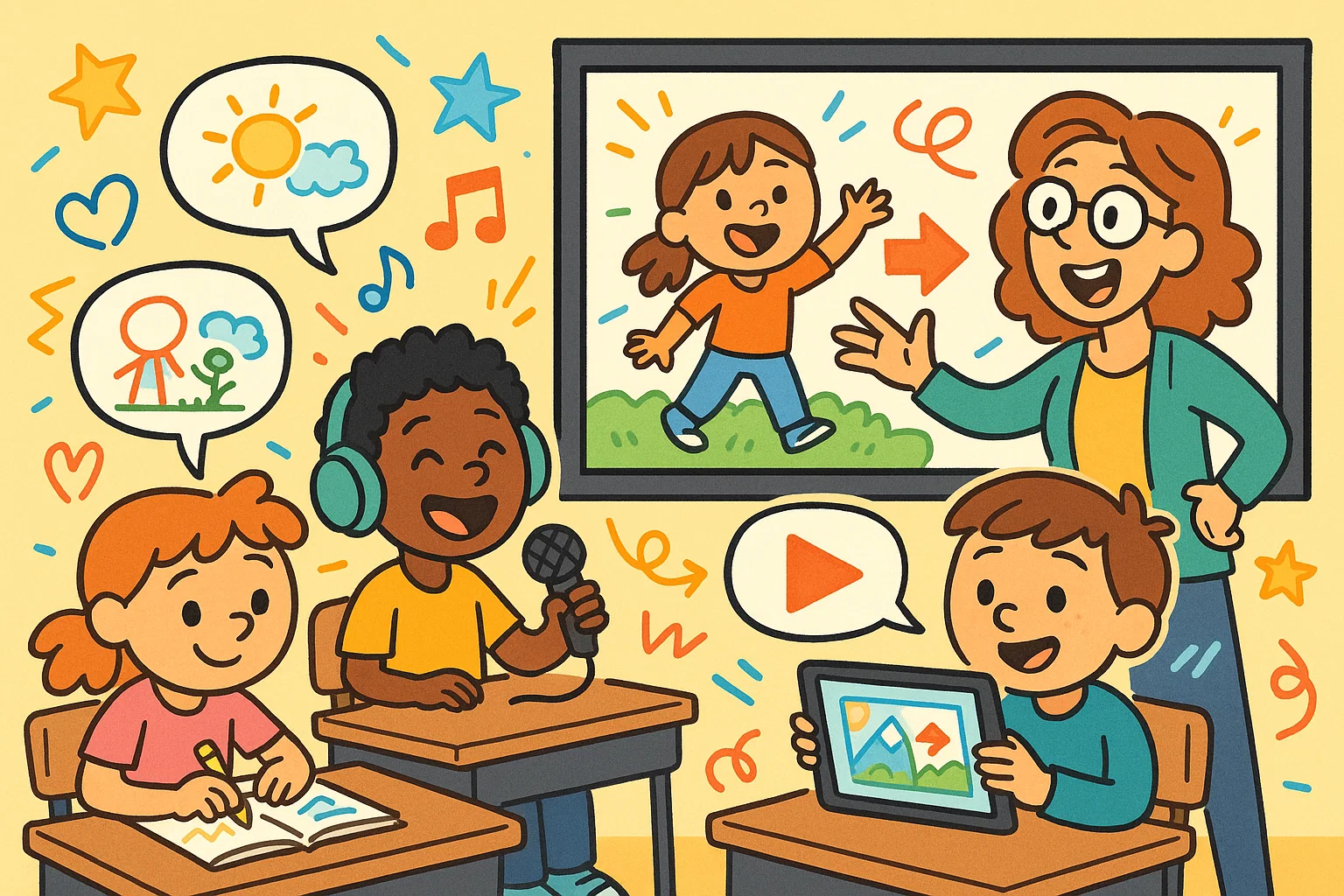
Modern written communication often integrates media. This prepares students for the future of writing professionally.
Combining Words With Illustrations
Students create illustrated guides or comic strips, where the text must be concise and descriptive enough to work with the visual.
Using School-Friendly Digital Media
Tasks include writing a script for a short explanatory video or creating a digital newsletter, reinforcing the need for tight, clear paragraphs and strong headings.
Presenting Written Work to Class
Presenting their work reinforces pride, helps students clarify their ideas under pressure, and adds a public, authoritative component to their writing.
Constructing Written Piece Step-by-Step
This workflow is the core process that helps students write with greater confidence and skill.
Planning Phase
- Brainstorming: Generating ideas and topic angles.
- Topic Selection: Narrowing the focus.
- Structure Sketching: Creating a simple outline (e.g., beginning, middle, end) to organize how they will communicate their ideas.
Drafting Phase
Encourage the mantra: “Get your ideas on the page.” The focus is solely on idea output, accepting that first drafts will contain errors.
Revision Phase
This phase is about refining the message, not just fixing mistakes. The student must check for: adding necessary clarity, removing redundancy, and ensuring the tone is appropriate for the assignment.
Finalizing Phase
This is the proofread stage: polishing grammar, checking punctuation, and ensuring the final product meets the submission guidelines.
Bonus Tips for Students Starting Writing Journey
These are the simple habits that separate good students from the ones who truly want to write like a pro.
Building Confidence Through Small Wins
Celebrate the effort and the improvement in the draft, not just the final grade. Positive reinforcement for a well-structured paragraph motivates students far more effectively than criticism focused on minor errors.
Exploring Diverse Writing Styles
Encourage variety: writing a letter to the editor, a short tip guide on a hobby, a story, or a biography. This diverse practice boosts overall writing skills.
Staying Curious in Everyday Life
The best writers who want to make their writing engaging are constantly observing the world around them. Noticing small details outside of school helps them add depth and authenticity to their work.
Program Summary
The Write Like Pro program provides the structure needed to transform older grade-schoolers into confident, capable communicators, prepared for the academic challenges ahead.
Key Learnings From Program
The main skills taught encompass the entire writing professional cycle: clarity in expression, creativity in storytelling, strong structure via the outline, and smooth flow between ideas. This set of simple steps is designed to help them create effective written communication every time.
Expected Skills by End of Course
Upon completion, students typically demonstrate:
- Ability to communicate their ideas logically and persuasively.
- A significantly reduced rate of grammatical and punctuation errors.
- The capacity to produce high-quality first drafts that require minimal supervision.
- A strong foundation of writing skills that help you write like a confident, articulate pro writer.
Next Steps for Parents and Teachers
To support a child’s continued progress:
- Encourage Reading: Continue to provide access to diverse books and quality content.
- Provide a Quiet Space: Dedicate 15 minutes a day for their writing routine.
- Focus on Content First: Always praise the idea and effort before pointing out a grammar or punctuation error.