

Learning to tell time is a key milestone that supports growing independence and a deeper sense of daily structure. For many children, especially young learners, the abstract nature of clocks – particularly analog ones – can feel like a puzzle. This guide presents a set of fun, hands-on “Time Masters” activities designed to help kids confidently read both analog and digital clocks. These strategies go beyond memorization, building early planning, scheduling, and real-life time-management skills.
The activities focus on active participation, progressing from recognizing the hour to understanding intervals and duration. Using simple materials, craft projects, and playful games, this toolkit offers parents and educators an engaging way to help children develop strong, stress-free time-telling skills.
Time Games and Hands-On Clock Activities To Help Kids Build Time-Telling Skills
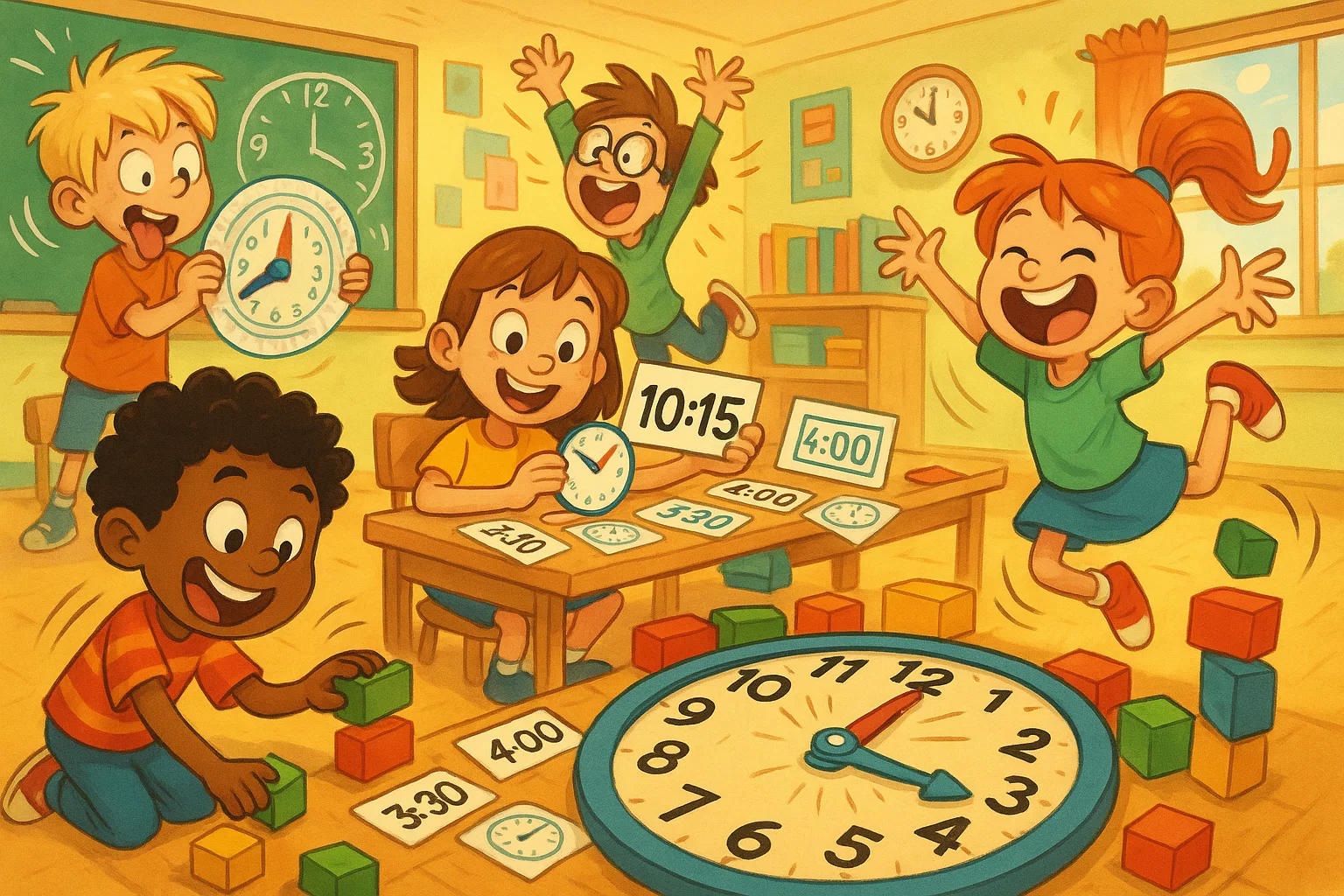
The most effective way to teach the concept is through tactile, hands-on learning. These activities transform the abstract idea of a schedule into something concrete and manipulable. They allow students to practice telling the hour by physically interacting with the components of a clock, making the connection between the clock face and the abstract numbers clear and intuitive.
Paper Plate Clock Crafts
Creating a paper plate clock is a foundational, inexpensive, and highly effective hands-on activity for introducing the concept of an analog clock.
How to Make and Use It:
- Preparation: Take a sturdy paper plate. Have students create or write the numbers 1 through 12 in the correct positions around the edge.
- The Hands: Cut out two strips of cardstock of different lengths (one short for the hour, one long for the minute) and attach them to the centre with a brass fastener so the student can easily move the hands. Colour-coding the hands (e.g., red for the minute hand, blue for the hour hand) can help students understand their function.
- Educational Value: As the child manually moves the hands to show the correct time, they physically reinforce the relationship between the movement of the minute hand and the slower progression of the hour hand. This fun way to practice immediately demystifies the mechanics of the clock.
Block Clock Building Tasks
This activity links clock reading with spatial–visual learning and early maths skills. Students can use building blocks or cubes (e.g., Lego or wooden blocks) to represent numbers and intervals.
- The Clock Outline: Students use 12 small blocks to mark the hours in a circle on the floor or a large mat.
- Representing a Moment: They can use longer blocks or a different colour block to represent the minute hand pointing to a specific interval. For example, a student places a long red block to the ‘3’ to represent quarter past the hour.
- Highlighting Intervals: Ask students to place five small, distinct objects between each hour block to visualize the five-minute increments, helping them grasp the concept of the minute hand counting in fives.
Polygon Clock Puzzles
Time puzzles are an engaging way for students to practice time-telling skills by matching different representations of the same time.
- Puzzle Pieces: Create polygonal pieces that fit together. One piece shows an analog clock face; another has the corresponding digital time (analog and digital matching); a third might have the written description (“quarter past three”).
- The Challenge: Children must find the three matching pieces to form a complete shape. This activity enhances pattern recognition and ensures students understand the equivalence of analogue and digital times.
Time Dominoes and Match-Up Cards
This is a versatile and fun activity that works well in small groups or as an independent centre.
- Game Mechanics: Create domino-style cards. One end of a card has an analog clock showing a reading, and the other end has a different digital time. The goal is to match the analog display on one card with the digital display on another. Example: Card A has an analog clock showing 4:30 on one side and the digital time 7:15 on the other. Card B must begin with an analog clock showing 7:15.
- Match-Up Cards: Use flashcards where students match a drawn clock face to the numerical reading or a written description. This is an excellent way to practice recognizing different times.
Classroom Clock Flower Display
This fun and educational visual aid helps demystify the minute markings on a classroom clock.
- The Setup: Place a large, round cutout of a flower around the existing classroom clock.
- The Petals: Use 12 large, colourful “petals” or labels around the clock face. The inner part of the petal points to the number (1-12) while the outer part has the corresponding minute value (5, 10, 15, 20, etc.).
- Reinforcement: This display helps students easily see that when the minute hand points to the ‘9’, it means 45 minutes past the hour. It reinforces the count-by-five concept.
Time Number Line Exercises
Visualising duration and elapsed time can be challenging. A number line provides a spatial model for these abstract concepts.
- How to Use It: Draw a long line representing a span of hours (e.g., from 8:00 AM to 12:00 PM). Mark the hours clearly.
- Interval Jumps: Pose a problem: “If you start reading at 9:15 and read for 30 minutes, when do you finish?” Students can draw or physically jump 30-minute intervals on the line to find the end moment (9:45). This helps students master the concept of time intervals.
Digital Learning and Printable Time Resources
While hands-on activities are crucial, digital tools and printable resources offer structured practice and immediate feedback, catering to different learning preferences and reinforcing the link between the analog and digital worlds.
Digital Clock Template Activities
Printable templates allow students to practice conversions between the two main clock formats.
- The Activity: Provide worksheets with a blank analog clock next to a blank digital clock.
- The Task: On one sheet, the analog clock has the hands drawn, and the student must record the time on the digital template. On the next sheet, the digital time is given, and the student must draw the correct time using the hour and minute hands on the blank clock face. This helps young kids smoothly transition between formats.
Posters and Visual Guides To Tell Time
Clear, concise visual aids serve as constant reminders and self-correction tools.
Essential Poster Content:
- The difference between the short (hour) and long (minute) hand.
- Minute increments (5, 10, 15, 20, etc.) for the numbers 1 through 12.
- Labels for quarter of an hour (quarter past and quarter to) and half past.
- AM vs. PM examples.
Time Bingo and Classroom Games
Time bingo is a lively, competitive, and highly effective time-telling game for the whole class.
| Activity | Focus Skill | Best For |
| Time Bingo | Rapid recognition, matching | Whole class/Small group |
| Time Puzzles | Analog-to-digital conversion, problem-solving | Independent/Pair work |
| Write the Room | Applying time-reading to a physical environment | Movement/Observation |
How to Play Time Bingo:
- Each student receives a bingo card filled with various clock faces showing different times.
- The teacher or a student acts as the caller and will call out a time verbally (“quarter past three,” “ten o’clock”) or show a digital time card.
- Students mark the corresponding time on their bingo card.
- The first student to get five in a row wins. This is a fun and engaging way to practice and instantly reinforces memory and accuracy.
Interactive Online Time Games
Web-based games offer instant feedback and can be self-paced or timed, adding a layer of challenge and fun. These often feature animated clocks where children can move their hands virtually or click on the correct time. The best games integrate sound and visual cues to solidify the learning process.
Printable Time Activity Sheets
While not always a hands-on activity, well-designed time worksheets are vital for assessment and structured practice telling the time.
Categories of Worksheets:
- Colouring Clocks: Simple sheets where children colour the hour and minute regions or draw hands.
- Matching Time Tasks: Drawing lines to connect an analog clock to its digital time match.
- Elapsed Time Problems: Word problems asking children to calculate duration between two moments.
- AM/PM Sorting: Exercises that require students to sort daily events (e.g., breakfast, bedtime) into AM or PM categories.
Research on touchscreen-based time-learning apps for 5- to 6-year-olds has shown that even a short interactive practice session can significantly improve children’s clock-reading skills and help them transfer what they learn from a tablet to physical toy clocks and paper tasks.
Daily Routine and Real-Life Time Activities
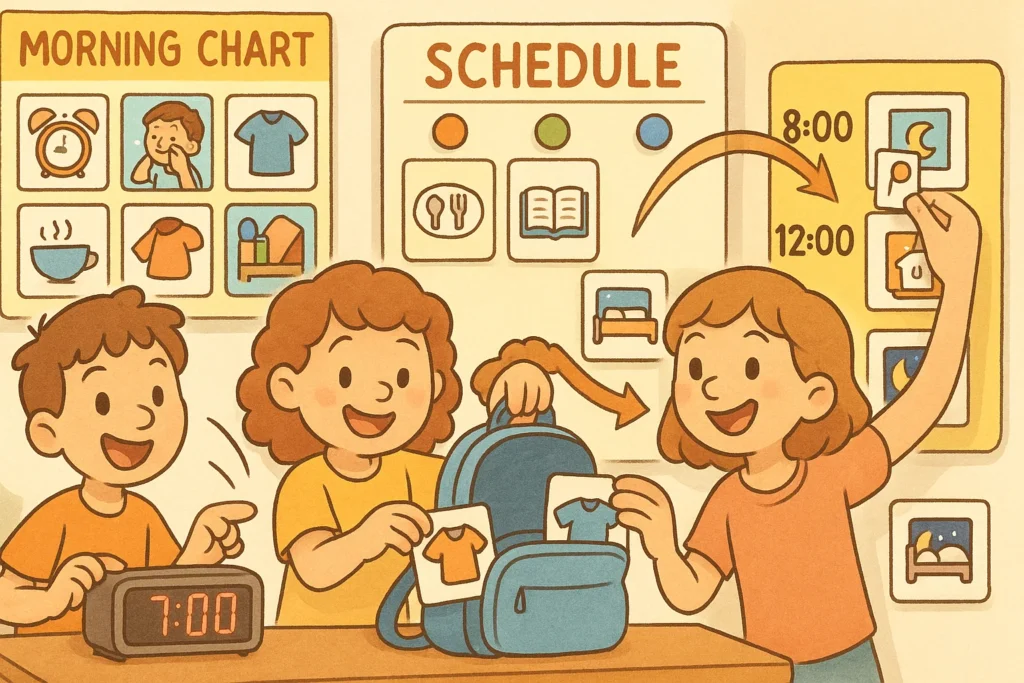
The ultimate goal of learning to tell the time is to apply it in life. These activities bridge the gap between classroom skills and practical independence, helping students understand the concept of time as a tool for planning and scheduling.
Daily Schedule Integration Tasks
Turn the day’s routine into a series of exercises on the clock.
- Class Transitions: Before moving to the next activity, ask students “What hour is it now?” and “When will it be 15 minutes later, when we go to recess?”
- Home Chores: If a child’s chore starts at 6:30 PM, have them check the clock themselves. This helps them relate the correct time on the clock to a concrete action.
- Daily Schedule Chart: Create a large chart of the day’s routine (school or home). Next to each activity (e.g., “Maths Class,” “Dinner”), draw a blank clock. Have students draw the hands for the starting time.
AM and PM Sorting Activities
The 12-hour cycle and the distinction between AM (morning/day) and PM (afternoon/night) can be confusing for young kids.
- Sorting Game: Create cards with pictures of typical daily activities (brushing teeth, watching the sunset, going to school). Students practice telling whether the activity happens in the AM or PM.
- Real-Life Scenarios: Ask students to describe an event that happens at 7:00 AM (waking up) and another that happens at 7:00 PM (dinner or bedtime story).
Duration Calculation Challenges
Understanding duration—how long something takes—is essential for planning.
- The Stopwatch Challenge: Use a stopwatch. “We will read for 10 minutes.” Start the timer. Have students use the elapsed period on the stopwatch to gauge what 10 minutes feels like.
- Estimation: Before starting a task (e.g., tidying up), ask students to estimate the period it will take. After the task, record the time it actually took. Compare the estimate to the reality.
Real-Life Time Scenarios
Presenting the notion of time as a practical necessity boosts engagement.
- “What Time Is It?” Quiz: Create simple time cards showing bus or train schedules and ask students to identify the earliest or latest departure.
- Planning a Party: “If the party starts at 2:00 PM and lasts for 90 minutes, what time will it end?” Have them use their paper plate clock to move the hands and calculate the end moment.
Creative and Play-Based Time Activities
Play is a child’s natural language. Integrating time-telling into imaginative, movement-based games is a fun and interactive way to practice and solidify skills in a low-stakes environment.
Human Clock Activity
This high-energy activity is a great, fun way to get the whole class involved.
- The Setup: Draw a large clock face on the ground (outdoors or on a mat). Twelve students stand on the hour numbers.
- The Hands: Two students are selected to be the hour and minute hands. They must stand in the center and point to the numbers the teacher calls out. For example, if the teacher calls “4:30,” the hour hand (short student) points halfway between the 4 and the 5, and the minute hand (long student) points directly to the 6. Students love this activity because it’s physical and memorable.
Musical Clocks Movement Game
A dynamic twist on classic “freeze” games.
- The teacher prepares time cards with various times shown on an analog clock.
- Music plays, and children dance or move around.
- When the music stops, the teacher quickly shows a time card.
- Children must freeze and instantly show the hour with their bodies (one arm for the hour, one for the minute) or quickly shout out the correct time.
I Spy Time Hunt
This is a fun way to get students observing clocks in their environment. It’s also an ideal “write-the-room”–style activity.
- Setup: The teacher hides various analog and digital clocks or time cards around the room.
- The Hunt: Ask students to find the clocks and record the time shown on a pre-printed sheet. This helps them connect the specific moment they see with the space they are in.
Seasonal or Festive Clock Crafts
Adding a seasonal or holiday theme makes the paper plate clock idea fresh and exciting.
Examples:
- New Year’s Countdown Clock: Focus on the “to the hour” concept by counting down minutes.
- Pumpkin Clock: Draw the clock face on a craft pumpkin for a fall lesson.
- Sunflower Clock: Use petals to represent the 5-minute increments.
Pretend Play Shop or School Timetables
Role-play makes the application of scheduling real and necessary.
- Scenario: Set up a pretend “shop” or “airport.”
- Task: Students use a simple timetable or schedule (e.g., “The next flight leaves at 10:45”) and must read analog clocks or digital clocks to manage the schedule. One student can be the announcer, checking the classroom clock to call out a time for the next event.
Time Management Skills for Kids
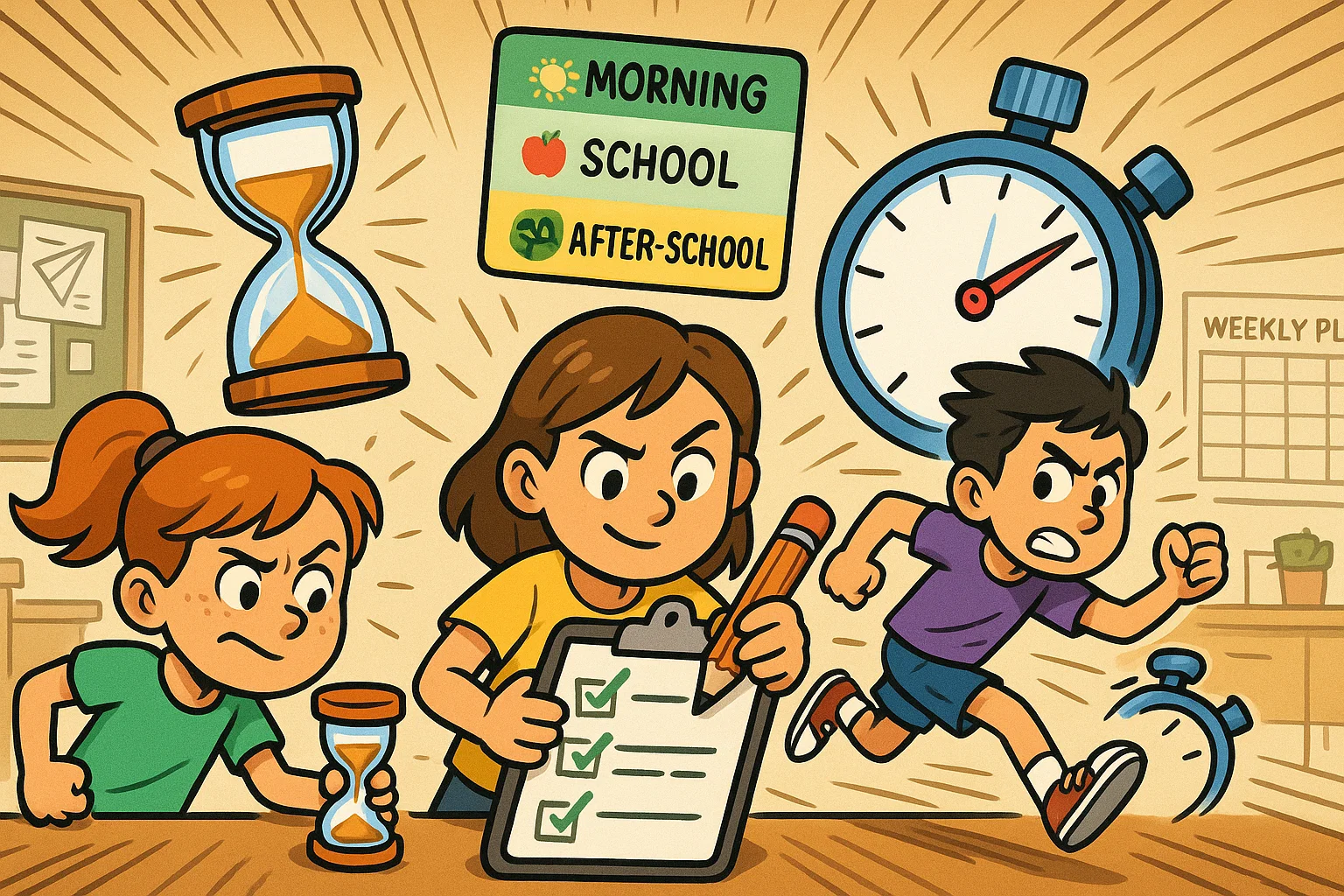
Moving beyond just telling the time, these activities focus on developing crucial executive function skills—the ability to plan, prioritize, and manage tasks within a given duration. This is where time-telling skills transform into practical time management abilities.
Scheduling Activities for Children
Introduce simple scheduling using visual aids.
- The Visual Planner: Use a whiteboard, magnetic board, or a large poster. Create simple visual icons for tasks (e.g., a book for reading, a plate for snack).
- The Task: Have the child arrange the tasks and write the estimated start moment next to each one. This helps students gain a visual understanding of time and their day.
Goal Setting for Daily Tasks
Tie a small, achievable goal to a specific interval.
- Example: Instead of just saying “Tidy your room,” say, “We will use time as our helper: Tidy your room for 15 minutes, starting at 4:00 PM.”
- This teaches children that time is a limited resource and can be actively managed to achieve a goal.
Minimising Distractions Through Time Challenges
Use short, timed challenges to build focus.
- The “Sprint” Method: Introduce the idea that focused work can be done in short bursts. Ask students to work on a difficult time worksheet or reading assignment for only 7 minutes with zero distractions. The timer acts as a boundary that enhances concentration.
Timed Games for Focus and Discipline
Stopwatches and timers add an element of fun and pressure to mundane tasks.
- “Beat the Timer” Clean-up: Set a timer for 3 minutes for cleanup after a hands-on activity. This creates a fun way for children to work together quickly and efficiently.
- “Quick Tidy” Challenge: Students can practice their ability to transition quickly between tasks by having a timed challenge to put away materials and get ready for the next activity.
Cross-Curricular Time Activities
Time is inherently mathematical, scientific, and literary. Integrating time-telling into other subjects provides a richer, more contextualized learning experience.
Maths-Based Time Tasks
Time-telling is deeply connected to fractions and arithmetic.
- Fractions of an Hour: Use the clock face to discuss fractions. “When the minute hand is at the 3, it’s 1/4 of the way around, or a quarter of an hour.”
- Elapsed-Time Word Problems: Introduce simple addition and subtraction based on time intervals. “If a baking recipe takes 20 minutes and you put it in the oven at 3:35, when do you take it out?”
Story-Based Time Adventures
Creative writing can reinforce time vocabulary and sequences.
- Writing Prompt: “Write a story about a day that goes backwards, starting at quarter of an hour to midnight and ending at sunrise.”
- Sequencing: Give children a series of story events and ask students to place them in chronological order, labeling each with an hour on a blank clock.
Science of Day–Night Cycles
Connect the concept of time to the Earth’s rotation and astronomical concepts.
- Activity: Discuss why the sun is visible during AM hours and the moon/stars during PM hours. Create a paper plate clock and label one half AM and the other half PM, illustrating the cycle. This helps students understand the rhythm of daily routines.
Tips for Parents and Educators
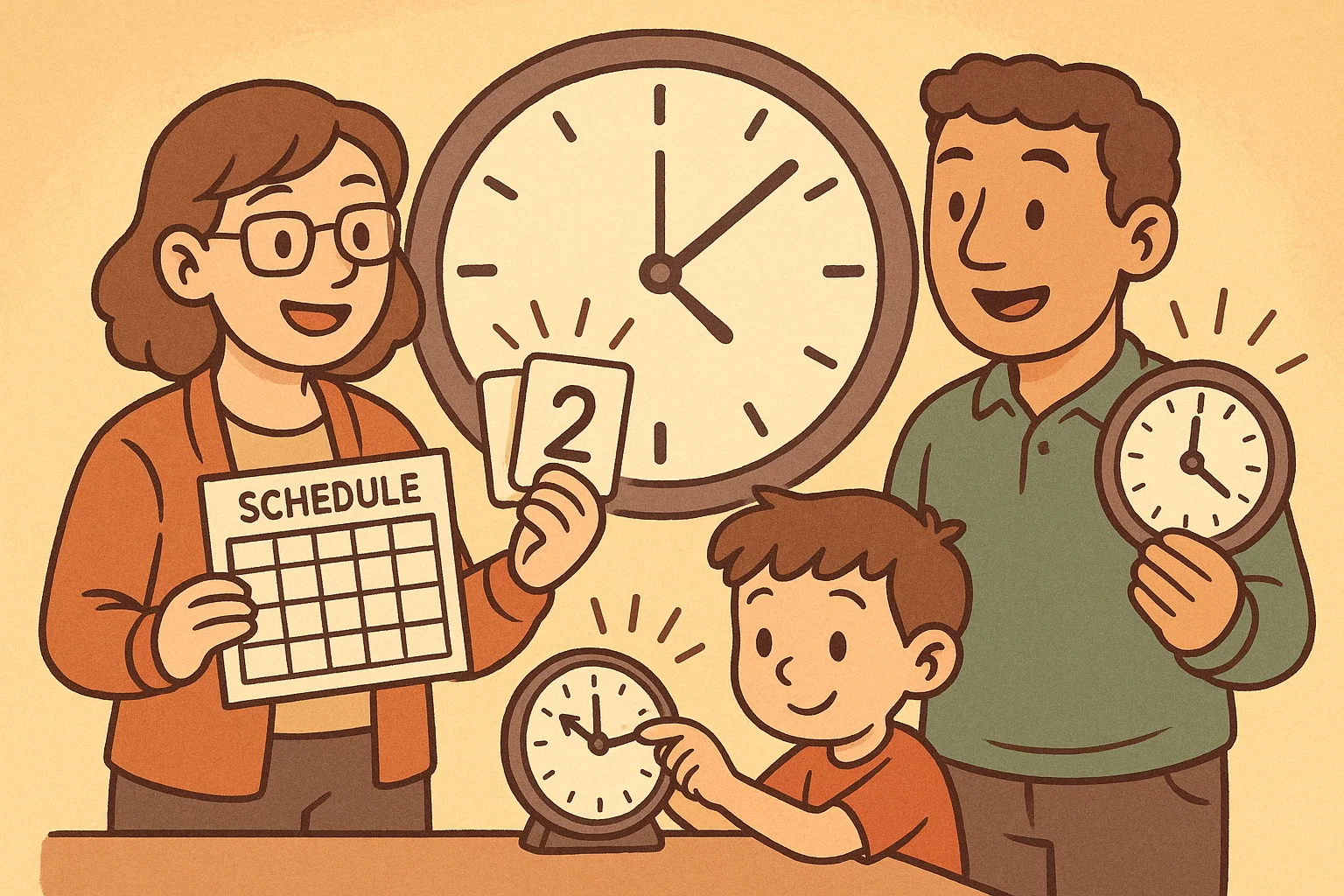
Consistent and encouraging support is the key to helping kids learn to tell the time successfully. These tips ensure a cohesive and effective learning environment.
Consistent Language in Time Lessons
Using varied or confusing terminology can stall learning.
- Stick to Standard Terms: Use “half past four” or “four thirty,” but avoid constantly switching between them within the same lesson. Similarly, be consistent with “quarter past” (or “15 minutes after”) and “quarter of an hour to” (or “15 minutes before”).
- Visual Reinforcement: Always point to the hands and the numbers when speaking the time aloud, linking spoken language to the visual representation.
Daily Practice Techniques
Small, frequent short interactions are more effective than long, infrequent sessions.
- Check-ins: Make a habit of asking: “what time is it now?” before every transition (leaving for school, starting homework, etc.).
- Set the Clock: If you have an adjustable teaching clock, have the child set it to the time of the next meal or event. This is a simple, effective way to practice.
Hands-On Tools and Learning Styles
Recognizing how a child learns best is critical.
| Learning Style | Recommended Time Masters Activities | Key Benefit |
| Tactile Learners | Paper plate clock, Human Clock, Block Clock Building | Physical manipulation of the clock components. |
| Visual Learners | Telling-Time Posters, Time Puzzles, Visual Guides | Clear sight of the analog and digital matching. |
| Auditory Learners | Time Bingo, Musical Clocks, Story-Based Adventures | Hearing the hour spoken and matched to the visual. |
By utilizing this diverse array of time-telling games and resources, educators and parents can ensure that all students grasp the concept of time within a fun, supportive learning environment, transforming them from novices into true Time Masters.