

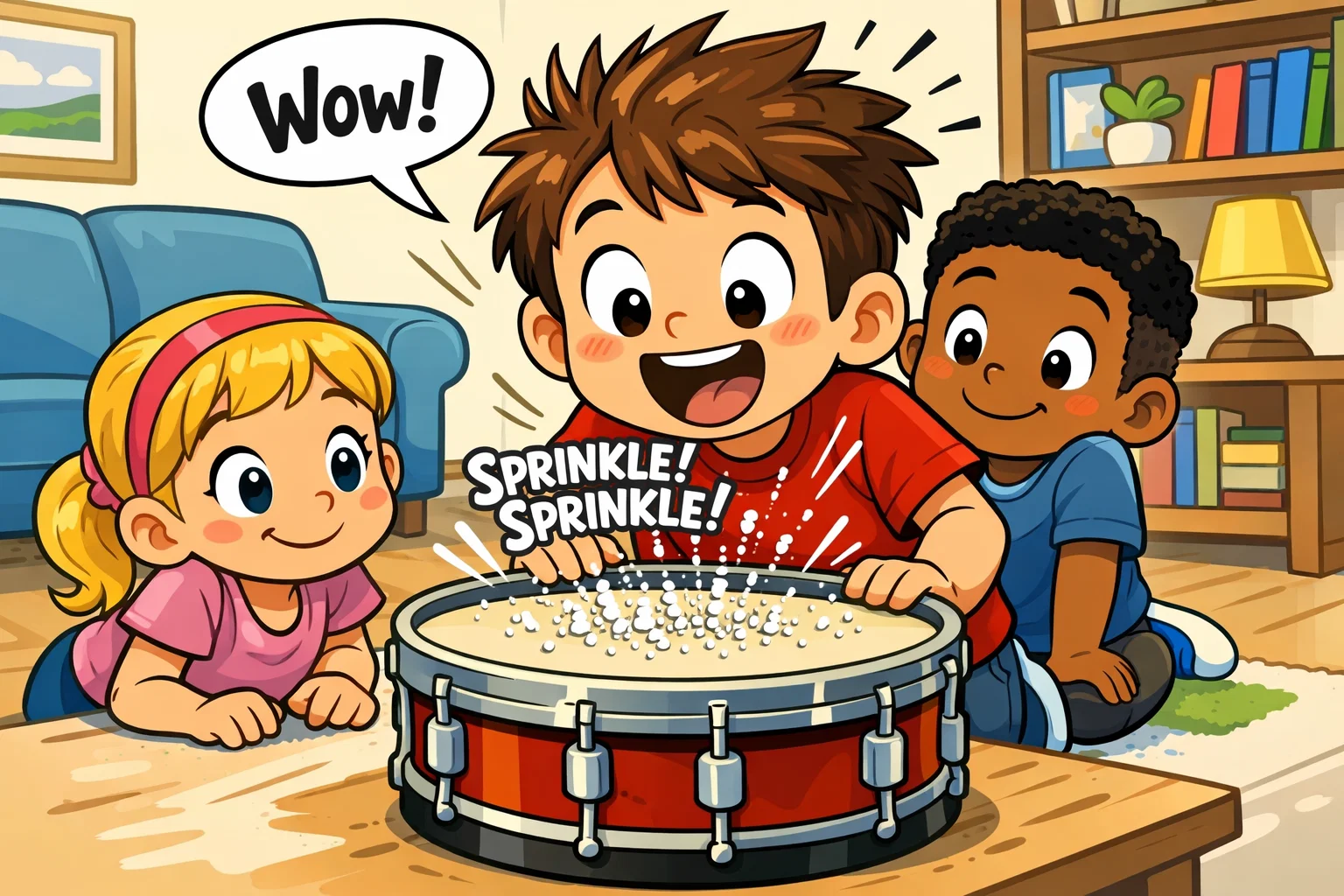
Exploring the world of acoustics at home provides a unique opportunity to turn a living room into a scientific laboratory. Engaging in a sound experiment allows children to interact with the physical laws of the universe through a hands-on approach that builds curiosity and critical thinking. By observing how objects vibrate and how noise travels through different mediums, young learners develop a foundational grasp of physics while enjoying creative activities for kids.
Invisible Forces: Basics of Sound Vibrations
At the heart of every noise is a vibration. When an object moves back and forth rapidly, it displaces the particles surrounding it. This kinetic energy transfer is the starting point for any acoustic experiment. Whether it is a finger plucking a rubber band or a spoon hitting a table, the initial movement creates a mechanical disturbance. For children, identifying the source of this movement is the first step in scientific inquiry.
Mechanics of a Sound Wave Traveling Through Air
Sound is a mechanical, longitudinal wave characterized by the transfer of kinetic energy through a medium via molecular collisions. Unlike transverse waves that move perpendicular to the direction of travel, longitudinal waves in air consist of alternating compressions and rarefactions:
- Compressions: Regions of high pressure where particles are crowded together.
- Rarefactions: Regions of low pressure where particles are spread apart.
In these zones, particles vibrate parallel to the path of the signal. This movement is governed by the wave equation v = f * lambda, where:
- v represents the velocity of the wave.
- f stands for the frequency of the vibration.
- lambda indicates the wavelength.
Velocity is influenced by the density and elasticity of the medium.
Visualizing Sound Vibrations for Young Scientists
Since air is invisible, it can be difficult for a child to grasp how audio travels. Visual aids help bridge this gap. By using lightweight materials like salt or seeds, we can demonstrate how the energy of a sound wave moves physical objects. Seeing the reaction of these particles provides tangible proof that “invisible” waves are actively pushing against the environment.
Principles of Frequency and Pitch in Every Experiment
Pitch is determined by how fast an object vibrates. A high-frequency vibration creates a high pitch, while a slower vibration results in a lower bass tone. Experiments for kids that involve changing the length of a string or the amount of water in a glass allow them to hear and see these differences in real-time. Resonance occurs when the frequency of an external vibration matches the natural frequency of an object, resulting in maximum amplitude and a much clearer, louder tone.
Safety Guidelines for Hands-on Science
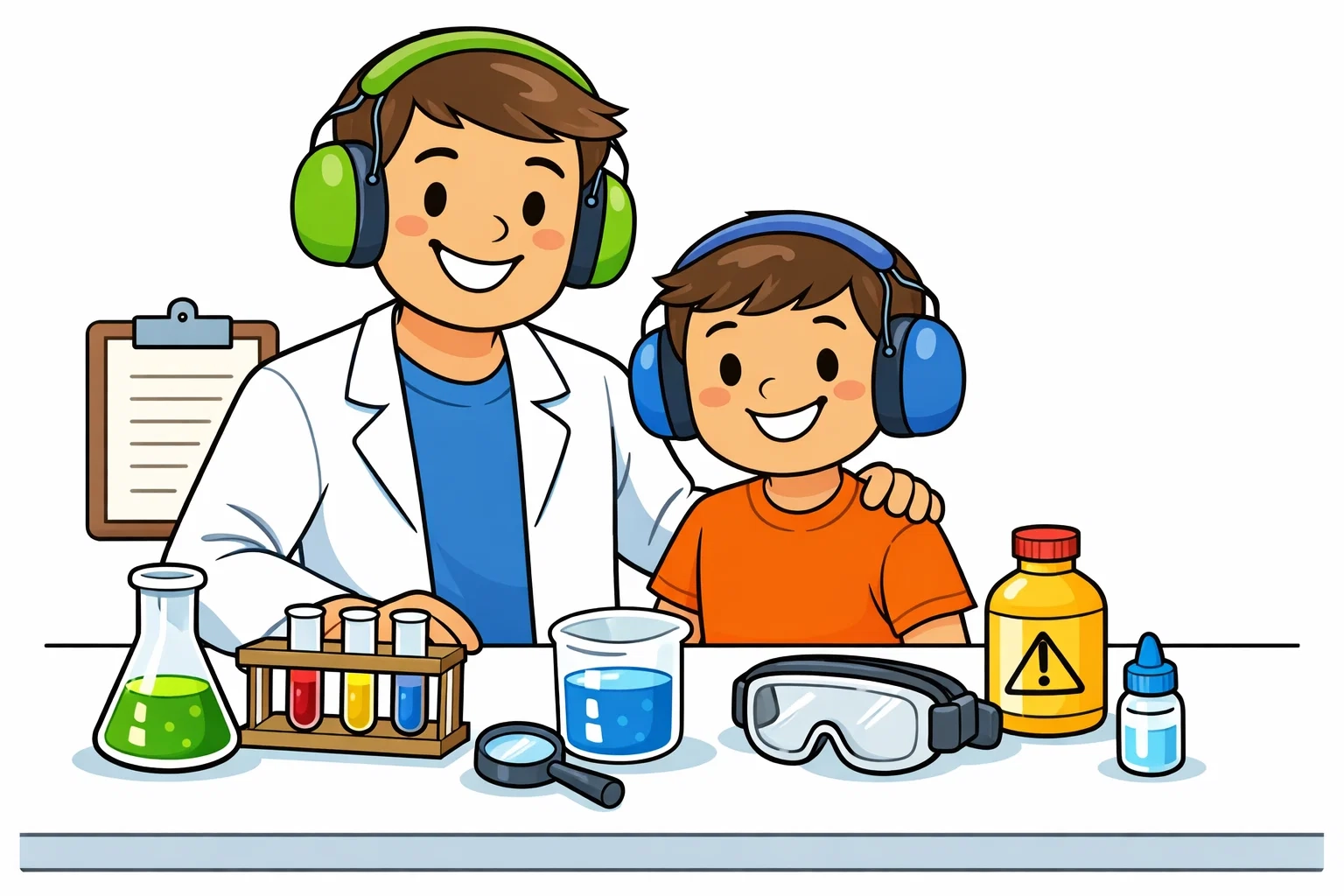
Essential Adult Supervision Rules for Experiments for Kids
Safety is the priority in any home-based lab. According to the National Science Teaching Association (NSTA), adults play a central and important role in helping young children learn science by preparing an environment rich for exploration. Experts suggest that inquiry-based learning should:
- Focus on the process of figuring things out.
- Encourage open-ended questions rather than memorizing facts.
- Model curiosity and scientific inquiry.
Positions from the NAEYC and NSTA highlight that even very young children (ages 3-5) have the cognitive capacity for reasoning if supported by knowledgeable adults.
Key supervision steps for parents include:
- Pre-testing any loud signal sources before the child starts the activity.
- Demonstrating the correct way to tap the fork or spoon to avoid excessive force.
- Helping children stretch the plastic wrap to ensure it reaches the necessary tension.
- Monitoring the volume levels on any speakers used during the experiments.
Safe Handling of Laboratory Tools and Supplies
While most materials are household items, certain tools like a metal fork or a glass jar require careful handling. Ensure that children grasp tools firmly and do not run while holding equipment. If an experiment involves a sharp edge or a heavy object, the adult should manage that specific component to prevent accidents.
Protecting the Ear from Loud Noises
The World Health Organization (WHO) establishes a pediatric safe listening limit of 75 dB for 40 hours per week. For every 3 dB increase above 85 dB, safe exposure time is halved. This results in the following benchmarks:
- 85 dB: Safe for 8 hours.
- 88 dB: Safe for 4 hours.
- 91 dB: Safe for 2 hours.
- 100 dB: Safe for only 15 minutes.
A practical safety tip is to cover the speaker of loud experimental tools with tape to reduce volume. If you must shout to be heard three feet away, the signal level is potentially damaging to a child’s ear. For experiments involving impulse noises, children under 12 should use earmuffs with a Noise Reduction Rating (NRR) of at least 25-31 dB.
Workspace Preparation for Messy Sound Experiments
Many activities for kids involve water or small particles like rice and sugar. Using a large tray or a plastic sheet helps contain the mess. It is also beneficial to use “phenomenon-based instruction,” where everyday experiences, such as the chime of a siren or a tap on a window, are used as the “anchor” for investigating physical laws.
Essential Supplies for Your Favorite Sound Lab
Finding Common Items for a Sound Experiment
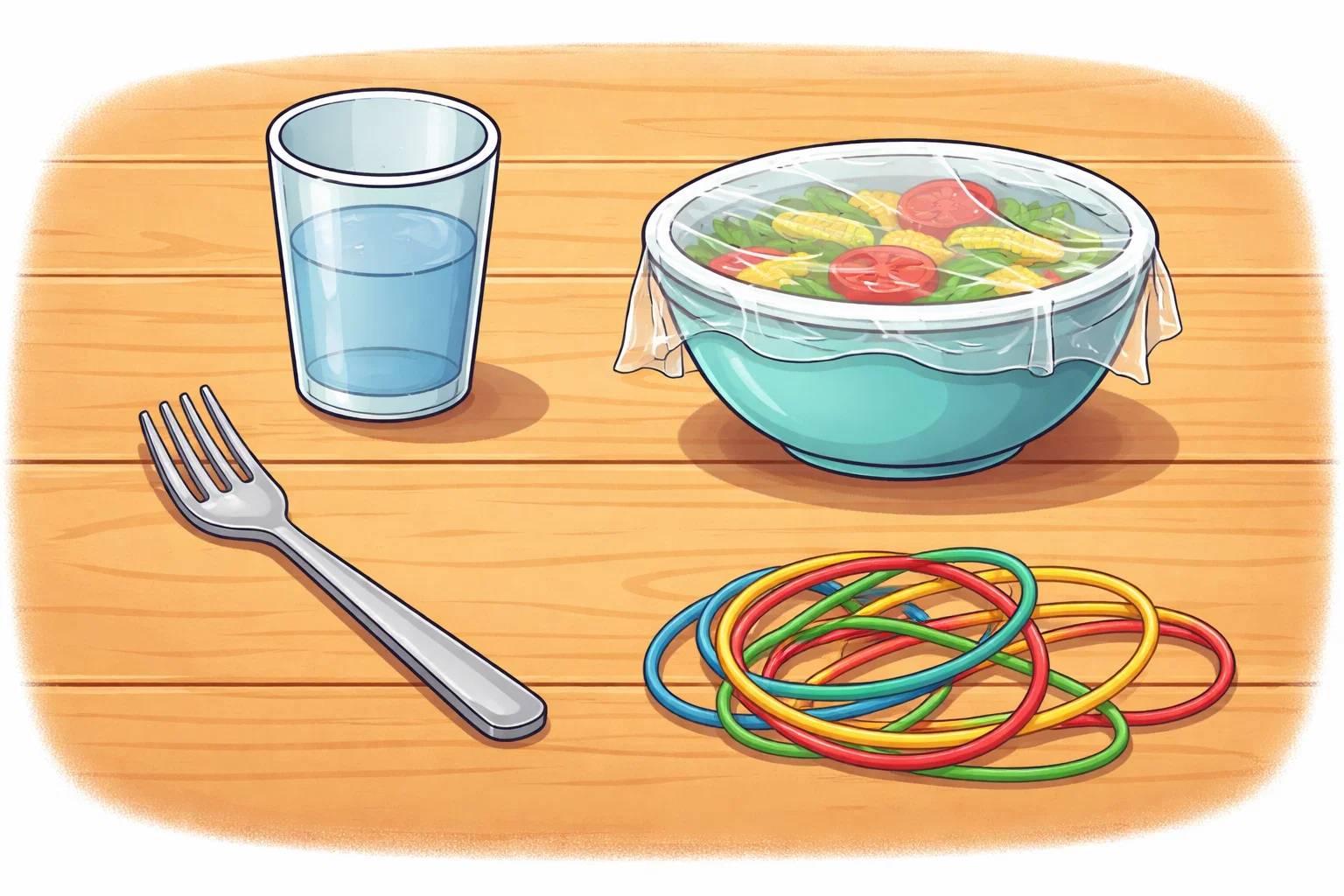
You do not need expensive equipment to study physics. Most vibration experiment setups use items already found in the kitchen or craft drawer. A simple sound experiment can be built using plastic wrap, a rubber band, and a bowl.
Low-Cost Materials for Acoustic Projects at Home
| Item | Scientific Purpose |
| Plastic Wrap | Acts as a diaphragm to see audio vibrations |
| Metal Fork | Demonstrates resonance and metal conductivity |
| Inelastic Cotton Twine | Transmits mechanical energy for cup phones |
| Rigid Plastic Cup | Amplifies waves as a resonator |
| Rice or Salt | Visible indicators of wave energy |
Recycled Resources for Your Next Vibration Experiment
Cardboard tubes, empty tin cans, and old containers are excellent for building instruments. Using these materials teaches children about sustainability while they explore how different shapes and densities change how a sound wave behaves.
Common household recyclables for sound science:
- Empty yogurt containers or rigid plastic cups.
- Metal soup cans (with smoothed edges) for resonance tests.
- Cardboard paper towel rolls to act as acoustic tubes.
- Scraps of inelastic twine or cotton string.
Organizing Scientific Equipment for Easy Access
Keeping supplies in labeled bins makes it easier for kids to grasp the tools they need. This organization encourages independent exploration, which is key to long-term interest in STEM fields. Quantitative data from 2024 reveals that active learning increases test performance by 0.47 standard deviations.
Visualizing Waves: Easy Ways to See Sound
Dancing Sugar and Salt Vibration Methods
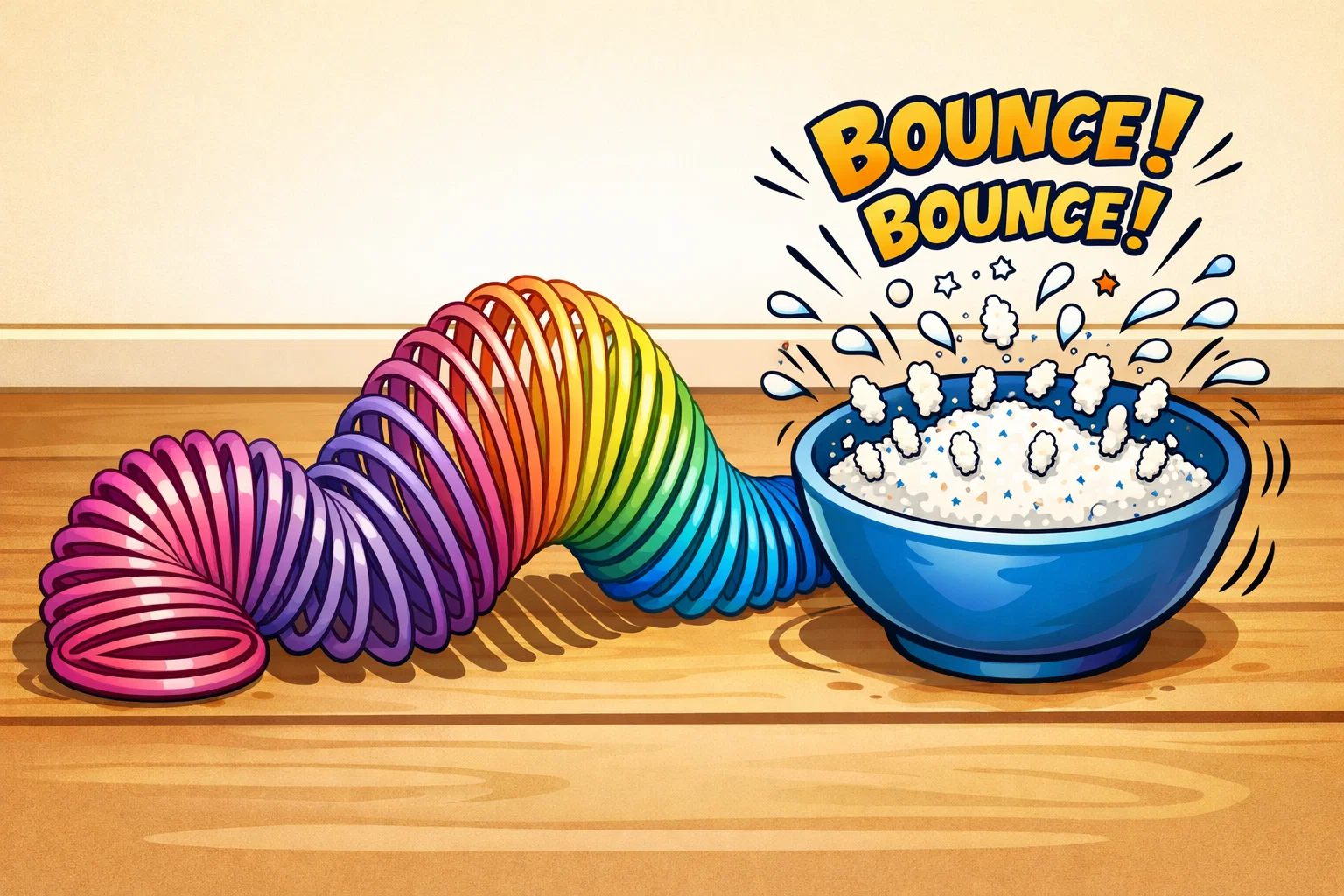
To see sound, you can create a simple drum. Stretch plastic wrap over a large bowl and pull it “drum-tight” so it oscillates rather than dampens energy. Sprinkle sugar or salt on top. When you make a loud noise or use a speaker nearby, the sugar will jump. This happens because the wave hits the wrap, causing it to vibrate and toss the grains into the air.
Rice Experiment Using Surface Tension
Similar to salt, rice provides a heavier weight to test the power of a vibration. By placing the bowl near a bass-heavy speaker, children can observe how lower frequencies create larger, more distinct movements compared to high-pitched tones.
Using Candles to Observe Sound Wave Force
A more advanced way to see sound is using a candle flame. By placing a speaker near a candle and playing a low-frequency tone, the flame will flicker or even blow out. This demonstrates that waves move the air physically, pushing the flame with the pressure of the compressions.
Slinky Models to Illustrate How Waves Move
A Slinky is the perfect tool to demonstrate longitudinal waves. When you push one end of the Slinky, you see the coils bunch up (compression) and spread out (rarefaction) as the energy travels down the line. This mimics exactly how a sound wave moves through the molecules in the air.
Auditory Discovery: Using Every Sense to Hear Difference
Singing Spoons Symphony: A Classic Hands-on Activity
Tie a metal spoon to the middle of a piece of string. Wrap the ends of the string around your fingers and press them against your ears. When someone else taps the spoon with a fork, the vibration travels up the string. Because solids have higher molecular density, they conduct audio more efficiently than gases, resulting in a deep, bell-like chime that sounds much clearer than it does through open-air speech.
Creating a Personal Gong with a Metal Fork
You can expand the spoon experiment by using a large metal fork. Tap the fork against a hard surface and quickly bring it to your ear. You will hear a long, resonating ring. This is a great way to explain how your ears work to catch vibrations and turn them into the signals your brain recognizes as noise.
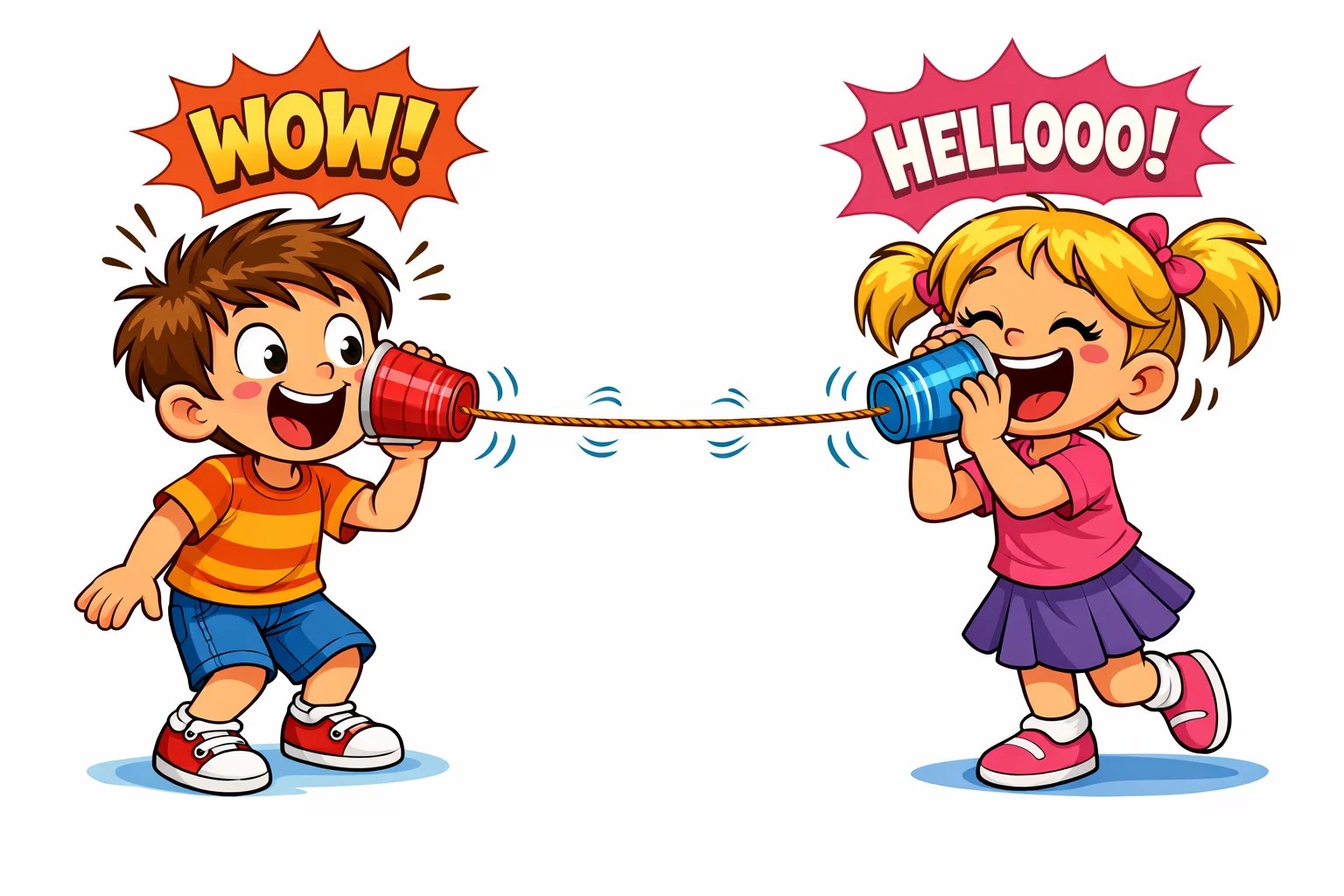
Secret Whispers via Cup and String Phones
The cup and string phone is a staple of childhood science. A common “fail point” in this experiment is string slackness. Sound waves travel through tension; a loose string absorbs mechanical energy rather than transmitting it.
Steps for a successful string phone:
- Poke a tiny hole in the bottom of two rigid plastic cups.
- Feed the inelastic cotton twine through the holes.
- Use paperclips as “anchors” to prevent the twine from pulling through.
- Pull the line taut to ensure mechanical energy can travel between cups.
Echo Exploration in Domestic Spaces
Have your child clap their hands in different rooms—a tiled bathroom versus a carpeted bedroom. This sense-based activity helps them understand how waves reflect off hard surfaces to create echoes or are absorbed by soft materials.
Musical Engineering: Favorite Sound DIY Projects
Homemade Straw Harmonica Construction
Cut several straws to different lengths and tape them together. When you blow across the top, the air inside vibrates. Shorter straws produce higher pitches because the sound wave has a shorter distance to travel, increasing the frequency.
Buzzing Bug Noisemaker Assembly
Using a popsicle stick, a rubber band, and a piece of string, you can create a “whirling” toy. As it spins through the air, the rubber band vibrates rapidly against the stick, creating a buzzing audio that mimics an insect.
Rubber Band Guitar Mechanics and Sound Vibrations
Stretch rubber bands of varying thicknesses over an open box. Plucking them allows kids to see the vibration with their eyes while hearing the pitch. They will notice that a tighter stretch or a thinner band results in a higher frequency wave.
Crafting Percussion Kits to Feel the Vibration
Fill different containers with dried beans, sand, or water. Tapping these containers allows kids to feel the vibration in their hands. STEM occupations are projected to grow by 10.4% through 2033, and these simple engineering tasks build the foundational literacy needed for future success in these fields.
Sensory Development Through The Magic Ear Trick
Testing Sound Direction with a Magic Ear Trick
Have a child close their eyes. Use two spoons to tap together in different locations around their head. Ask them to point to where the noise is coming from. Our ears work together to determine direction based on which ear the sound wave hits first. This is often called the “magic ear trick” because it shows how the brain processes tiny timing differences.
Cognitive Benefits of Sensory Experiments for Kids
Engaging in these experiments for kids improves spatial reasoning and memory. According to researchers at Pew Research Center, early exposure to scientific methodology fosters a more scientifically literate society. Active participation ensures that the child is a “doer” rather than just a “receiver” of information.
Long-term benefits of early STEM exploration:
- Increased interest in engineering and physical sciences.
- Improved critical thinking and problem-solving skills.
- Enhanced ability to formulate hypotheses and test results.
- Better understanding of safety and environmental awareness.
Fine Motor Skills in Hands-on Scientific Building
The act of stretching plastic wrap, tying knots in string, and cutting straws develops precision. For children ages 3-5, the focus should remain on the tactile feeling of vibrations. As they grow (ages 6-9), they can begin redesigning their instruments to manipulate volume and pitch.
Integrating Every Sense into STEM Learning
When kids see the rice move, feel the vibration of a string, and hear the resonance of a fork, they are using multi-sensory learning. This holistic approach ensures that the scientific principles are deeply ingrained.