

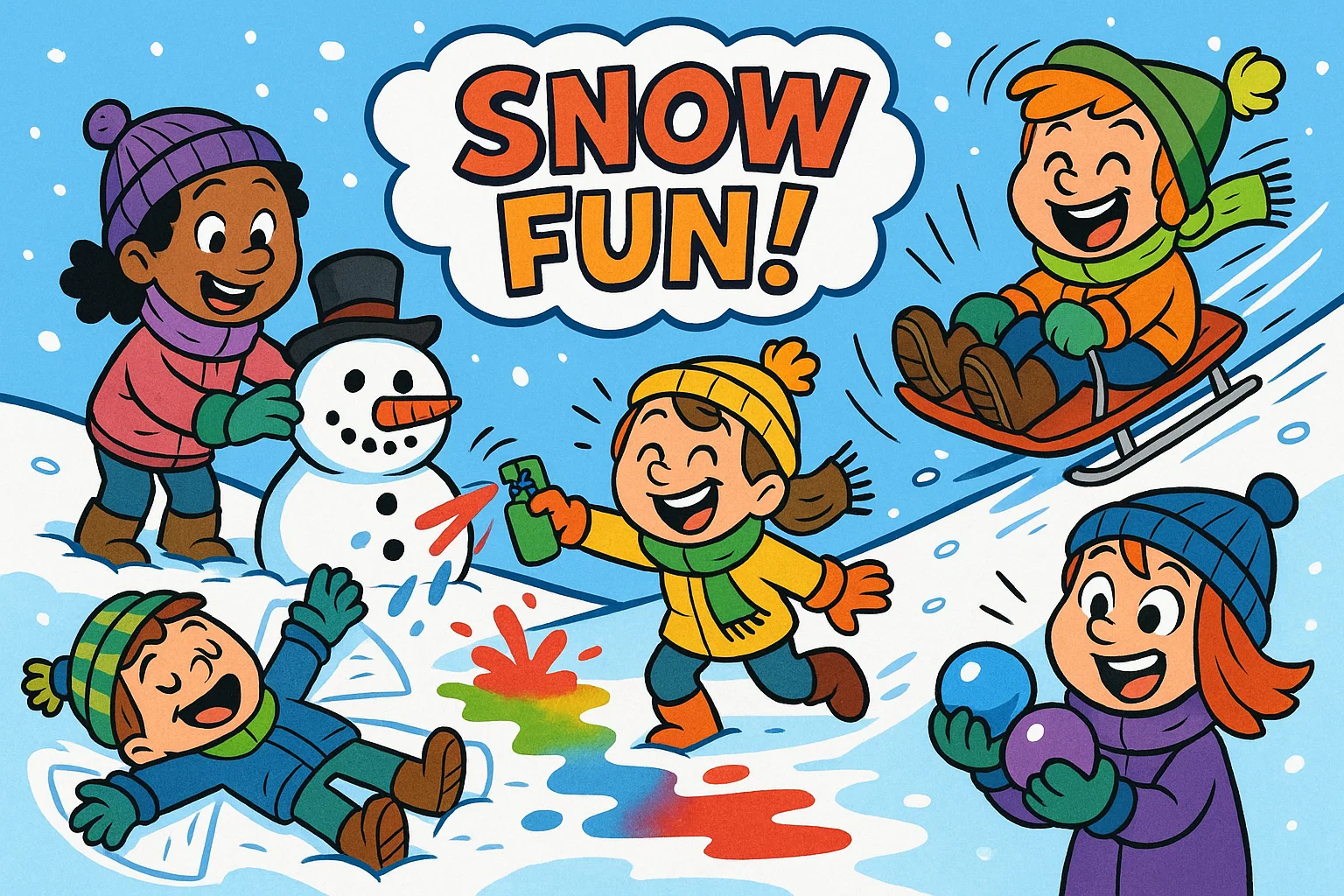
The first sight of fresh, pristine snow on the ground often brings a rush of pure excitement, whether you’re a toddler seeing it for the first time or a seasoned “big kid.” A snow day isn’t just a day off school; it’s a magical opportunity for children to engage their senses, develop crucial motor skills, and express unbounded creativity in a magnificent, wintry, natural laboratory. For parents, navigating a long winter season means finding easy, engaging, and safe ideas that balance the thrill of the outdoors with the cozy comfort of being indoors.
This guide, crafted by child development specialists, is packed with authoritative and trustworthy ideas for fun snow activities for kids of all ages. From classic winter activities like building a towering snowman or sledding down a gentle hill, to unique creative snow play ideas you can do right in your backyard or even bring the snow inside, we cover everything you need to make the most of those precious snowy hours. Get ready to bundle up, grab your snow boots, and transform that blanket of snow into a canvas for adventure and learning!
Outdoor Snow Play Ideas
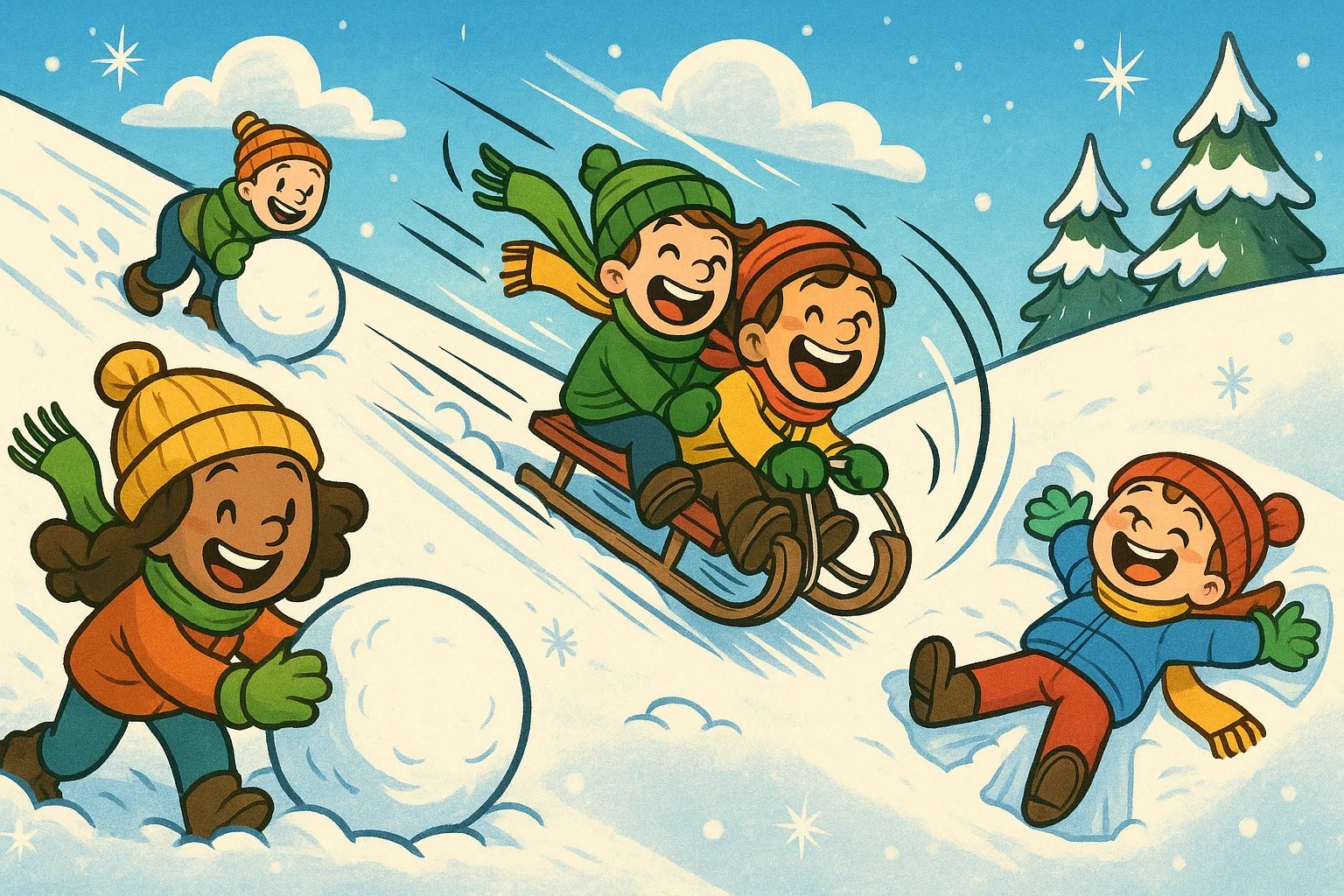
Heading outside for some fresh air and real snow is the quintessential winter activity experience. These timeless activities are perfect for burning energy and fostering imagination. Remember, kids will love freedom, but parents must prioritize warmth and safety.
| Activity | Developmental Skill Focus | Recommended Age Range |
| Build a Snowman | Gross Motor, Planning, Problem Solving | Toddlers to Big Kids |
| Sledging/Sledding | Coordination, Balance, Risk Assessment | 2+ (with supervision) |
| Snow Fort/Castle | Engineering, Teamwork, Strategy | 4+ |
| Make Snow Angels | Body Awareness, Following Directions | All Ages |
| Painting the snow-covered ground | Creativity, Fine Motor (spraying) | 3+ |
Build Snowman
Building a snowman is arguably the most famous of all classic snow pastimes. Start with a tiny compact ball, roll it to gather mass, and continue until you have three distinct segments. Step-by-step building teaches children about size, weight, and physics.
- Classic Challenge: How big can you make the base before it’s too heavy to move?
- Creative Add-ons: Instead of traditional coal eyes and a carrot nose, use food-colouring spray to decorate your snowman.
- Themed Characters: Try building a creature (like a snow dog or penguin) or a beloved cartoon character instead of a traditional person.
Make Snow Angels
Lying back and sweeping arms and legs in the soft white covering to make snow angels is a simple yet effective activity for body awareness. The cushion of fresh snow can be a soothing sensory experience.
- Motor Skills: This activity helps children practice rhythmic, symmetrical movements.
- Patterns in the White: Examine the different patterns made by various movements or objects in the powder.
- Fun Variation: Before making the angel, spray the area with a small amount of colourful water. When the child stands up, they reveal a brightly bordered figure!
Try Sledging and Downhill Snow Donuts
For pure speed and adrenaline, few winter activities beat sledding. Find a gentle slope for little ones and increasingly steep hills for older children.
- Safety First: Always check the path for obstacles. Helmets are essential for high-speed activities. While not always legally required, they are strongly recommended for sledging or tubing.
- Group Rides: Older kids can safely link sleds or tubes for a group ride, encouraging teamwork and shared fun.
- Downhill Donuts: Using a round snow tube or donut ring (similar to those available at large winter centres), kids can experience fun, controlled spins on the way down.
Go on Winter Walk
Even a simple walk can become an adventure. Encourage observation of the wintery landscape and the powdery snow covering the ground.
- Scavenger Hunt: Give kids a list or picture card of things to find: a specific type of tree, an icicle, a sign of an animal, a brightly coloured leaf, or a frozen puddle (like ice).
- Nature Exploration: Collect items like twigs, berries, or pinecones to use in later indoor crafts or decorations.
Look for Footprints in Snow
This simple activity turns the ground into an exciting mystery. The snowy ground captures every print.
- Identify Animals: Help kids look for tracks left by local wildlife (birds, squirrels, neighborhood dogs). Discuss how animals move differently.
- Simple Science: Use this to talk about weight (heavier things sink deeper in the drifts) and gait (how a creature walks).
Try Snow Building Projects
Moving beyond the standard snowman, challenge big kids with engineering projects.
- Snow Fort: Build a sturdy snow fort or wall using shovels and buckets, teaching basic architecture and leverage.
- Igloos and Mini Buildings: Use plastic storage containers or loaf pans to create stackable “blocks” for more intricate structures like small houses or snow castles. This is a great exercise in spatial reasoning.
Creative Snow Art Projects
Transform the expansive white canvas into vibrant, colourful masterpieces. These fun and creative projects are excellent for visual and sensory exploration.
Snow Painting – Spray Method
This is the fastest, easiest way to paint the natural covering.
- Basic Setup: Fill small spray bottles with water and a few drops of liquid food dye or washable non-toxic watercolor paints.
- Design Ideas: Encourage kids to make targets, draw giant pictures, or color their snowman a striking blue or green. The immediate results are always photo-worthy!
Snow Painting – Thick Paint Method
For a more controlled art experience, try a thicker paint.
- Method: Mix paint, water, and a touch of cornstarch to create a thicker consistency. Put this mixture into plastic condiment squirter bottles or use paintbrushes.
- Controlled Art: This method is better for drawing lines, filling in shapes, or creating smaller, detailed designs on a hard patch or packed surface.
Snow Spray Paint
Explain how to make child-safe spray mixtures and create gradients, murals, or stencils on the white surface.
Rainbow Ice or Ice Globes
These simple projects create beautiful, glowing outdoor decorations.
- How-To: Fill balloons or old plastic molds with water and a few drops of food colouring. Leave them outside overnight if it’s freezing.
- Ice Globes: Once frozen, peel off the balloon to reveal a perfectly smooth, colourful sphere of ice globe that glows in the sunlight. You can arrange or stack them to create colourful ice sculptures.
Modelling Balloon Ice Sculptures
For a stunning effect, fill different shapes of balloons (long, skinny, round) with colored water. Once frozen solid (like ice), peel the rubber away. You can then stack, arrange, or “glue” the pieces together with a little water to create beautiful, translucent ice sculptures.
Frozen Nature Decorations
- Nature Ornaments: Fill muffin tins or small containers with water. Add things collected on your winter walk—berries, pine needles, flower petals—and a loop of twine or ribbon. Freeze overnight. Pop them out and hang them from trees to create festive, ephemeral outdoor ornaments. This is a wonderful activity to let the kids decorate the garden.
Photographing Snowflakes
Teach simple macro-photo tricks kids can try with a phone camera and a magnifying glass to capture the unique crystal structures. This is a quiet, observation-based activity for cold days.
Snow Science Experiments
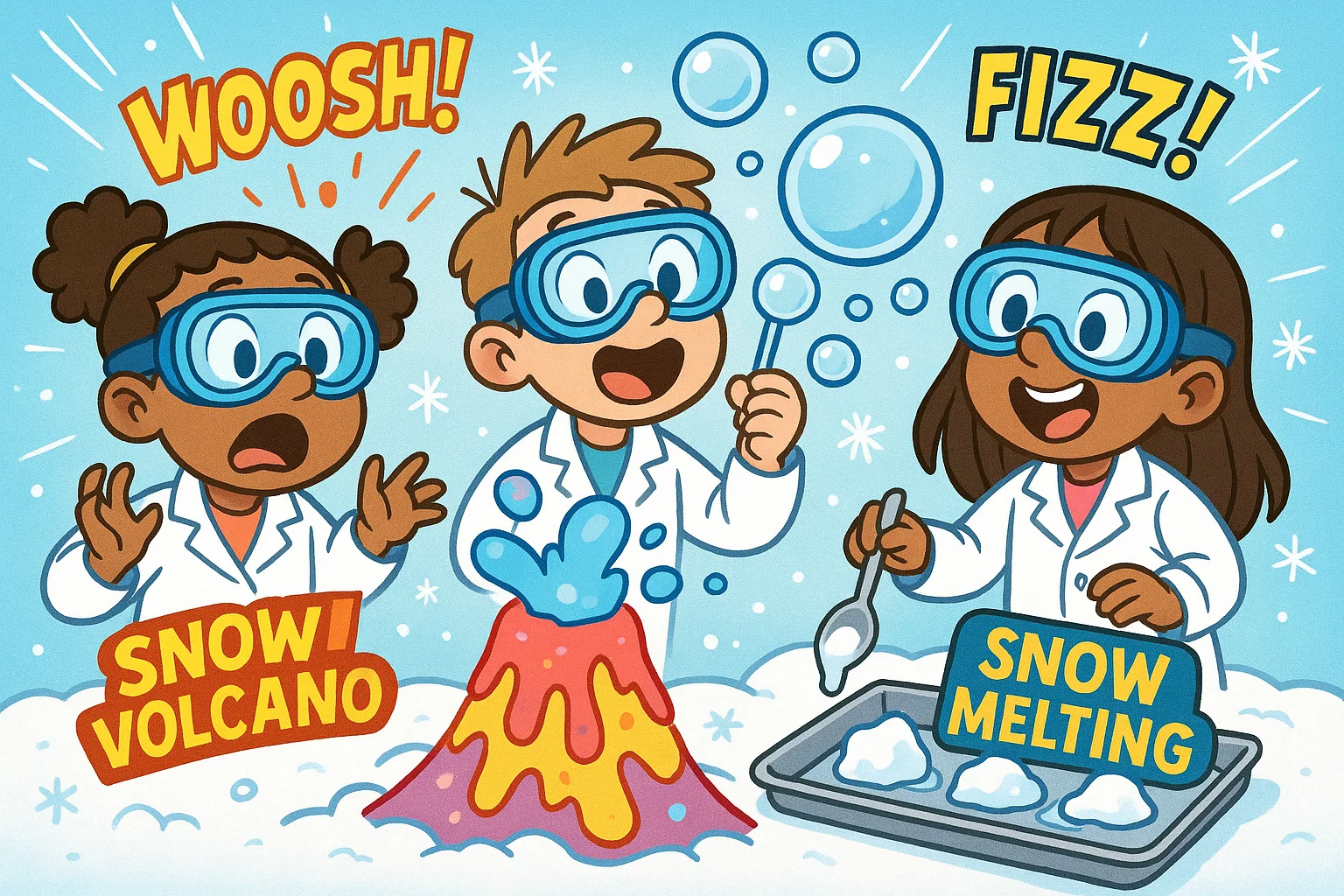
The frozen precipitation is just frozen water, making it the perfect medium for hands-on science lessons that are both engaging and memorable.
Snow Volcano
Combine art, chemistry, and fun with the classic eruption experiment.
- Setup: Pack a mound of the white stuff into a volcano shape. Carve a well in the top.
- Eruption: Pour baking soda into the well. For the eruption, add vinegar mixed with a few drops of food dye and maybe a dash of dish soap. Watch the colourful foam bubble and cascade down the sides!
Melting Snowman Experiment
This experiment helps children understand the effects of salt and heat on the frozen water.
- The Test: Build a small, packed snowman (or a few identical ones). Sprinkle one with salt, place another near a sunny window, and leave the third as a control.
- Predictions: Let the kids predict which figure will melt fastest and why. Discuss how salt lowers the freezing point of water.
Snow Sink or Float
A simple physics lesson in the cold! Gather small, waterproof objects (marbles, sticks, leaves, toy figures) and have children drop them into a bucket of packed snow. Discuss density—why do some items rest on top while others disappear?
Snow Alphabet Sensory Bin
Explain how to hide letters in the soft powder for early literacy practice.
Galaxy Snow Mixing Activity
Bring the snow indoors and add non-toxic glitter, iridescent mica powder, and various shades of blue/purple food colouring. The act of swirling and mixing the colors and textures provides a calming, mesmerizing a calming sensory experience with a galaxy-like look.
Snow Measuring Craft
Explain how to measure the depth of the precipitation, track snowfall changes over a day, or create snow journals. This activity uses real data collection for math and nature study.
Indoor Play with Real Snow
When it’s too cold outside, or you have a toddler who needs a gentler introduction to the texture, bring the snow inside! This is a fantastic snow sensory activity that provides rich tactile input without the hassle of heavy winter gear.
Take Snow Inside
- Setup: Use large, lipped trays, plastic storage bins, or even the bathtub to contain the mess. Line the surface with a towel. Scoop good snow (fresh and clean) directly into the container.
- Contain Mess Effectively: Ensure the play area is away from electronics. Provide small measuring cups or bowls for collecting the meltwater.
Real Snow Sensory Bin
A powder-filled container becomes a small world for imaginative play.
- Fine Motor Practice: Include scoops, tongs, sieves, spoons, and funnels. Toddler and preschoolers can practice scooping and pouring.
- Themed Play: Add small plastic animals (polar bears, penguins), construction toys, or miniature trees to create a winter landscape.
Painting on Ice Indoors
Explain using ice sheets as canvases and safe indoor paint options. Freeze a layer of water in a baking sheet to create a large ice canvas. Use liquid watercolors or diluted tempura paint and brushes to paint directly on the smooth, cold surface.
Snow Alphabet or Number Play
Cover ways to practice literacy and numeracy with the cold white material indoors.
Toddler Transport Play
Explain using piles of real snow with cars, animals, or construction toys. The change in texture offers a unique driving challenge.
Snow Food and Treat Activities
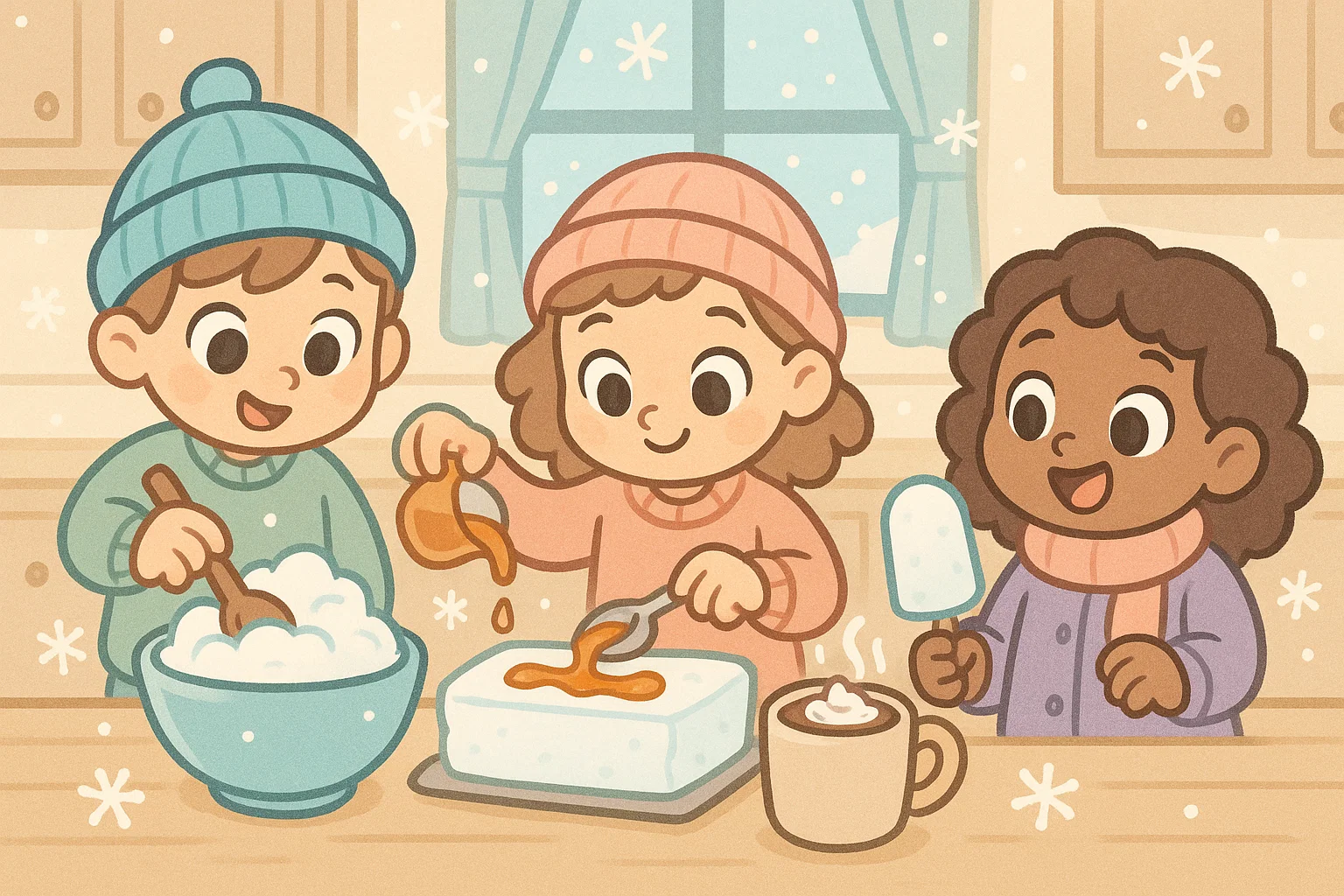
ed, safe, edible snow activities are often a highlight of a snow day.
Snow Ice Cream
A popular, quick treat using only five ingredients.
- Quick Recipe: In a large bowl, mix 8 cups of fresh, clean snow with 1 cup of milk (dairy or non-dairy), 1/3 cup of sugar, 1 teaspoon of vanilla extract, and a pinch of salt. Stir until it reaches a soft-serve consistency.
- Safety Note: Only use fresh snow that is free of debris and pollution.
- Flavor Ideas: Add cocoa powder for chocolate, or a drop of peppermint extract for a festive twist.
Snow Popsicles
Explain freezing juice or puree in molds surrounded by the cold white material.
Maple Syrup Candy
Detail the classic maple syrup candy method (supervision required!) where hot syrup is poured over a clean patch of packed snow. It quickly cools and solidifies into a chewy taffy-like lollipop.
Hot Chocolate Crafting
Set up a hot chocolate station. While technically an indoor activity, it’s the perfect reward after being out in the cold.
- Toppings Bar: Offer a variety of toppings: marshmallows, whipped cream, sprinkles, cinnamon sticks, and small chocolate chips. Let the kids customize their warm drink.
Themed Snow Crafts without Snow
For those without real snow or who need a break from the cold outside, these winter-themed crafts are perfect for a cozy afternoon cooped up inside.
DIY Symmetrical Snowflakes
Explain folding/cutting techniques and creative decorating. Hanging them in the window instantly transforms a dreary winter day.
Snowman Craft Projects
List simple materials kids already have at home and show variations by age.
- Socks: Fill white socks with rice or beans and tie them into segments to create a lasting snowman figure.
- Popsicle Sticks: Glue painted sticks together to form a figure shape.
- Cotton Balls: Glue cotton balls onto paper for a puffy, textured scene.
Easy Snowflake Crafts
Provide quick paper, paint, or salt-crystal craft ideas.
Sensory and Fine Motor Winter Activities
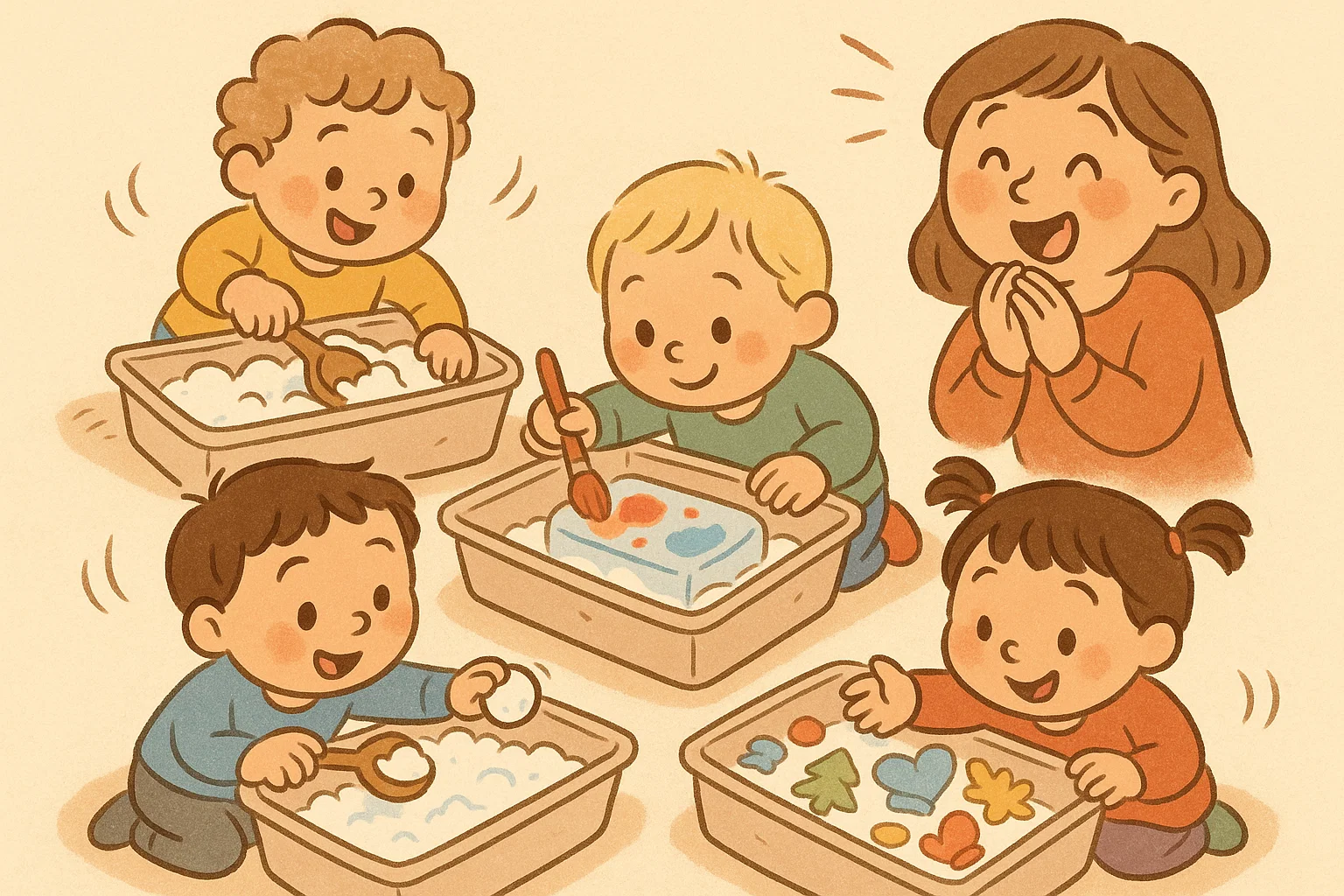
These projects intentionally focus on development using winter-themed materials.
Fine Motor Winter Crafts
List winter craft ideas that improve pinching, threading, squeezing, and drawing, such as making garlands or salt painting.
Gross Motor Winter Play
Share big-body activities like races, obstacle courses, and ice stomping out in the great winter outdoors. Go on an adventure with big movements.
Winter Sorting and Color Play
Explain sensory bags, sorting games, and color-mixing play with the cold material or ice.
Group Snow Fun and Events
Inspired by competitor structures, these ideas describe group-friendly winter events parents can join or host.
Kids’ Snow Birthday Parties
Explain themed party ideas such as sledding, painting the snowdrifts, or donut rides.
Kids Holiday Camps
Describe winter camp activities, skills learned, and how they help kids develop.
Festive Sledging or Seasonal Events
List holiday-themed experiences and safe family-friendly options like special sled runs or ice skating events.
Safety Tips for Snow Activities
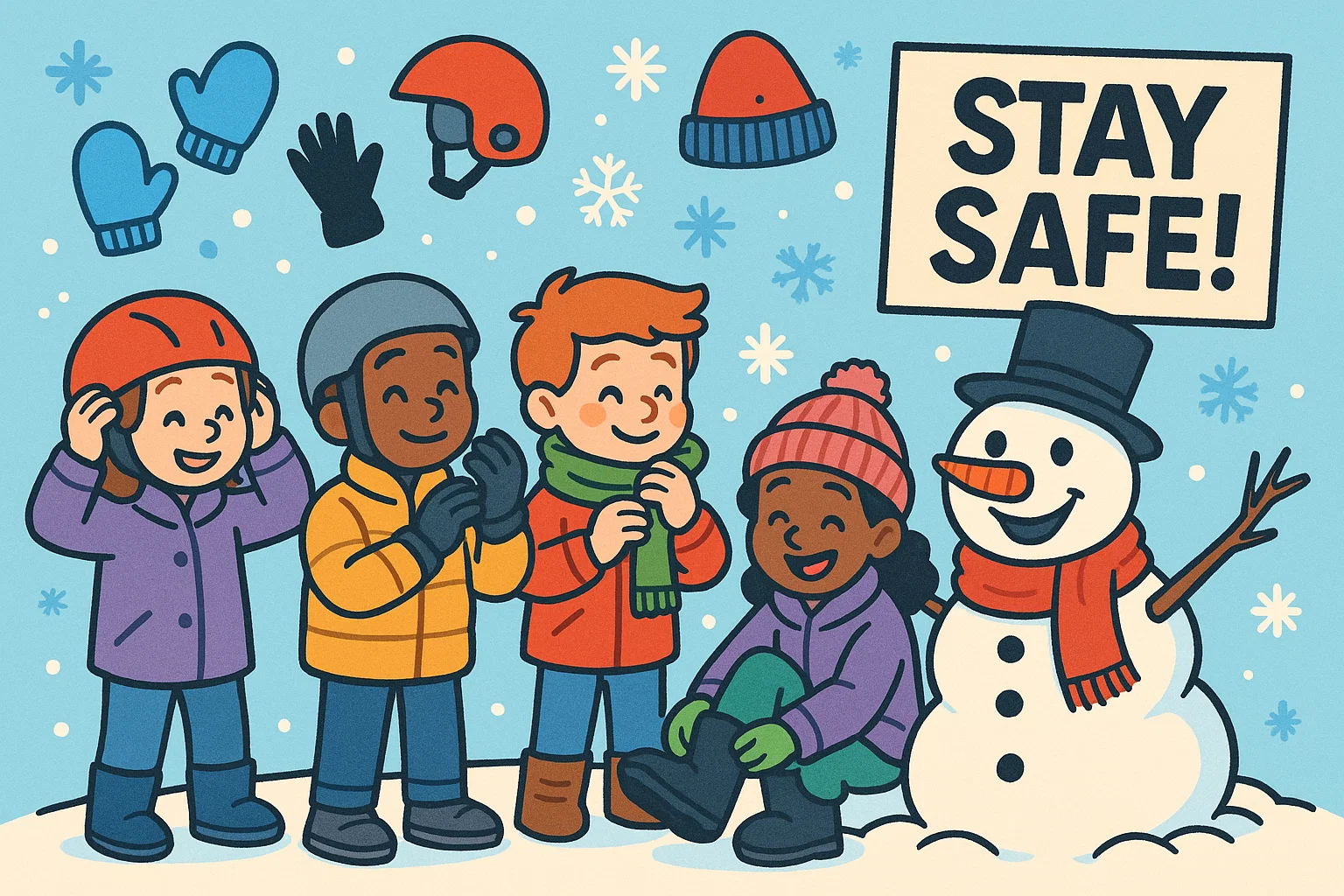
Safety and comfort are essential for all snow activities, and should always be prioritised.
| Safety Measure | Why It Matters | Expert Tip |
| Gloves Compulsory and Warm Gear | Prevents frostbite and keeps hands functional for play. | Use a thin liner glove inside a waterproof mitten for maximum warmth. |
| Helmets Mandatory for High-Speed Activities | Reduces the risk of serious head injury during falls while sledding or riding a tube. | Ensure the helmet is a proper fit (snug, level, and secure). |
| Comfort and Safety Assurance | Avoids frustration, meltdown, and unnecessary exposure. | Set a time limit before going out (e.g., 30 minutes) and take indoor hot chocolate breaks often. |
| Hydration | Physical activity and cold air can lead to dehydration. | Bring a thermos with warm, not hot, water or juice. |
Changing and Drying Tips
Be prepared to quickly manage wet clothing. Have towels and dry clothes waiting by the door. Put wet mittens and hats on a boot dryer or near a vent immediately to ensure they are dry for the next snow day fun.
Indoor Winter Activities Without Snow
If you’re in a snow-free region or are cooped up inside due to severe weather, you can still have winter-themed fun.
Baking Winter Treats
Explain simple recipes—sugar cookies, hot chocolate stations—kids can help make.
Storytelling and Snow Writing
Share prompts for winter journaling, creative writing, or drawing. Use themed printables for coloring if desired.
Snow-Themed Sensory Crafts
Describe slime, kinetic sand, or faux-snow recipes for indoor snow sensory play.