

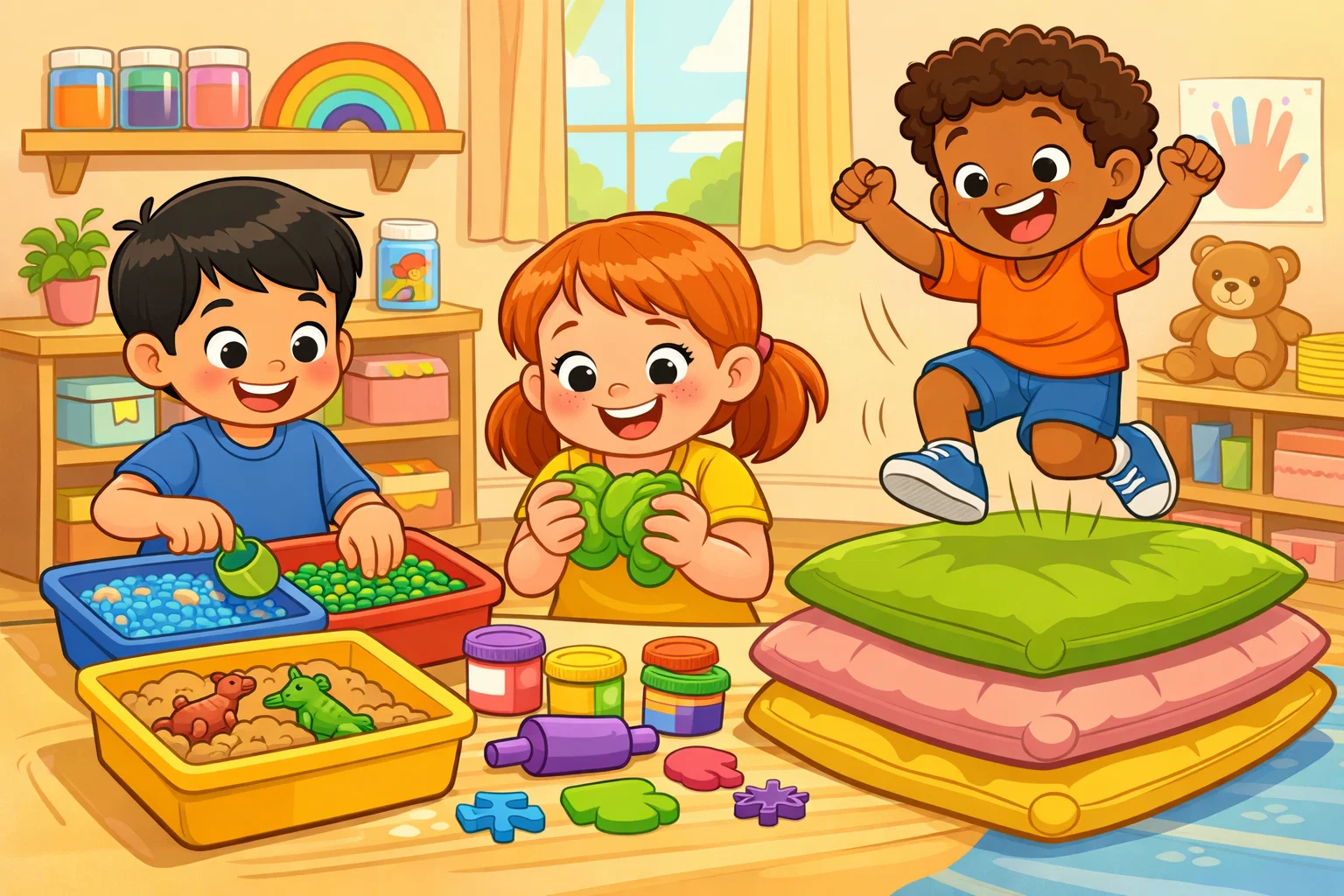
If you have ever watched a child lose themselves in the simple joy of pouring water between two cups or squeezing a ball of soft dough, you have witnessed the power of physical exploration. These activities for kids are more than just a way to pass the time; they are fundamental building blocks for healthy neurological development. Whether you are a parent looking for afternoon play ideas, a teacher designing a classroom curriculum, or a therapist working on specific developmental milestones, knowing how to engage the senses effectively can significantly impact a child’s growth.
This guide is designed to be your comprehensive resource for all things related to tactile and creative engagement. We will explore the science behind why these interactions matter, provide a vast array of practical ideas ranging from messy play to mess-free options, and offer expert tips on setting up a stimulating environment at home or in school. By the end of this article, you will have the confidence to create engaging, educational, and fun sensory experiences that cater to your child’s unique needs and interests.
Sensory Play Definition
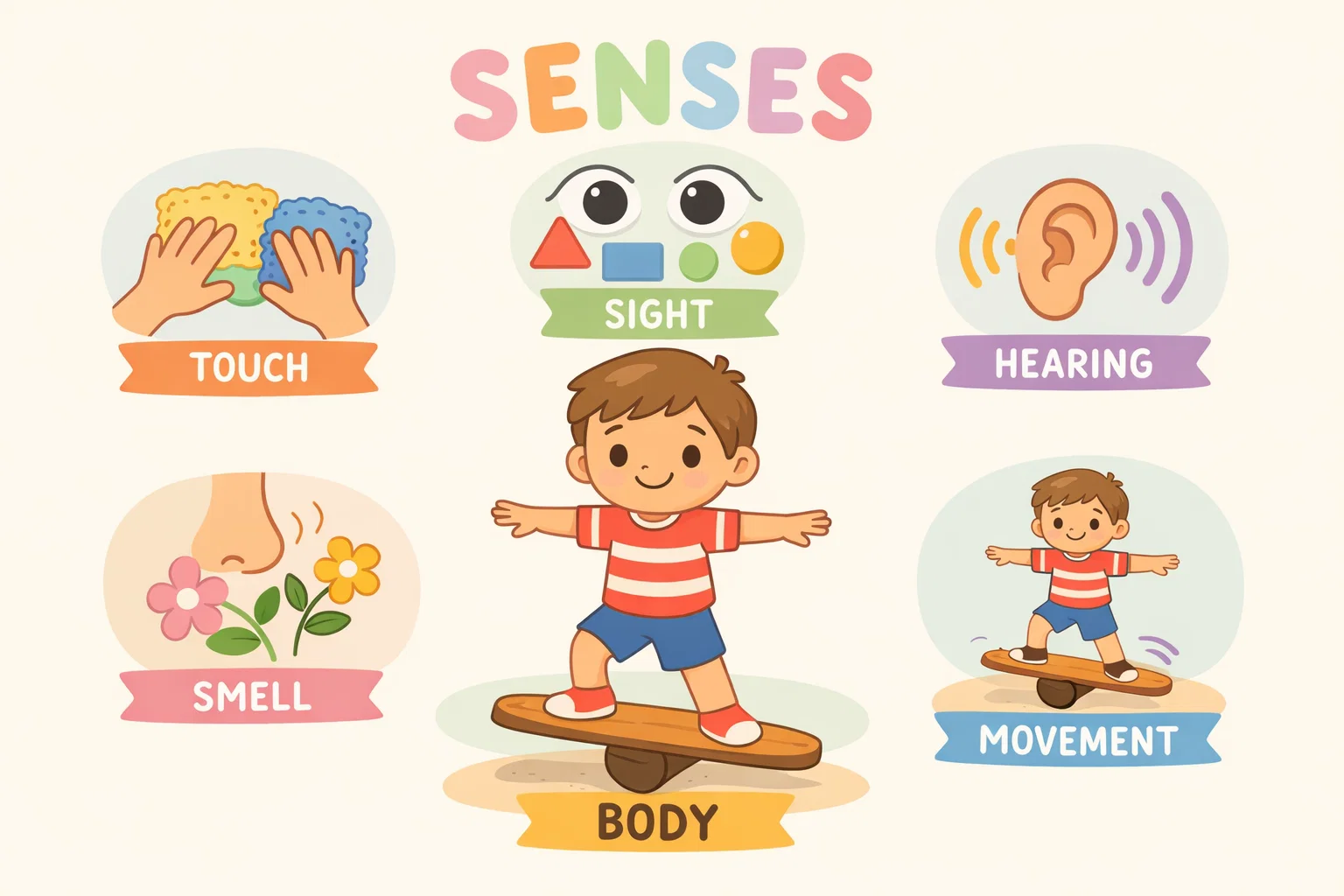
At its core, this developmental concept includes any activity that stimulates a child’s senses. While we often think only of the five basic senses, this type of exploration actually encompasses a broader range of internal and external sensory inputs. It is the process of children using their bodies to gather information about the world around them. This style of engagement is naturally open-ended, meaning there is no “right” or “wrong” way to do it.
When a toddler explores the texture of cloud dough or an older child experiments with the viscosity of slime, they are doing important work that helps their brain map out how the physical world works. These physical experiences help build connections in the brain that support learning, creativity, and problem-solving over time. These neural pathways are the same ones used for more complex cognitive tasks later in life, such as scientific reasoning or creative writing.
Five senses engagement in play
Engaging the primary senses is the most common way people think about sensory play. Here is how each is activated:
- Sense of Touch (Tactile): This is often the most prominent. Children use their hands and skin to feel different sensations like the grittiness of sand, the coldness of ice, or the squishy nature of playdough.
- Sight (Visual): Using a colorful array of materials, such as rainbow sensory rice or glitter in sensory bottles, helps children track movement and differentiate between shades and shapes.
- Sound (Auditory): Filling a balloon with dried beans or using a whisk in a soapy bowl of water introduces various pitches and volumes.
- Smell (Olfactory): Adding a specific scent like lavender to play dough or cinnamon to a sensory bin can create a calming or stimulating experience.
- Taste (Gustatory): For younger children, edible and taste-safe materials are essential. Exploring the tartness of a lemon or the sweetness of a strawberry is a form of learning that uses the mouth as a primary tool for discovery.
Sensory systems beyond five senses
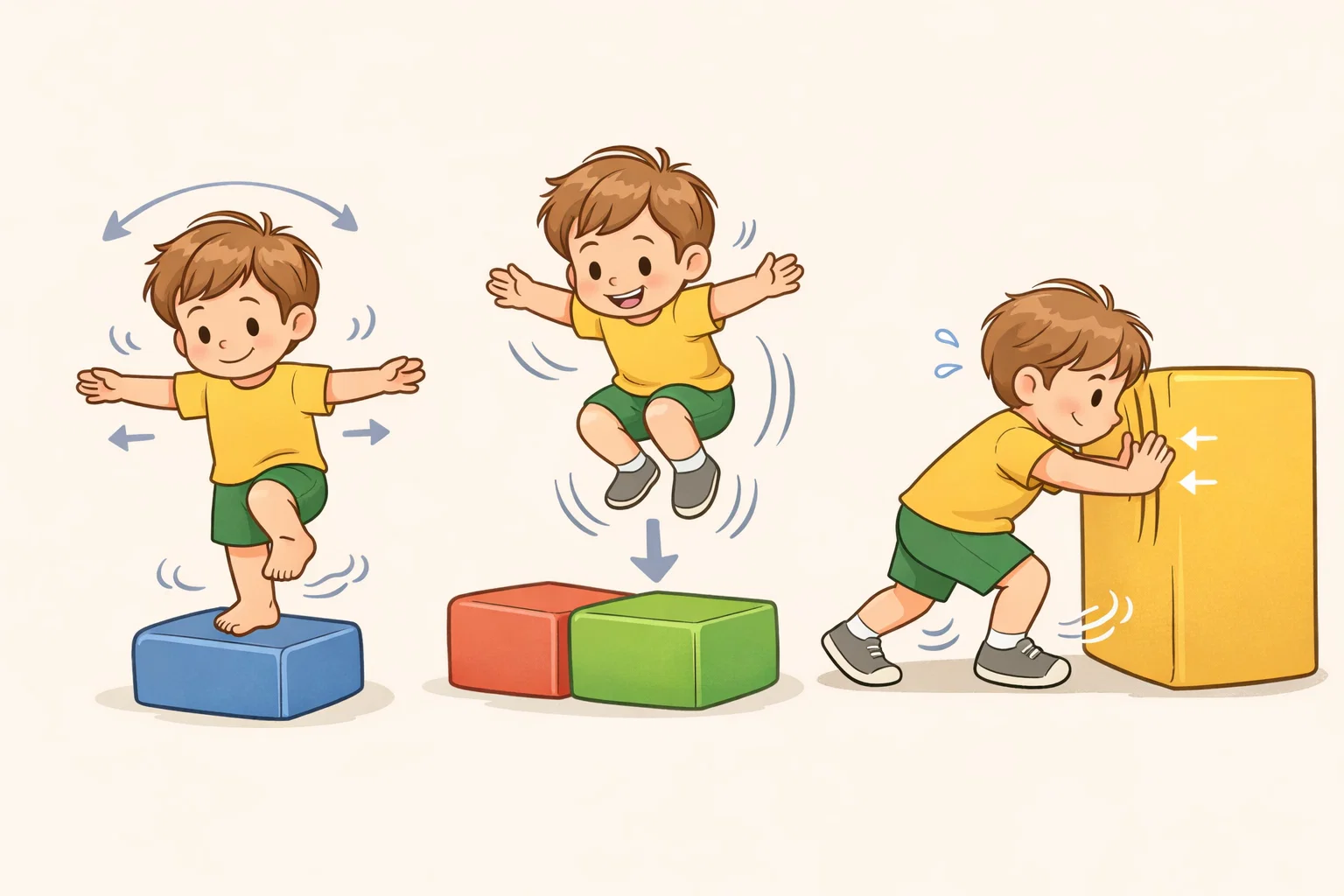
Beyond the traditional five, we must consider the “hidden” systems that are vital for brain development and physical co-ordination:
- Vestibular (Balance): This system, located in the inner ear, tells us where our head is in space. Moving, spinning, or balancing on one foot stimulates this area, helping children develop balance and spatial stability.
- Proprioception (Body Awareness): This involves the muscles and joints. When a child has to squeeze a heavy ball or push a weighted cart, they learn how much force is needed to move their limbs, which is crucial for spatial awareness.
- Interoception: This is the internal sense of what is happening inside the body. It helps a child recognize signals like hunger, thirst, or the need to use the bathroom, forming the basis for emotional regulation.
Sensory play role in early development
Play helps children prepare for learning in ways that traditional desk work cannot. When a child uses tongs to sort colored beads, they aren’t just playing; they are building the fine motor strength required to hold a pencil later. Early learning is rooted in the physical. Before a child can understand the abstract concept of the number “three,” they benefit from feeling three distinct stones in a plastic container. This hands-on fun bridges the gap between concrete objects and abstract thoughts, fostering early mathematical and scientific thinking.
Benefits of Sensory Activities for Kids
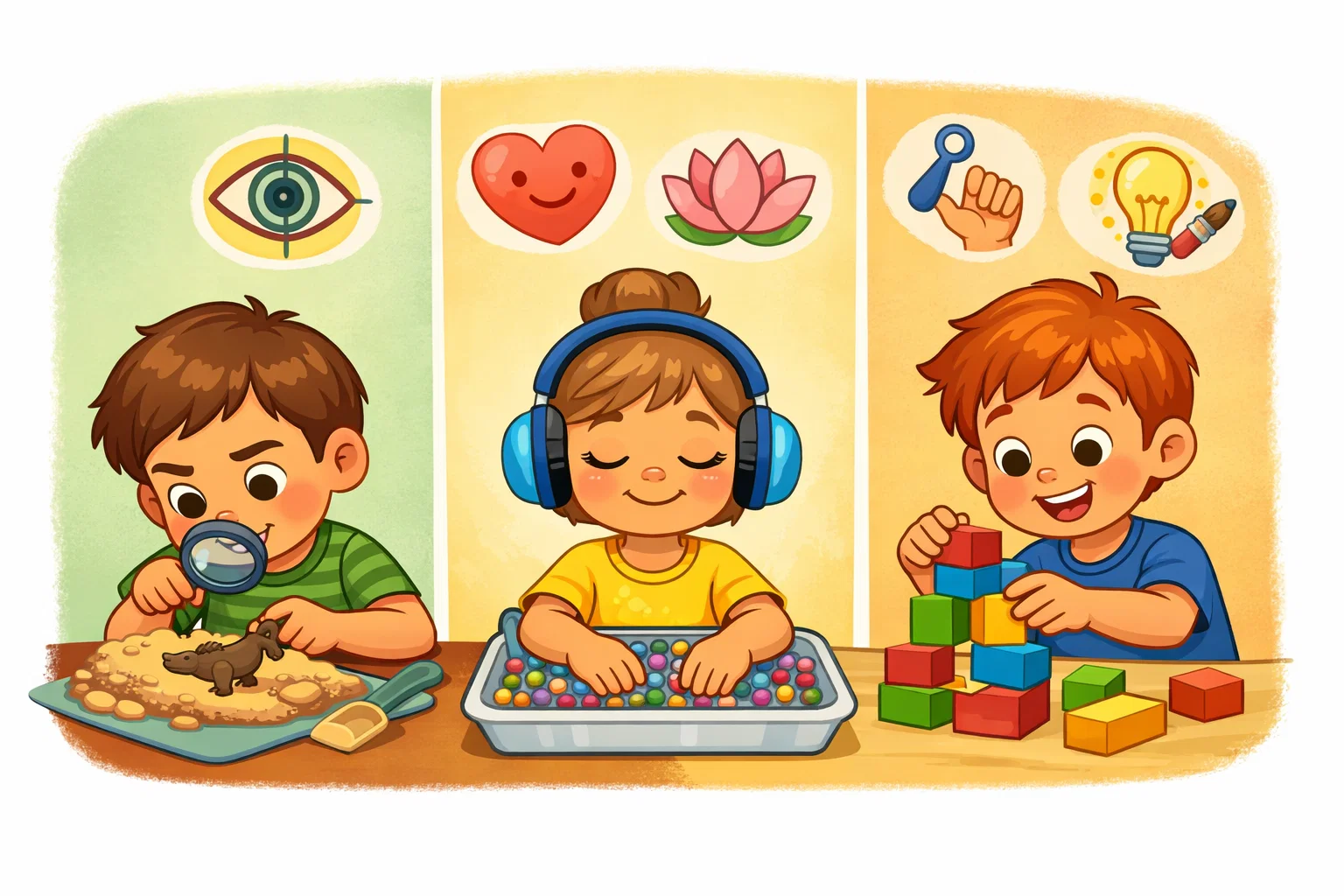
The benefits of sensory activities extend far beyond entertainment. They touch upon physical, emotional, and cognitive milestones that are essential for daily life.
Fine motor skill development
Fine motor skills involve the small muscles in the hands and wrists. Play ideas like finger painting, using a scoop to move rice, or poking holes in playdough are excellent for building these muscles. As children sculpt and squeeze, they improve their hand-eye coordination, which is essential for writing, buttoning clothes, and using cutlery independently.
Emotional regulation support
For many children, a simple sensory activity can be deeply calm. Using a sensory toy or watching the slow movement of glitter in a sensory bag provides a grounding effect. This is particularly helpful for kids who may feel overwhelmed or have sensory issues. The repetitive motion of shaving cream play or the rhythmic pouring of water can lower stress levels and help a child regain control over their emotions.
Language and communication growth
As children explore and play, they naturally begin to use descriptive words. You might hear them say “It’s gloopy,” “It feels squishy,” or “Look at the colourful bubbles.” This expands their vocabulary and helps them communicate complex feelings and observations. Teachers often observe that children are more talkative and social during tactile activities than during structured lessons.
Focus and attention improvement
Engaging in a themed sensory bin can keep a child focused for extended periods. This “flow state” is vital for developing task persistence. When children solve problems —such as figuring out how to get a toy out of a frozen block of ice—they are practicing the sustained attention required for school. It allows them to filter out background noise and concentrate on the task at hand.
Easy Sensory Activities at Home
You don’t need expensive equipment to set up a sensory environment. Most great sensory materials are already in your pantry or kitchen drawers.
Low-prep sensory play ideas
- Kitchen Whisk Bubbles: Fill a bowl with water and a drop of dish soap. Hand your child a whisk and let them create a mountain of bubbles.
- Dry Pasta Bin: Pour various shapes of dry pasta into a plastic container. Add some spoons and cups for a quick scoop and pour activity.
- Sock Mystery: Place a household object (like a spoon or a toy car) inside a sock and have your child guess what it is using only their sense of touch.
- Ice Cube Transfer: Use a pair of tongs to move ice cubes from one bowl to another. It’s a chilly way to practice grip strength!
10-minute sensory activities
When you are short on time, these simple sensory ideas work wonders:
- Ice Cube Painting: Freeze water with a drop of food colouring. Use the cubes to “draw” on paper as they melt.
- Shaving Cream Table: Spray a small amount of shaving cream directly onto a tray or mat. Let the child draw letters or shapes in it.
- Sticky Tape Rescue: Tape some small plastic animals to a tray using masking tape. Have the child peel the tape to “save” them.
- Flour Road: Sprinkle a little flour on a dark tray and let toy cars drive through it, creating “tire tracks.”
Mess-free sensory play options
If you want to avoid the “it’s messy” cleanup, try sensory bags. Fill a Ziploc bag with hair gel and some glitter or beads. Tape the top shut with duct tape. Children can move the items around through the plastic without any spills. Sensory bottles filled with oil, water, and sequins are another fantastic clean option. You can also use “Water Magic” mats where the “ink” is just plain water that disappears as it dries.
Sensory Activities by Type
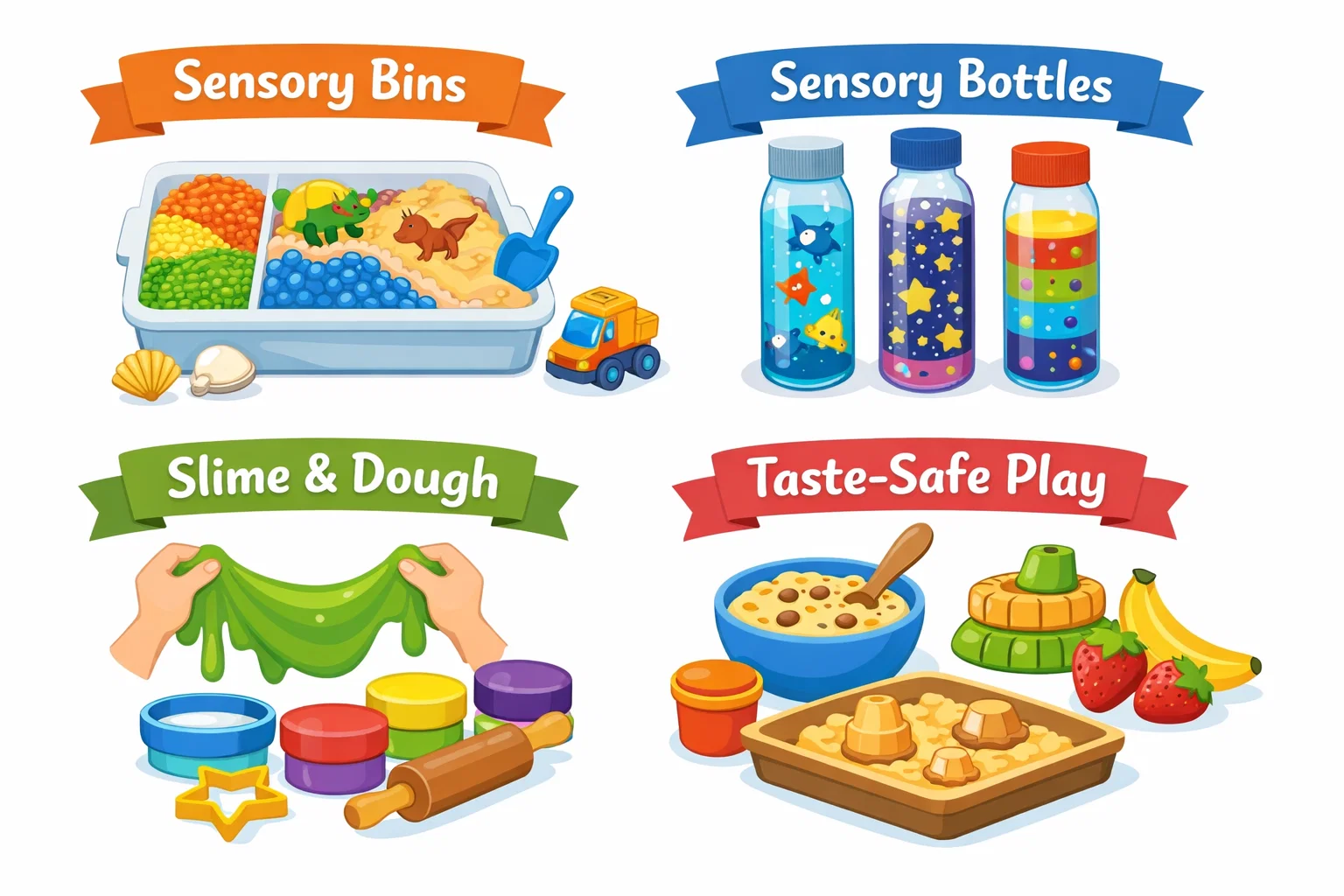
| Category | Material Examples | Primary Developmental Benefit |
| Tactile Bins | Rice, beans, sand, pasta | Exploration, Sorting & Math |
| Creative Doughs | Playdough, Cloud dough, Gloop | Fine motor & Hand strength |
| Visual Tools | Sensory bottles, Light tables | Visual tracking & Calm |
| Messy Play | Slime, Finger painting, Goop | Textural desensitization |
| Auditory Play | Shakers, Bells, Crinkly paper | Sound discrimination |
Sensory bins and tubs
A sensory table or a simple plastic container acts as the “base.” You can create themed sensory bins, such as a “Construction Site” using dried black beans as “dirt” and small toy trucks. These encourage children to explore their senses in a contained space. By adding hidden objects, you can turn this into a treasure hunt that builds patience and persistence.
Sensory bottles and bags
These are the “quiet time” heroes. Sensory bags are excellent for toddlers who still put things in their mouths, as the materials are sealed away. Sensory bottles can be filled with heavy syrup to make objects fall slowly, providing a mesmerizing visual sensory experience. They are often called “calm-down jars” because they help slow down a racing heart and mind.
Doughs, slime, and gloop
Slime and gloop (a mixture of cornflour and water) offer unique non-Newtonian fluid properties—they are solid when squeezed and liquid when released. These different sensations are fascinating for older children and preschoolers alike. Always supervise slime play to ensure it stays away from carpets and hair! Making these materials together also serves as a basic science experiment.
Taste-safe sensory activities
For the youngest explorers, edible materials are a must. Use crushed cereal as “sand,” or whipped cream instead of shaving cream. These taste-safe options allow kids to explore without parents worrying about accidental ingestion. You can even dye plain yogurt with food colouring to create a delicious and safe paint for the high-chair tray.
Sensory Activities by Season or Theme
Seasonal sensory play ideas
- Winter: Use “snow” made of baking soda and hair conditioner. It feels cold and looks realistic!
- Spring: A flower-washing station in the bath tub with real petals, warm water, and small sponges.
- Summer: Frozen fruit skewers or “ice excavations” where plastic dinosaurs are frozen in large blocks of ice.
- Autumn: A bin filled with dried leaves, pinecones, and acorns to stimulate the sense of smell and touch with natural textures.
Holiday sensory activities
For Christmas, try a “scented” play dough using ginger and cinnamon. For Halloween, create “spaghetti guts” using cooked pasta dyed with green food colouring. For Easter, hide different textures (cotton wool, rice, bells) inside plastic eggs. These themed sensory activities make holidays even more memorable and inclusive for all learning styles.
Nature-based sensory play
Take the sensory exploration outside. Mud kitchens are the ultimate messy play setup. Encouraging children to walk barefoot on grass, sand, or smooth stones helps develop their vestibular and proprioceptive systems. Nature provides the best sensory resources: the sound of wind in the trees, the rough bark of a pine tree, and the cool moisture of a morning dew.
DIY Sensory Materials
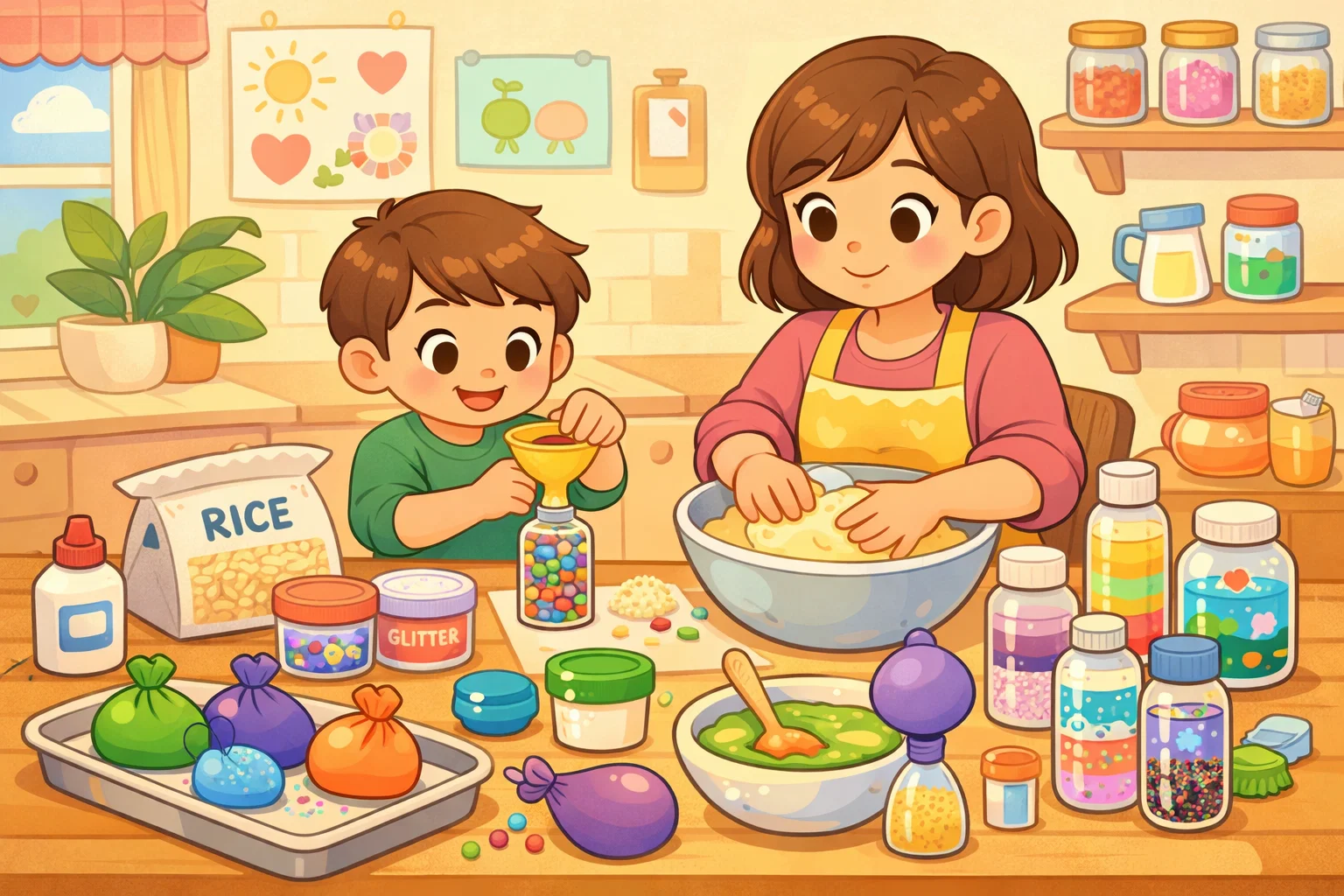
Homemade sensory dough recipes
- Classic Play Dough: 2 cups flour, 1 cup salt, 2 tbsp cream of tartar, 2 tbsp oil, 2 cups boiling water. Mix and knead until smooth. This lasts for months if stored in an airtight container.
- Cloud dough: Mix 8 parts flour with 1 part baby oil. It’s soft, crumbly, and holds its shape when squeezed. It feels like “moon sand.”
- Gloop (Oobleck): Mix 2 parts cornflour to 1 part water. It’s a great sensory material that behaves in surprising and fascinating ways and is incredibly satisfying to touch.
Sensory slime and foam recipes
To make “Soap Foam,” mix 1/4 cup water with 2 tbsp dish soap and a drop of food colouring in a blender. It creates a thick, soapy foam that is perfect for a bath tub or water table. For a “Galaxy Slime,” use clear glue, liquid starch, and plenty of blue and purple glitter.
Reusable sensory tools
Don’t throw away those empty juice bottles! Wash them out to create a library of sensory bottles. Keep a kit in a plastic container with tongs, scoops, and old whisks so you can easily set up a play session at a moment’s notice. Old egg cartons are also fantastic for sorting colored pom-poms or stones.
Sensory Activities for Different Ages
Sensory activities for toddlers
At this age, focus on large movements and safety. A rainbow sensory bin with large items to sort by colour is ideal. Toddlers love the texture of edible paints made from yogurt and food dye. Stick to simple concepts: hot and cold, hard and soft, loud and quiet.
Sensory activities for preschool kids
Preschoolers are ready for more complexity and narrative. Use tongs to explore numbers by picking up a specific count of pom-poms. This age group also loves shaving cream “writing” to practice their letters on the kitchen table. They can begin to engage in themed sensory bins that tell a story, like a farm or a space station.
Sensory activities for early school age
Older kids enjoy the “science” aspect. Creating a science experiment like a baking soda and vinegar volcano in a sensory bin combines learning with hands-on sensory play. They can handle more complex arts and crafts like making their own stress ball using a balloon and flour. They might also enjoy creating “sensory paths” on the floor using different textures to walk on.
Sensory Activities for Sensory-Seeking Kids
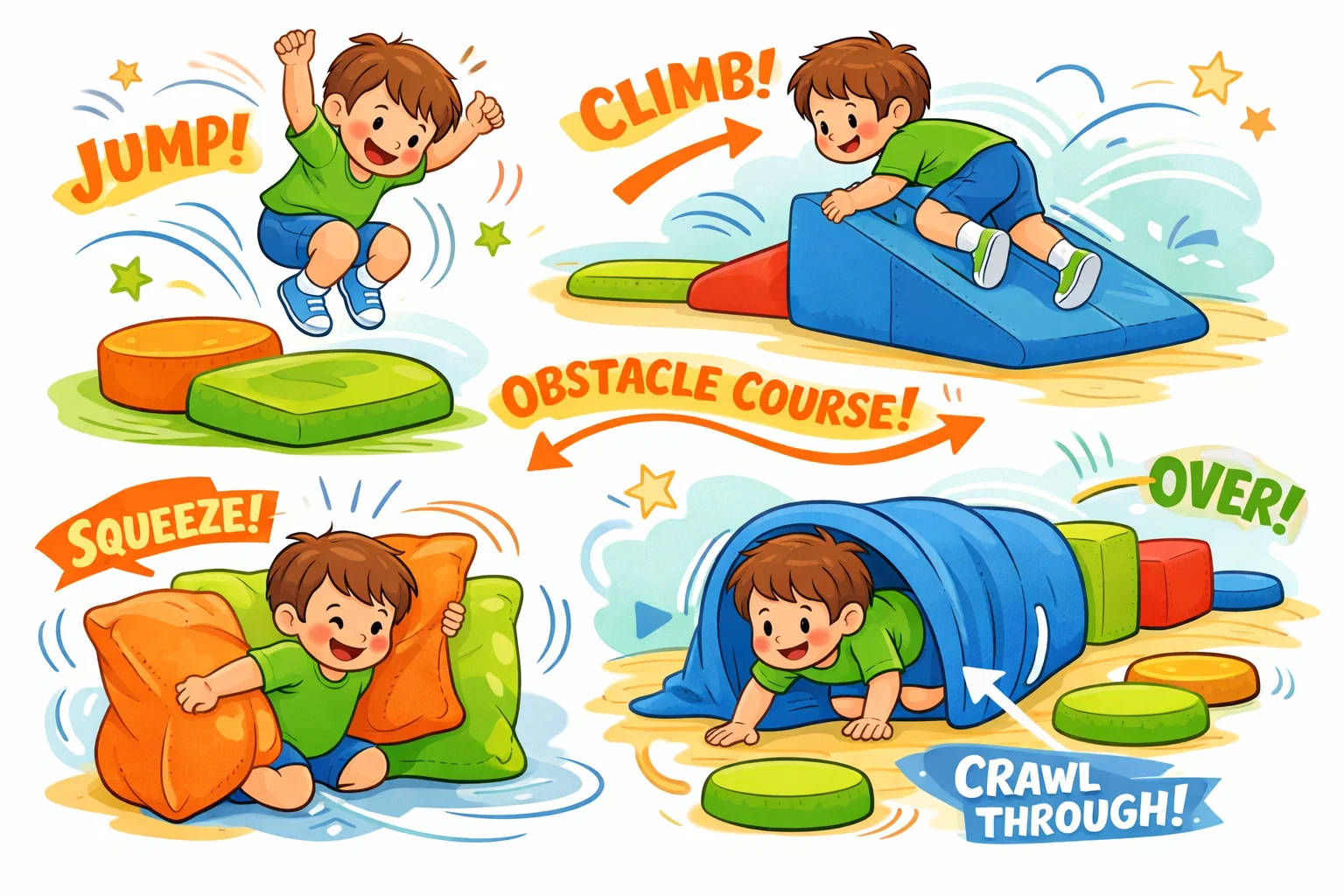
Some children are “seekers”—they actively look for intense input to feel balanced and focused.
Movement-based sensory activities
For kids with high energy, gross motor skills need to be engaged. Creating an obstacle course that involves jumping onto pillows, crawling under tables, or spinning in a chair provides the heavy work their bodies crave. Trampolines and heavy “push” toys are also excellent for these children.
Deep pressure sensory play
“Sandwiching” a child between two soft mats (with their head out and careful supervision) or giving “firm hugs” can be very calm for a child who feels overwhelmed or dysregulated. Squeezing heavy playdough or using a weighted lap blanket also provides this essential deep pressure.
Calming sensory strategies
For a child who is overstimulated, a “calm down bottle” with slow-moving glitter or a darkened room with a soft light projector can help them reset. Simple sensory inputs, like stroking a piece of soft fabric or listening to white noise, can be very grounding during a meltdown.
Sensory Play Setup Tips
Safe sensory play environment
“Safety first” is the golden rule. Always check for choking hazards, especially with items like water beads or small buttons. If you are using food colouring, be aware it may stain skin and clothes. Always supervise messy play to ensure materials aren’t swallowed, and be mindful of any food allergies when using pantry items.
Sensory play space organization
If you’re worried about the mess, lay down a large mat or an old shower curtain before you set up a sensory station. Using a sensory table at the child’s waist height helps with co-ordination and keeps the materials in one place. Labelling your plastic container bins with pictures helps children know where things go when it’s time to clean up.
Encouraging independent sensory play
Once you have set the stage, step back. Play is important because it allows children to lead. Instead of telling them how to use the tongs, let them figure it out. Your role is to be a “facilitator,” providing the sensory resources and then observing how they explore and play. This builds confidence and creative thinking.
Final Tips for Sensory Activities for Kids
Balancing structure and free play
While themed sensory bins are great for teaching specific concepts, sometimes the best play ideas come from a child just being handed a bowl of water and some stones. Aim for a healthy mix of “guided” activities and “open-ended” exploration where there are no instructions at all.
Adapting activities to child preferences
Every child is different. Some love to get messy, while others may find the texture of slime or gloop off-putting. If your child hesitates, offer a tool (like a spoon or tongs) so they can explore their senses without having to touch the material directly. Respect their boundaries and slowly introduce new textures over time.
Making sensory play part of daily routine
You don’t need a special occasion for sensory fun. Incorporate it into the daily routine—let them help wash vegetables (water play), garden in the dirt (tactile play), or help knead bread dough (proprioceptive play). By making these moments a regular part of life, you provide your child with constant opportunities for growth.