

As children enter their pre-teen years – a time of rapid growth and expanding curiosity – their appetite for mental challenges soars. Twelve-year-olds are no longer content with simple puzzles; they enjoy cracking complex codes, solving tricky riddles, and uncovering clever puns. This stage, often called the tween years, is a cognitive sweet spot where logic, language, and humor beautifully meet.
This collection of riddles has been carefully curated to challenge and entertain the bright minds of 12-year-olds. From hard brain teasers that spark critical thinking to laugh-out-loud riddles perfect for family nights or classroom fun, every puzzle fits a purpose. Whether you’re a parent looking for road-trip entertainment or a teacher promoting teamwork and learning, you’ll find the perfect riddles here to turn any quiet moment into one of creativity and joy.
What Are Riddles and Why They Matter for 12 Year Olds
At its core, a riddle is a statement, question, or phrase with a double or hidden meaning, presented as a puzzle to be solved. While they might seem like simple games for kids, for a 12-year-old, a riddle serves as an essential cognitive tool. Unlike straight facts or rules, riddles require lateral thinking – the ability to look beyond the obvious. This stage of development, which aligns with Jean Piaget’s formal operational stage, marks the period when kids begin mastering abstract reasoning. They can now conceptualize hypothetical situations, ponder philosophical questions, and, most importantly for riddles, manipulate complex linguistic concepts.
A well-crafted riddle encourages kids to think critically about language. It sharpens their vocabulary as they parse words for multiple meanings, and it fuels their creativity as they consider obscure or non-obvious solutions. Solving riddles moves from a simple guessing game to a sophisticated exercise in logic and deduction. The best riddles for kids in this age group often rely on wordplay or a misdirection known as a ‘trick,’ which they find immensely satisfying to uncover. The process of searching for the hidden meaning is what makes these brain teasers so valuable. Engaging with English riddles at this level prepares them for more complex literary analysis.
Benefits of Solving Riddles at 12
The cognitive, social, and academic advantages of regular riddle-solving are significant for tweens. This simple activity helps kids develop skills that will serve them well into adulthood.
- Enhanced Problem-Solving Skills: Riddles are micro-problems that require structured thinking. Hard riddles or tricky riddles force a child to break down the clues, test multiple hypotheses, and reject irrelevant information, all of which are core components of problem-solving.
- Improved Communication and Teamwork: When played in groups, such as a family game night or during classroom activities, riddles foster cooperation. Children must articulate their reasoning, listen to alternative suggestions from peers, and agree on a solution, strengthening their teamwork and persuasive communication skills.
- Boosted Language Development: Riddles rely heavily on semantics, grammar, and literary devices like metaphors. Engaging with English riddles expands a child’s understanding of idiom and figurative language, making them better readers and writers.
- Academic Application (STEM Thinking): Math riddles and logic puzzles, specifically, lay the groundwork for STEM success. They teach pattern recognition, deductive reasoning, and the application of rules – skills that are directly transferable to algebra, geometry, and scientific inquiry. Studies show that early exposure to logic puzzles significantly enhances computational thinking – a skill vital to modern education.
- Increased Focus and Attention Span: The focused nature of attempting to find the answer to a challenging puzzle encourages sustained attention. This focus is crucial for academic success.
Ways to Use Riddles at Home or School
Integrating fun and learning doesn’t have to be complex. Riddles are versatile tools that can be effortlessly slipped into various settings, making them perfect for classroom activities or casual family time.
| Setting | Activity Suggestion | Focus/Benefit |
| Home | The “Riddle of the Day” on the refrigerator using riddles for kids with answers on the back. | Routine, quick brain activation, family interaction. |
| Travel | A printed list of riddles for kids for the car. | Keeps kids busy, focused attention, screen-free entertainment. |
| School | “Think Tank Thursdays” or a quick transition break activity. | Teamwork, critical thinking, transition between subjects. |
| Parties | Scavenger hunt clues disguised as tricky riddles. | Problem-solving, physical activity, fun competition. |
| Alone Time | A free printable list of kids riddles to solve quietly. | Independent learning, self-paced challenge, focus. |
You might try posting an easy riddle on the whiteboard at school each morning to get their brains working right away. At home, you can use food riddles at the dinner table to spark conversation. Kids are at their best when they’re challenged!
Best Riddles for 12 Year Olds
This age group thrives on a balance: riddles must be stimulating enough to prevent boredom but solvable enough to prevent frustration. The collection below provides just the right mix of wit, wordplay, and challenge, moving from simple warm-ups to genuine brain teasers. Each of these riddles for children is designed to engage their sophisticated sense of humor and problem-solving skills.
Easy Riddles for 12 Year Olds
These are the ideal warm-up puzzles. They are clever and rewarding, providing that initial rush of success that motivates them to tackle the hard riddles later.
- What is full of holes but still holds water? (A sponge)
- I am always hungry, I must always be fed, the finger I touch, will soon turn red. What am I? (Fire)
- What has to be broken before you can use it? (An egg)
- What question can you never answer yes to? (Are you asleep yet?)
- What has cities, but no houses; forests, but no trees; and water, but no fish? (A map)
- I have an eye but cannot see. What am I? (A needle)
- What can run but never walks, has a mouth but never talks, has a head but never weeps, and has a bed but never sleeps? (A river)
- I have keys, but open no locks. I have a space, but no room. You can enter, but you can’t go outside. What am I? (A keyboard)
- What has a neck but no head? (A shirt or a bottle)
- I am tall when I am young, and I am short when I am old. What am I? (A candle)
- What belongs to you, but other people use it more than you do? (Your name)
- What can travel around the world while staying in a corner? (A stamp)
- What is always in front of you but can’t be seen? (The future)
- What has hands and a face, but can’t hold anything or smile? (A clock)
- I speak without a mouth and hear without ears. I have no body, but I come alive with wind. What am I? (An echo)
Funny Riddles for 12 Year Olds
Humor is a powerful cognitive tool. Funny riddles are brilliant for social gatherings and family game nights because the absurdity often hides a simple, clever truth. Kids are fun, and the sheer silliness of these answers is half the fun.
- What do you call a fake noodle? (An impasta)
- Why did the teddy bear say no to dessert? (Because she was stuffed)
- What is brown, hairy, and wears sunglasses? (A cool coconut)
- Why did the picture go to jail? (Because it was framed)
- What is a pirate’s favorite letter of the alphabet? (The C)
- What do you call a lazy kangaroo? (Pouch potato)
- What do you call a boomerang that won’t come back? (A stick)
- What do you call a snowman in July? (A puddle)
- What has four legs and a back but can’t walk? (A chair)
- What musical instrument is found in the bathroom? (A tuba – a play on ‘tube’)
- Why did the banana go to the doctor? (Because it wasn’t peeling well)
- What do you call two bananas? (Slippers)
- What goes up and down but doesn’t move? (A staircase)
- What kind of room has no doors or windows? (A mushroom)
- Why don’t eggs tell jokes? (Because they might crack up)
Hard Riddles for 12 Year Olds
It’s important to include hard riddles for kids that genuinely push their boundaries. These often rely on misdirection, detailed logic, or a significant shift in perspective. Encourage them to jot down clues and approach it as a real problem-solving challenge.
- What is light as a feather, but even the strongest person can’t hold it for five minutes? (Breath)
- A man rode into town on Tuesday. He stayed for three days and left on Tuesday. How is this possible? (His horse’s name was Tuesday)
- What can be measured but has no length, depth, or width, and if you cut it, it gets bigger? (A hole)
- The person who makes it has no need of it; the person who buys it has no use for it. The person who uses it can neither see nor feel it. What is it? (A coffin)
- You see me once in June, twice in November, but not at all in May. What am I? (The letter E)
- What invention lets you look right through a wall? (A window)
- What belongs to you, but others use it more? (Your name)
- If you have it, you want to share it. If you share it, you don’t have it. What is it? (A secret)
- What has 13 hearts, but no other organs? (A deck of cards)
- I am always coming, but never arrive. What am I? (Tomorrow)
- What has a thumb and four fingers, but is not a hand? (A glove)
- A girl has as many brothers as sisters, but each brother has only half as many brothers as sisters. How many brothers and sisters are there? (Three sisters and two brothers)
- I am the oldest person in the world, yet I’m only 10 years old. How can this be? (I’m the tenth person in line to speak)
- What can you catch but not throw? (A cold)
- What question, if you answer it, automatically breaks the rule of the riddle? (What is the answer to this riddle?)
Tricky Riddles with Double Meanings
These tricky riddles teach kids to think laterally. The solution is usually simple, but the clue is deliberately phrased to lead the mind in the wrong direction. The key to solving riddles like these is to listen exactly to what is being said.
- I am an odd number. Take away one letter and I become even. What number am I? (Seven)
- What is black when it’s clean and white when it’s dirty? (A chalkboard)
- Which word becomes shorter when you add two letters to it? (Short)
- What two things can you never eat for breakfast? (Lunch and dinner)
- What can you hold in your left hand but not in your right? (Your right elbow)
- The more you take, the more you leave behind. What are they? (Footsteps)
- What has a head and a tail but no body? (A coin)
- What goes up when the rain comes down? (An umbrella)
- I have cities, but no houses; forests, but no trees; and water, but no fish. What am I? (A map)
- What has hands but cannot clap? (A clock)
- What is so fragile that saying its name breaks it? (Silence)
- What starts with an ‘e’ and ends with an ‘e’ but only has one letter in it? (An envelope)
- What is always said in the middle of March and April? (The letter R)
- If you throw a white stone into the Red Sea, what does it become? (Wet)
- I am full of keys but can’t open any door. What am I? (A piano)
Math and Logic Riddles
These brain teasers are excellent for incorporating academic concepts into play. Math riddles promote structured, sequential thinking and the application of simple rules to complex scenarios.
- I add five to nine and get two. The answer is correct, but how? (When you add five hours to nine o’clock, you get two o’clock)
- If you were running a race and passed the person in second place, what place would you be in now? (Second place)
- Using only addition, how can you add eight 8s to get the number 1,000? (888 + 88 + 8 + 8 + 8 = 1,000)
- What three numbers have the same answer whether they are added together or multiplied together? (1, 2, and 3)
- A basket contains 5 apples. How do you divide them among 5 kids so that each one gets an apple, but one apple remains in the basket? (The last person gets the apple with the basket)
- What occurs once in a minute, twice in a moment, but never in a thousand years? (The letter M)
- Two fathers and two sons go fishing. Each catches one fish, and they bring home only three fish. How is this possible? (They are a grandfather, a father, and a son)
- What is next in this sequence: 1, 11, 21, 1211, 111221, …? (312211 – This is the “Look-and-Say” sequence, describing the previous number)
- A rope ladder hangs over the side of a boat. The rungs are 1 foot apart. The tide rises at 6 inches per hour. If 10 rungs are exposed at 10 a.m., how many will be exposed at 4 p.m.? (10 rungs. The boat floats with the tide)
- What number, when multiplied by 1, 2, 3, 4, 5, or 6, results in a number where the same digits appear in the same order? (142,857)
Riddles by Popular Themes
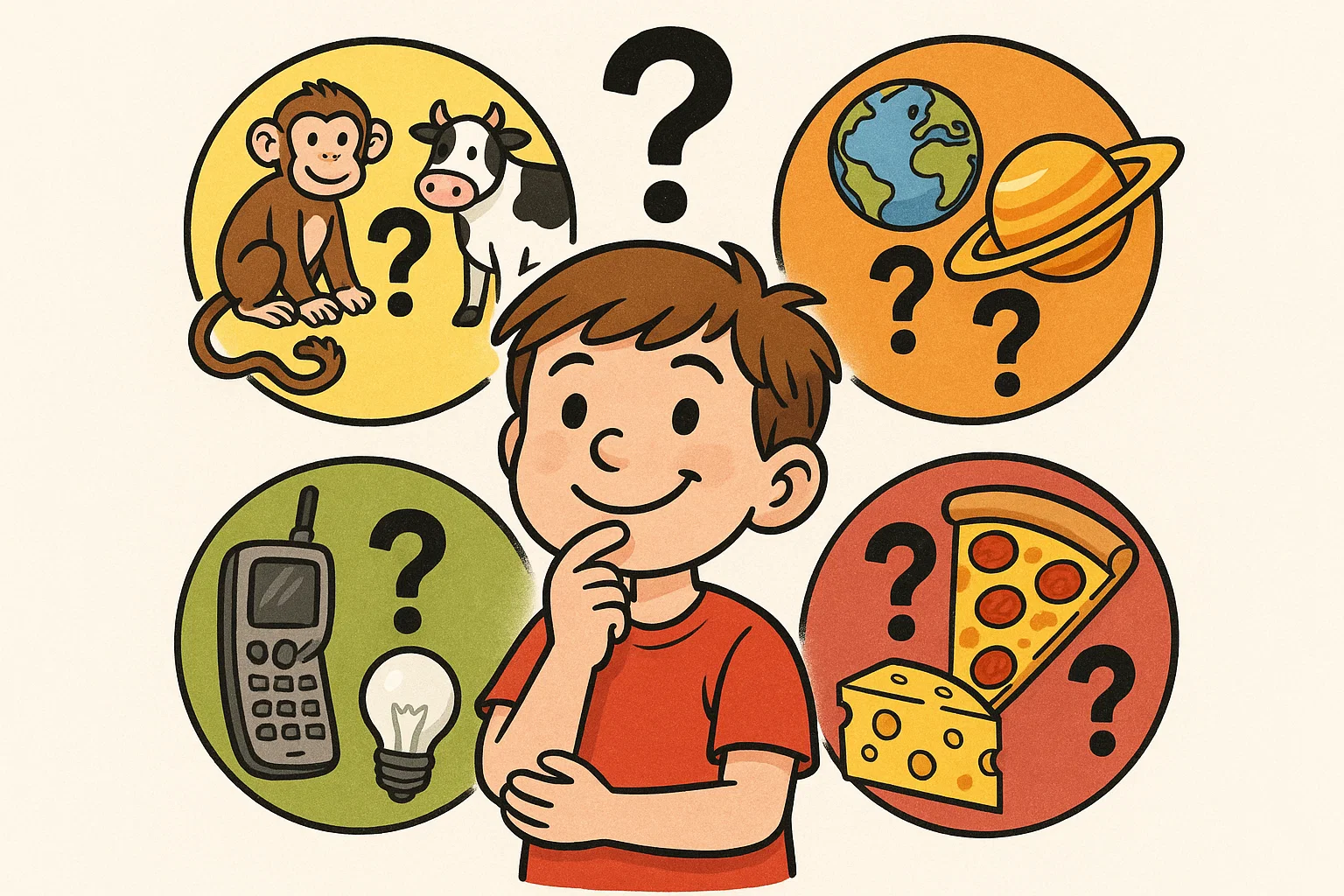
Organizing riddles with answers by theme can be incredibly helpful for parents and educators. Themes can tie into school curricula, current events, or seasonal activities, adding context and educational value to the fun.
Animal Riddles for 12 Year Olds
Animal riddles combine the fun of guessing with an opportunity to learn about biology and natural science. These are more challenging than the typical children’s animal riddles.
- I have no voice, but I can tell you what I look like. I live in a warm place, but my coat is white and black. What am I? (A zebra)
- I am bigger than a mouse, smaller than an elephant, and I can be found in almost every house. What am I? (A cat)
- I have a long neck, I eat leaves, and my spots are like a beautiful map. What am I? (A giraffe)
- I wear a coat in the summer and take it off in the winter. What am I? (A sheep)
- I sleep upside down, I fly through the night, and I’m associated with vampires. What am I? (A bat)
- I stalk the countryside with ears that can’t hear. What am I? (Corn)
- I build a house without brick or wood, and if you break it, my work is done for good. What am I? (A spider/spiderweb)
- I am a creature of myth, known to breathe fire and hoard treasures. What am I? (A dragon)
- I have a great memory, never forget a face, and I live for a hundred years in a sheltered place. What am I? (A tortoise)
- I have a long tail and a mischievous reputation. I chatter, swing, and love bananas. What am I? (A monkey)
Food Riddles for 12 Year Olds
Food riddles are light, playful, and great for dinner table conversation. They are often rooted in puns or wordplay related to common snacks and meals.
- I have many layers but am not wearing clothes. If you cry over me, I won’t mind. What am I? (An onion)
- What starts with T, ends with T, and is full of T? (A teapot)
- I wear my coat inside-out and am known for my curve. What am I? (A banana)
- What is orange and sounds like a parrot? (A carrot)
- What do you call cheese that isn’t yours? (Nacho cheese)
- I can be bitter, sweet, or dark, and I melt in your hand. What am I? (Chocolate)
- I have an eye but cannot see, and I grow underground. What am I? (A potato)
- I am often called the “King of Fruit” and am large and thorny on the outside. What am I? (A pineapple)
- I can be scrambled, fried, or poached, but first, I must be broken. What am I? (An egg)
- I have an ear, but cannot hear, and am often popped for a movie treat. What am I? (Corn/Popcorn)
Nature and Planet Riddles
These brain teasers focus on the environment, science, and geography, making them excellent educational puzzles.
- I have roots that nobody sees, am taller than trees, and yet I never grow. What am I? (A mountain)
- I am taken from a mine and shut up in a wooden case, never released, and used by almost everyone. What am I? (Pencil lead/graphite)
- I am always moving but have no legs. I am always talking but have no mouth. What am I? (A river/water)
- What is always coming, but never arrives? (Tomorrow)
- I have no voice, but I tell the world the time of day. What am I? (The sun)
- I fall often but never get hurt. What am I? (Rain/Snow)
- What goes all the way around the world but stays in a corner? (A stamp)
- I have no lungs, but I breathe; I have no voice, but I roar. What am I? (Wind)
- What has a bed but never sleeps? (A river)
- I am a great hole in the air, but I hold a lot of water. What am I? (A cloud)
Object and Everyday Life Riddles
Focusing on familiar objects allows kids to help each other by thinking about function and appearance.
- I have an eye, but I cannot see. I am used to connecting fabrics together. What am I? (A needle)
- I get wetter the more I dry. What am I? (A towel)
- I have teeth but cannot bite. What am I? (A comb or a zipper)
- I have a ring but no finger. What am I? (A telephone)
- I have to be broken to be used. What am I? (An egg)
- What kind of ship has two mates but no captain? (A relationship)
- I am measured in hours and served by expiring. I am quick when thin and slow when fat. What am I? (A candle)
- What is full of empty pages? (A book)
- I am black and white and read all over. What am I? (A newspaper)
- I have a long neck but no head. I keep liquid inside. What am I? (A bottle)
Holiday and Seasonal Riddles
These are great for themed family game nights or holiday classroom activities.
- I have many needles, but I cannot sew. I stand tall in the living room and light up. What am I? (A Christmas tree)
- I come down, but I never go up. I cover the earth with a white blanket. What am I? (Snow)
- I am often wrapped, but I’m not cold. I’m given, but I’m not a chore. What am I? (A present)
- What do you call a ghost’s favorite dessert to scream for? (Ice scream)
- What is a witch’s favorite subject in school? (Spelling)
- I have no body, but I will follow you all day until the sun goes down. What am I, perfect for a sunny summer afternoon? (A shadow)
- Why did the skeleton stay calm? (Because nothing gets under his skin)
- What did the fisherman say on Halloween? (Trick or trout)
- I have no legs, but I travel thousands of miles and often carry gifts. What am I? (Santa’s sleigh)
- What can you catch in the winter but can’t throw? (A cold)
Technology Riddles for Tweens
Fun puzzles about gadgets, computers, and online life – things kids might encounter every day.
- I have keys, but open no locks. I have a space, but no room. You can enter, but you can’t go outside. What am I? (A keyboard)
- I have a thousand eyes, but cannot see. I am a machine, but I have no feelings. What am I? (A network/server)
- I can fly without wings, crash without breaking, and ring without a bell. What am I? (A phone)
- I am measured by storage, but I have no drawers. I run and update constantly. What am I? (A computer/hard drive)
- I help you connect with others, but I have no voice. I’m always open, even when you’re sleeping. What am I? (Social media/The Internet)
- What is the largest electronic library in the world? (The Internet)
- I get “liked” and “shared” but have no body. I live in the clouds, but I’m not rain. What am I? (A post/digital content)
- I have a mouse, but no legs. I have windows, but no walls. What am I? (A computer)
- I can be used to stream and share, but I’m not water. I’m often watched, but I have no eyes. What am I? (A video/YouTube)
- What is a computer’s favorite type of music? (Algorhythms)
School-Grade Specific Riddles
Offering a graded difficulty ladder is useful for parents and teachers to match riddles for children to their comprehension levels. Solving riddles should be challenging but achievable.
Riddles for 5th Graders (Ages 10-11)
A slightly easier set, focusing on imagination and humor, ideal for preparing them for the more complex tricky riddles for kids.
- What is always put into a book before you read it? (A bookmark)
- What is easy to get into but hard to get out of? (Trouble)
- What is always coming, but never arrives? (Tomorrow)
- What has one head, one foot, and four legs, but cannot walk? (A bed)
- What has teeth but can’t eat? (A comb or a saw)
- I get wetter the more I dry. What am I? (A towel)
- What kind of running means you’re going up? (Running a fever)
Riddles for 6th Graders (Ages 11-12)
Logical riddles and word-based puzzles that push reasoning skills – the core age group for this article.
- I am an odd number. Take away one letter, and I become even. What am I? (Seven)
- What has cities, but no houses; forests, but no trees; and water, but no fish? (A map)
- You can find me in the middle of November and December, but not in January. What am I? (The letter E)
- I have an eye but cannot see. I am used to connecting fabrics together. What am I? (A needle)
- What can you hold in your left hand but not in your right? (Your right elbow)
- I have a face and two hands, but no arms or legs. What am I? (A clock)
- What gets bigger the more you take away? (A hole)
Riddles for 7th Graders (Ages 12-13)
Advanced riddles for kids mixing wordplay, math riddles, and logic. Perfect for group challenges where kids can help each other find the intricate solution.
- What is always in front of you but can’t be seen? (The future)
- A man rode into town on Tuesday. He stayed for three days and left on Tuesday. How is this possible? (His horse’s name was Tuesday)
- What can be measured but has no length, depth, or width, and if you cut it, it gets bigger? (A hole)
- I have a thousand eyes, but cannot see. I have a long tail, but no body. What am I? (A river)
- I have no voice, but I tell the world all its secrets. What am I? (An echo)
- Two fathers and two sons go fishing. Each catches one fish, and they bring home only three fish. How is this possible? (They are a grandfather, a father, and a son)
- What is full of holes but still holds water? (A sponge)
Themed Riddle Collections for Special Occasions
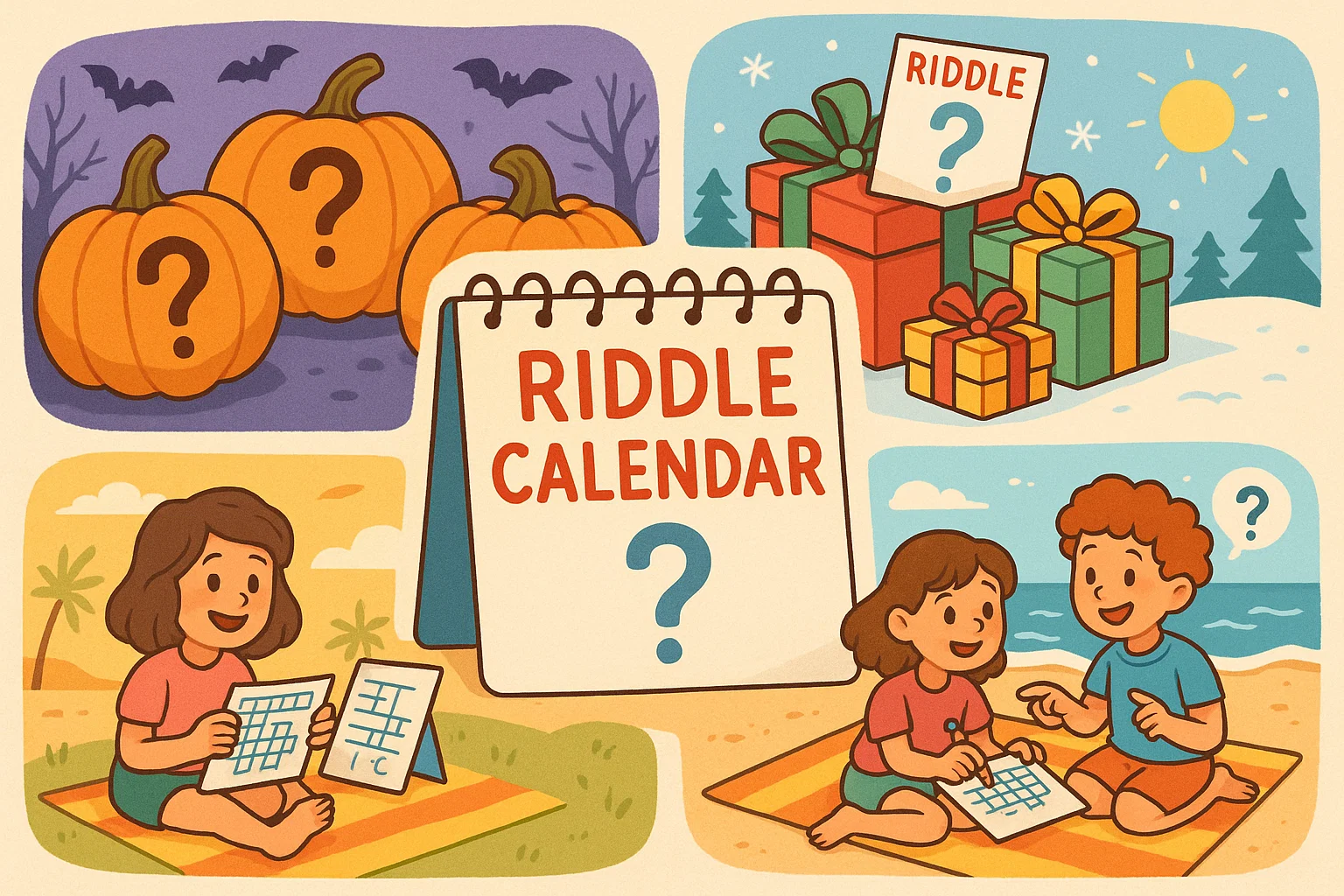
Timing your riddles with answers to fit special events is a proven way to boost engagement and make learning feel relevant. These are perfect for classroom activities or family game nights during the holidays.
Back to School Riddles
These jokes and brain teasers are great for easing the transition back to the classroom, blending humor with academic settings.
- I’m full of words and knowledge, but I can’t speak a single sentence. What am I? (A book)
- I bear the weight of knowledge on my shoulders every day. You’ll find me full at dawn and lighter by the hallway. What am I? (A backpack)
- I ring when it’s time to start or end. I’m not a phone, but I’m every student’s friend. What am I? (A school bell)
- I have a lead, but cannot run. I help you write the perfect sentence until I am too short for fun. What am I? (A pencil)
- What room does a teacher always have problems with? (The classroom)
- Why did the math book look sad? (Because it had too many problems)
- Where do pencils go on vacation? (Pencil-vania)
Summer Riddles
Fun, outdoor-themed riddles that celebrate vacations, travel, and the unique activities of the warmest months.
- I am cold and sweet, perfect for a hot day. I melt quickly, so eat me right away. What am I? (Ice cream)
- You throw me out when you want to use me, but you take me in when you don’t want to use me. What am I, often used near a boat? (An anchor)
- I am a destination on the water, but I have no motor. I have sand but no floor. What am I? (A beach)
- I can give you a sunburn, but I’m not fire. I make the day bright and the shadows appear. What am I? (The sun)
- What kind of tree fits in your hand? (A palm tree)
- I start as a liquid, then turn solid in a tiny cup, perfect for sucking up. What am I? (A popsicle)
- What stays in the corner yet can travel all over the world? (A stamp)
Halloween Riddles
Mix spooky and funny riddles perfect for October parties, blending the fun of the holiday with clever misdirection.
- I’m tall when I’m young, and I’m short when I’m old, and I bring a jack-o’-lantern to life. What am I? (A candle)
- What do you get when you drop a pumpkin? (Squash)
- What room does a ghost not need? (A living room)
- I am wrapped, but not a gift. I’m named after a parent but have no children. What am I? (A mummy)
- What do you call a monster who loves to dance? (The boogieman)
- Why are ghosts so bad at lying? (Because you can see right through them)
- What kind of music do mummies love? (Wrap music)
Winter and Christmas Riddles
Cheerful, festive puzzles about snow, gifts, and holidays, ideal for a family game night around the fire.
- I come down, but I never go up. I cover the earth with a white blanket. What am I? (Snow)
- I have needles, but I cannot sew. I stand tall in the living room and sparkle with lights. What am I? (A Christmas tree)
- I am often wrapped, but I’m not cold. I’m given, but I’m not a chore. What am I? (A present)
- What do you call an elf who solves animal riddles? (A genius – because they are clever and quick!)
- Why did the snowman bring a carrot to the party? (He was picking his nose)
- I travel thousands of miles to deliver toys but never leave a single footprint. What am I? (Santa’s sleigh)
- What is known for its red nose and helping guide a foggy trip? (Rudolph)
Create Your Own Riddles
One of the most engaging activities for this age group is encouraging kids to design their own brain teasers. This transforms them from passive consumers into active creators, deepening their understanding of language and logic. Creating riddles for children is a superb way to cement their problem-solving skills.
Start with the Answer
The easiest way to write a good riddle is to begin with the solution. Pick an object and then describe it without naming it. The art lies in choosing characteristics that suggest one thing but mean another. This method of reverse-engineering is a key problem-solving tactic.
- Example (The Answer: A Stamp): I can travel all around the world, but I never leave the corner. I stick to my task.
Brainstorm Everyday Objects
Suggest that kids might start by thinking about items they interact with constantly. These are familiar, but finding the right descriptive metaphors is the real challenge.
- Focus on how an object acts, not just what it is.
- Think about the item’s sound, texture, or movement.
Add Twists and Wordplay
This is where the real fun lies and where the riddle encourages kids to think creatively.
- Use homonyms, metaphors, and personification (e.g., giving a lock a “key”).
- Introduce misdirection: start with a clue that seems to point toward a person or animal riddles solution, then reveal it’s an object.
Test and Share
Encourage kids to quiz family or classmates with their creations. The feedback loop is essential – if no one can find the answer, the riddle may be too hard; if everyone gets it instantly, it may need a better twist. This sharing aspect makes it a great social activity and family game.
How to Use Riddles for Learning and Play
Riddles are a great way to integrate fun and learning into daily routines, making education feel like an engaging challenge rather than a chore.
Classroom Activities Using Riddles
Riddles are perfect for classroom activities because they can be easily scaled for different age groups and time constraints.
- Riddle of the Day: Post a challenging riddle each morning. Students submit answers anonymously, and a small reward goes to the first correct solver. This gets their brains working immediately.
- Team Challenge: Divide the class into small groups and give each group a set of brain teasers. The first group to correctly solve the riddles wins. This enhances teamwork and communication skills.
- Vocabulary Builder: Use riddles for kids that have complex or little-known answers. The clue not only requires logic but also a stronger vocabulary, especially with sophisticated English riddles.
Family Game Night Ideas
Turn your family game night into a cerebral exercise.
- Riddle Charades: One person silently acts out the clues of a riddle while others try to guess the answer.
- Riddle Cards: Create a deck of printed riddles without answers on the front and riddles with answers on the back. Take turns reading them aloud. This is a simple, screen-free activity to keep kids busy.
- Themed Weeks: Dedicate a week to food riddles at the dinner table or animal riddles during nature walks.
Printable Riddles PDF for 12 Year Olds
Many parents and teachers prefer offline content. Offering a free printable of riddles for kids with answers is a great resource. Look for downloadable sheets perfect for long car rides or quiet time, ensuring fun and learning are always available. Searching for “free printable hard riddles for kids” is a great way to source high-quality materials.
Popular Categories Kids Love (For Further Exploration)
For kids of all ages, expanding beyond simple riddles into related mental challenges is key to ongoing cognitive development. These related categories focus on different aspects of problem-solving and logic.
Brain Teasers for Tweens
These often involve non-verbal logic, spatial reasoning, or mathematical patterns, pushing the abstract thinking skills of 12-year-olds beyond wordplay. (Look for resources focused on logic grid puzzles or visual sequencing.)
Funny Jokes for 12 Year Olds
Humor is critical for this age. While riddles are puzzles, jokes are pure humor – a perfect pairing for social bonding and light-hearted relief after solving hard riddles. (Focus on puns and irony, which tweens appreciate.)
Trivia Questions for Kids 12+
Trivia shifts the focus from logic to factual knowledge, broadening their general education, especially in science, history, and current events. (Seek out trivia with complex, multi-layered answers.)
Logic Puzzles for School Age Kids
These require methodical, step-by-step deduction, often using tables or grids to track possibilities. They are more structured than tricky riddles and directly enhance problem-solving skills. (Excellent for developing organizational and systematic thinking.)
Summary and Final Thoughts
The journey through the world of riddles for kids is far more than just a source of entertainment; it’s a powerful investment in their cognitive growth. For a 12-year-old, a well-crafted riddle encourages kids to think outside the box, improves their focus, and reinforces the joy of problem-solving alongside their peers and family. Whether they’re tackling tricky riddles or giggling over funny ones, they’re training the parts of their brain responsible for logic, creativity, and communication.
These brain teasers for kids offer a perfect opportunity for fun and learning. We encourage you to make riddle-solving a regular activity, perhaps adopting the “Riddle of the Day” idea or using themed collections to spice up a quiet afternoon. The goal is to keep that intellectual spark alive and remind kids that getting their brains working can be the best part of the day.