

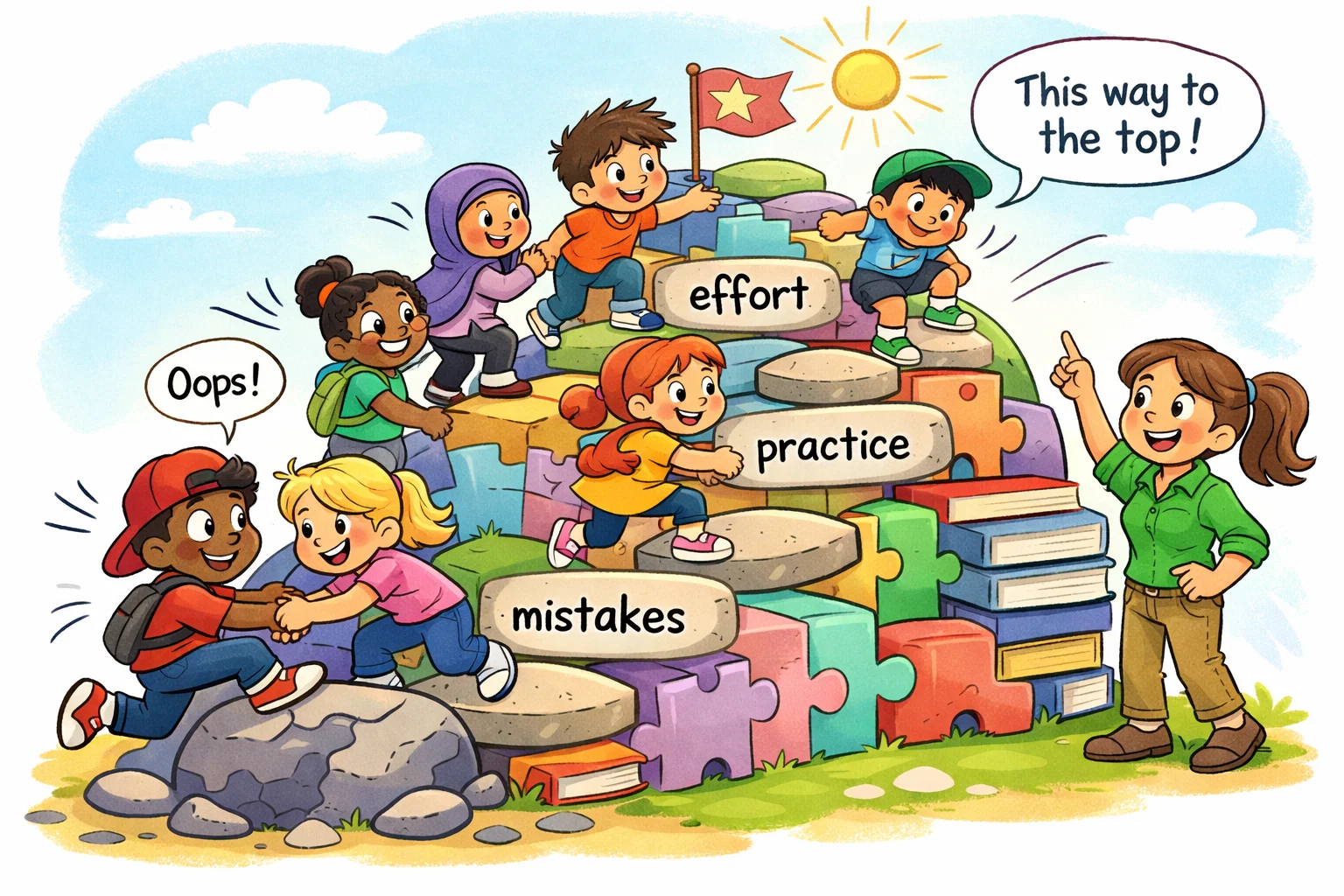
Resilience is not a fixed trait that children either have or lack; rather, it is a set of skills that can be nurtured, practiced, and strengthened over time. In practical terms, resilience in children is the ability to navigate a setback, manage stress, and bounce back from difficult situations with a sense of hope and competence. It involves emotional regulation, problem-solving, and the social-emotional toolkit necessary to face challenges head-on. When we help kids become more resilient, we aren’t protecting them from the world; we are preparing them to handle it.
Developing resilience skills is essential for wellbeing and academic success. Throughout this guide, the focus is on a variety of resilience activities designed to help children develop a growth mindset, improve self-awareness, and establish positive coping strategies. By integrating these fun activities into daily routines at home or in the classroom, parents and caregivers can build a strong foundation that allows children to thrive even in the face of adversity. You will gain actionable exercises that turn stressful situations into opportunities for growth and perseverance.
Grit and Perseverance Activities
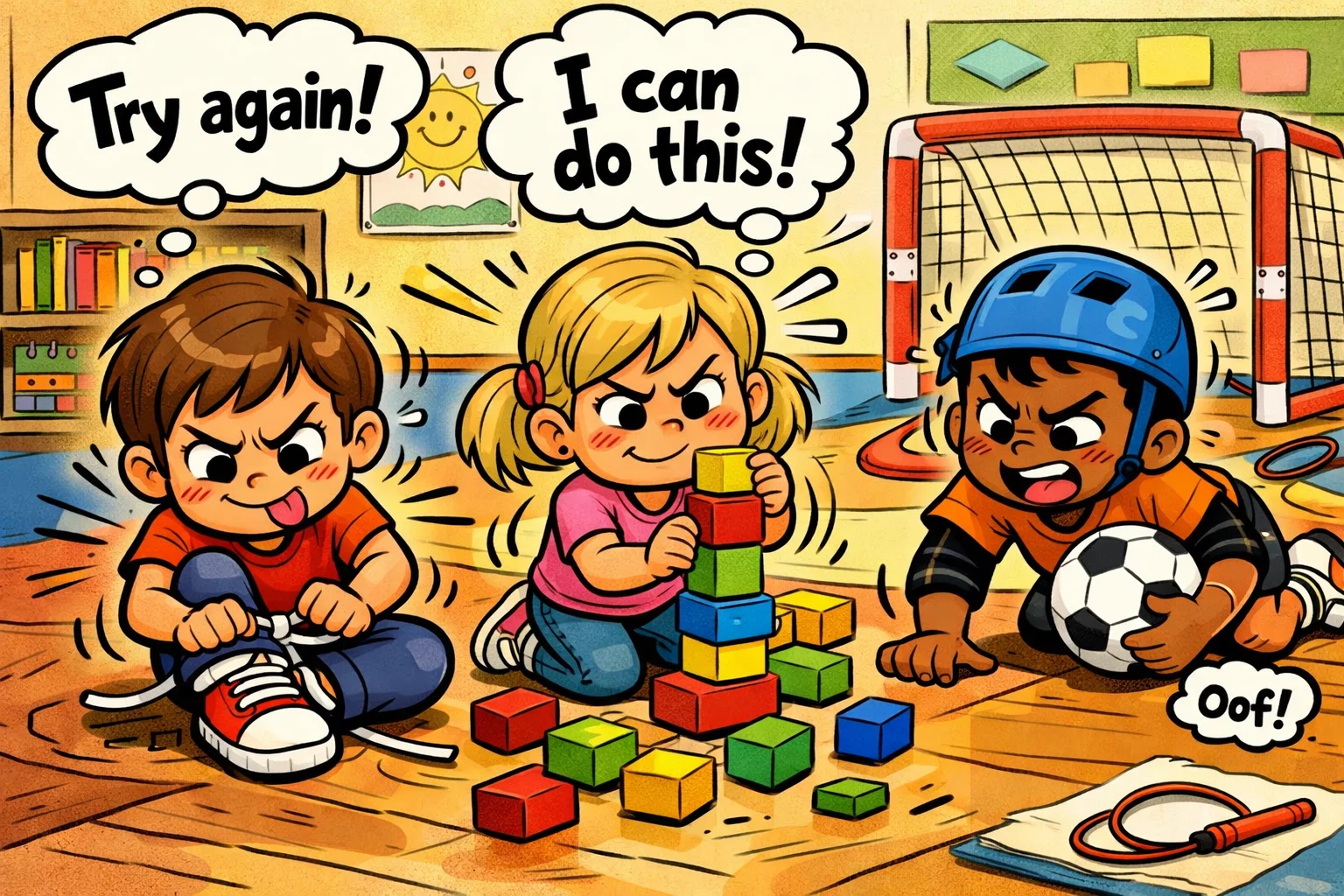
Grit is the passion and persistence for long-term goals. To build resilience, children must understand that effort is the engine of achievement. Perseverance and sustained effort often play a greater role in long-term success than ability alone. By focusing on perseverance, we teach children that the path to mastery is paved with “productive struggle.”
Purpose Discovery Exercises
To develop resilience, children need a “why.” When a child feels unmotivated, linking their tasks to a larger purpose can help. Ask your child to identify things they love (interests) and how those things can help others (contribution). For example, a child who loves drawing might create cards for a local nursing home. This connection builds self-esteem and keeps them resilient when a specific drawing becomes difficult to finish.
Grit Interview Projects
A wonderful way to build resilience is through storytelling. Have your students learn or your child interview a grandparent, coach, or neighbor. The goal is to ask about a significant setback that person faced and how they managed to recover and move forward.
- Question ideas: “What was the hardest thing you ever did?” “Did you ever want to give up?”
- Outcome: This helps children understand that even the most successful adults faced different situations where they had to demonstrate resilience.
Stories of Resilient Role Models
Using literature or film to show children examples of resilient kids or historical figures provides a roadmap for their own behavior. Discuss characters like Malala Yousafzai or even fictional heroes like Neville Longbottom from Harry Potter. Focus on how these individuals used coping skills to stay the course when faced with obstacles.
Hard Part Reflection Questions
Instead of general praise, use specific reflection after a setback. Ask:
- “What was the ‘hard part’ of that task?”
- “Which coping strategies did you try?”
- “What would you do differently if you faced a similar problem tomorrow?”
This normalizes the struggle and builds self-awareness.
Hard Thing Commitment Challenges
The “Hard Thing Rule” (popularized by Duckworth) involves choosing one activity—like a musical instrument or a sport—that requires practice. The commitment is to finish the season or the set of lessons. This teaches perseverance because it prevents quitting at the first sign of a setback, ensuring children build the “stamina” needed for resilience building.
Emotional Awareness and Regulation Activities
Emotional resilience starts with the ability to recognize what one is feeling. If a child cannot name an emotion, they cannot tame it. Self-regulation is the bridge between feeling an impulse and taking a constructive action.
Emotion Naming Games
For younger kids, use “Emotion Charades.” Act out feelings like “frustrated,” “disappointed,” or “hopeful.” For older children, use an “Emotion Wheel” to find more nuanced words like “irritable” versus “furious.” It’s helpful for kids to expand their vocabulary so they can communicate their needs clearly in stressful situations.
Self-Regulation Practice Activities
Create a “Calm Down Kit” together. Fill a box with items that engage the senses: a stress ball, a snow globe, or a soft piece of fabric. Practice using these before a meltdown occurs. This helps kids understand that they have agency over their emotional state.
Breathing and Grounding Exercises
Simple breathing techniques provide immediate coping support.
- Square Breathing: Inhale for 4, hold for 4, exhale for 4, hold for 4.
- 5-4-3-2-1 Grounding: Name 5 things you see, 4 you can touch, 3 you hear, 2 you smell, and 1 you can taste.
These activities help regulate the nervous system when they are faced with obstacles.
Body Signal Awareness Tasks
Teach your child to be a “body detective.” Where do they feel anger? (Maybe a tight chest or clenched fists). Where do they feel anxiety? (A fluttery stomach). Noticing these physical signs early allows children to understand when they need to apply coping skills before their emotions become overwhelming.
Reflection and Gratitude Practices
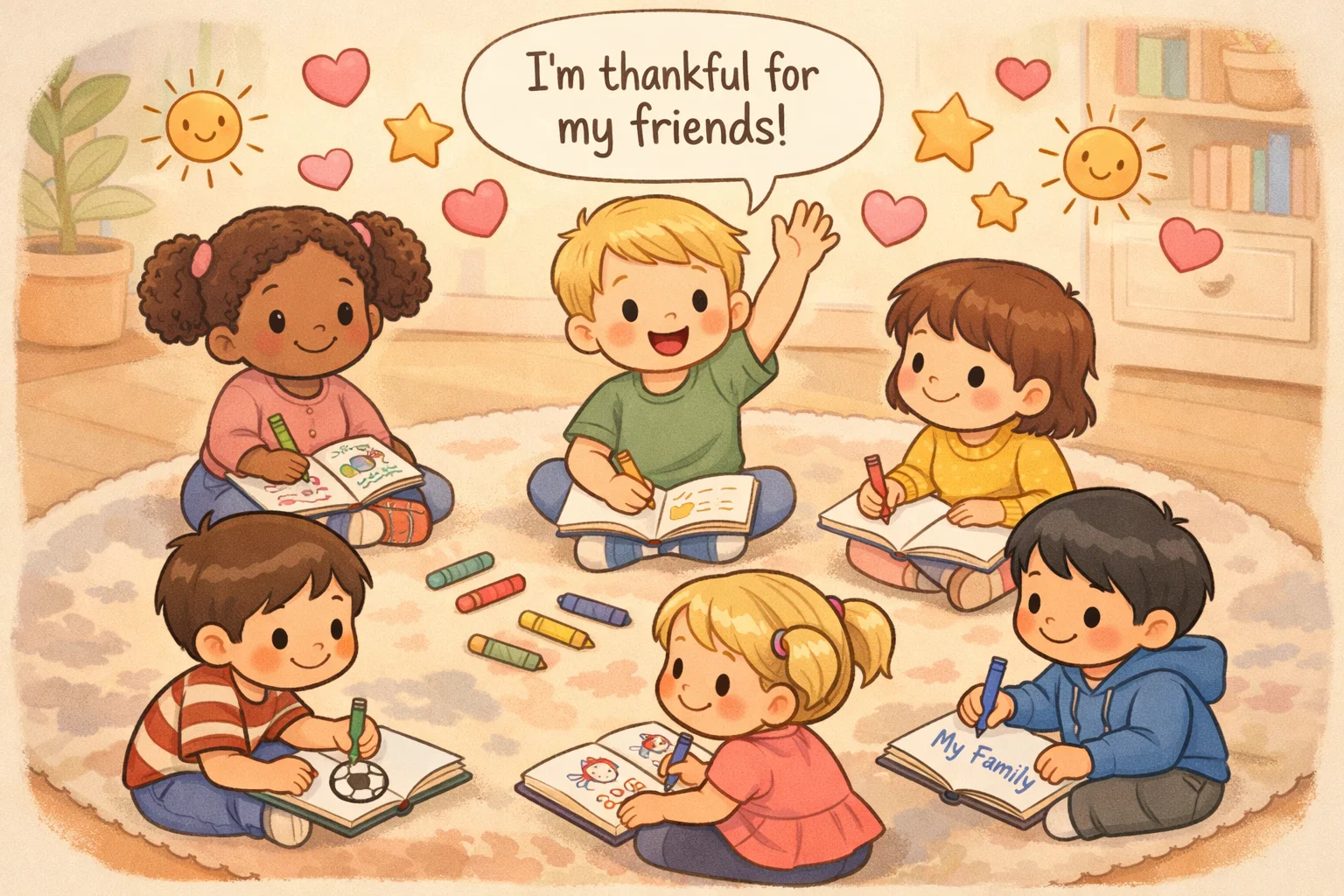
Positive psychology suggests that focusing on what is going well can significantly build resilience in children. It shifts the brain’s “negativity bias” toward a more balanced perspective.
Daily Gratitude Journals
Encourage your child to write down three “small wins” or things they are grateful for each night. This practice helps build mental strength and maintain a positive mindset even when they encounter difficult situations during the day.
Reflection Circles or Prompts
In a family or classroom setting, use a weekly reflection circle. Use the “Rose, Thorn, and Bud” method:
- Rose: A highlight of the week.
- Thorn: A challenge or setback.
- Bud: Something they are looking forward to or a new skill they want to develop.
Positive Experience Recall
When a child may feel defeated, ask them to “press rewind” and remember a time they succeeded at something hard. Recalling past perseverance acts as a “resilience bank,” proving to them that they have the ability to cope based on their own history.
Growth Mindset Skill Builders
A growth mindset—the belief that abilities can be developed through effort—is the cornerstone of resilient children. Without it, a setback feels like a permanent verdict on one’s intelligence or worth.
| Fixed Thinking | Growth Thinking (Reframed Response) |
| “I’m not good at this.” | “I’m not good at this yet.” |
| “This is too hard.” | “This will take some time and effort.” |
| “I made a mistake.” | “Mistakes help my brain grow.” |
| “I give up.” | “I’ll try a different strategy.” |
Fixed vs Growth Thinking Scenarios
Use puppets or role-play to act out scenarios. “Sam is trying to build a Lego tower, and it falls. Sam says, ‘I’m a bad builder!’” Ask the child: “Is that fixed or growth thinking? How can we help kids change Sam’s words?” This externalizes the concept and makes it less threatening.
Reframing Self-Talk Exercises
Teach children to talk to themselves like they would talk to a best friend. If they say, “I’m stupid,” it’s helpful for kids to reframe it to, “I’m frustrated because this math problem is tricky.” This is a key way to build resilience by preventing self-criticism from sabotaging perseverance.
Learning Through Mistakes Activities
Celebrate “Mistake of the Day” at dinner. Share a mistake you made as an adult and what you learned. This demonstrates resilience in action. When children learn that adults also fail and recover, they feel a greater sense of safety when they make their own errors.
Coping Strategies and Calm-Down Tools
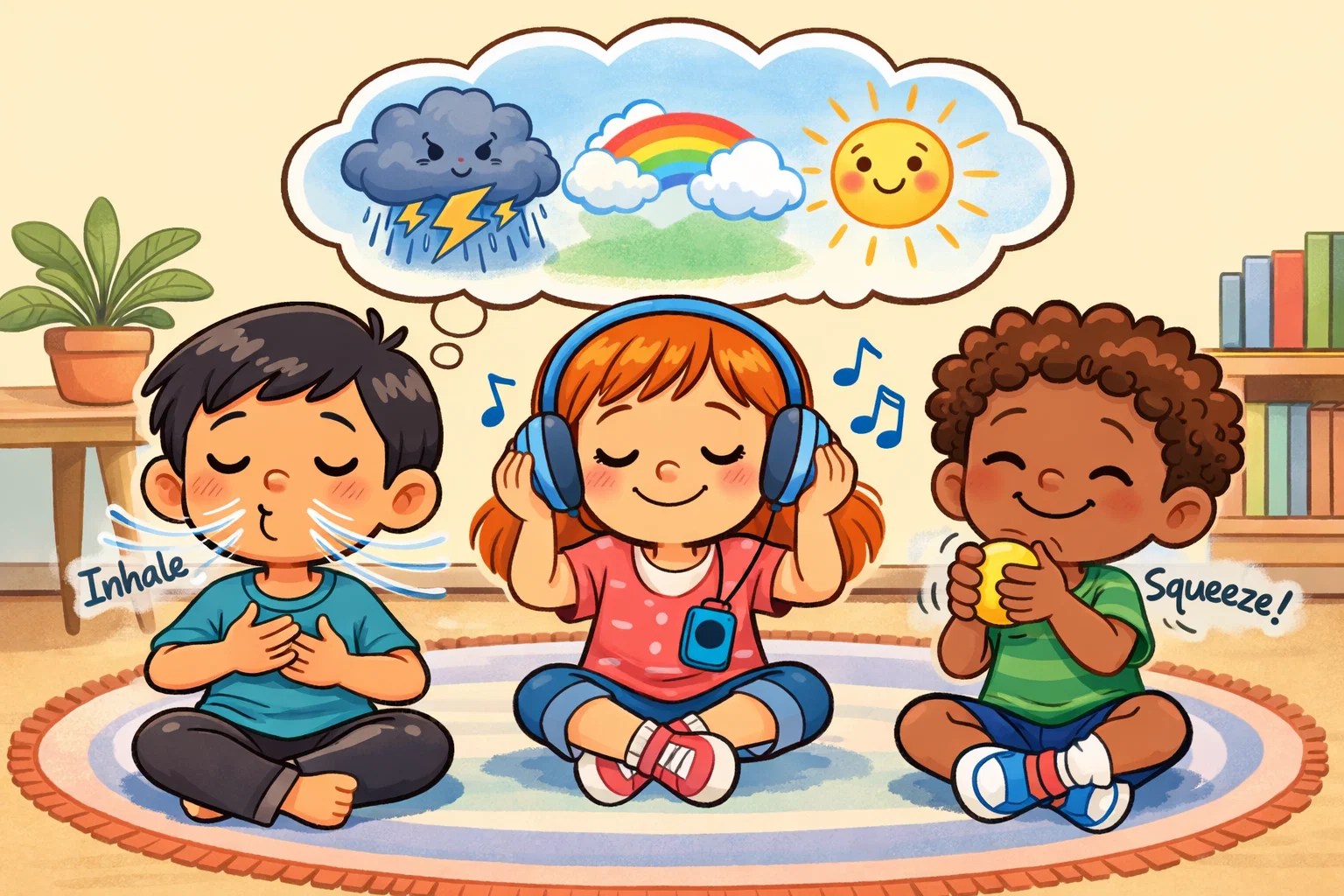
Coping skills are the “first aid kit” for the mind. When a child is in the midst of adversity, they need practical, accessible tools to lower their heart rate and regain focus.
Music and Sound Coping Activities
Music has a direct impact on the limbic system. Create a “Resilience Playlist” with upbeat songs for motivation and a “Calm Playlist” for de-escalation. Encouraging children to use music as a tool helps them take charge of their wellbeing.
Mindfulness-Based Movement
Yoga or simple stretching can help develop a mind-body connection. Activities like “The Tree Pose” require focus and balance, teaching kids that even if they “wobble” (a metaphor for life’s setback), they can find their center again.
Chill-Out Technique Games
Play “Freeze Dance” but with a twist. When the music stops, they must take three deep breaths before freezing. This integrates self-regulation into a fun activity, making the ability to cope feel natural rather than like a chore.
Social Connection and Empathy Activities
Resilience is not a solo sport. The “Ordinary Magic” of resilience, as psychologist Ann Masten calls it, often comes from strong relationships. Social skills and the ability to seek support are essential components of resilience.
Empathy Role-Play Games
Give children scenarios: “Your friend dropped their lunch. How might they feel?” This helps students develop the ability to see outside themselves. Empathy builds a supportive community, which provides a sense of safety for everyone involved.
Asking for Help Exercises
Many kids think being resilient means doing it all alone. Teach your child that asking for help is a sign of strength. Practice specific scripts: “I’m stuck on this. Can you show me the first step?” This builds self-efficacy and ensures they do not become overwhelmed in difficult situations.
Kindness and Cooperation Challenges
Group projects that require problem-solving together help build resilience. When a group faces a challenge (like building a bridge out of straws that keeps collapsing), they must use social skills to navigate the setback without blaming one another.
Problem-Solving and Flexible Thinking
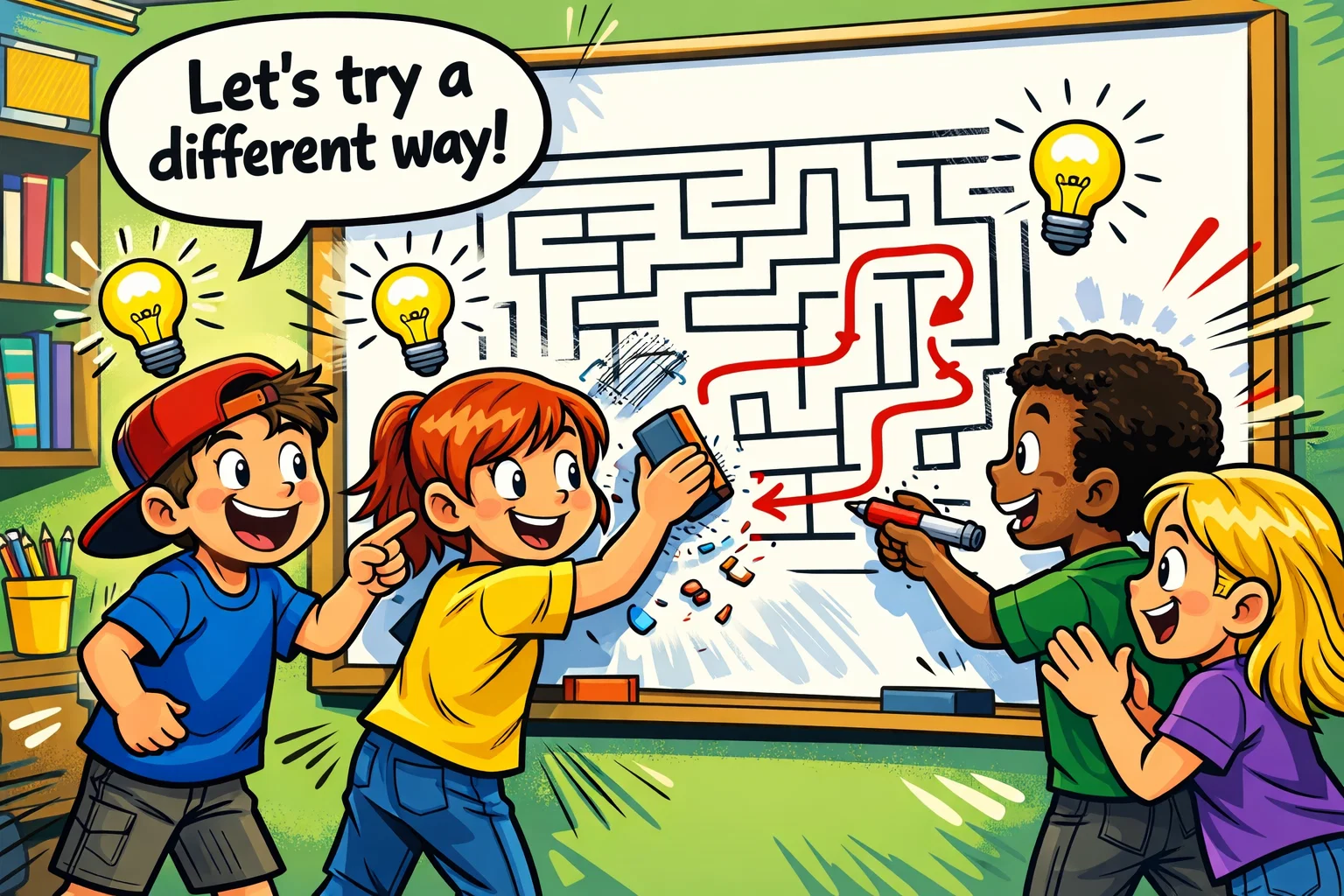
Resilient kids are flexible thinkers. They don’t get stuck on “Plan A.” They have the problem-solving skills to find Plan B, C, and D.
Step-by-Step Problem Solving Tasks
Teach the “SODAS” method to help students work through different situations:
- Situation: What is happening?
- Options: What are three things I could do?
- Disadvantages: What are the cons of each?
- Advantages: What are the pros?
- Solution: Choose the best one.
Flexible Thinking Games
Play “The Paperclip Game.” Give a child a common object (like a paperclip) and ask them to come up with 10 different uses for it. This allows children to practice “lateral thinking,” which is crucial when they face challenges that don’t have an obvious answer.
Decision-Making Scenarios
Discuss “What would you do?” scenarios. “If you forgot your lunch, what are your options?” This helps children build a repertoire of positive coping strategies before they are actually in a high-stress moment.
Confidence and Self-Efficacy Builders
Self-efficacy is the belief in one’s own ability to succeed. We build resilience in children by giving them opportunities to prove to themselves that they are capable.
Strength Spotting Activities
Help your child’s resilience by identifying their “superpowers.” Are they a good listener? Are they persistent? Create a “Strength Map” together. Referencing these strengths during adversity reminds them they have the tools to bounce back from adversity.
Goal Setting Exercises
Break large goals into “Micro-Goals.” If a child wants to learn to ride a bike, the first goal is just sitting on it. The second is coasting. Small wins build the self-esteem necessary to face challenges in the future.
Reward and Motivation Systems
Use “Effort Awards” rather than “Result Awards.” Instead of rewarding an ‘A’ on a test, reward the four nights of study. This reinforces the way to build resilience through hard work and perseverance.
Classroom and Group Resilience Activities
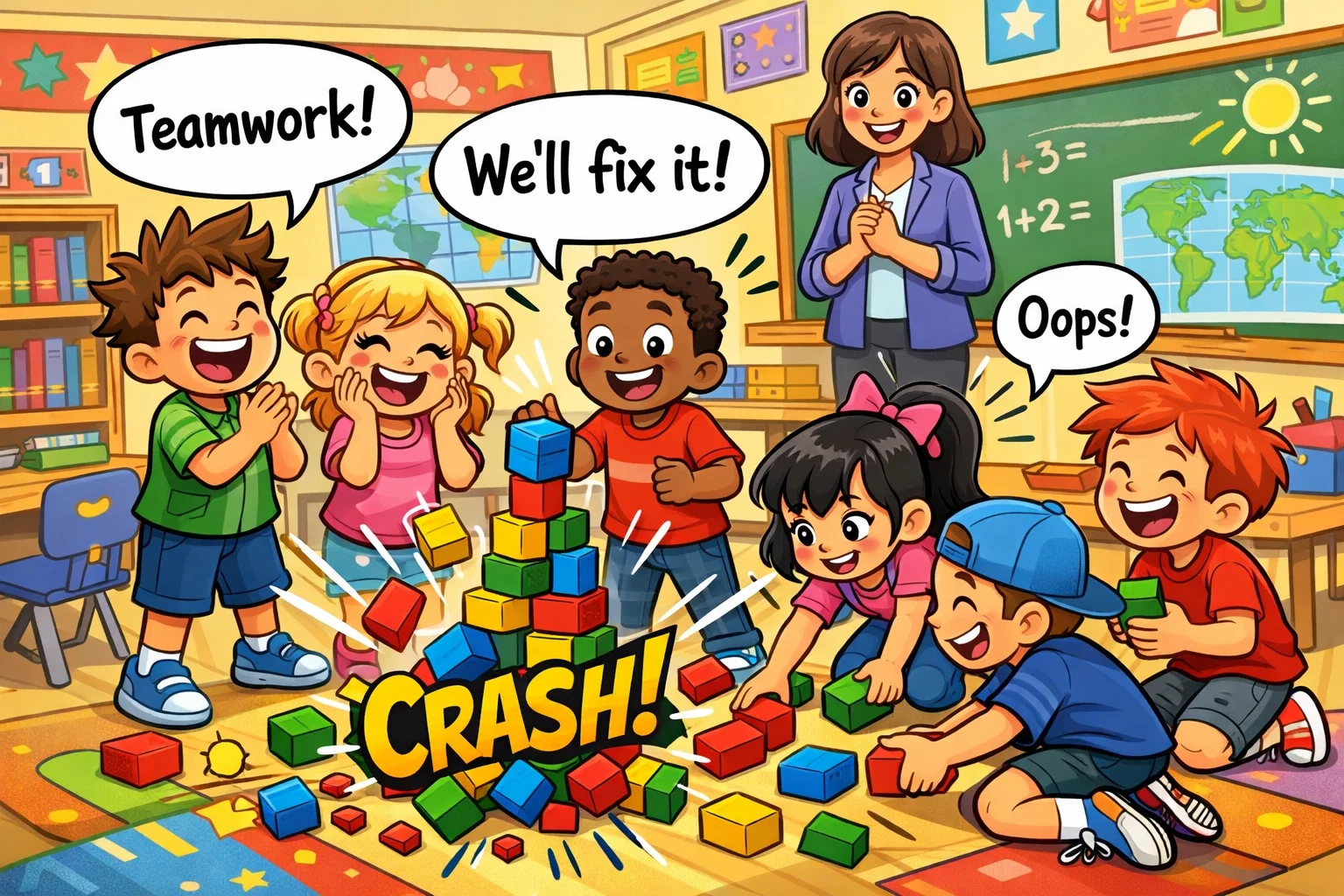
In a school setting, resilience-building activities create a culture of safety and healthy risk-taking. Helping students feel connected to their peers is a major factor in their wellbeing.
Cooperative Classroom Games
Games like “Human Knot” require students to communicate and solve problems under pressure. These resilience activities highlight that the group is stronger than the individual when faced with obstacles.
Reflection Activities for Groups
After a difficult lesson or a lost sports game, hold a “Post-Game Analysis.” Focus on what went well and how the group stayed resilient. This helps students learn to process collective setbacks healthily.
Wellbeing Check-In Routines
Use a “Mood Meter” at the start of the day. Students can place a sticker on how they feel. This simple act of self-awareness allows teachers to identify which child may need extra support to develop resilience that day.
Home-Based Resilience Activities for Families
The home is the primary laboratory for developing resilience. Parents and caregivers serve as the ultimate models for how to handle life’s ups and downs.
Family Reflection Conversations
During dinner, ask: “What was something that didn’t go as planned today?” Sharing your own minor setbacks and how you used coping skills to handle them is the most powerful way to build resilience in your kids.
Modeling Resilient Behavior
If you spill milk or get a flat tire, speak your positive coping out loud. “I’m frustrated right now, so I’m going to take a deep breath before I decide what to do next.” Your children are always watching how you demonstrate resilience.
Shared Challenge Activities
Take on a “Family Challenge,” like hiking a difficult trail or learning a new language together. When the whole family experiences the “hard part” together, it strengthens the bonds and helps your kids see that effort is a shared value.
Teaching Resilience Across Age Groups
As children grow, the resilience-related skills they need become more complex. Adapting resilience activities for their developmental stage is key.
Resilience Activities for Younger Kids (Ages 3-6)
Focus on naming emotions and basic self-regulation.
- Activity: “Bubble Breathing”—blowing bubbles slowly to practice long, calming exhales.
- Focus: Building a sense of safety and basic problem-solving.
Resilience Activities for Primary School (Ages 7-12)
Focus on growth mindset and social skills.
- Activity: “The Power of Yet”—adding the word “yet” to every negative statement.
- Focus: Perseverance and reframing self-talk.
Resilience Activities for Teens (Ages 13+)
Focus on autonomy, self-awareness, and deep reflection.
- Activity: “Values Mapping”—identifying what matters most to them to find purpose during difficult situations.
- Focus: Emotional resilience and complex decision-making.
Final Thoughts on Building Resilience Skills
Building resilience in children is a journey, not a destination. It is a process of layering skills and strategies that will serve them for a lifetime. By providing fun activities, encouraging a growth mindset, and modeling positive coping, children can gradually transition from vulnerability to resilience.
Consistency is more important than intensity. Building resilience does not require long workshops; it grows through short, consistent conversations and daily opportunities for new experiences. As parents and caregivers, your role is to provide the “scaffolding”—the support that allows children to reach higher than they could alone, until they have the strength to stand on their own.
“Resilience is not about bouncing back to where you were before; it’s about bouncing forward, changed and strengthened by the experience.” — Adapted from various positive psychology frameworks.