

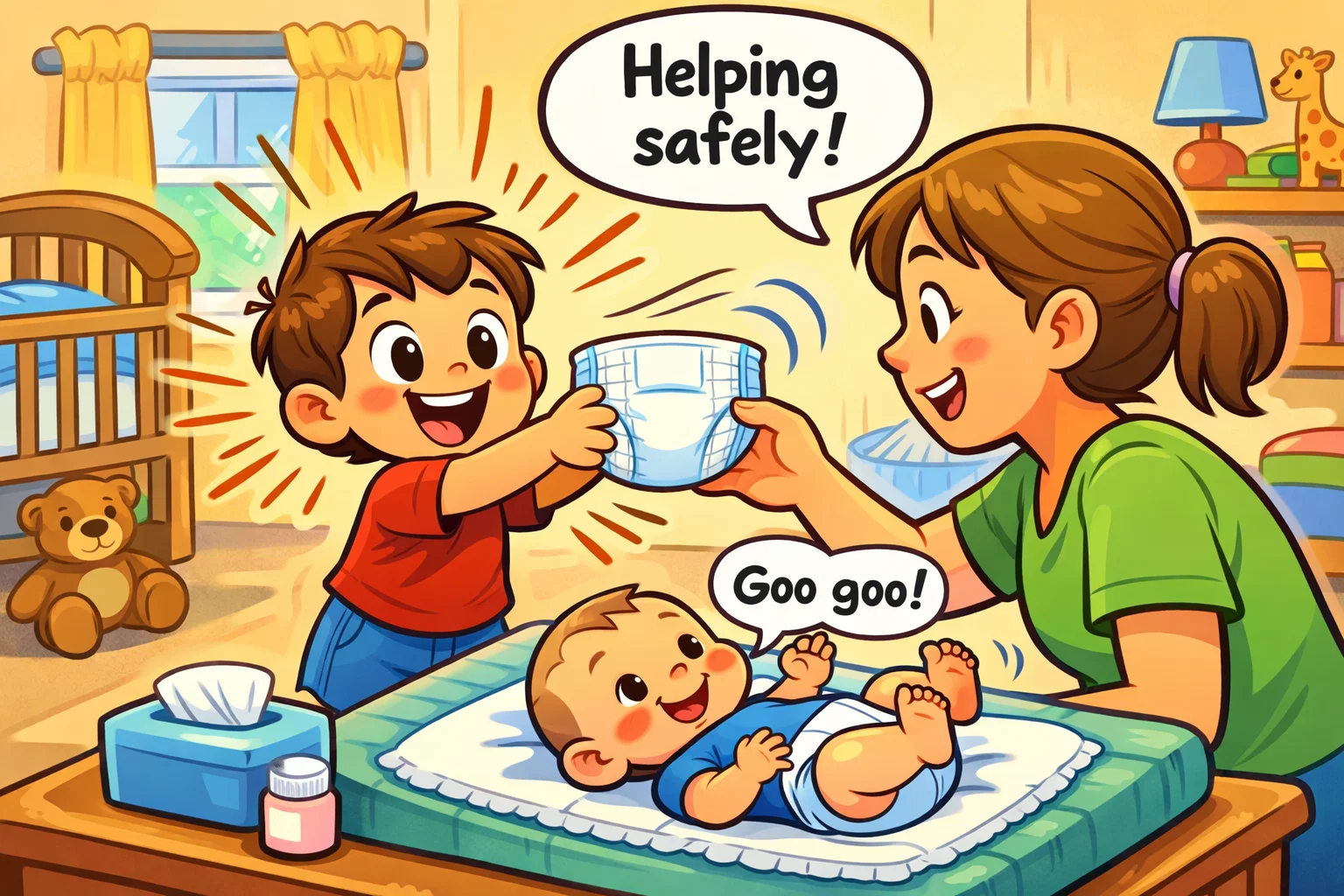
The arrival of a new baby is a monumental shift for any family. While it is a season of joy, it also introduces a complex dynamic for your older child, who may suddenly feel like their world has been upended. Involving your little one in the care of the new arrival is one of the most effective tips to help foster a lifelong bond and reduce feelings of displacement. However, this integration must be handled with a “safety-first” mindset, balancing the child’s desire for autonomy with the infant’s physical vulnerability.
Parents often struggle to find the “sweet spot” between keeping the baby and the older sibling apart and allowing safe interaction. The goal is to create a scaffolded environment where your little helper feels like a “big helper” without ever being in a position where they could accidentally cause injury. Through constant supervision and age-appropriate tasks, you can turn potential sibling rivalry into a collaborative family mission.
Child Safety First
Before the baby arrives, it is essential to establish that home safety is a non-negotiable family value. Infants and young children operate on completely different physical and cognitive levels, and bridging that gap requires clear, physical boundaries.
Physical Safety Boundaries
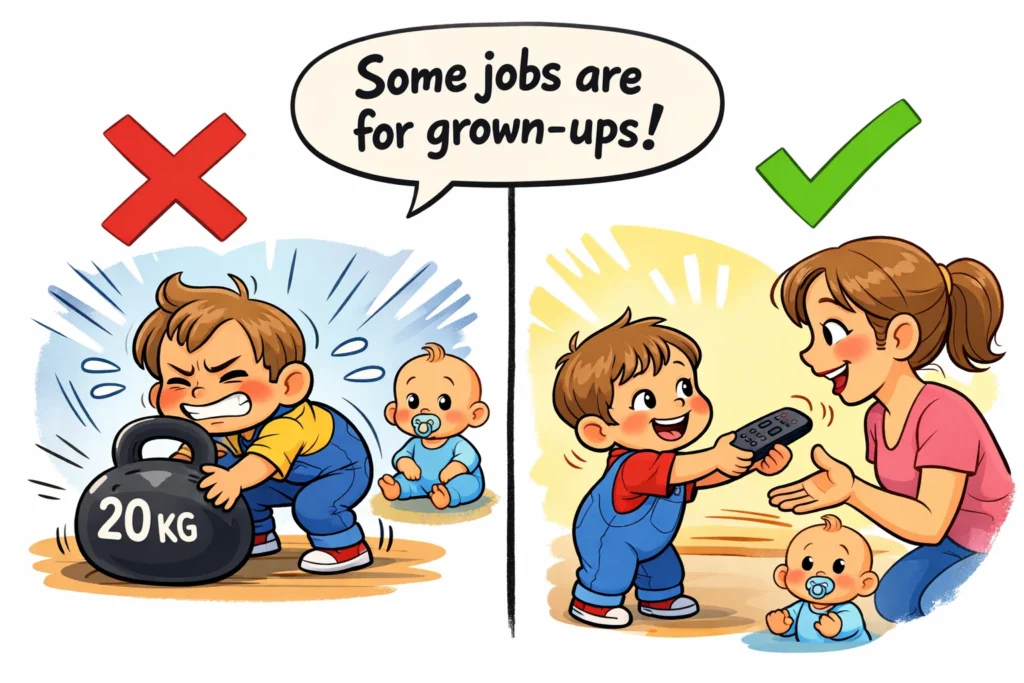
While your two-year-old might want to do everything you do, certain tasks must remain strictly for adults and older children. Very young children generally lack the fine motor control and muscle strength to safely hold your baby or carry them across a room.
- Adult-Only Tasks: Lifting the infant from a crib or bassinet, carrying the baby on stairs, and managing bath time immersion.
- Toddler-Safe Tasks: Bringing a diaper, choosing a “sleep sack,” or singing to the little one while they are safely positioned in a bouncer.
Supervision Rules During Toddler Help
The most critical rule for babies and young children is the “arm’s reach” policy. An adult must always be within arm’s reach and actively watching whenever a young child is near the infant. A toddler’s curiosity is faster than your reflexes; they may try to share a snack that could cause choking or offer a “hug” that is too tight. Never leave the two alone, even for a brief moment to grab a phone or a towel.
Safe Zones for Toddler Participation
Organizing your home into “zones” helps keep children safe. Use a bassinet or a playpen to create a physical barrier when you cannot be 100% focused on their interaction. When the toddler “helps,” ensure they are sitting on the floor or a sturdy sofa rather than leaning over high surfaces like a changing table, which increases the risk of falls.
Gentle Behavior Coaching
Teaching a young child to be “gentle” is a developmental process, not a one-time lesson. Their brains are still learning to manage impulses, a common developmental pattern where excitement overrides impulse control where excitement overrides their memory of the rules.
Teaching Gentle Touch Through Demonstration
Use a doll or a stuffed animal to show your toddler how to touch. Demonstrate “two-finger touches” on the doll’s feet or hands. By using hand-over-hand guidance, you can physically show them the amount of pressure that is safe. This helps the child explore the idea of a “soft touch” before the baby comes.
Words and Phrases Toddlers Can Copy
Young children respond best to short, rhythmic cues. Use consistent language that the little one can repeat:
- “Soft hands.”
- “Slow feet.”
- “Nice and quiet.”
- “Feet stay gentle.”
Managing Impulsive Movements
If your toddler gets too excited and starts to squeeze or grab, use redirection rather than punishment. Calmly move the little one and say, “The baby needs space right now. Let’s go jump on the cushions to get our wiggles out!” This addresses the toddler’s energy without making them feel like the new baby is a reason for them to get in trouble.
Choking and Suffocation Prevention
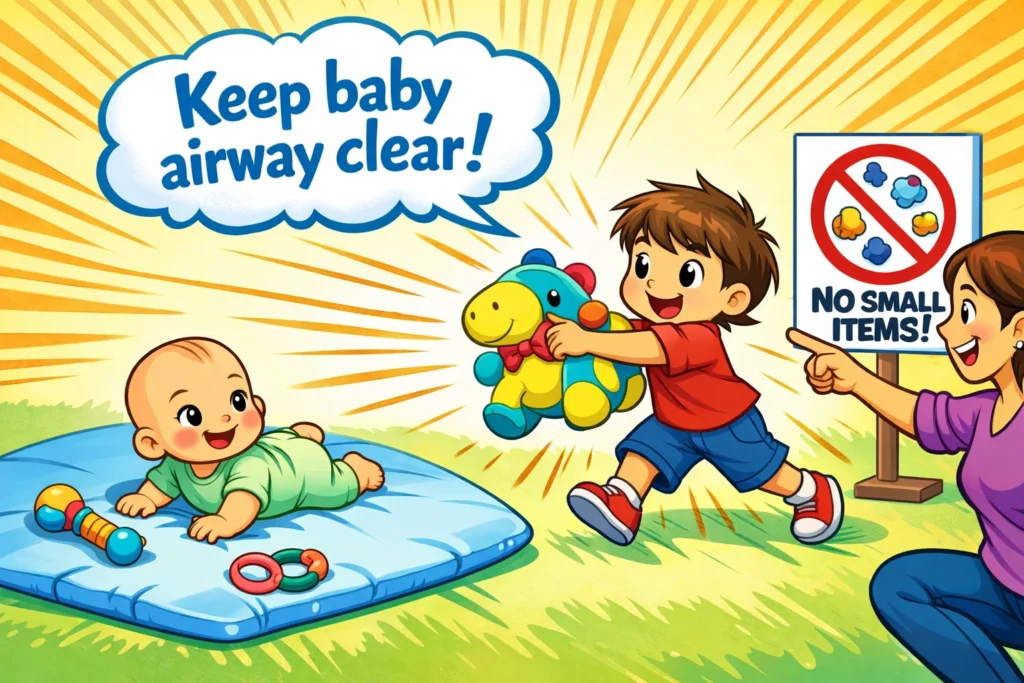
The leading risks for infants and toddlers in a shared space are suffocation and choking. Toddlers and preschoolers often live in a world of small objects that are perfectly safe for them but extremely dangerous for a newborn.
Safe Distance from Baby Face and Mouth
Explain to your toddler that the baby “breathes through their nose and mouth” and that we must always keep that area clear. A common risk is a well-meaning toddler trying to ‘feed’ the newborn a toy or a piece of their own food, which can cause choking.
Toy Separation Rules
Keep a strict “small toy” zone. Anything that can fit through a toilet paper roll – like marbles, LEGO® pieces, or button batteries – must stay in a high-up bin or a separate room. Button batteries are especially dangerous and must be kept entirely out of the reach of young children, as they can cause internal chemical burns if swallowed.
Safe Toddler Tasks Away From Airway Area
To help prevent accidents, direct the toddler’s attention to the baby’s feet.
- Safe: “Can you tickle the baby’s toes?”
- Unsafe: “Give the baby a kiss on the nose” (this brings the toddler’s face and hands too close to the airway).
Falls and Injury Prevention
A young child’s sense of balance is still developing. When they lean in to see the newborn, they can easily lose their footing and fall onto the infant.
Sitting Positions for Toddler Helpers
The safest way for a small child to interact is “bottom on the floor.” When they are sitting, they have a lower center of gravity and are less likely to tumble.
No Climbing or Leaning Rules
Establish a firm rule: “No climbing on the baby’s furniture.” Leaning into a crib or bassinet can cause the furniture to tip or the toddler to fall in. This is a vital part of making the environment toddler-safe.
Safe Hand Placement Zones
| Zone | Safety Level | Action |
| Feet & Toes | High Safety | Tickling, touching, counting toes. |
| Clothing/Blanket | Safe | Helping tuck in a blanket (away from face). |
| Hands | Medium Safety | Holding one finger (with adult guidance). |
| Head/Fontanelles | Adult Only | Touching the baby’s soft spot is for adults only. |
Safe Ways Toddler Can Help With Baby
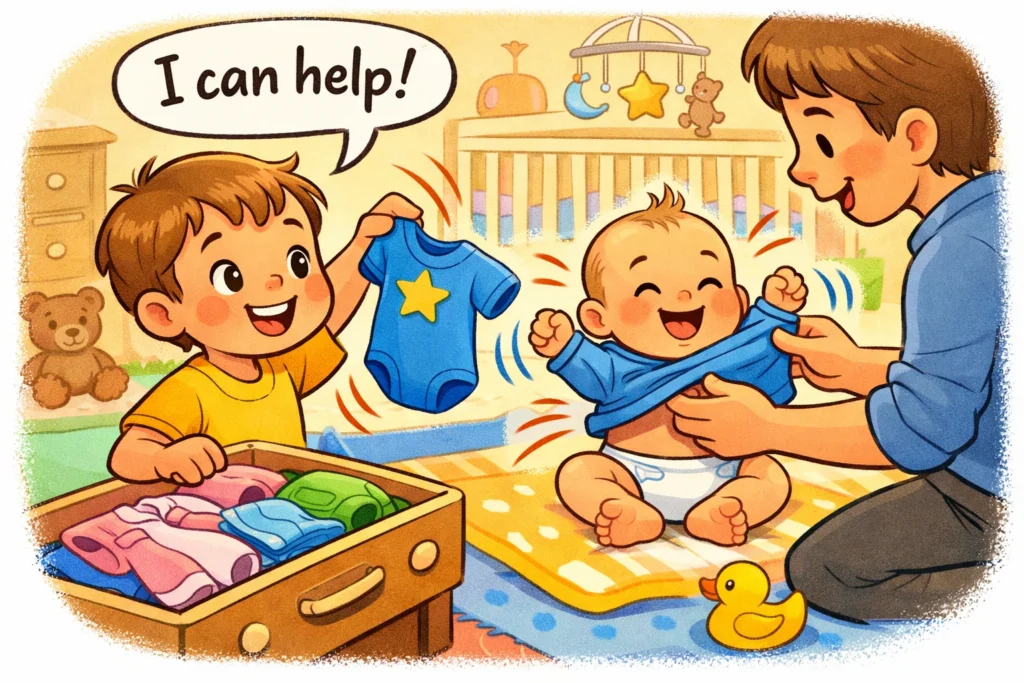
Giving your toddler a “job” makes them feel like part of the team. This one-on-one time spent “working” together is supportive of their emotional development.
Helping With Diaper Routine Without Contact Risk
Your toddler can be the “Diaper Deputy.” They can:
- Fetch a fresh diaper or a pack of wipes.
- Choose which onesie the baby should wear.
- “Dispose” of the diaper (if you have a toddler-friendly bin).
Helping With Clothing and Blankets
While you hold your baby, let the toddler “pat” the blanket down or help you pick out socks. This involves them in the care without requiring them to manipulate the baby’s limbs, which prevents accidental strains.
Helping During Bath Preparation
Bath time carries a higher risk of drowning. While you manage the baby in the water, the toddler can “test” the towel for softness or pick out which bath toy the baby might like to look at. Young children may want to jump in, so always keep a “dry feet” rule for the helper.
Emotional Bonding Without Physical Risk
Bonding doesn’t always have to be physical. Toddlers need to feel a connection that is safe for everyone involved.
Talking and Singing to Baby
Encourage your toddler to talk to the little sibling about their day. Infants love the high-pitched, melodic voices of children. This is a safe way for them to interact from a distance of a few feet.
Showing Baby Drawings or Toys
Have your toddler hold up a drawing or a “big” toy for the baby to see. This supports the child’s developmental milestones in visual tracking while keeping the small objects away from the baby’s reach.
Copying Calm Routines
When it’s time for the baby’s sleep period, have the toddler join in a quiet activity. They can look at a book nearby while the baby rests safely on their back in the crib. This helps the toddler learn to regulate their energy levels.
Creating Safe Environment for Shared Routines
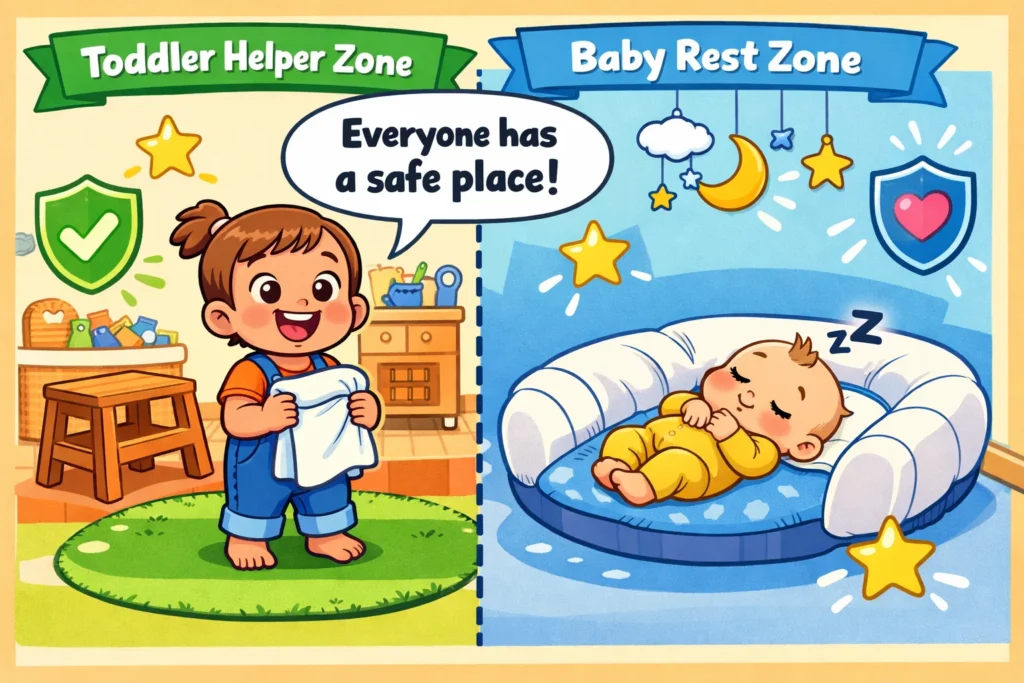
To reduce the risk of sudden accidents, the environment must be “pre-flighted” by an adult.
Organizing Baby Space Toddler Can Access
Create a “Big Sibling Station” where you keep the items the toddler is allowed to handle – diapers, soft burp cloths, and large board books. This prevents them from digging through a diaper bag and finding scissors or medications.
Removing Hazard Objects Before Toddler Involvement
Always scan the area for:
- Hot drinks (which can scald if knocked over).
- Pillows or heavy blankets (which pose a risk of sudden infant death or SIDS (Sudden Infant Death Syndrome) if they end up in the crib).
- Loose change or small toy parts.
Visual Safety Rules Toddlers Remember
Use simple pictures or “stop” signs. A red sticker on the side of the crib can remind a two-year-old that this is a “Look with Eyes, Not Hands” zone unless Mommy or Daddy is there.
First Aid Readiness for Parents
Even with the best plans, accidents happen. Having a well-stocked first aid kit and a plan of action is essential.
When Toddler Accidentally Hurts Baby
If the toddler hits or drops something on the baby, your first instinct might be to yell. Instead, remain calm. Pick up the baby to check for injury and calmly say, “That was not safe. The baby is hurt, and I need to help them now.” Later, when things are calm, discuss the “soft hands” rule again.
Teaching Toddler to Call Adult for Help
Teach your toddler that if the baby is crying or if they see something “yucky” (like a small object) near the baby, they should “Use your loud voice to call Mommy!” rather than trying to fix it themselves.
Emergency Boundaries Explanation
Use serious but non-frightening language. “We never touch the baby’s neck because it helps them breathe. If we are too rough, the baby can’t breathe well.” This builds understanding without creating unnecessary fear.
Developmental Limits for Toddler Helpers
Understanding infant and toddler nutrition and physical growth helps you set realistic expectations.
Age-Based Task Expectations
- 1 Year Old: Mostly “parallel play.” They can look at the baby but shouldn’t be asked to help much.
- 2 Years Old: Can fetch items and “sing” to the baby.
- 3+ Years Old: Can help with more complex tasks like “reading” a book or sorting baby clothes.
Motor Skills and Coordination Limits
Toddlers have a “heavy hand.” They don’t yet understand that a gentle pat to them might be a “thump” to a newborn with un-fused cranial bones. Always assume the toddler will be stronger and faster than they intend to be.
Emotional Regulation Challenges
A second child can spark jealousy. If your toddler is having a “meltdown” day, it is not the day for them to “help” with the baby. Toddlers need to feel safe and regulated before they can be safe around a smaller human.
When Baby Starts Moving More
Safety rules are not “set it and forget it.” They must evolve as your children grow.
Increased Supervision During Floor Time
When the baby starts to roll or crawl, the “physics” of the room changes. The toddler might find it funny to “chase” the baby, which can lead to accidental collisions. This requires active play to be even more closely monitored.
Updating Safety Rules
As the baby gets older, you can introduce new ways to help children interact. Maybe now the toddler can “share” a large ball or play “peek-a-boo” from across the rug.
Adjusting Helper Roles
Eventually, the toddler will transition from a “helper” to a “playmate.” This is a beautiful transition, but it requires constant reassessment of what is toddler safe and what still requires an adult’s steady hand.
Child development experts often note that empowering toddlers reduces unsafe attention-seeking behavior. When a child feels capable and included, they are less likely to act out for attention.
By following these guidelines and maintaining a well-stocked first aid kit, you are laying the foundation for a safe, loving, and supportive home for both your baby and older child.