

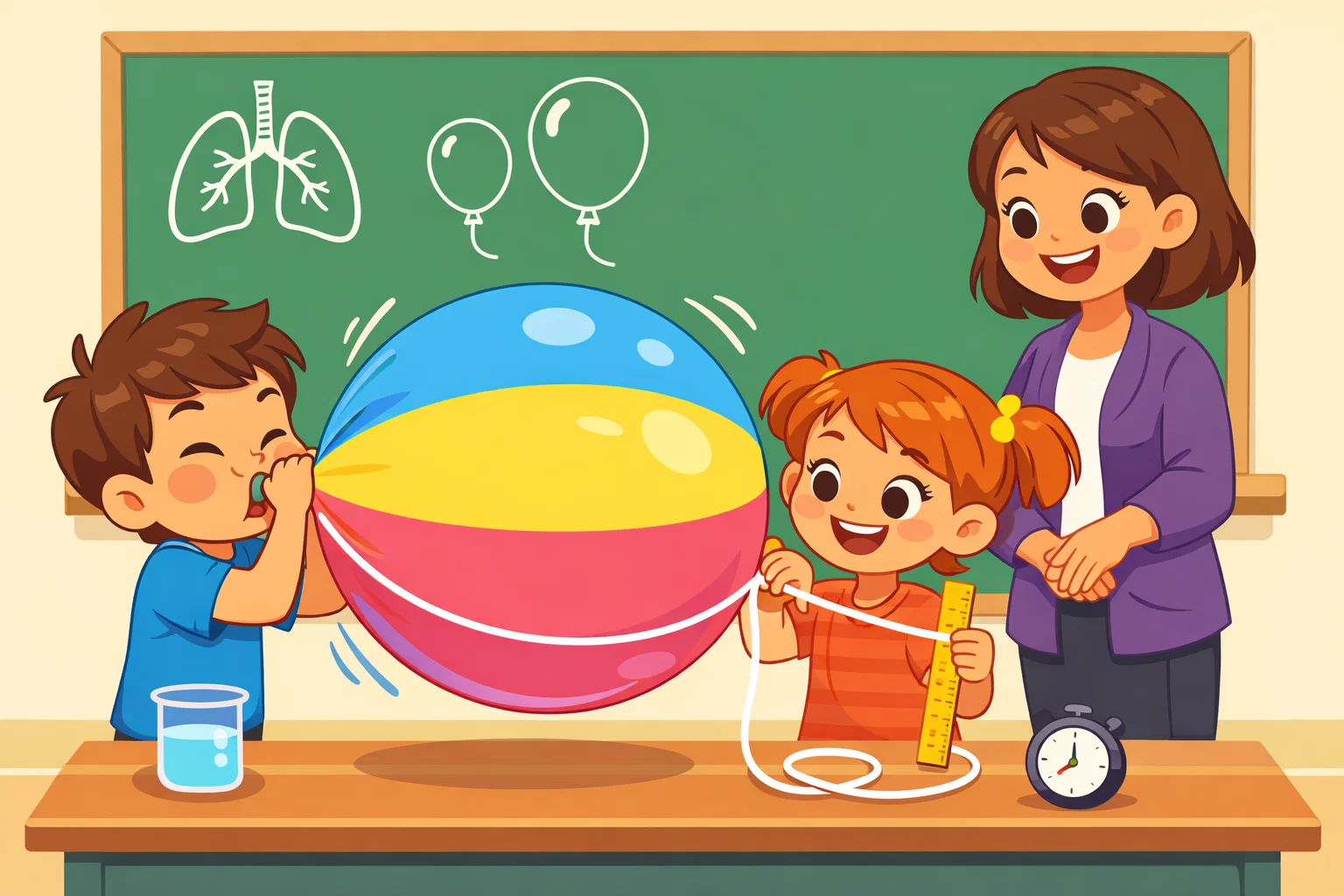
Have you ever wondered exactly how much air your lungs can hold? It is easy to take breathing for granted since our bodies do it automatically, but the human respiratory system is a marvel of biological engineering. For parents and educators, finding ways to make abstract concepts like “internal organ volume concepts” visible to children can be a challenge. That is where the lung capacity experiment comes in – a simple, safe, and highly visual activity that turns a regular party balloon into a scientific instrument.
This experiment is perfectly suited for children aged 7 to 14, though younger kids can participate with a little extra help. By using a balloon to measure lung capacity, children move from passive learning to active discovery. They get to see a physical “outline” of their breath captured in a rubber sphere, allowing them to compare the amount of air they can move with that of their friends or siblings. This hands-on approach builds a foundational understanding of human anatomy and the scientific method while keeping the energy high and the “boredom factor” low.
Introduction to Lung Capacity Experiment
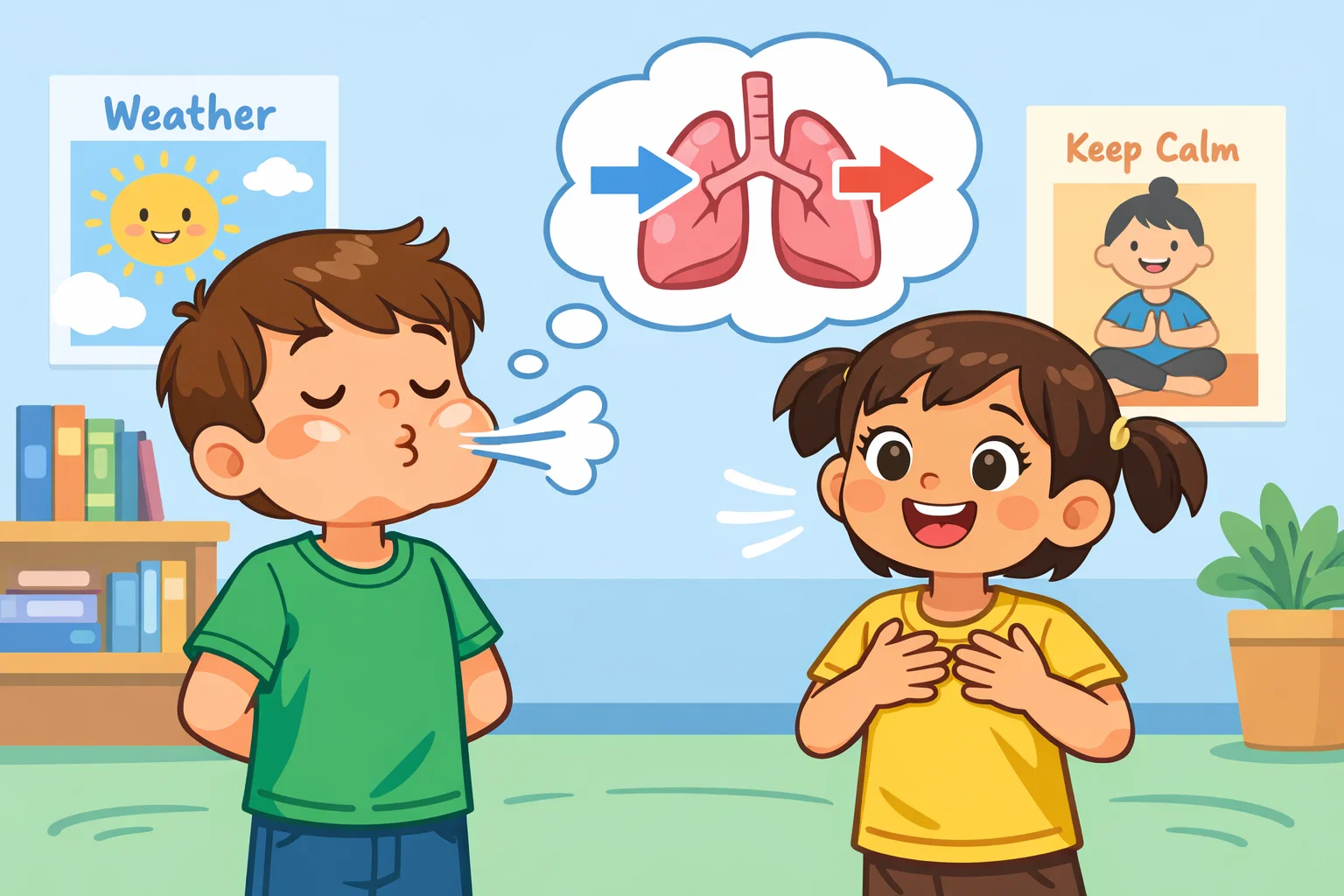
Every time you run across a soccer field, swim a lap in the pool, or even blow out birthday candles, your lungs are hard at work. But how much air the lungs can hold isn’t the same for everyone. This experiment is designed to help kids explore the respiratory system by capturing a single, maximal exhalation and measuring its volume.
In the world of life science, we often talk about things we cannot see. We know we inhale oxygen and exhale carbon dioxide, but we rarely get to see the “size” of that breath. By using a balloon, we can turn that invisible air into a measurable object. This activity is a classic life science experiment because it’s low-cost but high-impact, providing a clear window into how our lungs work.
What Lung Capacity Means for Kids
To a child, “lung capacity” might sound like a complicated medical term, but it’s actually quite simple. Imagine your lungs as two stretchy sponges inside your chest. When you take a deep breath, those sponges fill up with air. Lung capacity is simply the total amount of air a person can fit into those “sponges” at one time.
For kids, it’s helpful to compare this to objects they know. A toddler’s lungs might only hold as much air as a small juice box, while a grown-up athlete’s lungs might hold as much as a large two-liter soda bottle! During this experiment, the focus is on vital capacity – this is the maximum amount of air moved in and out of the lungs when you take the biggest breath possible.
Why Balloon Measurement Works for Experiments
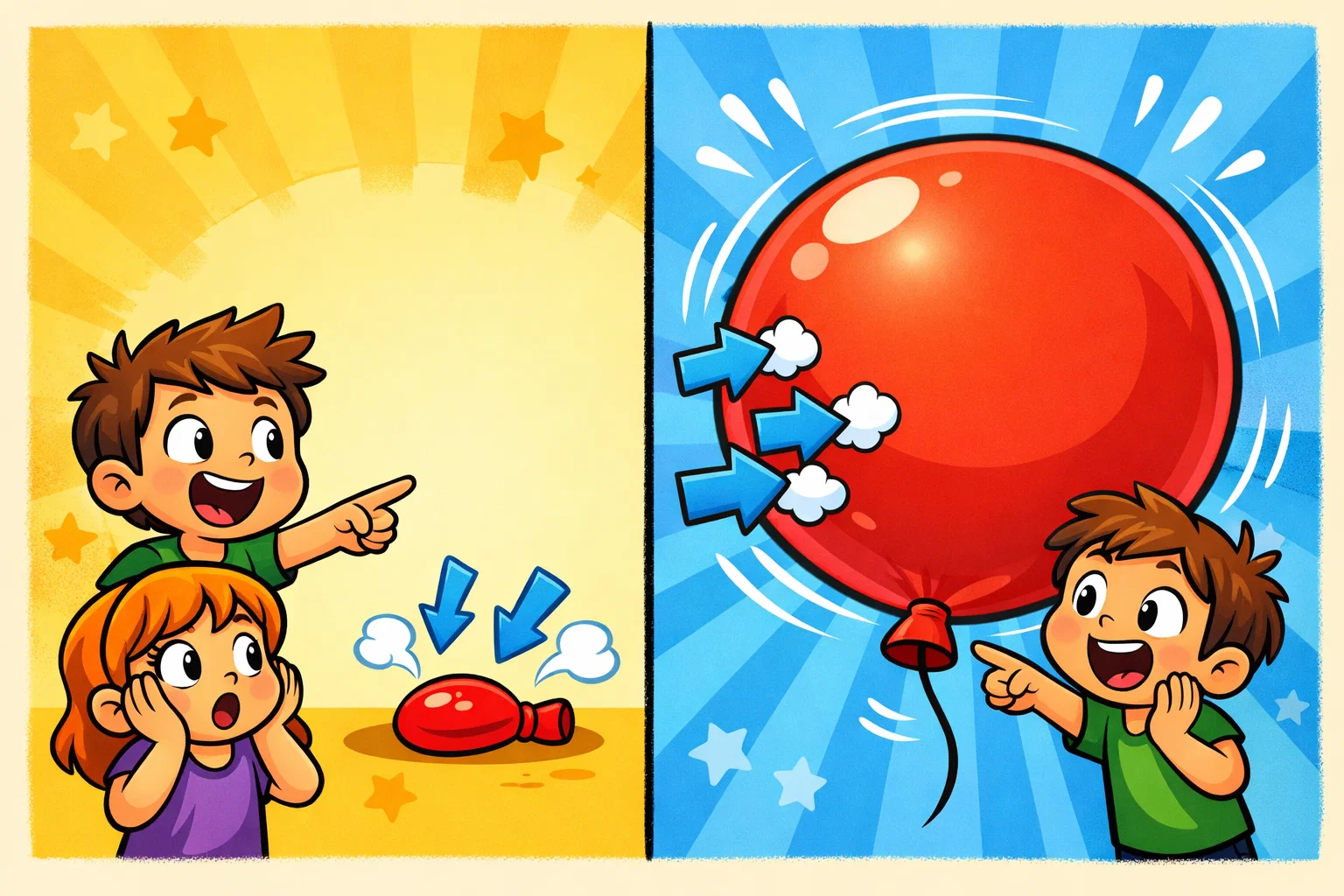
You might ask, “Why use a balloon instead of a fancy machine?” The answer lies in air pressure. When you exhale into the balloon, the air travels from your lungs (a high-pressure area) into the balloon. As the balloon fills with air, the rubber stretches.
The diameter of a balloon generally correlates with the volume of air exhaled. Because balloons are elastic, they provide just enough resistance to keep the air in a contained shape, making it possible to measure its diameter in centimeters. It’s an easy, visual, and immediate way to see the capacity of a person’s lungs without needing a laboratory.
Learning Goals for Science Activities
Participating in this lung capacity experiment helps children develop several key scientific skills:
- Observation: Watching how the balloon changes size based on the depth of the breath.
- Measurement: Using tools like string and rulers to turn a physical object into data.
- Comparison: Learning how to compare participants’ vital capacity and identifying why one might be larger than another.
- Data Recording: Understanding that “science” happens when we write down our findings to look for patterns.
Materials for Balloon Lung Capacity Experiment
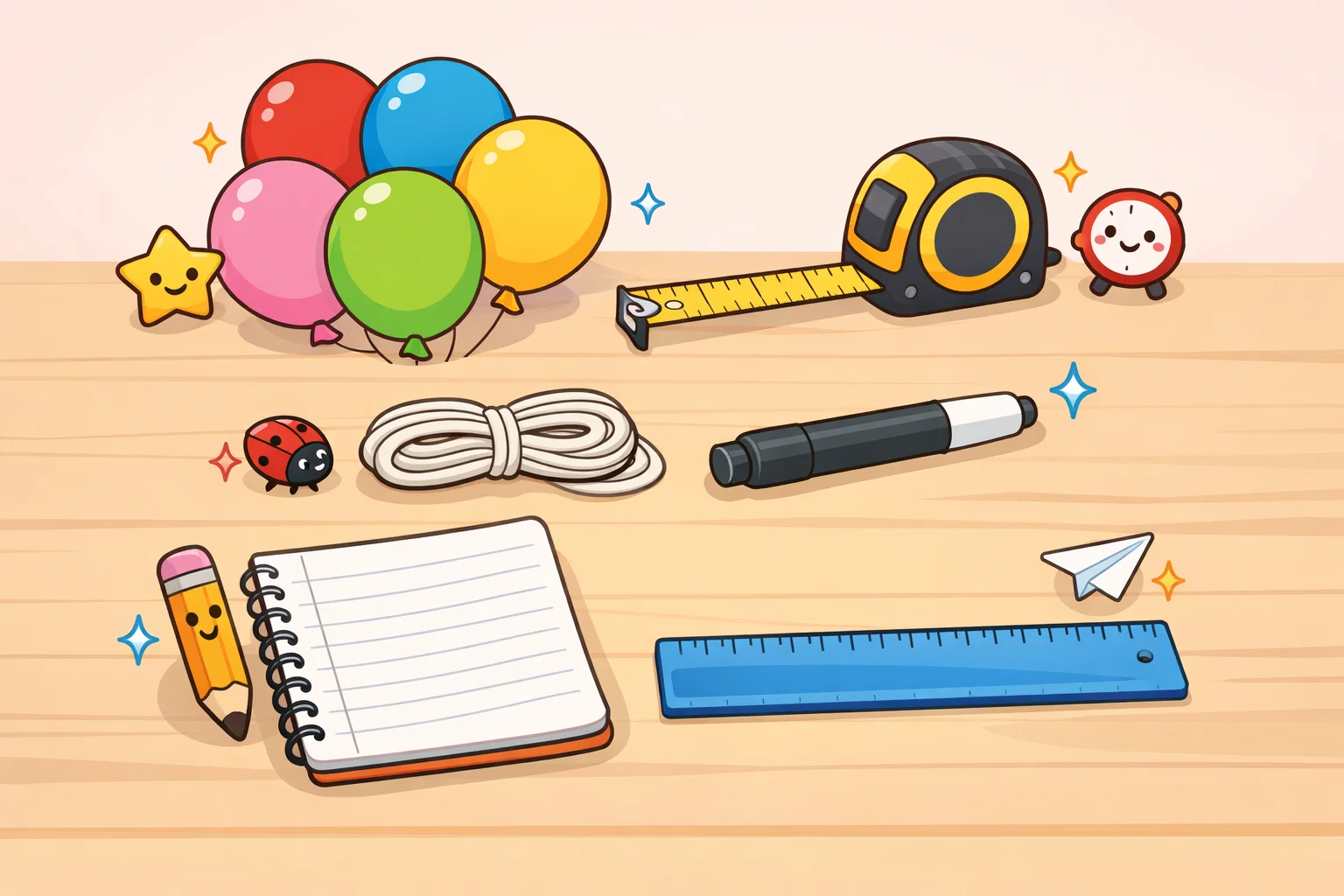
One of the best parts of this project is that you likely already have everything you need in your kitchen or junk drawer. Using household items makes science feel accessible rather than “exclusive.”
Required Supplies List
To get started, gather the following items:
- Balloons: Standard round party balloons work best. Ensure you have at least 2–3 per participant in case one pops.
- Measuring Tape or String: A flexible sewing tape is ideal, but a piece of string and a standard ruler work perfectly.
- Marker and Paper: For labeling balloons and creating a data table.
- Calculator: Helpful for older kids who want to estimate your vital capacity using volume formulas.
Safe Material Choices for Kids
Safety is paramount in any life science activity.
- Latex Allergies: Many balloons are made of natural rubber latex. If a child has a known allergy, look for “latex-free” synthetic balloons.
- Supervision: Small pieces of popped balloons are a choking hazard. Always have an adult nearby to manage the “cleanup crew.”
- Balloon Quality: Use fresh balloons. Old, “crispy” balloons are harder to stretch and are more likely to burst, which can be startling for younger kids.
Optional Tools for Data Accuracy
If you want to take this from a “fun trick” to a serious science fair project, consider these extras:
- Graph Paper: To plot the subjects’ vital capacity and variables like height or age.
- Large Clear Bottle: If you decide to try the “water displacement” method later (the model shows air displacing water).
Steps to Measure Lung Capacity Using Balloon
Follow these steps carefully to ensure your results are as accurate as possible. Remember, consistency is the key to good science!
Preparing Balloon for Measurement
Before the first breath is even taken, you must stretch the balloon several times. New balloons are quite stiff, and the air pressure inside your lungs might struggle to overcome that initial resistance. By manually stretching the rubber, you ensure the balloon expands easily.
Expert Tip: Have the participant stand up straight. Proper posture allows the diaphragm to drop fully, making it possible to inhale and exhale to your full potential.
Blowing Balloon Correctly
This is the most critical part of the lung capacity experiment.
- Inhalation: Instruct the child to take a deep breath – the biggest one they’ve ever taken.
- The Big Exhale: They should fit the end of the balloon tightly over their lips and exhale all the air in one steady, continuous stream.
- No Double-Dipping: Do not let them take a second breath to “refill” the balloon. We want to measure the maximum amount of air from a single breath.
- Seal it off: Quickly pinch the neck of the balloon so no air escapes.
Measuring Balloon Size
While holding the balloon shut (or tying it off), have a partner wrap a string around the widest part of the balloon and measure its circumference. If you are using a string, mark where it overlaps, then lay it flat against a ruler to get the circumference.
[Image showing how to use a string to measure the circumference of a balloon]
Repeating Experiment for Accuracy
In science, we rarely trust the first result. Factors like a “leaky” lip seal or a half-hearted breath can skew data. To estimate your vital capacity accurately, have each person repeat the process three times. You will likely see that the second balloon or third attempt yields a more consistent size as the participant gets used to the technique.
Collecting Data on Lung Capacity
Now that you have your measurements, it is time to organize them. This is where the “magic” of the experiment turns into “evidence.”
Creating Data Table for Results
A simple table helps kids visualize the relationship between the person and the amount of air they moved.
| Participant Name | Height (cm) | Trial 1 (Circumference) | Trial 2 (Circumference) | Trial 3 (Circumference) | Average |
| Sam | 140 | 45 cm | 47 cm | 46 cm | 46 cm |
| Maya | 155 | 52 cm | 55 cm | 54 cm | 53.6 cm |
Comparing Results Between Participants
When you compare your subjects’ vital capacity, you might notice that a taller person often has a greater lung capacity. This is because a person’s lung size is proportional to their body size – larger frames generally house larger thoracic cavities. It is important to discuss these differences respectfully, noting that “bigger” doesn’t mean “better,” just different!
Recording Observations During Experiment
Encourage kids to write down “qualitative” data too. Did the participant look red in the face? Did they hold their breath before blowing? These small details can explain why a lower vital capacity appeared in one specific trial.
Calculating Lung Capacity from Balloon Measurement
For older students, we can move beyond just measuring the “circle” and actually calculate the volume of the air your lungs can hold.
Estimating Volume from Circumference
If we assume the balloon is a perfect sphere (it’s not, but it’s close enough for a life science activity), we can use reference graphs commonly shown in textbooks to estimate volume.
The math works like this:
- Find the radius (r) from the circumference (C): r = C / (2π)
- Calculate volume (V): V = (4 / 3) × π × r³
Using Water Displacement Method as Alternative
If you want more precision, the water displacement method is the “gold standard” for home experiments. You fill a large bottle with water, turn it upside down in a bin of water, and blow through a tube inside the bottle. The air you expel from the lungs will push the water out. The volume of the empty space left in the bottle is exactly the amount of air you breathed out.
Simple Math Adjustments for Kids
If the formulas above are too complex, don’t worry! Simply focus on the diameter of a balloon. A balloon with a 20 cm diameter has significantly more volume than one with a 15 cm diameter. You can use a simple graph shown to estimate your capacities by comparing the circumference directly to a pre-calculated chart.
How Balloon Lung Capacity Experiment Works
Understanding the “why” is just as important as the “how.” This section dives into the mechanics of the respiratory system.
Balloon Expansion and Air Pressure
When you blow, you are increasing the air pressure inside the balloon. The rubber molecules are forced to stretch a round balloon to make room for the incoming gas. This is a great way to show that air, though invisible, takes up physical space.
Breathing Mechanics in Lungs
Our lungs work because of a muscle called the diaphragm. When it moves down, it creates a vacuum that causes inhalation. When you exhale, the diaphragm and rib muscles relax (or contract forcefully during the experiment), pushing the air that you move out of your body.
Why Results Differ Between Kids
Several factors listed below explain why no two balloons are the same:
- Height: Taller people have longer torsos and larger lungs.
- Age: Lung tissue becomes more elastic as children grow, then stabilizes in adulthood.
- Physical Activity: Regular exercise can increase your lung capacity by strengthening the muscles that help you breathe.
Troubleshooting Common Experiment Problems
Sometimes science gets messy! If your balloon lung capacity experiment isn’t going as planned, check these common issues.
Balloon Not Inflating Properly
If the balloon stays small despite a big effort, the participant might be experiencing air leaks around their mouth. Ensure a tight seal. Also, remember to stretch a round balloon several times before the first try; some balloons are just “stubborn.”
Inconsistent Measurement Results
If Trial 1 is huge and Trial 3 is tiny, the participant might be tired. Vital capacity requires a lot of energy! Ensure they are taking a deep breath and then exhale fully every single time.
Kids Feeling Dizzy or Tired
Safety Note: Blowing hard repeatedly can cause mild hyperventilation. If a child feels “light-headed,” have them sit down and rest for five minutes. It is better to take a break than to have someone fall over!
Discussion Questions for Kids
Use these prompts to spark a deeper conversation after the balloons are put away:
- Breathing Differences: “Why do you think your older brother’s balloon was bigger than yours?”
- Exercise Links: “If a professional swimmer did this, what would their balloon look like?”
- Future Predictions: “If you started running every day, how might your vital capacity change in six months?”
Drawing Conclusions from Lung Capacity Experiment
At the end of the day, what did we learn? Drawing a conclusion is the final step of the scientific method.
Identifying Patterns in Data
Help the kids look at their tables. Does the data show that “taller kids = bigger balloons”? In most cases, you will see a clear trend. This suggests that lung capacity is often related to physical size.
Explaining Results in Own Words
Instead of saying “My vital capacity is 2.5 liters,” a child might say, “I can move enough air to fill a giant balloon because I play soccer and I’m growing tall.” This shows true understanding.
Connecting Experiment to Daily Life
Discuss how lungs work during other activities. Singing requires controlling the amount of air you release. Swimming requires a large inhalation before going underwater. This makes science feel relevant to their hobbies.
Factors Affecting Lung Capacity in Kids
While our experiment uses balloons, real-world vital lung capacity is influenced by many biological factors.
Age and Body Size Influence
Lung capacity typically increases through childhood and stabilizes in adulthood. For kids, every birthday usually comes with a slight increase in lung capacity as the thoracic cavity expands.
Physical Activity Level Impact
Athletes often have a greater lung capacity. While exercise doesn’t necessarily grow new lung tissue, it makes the lungs more efficient at inhalation and strengthens the intercostal muscles, allowing them to inhale and exhale more forcefully.
Posture and Breathing Technique
If you are slumped over, your lungs cannot expand fully. This is why singers and athletes are taught to “stand tall.” Good posture can actually prevent a lower vital capacity reading by giving the lungs the space they need.