

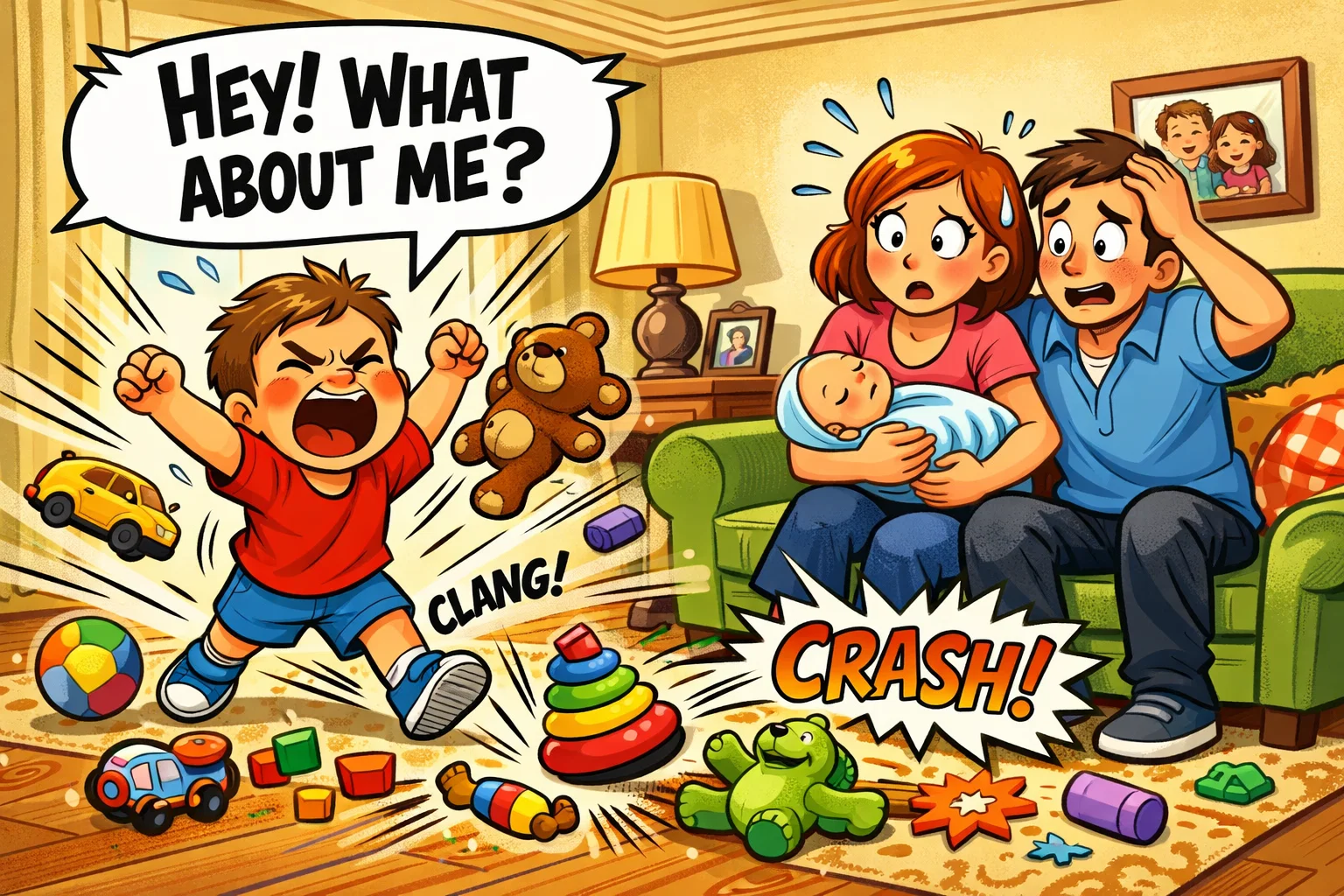
The arrival of a new baby is a landmark event for any family, but for a toddler or preschooler, it often feels less like a celebration and more like a sudden and overwhelming change. For months, or even years, your three-year-old has been the center of your universe. Suddenly, a new baby sibling arrives home, demanding constant attention and love, while the older sibling is expected to suddenly become “big” and independent overnight.
It is important to realize that when a toddler starts acting out or acting like a baby, they aren’t being “bad.” From a developmental perspective, they are navigating a profound sense of displacement. This article will explore why toddlers and young children struggle with the arrival of a new baby, how to identify regression, and practical ways to help your toddler adjust to their new role in the family dynamic.
Emotional Reactions After New Baby Arrival
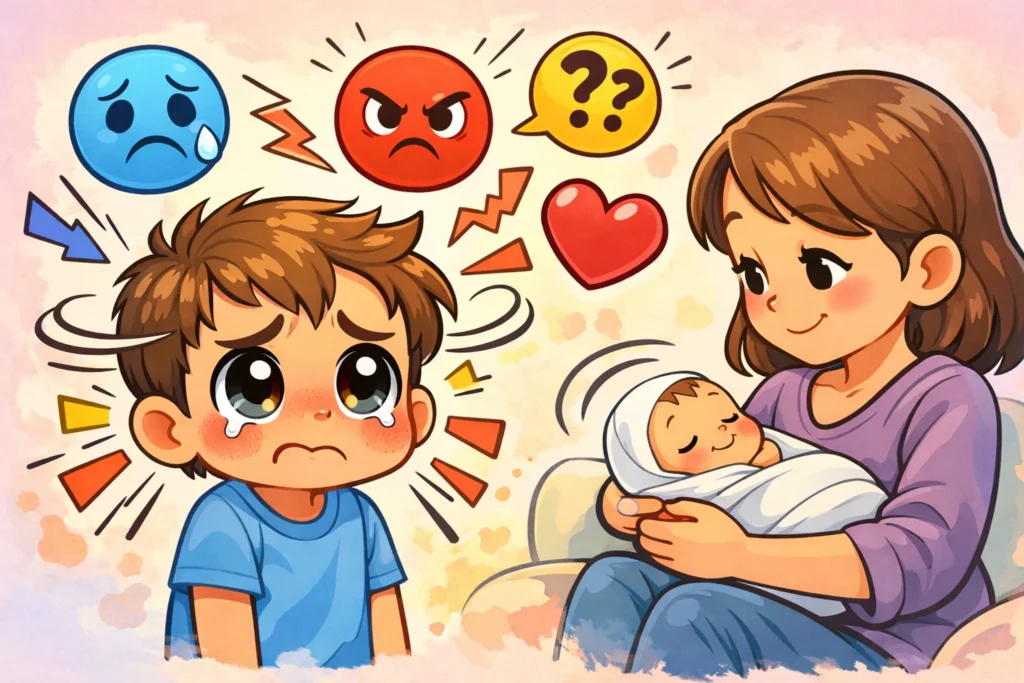
When the new baby arrives, the internal world of a toddler undergoes a massive shift. They are experiencing big feelings that they simply don’t have the words to describe yet. Understanding the reasons behind the tantrums or the jealousy is the first step in helping them cope.
Loss of Parental Attention
The most immediate change for an older sibling is the reduction in one-on-one time. Before the baby comes, your toddler likely has your undivided attention for play, reading, and cuddles. Now, they see you caring for the baby, busy with the baby, and often telling them to “wait a minute.” This perceived loss of status can trigger deep insecurity and sibling jealousy. They may resort to attention-seeking behaviors because, in a toddler’s mind, negative attention is better than being ignored.
Conflicting Feelings Toward New Baby Sibling
A toddler may feel a confusing mix of emotions. One moment they want to hold the baby or give them a kiss; the next, they might act aggressively toward the baby or tell you to “send them back.” They are curious about this new creature but also resentful of the disruptions the baby sister or baby brother has caused. It’s a classic case of “I love you, but I wish you weren’t here.”
Limited Emotional Expression Skills
While you might be able to say, “I’m feeling overwhelmed today,” a two- or three-year-old cannot. Toddlers and preschoolers lack the linguistic and neurological maturity to process the birth of a sibling verbally. Instead, they “speak” through their behavior. When a toddler feels forgotten, they don’t give a speech – they throw a block or act like a baby to get you to notice them.
Toddler Regression After New Sibling Birth
Regression is perhaps the most common response to a new baby sibling. It is a temporary retreat to an earlier stage of development. Essentially, your child sees that the newborn gets all the attention by being helpless, so they decide to try it out too.
Return to Younger Behaviors
You might notice your toddler acting strangely:
- Asking for a baby bottle or wanting to nurse again.
- Using “baby talk” or babbling instead of their usual sentences.
- Demanding to be carried like a very young infant.
- Thumb sucking or becoming extra clingy.
Sleep Disruptions
Even a “previously good sleeper” may experience regression in their bedtime habits. They might resist going to sleep, have frequent night wakings, or refuse to sleep alone. This is often driven by a fear of missing out; they know you are awake with the new baby, and they want to be part of that circle of care.
Potty Training Setbacks
If your toddler is already potty trained, don’t be surprised if they start having accidents. Using the potty is a “big kid” skill. When a toddler or preschooler feels the stress of a new sibling, they may lose interest in being a big kid. They might even ask for a diaper because they see how much time you spend at the changing table with the baby.
| Behavioral Area | Common Regression Sign | Parental Strategy |
| Feeding | Refusing to use a spoon; wanting a bottle. | Allow brief “baby play” for about 10 minutes, then encourage big-kid skills. |
| Potty | Accidents in a toddler previously potty trained. | Stay calm; avoid shaming; return to basics briefly. |
| Language | Reverting to babbling or whining. | Label their feelings: “It’s fun to play baby sometimes, isn’t it?” |
| Sleep | Refusing to stay in bed; night waking. | Keep the bedtime routine identical to pre-baby days. |
Aggression and Defiance Signals
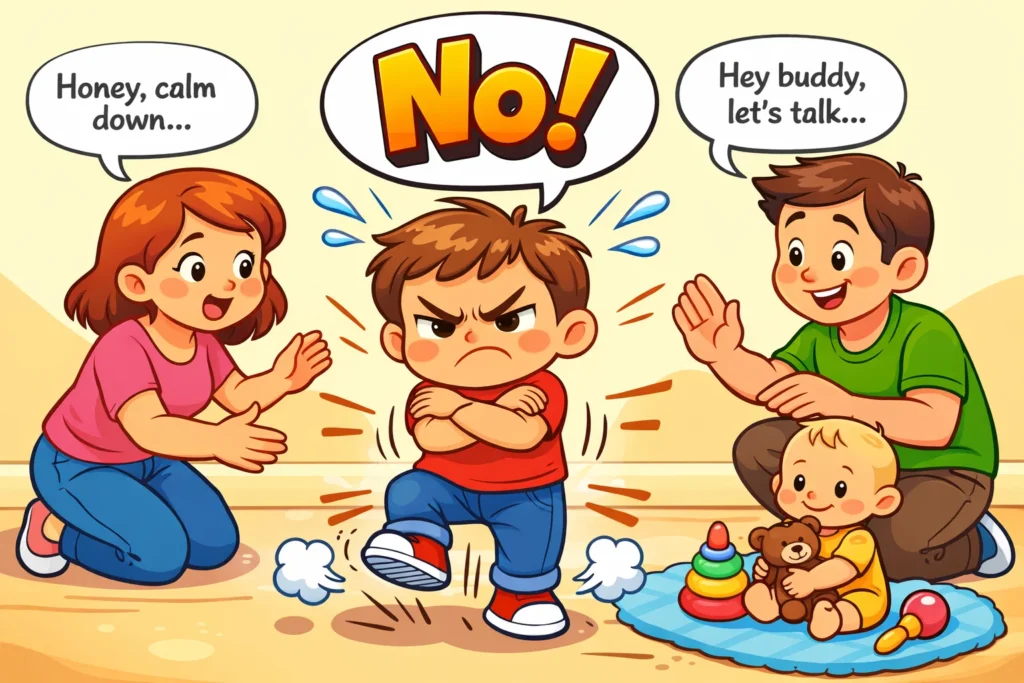
While regression is a bid for nurture, aggression is often an expression of frustration. These are the behaviors that worry parents most, but they are common toddler emotions during this transition.
Hitting, Biting, Or Pushing
Physical aggression – whether directed at the parents or the new baby – is a sign of emotional overload. A toddler doesn’t have a “filter” for their anger. If the baby cries and interrupts their play for the tenth time that day, the toddler might lash out. It’s common for toddlers to test physical boundaries to see if you will still keep them safe (and keep the baby safe).
Increased Tantrums And Screaming
The frequency and intensity of tantrums usually spike after the baby comes home. These are “pressure cooker” moments. The toddler copes with so much change that a small trigger, like the “wrong” colored plate, becomes the catalyst for a total meltdown.
Refusal To Follow Rules
Testing boundaries is a toddler’s way of checking if the world is still predictable. By refusing to follow rules, they are asking: “Are you still in charge? Do you still care enough to stop me?” They are looking for the security of your leadership amidst the chaos of a newborn and a toddler household.
Causes Behind Behavior Changes
Why does this happen so consistently? It’s a combination of environmental shifts and the toddler’s internal developmental stage.
- Arrival of a New Sibling: The fundamental shift from being an only child to a big sibling is a massive identity crisis.
- Disrupted Daily Routines: Toddlers crave predictability. When naps, meals, and park trips are delayed because the baby needs to be fed or changed, the toddler’s sense of stability vanishes.
- Parental Stress Spillover: New parents are exhausted. Toddlers and young children are like sponges; they soak up your stress and tension, reflecting it back through their own acting out.
Timeline For Adjustment Period
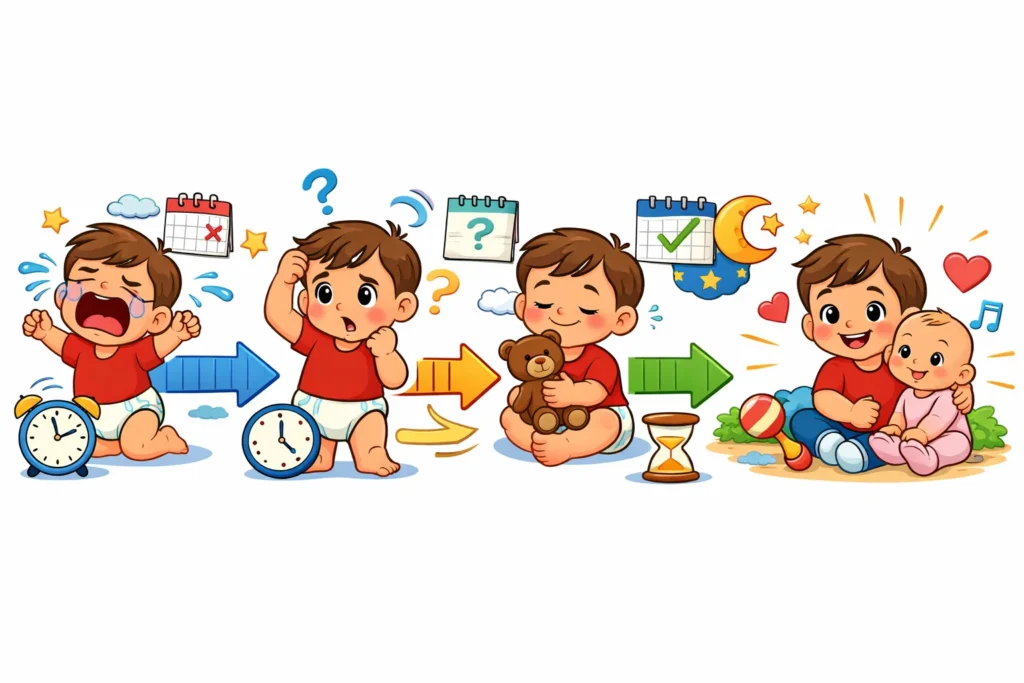
Parents often ask, “How long will this last?” While every child is different, there are some general patterns.
Typical Duration Of Acting Out Phase
Most toddlers and preschoolers show the most intense regression and acting out in the first 2 to 6 weeks after the baby is born. This is the “crisis” phase of the transition. By the three-month mark, most families have found a new rhythm, and the toddler begins to accept the new baby as a permanent fixture.
Signs Adjustment Is Progressing
You’ll know your toddler’s adjustment is moving in the right direction when:
- Tantrums become shorter and less frequent.
- The toddler shows genuine interest in caring for the baby (even for just a minute).
- They return to their usual developmental milestones (like using the potty successfully).
Factors Affecting Duration
The length of the adjustment depends on:
- Age Gap: A 3 year old may have more words to express themselves than an 18-month-old.
- Temperament: Some children are naturally more flexible with changes around the house.
- Consistency: The more you can keep your toddler’s routine stable, the faster they will feel safe.
Practical Support Strategies For Parents
To help your toddler through this phase, you need a proactive plan. Here is how you can give your toddler the security they crave.
Dedicated One-On-One Time
This is one of the most effective strategies of sibling adjustment. Even 10 to 15 minutes of uninterrupted one-on-one time can work wonders. During this time, the baby is around but someone else is holding them, or the baby is napping. Let your toddler lead the play. This tells them: “You are still my priority.”
Positive Reinforcement Of Big Kid Behavior
Catch them being good. When your toddler plays quietly while you’re frequently occupied with the baby, notice it! Use specific praise: “I love how you used your big-kid voice to ask for a snack.” This encourages them to seek attention through positive acts rather than acting like a baby.
Simple Choices To Restore Control
Toddlers feel powerless when a new baby comes. Restore their sense of agency by offering “forced choices”:
- “Do you want to wear the blue socks or the red socks today?”
- “Should we read the book on the couch or on the floor?”
These small choices help them feel in control of their world again.
Managing Daily Life with Toddler and Baby
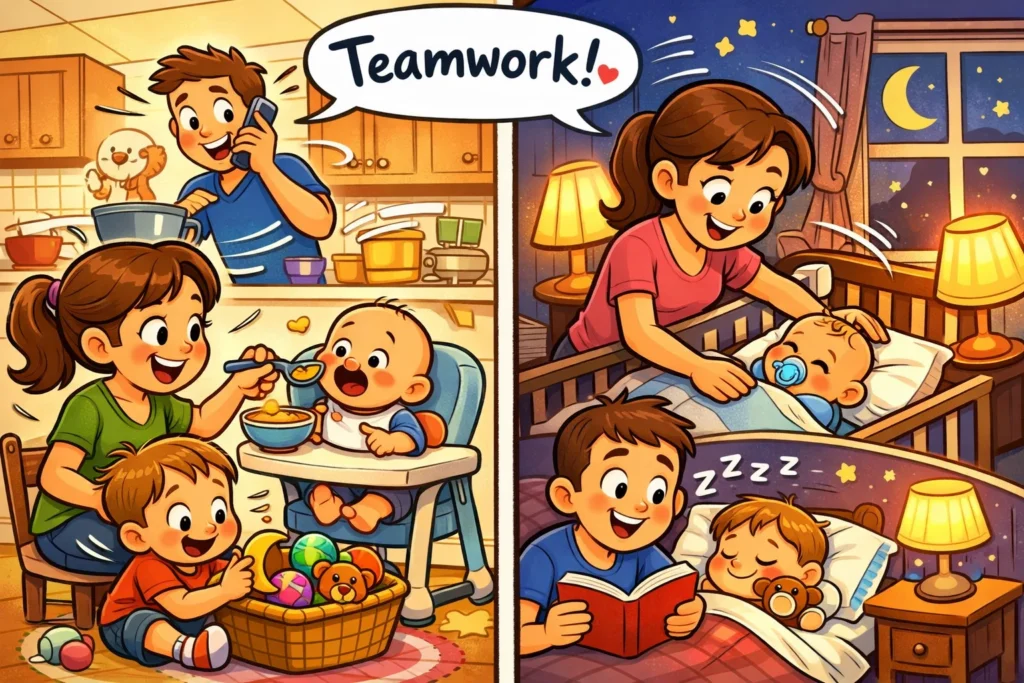
The logistics of life with a new baby and an active toddler are challenging. Tactical planning is key.
Handling Feeding Times With Baby
Feeding a newborn can be a challenging time for toddler mischief because you are physically “stuck.”
- The “Special Box”: Keep a basket of toys or stickers that only comes out when the baby sister or brother is being fed.
- Invite Your Toddler: Let them sit next to you. Let your toddler “help” by holding the burp cloth or choosing which book you’ll read aloud to both of them.
Bedtime Routines With Two Children
Try to keep the older sibling’s bedtime routine exactly as it was. If possible, have one parent handle the baby while the other focuses entirely on the toddler’s bath and storytime. This consistency is a powerful way to help them feel safe.
Outings And Transitions Outside Home
Leaving the house takes three times longer now. Prepare your toddler by giving them “warnings” (e.g., “In five minutes, we are going to put on shoes”). Use a double stroller or a baby carrier to keep your hands free to hold your toddler’s hand or help them navigate the playground.
Toddler Relationship with New Baby
Fostering a bond takes time. You cannot force a toddler to feel love for a newborn, but you can encourage a positive relationship between your toddler and the baby.
Safe Involvement With Baby Care
Encourage your toddler to be a “helper.”
- Invite your toddler to bring you a diaper.
- Let them hold the baby (while well-supported on a nursing pillow with you right there).
- Ask them to sing a song when the baby cries.
This gives them a new role as a protector rather than a competitor.
Preventing Jealousy Patterns
Watch your language. Avoid saying things like, “I can’t play because of the baby.” Instead, say, “My hands are busy right now, but I can play as soon as I put the baby down.” This shifts the “blame” away from the new baby sibling.
Protecting New Baby Safety
Never leave a toddler alone with a newborn. Even the most well-meaning toddler can be gentle with the baby one second and accidentally too rough the next. Show your toddler how to “touch with one finger” or kiss the baby’s feet instead of their face.
Parent Emotional Wellbeing During Transition
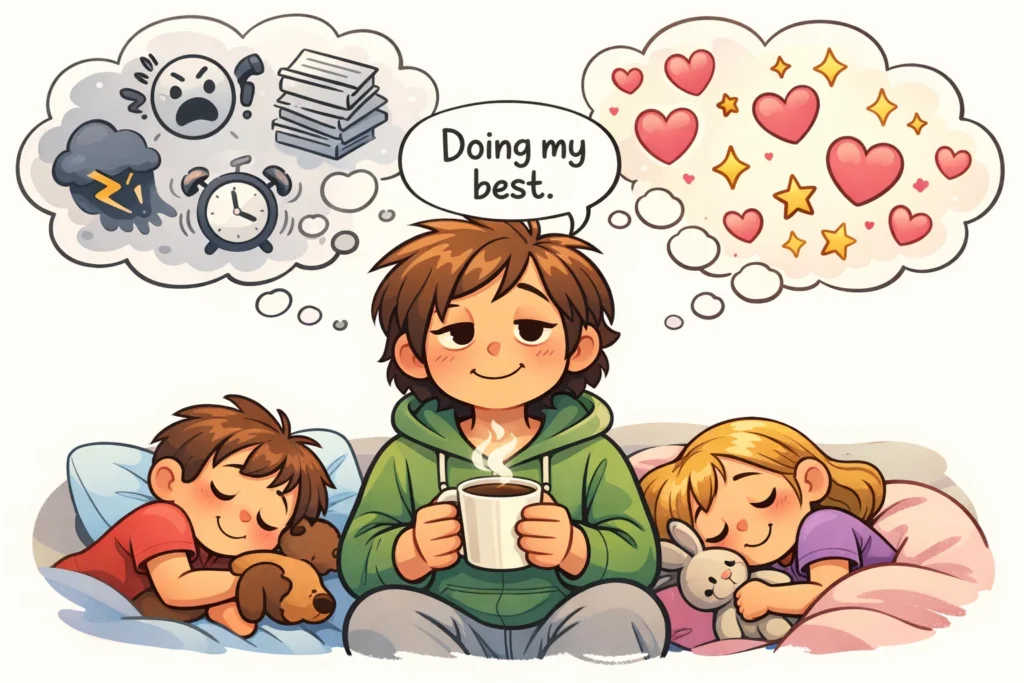
You cannot pour from an empty cup. Welcoming a new family member is exhausting, and your mental health directly impacts your toddler’s emotions.
Managing Guilt and Frustration
It is normal to feel guilty that you aren’t giving your firstborn enough attention. It is also normal to feel frustrated when your toddler is acting out. Remember: it’s common and temporary. You are a good parent navigating a difficult transition.
Self-Care Without Perfection Pressure
Forget the “Pinterest-perfect” nursery or a spotless house. Focus on the basics: sleep when you can, eat well, and allow your toddler to have a little extra screen time if it means you get a 20-minute nap.
Asking For Help Without Failure Narrative
If friends or family offer to hold the baby so you can spend time with your toddler, say yes! This isn’t a sign of failure; it’s a strategic move to stabilize your new family.
When Professional Support Makes Sense
While most toddler acting out is normal, some situations require a second opinion.
- Behavior Patterns That Need Extra Attention: If the aggression is severe (trying to cause serious injury), or if the regression lasts longer than six months without improvement.
- Pediatrician Or Child Specialist Consultation: If you are concerned about your child’s developmental progress or if you feel you cannot bond with one of your children.
- Early Support Benefits: Seeking help early can provide you with tailored strategies to de-escalate the household and rebuild a sense of peace.
FAQ About Regression in Toddlers and Preschoolers After Arrival of a New Baby
Yes, absolutely. Many firstborn children experience some level of behavioral disruption after a sibling is born. It is a sign they are processing a major life change.
Generally, no. As long as the older sibling eventually feels secure and valued, these temporary bouts of jealousy and regression do not cause long-term psychological damage.
The “balance” is never 50/50. Some days the baby needs more; some days the toddler feels more needy. Aim for “equity” over the course of a week rather than perfect equality every hour.