

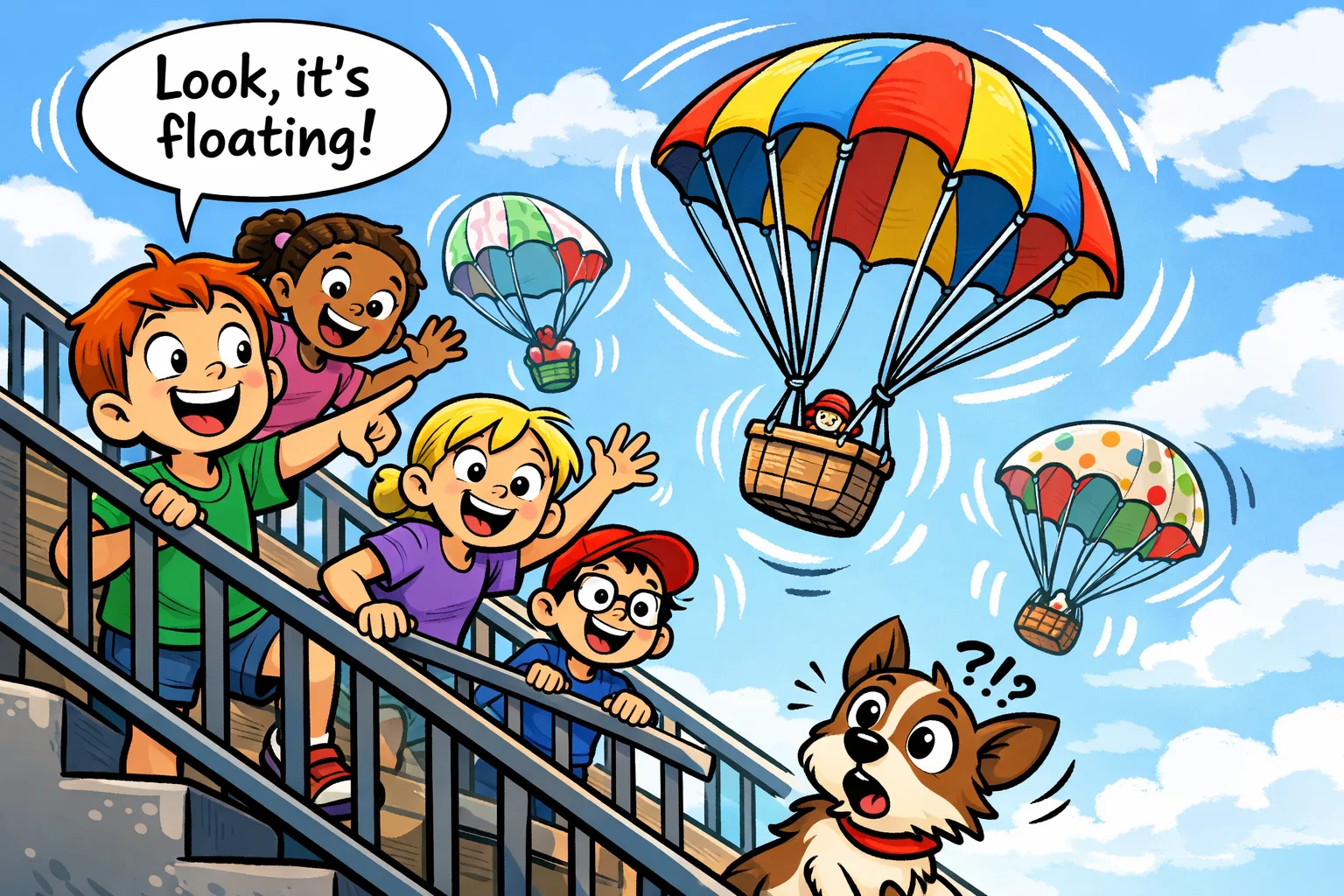
Introducing young learners to the wonders of physics often starts with a simple question: why do some objects fall faster than others? Engaging in a parachute experiment offers a tactile way to explore the invisible forces that govern our world. By participating in these activities, children move beyond passive observation and become active investigators of motion and energy.
Parachute Science Project Overview
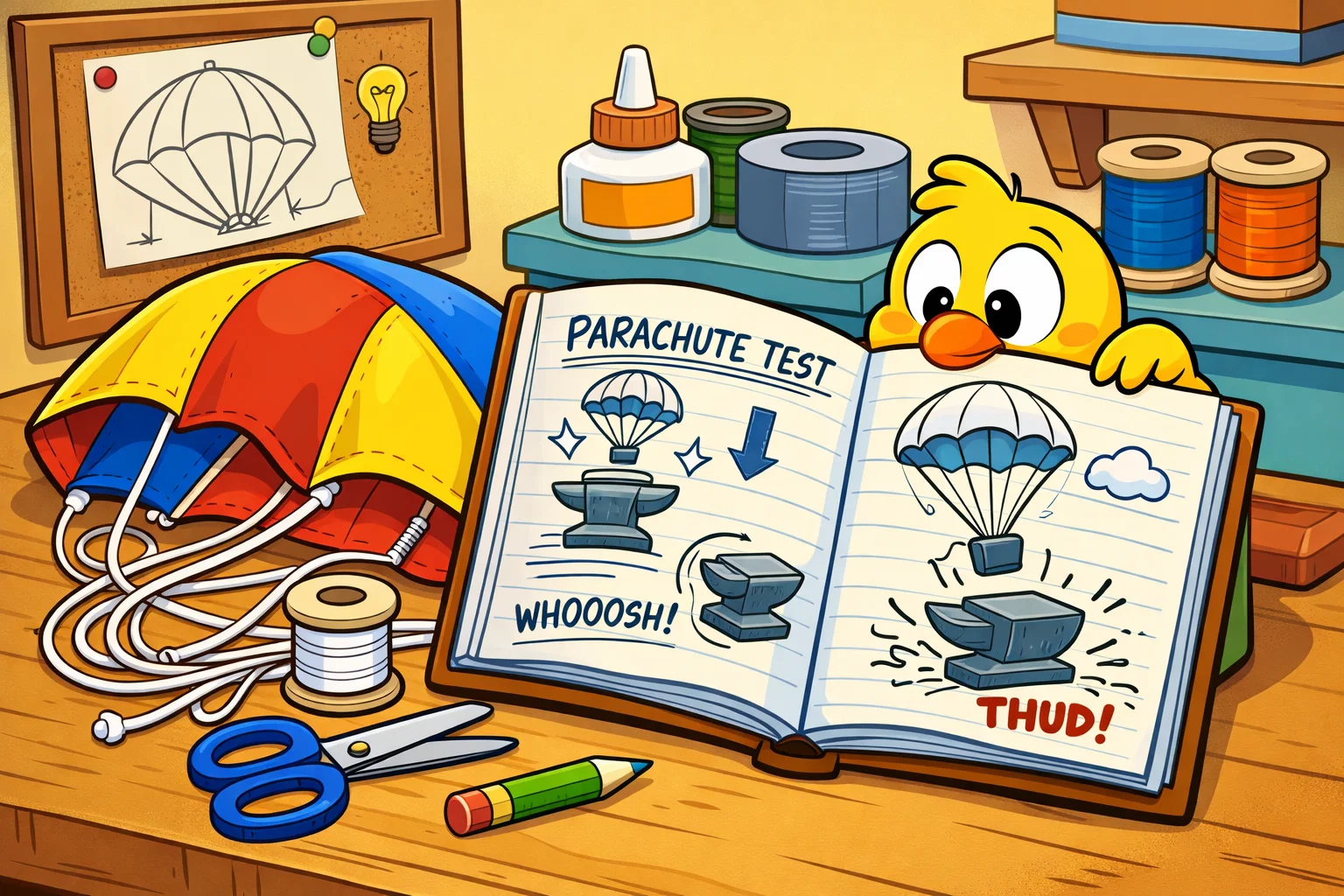
A parachute project serves as an ideal entry point into STEM (Science, Technology, Engineering, and Mathematics) because it combines creative building with rigorous testing. It allows kids to visualize how air interacts with solid objects, transforming abstract concepts into a visible struggle between opposing forces.
Scientific Objectives and Goals
The primary goal of this project is to investigate how air resistance can be used to counteract the pull of gravity. Through these experiments, students aim to achieve the following:
- Identify the forces acting on a falling object.
- Determine how changing the surface area of a canopy affects descent time.
- Observe the relationship between payload mass and terminal velocity.
- Apply iterative design to improve the stability of a homemade flight system.
Core Physics Vocabulary: Drag, Surface Area, and Velocity
To discuss these experiments accurately, it is helpful to use specific terminology. Drag is the technical term for air resistance; it is the force that opposes the motion of an object through a fluid like air. Surface area refers to the total size of the canopy that catches the air. Generally, a larger surface area creates more drag. Velocity describes the speed of the object in a specific direction. During a fall, when the upward drag force matches the downward pull of gravity, the object reaches a steady speed known as terminal velocity.
Essential Supplies for Parachute Construction
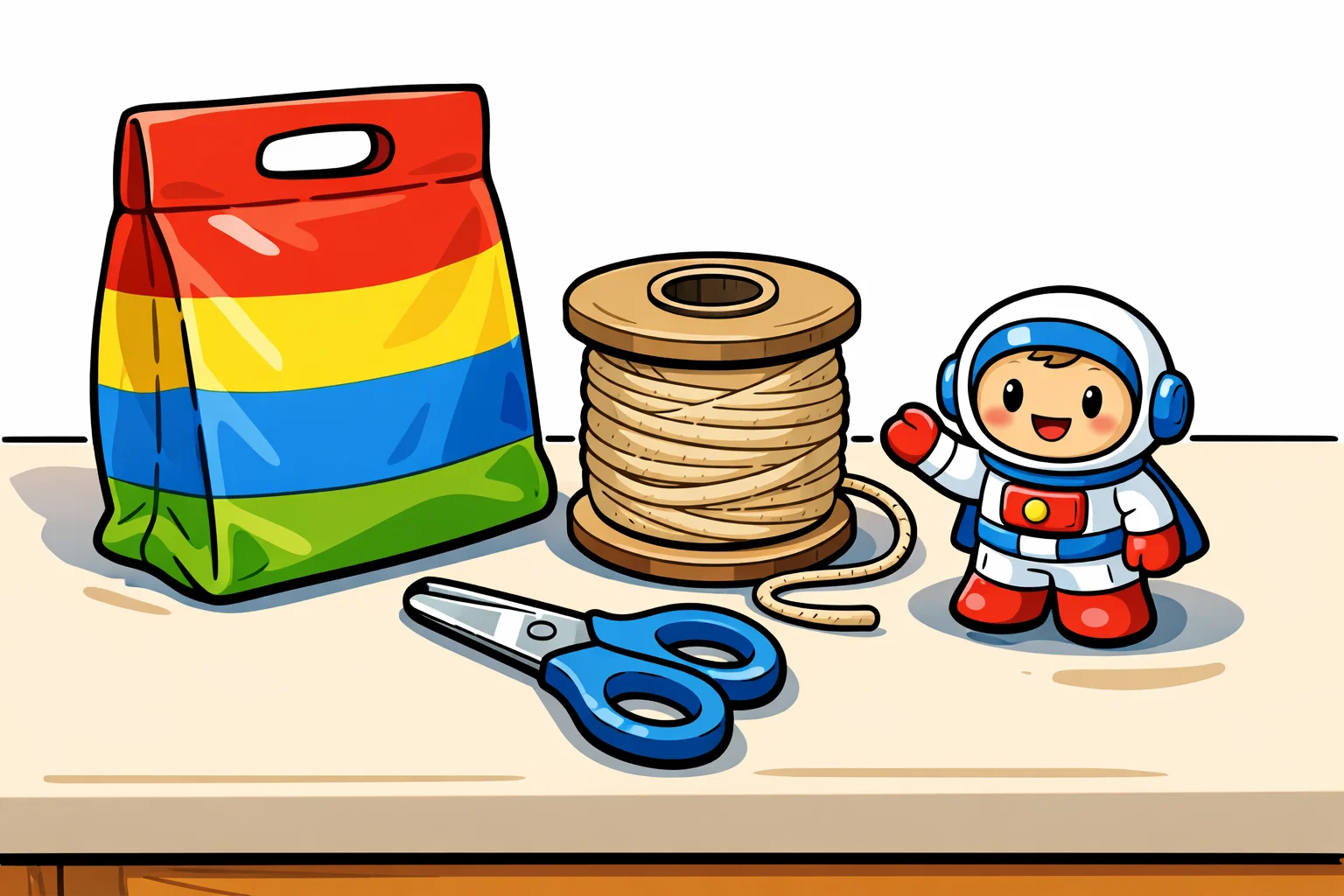
Success in building a functional model depends heavily on the selection of appropriate materials. The goal is to maximize drag while keeping the overall weight of the system as low as possible.
Canopy Material Selection: Plastic, Fabric, or Paper
The canopy is the most critical component. Lightweight plastic, such as that from a grocery bag or a thin trash liner, is often the most effective choice because it is impermeable to air and very light. Tissue paper is another popular option, though it is fragile and can tear easily. Lightweight fabrics like nylon or silk offer durability but may require more sophisticated attachment methods to prevent fraying.
Suspension Line Options
Suspension lines, or shroud lines, connect the canopy to the load. These should be thin, strong, and flexible. Common household items like kite string, embroidery thread, or even dental floss work exceptionally well. The key is to ensure all lines are cut to the exact same length to maintain balance during flight.
Payload Ideas: From Toy Figures to Egg Drop Challenges
The payload provides the weight necessary to pull the parachute down. For basic testing, small plastic toy figures or metal washers are excellent because they are consistent in weight. For a more advanced challenge, you might attempt an egg drop, where the goal is to protect a raw egg from breaking upon impact.
Measuring Tools for Data Collection
To turn a fun activity into a true science project, you need tools to record performance. A stopwatch is essential for timing the fall. A measuring tape is required to mark the drop height, and a simple kitchen scale can help children understand how different payload weights affect the results.
How to Make Parachute Step-by-Step
Building a parachute requires patience and precision. Following a structured process ensures that the final product is balanced and capable of capturing enough air to slow the descent.
Cutting and Shaping Canopy Designs
Start by laying your chosen canopy material flat. Using a template or a ruler, cut out a square or a circle. A standard recommendation for a classroom-sized model is a 14-inch diameter or side length. This size provides enough surface area to create significant drag without becoming too heavy for small payloads to manage.
Attaching Suspension Lines Securely
Once the canopy is cut, mark four to eight points evenly around the edge. Use a hole punch or a small piece of adhesive tape to reinforce these points before threading the lines through. It is vital to use an even number of lines — typically 4 or 8 — to ensure the load is distributed symmetrically.
Balancing Payload for Stable Flight
Gather the loose ends of the suspension lines and tie them together in a single knot. Attach this knot to your payload. Before dropping, hold the parachute by the center of the canopy and let the weight hang; if it tilts to one side, check if one of the strings is shorter than the others. Symmetry is the secret to a straight fall.
Adding Vents for Improved Stability
A common issue in parachute design is “wobbling” or “spilling” air. As the parachute falls, air builds up under the canopy and tries to escape. If it escapes over the sides, the parachute will tip. Adding an apex vent — a small hole cut into the very center of the canopy — allows a small stream of air to pass through, which actually stabilizes the descent by preventing the air from spilling unevenly over the edges.
How Parachutes Work: Forces of Motion
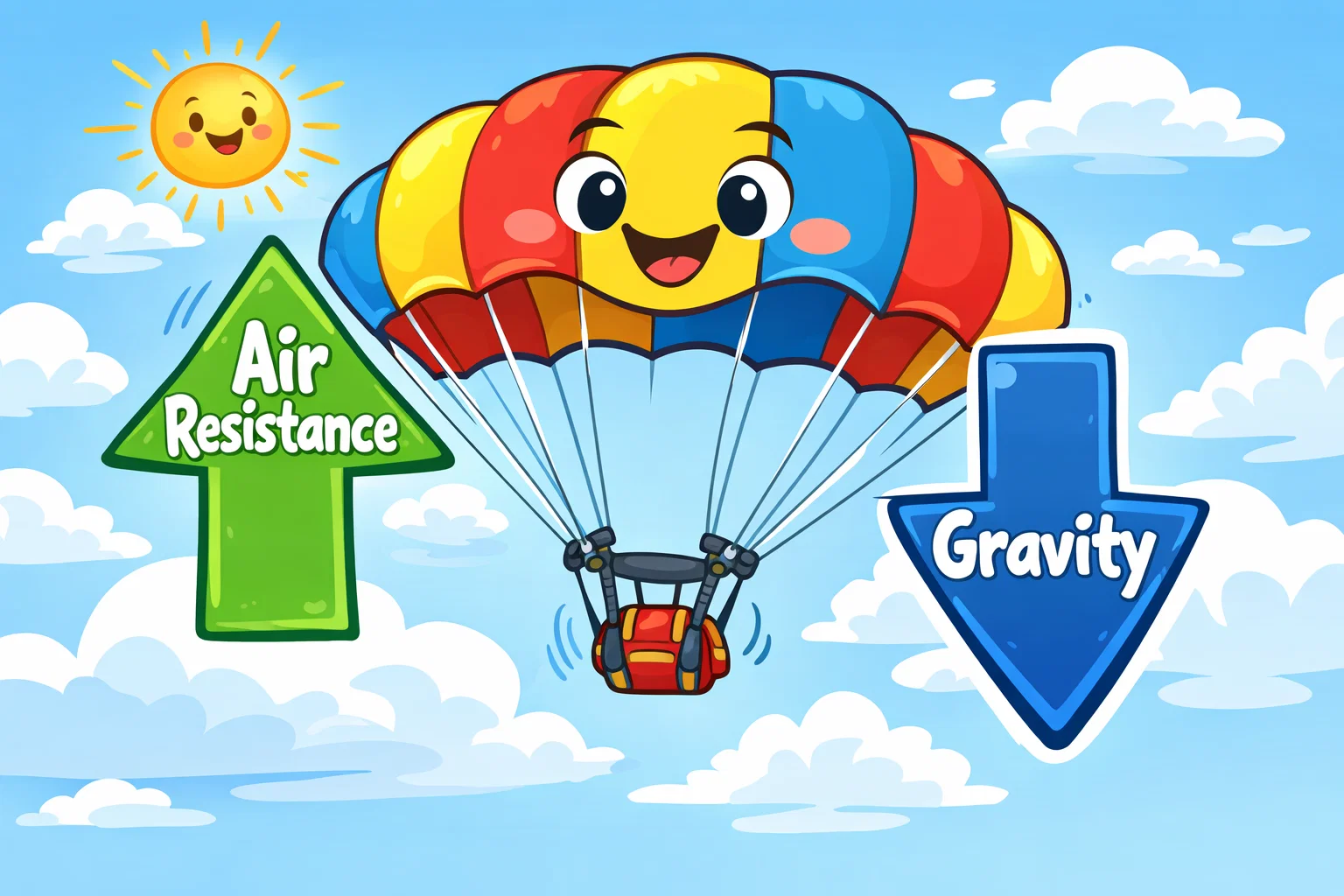
At its core, the science of these experiments is rooted in fluid dynamics and Newton’s Second Law of Motion. Gravity acts as an unbalanced force accelerating a payload toward the Earth at 9.81 m/s squared. This downward motion is opposed by air resistance, or drag, which is generated as the parachute canopy collides with air molecules.
Gravity vs Air Resistance Explained
Gravity is a constant pull, but air resistance is dynamic. The magnitude of this resistance is directly proportional to the projected surface area and the square of the velocity. This means that as the parachute falls faster, the air pushes back harder.
Research conducted between 2023 and 2025 emphasizes the importance of hands-on engagement in learning these abstract concepts. A comprehensive meta-analysis found that active learning provides an effect size of 0.519 on exam scores, indicating that students in these environments perform significantly better than those in traditional lecture-based settings. You can find more regarding the impact of active learning on student achievement in detailed educational studies at PNAS.
Impact of Surface Area on Descent Speed
A larger canopy catches more air molecules, increasing the upward force of drag. This is why a person with a large parachute falls slowly, while a rock falls quickly. By manipulating the surface area, kids can see the immediate impact on how long it takes for the object to reach the ground.
Terminal Velocity Basics for Kids
As the velocity of the fall increases, the drag force grows until it eventually equals the gravitational pull. When these two forces are balanced, acceleration ceases, and the parachute continues at a constant speed known as terminal velocity. In a classroom setting, a drop height of at least 3 meters is recommended to give the canopy enough time to inflate and approach this steady state.
Real-World Engineering Applications
Parachutes are not just toys; they are essential tools for space exploration and safety. Professional Mars entry simulations, such as the ASPIRE2 project, utilize these same principles to land rovers safely on the Martian surface. NASA’s curriculum often reminds students that the engineering process — including the “frustrating, messy parts” — is vital for developing critical thinking. “Every student should have the opportunity to research science. That’s how you learn science, is by doing it,” stated Meredith Cullen during a 2025 BINAP conference.
Conducting Parachute Investigation

To get the most out of your science experiment, you must approach the testing phase systematically. This involves controlling variables and keeping accurate records.
Finding Ideal Drop Zones
Safety and height are the two main considerations. A staircase with a railing, a secure balcony, or even a high playground structure can serve as an excellent drop zone. Ensure there is little to no wind, as even a slight breeze can push the lightweight canopy off course and invalidate your timing.
Observation and Data Logging Techniques
Encourage children to use a science journal. Before each drop, they should record the “starting conditions” — the weight of the payload, the size of the canopy, and the material used. During the fall, they should watch closely: Does it wobble? Does it open immediately?
Calculating Fall Times and Speed
Use a stopwatch to record the time from the moment of release until the payload touches the floor. Perform at least three trials for each configuration to calculate an average. This helps account for human error in starting or stopping the watch.
Safety Guidelines for Outdoor Testing
When testing outdoors, never climb on dangerous structures. Always have an adult present. If you are dropping payloads over a public area, ensure the path is clear to avoid hitting anyone below.
Variables to Explore in Resistance Experiments
The heart of the scientific method is the “Fair Test,” where only one variable is changed at a time. The following table provides a reference for standard classroom parameters.
| Component | Recommended Metric/Material | Reason for Selection |
| Canopy Size | 14-inch (35.5 cm) Diameter | Balances surface area with material weight. |
| Canopy Material | Thin Plastic (Grocery Bag) | Low mass, durable, impermeable to air. |
| String Count | 4 or 8 Evenly Spaced Lines | Ensures even load distribution and symmetry. |
| Drop Height | Minimum 3 Meters | Provides time for canopy inflation. |
| Apex Vent | 1-2% of Total Surface Area | Increases stability by preventing air “spillage”. |
Testing Different Canopy Sizes
To understand how surface area impacts the fall, you can try these variations:
- Small Square (8×8 inches): High speed, low drag.
- Medium Square (14×14 inches): Moderate descent.
- Large Square (20×20 inches): Slowest descent but hardest to stabilize.
Comparing Circular vs Square Shapes
Does a round parachute work better than a square one? Some evidence suggests that circular canopies provide more consistent drag, while square ones might be easier to build but more prone to tilting.
Analyzing Weight Influence on Flight
Keep the parachute the same but change the payload. Adding more washers will increase the force of gravity. This is a great way to show how the system must work harder to reach terminal velocity when the load is heavier.
Evaluating Performance of Various Materials
Compare a plastic bag canopy to one made of tissue paper or a cotton handkerchief. Kids will observe that materials that allow air to pass through (porous materials) fall much faster than those that trap the air effectively.
Extension Activities and Related STEM Projects
Once the basics are mastered, there are many ways to expand the learning experience.
Classic Egg Drop Challenge
This is the ultimate test of parachute engineering. Can you build a system that slows the fall enough to keep a raw egg intact? This requires thinking about:
- Creating a protective harness for the egg.
- Using shock-absorbing materials like cotton or straws.
- Ensuring the parachute deploys fully and quickly.
Air Balloon and Rocket Experiments
Explore other ways air interacts with motion. Building balloon rockets on a string helps kids understand thrust and Newton’s Third Law, complementing what they learned about drag and gravity.
DIY Wind Tunnels for Testing
For a more advanced project, use a box and a small fan to create a wind tunnel. This allows you to observe how the canopy inflates without having to drop it from a height repeatedly.
Designing Multi-Parachute Systems
Some spacecraft use multiple smaller parachutes instead of one giant one. Challenge kids to see if three small parachutes provide more stability or a slower fall than one large canopy of the same total area.
Educational Benefits of Parachute STEM
The value of these activities goes beyond simple physics. According to the National Science Teaching Association (NSTA), the secret to successful inquiry is the environment: “when students feel comfortable asking questions and are encouraged to work together to find the answers, inquiry almost happens on its own.”
Developing Critical Thinking and Problem Solving
When a parachute fails, students diagnose: tangled strings? Heavy material? This builds core critical thinking. NSF data shows hands-on STEM experiences significantly boost persistence and career interest in science.
Practicing Scientific Method through Iterative Design
Engineering is rarely about getting it right the first time. It is about trial, failure, and redesign. The iterative design cycle involves several key steps:
- Planning a concept based on existing research.
- Building a prototype using available materials.
- Testing and observing the performance in a real environment.
- Modifying the design to solve identified problems.
Building Math Skills with Measurement and Graphing
Calculating averages, measuring string lengths, and graphing the relationship between surface area and fall time provides a practical application for school math. Statistics from programs like STEMscopes show that 5th-grade proficiency rates in Illinois increased by 6.07 percentage points after implementing hands-on curricula.
Fostering Creative Engineering Solutions
There is no “perfect” parachute. This creativity is essential, as 42% of STEM educators now consider teamwork and interaction “absolutely essential” to their teaching framework. Working in teams allows kids to:
- Share diverse perspectives on design problems.
- Negotiate and compromise on building strategies.
- Communicate their findings clearly to others.
- Learn from the successes and failures of their peers.