
Number Activities for Preschoolers: 36 Fun Ideas for Counting, Number Recognition, and Writing

 Discover a Free Education Video App for Kids
Pastory uses AI to personalize educational video content based on your child’s interests and personality. Safe, engaging, and built for curious young minds. Sign up now to stay updated and enjoy early access with a free trial
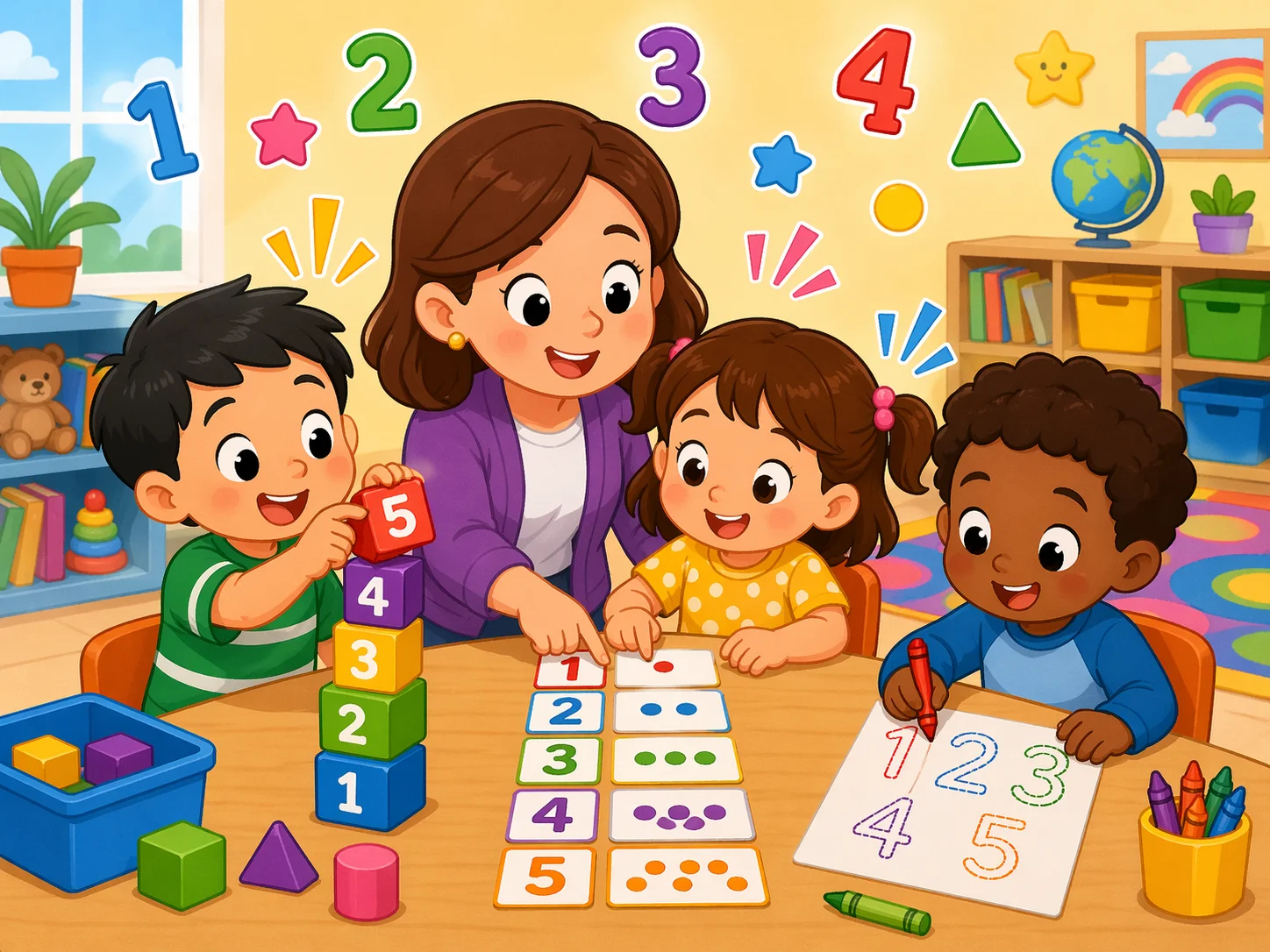
Introducing early math to young children does not require expensive kits or structured desk time. Preschoolers often learn best through hands-on play that weaves math concepts into their everyday environment. This guide provides 36 low-prep, play-based number activities designed for home, preschool, daycare, or homeschool settings. Whether you are focusing on numeral recognition, counting skills, or early writing, these engaging math games help turn abstract symbols into concrete understanding. By using a mix of printables, sensory bins, and movement, you can build a strong foundation in number sense that prepares children for future academic success.
Try These Preschool Number Activities Today
The activities below are grouped by skill so you can tailor them to your child’s needs. You can move between numeral recognition, sequencing, counting, and fine-motor writing activities based on your child’s current stage of development.
Quick activity guide by skill
- Beginner (Ages 3-4): Focus on number recognition and simple counting skills using pom poms or stickers.
- Intermediate (Ages 4-5): Introduce number sequencing, one-to-one correspondence, and matching numerals to quantities.
- Advanced (Pre-K/Kindergarten): Focus on numeral formation, writing digits, and basic addition and subtraction concepts.
How to choose the right activity by age and level
Choosing the right math activity depends on a child’s attention span and fine-motor skills. Math activities tend to work best when they are developmentally appropriate and match a child’s physical and cognitive readiness. For a child struggling with a pencil, a water writing activity is better than a worksheet. If a child is high-energy, a scavenger hunt will often work better than a classic card game.
Supplies to keep nearby
To make these preschool and kindergarten activities easier to set up, keep a ‘math bin’ stocked with reusable manipulatives such as:
- Flashcards
- Pom poms, buttons, and wooden blocks
- Sticky notes and construction paper
- Chalk, markers, and tweezer sets
- Painter’s tape (for indoor math lines)
8 Number Recognition Activities for Preschoolers
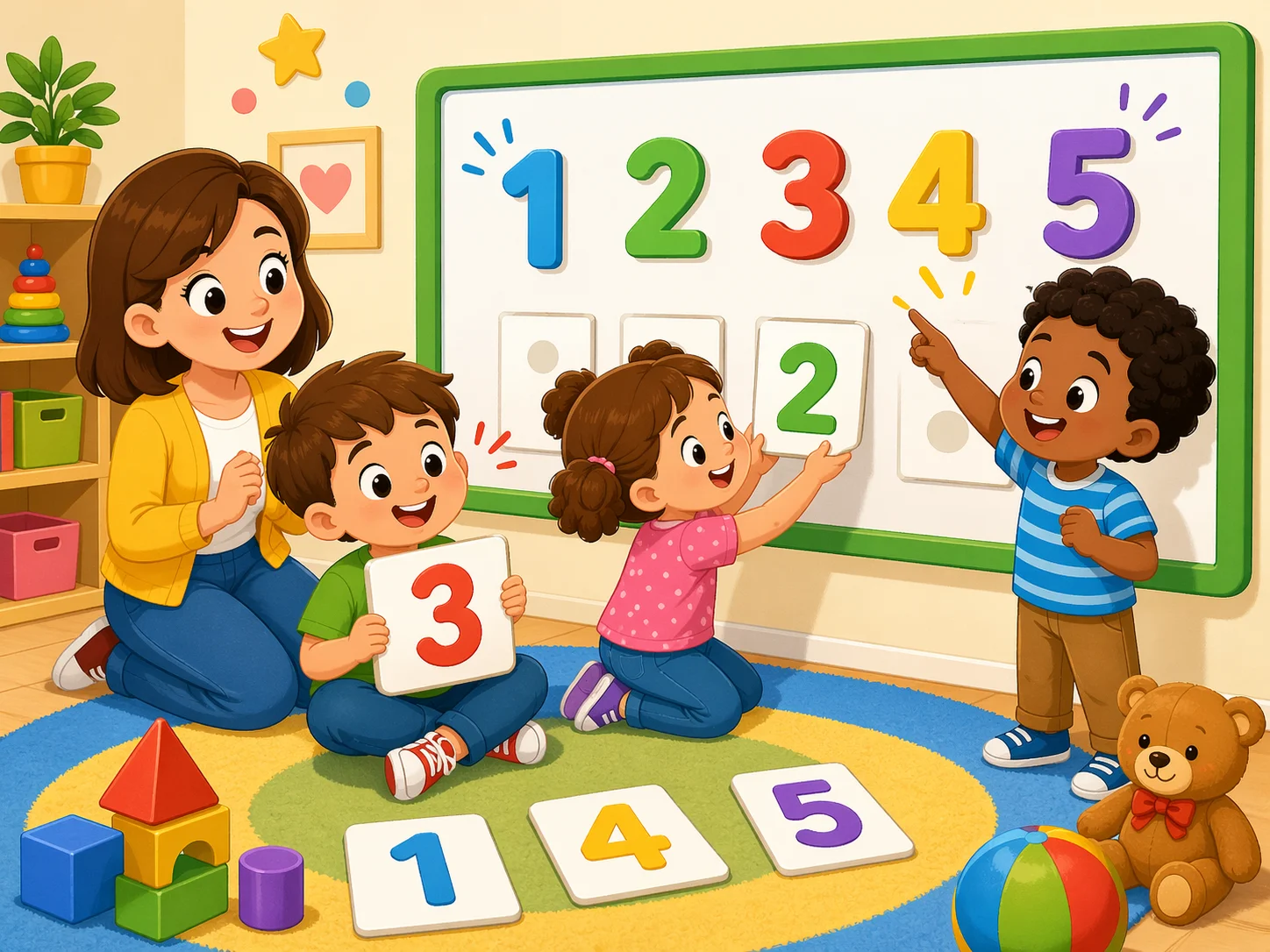
These activities help young learners see, name, and identify math symbols in their environment while building number recognition.
1. Digit Hunt
In this scavenger hunt, hide cards or sticky notes with different numerals around the room. The child finds each card and names the numeral out loud.
- Variation: For older kids, ask them to find the cards in numerical order.
2. Match-Up Cards
Use number cards and a set of small objects such as pom-poms. The child must match the symbol on the card to the correct quantity of items.
- Skills: Recognition and one-to-one correspondence.
3. Swat the Fly
Draw “flies” on pieces of paper, write a numeral on each, and tape them to the wall. Give the child a fly swatter. When you call out a target, the child swats the correct fly. This is a high-energy fun game for active learners.
4. Fishing for Digits
Attach paper clips to paper fish labeled with numerals. Use a stick with a magnet to go “fishing.” This engaging math activity builds fine motor skills while reinforcing numeral names.
5. Color by Code
Use a printable where different sections are marked with different numerals. Assign a color to each symbol. This helps with sustained focus and visual discrimination.
6. Connect the Dots
Dot-to-dot worksheets are excellent for teaching number sequence. As the child draws lines from 0 to 10, they reveal a hidden picture, providing an immediate reward for correct sequencing.
7. Spot Digits
Encourage your preschooler to find digits on cereal boxes, speed limit signs, or house addresses. This shows that math concepts are used in the real world every day.
8. Collage a Target Symbol
Give the child a large outline of the numeral 4 (or any target numeral) on construction paper. Have them fill the shape with stickers, pom poms, or magazine cutouts of that specific numeral.
7 Number Sequence and Sorting Activities for Preschoolers
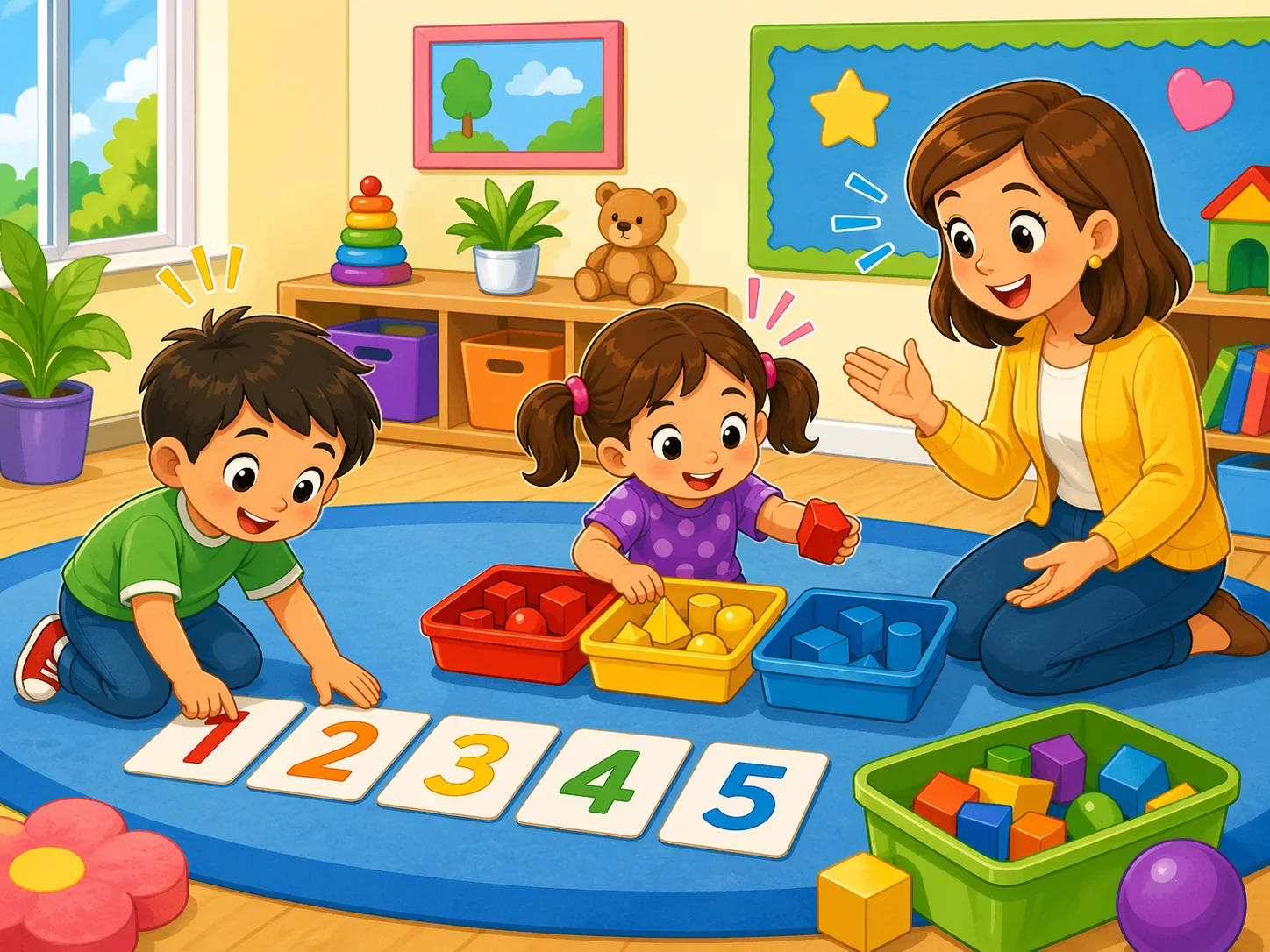
Once a child can identify basic numerals, they can begin sorting and sequencing them.
9. Line Jump
Use painter’s tape or chalk to create a large number line on the floor marked from 1 to 10. Have the child jump to the digit you call out, or jump in numerical order while counting aloud.
10. Train in Order
Label toy cars or blocks with numerals. Ask the preschooler to line them up in a “train” from 1 to 10. This hands-on task reinforces number order and helps children compare quantities.
11. Missing Digit Mystery
Lay out a sequence of cards (e.g., 1, 2, _, 4). Have the child identify and “solve” the mystery of the missing numeral.
12. Clip Wheel
Create a cardboard circle with digits around the edge. Provide clothespins with dots on them. The child must match a numeral on the wheel to the correct quantity of dots on the clothespin.
13. Sort Pom Poms by Card
Label muffin tin liners with numerals. The child uses tweezers to place the correct number of pom-poms into each cup.
14. Plastic Egg Order
Write a numeral on one half of a plastic egg and dots on the other. Children must match the symbol to the dots to close the egg, then line them up in order.
15. Puzzle Strip Sequence
Cut a picture into vertical strips and label the bottom of each strip in order. To see the full picture, the child must arrange the strips in the correct sequence.
8 Counting Activities for Preschoolers
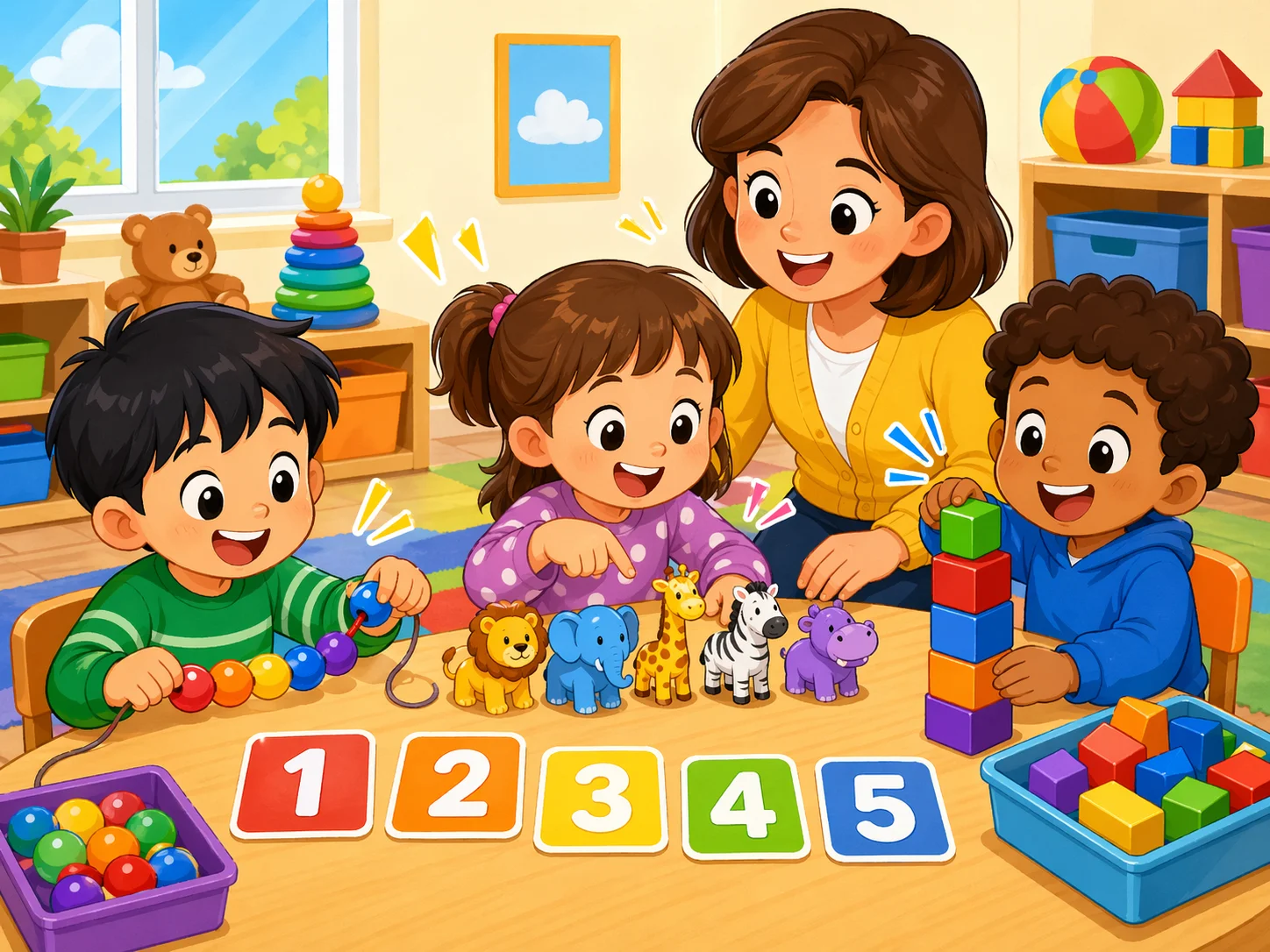
Counting is the bridge between recognition and basic arithmetic.
16. Counting Nature Walk
While walking, count rocks, trees, or flowers. This simple and fun activity connects early math to the physical world.
17. Lego Counting Build
Provide cards and a pile of LEGO bricks. The child builds a tower using the number of bricks shown on the card.
Comparison Table: Manipulatives for Counting
| Material | Best For | Skill Developed |
| Lego Bricks | Building towers | Counting with stacked objects |
| Beads/String | Threading | Fine motor & sequence |
| Pom Poms | Sorting into cups | One-to-one correspondence |
18. Counting Bead String
Have the child slide beads onto a pipe cleaner while counting. This fine motor task is excellent for young learners who need a tactile way to track their progress.
19. Magnetic Fishing Count
In this version of the fishing game, the child catches a fish and then must count out a matching amount of “worms” (yarn pieces) to feed it.
20. Corn Sensory Bag Count
Fill a Ziploc bag with hair gel and corn kernels. Tape a card behind the bag. The child pushes the kernels over the card to match the quantity shown.
21. Counting Treasure Hunt
Hide “gold coins” (yellow circles) in a sensory bin of rice. The child must find all the coins and count them to see if they found the whole “treasure.”
22. Tower Challenge
Ask: “Can you build a tower that is 5 blocks high?” This introduces the concept of height as a measurable value.
23. Pincer Play Count
Using tweezers, have the child move small items such as dried beans into a grid. This strengthens the pincer grip necessary for later formation practice.
6 Movement and Music Number Activities for Preschoolers
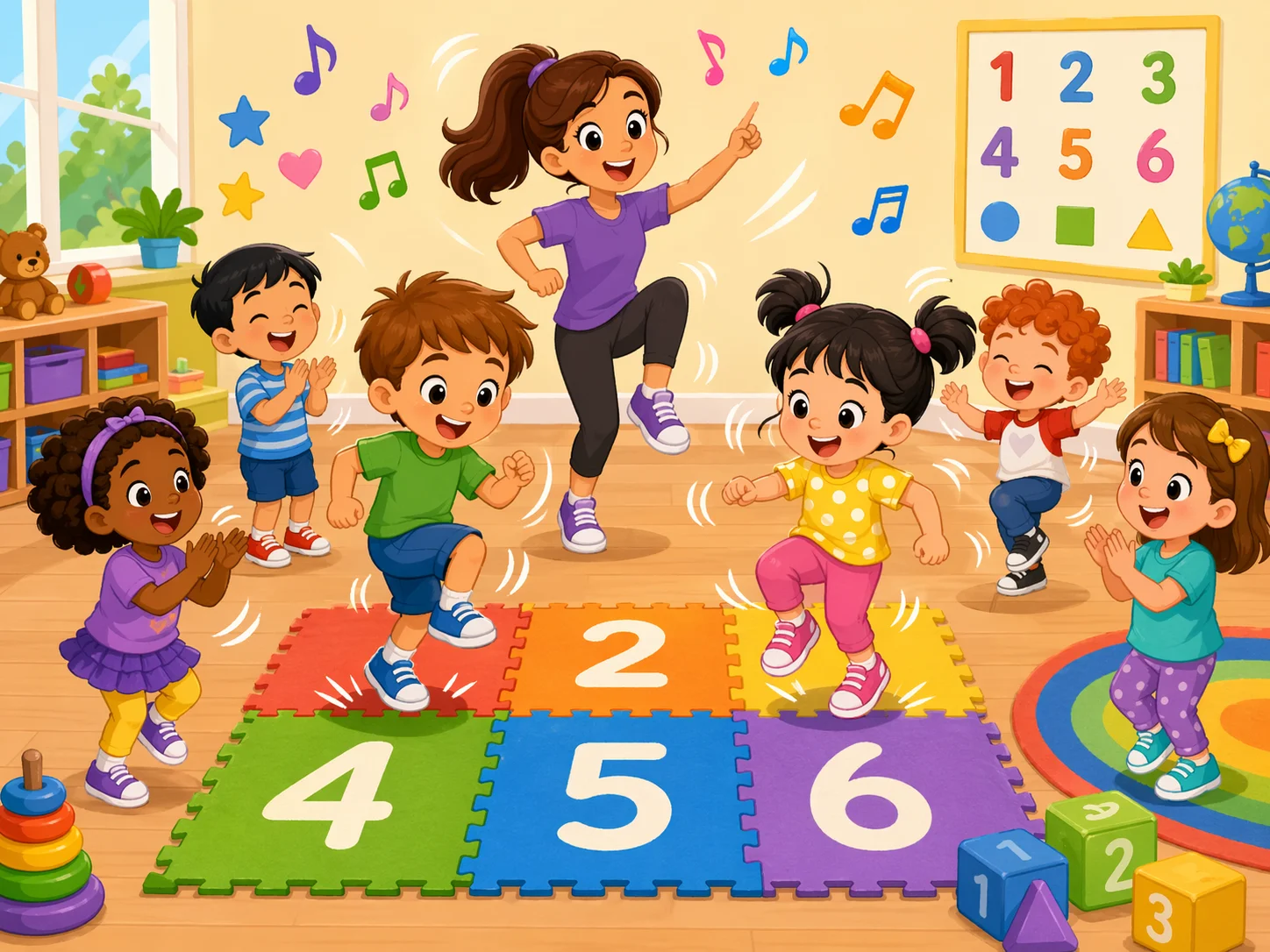
For kinesthetic learners, activities for kids that involve the whole body are one of the best ways to reinforce math concepts.
24. Hopscotch Count
Draw a hopscotch grid on the sidewalk. As the child lands in each square, they say the numeral or count aloud.
25. Count and Jump
Place cards on the floor. When you say a digit, the child must jump on that card and then perform that many jumps in place.
26. Run-and-Find Race
Place different cards at the end of a hallway. When you call out, ‘Find 3!’, the child runs to grab the correct card and brings it back.
27. Move and Count
Use “action cards” that say “Clap 5 times” or “Spin 2 times.” This connects the numeral to a physical quantity of actions.
28. Sing Counting Songs
Songs like “Five Little Ducks” or “Ten in the Bed” teach subtraction and counting skills through rhythm and repetition.
29. Freeze Dance with Digits
During a “Freeze Dance,” hold up a numeral when the music stops. The child must stay frozen for that many seconds or do that many “wiggles” before the music starts again.
7 Number Formation and Writing Activities for Preschoolers
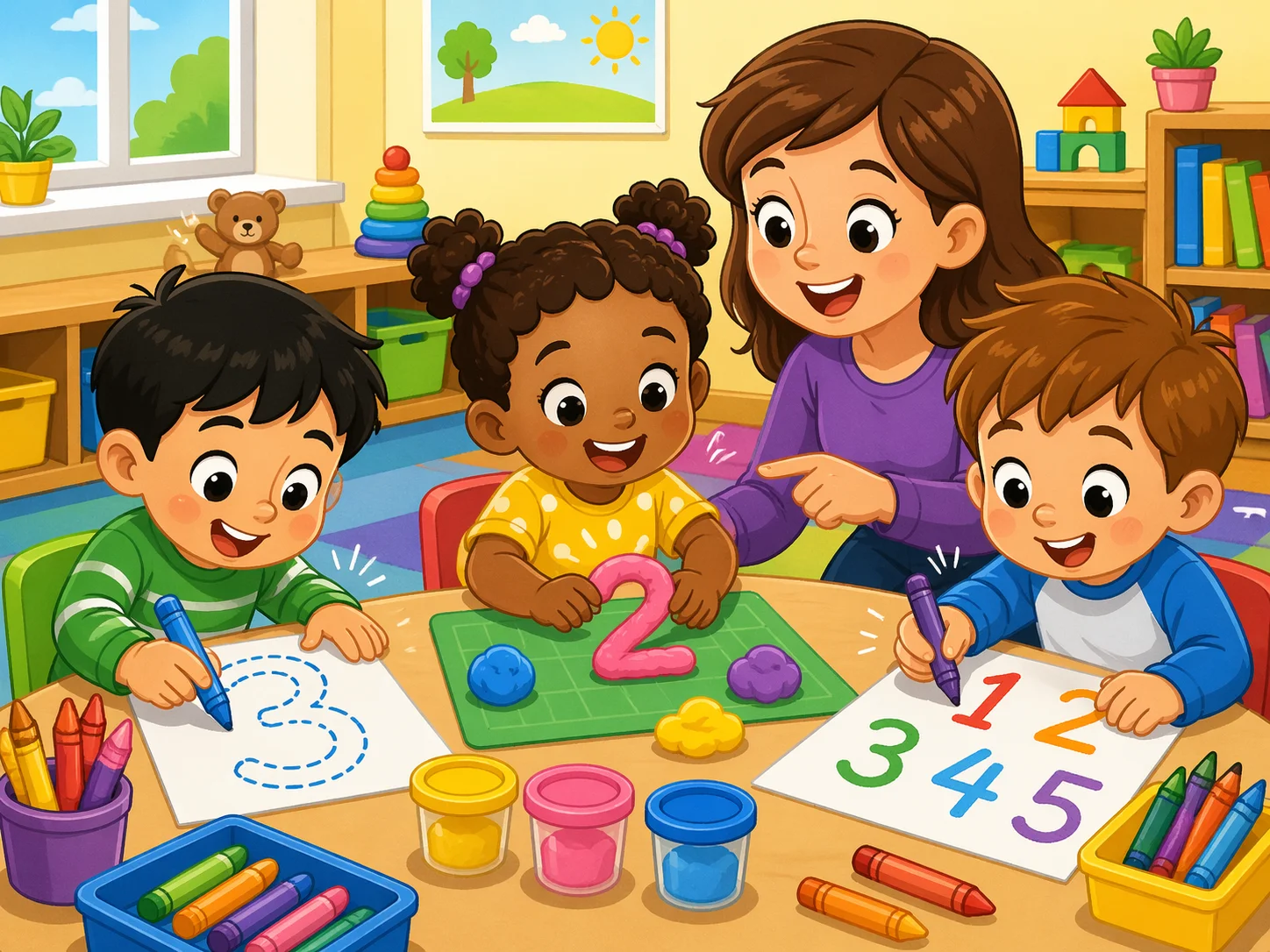
When a child shows interest in writing, you can introduce numeral formation.
30. Trace Numerals
Use free printable sheets with large, dotted numerals. Encourage the child to write digits using different colors to create “rainbow math.”
31. Sand Finger Paint or Playdough Writing
Provide a shallow tray of sand or a lump of playdough. The child uses their finger or a tool to practice symbol shapes. This sensory feedback helps with muscle memory.
32. Guided Worksheet Practice
A worksheet can be a useful tool if kept short and simple and fun. Focus on one numeral per day to avoid burnout.
33. Mini Sticker Fill
Draw a large digit on construction paper. Have the child place tiny stickers along the lines of the symbol. This builds fine motor skills and shape recognition.
34. Water Writing
On a sunny day, give the child a cup of water and a paintbrush. They can “paint” digits on the sidewalk. As the water evaporates, the marks disappear – a “magical” way to practice writing without the fear of making a mistake.
35. Arts and Crafts Shapes
Turn the digit 3 into a butterfly or the digit 8 into a snowman. These themed activities make the shapes of numerals memorable.
36. Dot Painting
Using a cotton swab and paint, have the child “dot” the outline of a symbol. This focuses on the specific path and direction of formation.
Skills Your Preschooler Will Practice
Early numeracy involves several distinct cognitive milestones. Understanding these math skills helps parents and educators provide the right support at the right time.
Recognition and matching
Number recognition is the ability to identify and name a numeral on sight. Before a preschooler can add or subtract, they need to understand that the numeral ‘4’ consistently represents the quantity four. Numeral-matching activities help solidify this connection.
Counting and one-to-one correspondence
One-to-one correspondence means counting each object in a set once and only once, with one touch for each number word. This prevents children from skipping items and helps them understand that the last number word they say represents the total quantity in the set.
Sequence and sorting
Understanding numerical order involves knowing the position of digits relative to each other. Sequencing activities, such as building a line from 1 to 10, teach children what comes “before” and “after,” which is a precursor to more complex problem-solving.
Formation and fine motor control
Formation refers to the physical act of writing digits. This requires fine motor skills and hand-eye coordination. Using hands-on activities like sand writing or tracing helps children memorize the specific strokes needed to create each symbol correctly.
Why These Preschool Number Activities Matter
Early exposure to math concepts is a significant predictor of later academic achievement. Play-based learning also supports working memory, flexibility, and self-regulation.
Early math readiness
Early math skills provide the scaffolding for future STEM success. Children who get early counting practice tend to perform better in elementary school because they have already mastered the foundational language of quantity and early number sense.
Confidence through play
Using a fun game or themed activity removes the “performance anxiety” often associated with mathematics. When little ones view counting as part of a treasure hunt or a hopscotch game, they develop a positive “math identity.”
Focus, memory, problem-solving growth
Activities that support early numeracy often involve sequencing and sorting, which require sustained attention. Playing a game like “Missing Digit” encourages problem-solving and logical reasoning as children deduce the correct answer based on context.
7 Benefits of Number Activities for Preschoolers
- Cognitive growth: Math learning exercises the brain’s ability to categorize and organize information.
- Math readiness: Early mastery of number sense leads to smoother transitions into early addition and subtraction.
- Problem-solving habits: A scavenger hunt teaches children to look for clues and think logically.
- Logical reasoning: Sequencing and sorting help children understand patterns and cause and effect.
- Memory and recall: Repeatedly seeing a numeral in different contexts strengthens long-term memory.
- Curiosity and independence: Hands-on activities empower children to explore math concepts at their own pace.
- Subitizing growth: This is the ability to look at a small group of items (such as three dots) and know how many there are without counting them one by one.
Conclusion
Best order for using this list
To build a child’s confidence, it is best to follow a progressive path:
- Recognition: Start by identifying numerals.
- Counting: Link those symbols to physical quantities.
- Sequencing: Learn the order of numbers on the number line.
- Writing: Develop the fine motor skills to create the symbols themselves.
How to keep practice fun and consistent
Consistency is more important than duration. A simple and fun 10-minute scavenger hunt every day is more effective than a one-hour worksheet session once a week. Keep your little ones engaged by rotating their favorite activities for preschool and kindergarten and always celebrating their progress.
Frequently Asked Questions
Best age to start number activities
Most children begin showing interest in numerals between ages 2 and 3. Early preschool (around age 3) is a great time for number recognition and counting, while older pre-K children (ages 4–5) are usually ready for numeral formation.
Need special materials for number activities?
No. Most of these activities for preschoolers use common household items like pom poms, sticky notes, chalk, and pieces of paper.
How often should preschoolers practice number recognition and writing?
Short, daily bursts of 5–15 minutes are ideal. Frequent, low-pressure exposure helps reinforce these concepts without causing frustration.
How can I help a child who avoids practice?
Focus on their interests. If they love cars, do a run-and-find race. If they love art, try dot painting or water writing. If they are active, stick to hopscotch.
How can I adapt these activities for mixed skill levels?
Adjust the range of digits. A younger child can focus on 0–5, while an older child can work on 0–20. You can also add a subtraction element for advanced learners.
How can I help my child recognize numbers more easily?
A simple first step is to use everyday objects and point out numbers in real life, such as house numbers, books, and food packaging. In early learning, number recognition means seeing a numeral and understanding what it represents, so repeated exposure helps children identify numbers more confidently.
Is it better to use number cards or toys for early math?
Both can work well, but many parents like to use number cards because they are easy to set up and adapt. You can hide number cards, place cards around the room, or pair each card with toys so your child can match the number to a group of objects.
What is a simple game for active kids who do not like worksheets?
A number scavenger hunt is one of the easiest options for active learners. Hide number cards around the play area and ask your child to find one, say the number out loud, and bring it back before searching for the next card.
How do I teach one-to-one correspondence at home?
Start with small sets of objects and ask your child to place one item on each space or mat. Then invite them to draw the same number of dots or circles after counting, or line up the same number of blocks. This helps them connect the written symbol to the corresponding number of items.
What objects work best for counting practice?
Small manipulatives are often the easiest choice because children can move them one at a time. Buttons, blocks, beads, or pom-poms can all work well for counting, sorting, and building strong early number skills through play.

Take a short quiz to find out what your everyday choices say about your parenting style
When your child is curious about something new, what’s your instinct?
Take a short quiz to find out what your everyday choices say about your parenting style
“Can I download this app?” What happens next?
Take a short quiz to find out what your everyday choices say about your parenting style
When it comes to rules at home, which sounds most like you?
Take a short quiz to find out what your everyday choices say about your parenting style
If you could give your child one life skill today, what would you pick?
Take a short quiz to find out what your everyday choices say about your parenting style
Your child gets to choose what to watch. What would your ideal setup look like?
Take a short quiz to find out what your everyday choices say about your parenting style
Pick your parenting superpower ✨



