

The early years of a child’s life — especially the toddler stage — are a time of rapid growth in movement, language, and emotions. During this stage, “big feelings” often clash with limited verbal skills, creating frustration for both child and caregiver. Music therapy, an evidence-based practice that uses music to support emotional and developmental growth, offers a gentle solution. While many parents intuitively use melodies to calm or connect with their child, structured sessions with a certified music therapist can provide deeper benefits, helping little ones navigate early challenges.
This guide explores how sound-centered therapeutic approaches can help children express emotions, develop focus, and find calm through organized auditory activities.
Core Principles of Music Therapy for Young Children
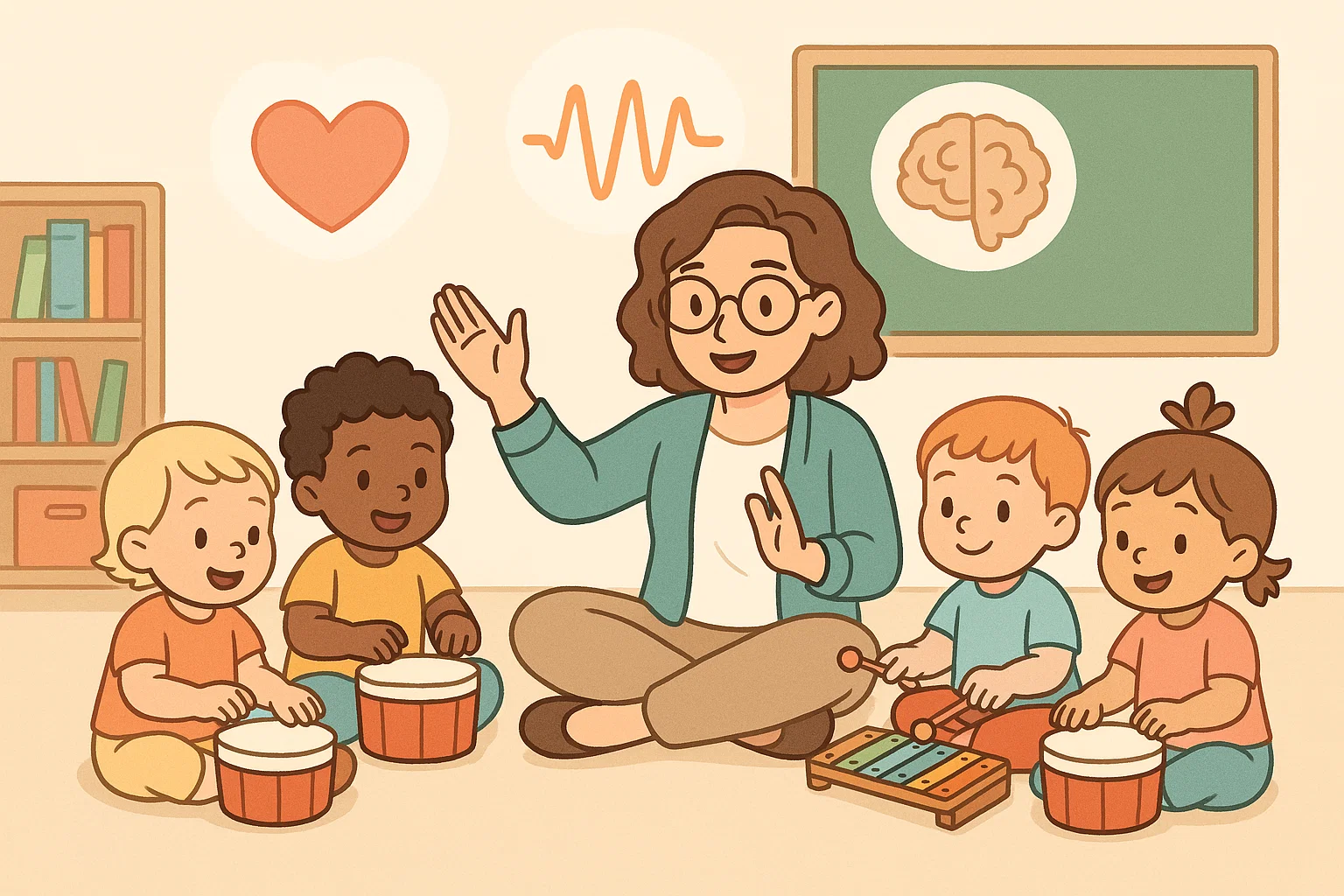
Music therapy is far more than simply listening to music. It’s a goal-oriented process where the music therapist strategically uses rhythm, melody, harmony, and structured sound to achieve individualized, non-musical goals. For toddlers, this approach recognizes that children learn and communicate most effectively through sensory play.
The fundamental principles include:
- Sound as a Tool for Expression and Regulation: Therapeutic sound-based work gives toddlers a non-verbal outlet to express emotion safely. A drumbeat can mirror excitement, while a gentle tune can help with emotional regulation when a child is overstimulated.
- Adaptation and Flexibility: The therapy session is constantly adapted to the toddler’s focus, energy, and developmental stage. Since attention spans are short, the session remains structured yet flexible.
- The Power of Relationship: The connection built between the child and the professional — often through shared musical experience — forms the basis for therapeutic progress.
Role of Play and Spontaneity
In a music therapy session, unstructured play and spontaneous sound-making are key elements. Toddlers thrive in safe environments that allow exploration. Improvisation — following a child’s spontaneous sounds or beats — helps build trust and shows that their contributions matter.
Importance of Routine and Predictability
Although spontaneity is vital, predictable rhythmic patterns offer toddlers a sense of security. Familiar songs and recurring auditory cues help children learn sequencing and anticipate transitions. Consistent “Hello” and “Goodbye” songs help structure the therapy session.
Connection Between Movement and Sound
Integrating motion — such as clapping, stomping, swaying, or playing instruments — stimulates both motor and cognitive development. Engaging the body rhythmically activates multiple neural pathways, highlighting the important role of music in brain integration.
Key Benefits of Music Therapy for Toddlers
Research shows that benefits of music therapy extend to virtually all children and young people, regardless of developmental stage.
| Developmental Area | Music Therapy Benefit | Example of Activity |
| Emotional Regulation | Helps children to express feelings safely and learn to calm themselves. | Using a slow tempo and soothing music to transition from a high-energy activity. |
| Cognitive Development | Enhances memory, attention, and executive function skills. | Playing instruments in a stop-and-go game (impulse control). |
| Social Skills | Encourages cooperation, sharing, and turn-taking in group activities. | Passing a shaker or a drum around a circle to the beat. |
| Motor Skills | Improves fine and gross motor coordination through rhythmic movement. | Clapping hands, stomping feet, or using rhythm sticks. |
Emotional Regulation and Expression
Children who struggle with verbal communication can express emotion by pounding a drum or matching feelings to a particular rhythm. This supports emotional resilience.
Cognitive and Speech Development
Singing is a powerful precursor to speech. The melodic and rhythmic patterns in songs stimulate the language areas of the brain. Techniques like Melodic Intonation Therapy, a common music therapy technique, use exaggerated pitch and rhythm to facilitate vocalization and speech development. Research among preschoolers indicated that a rhythm-and-movement intervention with music improved executive function and self-regulation.
Sensory Integration and Focus
For many children who struggle with processing the world around them, the controlled sensory input of a music therapy session is highly therapeutic. The texture of a soft drum, the vibration of a stringed instrument, or the controlled variations in pitch and rhythm help children to explore and process sensory input in a predictable way. This helps children with learning differences or sensory sensitivities to improve their focus.
Social Connection and Cooperation
The shared musical experience of engaging with sound in a group setting is a natural way to build social skills. Group activities in music therapy encourage children to listen, wait their turn, share instruments, and synchronize their movements and sounds. This collaborative musical activity enhances empathy and social interaction – a key area where rhythm naturally supports communication.
Popular Music Therapy Techniques for Toddlers
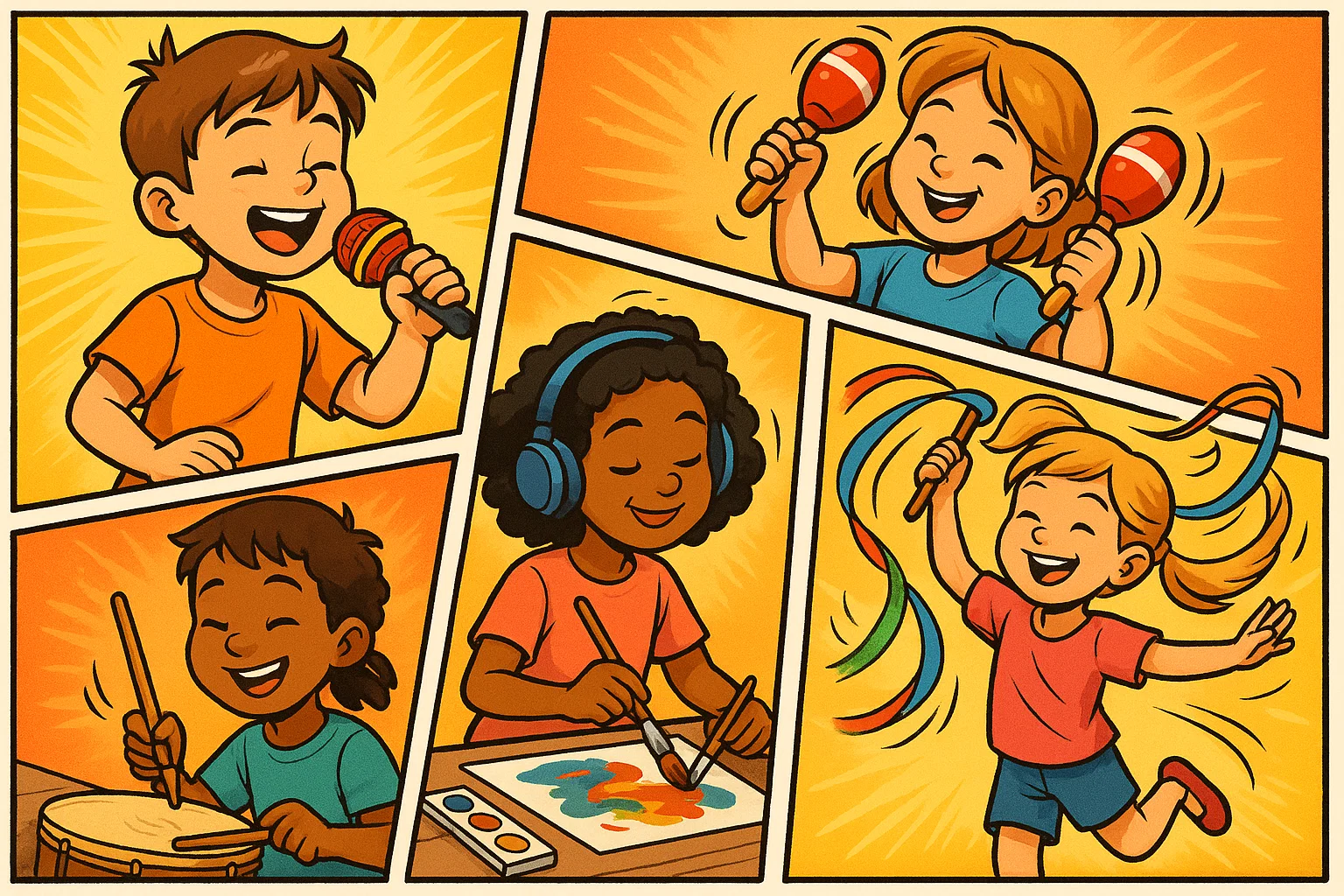
These actionable sound-based therapy interventions are designed to be easily implemented by parents and educators, aligning with the playful spirit of the toddler years.
Singing and Vocal Play
This involves more than just singing familiar songs. A music therapist often uses improvised, short, sing-song phrases that mirror the child’s actions or feelings (e.g., “Liam is building a tall, tall tower!”).
- Action: Use familiar nursery rhymes (e.g., “The Wheels on the Bus,” “Twinkle, Twinkle, Little Star”) and pause before the final word to encourage the child to complete it.
- Expected Outcome: Encourages vocalization, imitation, and joint attention.
Instrument Exploration
Simple percussion instruments are the music therapy tools of choice for this age group, offering immediate auditory feedback and engaging sensory input.
- Action: Provide simple, safe instruments like egg shakers, rhythm sticks, and small hand drums. Let the child freely explore sound by hitting, shaking, or scraping. The adult models different ways to make music (softly, loudly, fast, slow).
- Expected Outcome: Supports fine and gross motor development, sensory discovery, and learning concepts like volume and tempo.
Movement-Based Rhythm Games
These activities are fantastic for impulse control, following directions, and stimulating auditory-motor integration.
- Action: Moving to the beat in games like “Freeze Dance” where the children must stop moving the instant the sound stops. Or, a simple marching game where they follow the leader’s beat.
- Expected Outcome: Improves body awareness, ability to follow multi-step directions, and emotional regulation through physical release.
Sound and Art Fusion
This creative activity allows children to express their emotional responses to sound visually, connecting two different modes of expression.
- Action: Play various sonic patterns – some fast and loud, others slow and soft. Provide crayons, paint, or playdough and encourage the child to make marks that match the sounds they hear or the feelings the auditory input inspires.
- Expected Outcome: Facilitates emotional expression, fine motor skills, and abstract thinking by linking auditory and visual sensory input.
Musical Storytelling
Using sound effects and melodies to narrate a simple story encourages imagination and empathy.
- Action: Tell a short story (e.g., about a bear waking up and looking for honey). Use instruments to represent characters or actions (e.g., quiet, soft drumming for the sleeping bear, loud banging for the bear running, gentle shakers for rain).
- Expected Outcome: Helps children connect sound with imagination, enhances auditory memory, and provides a framework for emotional narratives.
Techniques for Calming or Energizing Sessions
The nature of music makes it a powerful regulator of the central nervous system. A skilled music therapist can manipulate elements like tempo, rhythm, and volume to either soothe an overactive child or engage a low-energy one.
Calming Routines for Overactive Toddlers
To help children who are overstimulated or struggling to calm down, the focus is on predictable, slow-paced input.
- Action: Use slow, steady, soft rhythmic songs, especially those in a minor key. Simple humming or playing a glissando (a slow, sweeping sound) on a soft instrument like a harp or chime can quickly soothe. Lullabies are classic examples of melodic interventions.
- Expected Outcome: Promotes relaxation, slows the heart rate, and aids in refocusing.
Energizing Activities for Low-Energy Moments
When a child is sluggish or unmotivated, the music therapist will introduce rapid, loud, and varied input to increase arousal.
- Action: Engage in fast-tempo drumming and clapping games with sharp, sudden starts and stops, introducing quick changes in tempo and dynamics. Upbeat marching songs are also very effective.
- Expected Outcome: Increases alertness, engagement, and motivation to participate.
Transition Songs and Grounding Melodies
Toddlers often struggle with transitions (e.g., moving from playtime to clean-up, or from home to the car). Aural input can become a reliable signal.
- Action: Create a short, specific “Clean-Up Song” or a “Sitting Song” that is always sung/played before the transition begins. The consistency of the melody acts as a grounding anchor.
- Expected Outcome: Reduces anxiety around change and helps children shift smoothly between activities.
Integrating Music Therapy into Daily Life
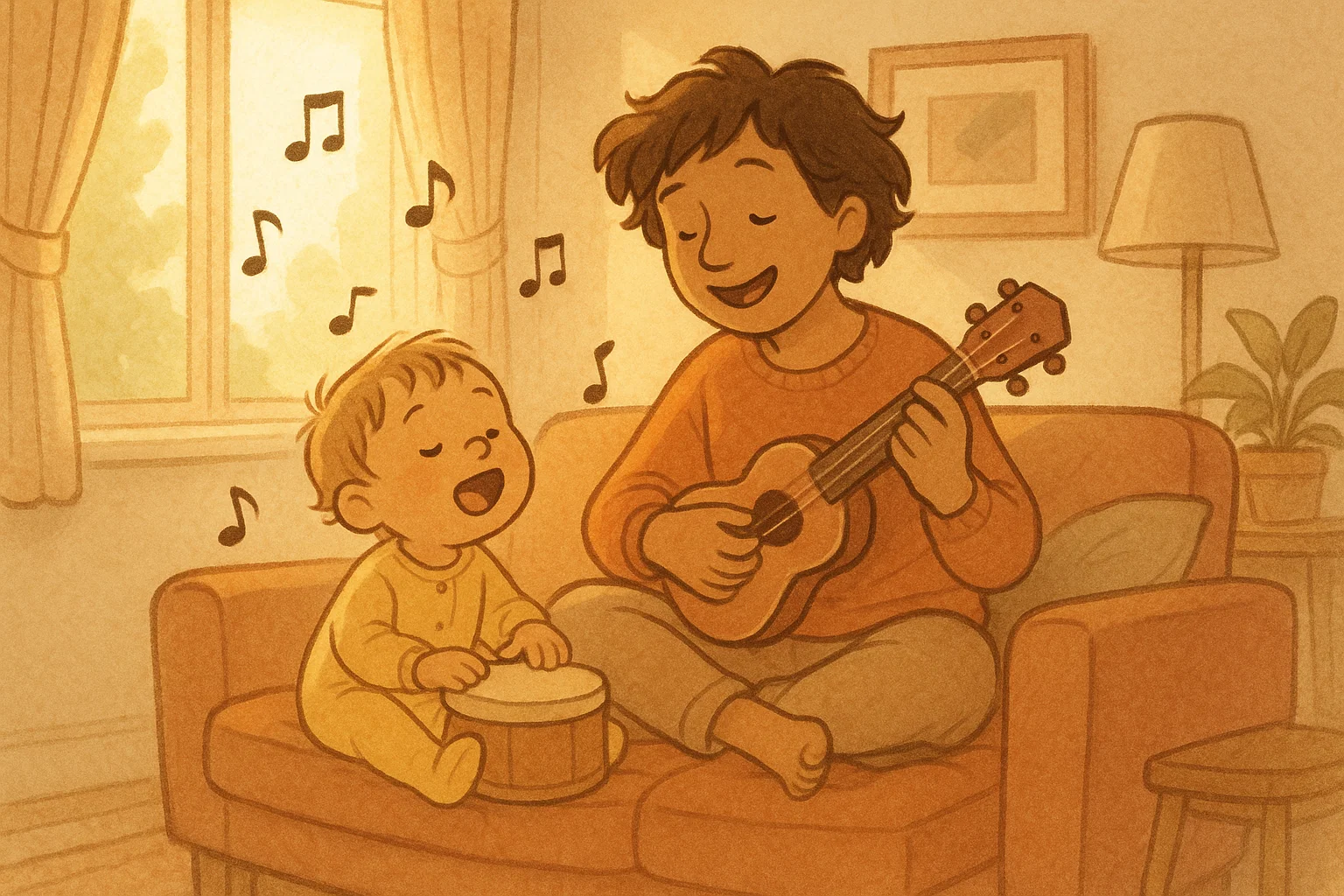
The true power of melody is realized when the principles and music therapy techniques are carried over into a child’s everyday environment, allowing the art form to support ongoing development.
Morning and Bedtime Music Rituals
Consistency is key to leveraging the use of melodic cues for routine.
- Morning: Use an upbeat, playful song to signal waking up and getting dressed. This encourages cooperation and makes routines fun.
- Bedtime: Implement a predictable sequence of quiet, soothing audio, perhaps a gentle piece of classical melody or soft acoustic guitar, leading up to a final lullaby. This aids emotional regulation before sleep.
Themed Music Sessions for Learning
Auditory input is an incredible mnemonic device that can reinforce early academic concepts playfully.
- Action: Use counting songs to reinforce numbers. Use simple songs that name colors (e.g., “Red and Yellow and Pink and Green”). Musical activities can also be themed around emotions, like a song about feeling “happy” or “sad.”
- Expected Outcome: Enhances memory, makes learning fun, and improves vocabulary.
Family Participation and Bonding
When adults create melodies with children, it strengthens the attachment bond and builds trust.
- Action: Dedicate a few minutes each day to joint musical play, where there are no rules other than having fun. Sing a duet, make up a rhythm on kitchen pots, or simply dance together.
- Expected Outcome: Deepens familial connection and provides a positive, shared auditory experience.
Role of Parents and Caregivers
Parents and caregivers are the most consistent partners in a child’s development. Their involvement is crucial to reinforcing the therapy goals between therapy sessions.
Observing Child Reactions During Musical Play
A central tenet of music therapy works is tracking the child’s non-verbal communication.
- Guidance for Parents: Learn to notice the subtle cues: Does the child lean in and smile when a particular tempo is played? Do they turn away when an instrument is too loud? This information is invaluable to the music therapist and helps children communicate their sensory preferences and emotional state.
Collaborating with Certified Music Therapists
Music therapy is an evidence-based practice that uses music. Only certified professionals can provide the specific, tailored music therapy interventions.
- Action: Regularly communicate with your child’s music therapist about successes and challenges at home. Ask for 1-2 specific music therapy activities to practice between therapy sessions that align with the child’s goals.
Encouraging Musical Exploration at Home
Children develop skills through curiosity. You don’t need expensive instruments to encourage the creation of sound.
- Action: Use household items as safe, accessible music therapy tools: wooden spoons and pots for drums, dried beans in a sealed jar for a shaker, or simply tapping hands on the floor. Provide children a way to explore sound freely.
Music Therapy for Specific Developmental Needs
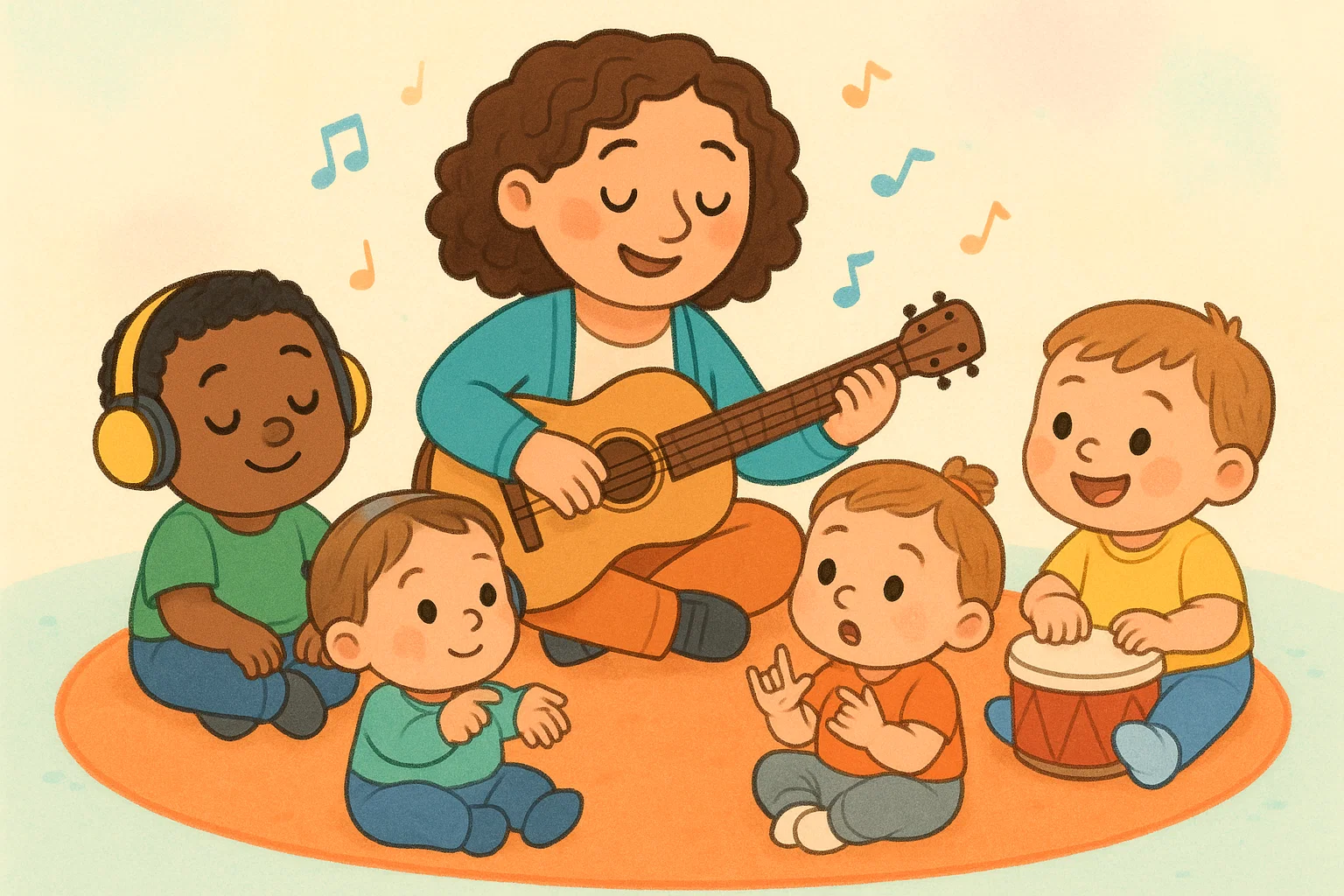
Music therapy can be used to effectively support children who struggle with particular developmental, learning, or communication challenges. The evidence base is strong, particularly for autism spectrum disorder.
Autism Spectrum Disorder (ASD)
For children with autism, who often find verbal communication difficult, this form of therapy provides a highly effective bridge. Music activates a wide range of brain areas, including those responsible for emotion and motor control.
- Techniques: Rhythmic sound-based interventions – often involving drumming or steady beat-keeping – are used to enhance social timing and turn-taking, which helps children develop better social communication. Melodic intonation is also particularly effective for children with ASD to encourage verbal imitation.
Attention-Deficit/Hyperactivity Disorder (ADHD)
The structured nature of rhythm, especially rhythm, can act as an external organizer for the typically disorganized nervous system of a child with ADHD.
- Techniques: Structured activities that demand high focus, like complex sound-making activities or movement to rhythm with stop-and-go rules, are used to improve attention span and impulse regulation. The steady beat itself acts as a focus aid.
Speech and Language Delays
The rhythmic and melodic components of speech are often preserved in the brain even when the ability to form words is impaired.
- Techniques: Melody is used to facilitate verbal responses. This approach can help by employing melodic intonation therapy, where short phrases are sung to activate the brain’s language centers. Simple rhythmic chants also provide a non-threatening environment for children to express themselves creatively.
Sensory Processing Difficulties
Controlled exposure to sound and vibration in a therapeutic setting helps the child modulate their response to sensory input.
- Techniques: The music therapist can carefully introduce instruments with different sound qualities (e.g., the soft sound of a chime versus the sharp sound of a wood block) to gently desensitize or stimulate the child. This supports sensory balance and helps children to explore and adapt to different auditory textures.
Practical Tips for Successful Music Therapy Sessions
Whether in a formal session or at home, the environment and approach can significantly impact the success of engaging with sound therapeutically.
Creating a Safe and Stimulating Space
The physical setting for musical activities should support both focus and freedom.
- Guidance: Choose a space free from visual clutter. Ensure instruments are safely placed and easily accessible. Soft lighting can be helpful for calming sessions, while brighter, natural light encourages active engagement. A safe, padded floor for movement to a steady beat is essential.
Balancing Structure and Freedom
The music therapy session needs a flexible framework. Too much structure can stifle creativity; too little can lead to chaos.
- Tip: Begin and end with predictable songs (structure), but allow a large middle portion for free instrument exploration and improvisation (freedom). This balance is critical for toddlers who need both predictability and autonomy.
Managing Group Behavior Through Auditory Cues
For group activities, sound itself can be a tool for managing dynamics.
- Strategies: Use musical signals instead of verbal instructions. A call-and-response rhythm can gather attention better than shouting. A simple, short rhythm can signal “stop” or “your turn.” This helps children learn to respond to auditory cues as a form of social communication.
Recommended Songs, Instruments, and Resources
Having the right tools and materials enhances the auditory experience for children.
Simple Songs and Chants for Everyday Use
These traditional songs are effective because they are already familiar, providing comfort and aiding development.
- Action Songs: “Head, Shoulders, Knees, and Toes” (body awareness, following directions).
- Social Songs: “If You’re Happy and You Know It” (emotional expression, cause and effect).
- Rhythm Chants: Simple, repetitive, sung phrases about daily tasks like “Time to Wash Our Hands, Wash Our Hands, Yeah!”
Instruments for Toddler-Friendly Play
Safety and durability are paramount for sound therapy tools used with toddlers.
- Recommended: Maracas (easy to hold, good for rhythm), tambourines (versatile, can be shaken or tapped), soft hand drums (great for releasing energy and practicing volume control), and rhythm sticks (for practicing steady beat).
Online Resources and Therapeutic Playlists
While an online playlist cannot replace a music therapist, curated soothing melodies or sound for specific themes can support home practice.
- Resource Tips: Look for playlists created by certified music therapists or organizations specializing in child development. Reputable therapist blogs often provide free, simple sound-based activities and guidance on the therapeutic use of sound for early learning.