

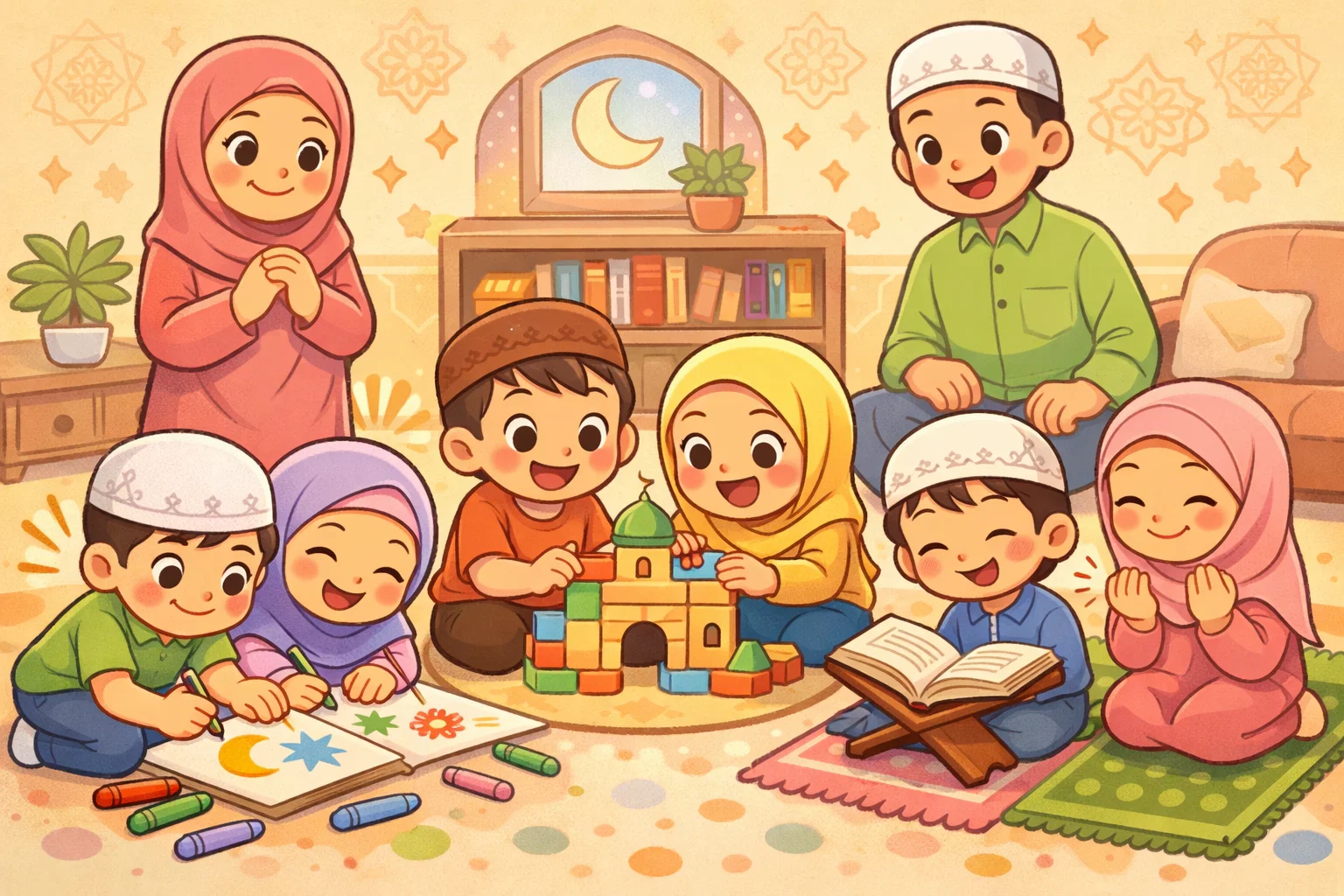
In child development, the idea of “intentional environments” refers to spaces where toys, books, and interactions help shape a child’s worldview. For parents raising Muslim children, creating such an environment goes beyond formal learning and relies on a balance of joy, curiosity, and tradition. Islamic activities for kids play an important role in this process, turning abstract concepts of faith into meaningful, lived experiences.
When spiritual education is integrated into play, children are more engaged and receptive. Hands-on activities – such as creative projects, teamwork, and guided play – support the development of a resilient identity rooted in Islamic values while encouraging cognitive and social growth. Whether at home or in a classroom, the goal is to offer Islamic learning that feels welcoming and engaging rather than obligatory. This guide presents a range of fun Islamic activities designed to suit different learning styles and help each child connect with Islam in a way that feels natural and personal.
Fun Islamic Activities for Kids
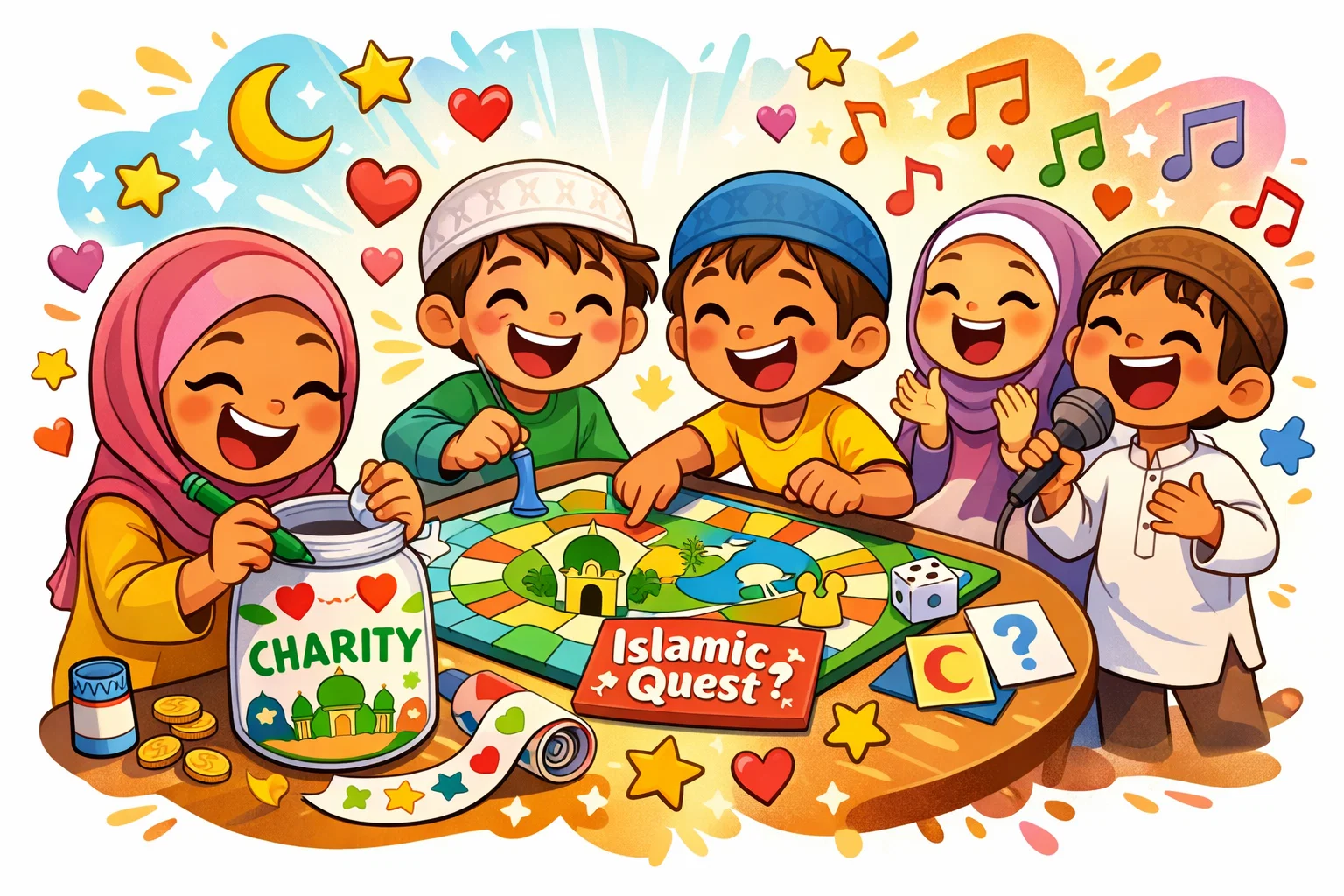
The most effective way to teach kids is to enter their world of imagination. When children are having fun, their brains are more receptive to new information, a phenomenon known as the “affective filter” in educational psychology. High-quality islamic activities should aim to lower this filter by prioritizing engagement and creative exploration. This section explores diverse ways to bring islam to life through interaction and play.
Mini mosque building activity
Making an islamic prayer space within the home environment is a powerful way to foster a love for communal worship. You can use large cardboard boxes, wooden blocks, or even soft cushions to construct a small “masjid” or prayer space. Let children take the lead in designing the entrance and the prayer niche (mihrab). This process helps kids understand the significance of the masjid and provides a dedicated area for their daily prayer routines. While building, you can discuss the diverse architecture found in the Muslim world, turning a simple craft into a lesson on global heritage.
Prayer rug decorating
To encourage consistent salah, try a personalization project. Provide plain fabric or heavy cardstock and invite your children to decorate their own prayer mats. Using fabric markers, stamps, or stencils, they can add patterns inspired by nature or geometric designs. This fun and meaningful way to engage gives them a sense of ownership over their spiritual practice. When a child uses a tool they helped create, they are often more motivated to maintain their habits. It shifts the perspective from a duty to a personal connection with the Divine.
Islamic journal creation
For older children, an islamic journal serves as a private space for growth and reflection. Encourage them to include gratitude notes (Shukr), reflections on stories from the Quran, and aspirations for personal character development. This practice helps children develop mindfulness and a personal relationship with the Creator, transforming islamic studies into a journey of self-discovery. In our digital age, the tactile experience of writing in a journal provides a much-needed grounding effect.
Islamic games and card games
Interactive play is one of the fastest ways children learn. Islamic card games, such as memory matches or “Who Am I?” cards featuring various prophet accounts, make the acquisition of islamic knowledge exciting. These sets allow families to bond over shared challenges. You can even create your own islamic bingo set using arabic alphabet characters to help younger ones recognize letters in a stress-free setting. Using a game as a fun revision tool reduces the pressure often associated with traditional testing and builds positive associations with learning.
Charity jaar project
To instill the value of generosity, start a family “Sadaqah Jar.” Children can make the jar themselves using glass paints or ribbons. Discuss the concept of charity beyond just money, such as a smile, a kind word, or helping a neighbor. Set a weekly goal and involve the whole family in choosing where to donate the funds. This is a fun and interactive way to demonstrate how islamic principles translate into real-world kindness. It teaches empathy and the social responsibility inherent in the faith.
Islamic storytelling sessions
Islamic storytelling sessions bring history to life. Instead of just reading from a book, use props, varied voices, or felt boards. Focus on islamic stories from the Qur’an that highlight resilience, honesty, and compassion. By reading islamic stories together, you create a safe space for questions and deep conversations about morality and purpose. These sessions foster a love for literacy while grounding the child in their cultural and religious heritage.
Ramadan countdown calendar
The holy month is a time of great anticipation. A countdown calendar with small daily tasks or dua prompts keeps the excitement alive. You can include “good deed” missions, such as “make a card for a friend” or “help set the table.” This seasonal fun islamic activity helps bridge the gap between waiting for a holiday and actively participating in its spiritual depth. It turns the month into a period of purposeful growth.
Dua and nasheed recitation
Music and rhythm are powerful mnemonic devices. Turning a difficult lesson into a nasheed or a rhythmic poem helps children memorize and understand complex concepts. Group sessions where children sing together foster a sense of community and make the Arabic language feel accessible and melodic. This auditory approach is particularly effective for younger learners who thrive on repetition and cadence.
Family khutbah activity
Building confidence in public speaking is a vital life skill. Encourage children to prepare a five-minute “talk” on a topic they are passionate about, such as “caring for animals” or “being a good friend.” This role-play activity allows them to practice their beliefs in a supportive environment, preparing them for future leadership roles within the community.
Nature walk with Islamic reflection
Step outside to see the “signs” of the Creator. A simple walk in the park can become an islamic lesson on the environment. Ask children to find three things they are thankful for or to observe the intricate patterns on a leaf. This fun way of reflecting on creation fosters a sense of wonder (Tafakkur) and deepens their appreciation for the natural world. It teaches them that the whole Earth is a place of prayer.
| Activity Category | Recommended Frequency | Primary Developmental Goal |
| Crafts | Weekly | Fine Motor Skills & Creativity |
| Storytelling | Daily | Literacy & Moral Development |
| Board Games | Weekend | Logic & Social Bonding |
| Nature Walks | Monthly | Spiritual Reflection & Observation |
Islamic Games for Kids
Structured gameplay is an “effective tool” for any parent or teacher. It takes the pressure off “formal” schooling and turns the process into a high-engagement experience. When children play, they are at their most creative and persistent.
Qur’an learning games
Teaching the holy book doesn’t always have to be about silent recitation. Use quranic learning games like “Verse Matching” or “Surah Scramble.” For those using an online Qur’an, there are many interactive tools that track progress and offer rewards, making Qur’an study a highlight of their day. This makes interaction with the scripture active rather than passive, which is vital for long-term retention.
Islamic board games
From navigating the path of hajj to learning about the pillars of islam, a board game can simplify complex ideas. These games often involve teamwork and group activities, teaching children how to win with humility and lose with grace while reinforcing islamic traditions. They provide a physical anchor for abstract concepts, making them easier to grasp and remember.
Islamic puzzle activities
Puzzles are excellent for developing concentration and problem-solving skills. Whether it’s a 100-piece image of a famous masjid or arabic alphabet floor puzzles, kids will love the visual satisfaction of completing a task. It’s a quiet, screen-free way to engage with islamic themes while developing spatial awareness and patience.
Scavenger hunt with Islamic themes
Create a list of items for children to find around the house or garden based on specific terms. For example, “Find something that represents ‘Nuur’ (light)” or “Find a fruit mentioned in the Qur’an.” This is a fun and meaningful way to get children moving and thinking critically about their faith in a domestic setting.
Islamic Arts and Crafts
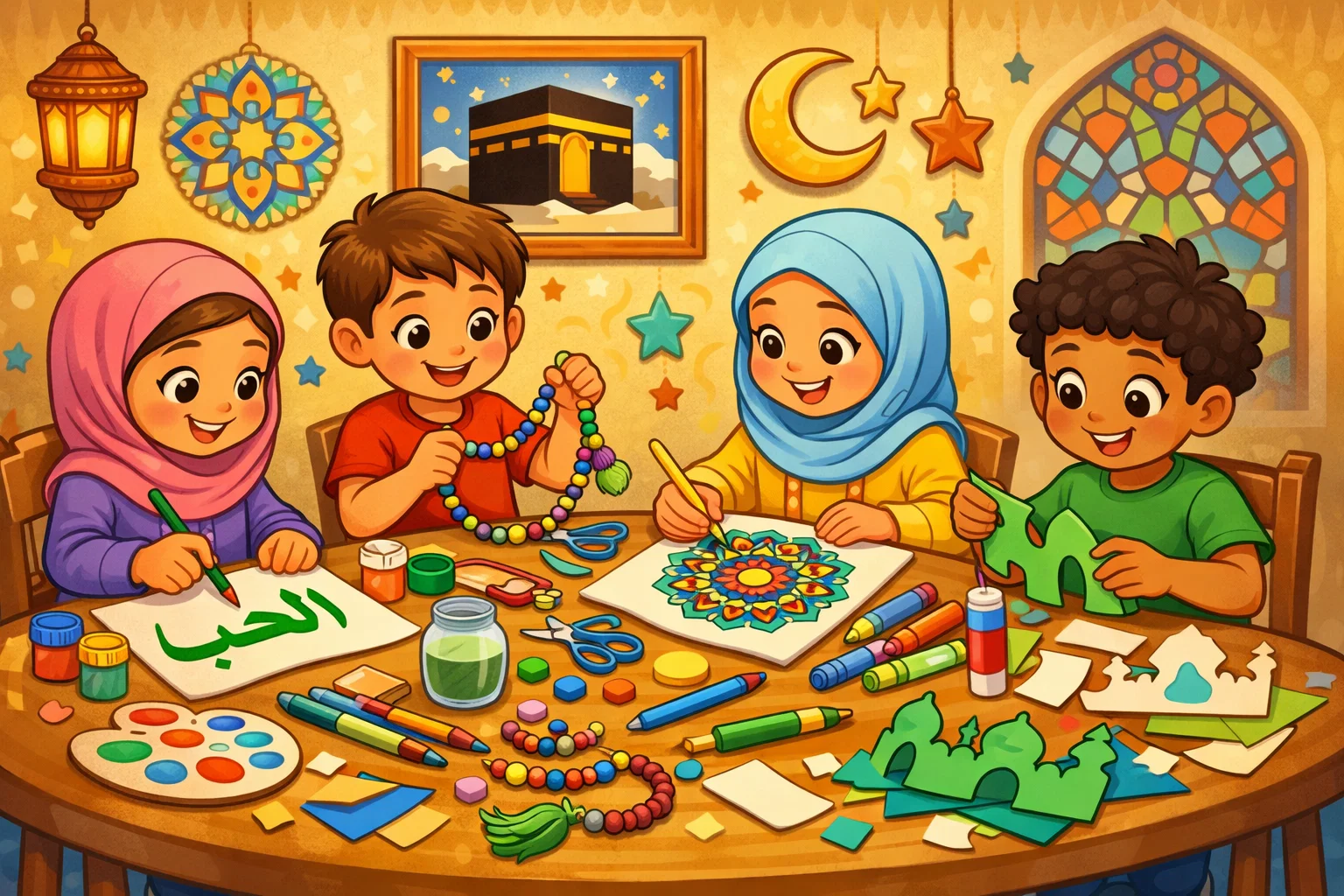
Creativity is a form of expression that transcends language. Through arts and crafts, children can express their inner world and beautify their surroundings, which is a central value in the faith’s artistic history.
Arabic calligraphy practice
The art of Arabic calligraphy is both meditative and educational. Start with simple tracing of the Arabic alphabet and move toward writing short words. Use vibrant paints or even sand art to make the letters “pop.” This making islamic art process helps children appreciate the aesthetic heritage of the Ummah and improves their fine motor control.
Tasbih making craft
Children create their own prayer beads using colorful wooden or glass beads. This is a great opportunity to teach kids the significance of dhikr (remembrance). Each bead can represent a specific praise or a person they want to make dua for. The finished product can be kept for personal use or given as an islamic gift to a loved one, fostering a spirit of generosity.
Islamic coloring and activity books
For moments of quiet focus, islamic coloring pages are a staple. Look for designs that feature geometric patterns or scenes from islamic history. These provide a peaceful alternative to digital entertainment and help children develop an eye for detail and color theory.
DIY Islamic crafts
Whether it’s making paper lanterns for a celebration or making an islamic wall hanging, hands-on activities give children a sense of pride. These projects often become family heirlooms, marking the passage of the seasons and the celebration of islamic culture within the household.
Role Play and Creative Expression
Imagination allows children to “test drive” different scenarios and social roles. This is essential for emotional intelligence and the development of empathy.
Islamic dress-up role play
Provide a “treasure chest” of traditional clothing from different countries – from Malaysian sarongs to West African agbadas. This helps children appreciate the global diversity of the faith and the richness of their shared identity. It is a visual way to explain the concept of the global Ummah.
Drama and skit activities
Children can play out famous historical events or create modern-day scenarios. Ask them to illustrate their own islamic stories through a short play or puppet show. This fun and interactive way of learning helps them internalize the courage and wisdom of the Prophet Muhammad (peace be upon him) and his companions.
Friday family role-play sessions
Simulate a “Community Friday” to build excitement for the weekly prayer. One child can act as the “welcomer,” another can help prepare a special meal, and another can lead a short nasheed. This fun learning experience makes the weekly congregational day feel special and anticipated rather than just another routine.
Learning Through Music and Media
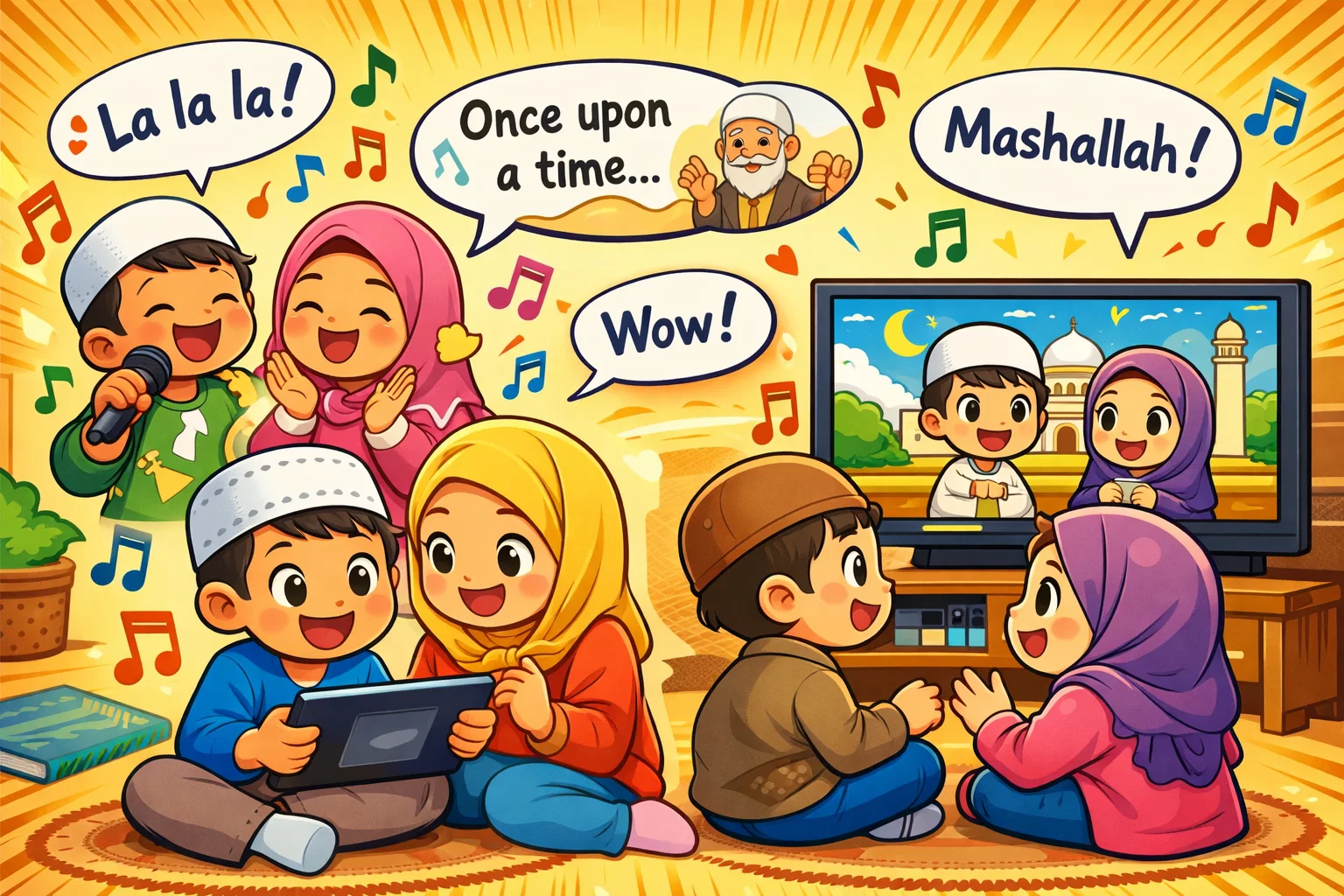
When used mindfully, media can be a powerful ally in the educational journey, catering to auditory and visual learners.
- Nasheed singing sessions: These help with language acquisition and memorization of islamic principles. The rhythm makes the words stick in the child’s memory.
- Islamic cartoons and videos: High-quality animations can help kids visualize stories from the past. Always follow up with a discussion to ensure they understood the core islamic lesson.
- Islamic story podcasts: Ideal for summer islamic camps or long car rides, these foster listening skills and imagination without the need for a screen.
Educational Islamic Activities
For a more structured approach that still feels engaging and enjoyable, consider these academic-leaning projects that connect faith with general knowledge.
Arabic language learning through play
Use Arabic alphabet bingo or digital apps to build vocabulary. Making the language a part of daily life – like using common greetings – helps children feel more connected to the scripture. This immersion through play is often more effective than formal lessons alone.
Islamic science experiments
Many early scholars were pioneers in science. Perform simple experiments, like observing water displacement, and link them to the history of the Muslim world. This shows that faith and reason are complementary, encouraging a love for STEM subjects.
Islamic astronomy night
Set up a telescope or just lay on a blanket to look at the stars. Discuss how the lunar calendar works and how it helps determine the timing of Ramadan and Hajj. This is a fun and meaningful way to connect with the cosmos and the Creator’s design.
Age-Based Islamic Activities for Kids
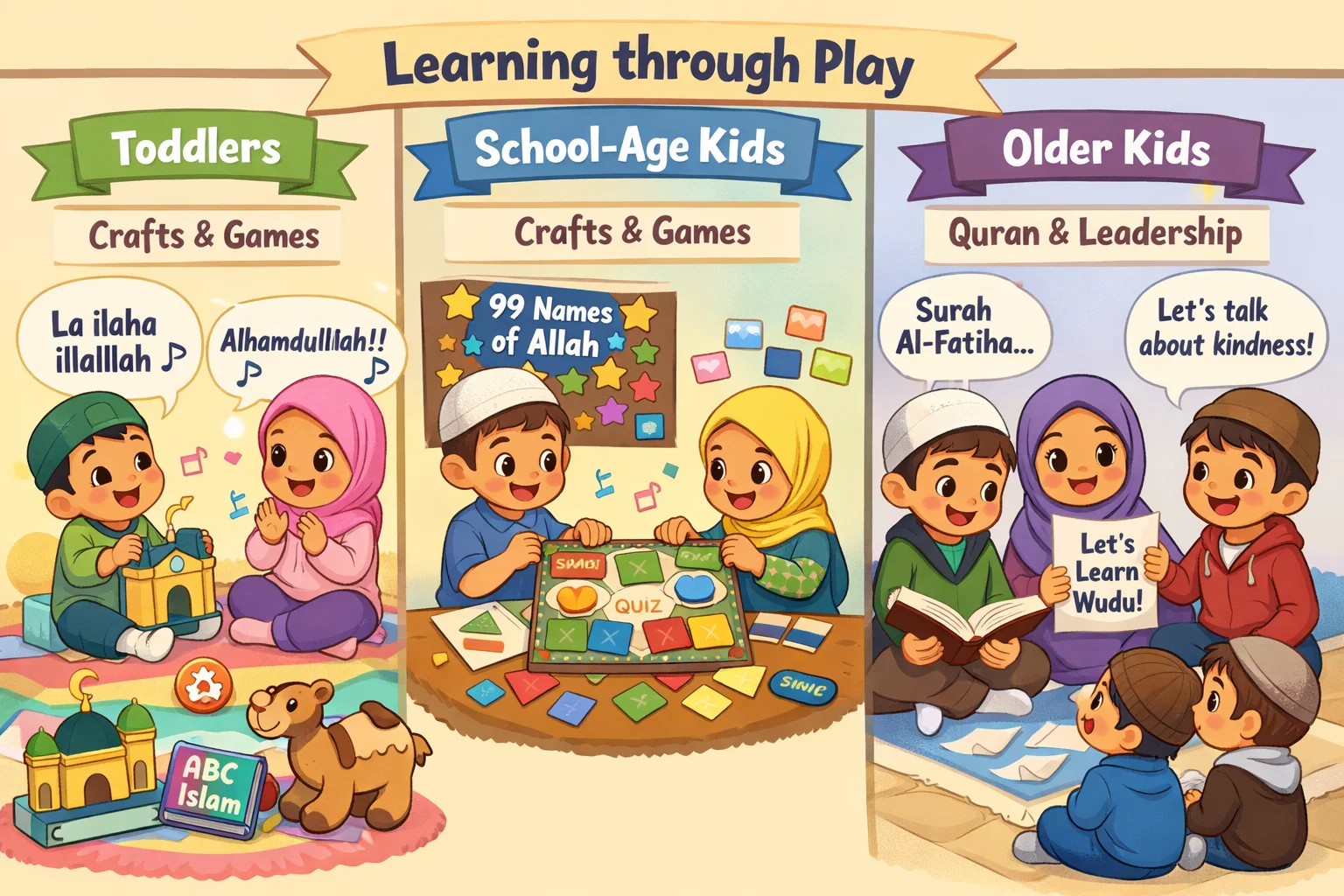
Understanding developmental stages is key to selecting the right activity. What works for a toddler will not engage a teenager.
Islamic activities for preschool kids
Focus on sensory play and high-repetition songs. Activities like “Arabic Alphabet Playdough” or singing simple nasheeds about the five pillars of islam are perfect. At this stage, the goal is to build a positive emotional association with the faith.
Islamic activities for school-age kids
This group enjoys islamic trivia and more complex board game challenges. They are ready for deeper islamic storytelling sessions and more intricate islamic crafts that require focus and planning.
Islamic activities for older kids
Engage their critical thinking through islamic activities for students like debates, community service projects, or creating an islamic journal focused on social justice and ethics. This age group needs to see how their faith applies to modern global issues.
Benefits of Islamic Activities for Kids
Participating in these projects offers multifaceted benefits that go beyond the religious curriculum:
- Moral development: Stories and role-play reinforce the islamic values of honesty, empathy, and kindness.
- Social growth: Teamwork and group activities build the ability to work with others toward a common goal.
- Emotional resilience: Learning about the lives of historical figures provides models of strength during trials.
- Cognitive skills: Puzzles, language games, and islamic trivia sharpen the mind and improve memory.
- Family Bonding: Shared traditions and projects create a sense of security and belonging.
Materials and Setup for Islamic Activities
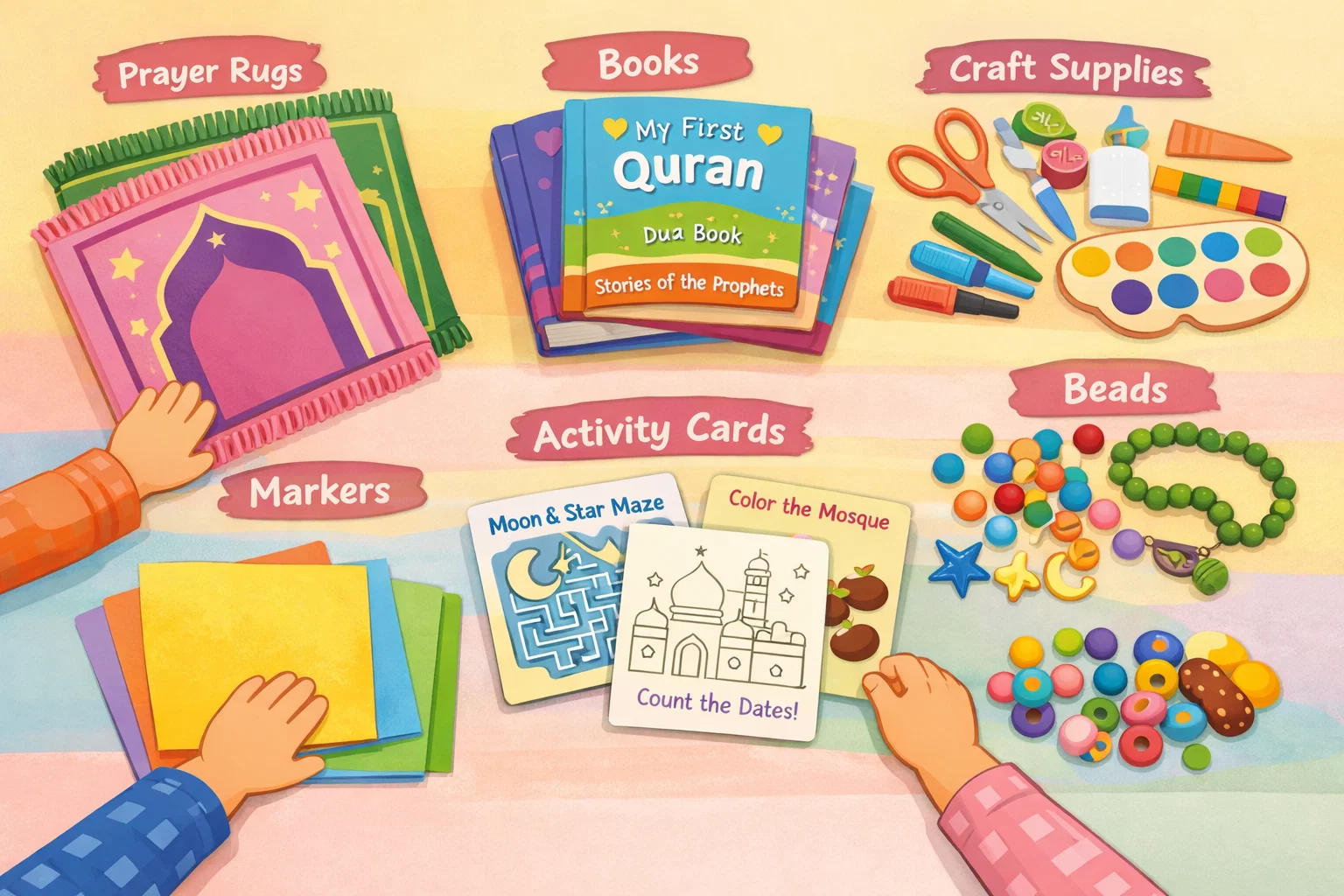
A little preparation ensures that the focus remains on the fun rather than the logistics.
- Time Planning: Dedicate a specific “Deen Time” each week to ensure consistency. It doesn’t have to be long; 20 minutes is often enough.
- The “Faith Box”: Keep a bin stocked with Arabic flashcards, beads, islamic coloring books, and craft supplies.
- Adaptability: Be ready to simplify or complicate an islamic lesson based on your child’s mood and energy level. Flexibility is the key to maintaining engagement.
- Environment: Create a comfortable, well-lit space where children feel free to make a little mess in the name of creativity.