

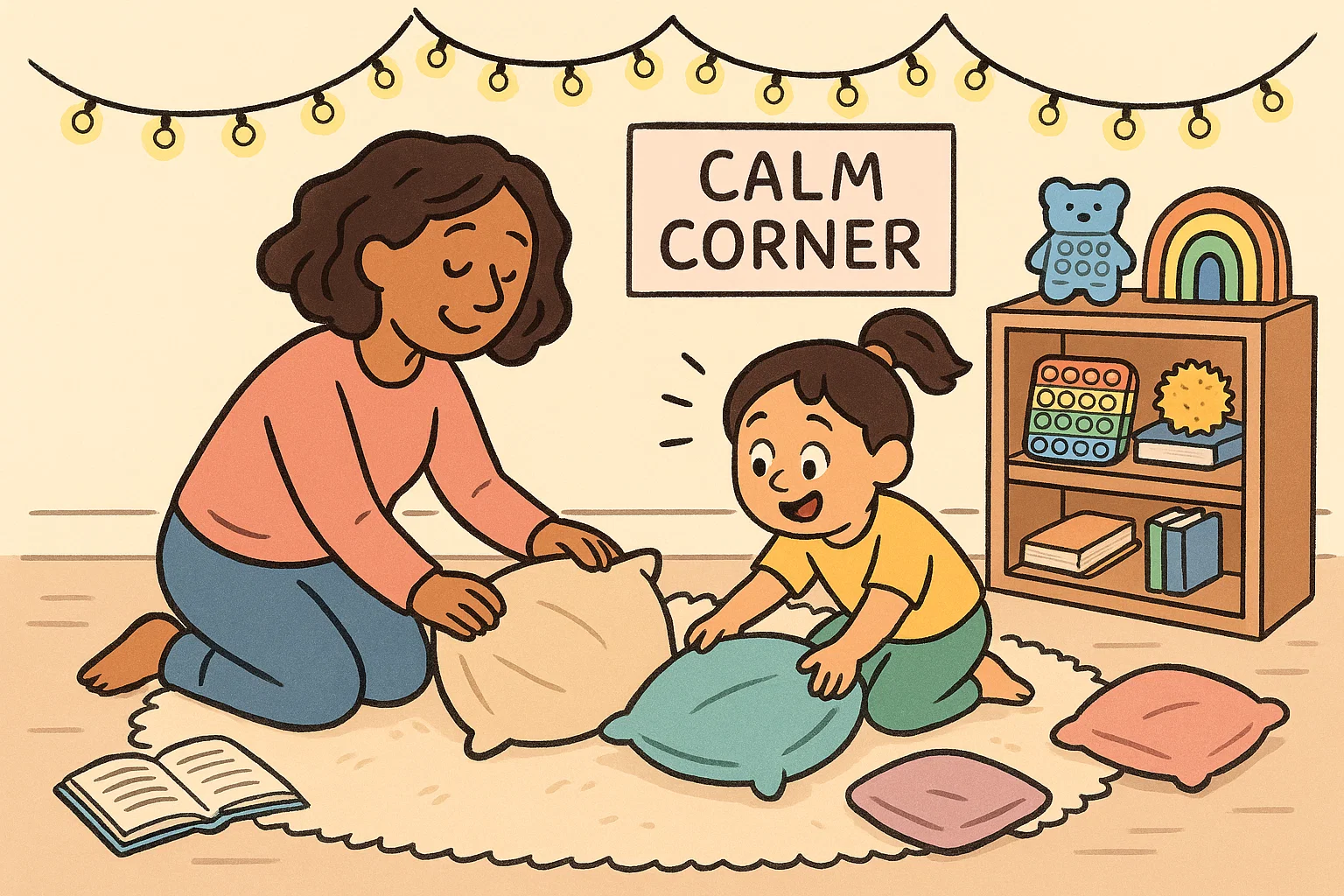
Creating a calm corner is one of the most effective ways to support emotional regulation in children. More than just a reading nook, it’s a safe, intentional retreat where a child can go to manage big emotions and regain balance. Often called a calm-down corner or calming space, it’s filled with soothing sensory tools and activities that help both children and adults pause and reset.
This isn’t about sending a child away as punishment – it’s about teaching essential self-regulation skills. By setting up a cozy, inviting calm corner at home or in the classroom, you give children a space to practice mindfulness, self-soothe, and build lifelong emotional resilience.
Purpose of a Calm Corner
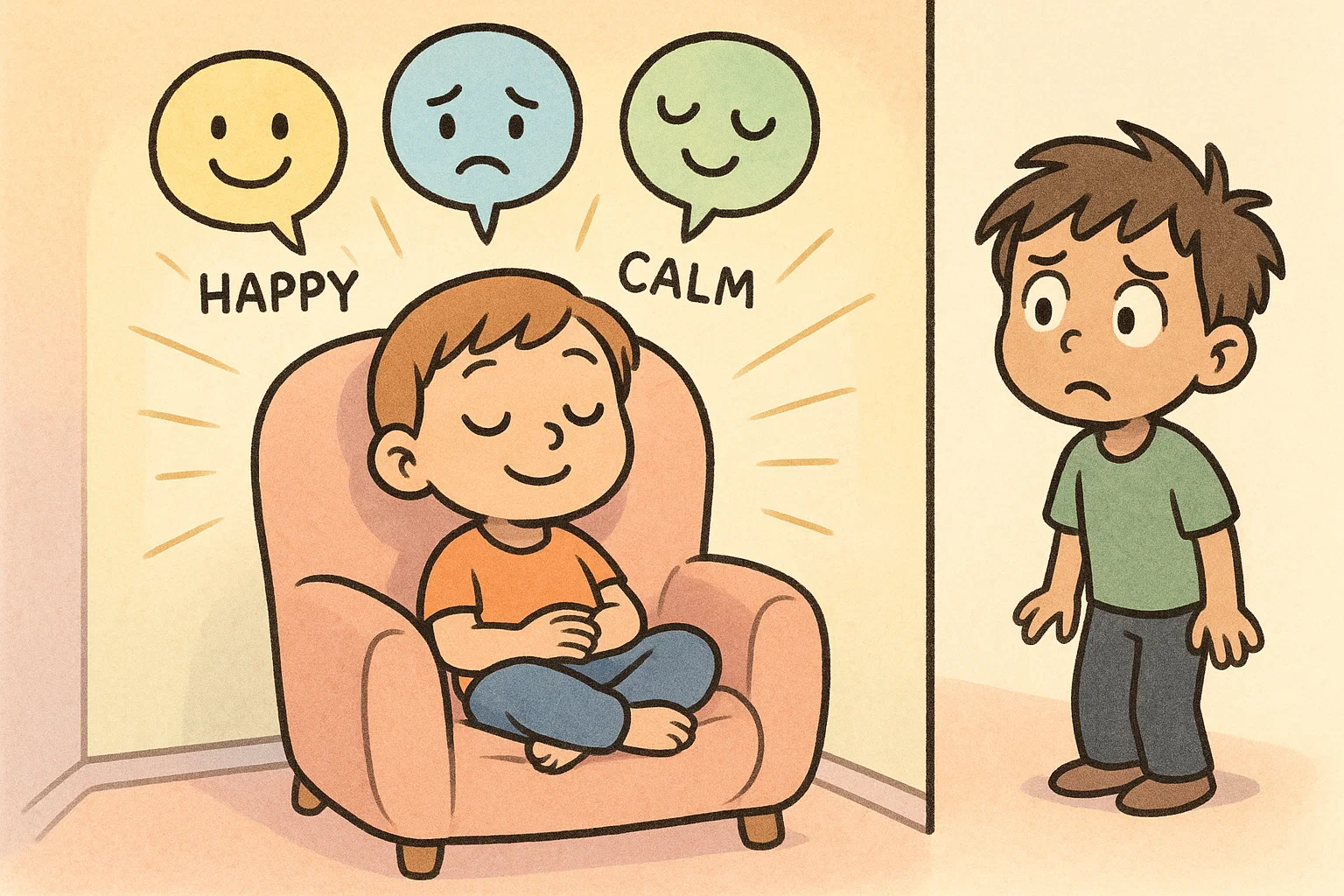
The calm corner is fundamentally a tool for emotional intelligence. Its primary function is to provide an immediate, accessible strategy for managing the daily ups and downs of life. By having a prepared environment, you remove the stress of having to figure out how to calm down in the heat of the moment. The presence of a calm-down corner signals that it’s okay to take a break and that strong feelings and emotions are normal, manageable experiences. It’s a proactive investment in social and emotional learning.
Emotional Regulation and Self-Soothing
The corner can help children develop the crucial ability to calm themselves down by interrupting the stress response. When a child is experiencing big emotions like frustration or anger, their logical thinking brain (prefrontal cortex) is temporarily offline. The calm-down corner allows them to engage their senses and body to return to a baseline state. Here, a child learns to recognize their escalating emotions and intentionally choose a soothing strategy, such as hugging a stuffed animal or squeezing a stress ball. This practice of independent calming is the core of self-regulation.
Reducing Overstimulation
For many children, particularly those with sensory processing disorder or those highly sensitive to their environment, the daily noise, light, and pace of a busy home or classroom can be exhausting. A calm corner is a sanctuary free from distractions, serving as a decompression zone. It provides a safe retreat to process the world. By limiting visual and auditory input, the space helps reduce sensory overload and the resulting meltdowns or anxiety attacks. When the child feels overstimulated, this quiet zone helps them reset their nervous system.
Encouraging Positive Behavior
When a child learns to manage stress and regulate their emotions effectively, their overall behavior improves. The calm space shifts the focus from punishment for negative behavior to empowering the child with coping skills. Instead of escalating a conflict, a parent or teacher can gently suggest, “I see you’re feeling frustrated. Maybe you need to calm down in our calm down corner until you feel ready to talk.” This approach promotes empathy, teaches patience, and encourages the development of emotional intelligence, allowing the child to return to social interactions with a clearer head.
Best Location for a Calm Corner
The success of your calm corner depends significantly on its placement. It must be respected as a designated space for quiet reflection, not a storage area or a high-traffic zone. The goal is to ensure the space offers a genuine sense of retreat.
Ideal Rooms and Light Conditions
Ideally, select a spot in a room that is naturally quiet and offers some degree of privacy, even if it’s an alcove or a corner of a larger room.
- Location: A quiet bedroom corner, a dedicated spot in a home office, or a seldom-used hallway niche can all work. For those in small apartments, a tent or canopy in a living room corner can serve the purpose beautifully.
- Lighting: Natural light is excellent, but it should be controllable. Avoid harsh overhead lighting. Soft, warm light is key to promoting relaxation. Consider a dimmer switch, a small lamp, or string lights that offer a gentle, diffused glow.
- Sound: Choose a spot away from TVs, loud appliances (like washing machines), or the main hustle and bustle of the kitchen.
Avoiding Overcrowded or Busy Areas
To ensure the calm-down corner can help a child truly relax, avoid placing it in areas with high stimulation or foot traffic.
Areas to Avoid:
- Directly next to the television or video game console.
- Near the main entrance or exit of the home.
- In the middle of a play area where other children are active.
- Near a window that overlooks heavy street traffic or other busy activity.
The corner’s job is to de-stimulate; placing it in a stimulating area defeats its purpose.
Creating Boundaries Within Shared Rooms
If the only available spot is in a shared space, like a child’s bedroom or a family room, you must create a calming boundary. This helps the child feel that this is their dedicated safe space.
- Use Visual Barriers: A decorative folding screen, a tall bookshelf, a room divider, or a simple hanging curtain can define the space.
- Establish a Physical Zone: A plush rug, a small tent, a canopy draped from the ceiling, or a bean bag chair clearly marks the boundaries of the corner space. When the child is inside this boundary, they are in calm-corner mode.
Essentials to Include in the Calm Corner
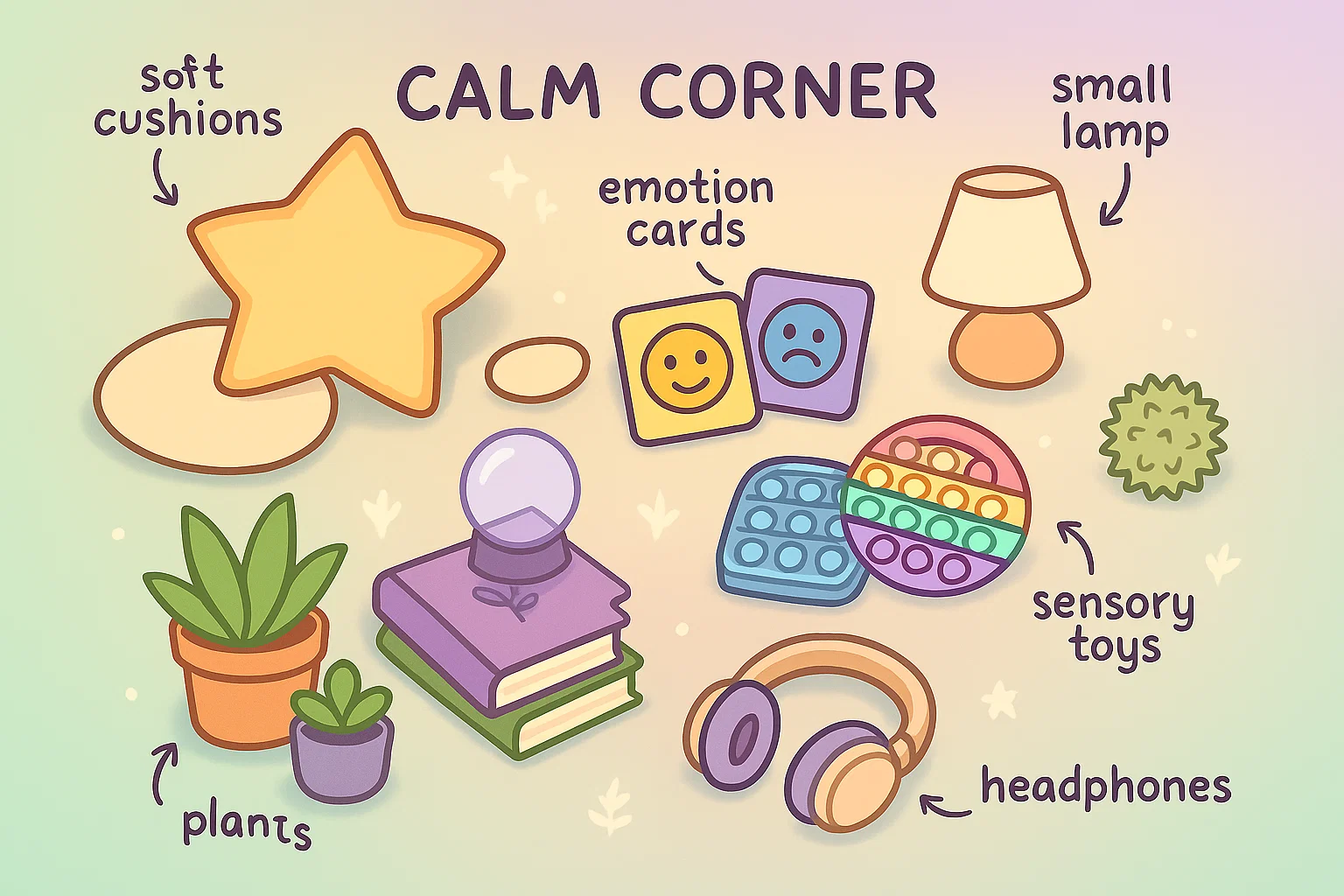
The contents of the calm corner should all serve one purpose: to help the user self-regulate. Items should be intentional and thoughtfully curated, not simply a pile of toys. The focus should be on engaging the senses in a soothing way.
Sensory Tools and Textures
These are the most critical components to help children calm down because they immediately engage the nervous system.
| Category | Recommended Items | Calming Function |
| Tactile (Touch) | Soft stuffed animal, textured squishies, stress balls, kinetic sand, textured sensory items, a soft bean bag or cushion. | Provides a grounding focus and redirects physical energy. Deep pressure from a weighted item can soothe the nervous system. |
| Proprioceptive (Deep Pressure) | Weighted blanket, weighted lap pad, compression vest (if recommended), or heavy blanket. | The pressure helps the body release calming neurotransmitters and gives a sense of security. |
| Visual | Glitter jar or sensory bottle (slow-moving), lava lamp, pinwheel to practice breathing, printables with soothing imagery. | Offers a single, non-overstimulating point of visual focus to quiet a racing mind. |
| Auditory | Noise-canceling headphones, a small sound machine, or a device with soft calming music (like nature sounds or instrumental tracks). | Blocks out distracting noise and introduces gentle, predictable sound patterns. |
| Olfactory (Scent) | A gentle essential oil diffuser (e.g., lavender, chamomile – use with caution and ensure child safety), a scented putty, or an object with a familiar, comforting scent. | Certain scents can trigger a relaxation response in the brain. |
Visual and Emotional Cues
These tools help the child connect their internal feelings to external strategies, which is key to learning how to regulate their emotions.
- Emotion Chart: A simple visual showing faces or pictures that represent different emotions (happy, sad, angry, frustrated) and corresponding words. This helps the child identify and name the feelings and emotions they are experiencing.
- Calm Down Strategy Chart: A visual list of 3-5 simple actions the child can take in the corner (e.g., focus on breathing, hug the teddy bear, squeeze the stress ball).
- Soft Lighting: A small string of battery-operated fairy lights or a salt lamp, which casts a warm, inviting glow.
Comfort Items and Personal Touches
Making the calm-down corner personally appealing increases the likelihood that a child will recognize it as a desired place to be.
- Favorite Soft Item: This could be a beloved stuffed animal, a silky blanket, or a special cushion. These items provide instant comfort and familiarity.
- Empowering Books: A few books focused on emotions, mindfulness, or simple stories about characters overcoming big feelings.
- Minimal Personal Photos: Perhaps one or two photos of a happy memory or loved ones to reinforce the sense of safety. The key here is minimal – you don’t want a wall of stimulation.
Design Ideas for a Cozy Calm Corner
The aesthetics of the calming space should be intentionally designed to lower stimulation levels. Think soft, natural, and low-key. The design itself is a form of calming strategies.
Choosing Furniture and Layout
The furniture should invite a child to curl up and feel protected.
- Enclosure is Key: Children often feel safe when they have a sense of enclosure. Consider a small, fabric play tent, a canopy over a mattress, or simply placing the seating against two walls in a corner.
- Seating Options: A comfortable bean bag chair is an excellent choice as it molds to the body and offers gentle, whole-body support. Alternatively, a pile of oversized cushions or a small, child-sized armchair works well.
- Grounding Surface: Use a thick, soft rug or carpet squares to define the area and add a pleasant tactile surface underfoot.
Calming Color Palette
Colors have a profound impact on mood. Avoid bright reds, oranges, and yellows, as they tend to be energizing rather than calming.
Preferred Colors:
- Cool Tones: Light blues, pale greens, and soft purples are known to be relaxing and can encourage quiet time.
- Neutrals: Beige, cream, soft grey, and white provide a clean, non-stimulating backdrop.
- Earthy Tones: Soft olive greens and light browns evoke nature, which is inherently calming.
Aim for a monochromatic or low-contrast palette that feels easy on the eyes.
DIY Decor and Themed Corners
Adding a theme can make the calm corner feel magical and inviting for a child’s imagination. The key is to keep the theme simple and non-busy.
| Theme Idea | Simple Decor Examples | Age Group |
| Cloud/Sky | White and light blue pillows, cloud-shaped lights, soft grey rug, quiet music of rain or wind. | All Ages |
| Forest/Nature | Green and brown color scheme, plants (safe, low-maintenance ones), wood sensory toys, a small pile of polished river stones. | Younger Children |
| Zen/Minimalist | Single, comfy place to sit, clean lines, a small fountain for water sounds, a mindfulness coloring book. | Teens and Adults |
How to Use the Calm Corner Daily
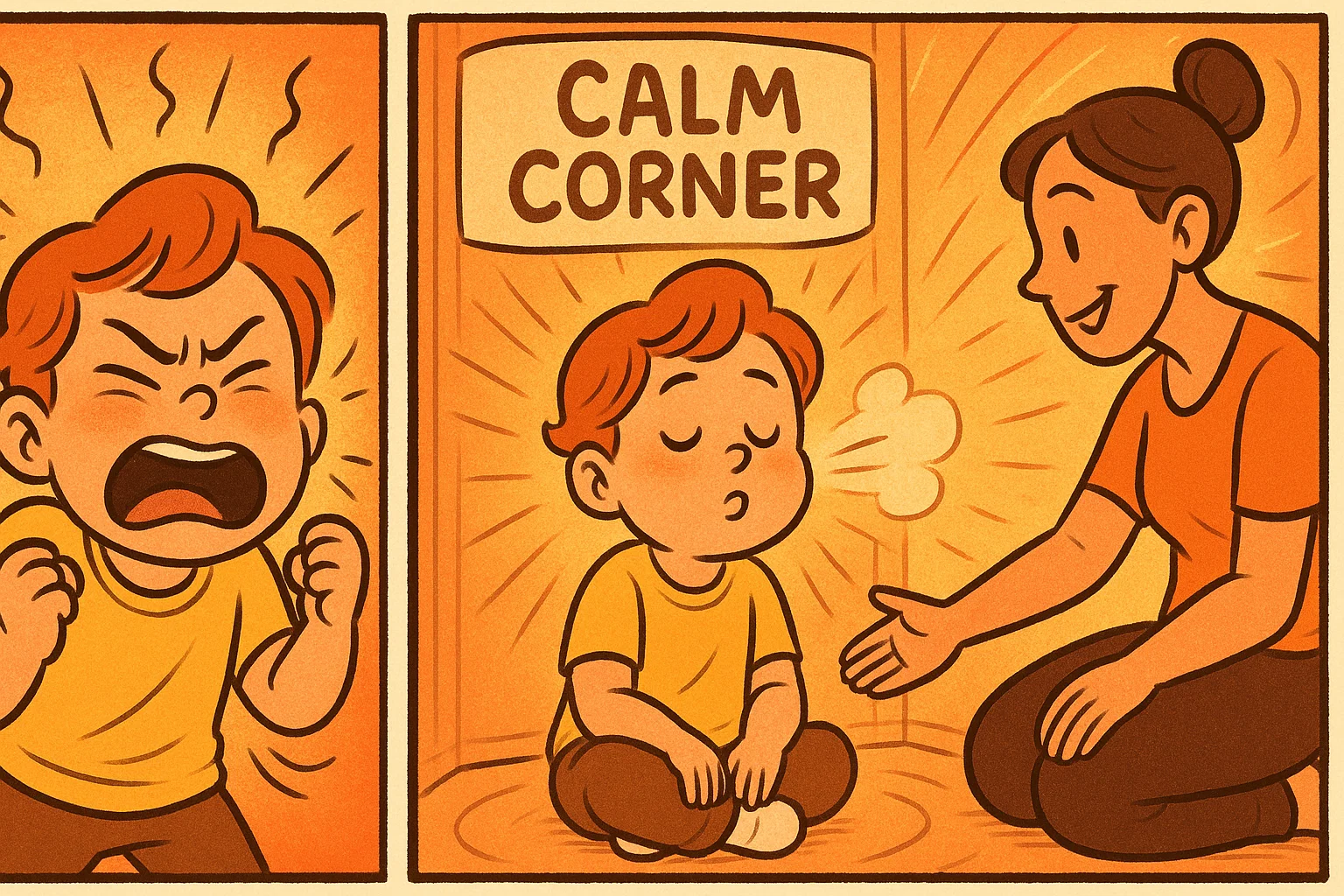
The most crucial step after setting up a calming corner is teaching its proper use. It must be introduced during a time of calm, never during a meltdown. This teaches your child to spend time there proactively.
Teaching Kids When to Use It
Model and practice the routine so the child understands the calming corner in your home is a tool, not a punishment.
- Pre-Meltdown Practice: When the child is calm, visit the corner and explain its purpose: “This is our special spot to feel better when we’re sad or angry.” Practice the deep breathing exercises.
- Recognizing Triggers: Help your child identify the physical signs that they are starting to feel overwhelmed (e.g., “My tummy feels tight,” “My hands are clenching”). Use scripts like, “I notice you are stomping your feet. That tells me you need to calm your body. Let’s try the calm-down corner.”
- The “When/Then” Script: “When you feel frustrated, you can go to the calming corner and take five deep breaths. Then you can come back and play.” This reinforces the corner’s role as a transition tool.
Setting Time Limits and Boundaries
While the space should feel safe and unrestricted, some gentle boundaries are helpful, especially to prevent it from becoming an avoidance tool.
- No Mandatory Time: The child should be allowed to leave when they feel safe and ready, not when a timer goes off. The exit is based on self-regulate status, not external pressure.
- Guidance on Duration: Sessions often naturally last 5-15 minutes. If a child is lingering for a very long time, gently check in to see if they need help with a strategy or if they are avoiding a task.
- Rule of No Toys: The corner is not for playing with regular toys or gaming. The only items allowed are the sensory and calming activities. This maintains its specific, focused purpose.
Using the Calm Corner as a Family Routine
The most powerful way to teach your child how to regulate their emotions is through modeling. We as adults benefit just as much from a quiet retreat.
- Model its Use: When you feel overwhelmed or stressed, say aloud, “Wow, I am feeling very stressed about this email. I’m going to go to the calm corner for five minutes to focus on breathing.”
- Scheduled Calm Time: For younger children, incorporate the corner into a daily routine, such as after school or before a potentially stressful event. Use it for quiet time and a brief, mindful check-in.
- Practice Together: Occasionally sit in the corner space together and do a breathing exercise or read a book to reinforce its positive association.
Calming Activities and Exercises
The items in the corner are tools, but the activities are the strategies to support emotional growth. These focus on integrating body and mind.
Breathing and Mindful Awareness
Deep breathing exercises are the fastest, most effective way to calm the nervous system. The parasympathetic nervous system is activated by slow, deep exhales.
- Balloon Breath: Inhale slowly and deeply, imagining your belly is a balloon filling up with air. Exhale slowly, letting all the air out.
- Blowing Bubbles: The act of blowing requires a long, slow exhale, which naturally encourages proper breathing. Keep a small bottle of bubbles in the corner.
- Five-Finger Breathing: Trace the outline of one hand slowly with a finger from the other hand. Inhale while tracing up a finger, and exhale while tracing down. This provides a visual and tactile focus.
Gentle Movement and Stretching
Releasing physical tension is crucial when big emotions are present.
- Body Scan: While lying on the rug or sitting comfortably, encourage the child to focus on one body part at a time, noticing how it feels, and consciously relaxing any tension they find, from their toes up to their head.
- Simple Yoga Poses: Introduce simple, relaxing poses like Child’s Pose (a fetal position that is naturally soothing) or Tree Pose (which requires focus and concentration).
Creative Expression
Non-verbal outlets can help kids process difficult feelings without the pressure of having to articulate them immediately.
- Mindful Coloring: Provide coloring books with intricate but not overstimulating designs (like mandalas) and crayons or colored pencils. The repetitive, focused nature of coloring is very calming.
- Journaling/Drawing: A special notebook for the corner where older children or teens can write or draw their feelings. They don’t have to be “good” at it; it’s simply a way to release emotions.
- Listen to Music: Use the device for calming music or nature sounds to change the sensory input. Avoid music with heavy beats or distracting lyrics.
DIY Calm Corner Projects
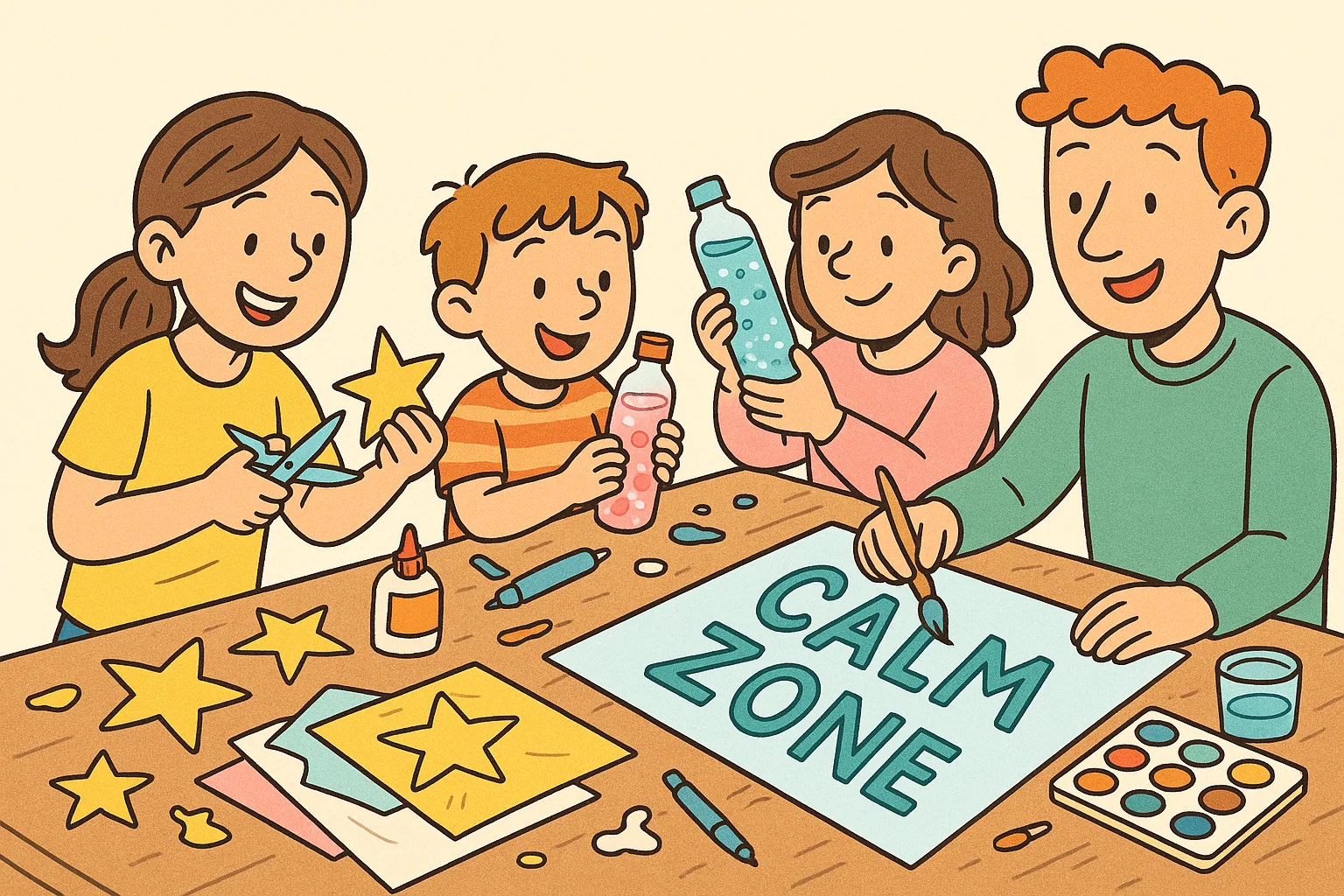
You don’t need a large budget to create a calming corner. Many of the most effective tools can be made with items already in your home or classroom.
Low-Cost Setup Tips
- Repurpose What You Have: Use extra pillows, blankets, or even a large sweater to create a soft, inviting texture. A laundry hamper turned on its side and covered with a blanket can be a cozy, semi-enclosed den.
- Use Found Objects: Collect smooth river stones or shells on a walk to serve as sensory tools to hold and focus on.
- Printable Resources: Find free printables online for emotion cards, breathing guides, and coloring pages. Laminate them for durability.
Handmade Sensory Tools
Creating these items together can also be a calming activity and gives the child ownership of their space.
- DIY Sensory Bottle (Calm Jar): Fill a clean, clear plastic bottle with water, a bit of clear glue (or corn syrup), and glitter. Seal the lid tightly. Shaking the bottle and watching the glitter slowly settle provides a powerful visual focus for quiet time and can help a child focus on breathing while they wait for the glitter to fall.
- DIY Stress Balls: Fill balloons with flour, playdough, or cornstarch, tie them securely, and double-layer them with a second balloon. These are tactile and excellent for releasing tension in the hands, promoting fine motor skills as a side benefit.
- Homemade Texture Mat: Glue different textures (velvet, sandpaper, sponges, soft fabric scraps) onto a piece of cardboard. This provides a rich tactile experience for grounding.
Upcycling and Eco-Friendly Materials
Focusing on sustainable and natural materials can enhance the calming effect.
- Natural Fabrics: Choose cotton, linen, or wool for blankets and pillows. These feel softer and more breathable than synthetic materials.
- Upcycled Furniture: A thrifted bean bag cover can be refilled with old clothes or shredded paper to make a cozy seat. An old lampshade can be recovered with soft fabric to create a warm, diffused light source.
- Safe Scents: Instead of synthetic air fresheners, use a bowl of dried lavender or a small sachet of cinnamon sticks.
Adapting Calm Corners for Different Ages
A calming corner is not one-size-fits-all. What works to soothe a toddler will bore a teen. Tailoring the content ensures the designated space remains relevant and effective.
Calm Corners for Toddlers
- Safety First: Ensure all items are non-toxic and there are no choking hazards. The space must be soft and safe.
- Focus on Sensory Exploration: Include bright, safe, simple sensory toys, soft stuffed animals, and very basic printables (like a picture of a mad face).
- Parental Presence: Toddlers require a parent or caregiver to accompany them to guide them through the process. Use very simple language: “We need a break. Let’s hug the soft blanket.”
Calm Spaces for Teens
- Privacy and Independence: Teens value their space. The corner should be placed in their room or a private area. The setup should look more mature – think a sleek bean bag chair, a weighted blanket, and noise-canceling headphones.
- Focus on Internal Strategies: Items should support introspection: a journal, sketching pad, mood lighting, and perhaps a small collection of poetry or guided meditation apps. The goal is to facilitate the ability to calm without supervision.
- Personalized Aesthetics: Allow the teen to choose the colors and style to ensure the space is personally appealing and not dictated by a parent.
Adult Relaxation Zones
The calm corner at home isn’t just for children. Adults can benefit immensely, too.
- Focus on Mindfulness: An adult zone can be a mindfulness corner with a yoga mat, a comfortable pillow for meditation, a small essential oil diffuser, and a reading light.
- Digital Detox: Encourage leaving phones and computers outside this area. The corner is a retreat from screens and work stress.
- Stress Management Tools: Include sophisticated tools for managing stress, such as gratitude journals, adult coloring books, or even intricate puzzles that promote focused attention.
Common Mistakes When Creating a Calm Corner
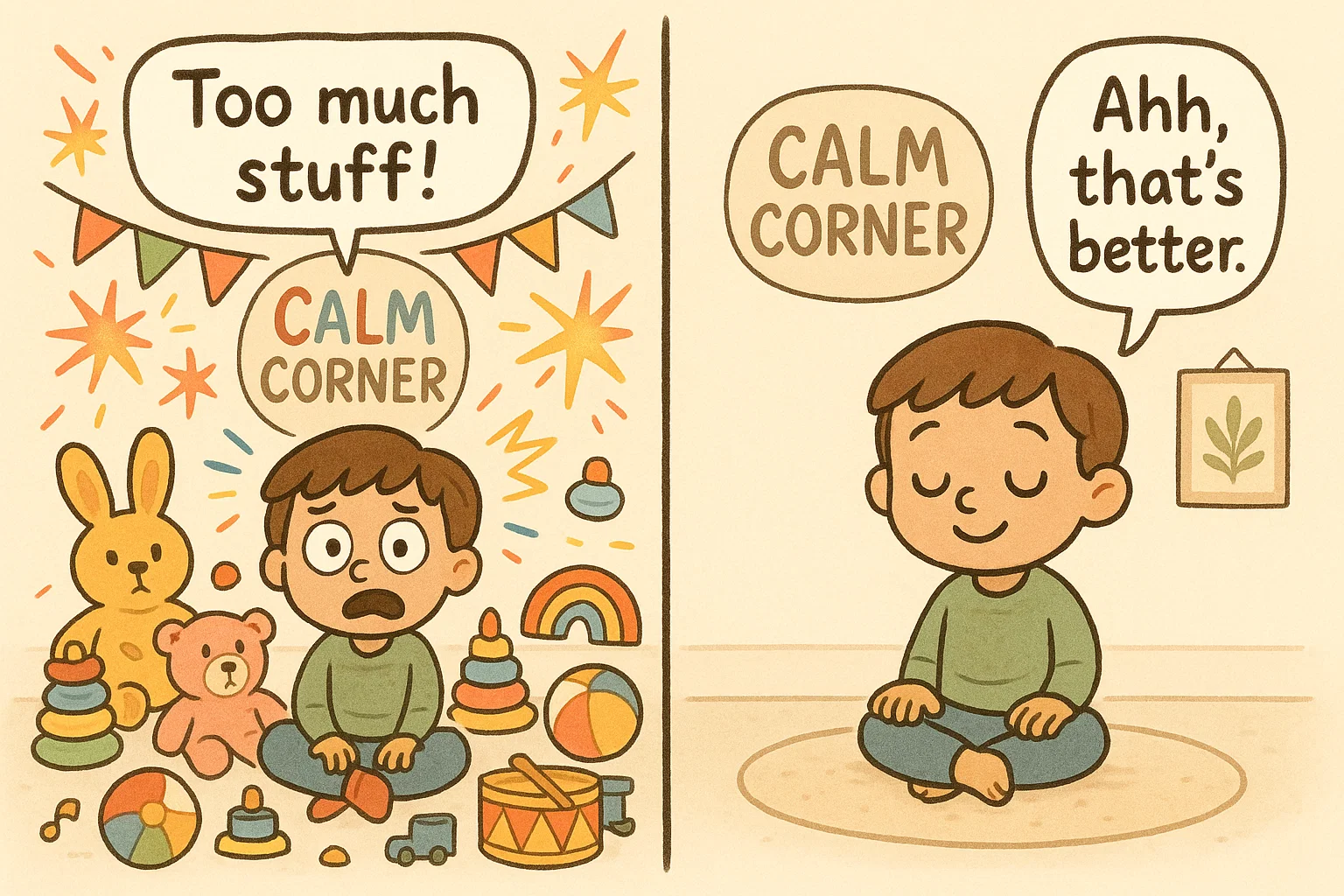
Even with the best intentions, it’s easy to make mistakes that undermine the purpose of the calming corner. Avoiding these pitfalls is crucial for its success as a tool for emotional regulation.
Too Many Stimuli
The corner’s purpose is to reduce stimulation.
- Avoid: Brightly colored, busy patterns on walls or textiles; too many toys; loud, complicated electronics; or a cluttered appearance. A minimalist approach is best.
- Goal: The space should be visually calming, with soft light and a small number of carefully curated sensory items that promote focused attention.
Using the Corner as a Timeout
This is the number one mistake that can ruin the effectiveness of the corner. A timeout is typically a punitive isolation intended to stop a behavior. A calming corner is a safe space for self-help.
- The Difference: If you force a child to sit there, it becomes punishment and they will hate it, refusing to use it when they genuinely need to calm down.
- The Correct Approach: Always frame the corner as a choice and a tool. “I see you are upset. Would you like to go to your special spot to help your body feel better?” You are teaching skills, not enforcing compliance.
Ignoring Personalization
If the space reflects only what the adult thinks is best, the child feels less connected to it.
- Involve the User: Let the child choose the color of the bean bag, the stuffed animal, or the theme of the calm-down corner. When they have a say, they take ownership, making the space more effective.
- Adapt Over Time: What a child needs changes as they grow. Be willing to swap out a glitter jar for a journal as the child moves from early childhood to the pre-teen years.
Benefits of Having a Calm Corner at Home
The investment in time and space to create a calming corner yields significant long-term returns, benefiting not just the child, but the harmony of the whole family.
Improved Family Communication
When children learn to pause and regulate before reacting, family conflicts are drastically reduced.
- Reduced Conflict: Instead of shouting matches, the calming corner provides the space needed for emotions to cool down. This allows the child to return ready to discuss their feelings and emotions calmly.
- Enhanced Empathy: By talking about why the corner was needed and what strategies helped, both children and parents develop a deeper understanding of each other’s emotional needs. The corner can also help children better understand their siblings.
Better Sleep and Focus
The practice of self-regulation has powerful ripple effects on daily functioning.
- Bedtime Transitions: Quiet time in the calming space before bed can be an excellent transition routine, helping a child downshift from the stimulation of the day to a restful state, leading to better sleep.
- Attention Span: A child who knows how to manage stress and big emotions is less internally distracted. This ability to regulate their state of arousal translates directly into improved focus and attention for homework and schoolwork.
Emotional Growth and Confidence
Consistent use of a calm corner is one of the greatest gifts you can give a child, as it builds true emotional resilience.
- Self-Efficacy: When a child can successfully use the calm-down corner to regulate their feelings, they gain confidence: “I was angry, and I knew what to do. I handled it.” This feeling of control is fundamental to self-esteem.
- Lifelong Skill: The calming strategies taught in the corner, such as deep breathing exercises and mindfulness, are skills that help children (and adults) for their entire lives. They learn to navigate life’s inevitable challenges with calm, control, and balance. The corner is a safe and supportive training ground for the highly valuable skill of emotional resilience.