

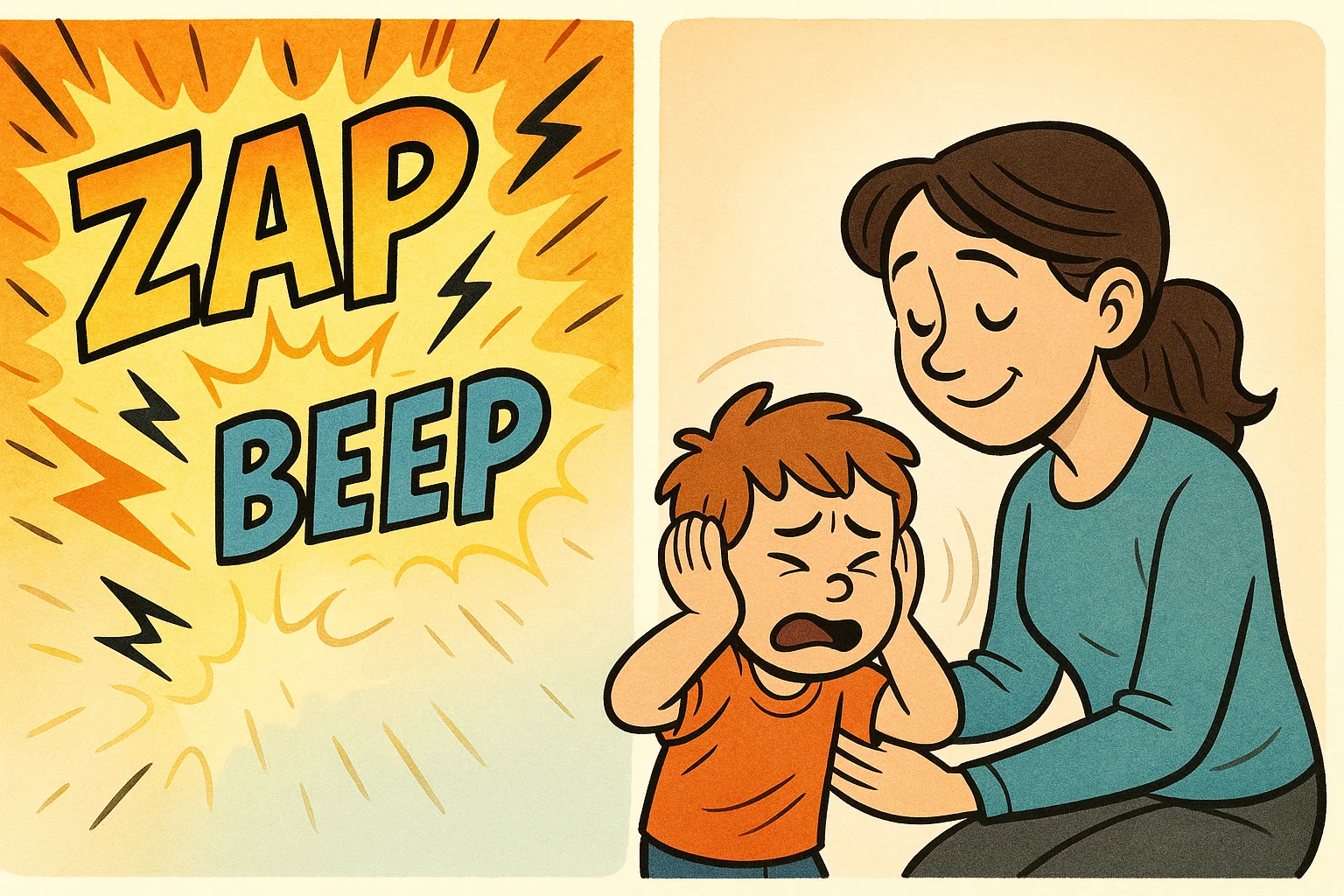
Overstimulation in children, often referred to as sensory overload, is a common reaction where a child’s nervous system is simply overwhelmed by excessive environmental input. This flood of stimulus can be visual, auditory, tactile, or even emotional, leading to distress, meltdowns, or tantrums that are often misinterpreted as simple misbehavior. When your child is overstimulated, they aren’t trying to be difficult; they are genuinely feeling overwhelmed and can’t process the world around them effectively.
As a parent or caregiver, learning to recognize the signs of overstimulation and having a toolkit of effective, practical strategies is essential. This guide, drawing on principles from child psychology and occupational therapy (OT), will provide you with practical, actionable tips to help your child calm down, prevent future sensory experiences from becoming crises, and help children develop crucial self-regulation skills.
What Is Overstimulation in Kids
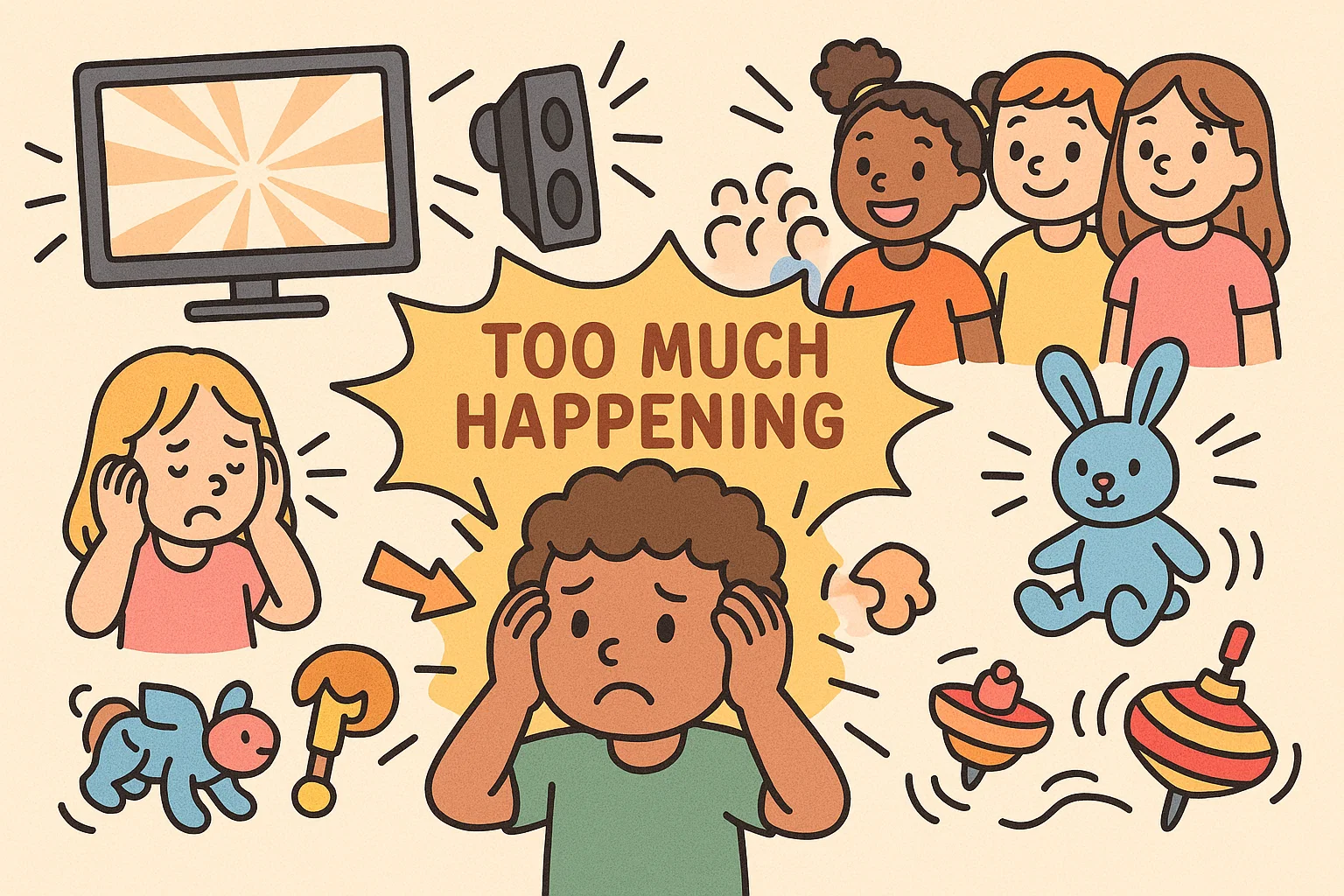
Overstimulation in children is a state where the brain receives more sensory or emotional input than it can successfully organize and interpret. Think of it like a computer trying to run too many programs at once—it freezes, slows down, or crashes. When a child experiences overstimulation, they often lose the ability to regulate their emotions and behavior.
Common Triggers of Overstimulation
The trigger for sensory overload can be any intense or prolonged input from the environment or even internal feelings. Recognizing these common culprits is the first step toward prevention.
- Loud Environments: Crowds, parties, concerts, or even a sudden loud siren.
- Visual Chaos: Bright, fluorescent lights (especially in stores or schools), too many moving objects, or excessive clutter.
- Tactile Input: Scratchy clothes, unexpected touch, or messy hands (tactile sensitivity).
- Too Much Screen Time: The rapid-fire visual and auditory input of video games or fast-paced shows.
- Emotional Overload: High social pressure, intense peer interactions, or even excessive excitement from a fun event.
- Lack of Sleep/Hunger: When basic needs are unmet, the threshold for tolerating stimulation drops significantly.
Difference Between Overstimulation and Hyperactivity
It’s common to mistake an overstimulated child for one who is simply hyperactive, but they are fundamentally different states.
| Feature | Overstimulation (Sensory Overload) | Hyperactivity (Behavioral) |
| Root Cause | Sensory processing breakdown (too much stimulus). | Primarily behavioral/neurological (e.g., associated with ADHD). |
| Child’s Goal | To escape, shut down, or reduce overwhelming input. | To move, fidget, or seek more activity/attention. |
| Behavior | Covering ears, crying, withdrawal, meltdown, becoming aggressive, or running away (removing the child from the environment is often the immediate need). | Constant movement, interrupting, blurting, difficulty staying seated. |
| Intervention | Reducing sensory input, providing a quiet place, deep pressure. | Structured activity, clear rules, movement breaks, focused tasks. |
Overstimulation is a reactive state caused by the environment, whereas hyperactivity is a persistent behavioral trait, often requiring different strategies to manage.
How Sensory Processing Affects Overstimulation
A child’s unique way of processing sensory input dramatically affects their susceptibility to overload. For children with autism spectrum disorder (ASD), ADHD, or sensory processing difficulties (often grouped as sensory processing disorder or SPD), the nervous system is either hypersensitive (over-responsive) or hypo-sensitive (under-responsive).
In hypersensitive kids, their internal filter for sensory input is too weak. A normal sound might register as deafening, or a light touch might feel painful. This means they get overstimulated much faster than their peers. Expert occupational therapy often focuses on a sensory diet—a personalized set of sensory activities offered throughout the day—to help the brain process input more effectively and prevent overstimulation from happening.
Signs a Child Is Overstimulated
Recognizing the child may be experiencing sensory overload early allows for intervention before a full-blown temper tantrum or meltdown. Look for both subtle and overt cues.
Signs in Babies and Toddlers
In toddlers and preschoolers, the signs are often physical and immediate, as their verbal skills are still developing.
- Sudden Crying or Fussiness: Unexplained distress that doesn’t resolve with feeding or a diaper change.
- Gaze Aversion: Turning their head or physically looking away from you or the source of stimulation.
- Body Language: Arching their back, stiffening their limbs, or frantic, uncoordinated movements.
- Clinging or Needing Isolation: Trying to hide their face on a parent’s shoulder or asking to go somewhere quiet.
Signs in Preschoolers and School-Age Kids
As kids get older, the signs become a mix of physical and emotional expressions.
- Emotional Outbursts: A meltdown that seems to come out of nowhere, often triggered by something small, often triggered by a minor incident.
- Escapism Behaviors: Running, hiding, or asking to be taken to somewhere quiet.
- Physical Signs: Covering ears, rubbing eyes, excessive fidgeting, rocking back and forth, or headaches.
- Verbal Frustration: Saying things like “I can’t do it,” “Leave me alone,” or rapid, anxious questioning.
- Difficulty Focusing: Seeming distracted or unable to follow simple directions, even if they usually can.
Signs in Teens
For teens, feeling overstimulated can manifest more internally and subtly, often mistaken for typical adolescent moodiness.
- Fatigue and Withdrawal: Extreme tiredness or suddenly canceling social plans/avoiding crowded places.
- Increased Irritability: Short fuse, snapping at others, or high sensitivity to constructive criticism.
- Physical Complaints: Frequent headaches, stomachaches, or general body tension.
- Self-Soothing Techniques: Engaging in excessive screen time, listening to loud music (as a way to ‘block out’ other sounds), or nervous habits.
Why Kids Get Overstimulated

Understanding the root cause is key to prevention. It’s not about poor parenting or a “bad” temperament—it’s about neurology meeting the environment.
Sensory Sensitivity and Brain Response
The fundamental reason why kids get overstimulated lies in their unique neurological wiring. When external sensory stimuli (like loud music) enters the brain, it passes through the thalamus, which acts as a sensory filter.
- Hypersensitivity: For children with sensory processing difficulties, this filter is weak. Too much information rushes in simultaneously, causing a traffic jam in the brain. The fight-or-flight response activates, leading to a meltdown.
- Proprioceptive and Vestibular Input: The senses of body awareness (proprioceptive) and balance (vestibular) are often involved. A child may seek intense input (like spinning or crashing) or avoid it entirely, both of which are ways the child tries to regulate an overwhelmed nervous system.
A study published in the Journal of Child Psychology and Psychiatry suggests that children with ASD may have significantly different connectivity patterns in brain regions related to multisensory integration, making them highly susceptible to sensory overload.
Emotional and Environmental Factors
The environment and a child’s emotional state don’t cause the sensory issue, but they can significantly lower the threshold for overload.
- Sudden Changes: Unexpected transitions—like leaving the park early or changing plans last minute—disrupt a child’s sense of predictability and control, making them more vulnerable to subsequent sensory input.
- Cumulative Stress: Day-to-day low-level stress from school, a busy schedule, or even a messy room builds up. A child can tolerate minor stimulation when rested and relaxed, but after a busy week, the same input can cause a crisis.
How Parents’ Emotions Influence Kids
Parents and caregivers play a crucial, often subconscious, role. Children are highly attuned to adult emotions—a phenomenon known as emotional mirroring.
If a parent is stressed, anxious, or tense (e.g., trying to rush out the door), the child’s nervous system picks up on that tension. The parent’s heightened state becomes an additional stimulus, often amplifying the child’s own stress and increasing the likelihood that the child gets overstimulated. To help kids stay calm, parents must first consciously work to stay calm themselves.
How to Calm an Overstimulated Child
When the child is overstimulated, the immediate goal is not to punish or teach, but to help them calm down. These techniques aim to organize the child’s nervous system and bring them back to a regulated state.
Create a Calm Environment
The first and most critical step is managing the external environment.
- Remove the Child from the Environment: If possible, physically remove the child from the noise, crowd, or light to somewhere quiet. This might be a hallway, the car, or a dedicated “safe spot” at home.
- Reduce Sensory Input: Dimming lights (fluorescent lights are especially harsh), turning off the TV, and reducing noise is essential. Even a few minutes of reduced stimulation can be profoundly helpful.
- Offer a Boundary: Sometimes a simple boundary is enough. For example, moving to the edge of a crowd or standing behind a parent.
Use Deep Pressure and Heavy Work Activities
Deep pressure input and proprioceptive (body awareness) work are incredibly grounding and help the brain reorganize. The proprioceptive system is often called the body’s “self-calming” sense.
| Technique | Description | Age Group |
| Deep Pressure Hugs | A slow, firm hug that provides consistent pressure, held for a few seconds. Avoid light, tickly touch. | All ages |
| Heavy Work | Activities that push or pull against the body. Examples: Pushing a grocery cart, carrying a stack of books, helping move furniture. | Toddlers to Teens |
| Squeezing/Crashing | Squeezing a stress ball, a favorite cuddly toy, or crashing onto a beanbag chair or pile of pillows. | Preschoolers to School-Age |
| Weighted Items | A weighted blanket or lap pad provides consistent, calming pressure. | All ages (with supervision) |
Teach Breathing and Mindfulness Techniques
When a child is older and not in a full meltdown, conscious breathing is a powerful tool to engage the parasympathetic nervous system (the “rest and digest” system).
- Belly Breathing: Teach them to place a hand on their belly and feel it rise and fall. “Breathe in peace, breathe out worry.”
- “Smell the Flower, Blow the Candle”: A simple, age-appropriate visualization where the child takes a slow deep breath in through the nose (smelling the flower) and exhales slowly through pursed lips (blowing out a candle). This is one of the most effective techniques for helping a child learn to self-regulate.
- Five Finger Breathing: Trace the outline of one hand slowly with a finger from the other hand, inhaling as you go up a finger and exhaling as you go down.
Offer Comfort and Predictability
Familiarity is soothing. When feeling overwhelmed, a child needs to feel safe and secure.
- Soothing Voice: Speak in a low, slow, monotone voice. A high-pitched, excited, or frantic voice can escalate the situation.
- Familiar Items: Offer a favorite blanket, stuffed animal, or small fidget toy to hold.
- Consistency: A predictable daily routine is a strong preventive measure. During a crisis, remind them of the consistent steps you take to help soothe them.
Redirect with Calm Play or Movement
Once the child is starting to recover, redirection can prevent a relapse into distress. This should be a low-demand, quiet activity.
- Quiet Movement: Gentle stretching, slow rocking, or swaying.
- Low-Demand Creative Play: Simple drawing, coloring, or playing with clay/Play-Doh (tactile input can be regulating).
- Rhythmic Music: Put on a calm playlist or use a rhythmic metronome beat to help organize their internal state.
How to Prevent Overstimulation
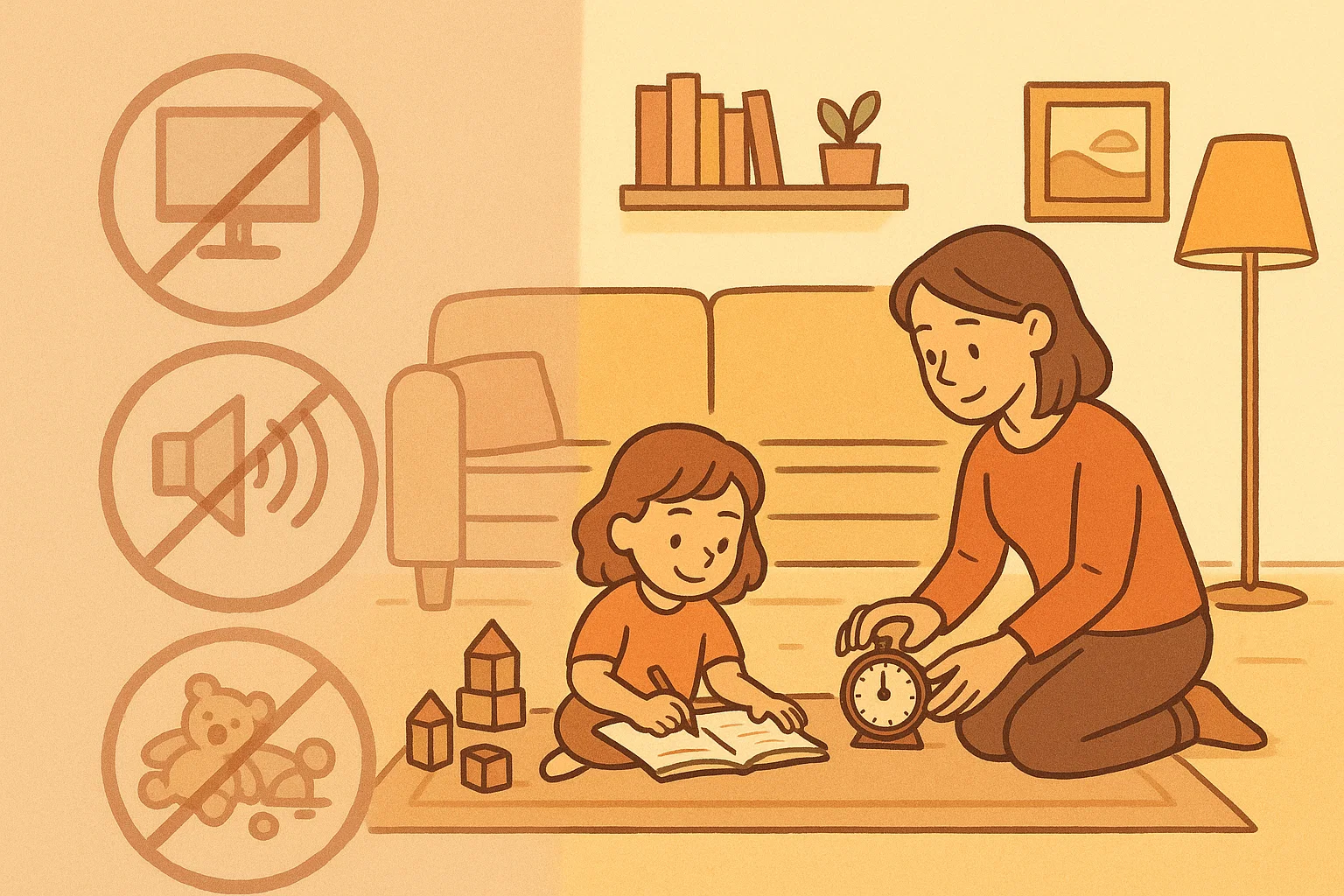
Prevention involves building a sensory diet and a lifestyle that respects the child’s processing needs.
Manage Transitions and Downtime
Sudden changes are major triggers. Predictability is an antidote to anxiety.
- Use Visual Schedules: Pictures or words showing the day’s activities help your child anticipate transitions.
- “The Five-Minute Warning”: Always give a verbal and visual warning before ending an activity or moving to a new one (e.g., “Five more minutes until bath time”).
- Mandatory Rest Breaks: Schedule quiet time into the day, even if the child protests. This is non-negotiable downtime, which could be reading, lying down, or calm coloring.
Balance Screen Time and Outdoor Play
The modern environment is saturated with intense, artificial stimulation.
- Limit High-Intensity Screens: Fast-paced, aggressive video games or shows increase the baseline arousal level of the nervous system.
- Encourage Natural Sensory Experiences: Outdoor play—climbing, digging in the dirt (tactile), running, and jumping—offers natural, regulating proprioceptive and vestibular input. Kids need these sensory experiences to develop healthy sensory processing skills. A good goal is to match high-intensity screen time with equal or greater outdoor ways to play.
Teach Self-Regulation Skills
The ultimate goal is to move the child from being reliant on the parent to regulate, to using self-soothing techniques independently.
- Label Emotions: Use simple language: “I see you are getting frustrated. Your body looks angry.” This helps the child connect the physical feeling overwhelmed with the emotion.
- Develop a Toolkit: Work with your child when they are calm to create a personalized list of behaviors to help—the things that work for them (e.g., listening to a specific song, reading a book, getting a deep hug).
When to Seek Professional Help
While all kids need help regulating occasionally, persistent overstimulation may indicate a deeper issue requiring a specialist’s expertise.
When to Talk to a Pediatrician or Therapist
Consider seeking professional guidance if you notice that your child consistently exhibits these warning signs:
- Frequent Meltdowns: Meltdowns that happen daily or multiple times a week, despite consistent parenting efforts.
- Sleep/Eating Disruption: Persistent sleep issues or extreme selectivity in eating (often a sign of oral or tactile sensory issues).
- Social/School Withdrawal: A refusal to participate in age-appropriate social activities or significant academic struggles due to difficulty focusing.
- Safety Concerns: Aggression, self-injurious behaviors the child uses to cope, or inability to be comforted during meltdowns.
- Developmental Delays: If sensory processing difficulties are impacting overall development.
How Occupational Therapy Can Help
An occupational therapist (OT) specializing in sensory processing is the key specialist in this area.
- Sensory Integration Therapy: OTs use play-based activities in a safe environment to help the child’s nervous system process sensory stimuli more efficiently. This can involve specialized equipment like swings, trampolines, and weighted items.
- Sensory Diet Planning: An OT can create a highly individualized sensory diet—a schedule of activities designed to meet the child’s specific sensory needs throughout the day, which can effectively prevent overstimulation.
Support for Parents and Caregivers
It’s exhausting to manage a child who is frequently experiencing sensory overload. Remember, you need to help yourself first. A board-certified behavior analyst (BCBA) or a parent coach can provide tailored strategies and support. Joining a local support group for parents of children with autism or SPD can also provide invaluable empathy and practical tips for parents.
Everyday Tips for Different Age Groups
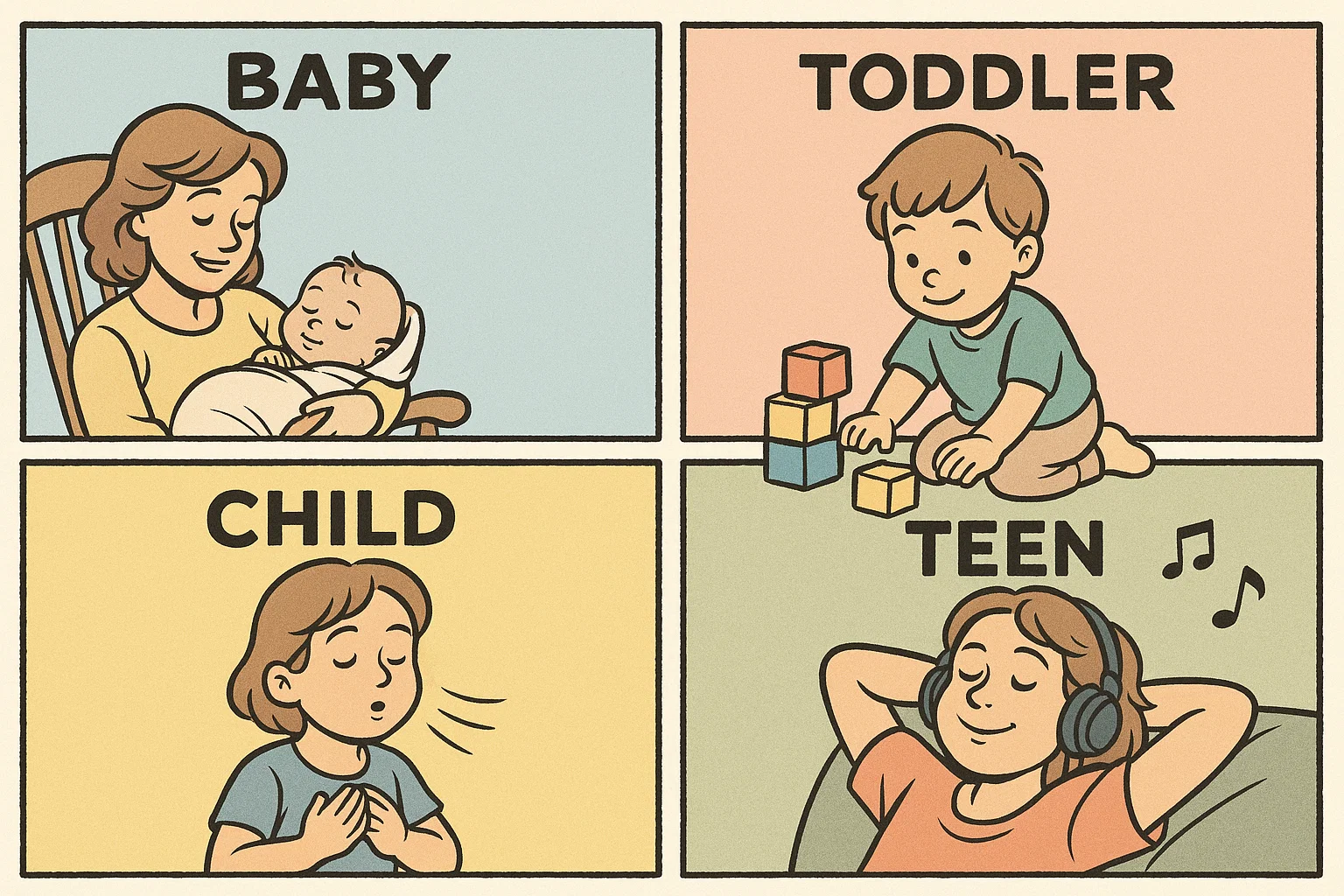
Interventions must be age-appropriate to be effective.
Babies and Infants
- Swaddling: Provides firm, all-over pressure, mimicking the womb.
- Gentle Rocking and Humming: Rhythmic, slow movement, and a steady, low-tone sound are regulating.
- Low Light/Quiet Environment: Keep environments simple, especially when a baby is awake. Introduce new sensory stimuli one at a time.
Toddlers and Preschoolers
- Quiet Time Corners: A designated, low-stimulus spot with a few simple, favorite items.
- Deep Hugs: Provide a deep pressure input instead of a light, quick hug.
- Sensory Bins: Simple, single-input bins (e.g., just dried beans and scoops, or just water) can be incredibly regulating ways to play.
School-Age Kids and Teens
- Mindful Breaks: Encourage a 5-minute break every hour during homework or screen time.
- Calm Playlists/Music: Allow the child to create a personalized playlist of calming music to use with headphones when feeling overstimulated.
- Journaling/Drawing: A non-verbal outlet for processing complex emotions and sensory experiences. This gives the child a way to externalize internal overwhelm.
Creating a Calm-Down Routine at Home
A routine transforms a chaotic reaction into a predictable process, which significantly helps children cope.
Setting Up a Calm Space
This should not be a “time-out” zone for punishment; it’s a sanctuary.
- Sensory-Friendly Zone: A small tent, a closet converted into a cozy nook, or a corner of a room.
- Tools: Stock it with items like a weighted blanket, large pillows, noise-canceling headphones, and a few favorite books.
- Lighting: Use a lava lamp or string lights instead of harsh overhead lighting.
Using Visual Aids and Calm-Down Charts
Visual supports simplify complex emotional concepts for the child’s brain, especially when they are already stressed.
- Emotion Cards: Use simple faces or colors to help the child identify where they are on the emotional spectrum (e.g., Green = Calm, Yellow = Worried/Fidgety, Red = Meltdown).
- Calm-Down Chart: A simple, laminated chart showing 3-5 approved steps to take when they reach “Yellow” (e.g., 1. Go to the quiet corner. 2. Take three deep breaths. 3. Squeeze the stress ball. 4. Ask for a hug).
Practicing Daily, Not Just During Crises
The key to an effective routine is practice. Help your child practice the calming steps when they are already calm.
“Practice makes it easier. We practice when we are happy, so our brain knows what to do when we are mad or overwhelmed.”
This regular practice helps build the neural pathways for self-regulation so that the routine becomes automatic during a high-stress moment.
Helpful Tools and Sensory Products
While no product is a cure-all, many safe tools can supplement your efforts to help your child calm.
Weighted Blankets and Compression Vests
These products provide deep pressure input (DPI) across a large area of the body.
- How They Work: DPT releases neurotransmitters like serotonin and dopamine, which have a calming, organizing effect on the nervous system. The extra weight provides continuous proprioceptive input, telling the brain where the body is in space.
- Use: Weighted items are excellent for settling down before bed or during quiet time. Note: Always consult the manufacturer’s guidelines for appropriate weight (usually 10% of the child’s body weight) and ensure the child can easily remove the blanket.
Fidget Toys and Chewables
These tools redirect nervous energy and provide focused sensory experiences.
- Fidget Toys: They occupy the small motor muscles and the tactile system, helping the brain stay organized enough to focus on an auditory or visual task (like listening to a teacher).
- Chewables: These provide intense proprioceptive input to the jaw, which can be highly regulating for children who chew on clothing, pencils, or their hands.
Apps and Audio Resources for Calm
- White Noise/Nature Sounds: Blocking out a chaotic environment with consistent, predictable sound can dramatically reduce sensory overload.
- Mindfulness Apps: Apps like Calm or Headspace have kid-friendly stories and guided meditations to teach breathing and focus.
Recognizing that overstimulation happens is the first step toward effective parenting. By implementing these expert-backed strategies, you provide your child with sensory tools and the emotional safety they need to help them navigate their world and thrive.