

Building a foundation for lifelong success starts with how a child perceives their own potential. As parents and educators, we often focus on the end result—the grade on the test or the trophy at the end of the season—but the true driver of achievement is the learning process. Growth mindset activities for kids provide a practical framework to shift focus from innate “talent” to the power of effort and persistence. By engaging in growth mindset activities, children learn that their brains are like muscles that get stronger with use, helping them navigate challenges with confidence rather than fear.
These activities go beyond simply “thinking happy thoughts.” They include printable worksheets, interactive games, and classroom discussions that help children build resilience and emotional control. Whether you are using growth mindset posters in a classroom or practicing positive self-talk at the dinner table, the goal is to help kids move away from the “I can’t” mentality and embrace the “I can’t yet” philosophy. This proactive approach supports long-term emotional health and academic persistence, helping children learn how to bounce back from everyday setbacks.
Growth mindset concept for kids
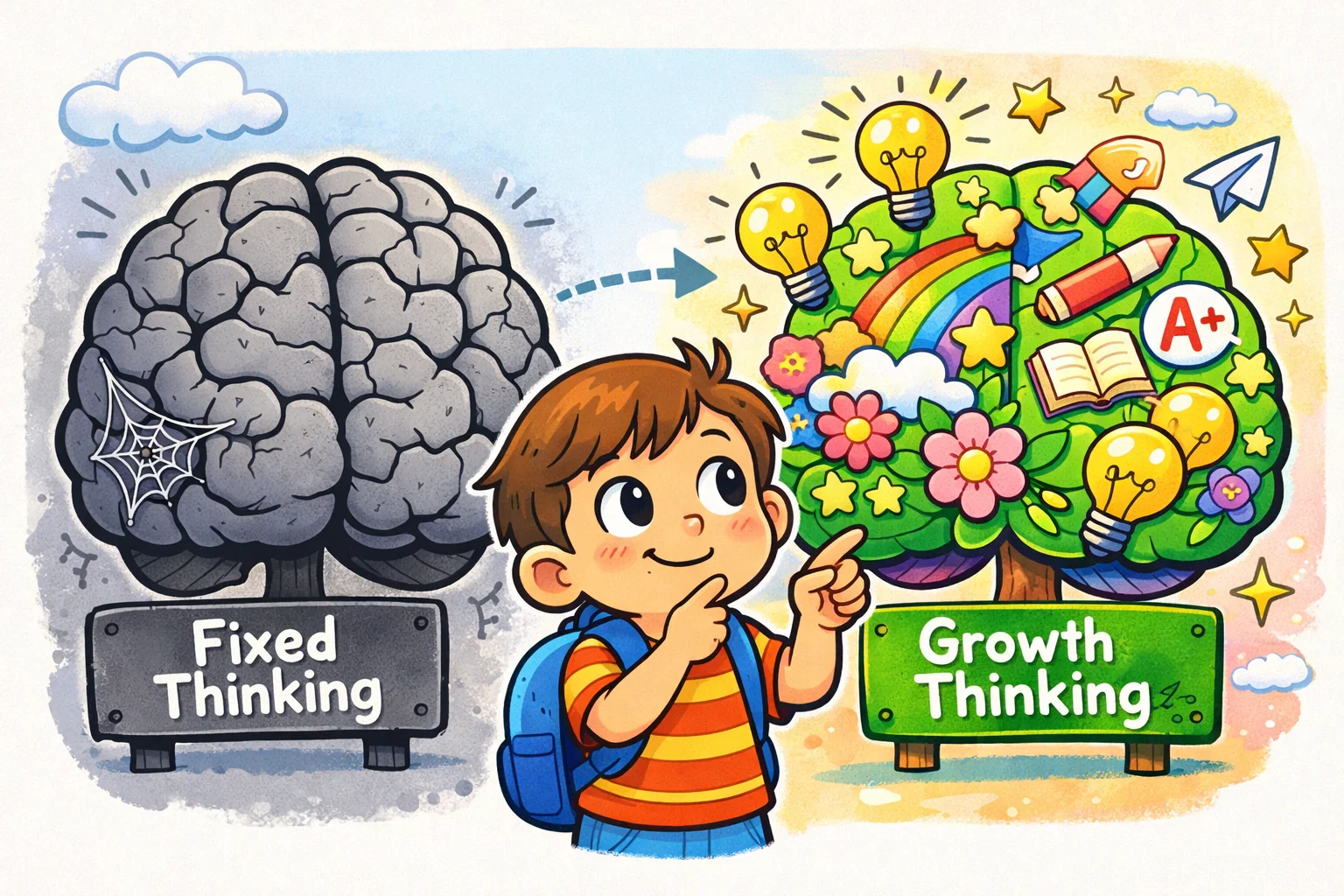
The concept of a growth mindset, a term introduced by psychologist Carol Dweck, centers on the belief that intelligence and abilities can be developed through effort, good strategies, and mentorship. In contrast, people with a fixed mindset tend to believe that they are born with a certain amount of intelligence or talent, and that it cannot easily change. For a child, a fixed mindset can feel like a ceiling; they may avoid challenges because they fear making mistakes or give up quickly when they make mistakes.
Fostering a growth mindset in children is deeply connected to neuroplasticity—the brain’s ability to reorganize itself by forming new neural connections. When we teach kids that their brain physically changes when they learn new things, we demystify the struggle of education. It transforms opportunities to learn from stressful tests of character into exciting puzzles to be solved. This mindset is vital across all domains:
- School: Encourages perseverance in difficult subjects like math or writing.
- Sports: Focuses on practice and technique rather than just winning.
- Socially: Helps kids understand that friendships take work and communication.
Growth mindset meaning for children
To help your child understand this, use relatable language. You might say, “Your brain is like a seed. If you water it with practice and sunshine it with effort, it grows into a strong tree.” For a middle schooler, you might compare it to a video game: you don’t start at Level 100; you have to fail, learn the patterns, and keep trying to level up.
Fixed mindset vs growth mindset
The difference between growth and fixed mindsets is most visible during a setback.
| Feature | Fixed Mindset | Growth Mindset |
| View of Challenges | Avoids them to stay safe | Embraces challenges |
| Reaction to Failure | “I’m not good at this.” | “This is a chance to grow.” |
| Effort | Seen as a sign of low ability | Effort as a path to mastery |
| Feedback | Takes it personally or defensively | Uses it to develop skills |
Brain growth through effort
Science suggests that the brain is remarkably adaptable. When children persist in the face of difficulty, the brain strengthens its connections through repeated effort. This means that tasks which were once incredibly hard eventually become “automatic.” Teaching this to kids removes the shame of struggle and replaces it with the pride of “brain building.”
Role of mistakes in learning
In a growth-oriented environment, mistakes are celebrated. We want children to learn that an error is simply data. It tells you what didn’t work so you can brainstorm a better way. When we teach children to value the “mishap,” we build resilience and help them bounce back from failure without losing their self-esteem.
Confidence building through mindset
Children with a growth mindset don’t necessarily think they are the best at everything; rather, they have the confidence to try. This personal growth stems from knowing that their value isn’t tied to a perfect score, but to their willingness to try new things.
Growth mindset activities for kids
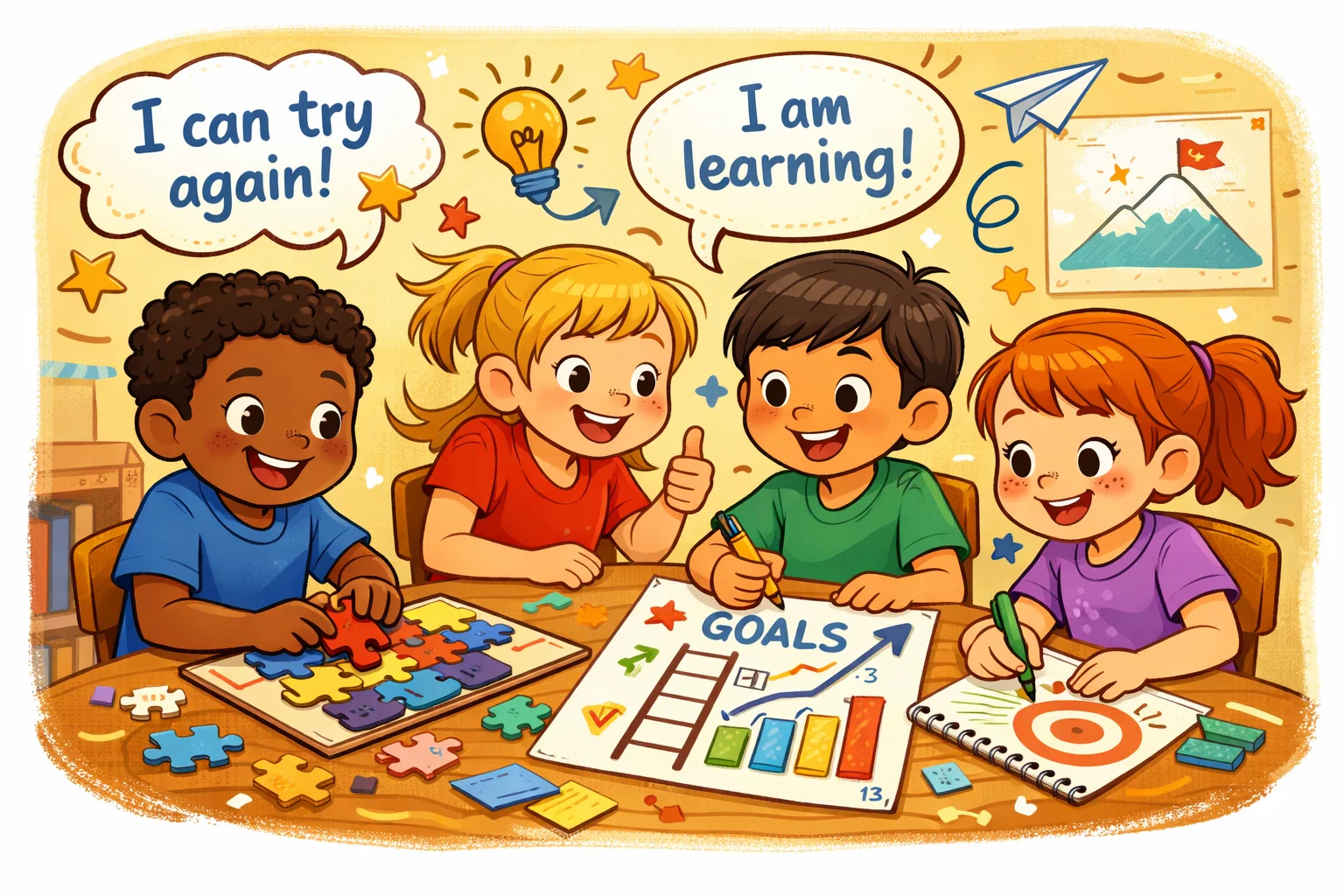
Implementing growth mindset activities for kids doesn’t require a PhD in psychology. It requires consistency and a bit of creativity. Here are several hands-on ways to foster a growth mindset at home or in the classroom.
Negative to positive
Teach kids to flip the script. When a child says, “I can’t do this,” encourage them to add “yet.” Use growth mindset statements to replace negative thoughts with positive ones. For example: “This is too hard” becomes “This may take some time and effort.”
Success iceberg
Draw an iceberg. Above the water, write “Success.” Below the water, have the child list everything people don’t see: persistence, perseverance, late nights, learning from mistakes, and problem-solving. This visual helps them realize that growth and success are earned, not just given.
Fixed vs growth mindset anchor chart
Create a visual T-chart for the wall. On one side, list “Fixed Mindset Thoughts” and on the other, “Growth Mindset Thoughts.” Using growth mindset posters like this serves as a constant reminder of how to choose their perspective.
Famous fails
Look up famous figures like Michael Jordan, J.K. Rowling, or Walt Disney. Discuss their failures with your students or children. Seeing that high achievers also face rejection helps kids adopt a growth mindset and realize that failure is a stepping stone, not a wall.
Yet crown
For younger children, make a paper crown with the word “YET” on it. When they are struggling to get better at something, they wear the crown to remind themselves that they are in the process of becoming.
Kindness challenge
Growth mindset activities teach us that we should be kind to ourselves too. Have children write one “growth-focused” compliment to a peer and one to themselves daily. This builds empathy and reinforces positive self-talk.
Escape room activity
Create a simple DIY escape room with puzzles. To “unlock” the next clue, they must solve a problem. This encourages problem-solving skills and rewards the learning process rather than just the final answer.
Goal setting journaling or crafts
Have kids create a “Vision Map.” Instead of just writing a goal, have them map out the opportunities to learn and grow they will encounter along the way.
What I like about myself
Confidence is the fuel for a growth mindset. Have kids list three things they are good at because they practiced them. This reinforces that abilities can be developed.
Contribution brainstorming
Ask kids to brainstorm ways they can help others learn a skill they’ve already mastered. Teaching someone else is one of the best growth mindset behaviors for reinforcing one’s own knowledge.
Quote inspiration
Use growth mindset quotes as daily prompts. Ask: “What does this quote mean for your math homework today?”
“It’s not that I’m so smart, it’s just that I stay with problems longer.” — Albert Einstein
Crumple activity
Have a child write a mistake they made on a piece of paper and crumple it up. Then, have them uncrumple it and trace the lines. Explain that the “cracks” are where the new learning happened.
Fortune teller
Create an origami “cootie catcher” with growth mindset activities for middle schoolers or younger kids. Inside, put challenges like “Give someone a growth mindset compliment” or “Describe a time you used persistence.”
Growth mindset dice
Use a wooden block to create dice. Each side has a prompt: “What did you learn today?”, “How did you help someone?”, or “What was a setback you overcame?”
Grow-ga
Combine yoga with mindset affirmations. While holding a pose, have children repeat, “I am strong, I am focused, I am growing.” This helps with emotional regulation.
Error analysis
Instead of hiding a graded test with red marks, do an “Error Analysis.” Have the child categorize mistakes into “Silly Mistakes,” “Didn’t Know How,” or “Misread.” This makes learning from mistakes clear and actionable.
Easy or hard craft
Give kids two tasks: one very easy (coloring a circle) and one hard (origami). Afterward, ask which one made their brain feel “tighter” or “stronger.” Usually, it’s the hard one!
Action plan
When a child is stuck, help them develop a growth mindset by creating a 3-step action plan. Step 1: What is the problem? Step 2: What is one new strategy? Step 3: Who can I ask for help?
Self-awareness checklist
Provide a free printable checklist where kids can mark off when they used a “Growth Mindset Strategy” during the day, such as “I tried a new way” or “I didn’t give up.”
List ways to achieve success
Brainstorm a list of tools for success: asking questions, taking a break, using a ruler, or looking at a mentor. This shows that problem-solving is a skill, not a gift.
Teaching strategies for growth mindset
As the primary influencers in a child’s life, adults must model the mindset they wish to see. Simply telling a child to “have a growth mindset” isn’t enough; we must weave it into our daily interactions.
Praise for effort
Many educators note that praising a child’s intelligence (“You’re so smart!”) can actually lead to a fixed mindset, as the child becomes afraid of losing that label. Instead, praise the process: “I noticed how hard you worked on that drawing!” or “I love the strategy you used to solve that puzzle.”
Share personal examples
Children often think adults are “perfect.” Share your own failures with your students or kids. Say, “I made a mistake at work today, but here is what I learned from it.” This normalizes the learning process.
Process-focused feedback
When giving feedback, focus on the “how” rather than just the “what.”
- “You used a lot of detail in this paragraph.”
- “I see you practiced your scales ten times today; that’s why the song sounds smoother.”
Reflection questions
Instead of asking “How was school?”, try:
- What was something that challenged you today?
- Did you make a mistake that taught you something?
- What is one thing you want to get better at tomorrow?
Learning progress tracking
Visual evidence of growth is powerful. Use a “Power of Yet” wall or a progress chart that tracks how many times a child attempted a difficult task before succeeding. This highlights perseverance over perfection.
Habit building routines
Incorporate growth mindset activities into the morning or bedtime routine. A simple “Mistake of the Day” discussion during dinner can change the family culture to one that encourages kids to embrace challenges.
Growth mindset weekly guide
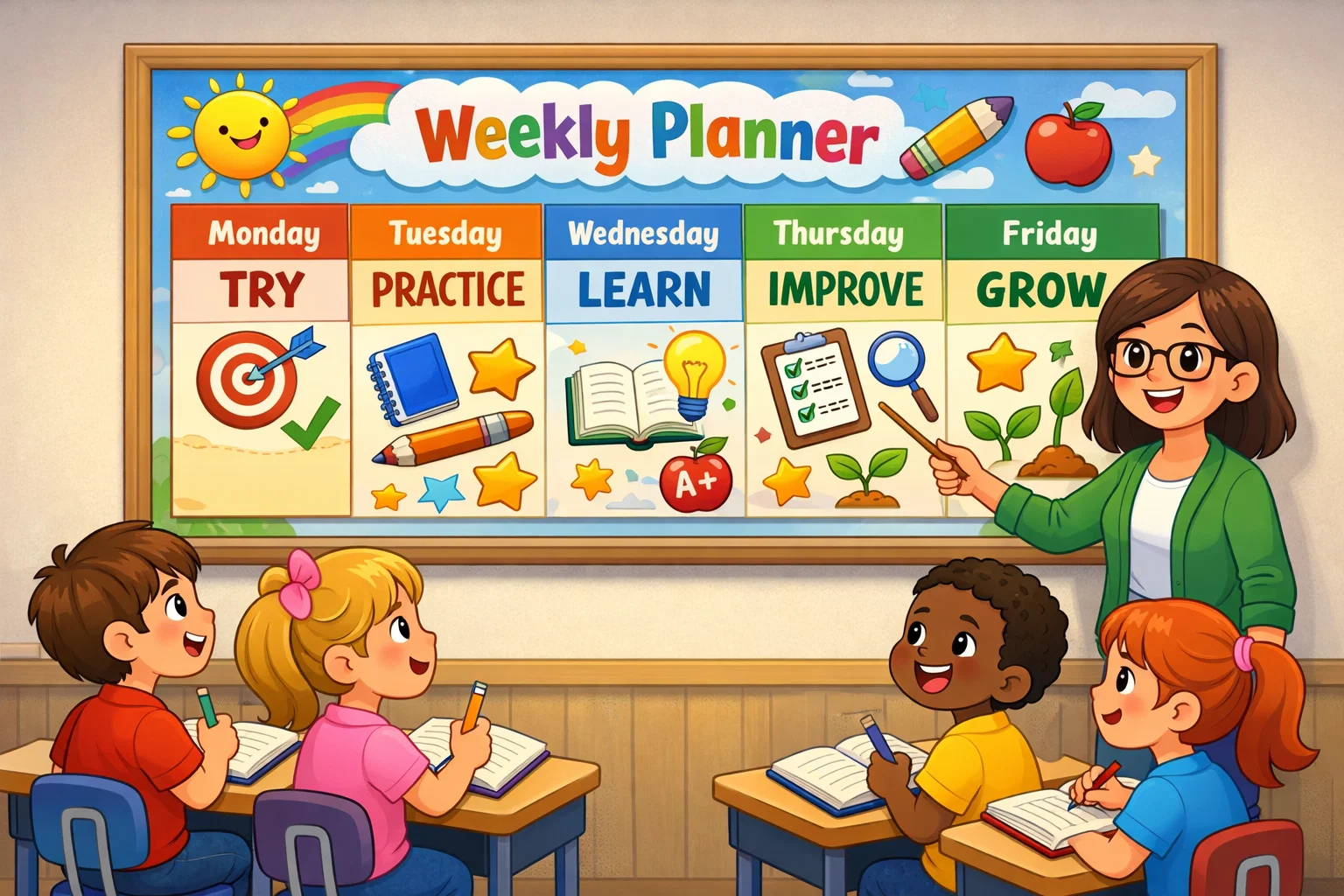
If you are looking for a structured way to introduce these concepts, here is a 4-week growth mindset kickoff plan.
Week one: Introduce mindset
Focus on the basic concept of a growth mindset. Use the brain growth analogy and the “Success Iceberg.” Read stories about how the brain changes and introduce the word “Yet.”
Week two: Notice mindset
Start “mindset spotting.” Help children identify when they are using “Fixed Mindset Voice” (e.g., “I’m just not a math person”). Practice turning those into growth mindset statements.
Week three: Model mindset
The focus shifts to the adults and mentors. Show the child how you handle a setback. Use a “Famous Fails” activity to show that even heroes struggle.
Week four: Practice mindset
Apply the mindset to a specific challenge, like learning a new instrument or a difficult sport. Use age-appropriate mindset activities to track real-world application.
Growth mindset games for kids
Play is the natural language of children. Growth mindset games for kids make the struggle of learning feel like a fun challenge.
Sudoku-style logic games
Sudoku-style games for kids require logic and the ability to bounce back when a number (or cat) doesn’t fit. It rewards the “try and try again” approach.
Origami challenges
Origami is rarely perfect on the first try. It requires precise folding and persistence. When the paper rips or the bird looks like a blob, it’s a perfect moment to teach kids about learning from mistakes.
Coding and robotics
In coding, “bugs” are expected. You cannot code without failing. This makes robotics a premier environment for problem-solving skills and perseverance.
Project-based learning
Engage in a long-term project, like building a birdhouse or planting a garden. Because these take time, they naturally teach kids to persist in the face of slow progress.
Try three then ask
Before asking for help, the child must try three different strategies. This builds self-reliance and the habit of brainstorming their own solutions first.
Growth mindset videos for kids
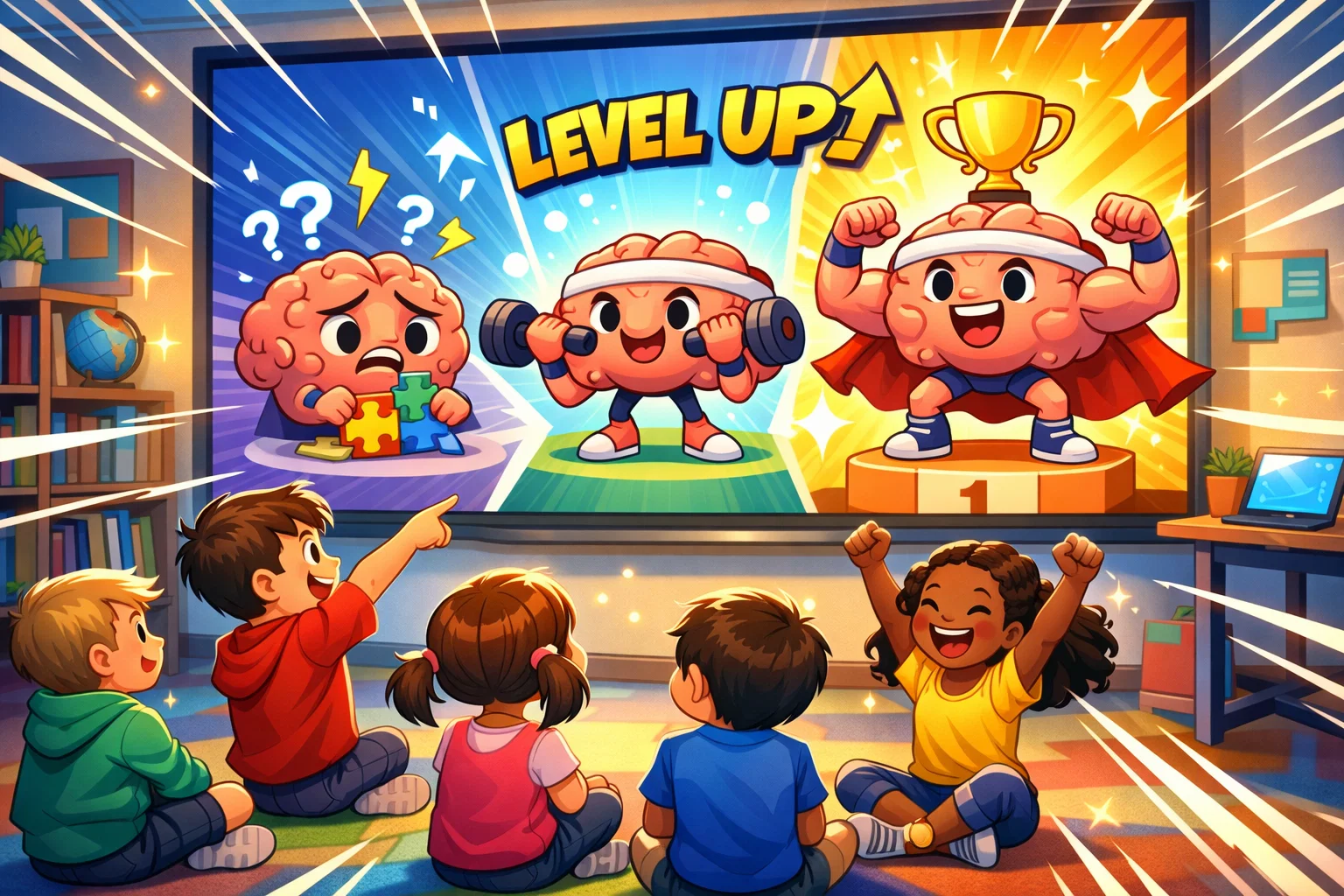
For visual learners, videos can be a free growth mindset resource that explains complex neurological concepts simply.
Brain growth videos
Look for kid-friendly videos about how the brain learns. Seeing animations of neurons connecting provides a concrete image of what happens when they learn new things.
Fixed vs growth mindset videos
Many animated shorts show two characters—one who gives up and one who keeps trying. These serve as excellent mindset activities for middle and elementary students to spark discussion.
Class Dojo video series
The “Big Ideas” series by Class Dojo is a highly recommended, free resource. It follows characters like Mojo as they learn about the learning process and the power of effort.
Videos for older students
For teens, look for TED-Ed videos on “The Power of Belief.” These delve deeper into the psychology of growth and success, which resonates more with the “why” of the older age group.
Growth mindset songs for kids
Music is a powerful mnemonic device. Growth mindset songs for kids can stick in a child’s head, providing a mental soundtrack of positive self-talk.
Lyric-based affirmation
Songs like “Try Everything” by Shakira or “Don’t Give Up” by Bruno Mars (Sesame Street) provide lyrical reminders to keep trying. Singing these together builds a love of learning.
Movement and rhythm
Incorporate dance into the songs. Kinetic movement helps anchor the emotional message of resilience and personal growth.
Classroom sing-along
Group singing creates a shared culture. When an entire class sings about the “Power of Yet,” it reduces the stigma of struggling individually.
Growth mindset books and read-alouds
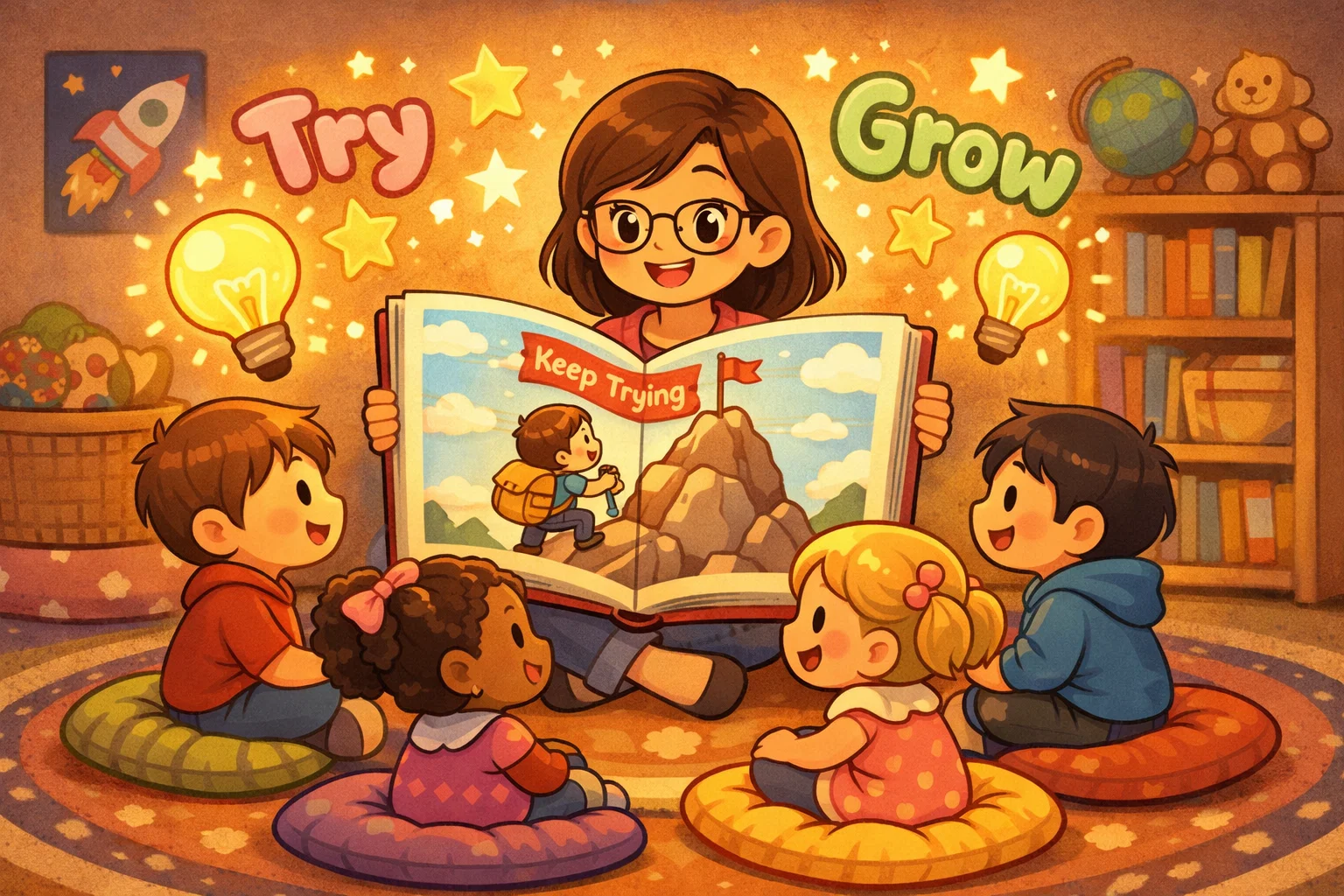
Literature allows children to experience a protagonist’s setback and eventual triumph from a safe distance.
Read-aloud books
- The Girl Who Never Made Mistakes by Mark Pett
- The Most Magnificent Thing by Ashley Spires
- Rosie Revere, Engineer by Andrea Beaty
Famous failure stories
Biographies of people like Abraham Lincoln or Thomas Edison (who famously said he didn’t fail, he just found 10,000 ways that didn’t work) are essential growth mindset resources.
Discussion prompts
After reading, ask: “How did the character feel when they failed?”, “What did they do to bounce back?”, and “How did their brain grow?”
Benefits of growth mindset for kids
The impact of fostering a growth mindset extends far beyond the classroom. It shapes the child’s entire worldview.
Confidence building
When a child realizes their abilities can be developed, they lose the fear of the unknown. This results in higher self-esteem and a willingness to try new things.
Academic resilience
Children with a growth mindset are more likely to keep trying when learning feels difficult. They see a low grade as a signal to change their study habits, not as a sign to drop the class.
Emotional regulation
A growth mindset is one that understands frustration is a temporary state. Instead of throwing a tantrum when a tower falls, the resilient child stops to think about a better base.
Long-term success
Ultimately, growth mindset behaviors lead to adults who are adaptable, innovative, and capable of leading. In an ever-changing world, the ability to learn and grow is the most valuable skill a person can possess.