

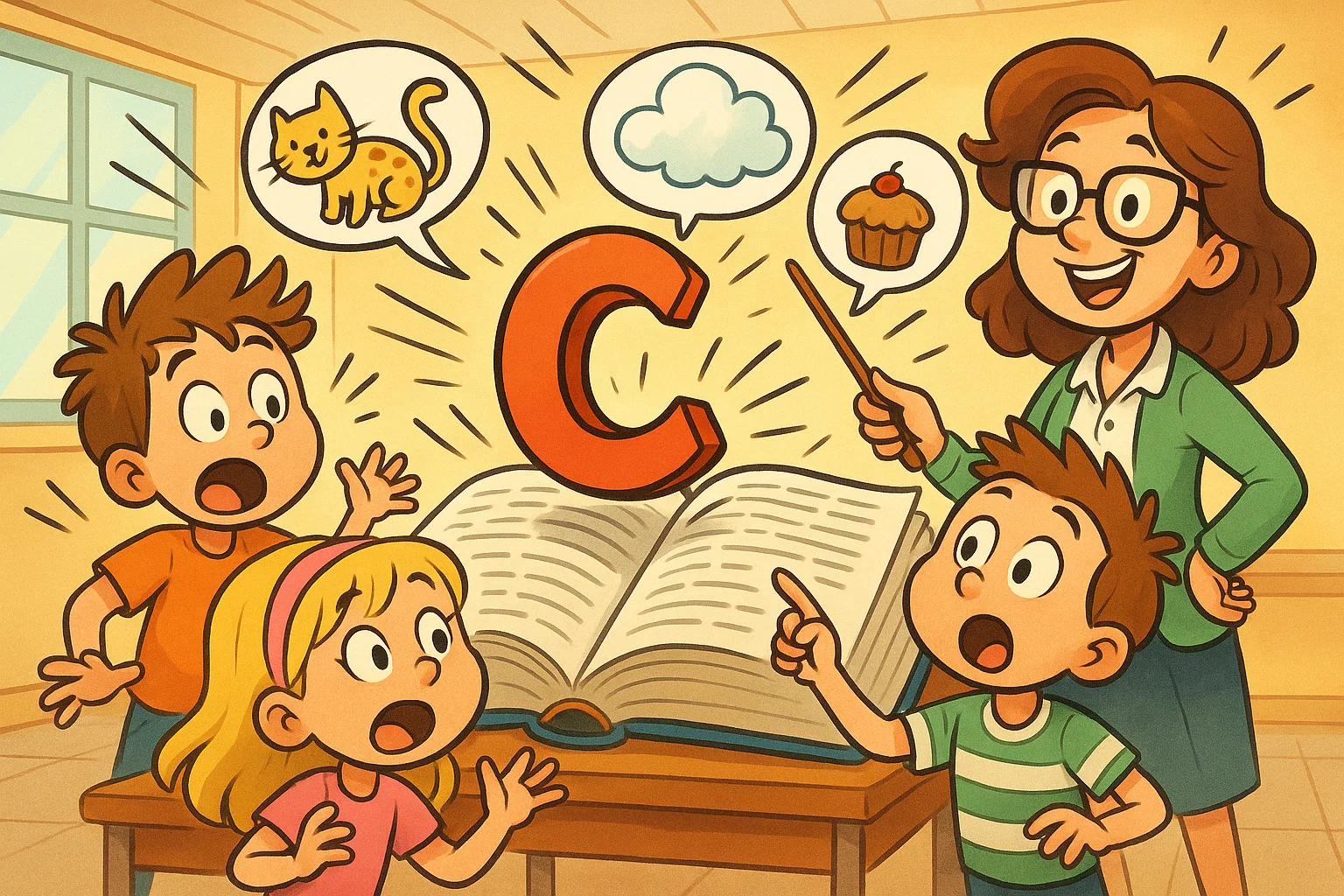
As a parent or educator, you’ve likely noticed the universal appeal of silly, quirky language. There’s a certain delightful chaos when a child encounters a genuinely odd word, and the words that start with c seem to corner the market on comedic charm. From the satisfyingly crunchy sound of “clumsy” to the delightfully exaggerated sound and rhythm of “cantankerous” C-words often form the backbone of playful banter, childhood jokes, and engaging classroom vocabulary lessons.
This guide introduces you and your children to a list of words that start with c—specifically, the ones that make us smile or giggle. We’ll explore why these funny words are so effective at boosting linguistic creativity, enhancing humor, and providing a foundation for imaginative play. By embracing this kind of playful vocabulary, we’re not just expanding a child’s dictionary; we’re giving them the tools to become more expressive, confident, and utterly charming communicators. Let’s delve into the wondrous world of the comedic letter c.
Funny Words Starting With C
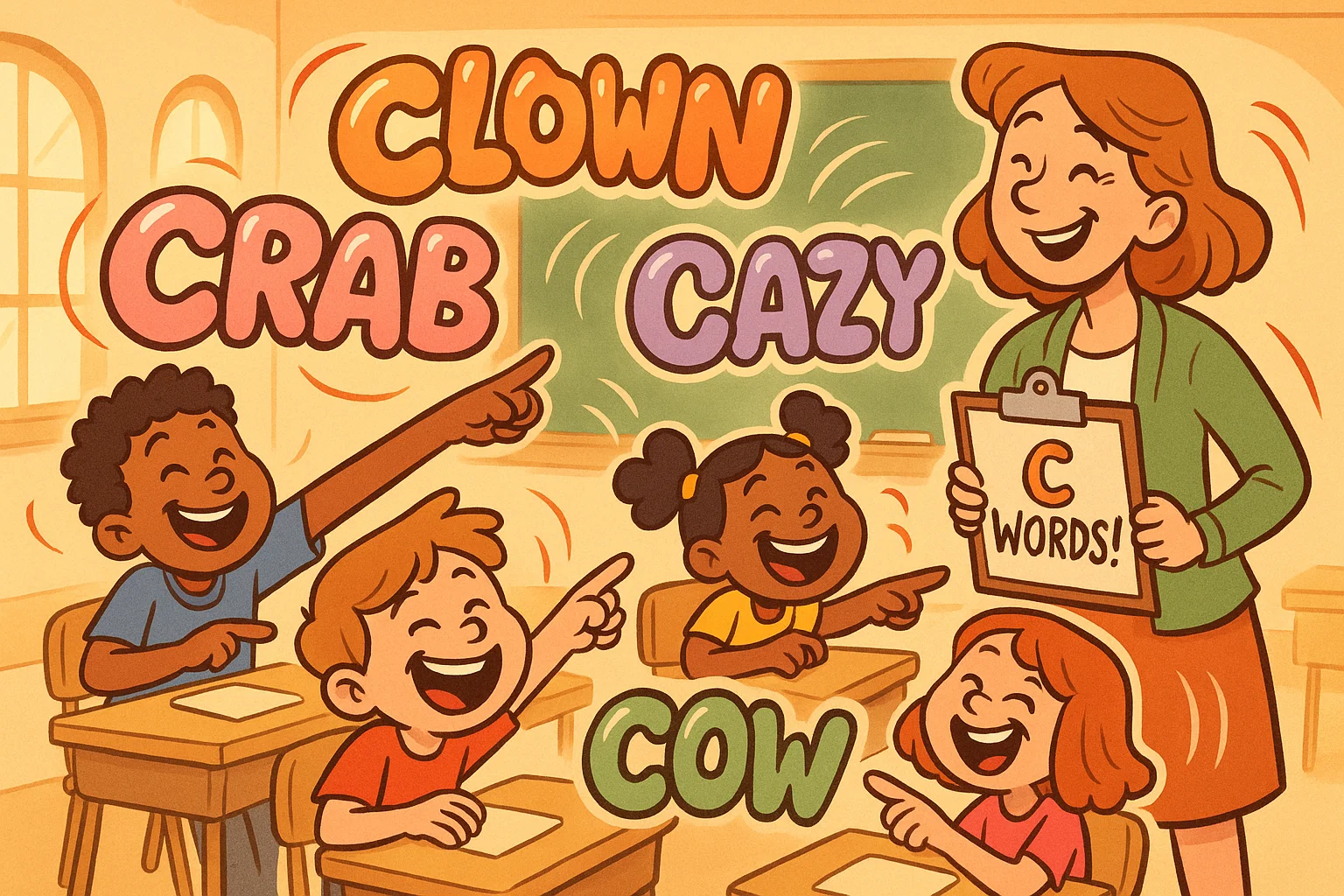
The letter c is a powerhouse for creating laughter. Many of the most inherently humorous, odd, and playful words beginning with c possess a delightful irregularity, either in their pronunciation or their meaning. This section provides a foundational word list of some of the best funny words starting with c, offering easy-to-grasp meanings and simple usage examples. These are the verbal building blocks of great jokes and silly stories.
Short Description of Humor in C Words
Why do C-words sound so funny? Often, the comedic effect comes from the way we pronounce the letter. The “hard C” (like in “clown” or “clever”) is a sharp, plosive sound, requiring a distinct movement of the tongue and mouth. When followed by certain vowel or consonant combinations, it can create a sound that is inherently awkward, exaggerated, or satisfyingly punchy—like “clutter” or “clobber.” Linguistically, this abruptness and rhythm are excellent ingredients for lighthearted humor and alliteration.
List of Funniest C Words With Meanings
Here is a selection of 25 funny, memorable words starting with c, perfect for introducing kids to playful language.
| Word | Meaning | Sample Sentence |
| Calliope | A musical instrument with steam or air-powered whistles; the sound itself is often loud and oddly cheerful. | The circus calliope played a ridiculously upbeat tune. |
| Cantankerous | Bad-tempered, argumentative, and uncooperative. | Grandpa was a bit cantankerous before his morning coffee. |
| Catawampus | Askew or wildly out of alignment; sometimes used to describe something chaotic or out of order. | My picture frame is entirely catawampus on the wall. |
| Chortle | To chuckle or snicker in a joyous, muffled way. | He couldn’t help but chortle at the clumsy dog’s attempt to catch the ball. |
| Clabber | To curdle or cause to coagulate (often describing sour milk). | The sun left the milk out, and now it’s starting to clabber. |
| Clamorous | Making a loud and confusing noise. | The children were clamorous when the ice cream truck drove by. |
| Clapperclaw | To abuse or attack with harsh words; originally meant “to claw or scratch,” now mostly figurative. | She threatened to clapperclaw the bully who took her toy. |
| Clemency | Mercy; mildness. (Often funny due to its formal sound in silly context). | The squirrel begged for clemency after eating all the birdseed. |
| Clobber | To hit someone hard. | The villain was about to clobber the hero with a rubber chicken. |
| Cloddish | Like a dull, loutish person; clumsy and confused. | His cloddish attempt at dancing resulted in a few bruised toes. |
| Confabulate | To converse or chat informally. | The two sneaky spies decided to confabulate over chocolate milk. |
| Conundrum | A difficult problem or a riddle whose answer is a pun. | Solving that tricky math problem was a real conundrum. |
| Coruscate | To flash or sparkle. (Funny when used to describe something mundane). | His newly polished shoe began to coruscate in the sunlight. |
| Crabbit | A Scottish dialect word meaning grumpy or irritable. | The old wizard was always crabbit before noon. |
| Cacophony | A harsh, discordant mixture of sounds. | The band’s practice session was pure cacophony. |
| Curmudgeon | A bad-tempered or surly person. | The neighborhood curmudgeon complained about the lawn gnome convention. |
| Doodad | (Not a C word, but often used in humorous word games alongside contrivance or contraption). | Pass me that little doodad over there! |
| Cacography | Bad spelling or handwriting. | His letter was so hard to read due to his messy cacography. |
| Chutzpah | Shameless audacity; nerve (from Yiddish). | It took incredible chutzpah to ask the teacher for extra dessert. |
| Codswallop | Nonsense; rubbish. | That story about the talking giraffe is complete codswallop! |
| Cackle | A sharp, broken noise or laugh (often associated with witches or goofy chickens). | The witch let out a loud, triumphant cackle. |
| Circumlocution | Using unnecessarily large numbers of words to express an idea. | His long, rambling circumlocution made everyone fall asleep. |
| Crumple | To crush or collapse into wrinkles. | The paper airplane began to crumple mid-flight. |
| Cozy | Giving a feeling of warmth, comfort, and relaxation. (Often funny when describing a monster or giant). | The huge monster settled down for a cozy nap in the tiny bed. |
| Cuckoo | A bird whose call sounds like its name; also means crazy or silly. | That little bird is absolutely cuckoo for sunflower seeds! |
Fun Examples and Situations Using C Words
- Scenario 1 (Clumsy and Clever): “The little clumsy clown tripped over his own enormous shoes, then winked at the crowd with a clever, knowing grin.”
- Scenario 2 (Confabulate and Codswallop): “The two squirrels decided to confabulate about where they hid their nuts, but all they told each other was complete codswallop.”
- Scenario 3 (Cranky and Chortle): “The very cranky cat tried to look fierce, but the sight of a mouse in a tiny hat made him let out a small, quiet chortle.”
Short Funny Words Starting With C (Three Letters)
Sometimes, the simplest words deliver the biggest punch. This section focuses on very short, punchy humorous words beginning with c that work exceptionally well for younger children, reading games, and quick jokes. These words are easy to memorize and integrate into playful language activities, enhancing early vocabulary skills.
Three-Letter Funny C Words List
These words are excellent for early readers and fun, fast-paced word games.
- Cab: A taxi; funny when a silly animal is hailing one.
- Cap: A head covering; funny when it keeps falling off.
- Coo: A soft, murmuring sound (like a dove); funny when a grown-up makes it at a baby.
- Cog: A tooth on a gear wheel; funny when a tiny, important part of a huge machine.
- Cud: Food that a ruminant brings back up to chew again; inherently a silly, sticky c word.
- Cub: A young animal (bear, lion); funny when a grumpy one wants a nap.
- Caw: The loud, harsh cry of a rook or crow.
- Clot: A sticky lump; funny when describing a huge lump of ice cream.
- Cue: A signal or a long stick; funny when used for a silly, dramatic entrance.
- Cut: To divide; funny when describing a ridiculous clumsy haircut.
How Kids Can Use Short C Words in Play
Short c words are perfect for word games and building basic literacy skills.
- Reading Practice: Write them on flashcards for quick recognition. Ask a child to act out the meaning (e.g., pretend to hail a cab).
- Tongue Twisters: Create simple, fast phrases: “Can the cub coo while it chews cud?”
- Silly Sentences: Use them as a game where every third word has to start with c: “My clumsy friend can cut a cap.”
Mini Printable-Style List for Teachers and Parents
| 3-Letter C-Words | ||
| Cab | Cap | Coo |
| Cog | Cud | Cub |
| Caw | Clot | Cue |
| Cur | Cat | Can |
Four Letter Funny Words Beginning With C
This category includes slightly longer, yet still concise and expressive humorous words that start with c. Many four-letter c words have a clipped, impactful sound that makes them inherently enjoyable to say out loud.
Four-Letter Funny C Words List
These words offer more descriptive power while still being short and punchy.
- Chop: To cut with a heavy blow; funny when describing cutting a tiny vegetable with a huge sword.
- Crank: A bent part for rotating motion; also a grumpy person (curmudgeon-lite).
- Crab: A crustacean; also to complain fretfully.
- Coot: A small, dark aquatic bird; also a foolish or eccentric old man.
- Couch: A long piece of furniture for sitting or lying down; funny when imagining a very fancy one in a silly place.
- Clam: A bivalve mollusk; funny when used to describe someone who is quiet or shut up (“clam up”).
- Chug: To drink or move noisily; a great, sound-based c word.
- Clap: To strike the palms of the hands together; funny when used excessively.
- Clog: To block up; also a heavy, wooden-soled shoe.
- Cuff: A fold at the end of a sleeve; also a light blow with the hand.
- Cork: The stopper of a bottle; funny when it pops out dramatically.
How These Words Sound Funny Out Loud
The humor in four-letter c words often comes from their sudden, decisive phonetic quality. The final consonants often create a satisfying closure: “Chop,” “Crank,” “Clamp.” This punchiness is amplified when used with expressive voice acting, making them excellent choices for story time or dramatic play. “Clap” and “chug” are particularly great sound-effect words.
Jokes and Quick Puns With Four-Letter C Words
- Question: Why did the crab get a new couch?
Answer: Because he kept getting cranky! - “Don’t chug that fizzy water too fast, or you’ll cough up a storm!”
- “I tried to use a tiny cork to stop a giant hole. It was a funny, clumsy plan.”
Five Letter Funny Words That Start With C
This group of words that start with c is slightly longer, making them more interesting for creative writing and slightly more advanced word games, but still easy to spell and pronounce. They contain a variety of expressive sounds and meanings.
Five-Letter Funny C Words List
- Caper: A playful, skipping movement or a wild escapade.
- Cramp: A sudden, involuntary muscle contraction.
- Cranky: Easily irritated or bad-tempered.
- Chuck: To throw carelessly or casually.
- Creak: A harsh, scraping sound.
- Crook: A sharp bend; also a dishonest person.
- Clump: A compact mass; funny when describing a messy group of things.
- Chomp: To chew noisily or voraciously.
- Couch: To express something in a particular way (often funny in its formality).
- Cheek: The fleshy part of the face; also impudence or sass.
- Comic: Causing or relating to laughter.
How to Use These Words in Word Games
Five-letter words are the heart of many popular word games, like Wordle or Scrabble. Incorporating funny words beginning with c helps players memorize unusual letter combinations. For example, using “Caper” not only provides a high-scoring set of letters in Scrabble but also injects humor into the game.
Classroom Activities Using Five-Letter Words
- Definition Match-Up: Create a matching task where c word (e.g., Cranky) is on one card and its simple definition (Grumpy) is on another.
- Story Starters: Use words like “Caper” or “Clump” to start a short writing task. Example: “The giant’s pet hamster went on a silly caper…”
- Act It Out: Have students draw a c word and act out the meaning (Cramp, Chomp, Creak) for the class to guess.
Six Letter Funny Words Beginning With C
Six-letter words offer a delightful sweet spot: long enough to sound sophisticated, but short enough to retain punch and humor. This is a list of humorous, quirky, and slightly whimsical words beginning with c.
Six-Letter Funny Words With Definitions
| Word | Meaning | Sample Sentence |
| Cacodyl | A toxic, foul-smelling liquid. (Funny because it sounds serious but is utterly repulsive). | The mad scientist accidentally spilled some smelly cacodyl on his toast. |
| Cahoots | Conspiring together secretly. | The cat and the mouse were secretly in cahoots to steal the cheese. |
| Chintzy | Cheap, flimsy, or gaudy. | The king’s supposedly gold crown looked utterly chintzy. |
| Coddle | To treat someone tenderly; over-protect. | The parents decided to coddle the baby giraffe with a tiny knitted hat. |
| Cranny | A small, narrow space or crack. | We looked for the lost toy in every cranny of the dusty attic. |
| Cuckoo | Eccentric, silly, or the name of the bird itself. | That bird’s habit of standing on its head is just a cuckoo! |
| Clunky | Awkwardly large, old, or inelegant. | The new robot walked in a slow, very clunky way. |
| Craven | Lacking courage; cowardly. | The craven knight ran away from the tiny, fluffy bunny. |
| Cringe | To recoil in embarrassment or disgust. | I had to cringe when I saw the clumsy dancer fall over. |
Creative Story Prompts Using Six-Letter C Words
Using imaginative words starting with c like these can kickstart a child’s story.
- “Tell a story about two unlikely partners who are in cahoots to get the last slice of cake.”
- “Describe a king whose throne is so chintzy that it falls apart when he sits on it.”
- “Write a journal entry from a craven mouse trying to avoid a shadow.”
Why Kids Love Longer Silly Words
Children, particularly around 6 to 10 years old, enjoy longer, silly words beginning with c because they often discover a joy in the sound patterns and the slightly more complex meanings. These words (cacodyl, clunky, craven) feel more grown-up and sophisticated, yet their humorous context makes them safe and fun to use. It’s a way of playfully manipulating the language that boosts their confident use of vocabulary.
Seven Letter Words Starting With C With Humor
Seven-letter words often lean into the clever and the slightly archaic, which makes them sound wonderfully exaggerated or odd in a modern context. This antique-sounding air naturally lends itself to comedy.
Seven-Letter Funny Words List
| Word | Meaning | Sample Sentence |
| Calamity | An event causing great and often sudden damage or distress. | The baking competition turned into a calamity when the cakes all exploded. |
| Caprice | A sudden, unaccountable change of mood or behavior. | The puppy’s sudden caprice to chase its tail was hilarious. |
| Charade | An absurd pretense intended to create a pleasant impression. | His entire act of being a sophisticated diner was a charade. |
| Chauvin | An exaggerated or aggressive patriotism; also refers to unreasonable loyalty. | The fan showed absurd chauvin for his local team’s ugly mascot. |
| Clatter | A loud, rattling sound as hard objects strike together. | The spoon fell to the floor with a loud, ringing clatter. |
| Crumble | To break or fall apart into small fragments. | The old, dusty cookie began to crumble as soon as he touched it. |
| Caitiff | A cowardly or despicable person. (Archaic, but funny). | The villain was revealed to be a mere caitiff after he saw a ghost. |
| Capacitor | A device used to store an electric charge. (A very serious word, funny in a silly context). | The squirrel attempted to fix his tiny phone using a rusty capacitor. |
| Chicanery | The use of trickery to achieve a political, financial, or legal purpose. | The magician was known for his clever chicanery with the disappearing coins. |
| Clarity | The quality of being clear. (Funny when used sarcastically). | The sign offered perfect clarity: “Exit Here, Not There, or Maybe Over There.” |
How to Use These Words in Writing Games
These longer, descriptive words that start with c are ideal for creative writing.
- Vocabulary Challenge: In a shared story writing game, challenge each player to incorporate one of the seven-letter c words into their paragraph.
- Exaggeration: Encourage children to use words like “calamity” or “clatter” to exaggerate a small event, like a dropped pencil or a spilled drink, for comedic effect.
Funny History or Origins of Selected C Words
- Chicanery: This c word likely comes from the French word chicane, meaning “quibbling,” which was used to describe complicated legal wrangling. Its roots in sneaky legal talk make its current meaning of simple trickery even funnier.
- Caitiff: This word has a fascinating, less-than-funny origin. It comes from the Latin captivus (meaning “captive”). Over time, the meaning shifted from a miserable captive to a cowardly or despicable person. Its shift from misery to modern comic villainy is quite a linguistic journey.
Eight Letter Funny Words Beginning With C
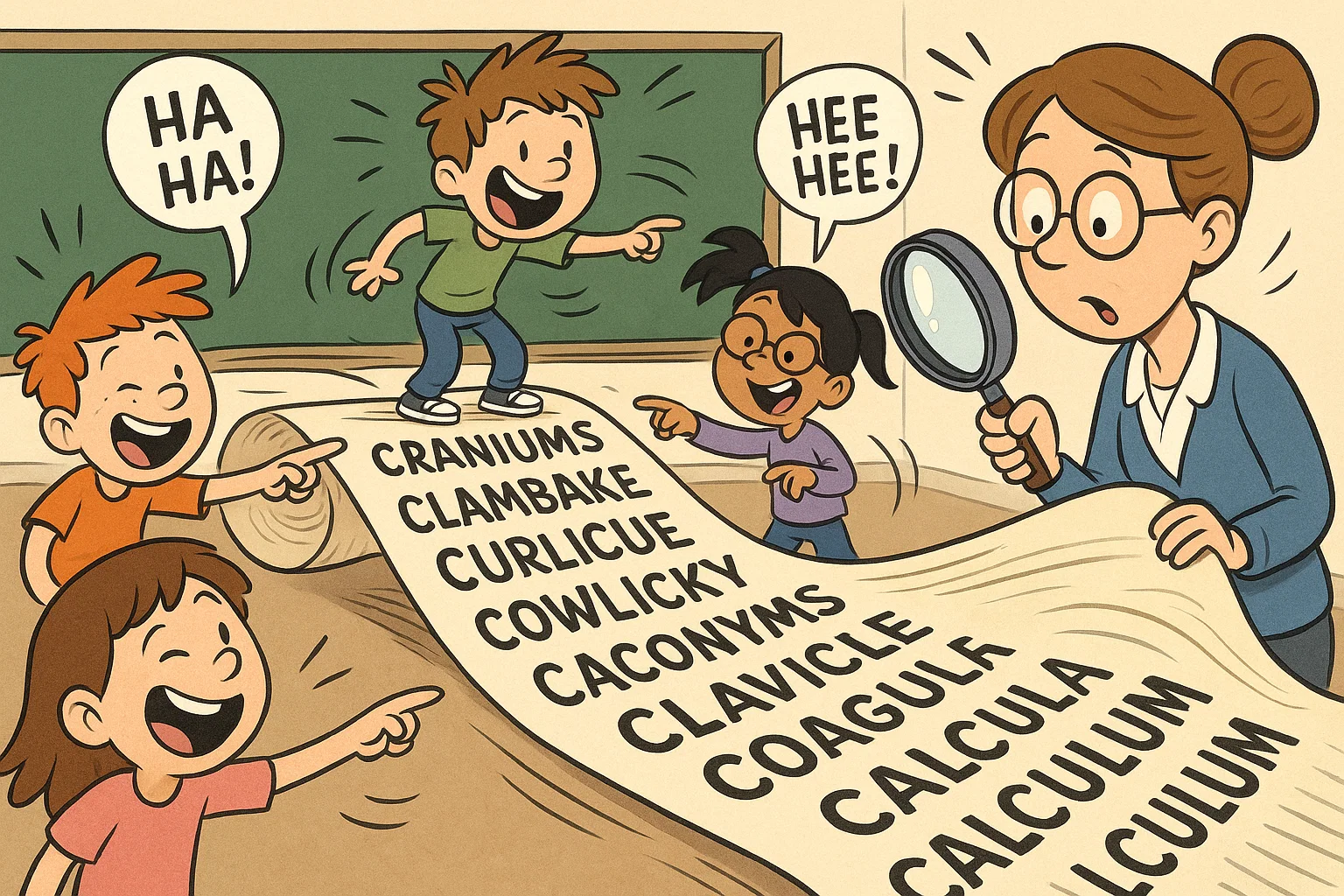
The most complex words in a word list often appear in storytelling and humor precisely because of their unusual sound, length, or formality. These long words beginning with c are often unexpected and can dramatically enhance the comedic timing of a sentence.
Eight-Letter Comedy C Words List
| Word | Meaning | Sample Sentence |
| Crabwise | Moving sideways like a crab. | The nervous spy entered the room crabwise so no one would see him. |
| Confetti | Small pieces of colored paper thrown during celebrations. | A rain of purple and green confetti fell down on the losing team. |
| Capricious | Given to sudden and unaccountable changes of mood or behavior. | The weather was so capricious it went from sunshine to snow in five minutes. |
| Claptrap | Absurd or nonsensical talk. | His excuse for losing his homework was total claptrap. |
| Commotion | A state of confused and noisy disturbance. | The cat on the keyboard caused a terrible commotion in the library. |
| Conflate | To combine two or more texts, ideas, etc., into one. | He tried to conflate the plot of a pirate movie and a cooking show. |
| Consortia | Associations or groups. (Funny due to the highly formal sound). | A consortium of five-year-olds gathered to discuss their ice cream budget. |
| Crummy | Poor quality; dirty, miserable. | The pirate was offered a crummy boat made entirely of old shoes. |
| Creaking | Making a harsh, high-pitched squeal. | The house was full of strange creaking noises after midnight. |
Fun Pronunciation Tips
The key to making these longer c words funny is to over-articulate the syllables. For “capricious,” draw out the “ca-PRISH-us.” For “crabwise,” emphasize the “crab” and speed up the “wise.” This exaggerated, slightly theatrical delivery boosts the comedic impact, especially when used in the right, unexpected context.
Silly Sentences to Practice Eight-Letter Words
- “Due to the capricious wind, the squirrel was blown away crabwise.”
- “The meeting of the local bird consortia was ruined by a sudden commotion over a single seed.”
- “Every word he spoke, especially about cleaning his room, turned out to be pure claptrap.”
Funny Words That Start With C and End in E
Words ending in ‘-e’ often create a specific rhythmic pattern. The final, silent ‘e’ often elongates the preceding vowel, giving the word a soft, whimsical, or slightly musical sound that adds a playful dimension to the vocabulary.
List of C-to-E Funny Words
| Word | Meaning | Sample Sentence |
| Cliche | An overused phrase or opinion; a stereotype. | His speech was so full of cliche that everyone rolled their eyes. |
| Caprice | A sudden, unaccountable change of mood or behavior. | The clown’s sudden change in routine was an act of pure caprice. |
| Cobble | To assemble or repair roughly. | He tried to cobble together a new bike from spare parts. |
| Crate | A large wooden box for transport. | The gorilla was shipped in a surprisingly tiny crate. |
| Chasse | A step in dancing where one foot chases the other. | The clumsy bear attempted a fancy chasse across the dance floor. |
| Crease | A fold, line, or wrinkle. | The cat made a permanent crease in my favorite book. |
| Cloche | A bell-shaped cover (often for food). | The waiter lifted the silver cloche to reveal a single pea. |
| Coyote | A wild dog native to North America. | The little coyote howled a very silly song at the moon. |
Why These Endings Sound Playful
The silent ‘e’ at the end of many of these c words creates a phonemic bounce. Words like ‘crate’ or ‘cloche’ feel light and airy, avoiding a hard, blunt stop. This rhythmic quality is excellent for light poetry and making memorable word lists for kids. It helps the words roll off the tongue with a playful, easy cadence.
Fun Phrases Using These Words
- “The tiny dog’s caprice was to chase the coyote who stole the silver cloche.”
- “Did you see the clumsy attempt at a chase across the crease in the rug?”
- “It’s a cliche to say the bear tried to cobble together a ship in a crate.”
Funny Words Beginning With C and Ending in P
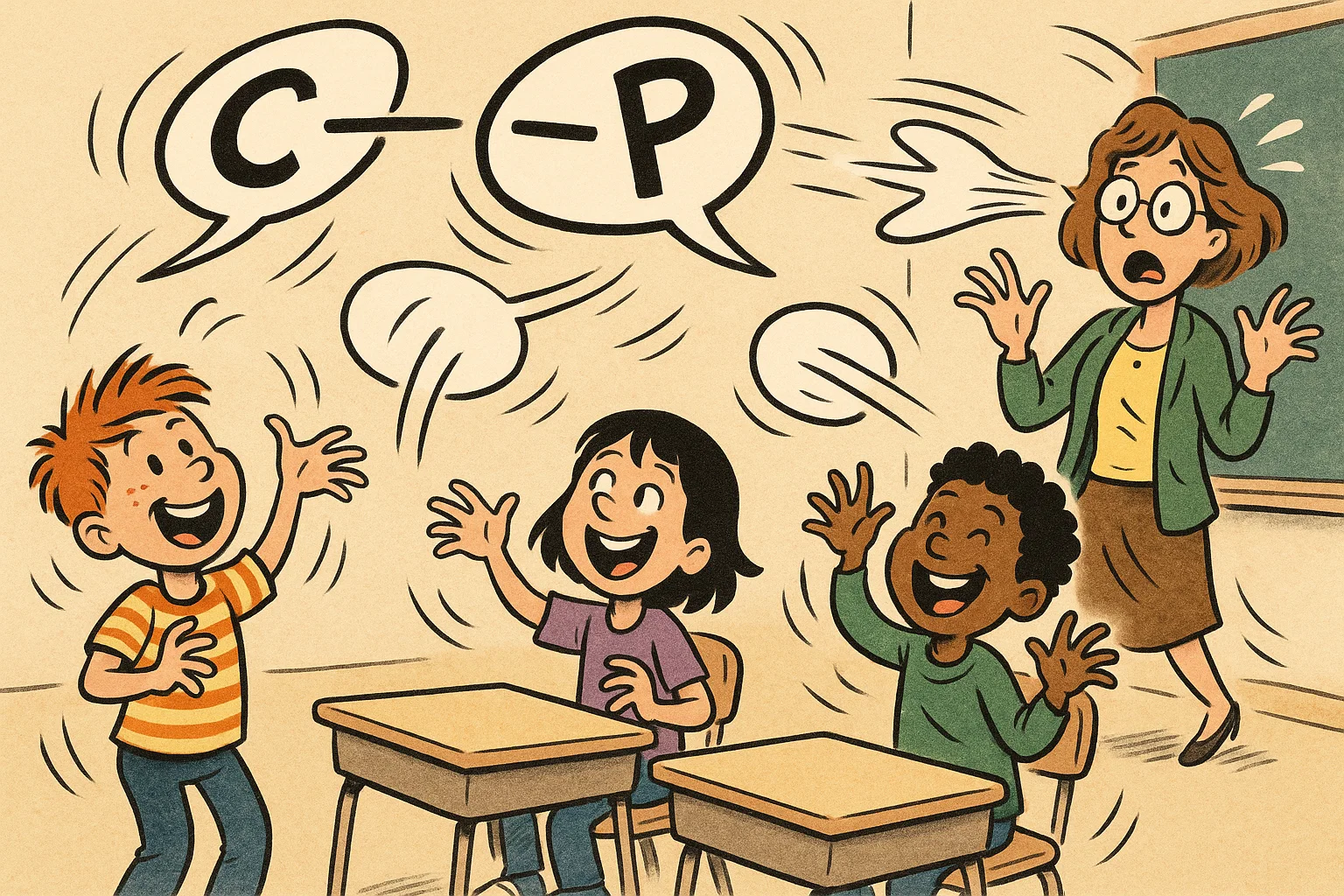
Words ending in “-p” sound punchy and playful. This abrupt, slightly explosive sound adds a comedic impact, making these c words excellent for emphasis or sound effects.
C-to-P Words List
- Clomp: To walk with a heavy, clumsy, dull sound.
- Clasp: A device for fastening things together.
- Chirp: A short, sharp, cheerful sound (like a bird).
- Camp: A place where people live temporarily (funny when used to describe a ridiculously fancy setup).
- Crimp: To compress or fold into small ridges.
- Clip: To cut with shears; a small fastener.
- Cramp: A painful, involuntary muscle contraction.
- Chop: To cut with a heavy blow.
How to Use These Words in Kids’ Games
These words are perfect for action and sound-based games.
- “Clomp” and Stop: Ask children to clomp their feet around the room, then clasp their hands and chirp like a bird when you call out the word.
- Sound Effects Story: Write a short story and have the children yell out the “P-ending” c words as a sound effect. Example: “The tiny robot started to clomp (CLOMP!) toward the camp (CAMP!) to get his clip (CLIP!).”
Pronunciation Tricks With Plosive Ending
The sound of the final “P” is an ‘unvoiced bilabial plosive.’ That’s a fancy way of saying you use both lips to build up a small puff of air and then release it suddenly. Encouraging children to exaggerate this final puff, especially in words like “clomp” or “cramp,” makes the words more fun to say and increases their inherent comical effect.
Funny Words Starting With C Containing Double Letters
Double letters within a c word often create visual amusement and also contribute to a prolonged or emphasized sound, making the words memorable and easily recognizable.
Double-Letter C Words List
| Word | Meaning | Sample Sentence |
| Cabbage | A round, leafy green vegetable. (Funny when used unexpectedly). | The queen was wearing a cabbage instead of a hat. |
| Carrot | An orange root vegetable. | The rabbit had a dangerously large carrot hidden in his pocket. |
| Crummy | Poor quality; dirty, miserable. | The boat was small and extremely crummy. |
| Commotion | A state of confused and noisy disturbance. | The duck with the tiny hat caused a big commotion. |
| Chuckle | To laugh quietly or inwardly. | He couldn’t help but chuckle at the silly situation. |
| Current | A flow of water or electricity. | The strong current pulled the tiny boat rapidly downstream. |
| Cunning | Having or showing skill in achieving an end by deceit or evasion. | The cunning fox managed to trick the grumpy badger. |
| Curry | A dish of meat/vegetables in a spiced sauce. | The alien demanded a large bowl of very spicy curry. |
| Clatter | A loud, rattling sound. | The tiny metal tools fell with a tremendous clatter. |
Spelling Tips for Double Letters
Double letters are often tricky for young learners. A fun mnemonic device can help. For “cunning,” teach the saying: “You need two N’s to be truly cunning.” For “chuckle,” “A chuckle needs two C’s to sound good.” Making the spelling rule itself part of a silly phrase increases memorability.
Games for Practicing Double-Letter Words
- Spelling Bee Focus: Hold a short, informal spelling bee using only words that start with c and contain double letters.
- Matching Game: Create cards with the first half of the word (CA…) and matching cards with the second half (BBAGE). Children must match the pieces to form the full, funny c word.
- Visual Association: Draw a picture next to the word that uses the double letter prominently. For Cabbage, draw a big, round object.
Commonly Used Funny Words Starting With C
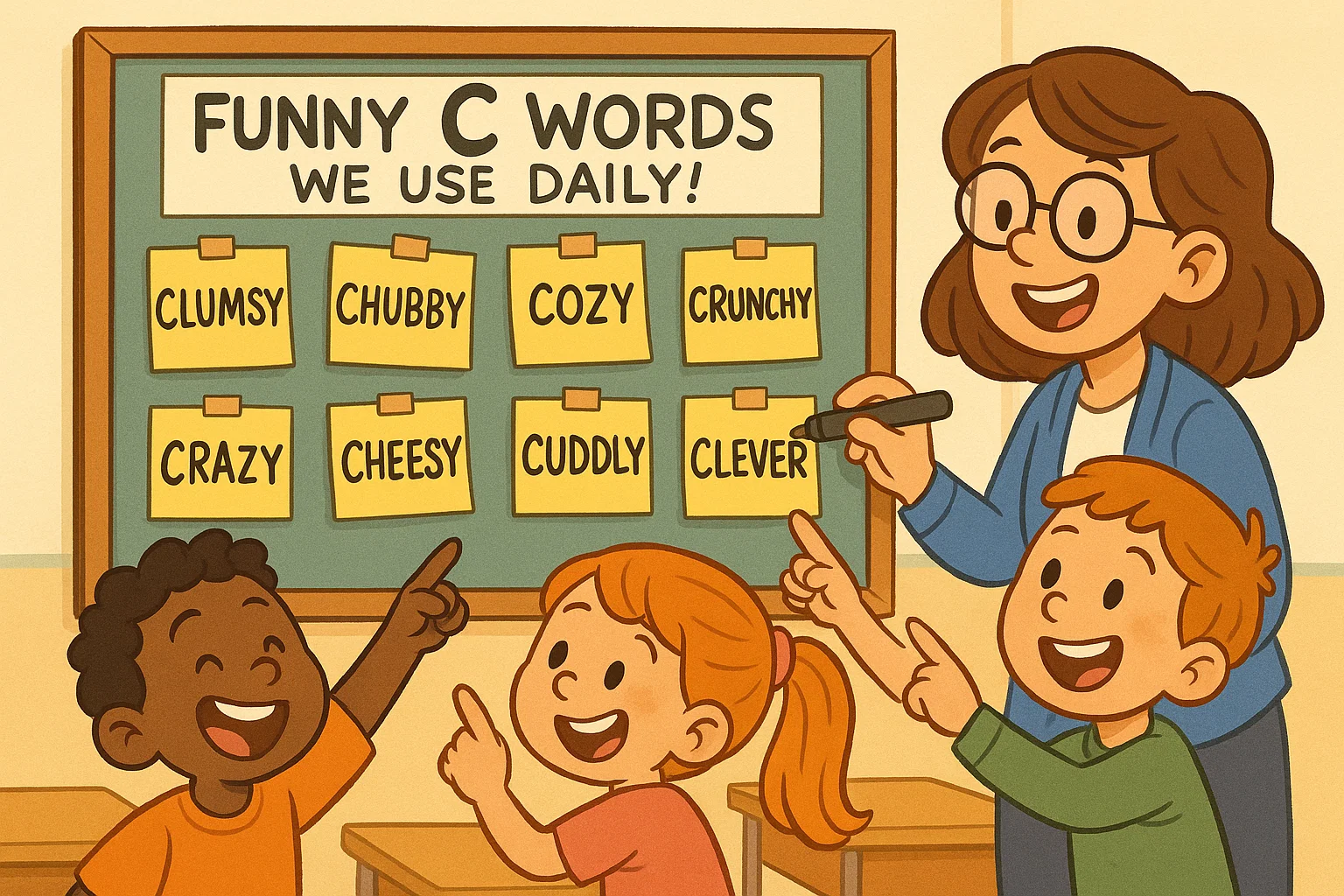
These are the everyday vocabulary items that, while not inherently bizarre, sound comedic or silly when used in an unexpected or exaggerated context. They are highly practical for daily use and inject easy humor into casual conversation.
Most Popular Funny C Words
- Clown: A comic performer. The ultimate funny word starting with c.
- Couch: A piece of furniture; often funny when used in a formal setting.
- Cookie: A small, flat, sweet baked food.
- Chuckle: A quiet laugh.
- Crush: To deform by pressure; a strong infatuation.
- Cute: Attractive in a pretty or endearing way.
- Confuse: To make bewildered or unclear.
- Curious: Eager to know or learn something.
- Crispy: Hard and brittle.
How to Use Funny Words in Daily Conversation
The trick to casual humor is context. Don’t force the word; wait for the right moment.
- Instead of saying, “You made a small mistake,” say, “Wow, you really confused the cat with that trick!”
- When someone asks what you’re doing, respond, “I’m having a very important meeting with my couch right now.”
- If a friend does something silly, you can say, “You’re acting like a real clown today!” (Keep the tone light and friendly).
Short Dialogues Using These Words
Scene: Morning Routine
Parent: “I’m feeling so clumsy today, I almost tripped over the crispy cereal box!”
Child: “That’s why you need to eat a cookie! It will make you feel better.”
Parent: “Oh, you’re so cute! That’s a clever idea.”
Rare or Unusual Funny Words Beginning With C
These are the truly odd, uncommon, or archaic words that start with c that sound hilarious simply because they are unexpected. Introducing these rare words is a fun way for children to appreciate the vastness of the English vocabulary.
Rare Funny C Words List
| Word | Meaning | Origin/Context |
| Callipygian | Having shapely buttocks. | Greek roots. Funny in a formal, anatomical sense. |
| Cacology | Bad choice of words; poor pronunciation. | Greek. Funny when used to describe someone’s silly speech. |
| Cockalorum | A self-important little man. | From the 18th century. A great, silly-sounding description. |
| Clanjamfry | A rabble; a disorderly crowd of people. | Scottish. Funny due to its messy sound. |
| Collywobbles | A feeling of sickness in the stomach; anxiety. | Late 19th-century slang. A beloved, funny c word. |
| Compos mentis | Of sound mind. (Latin, often funny in an English context). | Used to declare someone sane in a silly scenario. |
| Cacofuel | Fuel that produces noxious fumes. | Archaic. Funny when describing a stinky old car. |
| Circumbendibus | A roundabout way of speaking. | From the 17th century. A brilliantly descriptive, verbose c word. |
Why Rare Words Sound Funnier
Rare words that start with c sound funnier due to their unexpected phonetic combinations (Collywobbles), their old-fashioned, dramatic rhythm (Cockalorum), or their formal, Latinate origin in a modern, silly context (Compos mentis). They interrupt the flow of regular speech, drawing attention to themselves and enhancing the humor.
Creative Uses in Stories or Scripts
- Story: “The tiny, loud little man who was a complete cockalorum began to speak, but his long-winded speech was just a lot of circumbendibus.”
- Character Name: Name a slightly silly, sickly character ‘Mr. Collywobbles.’
- Script Dialogue: “Are you compos mentis? You just put my sock in the toaster!”
Positive Adjectives Starting With C (Humorous Tone)
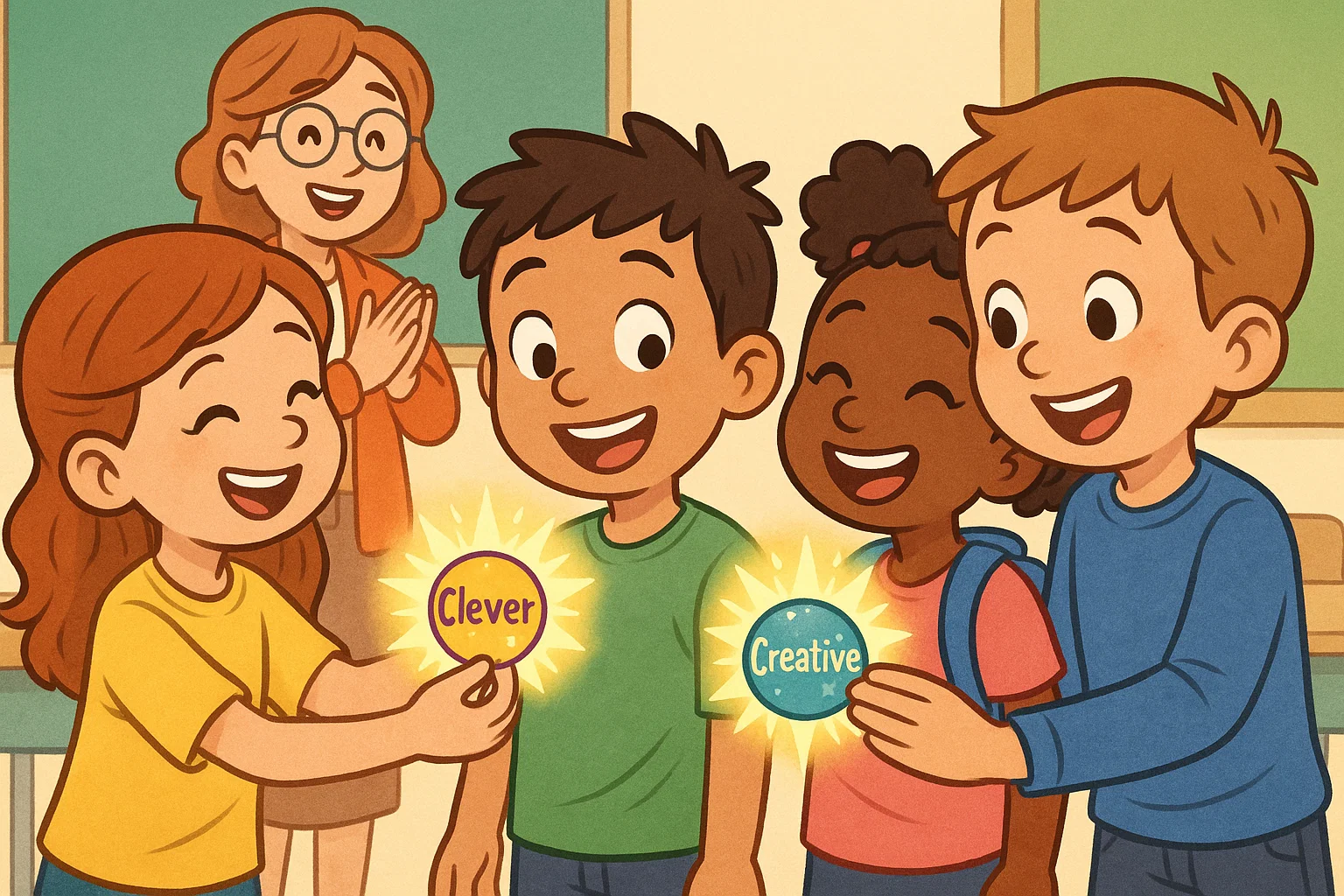
Some genuinely positive adjectives that start with c can become amusing when used with playful exaggeration or in an ironic context. This is a great way to introduce positive words that start with c while maintaining a humorous approach.
List of Positive C Adjectives With Light Humor
| Adjective | Meaning | Humorous Context Example |
| Cheery | Happy and optimistic. | “The grumpy ogre woke up surprisingly cheerfully.” |
| Charming | Pleasant or attractive. | “The earthworm’s singing voice was truly charming.” |
| Courageous | Not deterred by danger or pain. | “It was courageous of him to eat that giant sandwich.” |
| Clever | Quick at learning and understanding things. | “A clever dog figured out how to lock us out of the house.” |
| Confident | Feeling self-assurance. | “The mouse was so confident it tried to race a speeding train.” |
| Cushy | Easily accomplished; soft and comfortable. | “The job of chief pillow tester is very cushy.” |
| Curious | Eager to know or learn. | “She was so curious she asked the mailbox ten questions.” |
| Comical | Producing laughter; funny. | “The dog’s attempt at knitting was utterly comical.” |
Fun Compliments Using Positive C Words
Using these adjectives starting with c for playful praise is an excellent parenting tool. Keep the compliments specific and lighthearted.
- “You were so courageous when you faced that giant broccoli!”
- “That was a really clever way to tie your shoe, I never would have thought of it.”
- “You are so charming that even the washing machine smiles when you walk by.”
Classroom or Parenting Uses
Turn these into ‘Praise Tools.’ Write a positive c word on a child’s chore chart or homework. This reinforces positive behavior with a fun, new vocabulary word, strengthening their association between the letter c and good feelings.
Neutral Describing Words Starting With C With Fun Usage
These words to describe things or people are neutral in meaning but can become hilarious when applied in an exaggerated or highly unexpected context. The humor comes from the deliberate mismatch.
Neutral C Words List
- Circular: Round, in the shape of a circle.
- Chaotic: In a state of complete confusion and disorder.
- Compressed: Flattened or pressed together.
- Contain: To hold or keep within limits.
- Curved: Bending evenly.
- Cubical: Shaped like a cube.
- Customary: Established practice; usual.
- Coarse: Rough or uneven in texture.
- Complex: Consisting of many different and connected parts.
How Neutral Words Can Sound Silly
The humor here is all about delivery. Say the sentence with a serious, formal, or slightly exaggerated tone.
- Example: “My desk is not messy; it is simply in a state of high chaotic organization.” (The formality of the adjective clashes with the reality of the mess).
- Example: “The secret note was so incredibly compressed that we needed a microscope to read the single word: ‘Boo!’”
Examples in Stories and Comics
In comics, an artist might draw a perfectly square object and label it: “Slightly Curved.” Or, a character might be described as “remarkably customary” right before doing something utterly outlandish. The dry, precise description is used to highlight the absurdity of the situation.
C Words to Describe Someone (Silly Version)
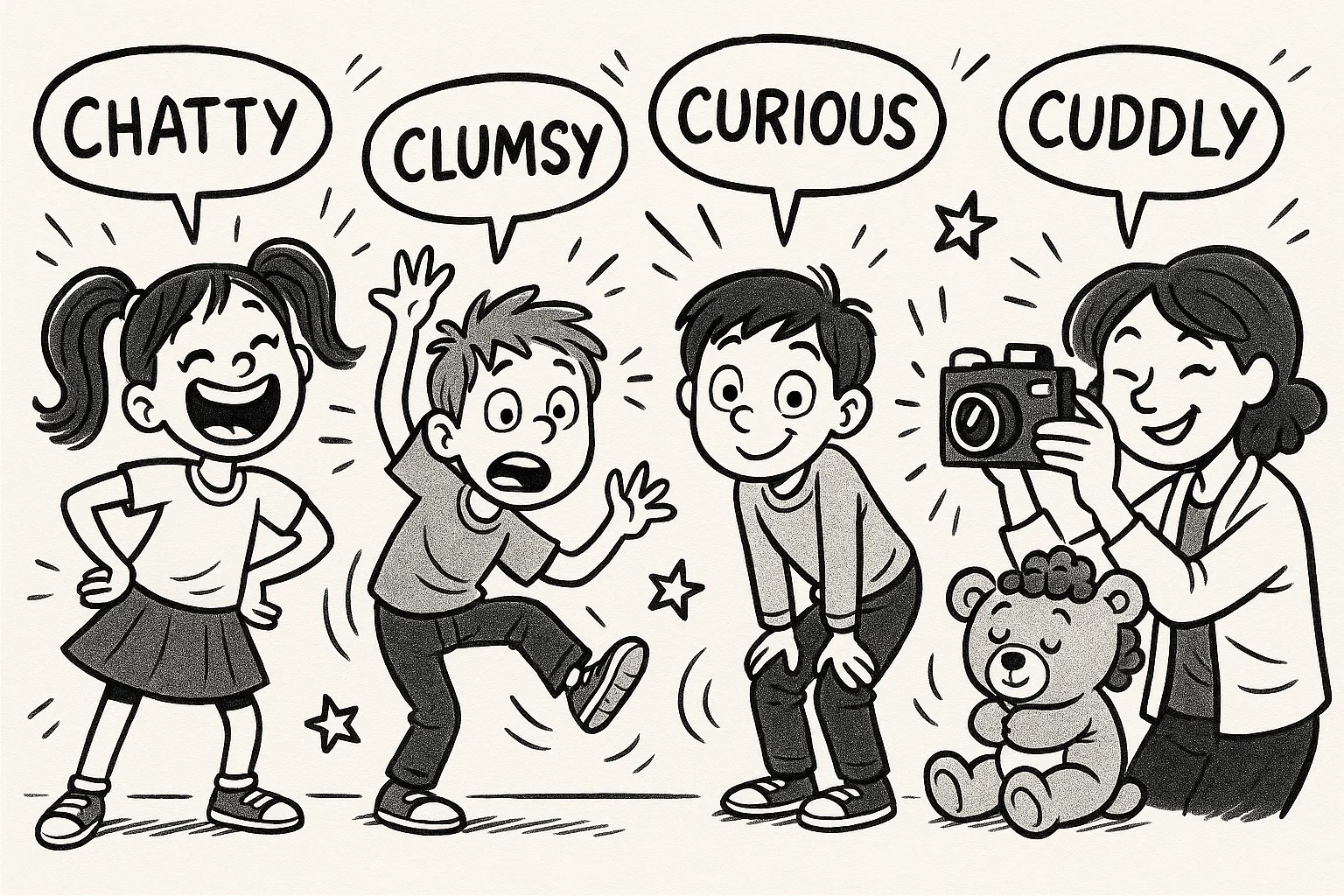
Descriptive c words can be turned into playful, gentle compliments or funny ‘roasts’ when used with a very light touch. The focus remains on being playful and positive, never mean-spirited.
Funny Character Descriptions Using C Words
- Chum: A close friend. Silly: “He’s my chum, the one who always wears mismatched socks.”
- Critter: A small creature. Silly: “She’s a feisty little critter who never stops asking questions.”
- Clown: A comic performer. Silly: “My brother is such a clown; he once tried to wear a banana peel as a shoe.”
- Curmudgeon: A bad-tempered person. Silly: “He only looks like a curmudgeon on the outside; inside, he’s full of marshmallows.”
- Challenger: Someone who competes. Silly: “She is my biggest challenger in the race to finish the puzzle first.”
Child-Friendly Compliments and Roasts
The key is to use the c words in a way that emphasizes a cute or slightly clumsy trait affectionately.
- Compliment: “You are so clever that you probably know what dogs are thinking!”
- Gentle Roast: “You are wonderfully clumsy; every time you walk into a room, it’s a surprise party for the furniture.”
Story Character Ideas Based on C Words
These ideas can inspire a fun story-writing exercise for children:
- The Captivating Cuttlefish: A deep-sea critter that loves to sing in a dramatically formal voice.
- The Clamorous Clod: A character who is both loud (clamorous) and perpetually clumsy (clod-like).
- The Confident Cook: A person who is absolutely confident that their disastrous baking experiments are delicious.
Character Traits That Start With C (Playful Approach)
Character traits that start with c are essential for describing people. Using them in a playful way helps children understand both the meaning and the positive/negative connotation of each word.
Playful Trait List
| Trait | Meaning | Playful Wording |
| Careful | Taking great care to avoid mistakes. | “So careful they organize their sock drawer by color and size.” |
| Cautious | Being wary and clever. | “So cautious they check under the bed for glitter every morning.” |
| Curious | Eager to know or learn. | “So curious they try to interview the family dog about his dreams.” |
| Cheeky | Impudent or irreverent, often in a cute way. | “A little too cheeky when it comes to stealing the last chip.” |
| Confident | Feeling self-assurance. | “Utterly confident in their ability to fly off the back porch.” |
| Creative | Relating to the use of imagination. | “Creative enough to turn a paper bag into a space helmet.” |
| Cunning | Achieving an end by deceit. | “A cunning strategist in the game of ‘Don’t Touch My Stuff!’” |
| Charming | Pleasantly attractive. | “Charming enough to get out of trouble just by blinking.” |
Comparing Traits in a Funny Way
Compare the silly traits to reinforce the meaning.
- “The cunning cat was careful not to knock over the milk, but the clumsy dog didn’t care at all!”
- “You need to be cautious around the baby, but you can be utterly cheeky with me.”
Kids’ Activities for Learning Traits
- Trait Sorting: Write the words starting with C on cards. Have children sort them into categories: ‘Slightly Silly,’ ‘Very Positive,’ and ‘Needs Caution.’
- Role-Play: Assign a trait to a child (e.g., “Curious”). The child must act out being excessively curious in a funny scenario, like finding a mysterious box.
- Mnemonic Sentences: Create memorable sentences: “The Clever Clown was always Cautious.”
Fun Words That Start With C
These words that start with c are more about excitement, energy, or pure playfulness than just punchline humor. They are great for adding a joyful, energetic tone to language.
Fun C Words List
- Celebrate: To observe a day or event with ceremony or gaiety.
- Carnival: A public festival involving parades, rides, and games.
- Cheer: To shout for joy or encouragement.
- Chase: To pursue in order to catch or overtake.
- Cuddle: To hold close in a warm, affectionate embrace.
- Charm: The power or quality of delighting or attracting others.
- Champion: A person who has defeated all rivals in a competition.
- Create: To bring something into existence.
- Commence: To begin or start.
- Capriole: A movement in which the horse leaps up and kicks out its hind legs.
How Fun Words Boost Creativity
Energetic vocabulary encourages language play. When a child encounters words like “carnival” or “capriole,” their imagination is instantly stimulated. They begin to associate language with action, energy, and excitement, leading to more imaginative storytelling and a greater willingness to use new, vibrant words beginning with c.
Story Prompts Using Fun C Words
- “Write a story about a champion who had to perform a difficult capriole to win the great carnival prize.”
- “What happens when you decide to commence a huge chase to find a legendary monster to cuddle?”
- “Describe the best way to celebrate after you finally create the perfect super-robot.”
Activities That Help in Learning Funny C Words
Kids learn humor and vocabulary best through interactive, multi-sensory tasks. These activities help anchor the meaning of the word starting with C in a fun, memorable experience.
C Word Scavenger Hunt
The Activity:
- Create clues based on the funny c words.
- The child reads the clue and has to find an object, or perform an action, that relates to the word’s meaning.
Example Clues:
- “Find an object that is circular and give it to a clown.”
- “Do something very clumsy and then chuckle.”
- “Find something you can cuddle and hide it in a crate.”
C Word Story Time
The Activity: The parent starts a story, and the child must continue it by adding a sentence that creatively uses one of the funny c words from a pre-made list.
Example:
- Parent: “Once upon a time, a small mouse decided to build a house.”
- Child (Uses ‘Commotion’): “But he caused a huge commotion when he accidentally used the sleeping dog’s ear as a hammer.”
- Parent (Uses ‘Clever’): “That was not very clever!”
C Word Matching Games
The Activity: Create simple matching pairs: one card has the funny c word, and the other has a very silly drawing or description of its meaning.
Example Pairs:
- Word Card: Cantankerous / Picture Card: A drawing of a grumpy-looking pickle.
- Word Card: Clumsy / Picture Card: A drawing of a stick figure tripping over air.
C Word Alphabet Chain
The Activity: Players take turns saying a funny c word. The next player must say a funny word that starts with the last letter of the previous word. When someone gets stuck, they have to perform a clumsy act.
- Player 1: Cabbage
- Player 2: Elephant
- Player 3: Top
- Player 4: Play
- …and so on! (A great way to integrate the letter c with the entire alphabet).
Tips for Using C Words
Introducing new, humorous vocabulary should be done naturally and consistently to make it stick. These tips can help parents and teachers integrate funny c words into their everyday routines.
Tips for Parents Teaching Funny Words
- Contextual Use: Don’t quiz your child. Use the words naturally in conversation. Instead of saying, “Your room is a mess,” say, “Wow, the chaos in here is truly magnificent.”
- Exaggerate the Sound: When you use a funny c word like “clatter” or “chuckle,” emphasize the sound with your voice. This makes the word more memorable.
- “Word of the Day”: Pick one funny c word a week (like “collywobbles”) and try to use it throughout the day. Make it a running joke.
Tips for Teachers Using Humor in Lessons
- Humor as a Memory Hook: Use funny c words when introducing a duller topic. For example, when teaching the concept of a gear, call it a “tiny, clever cog.”
- Creative Writing Prompts: Start every writing exercise with a prompt that includes a silly c word (e.g., “The day the entire school turned crummy…”).
- Non-Judgmental Environment: Encourage students to try out new, funny vocabulary, even if they mispronounce it. Laughter should be celebrated, not corrected.
Tips for Writers Adding Comedy With C Words
- Rhythm and Alliteration: The letter c is a great tool for alliteration. “The clumsy clown created chaos.” Use this rhythmic pattern to make sentences snappy and funny.
- Unexpected Juxtaposition: Pair a very formal c word (“circumlocution”) with a very informal subject (a toddler talking about cookies). The clash is inherently funny.
- Exaggeration is Key: Use the strong connotation of c words like “chaotic,” “cunning,” or “clever” to blow a small detail far out of proportion for comic effect.