

Preschool and kindergarten kids are full of curiosity and see the world like it’s brand-new. Fun facts feed that excitement by turning learning into a joyful game. Surprising little pieces of information spark curiosity, build vocabulary, and inspire a love of discovery.
Kids love to be amazed, and sharing knowledge in a playful way helps them learn best. This curated collection of fun facts for kids covers everything from giant blue whales to speedy Jupiter, all explained simply and designed to make them say, “Wow!”
Animal Fun Facts for Kindergarten
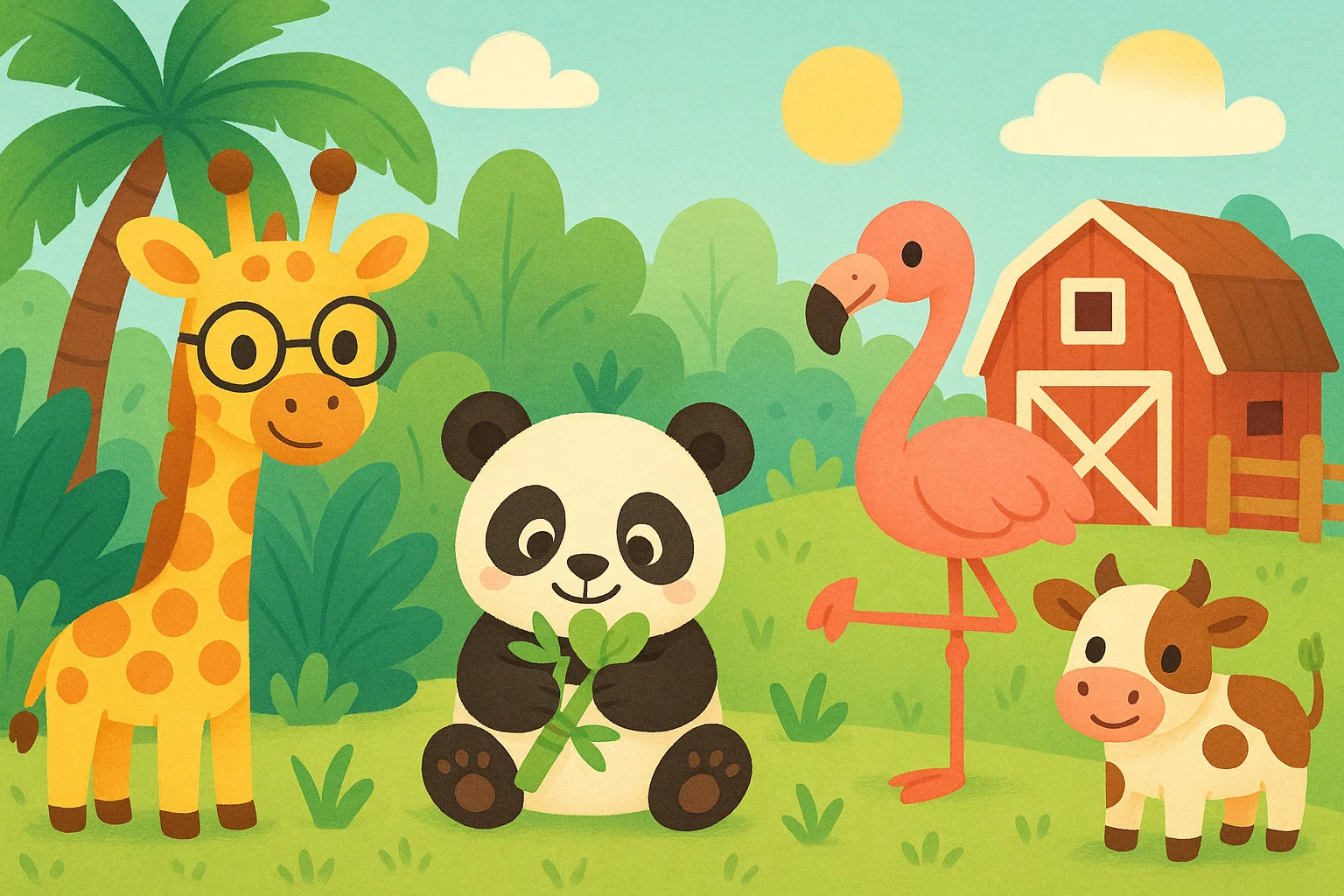
The animal kingdom provides some of the most accessible and amazing facts for little learners. These animal facts for kids are playful and easy to picture, covering familiar pets, zoo residents, and fantastic wild creatures.
Silly Animal Behaviors
Animals do some incredibly funny things! Sharing these whimsical traits is a great way to introduce concepts of biology and behavior through humor.
- A group of flamingos is called a ‘flamboyance.’ How’s that for a fancy name?
- Did you know that cows have best friends? They get stressed when separated from their favorite pals, just like you might miss your best buddy!
- A sloth is so slow that algae can grow on its fur, giving it a green coat that helps it hide in the trees!
- Zebra stripes are like human fingerprints—no two zebras have the exact same pattern!
- Sea otters hold hands when they sleep so they don’t drift away from each other. They are truly social animals!
Baby Animals and How They Grow
Facts about babies, their names, and their family habits are inherently cute and introduce concepts of life cycles and family structure.
- A baby elephant is called a calf. They are huge, but they are born blind and weigh around 200 pounds—as much as a tiny refrigerator! It’s the largest land animal baby!
- A baby kangaroo is called a “joey” and is only about the size of a jelly bean when it’s born! It then climbs into its mother’s pouch to grow.
- Penguin chicks have a special gray or brown fluff that keeps them warm until their waterproof feathers grow in.
Animals in Different Places
Connecting interesting wildlife fun facts to their environments—oceans, forests, jungles—broadens a child’s understanding of geography and biodiversity.
- The blue whale is the largest animal in the world. Its heart is the size of a small car!
- Even though polar bears look like they have white fur, their skin is actually black. The white fur helps them stay warm and blend in with the snow!
- Sharks are older than the dinosaurs; these amazing creatures have been around for over 350 million years!
- The bee hummingbird is the smallest bird in the world. It is about the size of a large bumblebee and lives in Cuba.
- The colossal squid has the largest eyes of any animal in the world—each eye can be up to 10 inches (25 cm) across, the size of a dinner plate!
- The immortal jellyfish (or Turritopsis dohrnii) can essentially live forever by repeatedly turning back into its baby stage.
Space Fun Facts for Kindergarten
Introduce the cosmos in an imaginative way. Science fun facts about space can be mind-boggling, so keep the explanations simple and visually rich.
Planets with Funny Features
Short, engaging lines about the planets help kids remember their unique characteristics.
| Planet | Fun Fact for Kids | Amazing Feature |
| Jupiter | It’s so big you could fit all the other planets inside it! | Jupiter is the fastest-spinning planet in our solar system. |
| Saturn | It has beautiful, icy rings you can see through a telescope. | Its rings are made of billions of ice chunks, some as big as houses! |
| Mars | It’s often called the “Red Planet” because of the rust in its soil. | Scientists call the tiny grains of rust “iron oxide.” |
| Venus | It’s the hottest planet because it traps heat from the sun like a thick blanket. | A day on Venus is longer than a year on Venus! |
Moon, Sun, and Stars
Simple explanations for the celestial bodies kids see in the sky every night.
- The sun is actually a star, and it’s so big that about one million Earths could fit inside it!
- The Moon is Earth’s only natural satellite. Every night, it looks like a glowing ball, but the light we see is actually the sun’s light reflecting off it.
- Scientists estimate there are more stars in the universe than grains of sand on all the beaches on Earth!
Astronaut Life
Random fun facts about living in space are particularly captivating because they flip the familiar upside down.
- Astronauts don’t just float; they sleep while strapped to a wall or bed so they don’t drift around and bump into things!
- In space, astronauts can’t just pour milk; they drink liquids from sealed pouches using a straw!
- You can’t hear loud sounds in space because there’s no air for the sound to travel through. It’s totally silent!
Science Fun Facts for Kindergarten
Focus on nature and physical phenomena that are tangible and fascinating to small children. These amazing facts encourage simple hands-on exploration.
Water, Rain, and Weather
Keep the descriptions visual and playful, tying phenomena to familiar sights like rainbows and snowflakes.
- No two snowflakes are exactly the same. They all have six sides, but the intricate shapes are always unique.
- A rainbow is actually a full circle, but we only see the top half above the ground!
- Bioluminescence is a fancy word for when living things, like fireflies and some deep-sea animals, can make their own light.
Magnets and Simple Forces
Short science fun facts showing basic forces like push, pull, and stickiness are perfect for this age group.
- Magnets have an invisible force field that lets them push things away or pull them close without touching!
- A bubble is always round because air pushes evenly in every direction.
Light and Colors
Facts explaining sight and color, which kids can often test with a prism or colored glasses.
- The sky looks blue because when the sun’s white light hits the air around Earth, the blue color scatters all over!
- The color red is the first color a baby can see when they are born.
Human Body Fun Facts for Kindergarten
These are friendly, non-scary facts that help children understand their own amazing bodies. These human body facts for kids focus on ‘super skills.’
Senses and Super Skills
Kid-friendly descriptions of how our eyes, ears, nose, tongue, and skin work as a team.
- Your tongue has around 10,000 taste buds, and all of them help you taste different flavors.
- Your nose can remember over 50,000 different smells! That’s a huge library of scents!
- Your eyes grow very quickly when you are a baby, then much more slowly after that, but your nose and ears keep growing your whole life!
- No one else in the world has human fingerprints exactly like yours—they are 100% unique!
Bones and Growing Up
Quick, surprising comparisons show how much they are growing and changing.
- Babies are born with about 300 bones, but adults only have 206. Some bones fuse together as you grow up!
- Your funny bone isn’t a bone at all; it’s a nerve! When you hit it, it feels funny because it’s sending a shocking message to your brain!
Smiles, Laughter, and Fun Sounds
Giggle-worthy facts that encourage self-awareness and a little light humor.
- A sneeze comes out of your body so fast that you can’t keep your eyes open. Try to do it; you can’t!
- Smiling sends happy signals to your brain, which can make you feel better. Smiling is easier!
- The average person laughs about 10-15 times a day. Laughter is good for your heart!
Food Fun Facts for Kindergarten
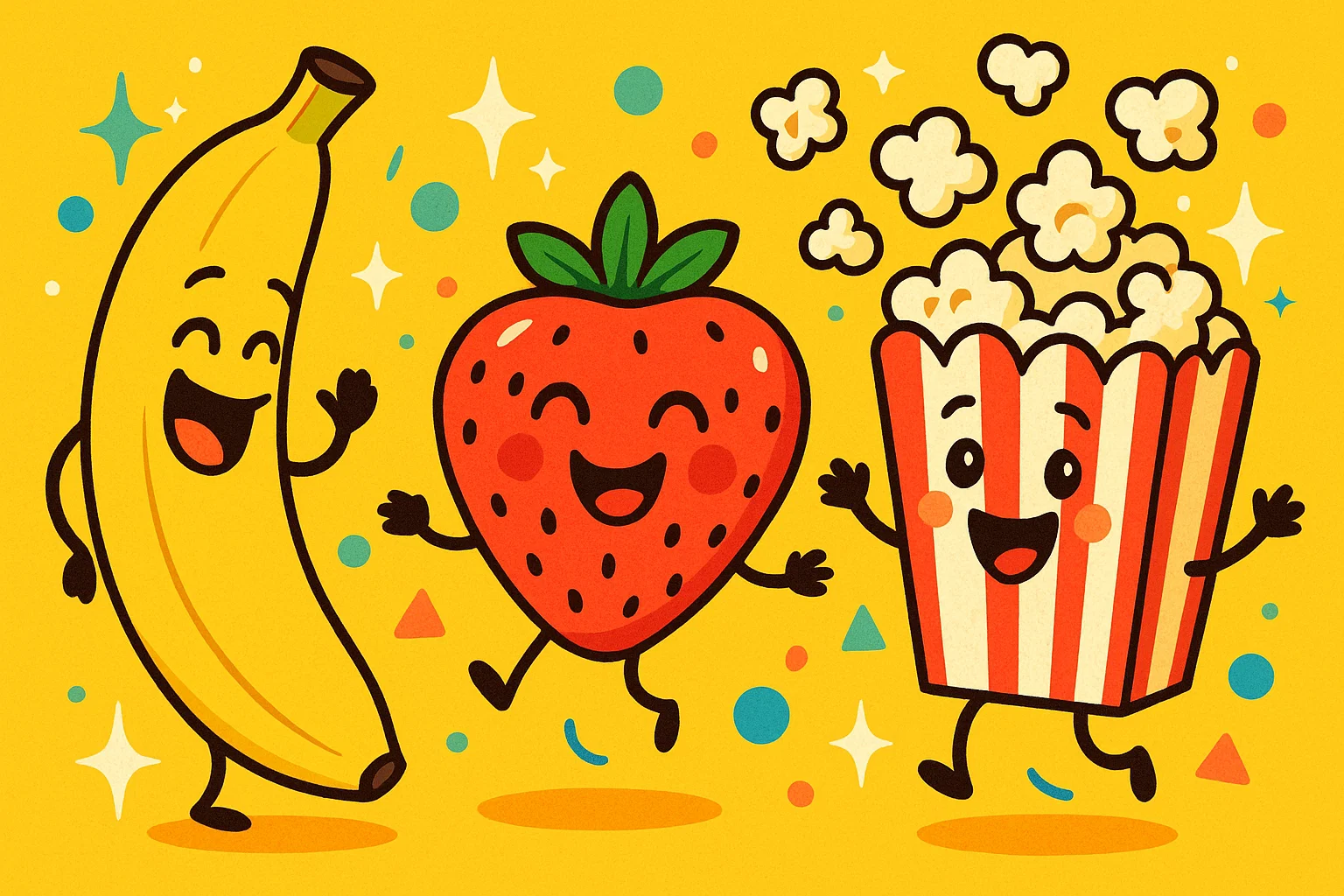
Food facts about the meals and snacks kids know and love are always a hit. Keep a healthy balance, focusing on natural curiosity.
Fruits and Vegetables
Explain colors, seeds, and shapes in an interesting way to encourage trying new things.
- A strawberry is the only fruit that wears its seeds on the outside.
- A red bell pepper is actually a green bell pepper that has ripened for longer on the vine!
- Believe it or not, a banana is technically an herb, and its fruit is a berry!
Favorite Treats
Interesting trivia about treats helps children think about where their food comes from.
- Popcorn has been around for thousands of years! Ancient peoples discovered that drying corn kernels can make them explode into a yummy snack.
- White chocolate isn’t technically chocolate because it doesn’t contain cocoa solids—just cocoa butter!
Foods Around the World
Simple cultural variety broadens a child’s horizons in a positive, digestible way.
- In Italy, they eat so much pasta that they have over 600 different shapes of it!
- Rice is the food source for almost half of the people in the world!
Dinosaur Fun Facts for Kindergarten
Keep the dino facts friendly and awe-inspiring, not scary. Dinosaurs are an endless source of amazing facts.
Size and Shapes
Use kid-friendly comparisons for the biggest versus the smallest dinosaurs.
- Some dinosaurs, like the Compsognathus, were about the size of a chicken, while the Argentinosaurus was longer than three school buses lined up!
- The name Triceratops means “three-horned face.” Its giant frill was for defense, like a superhero shield!
Fossils and Bones
Explain simply how scientists, called paleontologists, find old dinosaur remains.
- Fossils are not just bones; they can be footprints, eggshells, or even poop (fun facts) that turned into rock!
- It can take millions of years for a bone to become a fossil!
How Dinosaurs Lived
Fun details about dino environments and families.
- T. rex had very short arms, but they were strong and may have helped it hold on to prey.
- Some dinosaurs had feathers, and scientists believe they may have used them to attract a mate or to stay warm.
History Fun Facts for Kindergarten
Keep historical stories positive, short, and cheerful, focusing on fun origins.
Famous Inventions Kids Use
Random facts about the origins of everyday objects are super relatable.
- The first successful ice-pop (food fun facts) was created by an 11-year-old boy in 1905 when he accidentally left a sugary drink outside with a stirring stick in it overnight!
- Crayons were first made in 1903, and at the time, a box of 8 crayons only cost a nickel!
People From the Past
Highlighting achievements of historical figures in a kid-friendly way.
- Babe Ruth, a very famous baseball player, was known for hitting home runs that amazed everyone.
- Leonardo da Vinci, who lived a long time ago, was famous for his beautiful paintings, but he also designed inventions like a flying machine!
Fun Things From Old Times
Introducing concepts of tradition and change in a lighthearted way.
- In the 1800s, people didn’t have alarm clocks, so they hired a “knocker-upper” who tapped on their window with a stick to wake them up!
- Long ago, many people didn’t have forks, so they ate their food with knives and their fingers!
Geography Fun Facts for Kindergarten
Focus on places, amazing animal fun facts, and landmarks that are easy for kids to relate to and imagine.
Cool Countries and Flags
Simple colors and shapes can make different countries memorable.
- The flag of Nepal is the only national flag in the world that is not a rectangle! It’s made of two triangles stacked on top of each other.
- The country of Australia is so big that it is also considered a continent!
Oceans, Mountains, Deserts
Meaningful size comparisons spark their curiosity and encourage them to learn about the vastness of Earth.
- Mount Everest is the tallest mountain in the world, and it is still growing about a quarter of an inch every year!
- The Sahara Desert is the biggest hot desert in the world, and it’s actually the size of the entire United States!
- The deepest part of the ocean, the Mariana Trench, is deeper than Mount Everest is tall!
Amazing Places Kids Know
Keep descriptions playful and visually evocative.
- The Great Wall of China is so long that if you walked 8 hours a day, it would take you almost 18 months to walk the whole thing!
- The Egyptian pyramids were built so well that even today, you can’t slip a piece of paper between the stones!
Classroom Games with Fun Facts
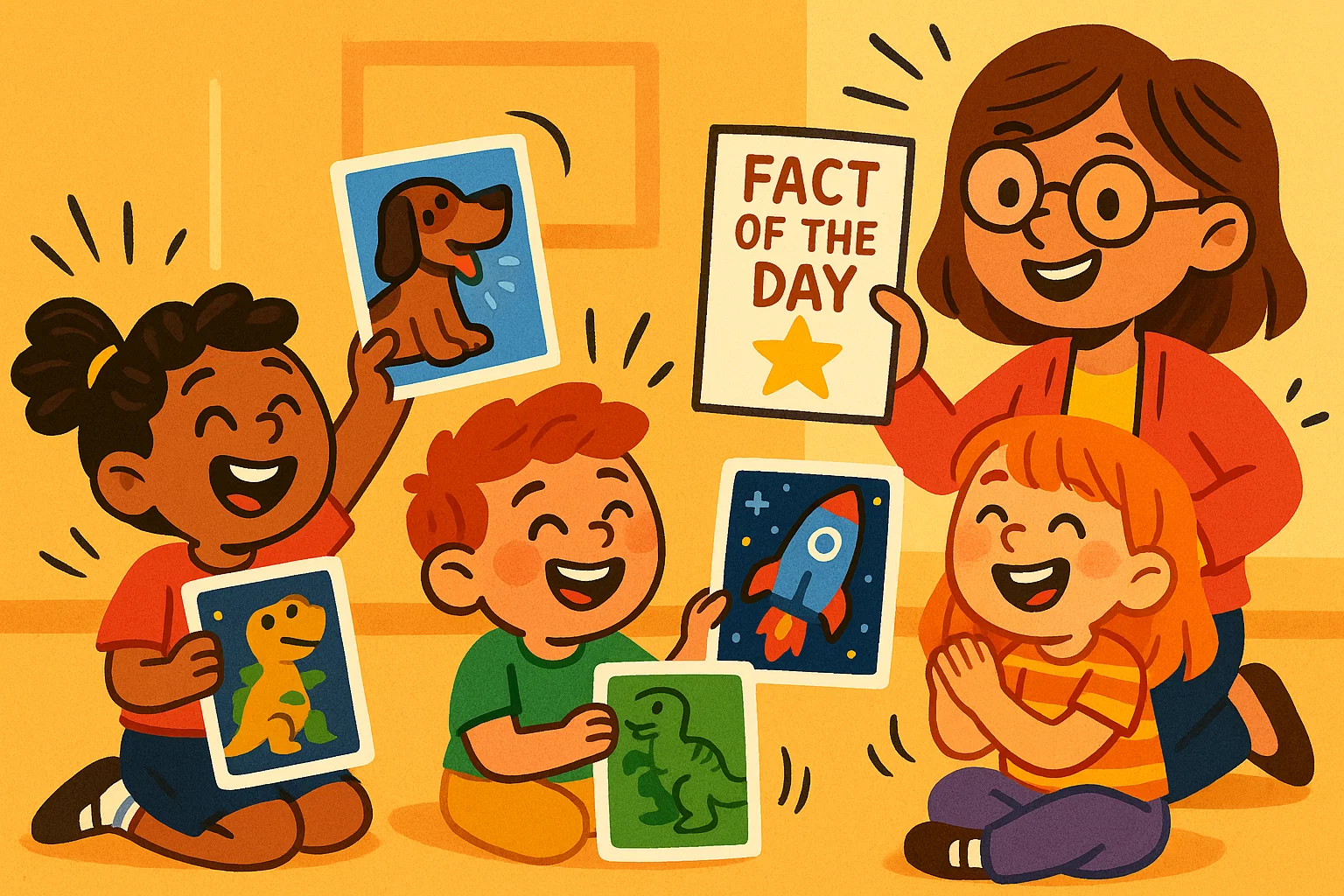
These activities are perfect for teachers or parents who want to turn these fun facts into interactive learning experiences. Incorporating these games into a daily routine enhances their memory and understanding.
Guessing Games
Kids hear a random fact and guess the animal, planet, or object. This can be adapted for any subject, from a dolphin’s intelligence to the life of a reptile.
- How to Play: The teacher says: “I am an animal that has been around for a million years, even before the dinosaurs. I have rough skin made of scales, and I breathe using a gill when I am a baby. What am I?” (Answer: Shark).
- The Power of the Fact: This encourages listening skills, critical thinking, and recollection.
Matching Cards
Create simple flashcards that pair pictures (e.g., a hummingbird) with one of the amazing facts about it.
- How to Create: Print small images of a sloth, an elephant, the smallest bird, and Jupiter. Print a separate set of cards with their key facts.
- The Power of the Fact: A tactile, visual game helps kinesthetic learners absorb the information and encourages team play.
Fact of the Day Routine
A simple, powerful ritual for continuous learning.
- How to Implement: Write one fun fact on a whiteboard each morning. For example: “Did you know that clownfish are all born male, but the largest one in the group will turn female to lay eggs?”
- The Power of the Fact: Consistency introduces new vocabulary and concepts daily, making learning habitual and effortless for kids who are always eager to learn.
By integrating these rich, well-researched fun facts into your child’s world, you’re not just providing trivial information; you’re setting the stage for deep engagement with science, history, and the natural world.