

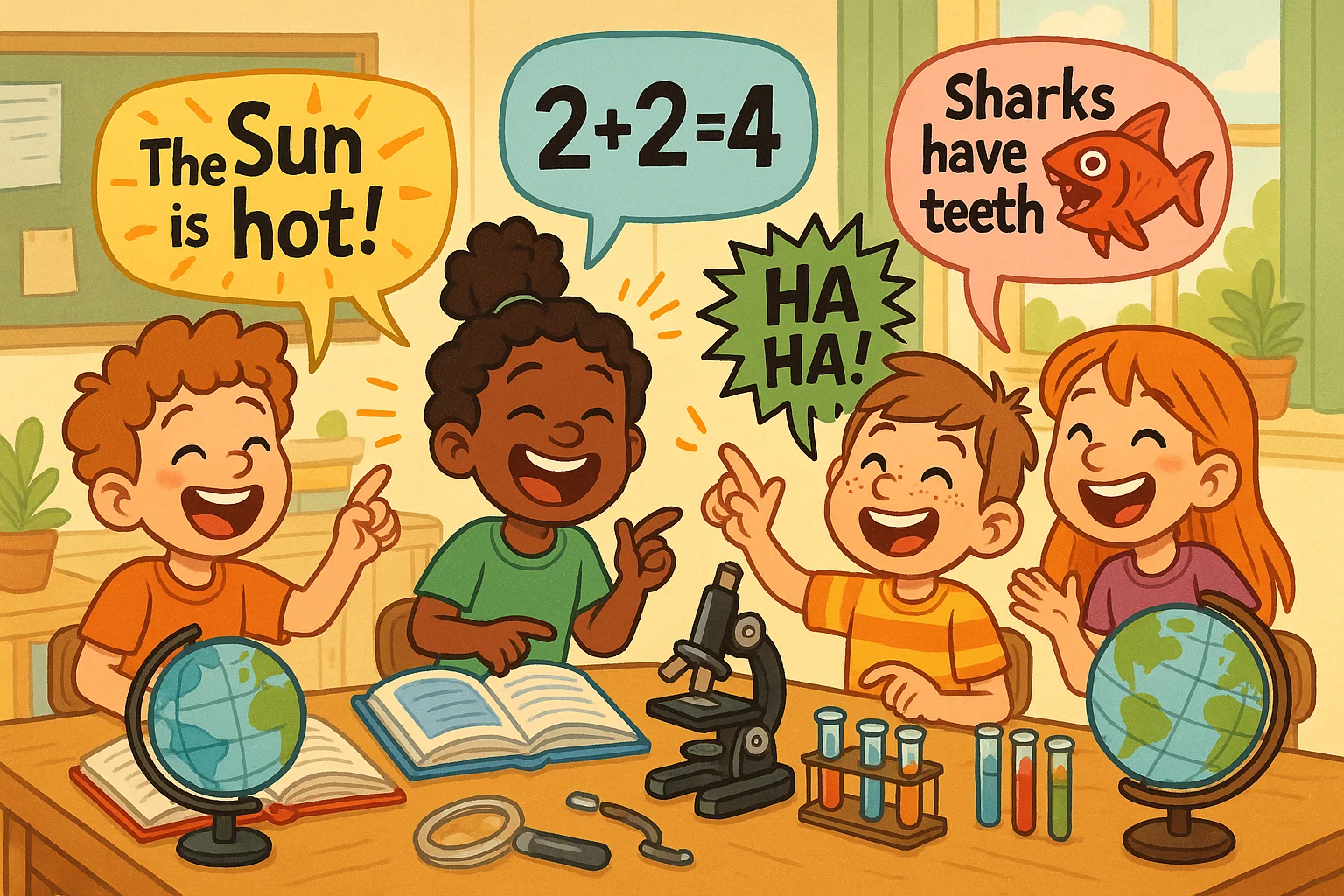
As your child turns nine, their world of learning explodes! This is an age defined by insatiable curiosity, a love for a great story, and a budding ability to grasp complex ideas. Nine-year-olds aren’t just memorizing; they’re connecting the dots between science, history, and the natural world, transforming simple facts into mind-blowing “aha!” moments. They love trivia, riddles, and anything that makes them say, “Wow, I didn’t know that!”
This collection of informative, age-appropriate, and genuinely cool fun facts for kids is designed to feed that hungry mind. We’ll journey from the farthest reaches of the solar system to the deepest oceans, covering everything from surprising animal behaviors to weird historical happenings. Get ready for an adventure that makes learning feel less like a chore and more like unlocking the secrets of the universe!
Science Fun Facts for 9 Year Olds

Science is all about exploring the world around us, from the tiniest atom to the vast universe. For a 9-year-old, understanding the principles of science through interesting facts can turn everyday objects and occurrences into things of wonder.
Cool Space and Planet Facts
The cosmos is packed with space facts that are genuinely mind-boggling, making it a favorite topic for kids who love to imagine the impossible.
- A Day on Jupiter is Short: Despite being the largest planet in the solar system, Jupiter spins so fast that a single day there lasts only about 10 Earth hours! Imagine fitting twice as much into one day.
- Venus is a Hotspot: Venus is the hottest planet in our solar system, even hotter than Mercury, because its thick atmosphere traps heat in a runaway greenhouse effect. Its surface temperature is hot enough to melt lead.
- Mount Everest’s Space Cousin: Did you know that Olympus Mons, a giant shield volcano on Mars, is the tallest known mountain and volcano in the solar system? It is nearly three times the height of Mount Everest!
| Planet | Fun Fact | Comparative Size |
| Jupiter | Shortest day (10 hours) | You could fit about 1,300 Earths inside it. |
| Saturn | Could float in water (mostly gas) | Second largest, famous for its rings. |
| Mars | Has the tallest known mountain (Olympus Mons) | About half the size of Earth. |
Earth and Weather Wonders
Our own planet, Earth, is full of mysteries and natural power. Understanding geography and weather is key to understanding our world.
- The Tallest Mountain Base: While Mount Everest is the tallest mountain above sea level, the shield volcano Mauna Kea in Hawaii is actually the tallest mountain when measured from its base on the ocean floor to its peak, extending to an impressive 10,210 meters (33,500 feet) in height. That’s a lot of mountains!
- A Lot of Water: Approximately 71% of Earth’s surface is covered by water, but less than 1% is easily accessible freshwater. Most of the water on Earth is saltwater or frozen in glaciers.
- Lightning’s Heat: A single bolt of lightning can reach temperatures around 50,000°F – about five times hotter than the surface of the Sun!
Mind-Blowing Human Body Facts
The human body facts for kids are often some of the most fascinating because they relate directly to themselves!
- Unique as a Snowflake: Just like no two snowflakes are exactly alike, everyone has a totally unique fingerprint. It’s your body’s personal signature.
- Strongest Muscle: The strongest muscle in the human body, pound for pound, is the masseter, which is the jaw muscle used for chewing.
- Gut Gland: The liver is the largest internal organ and gland in the body, performing over 500 different chemical functions, from filtering blood to producing bile.
Weird Chemistry and Matter Facts
Chemistry is often seen as complex, but it’s just about what things are made of. These science facts show the fun side of atoms and molecules.
- Sponge Power: A dry kitchen sponge can submerge and hold a massive amount of water – up to 20 times its own weight!
- Sound Check: The loudest sound ever recorded was the 1883 eruption of the Krakatoa volcano, which could be heard over 3,000 miles away and measured over 180 decibels. That’s enough to permanently damage your hearing!
Animal Fun Facts for 9 Year Olds
Kids love animals, and the natural world is a never-ending source of amazing facts. From the fastest runners to the deepest swimmers, there is always something new to learn about the creatures we share the planet with.
Wild Animal Facts
The wilds of the world are full of creatures with incredible adaptations.
- Sharks Don’t Have Bones: A shark’s skeleton is made of cartilage, the same material in your nose and ears. This lighter material helps them to be silent, fast swimmers.
- Elephant’s Thirst: An elephant can drink up to 50 gallons of water in a single day, which is enough to fill a small bathtub!
- Fingerprints in the Ocean: Just like humans, no two dolphins have the exact same markings. Scientists sometimes use these unique nicks and scars to identify individual dolphins.
Ocean and Sea Creature Facts
The ocean covers most of our planet and contains some of the weirdest and most wonderful life, making these sea level facts particularly fun.
- The Snail’s Journey: While most snails move at a very slow pace, the fastest snails crawl only about 0.03 miles per hour – so they’re still pretty slow! However, most snails are much, much slower.
- The Deepest Dive: The Cuvier’s beaked whale holds the record for the deepest and longest-duration dive of any mammal, reaching depths that defy belief.
- Jellyfish are Immortals: Some species of jellyfish are biologically immortal, meaning they can revert back to an earlier stage of their life cycle when stressed, effectively starting over again.
Pet and Farm Animal Facts
Even the animals that share our homes and farms have their own amazing secrets.
- Cat and Dog Noses: A cat’s and a dog’s nose prints are as unique as human fingerprints; some people use them to identify their pets.
- Dog Sweat: Dogs don’t sweat all over their bodies like humans do; they primarily cool down by panting and sweating through the pads of their feet.
Tiny but Mighty Insects Facts
Insects are the tiny architects of the natural world, showing incredible complexity in miniature.
- Hummingbird’s Speed: The hummingbird is the only bird that can fly backward, and its wings beat so fast – up to 80 times per second – that they create a humming sound. The tiny bird is a true wonder of nature, covered in feathers.
- Ant Strength: An ant can lift 50 times its own weight. If a 9-year-old could do that, they could lift a small car!
Space and Universe Fun Facts

For kids with fun imaginations, the universe provides the ultimate playground. Expanding our knowledge beyond the main planet in the solar system introduces ideas of cosmic vastness.
Planets and Moons Trivia
- Saturn’s Rings are Icy: The stunning rings of Saturn are not solid, but made up of billions of pieces of ice, rock, and dust, ranging in size from tiny grains to massive boulders.
- Uranus’s Tilt: Uranus is unique because it spins on its side, making it look like a rolling ball. This extreme tilt gives it very weird seasons!
- Neptune’s Winds: Neptune has the fastest winds in the solar system, sometimes reaching over 1,200 miles per hour.
Astronaut Adventures
- The Lunar Golfer: On the Apollo 14 mission, astronaut Alan Shepard hit two golf balls on the lunar surface using a makeshift club. He joked that the second one went “miles and miles and miles.” This is an example of a random fun facts story that captures the spirit of space exploration.
- The ISS’s Speed: The International Space Station (ISS) orbits Earth at about 17,500 miles per hour, meaning the astronauts aboard see a sunrise and sunset approximately 16 times every 24 hours.
Cosmic Phenomena
- Stars are Giants: Our Sun is so enormous that you could fit about one million Earths inside it. This scale of size is an amazing fact for kids.
- Diamond Rain: On Neptune and Uranus, the intense pressure and heat in the atmosphere are believed to compress carbon into solid diamonds, which then rain down through the gas.
History Fun Facts for 9 Year Olds
History doesn’t have to be a boring list of dates! It’s filled with random facts and surprising stories that show how life was different in the past.
Ancient World Curiosities
- Dinosaur’s Long Reign: Dinosaurs ruled the Earth for about 165 million years. That’s a massive amount of time, especially when compared to the relatively short period humans have been around. The last major group of dinosaurs, the non-avian ones, died out 66 million years ago.
- First Olympic Winner: The very first recorded Olympic champion was a baker named Coroebus, who won the sprint race in 776 BC.
Famous Inventors and Discoveries
- The Accident of the Microwave: The microwave oven was invented by accident. A scientist named Percy Spencer noticed a radar set melted the candy bar in his pocket!
- Early Alarm Clocks: Before electric alarms, there were “knocker-uppers” in some countries who were paid to tap on people’s windows with long sticks to wake them up for work!
Funny Historical Facts
- The Tallest Structure Before the Skyscrapers: For over 3,800 years, the Great Pyramid of Giza held the record for the tallest human-made structure in the world, until the completion of Lincoln Cathedral in 1311.
Geography and World Fun Facts

Geography is more than just maps; it’s about the unique features and incredible extremes of our planet Earth.
Amazing Countries Around the World
- Dubai’s Indoor Snow: Dubai is known for its incredible architecture, including the Burj Khalifa, the tallest building in the world. But it also has an indoor ski resort where you can ski in the desert!
- The Reindeer Driver’s License: In Finland, reindeer need to have a special tag on their antlers if they are being herded, essentially a form of license, to prevent road accidents.
Natural Wonders and Landmarks
- Coral City: The Great Barrier Reef, off the coast of Australia, is the world’s largest living structure and is so vast it can be seen from space!
- The Desert’s Age: The Sahara is the world’s largest hot desert, but it has not always been dry. Geological data suggests it goes through cycles of being a lush, green land every 20,000 years or so, due to changes in the Earth’s orbit.
World Records and Extremes
- Coldest Place: The coldest place on Earth is Antarctica, specifically the high ridge of the East Antarctic Plateau, where temperatures can plummet to below –90°C (–130°F).
- Highest Altitude: Mount Everest holds the record for the tallest mountain above sea level at 8,848.86 meters (29,031.7 feet).
Food Fun Facts for 9 Year Olds
Mealtimes are a great place for discovery! These fun facts might change the way your child looks at their plate.
Funny Fruit and Vegetable Facts
- Tomato Time: A tomato is botanically a fruit (as it contains seeds), but it is legally a vegetable in the United States, based on a Supreme Court ruling from 1893 that determined how it should be taxed.
- The Bananas’ Journey: Bananas don’t grow on trees; they grow on plants that are actually giant herbs.
Sweet and Snack Trivia
- Chocolate’s Name: The scientific name for the tree that chocolate comes from, Theobroma cacao, literally means “food of the gods.”
Around the World Foods
- Ketchup’s Origins: Ketchup didn’t start as a tomato product. Early recipes included ingredients like mushrooms, walnuts, or even anchovies. The first known recipe was a fermented fish sauce from China.
Sports and Games Fun Facts

For the athletic and competitive 9-year-old, sports offer incredible tales of skill, endurance, and unique records.
Unusual Sports and World Records
- The Marathon Swimmer: Michael Phelps, the most decorated Olympian of all time, holds the record for the most Olympic gold medals won by any swimmer. He won a staggering 23 gold medals in his career.
- Longest Home Run: One of the most famous baseball players, Babe Ruth, is credited with hitting a home run that traveled over 575 feet. While records were less precise then, his powerful hits were legendary.
Famous Athletes and Olympic Facts
- The Hockey Legend: Wayne Gretzky, the legendary National Hockey League hockey player, holds the record for the most goals and most assists in NHL history, earning him the nickname “The Great One.”
- The True Medals: Modern Olympic medals are not pure gold medals. The gold medal is actually made mostly of silver, with a gold plating of at least 6 grams.
Random and Weird Fun Facts for 9 Year Olds
This is where the truly unexpected, often funny, random fun facts live, perfect for sharing around the dinner table!
Gross but Cool Facts
- The Sneeze Speed: A sneeze can shoot out of your nose and mouth at speeds of up to 100 miles per hour. That’s why it’s important to cover your mouth!
- Stomach Acid Power: The acid in your stomach is so strong it could dissolve a metal razor blade. Don’t worry, the mucus lining of your stomach protects you from dissolving yourself!
Everyday Object Secrets
- Pencil Power: The average pencil can draw a line almost 10 miles long or write approximately 50,000 English words.
- The Size of a Dime: A dime is the smallest and thinnest U.S. coin, with 118 ridges around its edge. It’s just 0.705 inches in diameter.
Human Habits and Traditions
- The Most Common Name: The most common name in the world is likely Mohammed, due to its global prevalence and variations in spelling.
Holiday and Seasonal Fun Facts

Holidays are an important part of a 9-year-old’s life, and knowing the origins of traditions can be a lot of fun facts for kids.
Halloween and Spooky Trivia
- The Pumpkin’s Size: The world record for the heaviest pumpkin is constantly being broken, with the winning pumpkin sometimes weighing over 2,500 pounds!
Winter and Christmas Fun
- Emperor Penguin Facts: Emperor penguins are the tallest and heaviest of all living penguin species, and they live exclusively in Antarctica, near the South Pole.
- Reindeer’s Eyes: Reindeer’s eyes change color with the season. They are golden in the summer and deep blue in the winter, which helps them see better in the low light of the Arctic.
Summer and Vacation Facts
- The Loudest Creature: The loudest animal on Earth, based on its relative size, is the pistol shrimp, which can snap its claws shut to create a bubble that bursts with a sound louder than a jet engine – over 200 decibels!
Bonus: Fun Facts About 9 Year Olds Themselves
This section is all about what makes a 9-year-old brain so amazing!
Brain and Curiosity Growth
- Mental Multiplication: Nine-year-olds are often mastering the ability to multiply multi-digit numbers, an important math skill that helps the brain make complex connections.
Favorite Topics and Trends
- Trivia Experts: At this age, a 9-year-old is highly motivated to become an expert on a specific topic, whether it’s shark species or astronaut biographies, often collecting bits of trivia and becoming the “go-to” expert among their friends.
How Fun Facts Help Learning
- Memory Hooks: Presenting information as fun facts creates “memory hooks” that make the information easier to recall. The surprise and novelty of an amazing facts story increases the brain’s engagement, leading to better long-term retention of science facts and other information. Learning should feel exciting, not like a chore.
Quiz: Test Your Knowledge!
Let’s see how many of these fun facts stuck! Choose the best answer for each question.
- What is a shark’s skeleton primarily made of?
a) Bone
b) Cartilage
c) Metal - Which planet has a day that only lasts about 10 Earth hours?
a) Mars
b) Saturn
c) Jupiter - What is the tallest mountain when measured from its base on the ocean floor?
a) Mount Everest
b) Mauna Kea
c) Kilimanjaro - Which famous astronaut played golf on the lunar surface?
a) Neil Armstrong
b) Buzz Aldrin
c) Alan Shepard, on Apollo 14 - How many Earths could you fit inside the sun?
a) About 100
b) Almost 10 million
c) One million - The gold medals given at the Olympics are mostly made of what material?
a) Pure gold
b) Silver
c) Platinum - Which animal is the shortest species of mammal?
a) Etruscan Shrew
b) Mouse
c) Hummingbird - Which legendary baseball player is famous for hitting very long home runs?
a) Michael Phelps
b) Babe Ruth
c) Wayne Gretzky - The last non-avian dinosaurs died out how many million years ago?
a) 200 million years ago
b) 66 million years ago
c) 1 million years ago - The International Space Station (ISS) orbits Earth about how many times a day?
a) 16 times
b) 4 times
c) 24 times
Answers: 1. b; 2. c; 3. b; 4. c; 5. b; 6. b; 7. a; 8. b; 9. b; 10. a.