


Parents and educators are familiar with the boundless energy and insatiable curiosity of young children. Around the age of five, kids are especially eager to learn, and their imaginations soar. Offering easily digestible, fun facts for kids is a wonderful way to nurture that early love for knowledge, turning everyday moments into exciting learning adventures. Introducing the world through amazing facts helps solidify critical thinking skills and encourages them to ask “Why?” about everything from the creatures in the animal kingdom to the mysteries of the human body.
This collection of random fun facts is designed to spark that sense of wonder, offering a mix of animal facts for kids, science trivia, and astonishing details about the world around us. From the deepest ocean to the farthest stars, these pieces of knowledge are specifically curated to be authoritative yet accessible, engaging, and memorable for young minds. Dive in and get ready to share some truly cool facts that will undoubtedly make your child smile and feed their burgeoning curiosity and encourage a lifelong passion for discovery!
Fun Facts for Kids About Animals
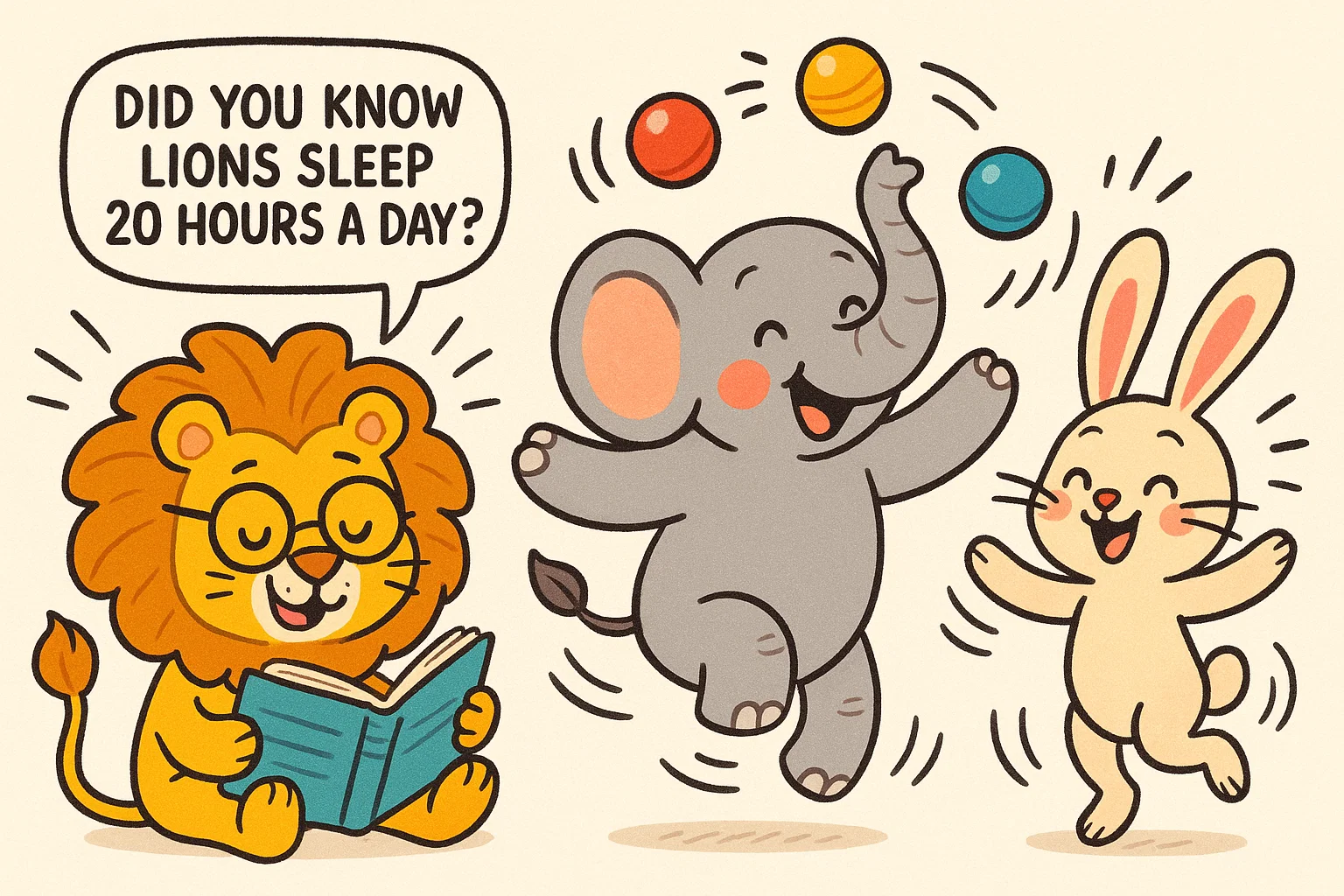
The animal kingdom is a treasure trove of wonders, and sharing animal facts is one of the best ways to capture a child’s attention. Children love learning about creatures big and small, especially those with surprising behaviors or unique features.
Fun Facts About Zoo Animals
Zoo animals are often a child’s first introduction to exotic wildlife, making facts about them especially captivating.
- Elephants: Did you know that an elephant is the largest land animal and that their trunk is an incredible tool? They can use it to breathe, drink, grab food, and even squirt water when bathing! An elephant’s brain is highly developed, making them incredibly intelligent, social animals. Scientists have even observed them showing signs of mourning when a family member passes away.
- Lions: The mighty lion facts include the stunning detail that their roar can be heard from as far as 5 miles away! A group of lions is called a pride, and it’s the female lions (lionesses) who do most of the hunting for the pride, showing teamwork that makes them efficient social animals.
- Polar Bears: These magnificent creatures live in the Arctic. A polar bear’s fur isn’t actually white – it’s transparent! It only looks white because it reflects light. This fantastic camouflage helps them blend in with the snow and ice.
- Giraffes: A giraffe’s neck is so long that they have the same number of neck bones as a human – just seven! However, each of those bones is much, much bigger. They are also known for their surprisingly long, dark-colored tongues, which they use to pluck leaves from high-up branches.
| Animal | Amazing Fact |
| Elephants | They are the only animal that cannot jump. |
| Cows | It’s true! Studies suggest that cows have best friends and get stressed when separated from them. |
| Zebras | No two zebras have the exact same pattern of stripes – each is unique, like a human fingerprint. |
Marine Animal Fun Facts
The ocean is full of mysteries and incredible life, making marine animal facts a huge hit.
- Dolphins: A dolphin is considered one of the smartest animals in the animal kingdom. They communicate through a complex system of clicks and whistles. When they sleep, they only shut off half of their brain, keeping the other half awake to ensure they can continue breathing and watch out for danger!
- Sharks: Most people are fascinated by the great white sharks, but here is a cool fact: a shark never runs out of teeth! If one falls out, a new one simply moves forward to replace it. Some sharks can go through tens of thousands of teeth in their lifetime!
- Whales: The Blue whale is the largest animal on Earth – even bigger than any dinosaur that ever lived! Just its tongue can weigh as much as an entire elephant. A baby blue whale (a calf) gains about 200 pounds every day during its first year.
Birds and Insects Facts
Even the smallest creatures hold some of the most surprising secrets!
- Hummingbirds: The hummingbird is the smallest bird in the world, but it has the biggest appetite! They have to eat about half their body weight in sugar every day. Their wings beat so fast – up to 80 times a second – that they create a humming sound, which is how they got their name. They are the only birds that can truly fly backward.
- Bees : A single bee will only make about one-twelfth of a teaspoon of honey in its entire life. To make one pound of honey, bees have to visit about 2 million flowers.
Fun Facts About Space and the Universe
Looking up at the night sky sparks curiosity and fosters a desire to learn about the vastness of space. These random science facts about the cosmos are truly stunning.
Planets and Stars
- Mars: The “Red Planet” gets its color from rust, or iron oxide, in its soil. If you could stand on Mars, the sky would look pink!
- Saturn: Saturn’s rings are not solid; they are made up of billions of pieces of ice and rock. If you could put Saturn in a giant bathtub of water (if one existed!), it would float because it’s less dense than water. That’s a truly fantastic fact!
- A Day on Venus: A day on the planet Venus is actually longer than its year! It takes Venus 243 Earth days to rotate once on its axis (a “day”), but only 225 Earth days to orbit the Sun (a “year”).
Astronauts and Space Travel
- Space Suits: An astronaut’s space suit is like a mini-spaceship! It has to provide air, water, and protection from space radiation. It can cost over $1 million to build just one, showing the precision and expertise involved.
- Space Station Sleep: Astronauts on the International Space Station (ISS) don’t have gravity to hold them down. They have to sleep in sleeping bags strapped to the walls or ceiling so they don’t float around while they snooze.
Fun Facts About the Sun and the Solar System
- The Sun’s Size: The Sun is so enormous that you could fit about one million Earths inside of it! It’s an incredibly powerful ball of hot gas that gives us all the energy we need.
- Meteoroids vs. Meteorites: A space rock that is flying through space is called a meteoroid. If it enters Earth’s atmosphere and burns up, creating a streak of light, it’s called a meteor (or “shooting star”). If it actually survives the trip and lands on Earth, then it’s called a meteorite.
Fun Facts About Food
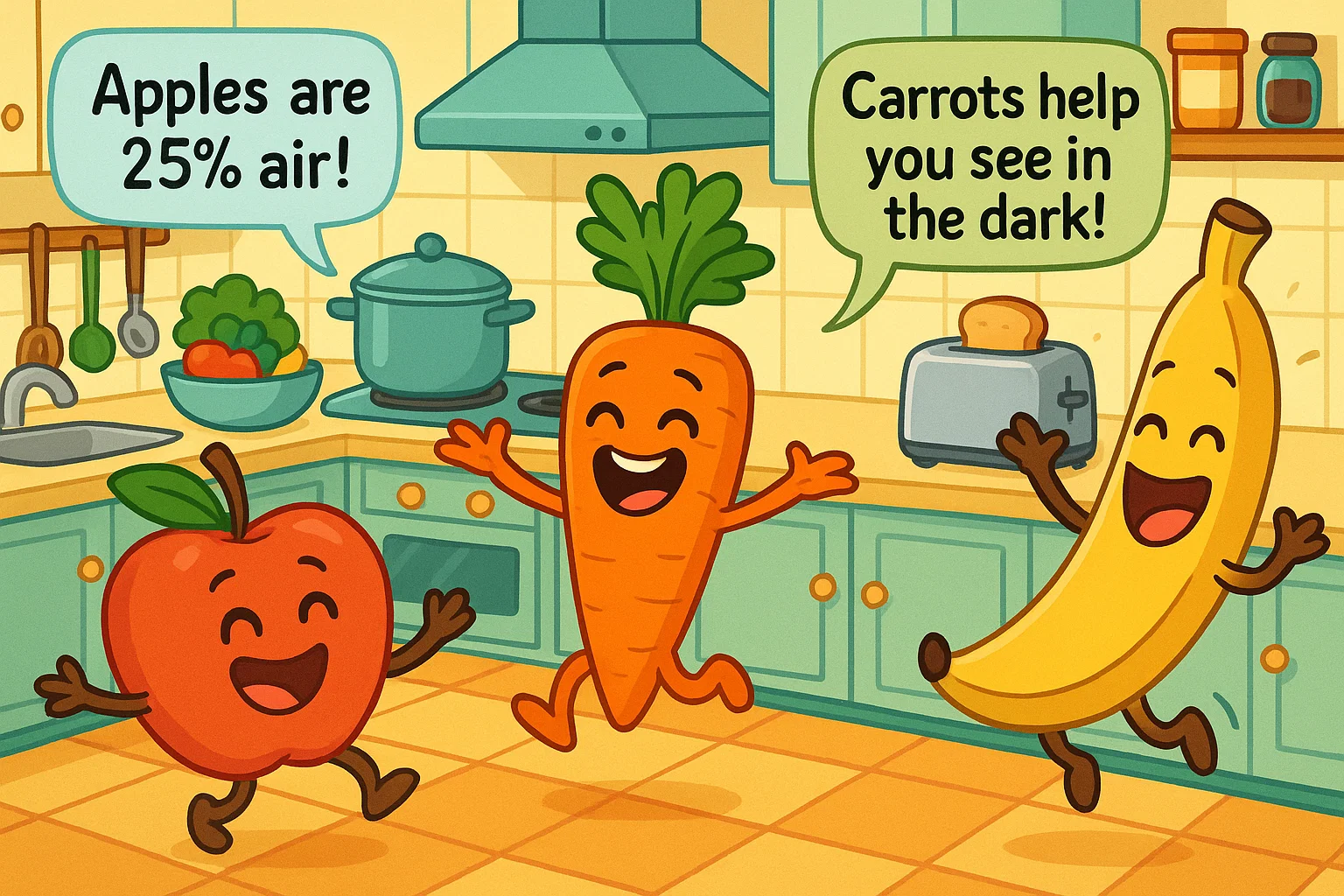
Food is something kids engage with every day, and learning fun facts about it can make mealtime more exciting.
Fruits and Vegetables
- Strawberries: Unlike most berries, strawberries wear their seeds on the outside – an average strawberry has about 200 of them!
- Avocados: Did you know that the avocado is technically a single-seeded berry? This random fun fact often surprises adults and kids love the quirky classification.
- Carrots: Carrots were originally purple, yellow, and white! The orange carrot we know and love today was cultivated in the 17th century by Dutch growers.
| Fruit/Vegetable | Color Fact |
| Bell Peppers | Red bell peppers are simply green peppers that have been left on the vine to ripen longer. |
| Apples | There are over 7,500 varieties of apples grown around the world. |
Food Origins and Trivia
- Pizza’s Name: The word “pizza” was first documented in a Latin text from a town in Italy in 997 AD! The modern version we know today, topped with tomatoes and mozzarella, was created in Naples, Italy, in the late 19th century.
- Ketchup History: Modern ketchup is primarily made from tomatoes, but the original ketchup from ancient China was actually made from fermented fish and soybeans!
Weird Food Facts
- Chocolate: Chocolate comes from the cacao bean, which grows on trees in pods. It takes about 400 cacao beans to make just one pound of chocolate!
- Honey Never Spoils: Honey, if stored properly, is the only food that never goes bad. Archaeologists have found pots of honey in ancient Egyptian tombs that are thousands of years old and still perfectly edible! That’s an interesting fact about preservation!
Fun Facts About the Human Body
The human body is an amazing machine, and sharing fun body facts for kids helps them understand how they grow and function.
Fun Facts About Bones and Muscles
- Bones in the Body: A grown-up human has 206 bones in their body, but a baby is actually born with almost 300! As we grow up, some of the smaller bones fuse together. This is a crucial human body fact for kids to grasp the concept of growth.
- Strongest Muscle: The strongest muscle in your body isn’t in your arms or legs – it’s the masseter muscle, which is the muscle we use for chewing! However, the largest muscle is the Gluteus Maximus, which helps you stand up.
The Brain and Senses
- Sense of Smell: Your nose can remember about 50,000 different scents! Smells can bring back strong memories because the area of your brain that processes smell is very close to the areas that handle memory and emotion.
- Tongue Print: Just like fingerprints, everyone has a unique tongue print! This is a random fact that highlights just how unique each person is.
Growth and Change
- Tallest at Night: You are slightly taller in the morning than you are at night! This is because the cartilage in your knees and spine is compressed from standing and sitting all day, and it relaxes and expands a bit while you sleep.
- Laughter: Laughter is not only a great way to show joy but also an amazing exercise! A good belly laugh can send about 80 miles per hour of air out of your lungs. This helps the body take in more oxygen and feel better.
Fun Facts About Nature and Earth
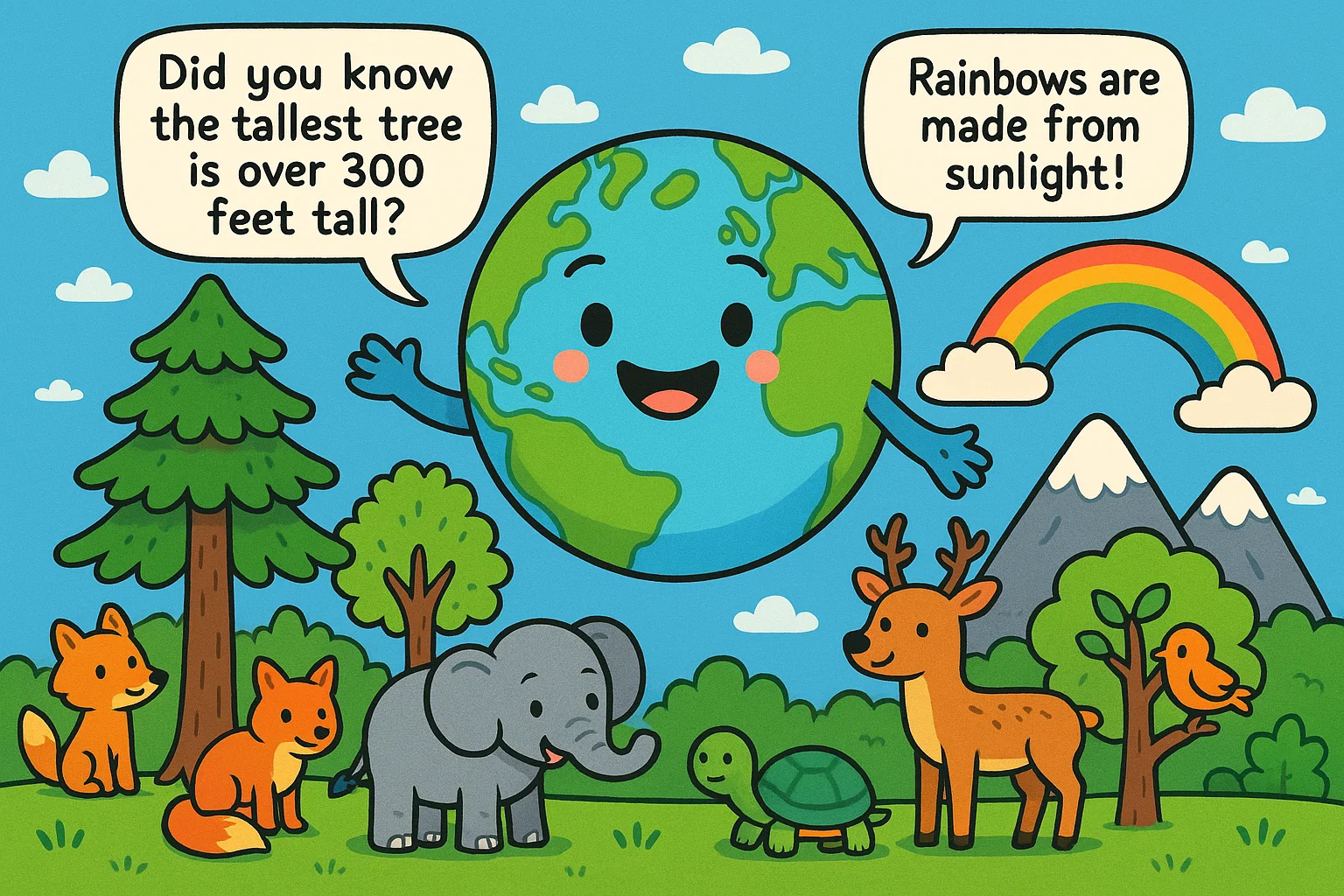
Teaching children about the natural world instills respect for the planet and encourages environmental awareness.
The Weather and Seasons
- Raindrops: A raindrop is not shaped like a tear! It is actually more like a tiny, flattened hamburger bun because of air resistance as it falls.
- Lightning Heat: A bolt of lightning is hotter than the surface of the sun! It can reach temperatures of up to 50,000 degrees Fahrenheit.
Plants and Trees
- Tree Rings: You can tell the age of a tree by counting its rings, but did you know those rings also tell a story? Thicker rings usually mean a year with lots of rain, while thin rings mean a dry or difficult year.
- Speaking Plants: Plants can “talk” to each other! When a plant is attacked by bugs, it sometimes releases chemicals into the air that warn nearby plants to start producing their own bug-repelling chemicals.
Natural Wonders Around the World
- The Great Barrier Reef: Located off the coast of Australia, the Great Barrier Reef is so enormous that it can be seen from space! It is the world’s largest living structure and home to countless marine animal fun facts.
- Mount Everest: The world’s tallest mountain above sea level is Mount Everest, but did you know it actually grows about a quarter of an inch taller every year?
Fun Facts About Dinosaurs and Prehistoric Life
Few things ignite a child’s imagination more than mighty dinosaurs!
Popular Dinosaurs and Their Features
- Tyrannosaurus Rex: The name Tyrannosaurus Rex actually means “Tyrant Lizard King.” T-Rex had tiny arms, but they were incredibly strong! The T-Rex also had teeth that were up to 12 inches long, making it a truly fearsome predator.
- Brachiosaurus: This massive herbivore had nostrils on the top of its head, not at the end of its snout. This has been a source of much debate among scientists but is a truly amazing fact about their anatomy.
Dinosaur Discoveries
- Fossil Finders: Paleontologists (the scientists who study dinosaurs) look for fossils in special rock layers. Fossils are essentially the preserved remains or traces of ancient life, which are the main source of all our dinosaur facts.
- The First Dino Name: The first dinosaur to be formally named was the Megalosaurus in 1824.
Dinosaur Extinction
- The Big Disappearance: Most scientists agree that a huge asteroid hitting Earth about 66 million years ago caused a massive, sudden change in the climate, which led to the extinction of most dinosaurs. This is one of the most critical random science facts we have about the Earth’s history.
Fun Facts About History and Famous People
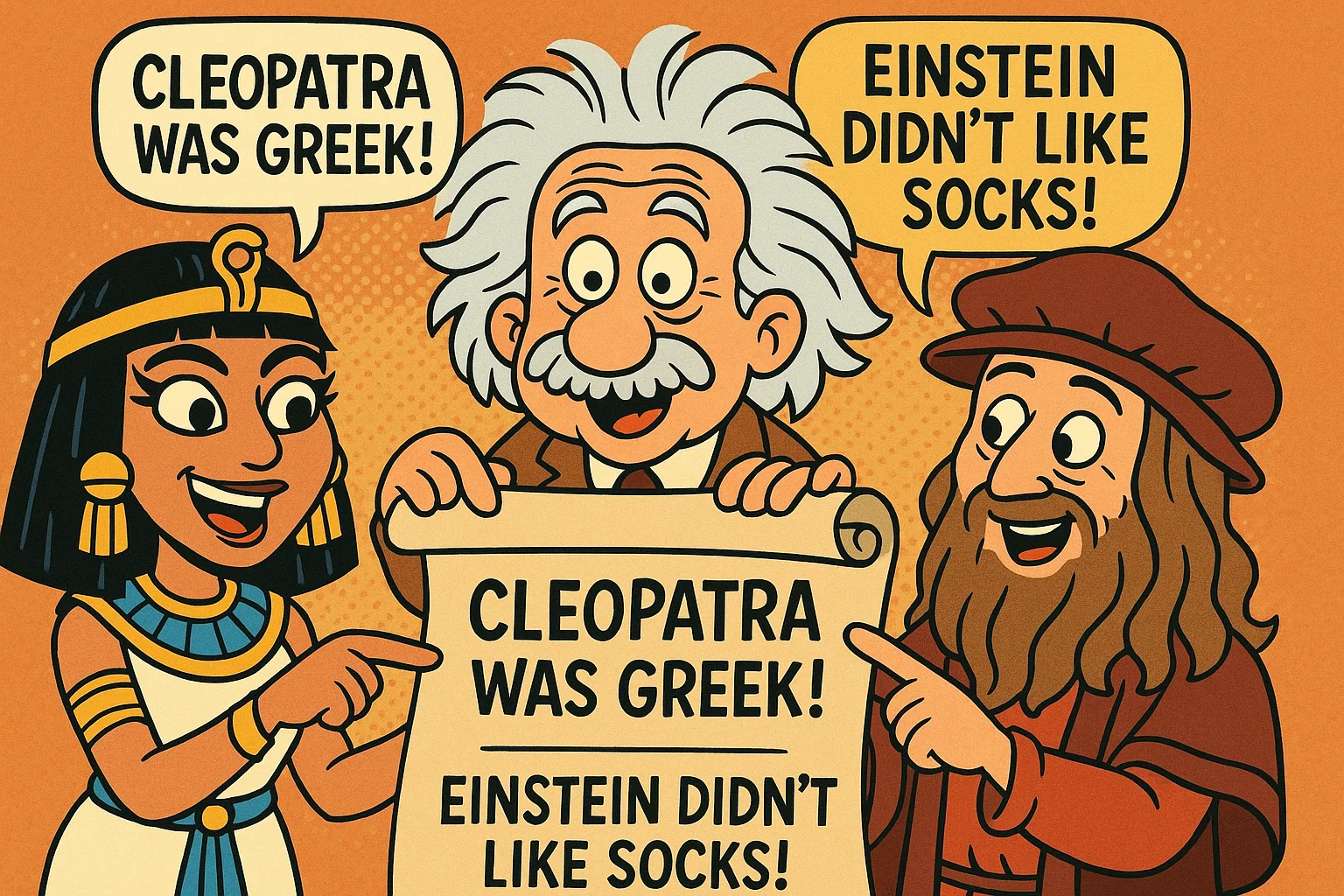
History is a collection of incredible true stories, and these facts make the past come alive.
Cool Facts About Famous Inventors
- Thomas Edison: The inventor of the practical lightbulb was afraid of the dark! This is a wonderful, humanizing cool fact that shows even brilliant people have simple fears.
- Marie Curie: She was the first woman to win a Nobel Prize and the only person ever to win Nobel Prizes in two different sciences (Physics and Chemistry).
Fun Facts About Kings, Queens, and Famous Figures
- Queen Elizabeth II: The late Queen Elizabeth II was a trained mechanic during World War II, a skill she maintained throughout her life.
- Julius Caesar: It’s widely reported that the Roman general Julius Caesar wore a laurel wreath not just as a symbol of power, but also to hide his receding hairline! A fun fact that shows historical figures were often self-conscious too.
The World’s Tallest, Smallest, and Longest People
- Tallest Man: The tallest man reliably recorded was Robert Wadlow, who stood 8 feet, 11.1 inches tall!
- Oldest Person: The oldest person ever recorded was Jeanne Calment of France, who lived to be 122 years and 164 days old.
Fun Facts About Sports
Sports provide great inspiration and show what the human body facts for kids can achieve through dedication.
Fun Facts About Popular Sports
- Soccer: The official name is association football, but kids love to call it soccer. The fun fact is that it is the most popular sport in the world, with an estimated 4 billion fans!
- Basketball: James Naismith invented basketball in 1891 and originally used peach baskets as the hoops!
Record-Breaking Moments in Sports
- The Longest Baseball Game: The longest professional baseball game ever played lasted for 8 hours and 25 minutes! It was an amazing fact of endurance.
- Fastest Sprint: Usain Bolt, the fastest human on record, reached a top speed of nearly 27 miles per hour during his record-breaking 100-meter dash!
Fun Sports Facts for Active Kids
- Jumping Rope: Just 10 minutes of jumping rope can be the equivalent of running a mile in terms of cardiovascular benefit! It’s a cool fact about staying active.
- Brain Power: Playing sports, like soccer or basketball, actually helps your brain grow! Physical activity increases blood flow to the brain, which helps you think better and faster – a great random science fact for any active child.