


Early childhood is a period of rapid cognitive growth, language expansion, and sensory exploration. At three years old, children actively ask questions, test cause and effect, and absorb new information at remarkable speed. Carefully selected fun facts for 3 year olds support this developmental stage by transforming everyday moments into structured learning opportunities.
Short, surprising facts about animals, nature, the human body, food, or space stimulate memory, expand vocabulary, and encourage analytical thinking in an age-appropriate format. When presented with enthusiasm and visual support, these bite-sized discoveries strengthen neural connections while maintaining emotional engagement. Consistent exposure to meaningful, simple knowledge builds a strong foundation for future academic readiness and sustained curiosity.
Fun Facts for 3-Year-Olds: Explore the World of Wonders
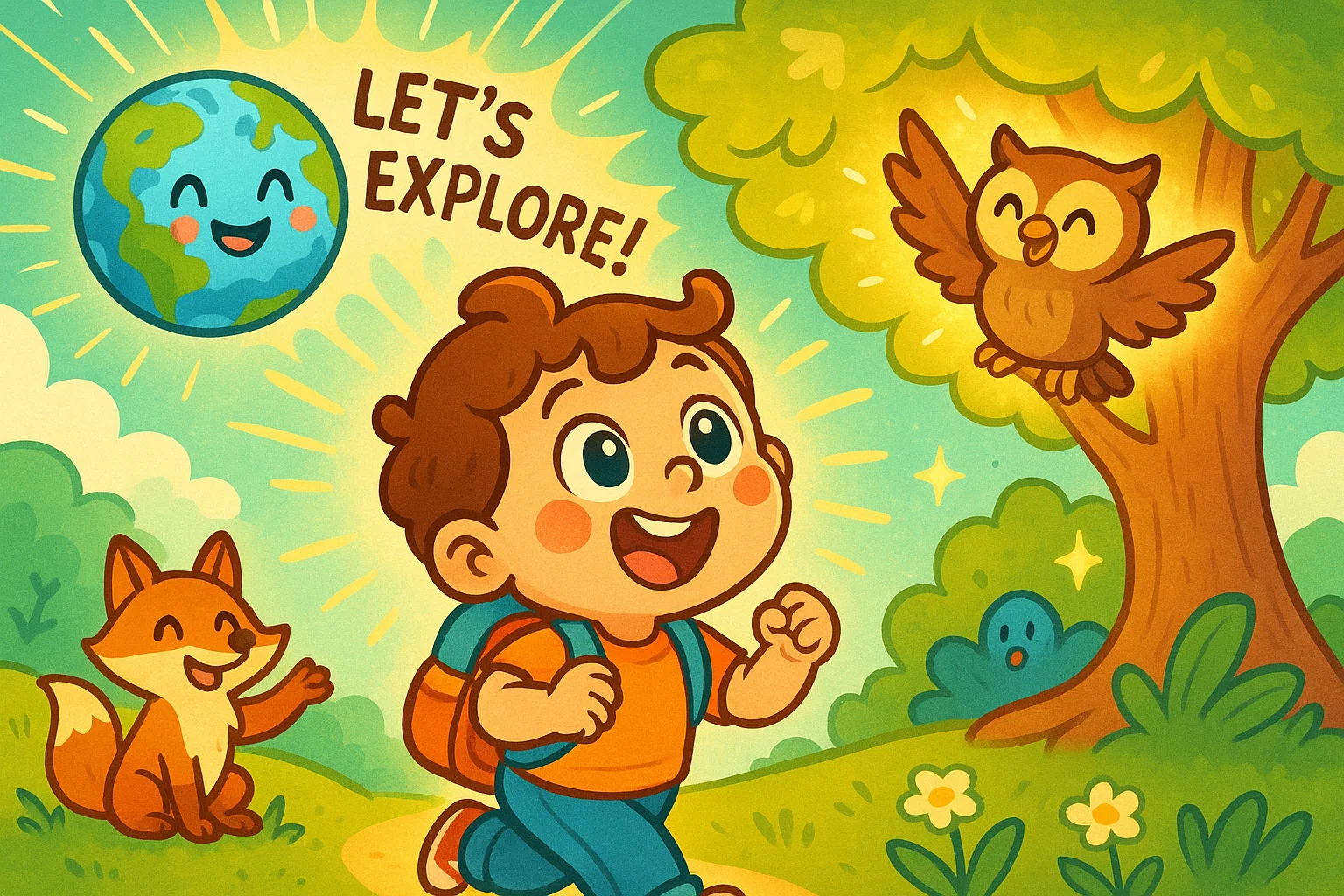
Why Fun Facts For Kids are Essential
Toddlers are natural scientists. They touch, taste, drop, and shake everything, instinctively exploring how the world works. Fun facts directly tap into this innate curiosity. Research in early childhood education suggests that presenting information in a novel, surprising, and concise format – such as ‘fun facts’ – is effective for retention in young children. Programs like Head Start, which focus on early education, support this approach by incorporating short, engaging lessons to improve cognitive skills and readiness for school.
- Stimulate Curiosity: A fun fact about an elephant’s trunk or a human body part instantly spark their curiosity and motivates them to ask follow-up questions. This questioning is the basis of critical thinking.
- Improve Cognitive Development: Learning new, often complex, concepts in a simple package strengthens neural connections. For a 3-year-old, discovering that a giraffe has the same number of neck bones as they do (human body facts) is a concrete, relatable comparison that aids abstract thinking.
- Provide Entertainment While Learning: Facts are not boring lectures; they are tiny stories. When delivered with enthusiasm, they entertain and turn passive listening into active, joyful engagement. For instance, did you know that an octopus has three hearts? That’s a fact of the day that can truly blow their minds!
Benefits of Sharing Fun Facts with Your Toddler
Sharing random fun facts isn’t just about filling their heads with trivia; it’s a profound social and developmental activity.
| Developmental Area | Benefit of Fun Facts | Example Fun Fact |
| Language Skills | Introduces new vocabulary and complex sentence structures in a digestible context. | “A baby kangaroo is called a joey.” |
| Social Skills | Provides conversation starters and fosters turn-taking in discussions. | Sharing a fact with a sibling or friend. |
| Emotional Development | Creates shared moments of wonder and joy, strengthening the parent-child bond. | Laughing together about a wacky animal fact. |
| Memory | The novelty of the fact makes it easier for the toddler to remember (cognitive skills). | Recalling that a snail can sleep for thousands of years. |
Dr. Maria Montessori noted that children possess an “absorbent mind,” soaking up information effortlessly. By integrating these facts into playful interactions, you are capitalizing on their natural ability to teach children to learn through delight. This makes learning an inherently positive experience, establishing a firm milestone in their educational journey.
How to Introduce Fun Facts to a 3-Year-Old
The key to successful fact-sharing with a 3-year-old is age-appropriateness and enthusiasm. They don’t need a lecture; they need a lightbulb moment.
- Contextualize It: Share an animal fact when you see that animal in a book or at the zoo. For example, “Look, a dog! Fun fact: Did you know a dog’s nose print is as unique as a person’s fingerprint?”
- Use Visuals: Always pair the fact with a picture, a toy, or a real-life object. Show them a picture of the planet Mars while sharing a space fact about its red color.
- Use Dramatic Delivery: Change your voice, widen your eyes, and whisper fascinating facts to make them seem like a big secret. This element of surprise is what makes the fact so amazing.
Keep it Brief and Simple: Stick to one-sentence facts. The concept should be easily grasped and not require long, convoluted explanations.
Animal Facts for 3-Year-Olds: Fascinating Creatures Around Us
The animal facts category is always a winner. It sparks the imagination and teaches about biology and diversity in the most engaging way.
Wild and Domestic Animals Your Toddler Will Love
Let’s share some simple facts about animals they see often and those they dream of.
- Cat: A cat has five toes on each front paw, but only four toes on each back paw!
- Dog: Dogs sweat through their paws, not their whole body! That’s a cool kid fact that explains why they pant.
- Elephant: The elephant is the world’s largest land animal. Its trunk is actually a combination of its nose and upper lip!
- Panda: A baby panda is so small when it’s born that it is smaller than a stick of butter.
Sounds and Movements: What Animals Do
Learning about how animals move and communicate is crucial for developing motor skills and understanding nature’s dynamics.
| Animal | Movement/Action | Sound |
| Bunny | Hops and wiggles its nose. | Thumps its back foot (usually not a vocal sound). |
| Snake | Slithers on its belly. | Hisses to warn others. |
| Frog | Jumps very high! | Croaks, especially when it’s raining. |
| Cow | Walks slowly and chews its cud. | Moos very loudly. |
Animal Adaptations and Superpowers
Comparing an animal’s special ability to a superhero power is a fantastic way to inspire wonder.
- Chameleon: The chameleon’s superpower is changing the color of its skin to hide from other animals. This is called camouflage!
- Elephant: The elephant uses its trunk like a big straw to drink water and spray itself with dust!
- Spider: A spider can make its own silk to build a strong web that catches its dinner.
- Dolphin: Dolphins can sleep with only half of their brain at a time. The other half stays awake to help them breathe! That’s an amazing fact.
Nature and Environment: The World We Live In
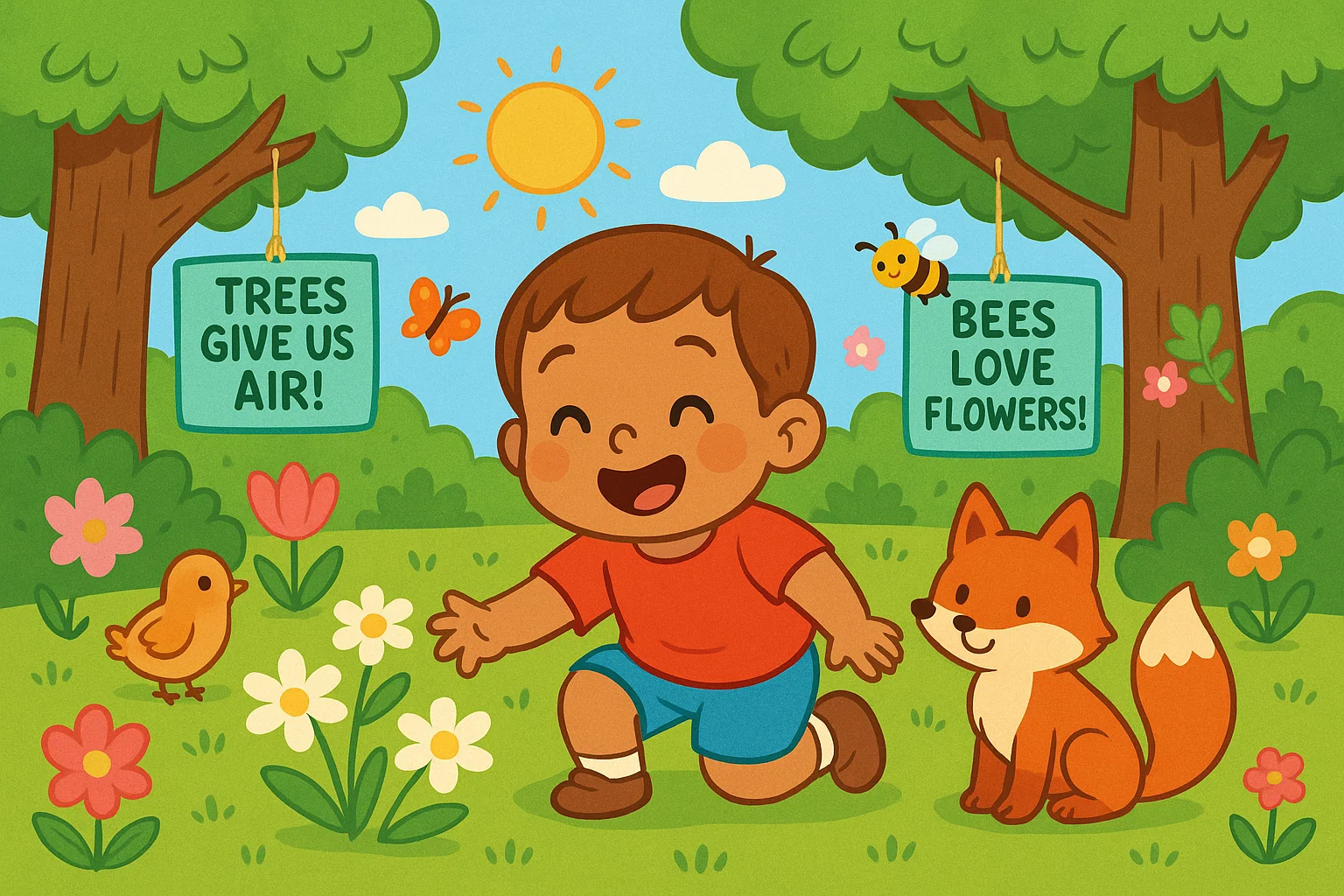
Introducing geography and basic science facts through the lens of nature helps build respect for the environment.
Fun Facts About Trees, Flowers, and Bugs
- Trees: A tree breathes in air that is not good for us and breathes out the good, clean air we need!
- Flowers: The bright color of a flower is a signal to bees and butterflies that says, “Come here! I have tasty nectar for you!”
- Bugs (Ants): Ants are super strong! They can lift a leaf or piece of food that is 50 times their own weight!
Weather Wonders: Raindrops and Rainbows
- Clouds: Clouds are actually made of millions of tiny water droplets floating in the sky.
- Raindrops: Not all raindrops are the same size; some are as big as a grain of sand, and some are as big as your pinky nail!
- Rainbows: A rainbow is made when sunlight shines through raindrops. The water splits the light into all the different colors! Fun fact: A rainbow is a full circle, but we only see half of it!
Earth’s Different Seasons and What Happens
Explain the seasons using concrete, relatable examples that connect to the 3-year-old’s experience.
- Spring: In spring, the rain washes the earth, and tiny buds pop open on the trees. Baby animals are born!
- Summer: Summer is the warmest season! We can play outside for a long time, and the sun stays up late.
- Fall (Autumn): The leaves on the trees turn beautiful colors – red, yellow, and orange – and then they fall off.
- Winter: Winter is the coldest season, and sometimes we get to see the amazing white snow!
Human Body Facts for 3-Year-Olds: Learning About Ourselves
Self-awareness is a major milestone. Human body facts are critical because they relate directly to the child.
Our Amazing Senses: Touch, Taste, Smell, Sight, and Hearing
- Sight: Your eyes are working even when you are asleep, but your brain is resting so it doesn’t see anything!
- Touch: Your skin is the biggest organ you have! It helps you feel if something is hot, cold, bumpy, or soft.
- Taste: You can only taste food when it mixes with your spit. Try tasting something right after you dry your tongue! (Wacky and safe experiment.)
- Smell: Your nose can remember about 50,000 different smells. That’s a random fact!
Fun Facts About Hands and Feet
Hands and feet are central to developing motor skills and engaging in sensory play.
- Fingers: You have 10 fingers, and each one has three bones, except your thumbs, which only have two!
- Toes: The smallest bone in your foot is also the smallest bone in your body!
- Thumbprint: Just like a dog’s nose, your fingerprint is completely unique! No one in the world has the exact same one.
Why Our Bodies Need Sleep and Food
This section reinforces practical life skills and good habits.
- Sleep: When you sleep, your body is busy growing! Scientists say that kids grow fastest when they are resting.
- Food: Food is like the fuel for a car. It gives your body the energy to run, jump, think, and play.
- Water: Your body is mostly made of water! That’s why you need to drink water to stay super strong and healthy.
Fun Facts About Food for 3-Year-Olds: Tasty Discoveries
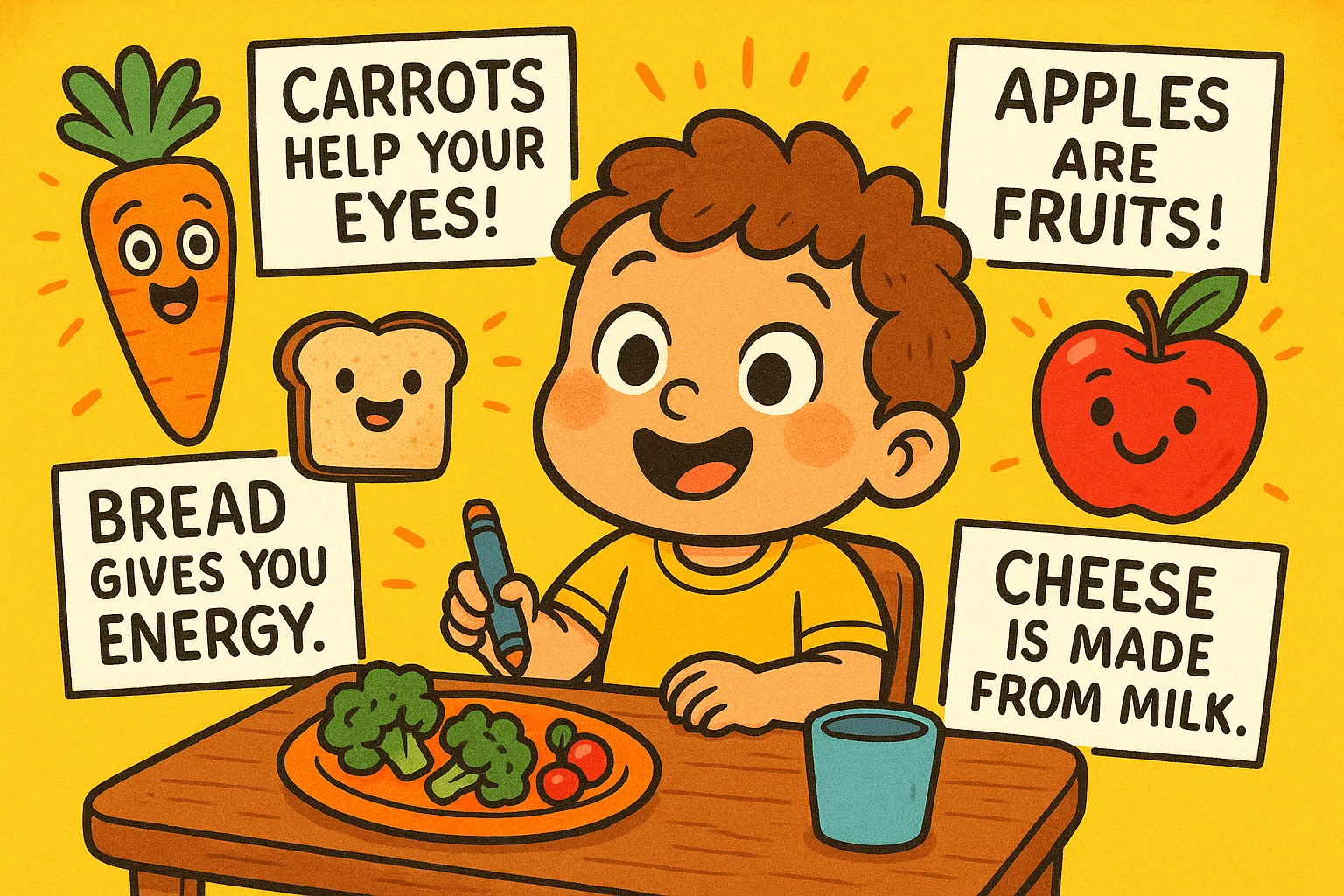
Turning mealtime into a learning experience with fun food facts encourages healthy eating and fun with food.
Colors and Shapes of Fruits and Vegetables
- Carrots: Eating orange carrots helps you see better in the dark. That’s a fun food fact!
- Bananas: Bananas grow by pointing up toward the sky!
- Apples: You could float an apple in water because it is 25% air! That amazes many kids love this one.
- Blueberries: Blueberries are one of the only fruits that are truly blue.
Food from Around the World for Little Eaters
Introducing simple concepts of geography through food.
- Pasta: The long, stringy pasta was first eaten a very long time ago in Italy.
- Rice: Rice is eaten every single day by more people than any other food in the world! It’s a staple in many countries, especially in Asia.
- Taco: A taco is a fun way to eat dinner, all wrapped up in a corn or flour blanket. It comes from Mexico!
How Food Helps Us Grow and Stay Healthy
- Milk: Milk has calcium, which is like the building blocks that make your bones and teeth super strong.
- Oranges: Oranges are full of Vitamin C, which is the vitamin that helps your body fight off bad germs and colds.
- Oats: Eating oatmeal can give you long-lasting energy, so you can run and play all morning!
Space and the Universe: Little Astronomers
Space facts are the ultimate tool to spark curiosity about the unknown.
The Moon, Stars, and Planets: A Toddler’s Guide
- Moon: The moon is our Earth’s best friend in space. We only ever see one side of it!
- Stars: The stars are giant, hot balls of gas, much bigger than our whole Earth. They look tiny because they are so far away.
- Planets: Scientists say there are eight planets that go around the sun. We live on Earth, which is the third one!
The Sun and Why It’s So Important
- Sun: The sun is a giant star that is so hot it gives us light and heat. Without the sun, nothing could grow on Earth.
- Shadows: Shadows are made when you block the sun’s light. Your shadow is always there when the sun is out!
How Rockets Fly to Space
- Rockets: A rocket needs a lot of powerful fuel to push it all the way up into space past the Earth’s gravity.
- Astronauts: Astronauts are the super-brave people who wear special suits and travel in rockets to study space.
Fun Facts About Animals: Keep Them Roaring with Laughter
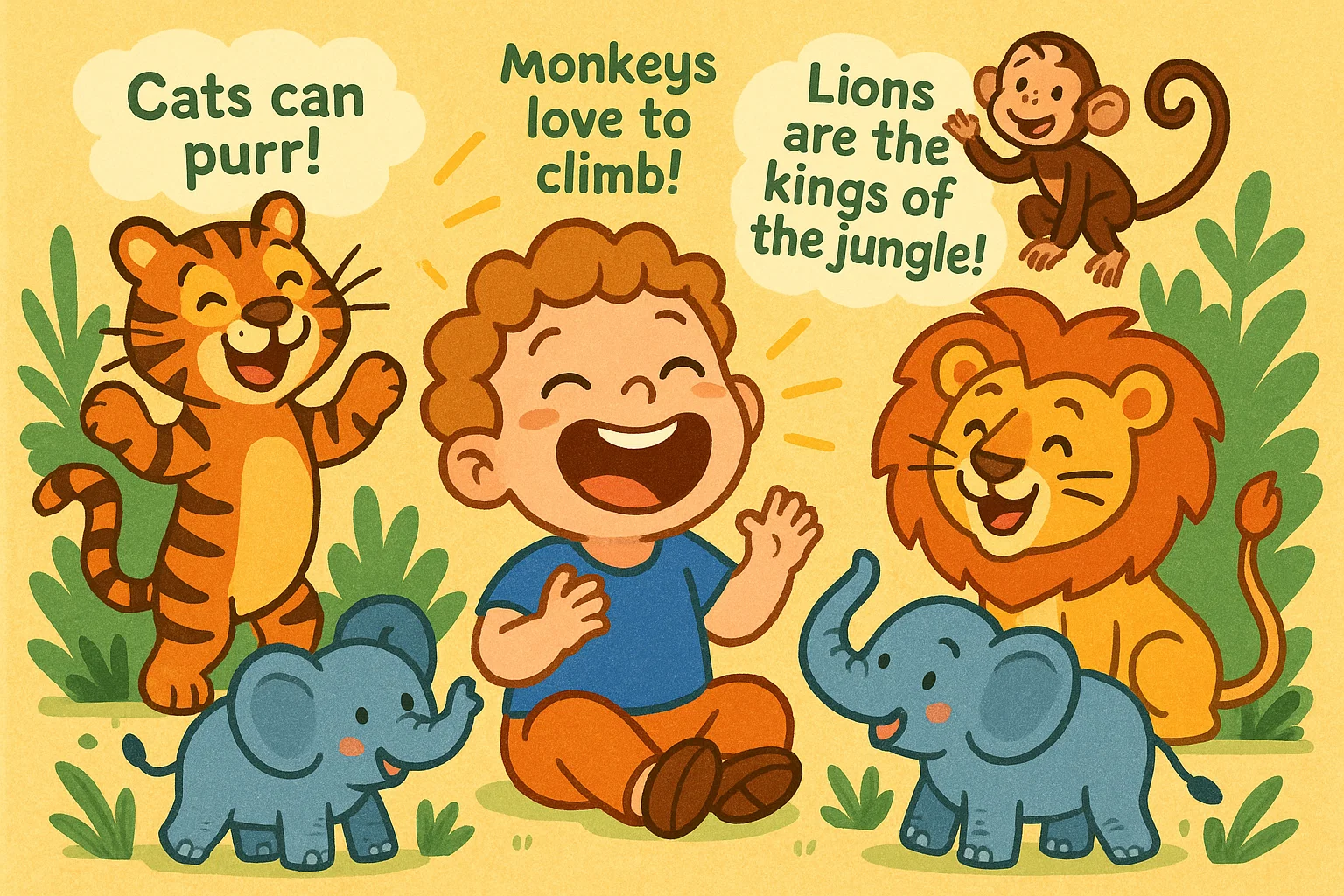
Funny Animal Habits: From Licking Cats to Dancing Birds
- Cat Licking: When a cat licks itself, it’s called grooming. The cat is cleaning its fur, and it helps them feel calm.
- Birds: Some birds, like the Cockatoo, love to dance when they hear music!
- Hedgehog: When a hedgehog gets scared, it rolls up into a tight, spiky ball to keep itself safe.
- Octopus: An octopus has a favorite hiding spot – it can squeeze its whole body into a tiny hole because it has no bones!
The Coolest Animal Facts for Toddlers
- Snail: Did you know a snail can sleep for up to three years? That’s a wacky and true animal fact!
- Polar Bear: A polar bear’s fur is not actually white; it’s see-through! It only looks white against the snow.
- Giraffe: A giraffe’s tongue is blue and can be as long as 20 inches! It uses its tongue to grab tasty leaves from high-up trees.
Fun Facts About Sports for Toddlers: Introduction to Games
This section connects facts to motor skills development and social skills.
Basic Sports: Running, Jumping, and Kicking
- Running: The fastest person in the world can run faster than 25 miles per hour!
- Jumping: Some people can jump higher than a rope held by two adults!
- Kicking: Kicking a ball is a great way to use your leg muscles and work on your balance.
Famous Athletes Kids Will Love
- Simone Biles (Gymnastics): She can jump so high and do flips so fast she has a move named after her! She is the most decorated American gymnast!
- Lionel Messi (Soccer): He is known for being able to run very fast while keeping the soccer ball very close to his feet.
Why Sports are Fun for the Whole Family
Playing simple games like catch or having a running race makes for great learning fun. Fun fact: When you run, your brain releases happy chemicals that make you feel good! Family sports teach cooperation and the importance of teamwork.
Fun Facts About Our Amazing World: Explore the Wonders
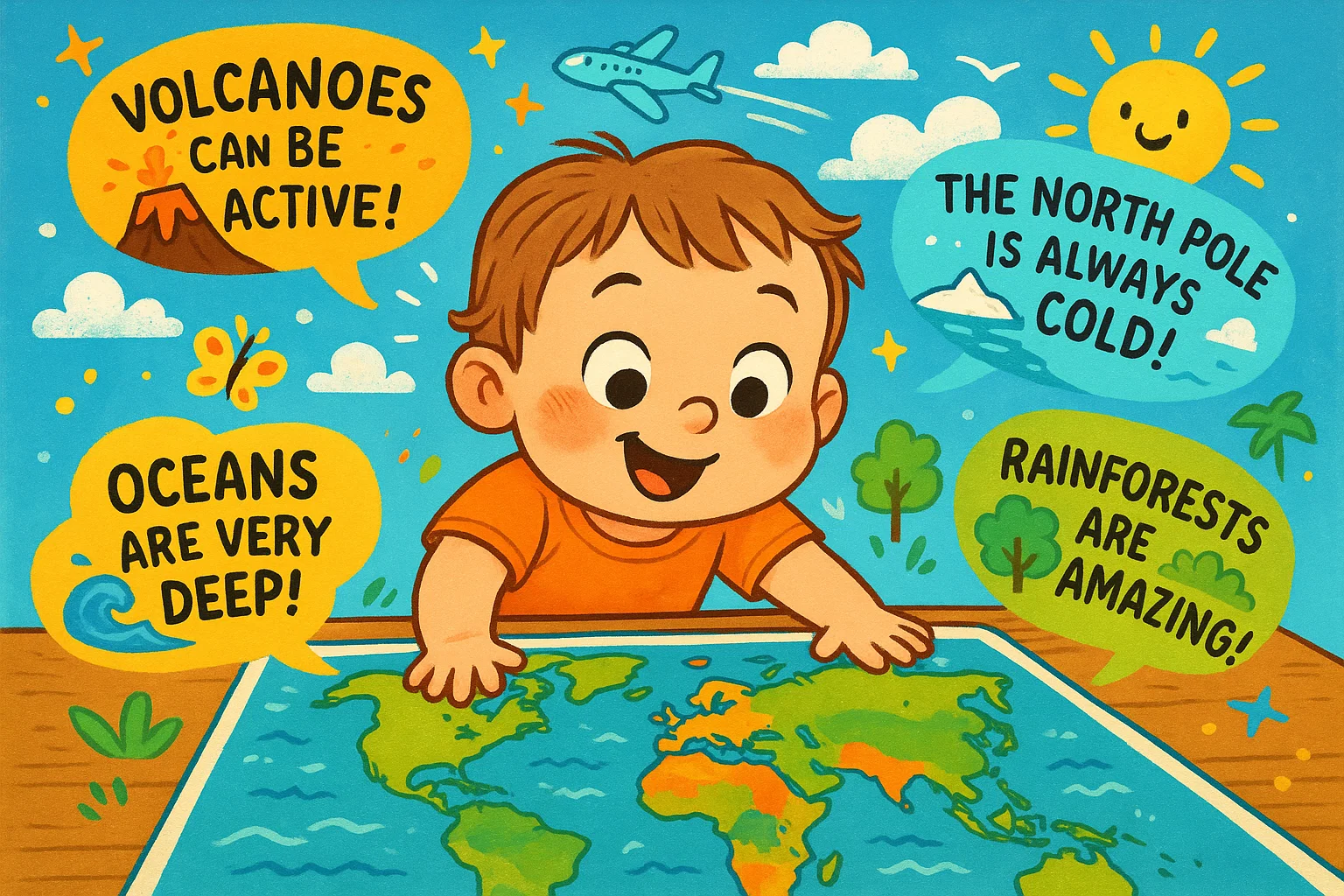
These random facts inspire a global perspective and love of learning.
Places to See and Things to Do Around the World
- Eiffel Tower (Paris): The Eiffel Tower can grow taller in the summer because the metal expands in the heat!
- The Great Wall of China: This wall is so long that it took thousands of years to build!
Discover Nature’s Marvels: From Waterfalls to Volcanoes
- Waterfalls: Waterfalls are where rivers fall over a cliff. The tallest waterfall in the world is called Angel Falls, and it’s almost a mile high!
- Volcanoes: Volcanoes are like vents on Earth. They are mountains that can sometimes erupt with hot lava!
The Animal Kingdom: A World of Wonders
- Antarctica: It’s the only continent that doesn’t have any trees! It’s too cold for them to grow.
- Oceans: The ocean is so huge that scientists say we’ve explored less than five percent of it. Imagine all the amazing facts waiting to be found!
Fun Facts About the Human Mind and Emotions
Understanding emotions is a crucial aspect of social skills development.
Why Do We Laugh, Cry, and Feel?
- Laughter: When you laugh, you use almost all the muscles in your body, and it’s a sign that you are happy!
- Crying: Tears help to clean your eyes, and sometimes they come out when you feel a big emotion like sadness or excitement.
- Emotions: All of your emotions, like happy, sad, or angry, are important. They tell you and others how you are feeling inside.
Learning Through Play and Fun Facts
Cognitive skills are sharply developed when learning is disguised as play. Every fun fact can lead to a game. If you share a fact about gravity, you can follow it up by dropping different objects. This links abstract concepts to sensory play and solidifies the milestone of understanding cause and effect.
Fun Facts About Technology: The Future for Kids
This introduces basic science facts and engineering concepts.
Simple Machines and How They Work
- Bicycles: A bicycle uses wheels and a chain to help you move very fast with less work. It’s a simple machine!
- Elevators: An elevator uses a strong rope and a big motor to pull you up and down in a building.
Toys That Help Learn
- Building Blocks: When you stack blocks, you are learning about balance and physics. Fun fact: The tallest block tower ever built was taller than 100 feet!
- Puzzles: Puzzles help your brain learn how to match shapes and solve problems.
Conclusion: Keep Discovering the World with Fun Facts!
The Power of Learning Through Fun
Fun facts for kids are the essential skills builder you never knew you needed. They fuel cognitive development, spark curiosity, and build a strong foundation for future academic success. By using these bite-sized pieces of wonder, you are fostering a lifelong love of learning in your 3-year-old. These moments of shared discovery are priceless – they are the memories your child will cherish and the confidence they will carry forward.
How Parents Can Make Fun Facts a Regular Part of Life
The best way to integrate these facts is by doing so naturally and with enthusiasm.
- The “Fact of the Day” Routine: Choose one random fact to share at breakfast or before a nap. Ask your child to repeat it back to you later.
- The “Fun Fact Conversation Starter”: When driving, instead of asking, “What did you do today?” ask, “Did you know that the clouds floating above us are full of water vapor?”
- Use Books and Media: When reading a book, pause to elaborate on a point with an external cool kid fact. If the book shows a picture of an ocean, share a fascinating fact about how blue whales are the biggest animals on Earth.
By embracing this playful approach, you’re not just sharing 100 fun facts for kids; you’re cultivating an inherent desire to inspire and explore. Keep the conversation going, keep the wonder alive, and watch your young minds grow into passionate lifelong learners.