

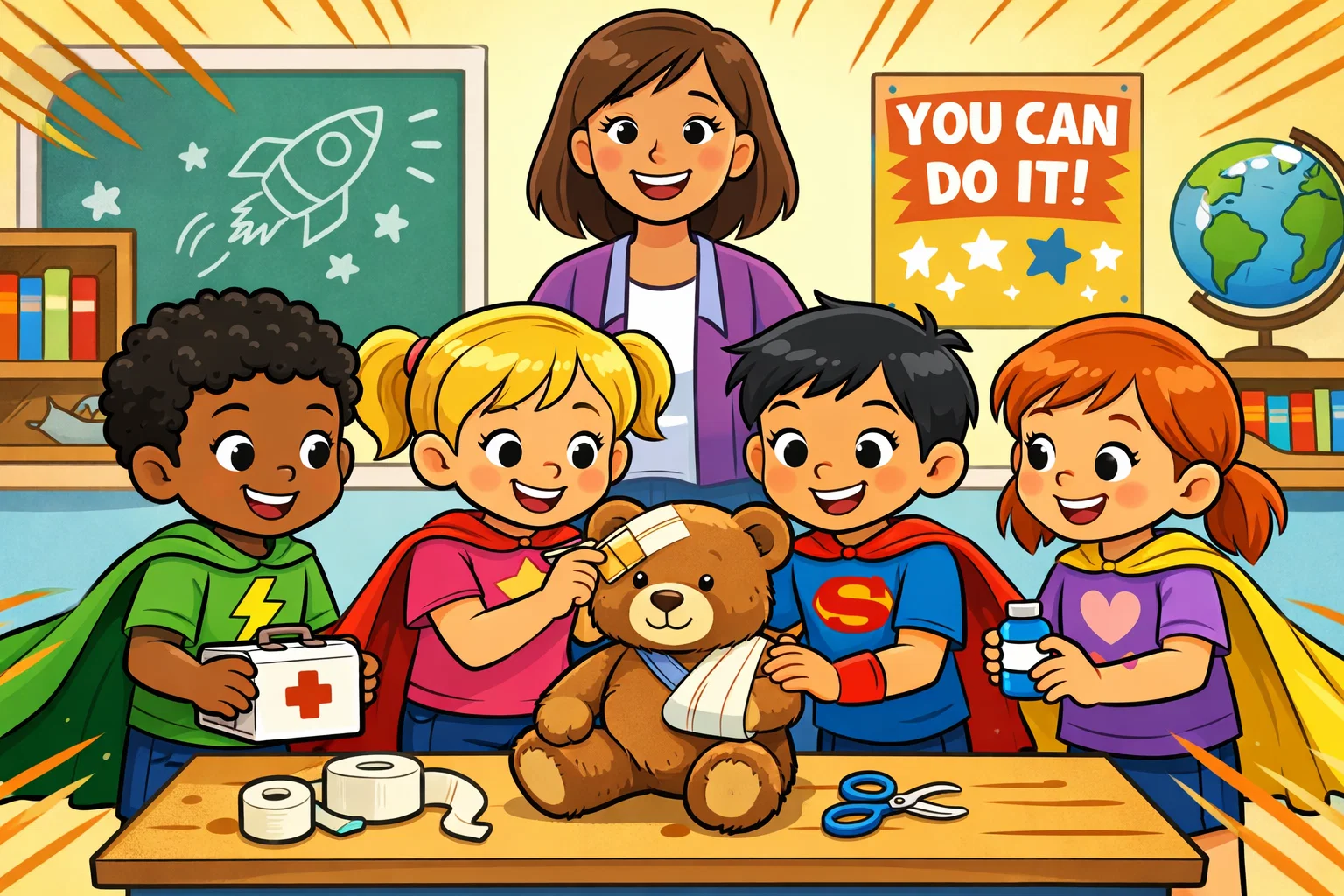
Teaching children how to respond in a crisis is one of the most valuable life lessons a parent or educator can provide. While the term “first aid” might conjure images of complex medical procedures, first aid activities for kids are designed to simplify these concepts into manageable, playful, and memorable actions. These activities aren’t just for future doctors; they’re for scouts, students, and siblings alike who may one day find themselves in a position to help. By shifting from dry, theoretical lectures to hands-on, activity-based learning, we allow children to build “muscle memory” as well as emotional resilience.
Research in pediatric education suggests that children as young as four or five can begin to grasp the basics of recognising danger and seeking help. When learning is fun and engaging, the information sticks. Instead of fearing an emergency situation, children who participate in first aid lessons feel empowered. Whether you are a parent at home, a teacher in a classroom, or a leader of a scout troop, integrating first aid into your curriculum fosters a culture of safety and compassion that benefits the entire community.
Importance of First Aid Skills for Children
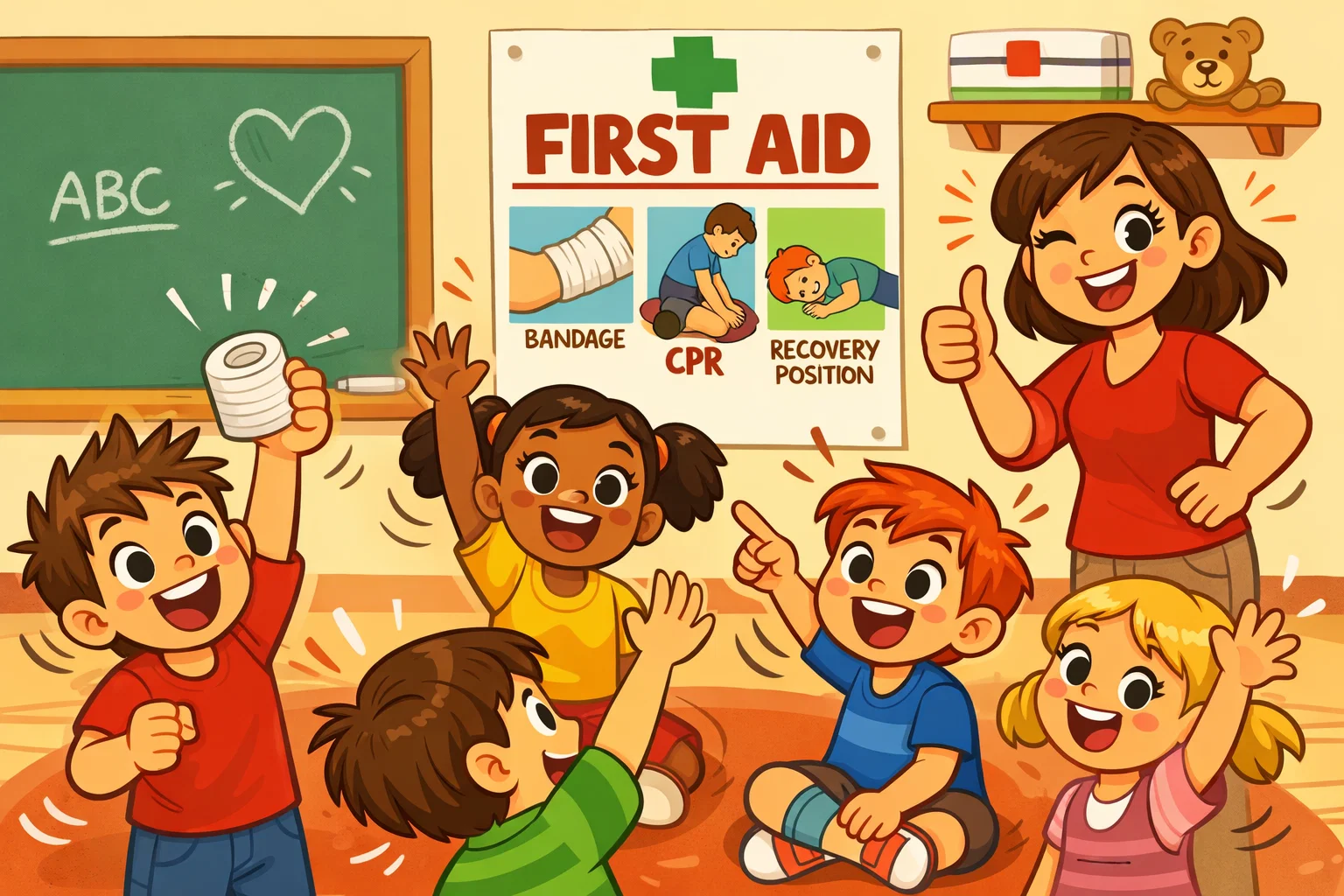
The importance of first aid extends far beyond the physical act of applying a bandage. It is about equipping a child with the psychological tools to remain calm when others might panic. Accidents happen—on the playground, during sports, or even at the dinner table. When a child possesses knowledge of first aid, they move from being a passive bystander to an active participant in the chain of survival.
Safety awareness development
Engaging in basic first aid training naturally sharpens a child’s awareness of potential hazards. Through various activities, kids learn to spot potential dangers—like a spilled liquid that could cause a slip or a sharp tool left within reach of a toddler. This proactive mindset helps prevent injuries before they occur, shifting the focus from reaction to prevention.
Confidence in emergency situations
Panic is often fueled by a lack of information. When children practice simple first aid through repetition, the “unknown” becomes “known.” Knowing how to dial 999 (or the local emergency number) and what information to provide to emergency services gives a child a sense of agency. This confidence can significantly reduce the trauma associated with witnessing an accident.
Responsibility and peer support
First aid is inherently a team effort. Activities that require children to work together to render first aid—such as one child acting as the casualty and the other as the helper—build empathy. It teaches them that they have a responsibility to look after their peers’ wellbeing, fostering a supportive environment in schools and clubs.
World First Aid Day for Kids
Every year, the Red Cross and Red Crescent Movement celebrate World First Aid Day on the second Saturday of September. This global event highlights how first aid skills can save lives in everyday and crisis situations. For children, this day serves as an annual reminder that heroes don’t always wear capes—sometimes they just carry a first aid kit.
Meaning of World First Aid Day
This day is dedicated to raising public awareness of how first aid can prevent injuries and save lives. For children, the focus is on “Everyday Heroes.” It emphasizes that anyone, regardless of age, can learn basic first aid skills. It’s a day to celebrate the bravery of young people who have stepped up in emergencies and to encourage others to start their learning journey.
Age-appropriate activities for World First Aid Day
- The “Helper” Parade: Younger children can dress up as doctors, nurses, or paramedics.
- The 999 Call Drill: Practice what to say to the operator using toy phones.
- Kit Scavenger Hunt: Finding items like gauze, adhesive tape, and rubber gloves around the room.
School and community involvement ideas
Schools can host a first aid course led by organizations like St John Ambulance. Assemblies featuring real-life stories of kids helping others can be incredibly moving. Community centers might host a “Safety Fair” where local ambulance crews show children the inside of their vehicles, making the emergency services feel approachable rather than scary.
First Aid Games for Kids
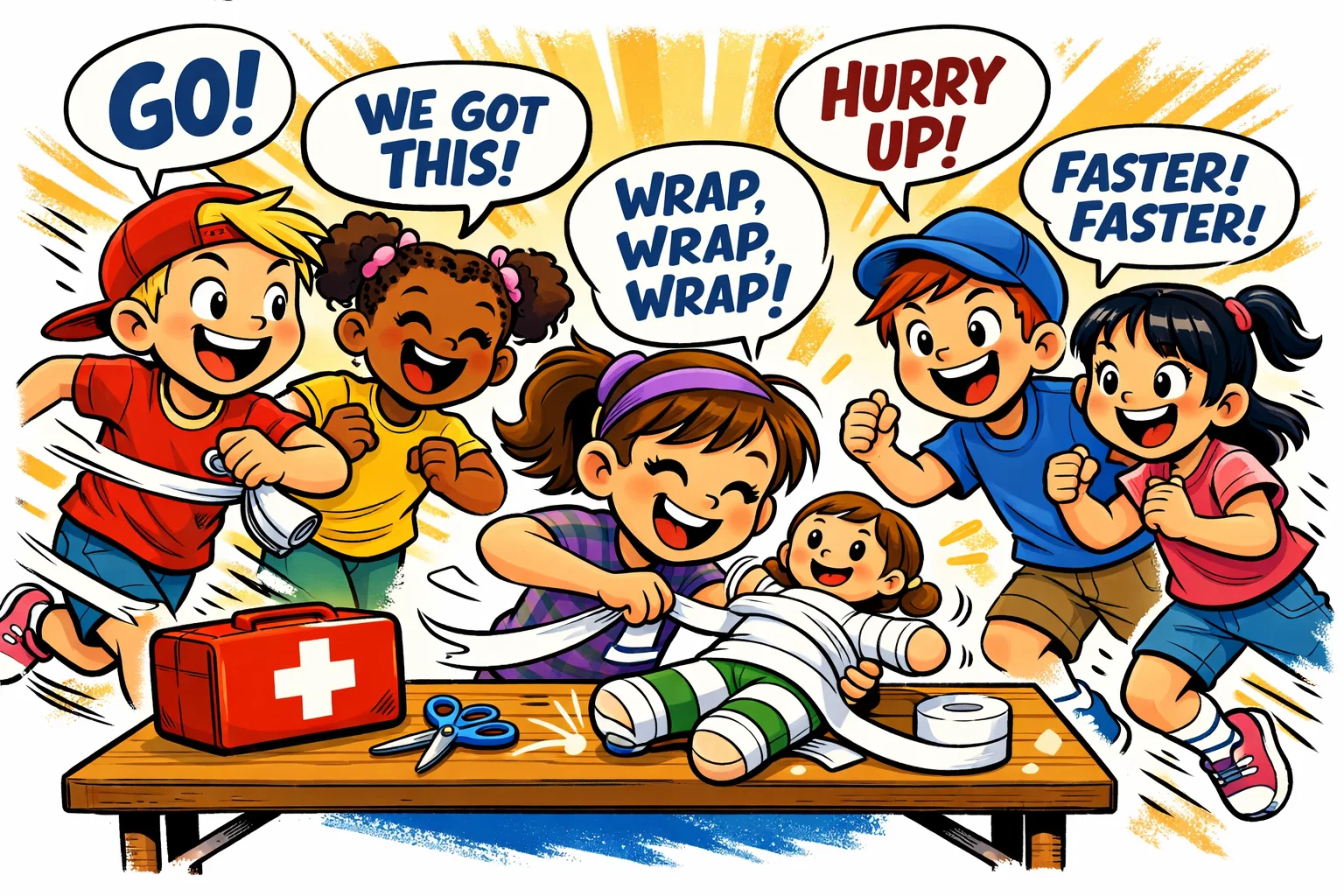
The best way to teach first aid lessons is to disguise them as play. Games remove the “clinical” pressure and allow children to explore medical concepts through movement and imagination.
First aid charades
In first aid charades, children take turns acting out a scenario without speaking. One child might pretend they receive a cut, while another acts out being stung by a bee. The “audience” must guess the injury and then call out the first step to take (e.g., “Wash with water!” or “Tell a grown-up!”). This reinforces the recognition of symptoms.
First aid relay games
Divide the group into teams. At the other end of the room is a “casualty” (a stuffed animal or a teammate). Each child must run to the casualty, perform one action—like applying a piece of gauze—and run back to tag the next person. The goal is to complete the basic first aid steps correctly as a team.
Scenario-based role play
Role-playing is the gold standard for teaching first aid. Create a mock campsite where a child is designated as an “injured scout”. Give the “medics” a first aid kit and a specific scenario: “Your friend fell and has a scraped knee.” Watch as they navigate the steps of cleaning the wound with a clean cloth or dressing and applying a plaster if appropriate.
Bandaging and Splinting Activities
Learning to bandage a wound or steady a limb is a tactile skill that kids usually find very satisfying. It feels “official” and provides immediate visual feedback.
Basic bandaging practice
Using clean strips of cloth or inexpensive crepe bandages, teach children the “spiral wrap” or the “figure-eight.” Start by having them bandage a doll’s arm. Explain that a bandage should be snug but not so tight that it stops blood flow. This is a great time to introduce the concept of keeping a wound clean.
Splint building activities
In the woods or a backyard, children can learn to improvise. A splint can be made from a blanket and two poles, or even just sturdy sticks and some bandage or cloth strips.
Teaching children to stabilize a “broken” limb (using a ruler or cardboard at home) helps them understand the importance of keeping an injury still until medical assistance arrives.
Bandage relay challenges
To add excitement, set a timer. How quickly can the team safely wrap an “injured” ankle? Skills in a fun environment like this help children perform under the minor pressure of a clock, which mimics the urgency of a real-life situation without the actual danger.
Severe Bleeding Activities
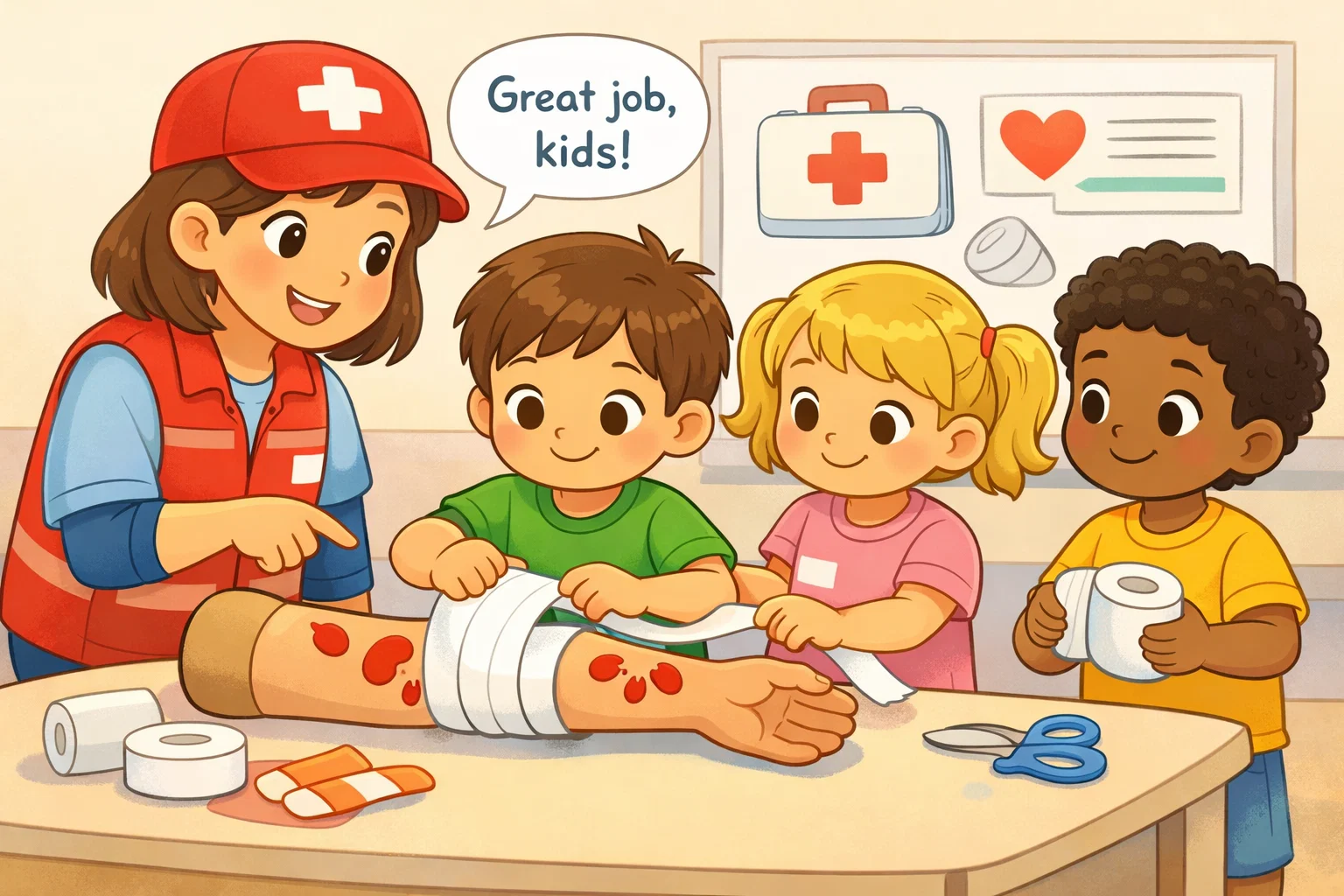
While it sounds intimidating, children need to know what to do if they encounter a serious injury, such as a serious bleeding injury. The focus here is on “Stop, Press, Call.”
Bleeding control basics
Teach the “Direct Pressure” method. Explain that if someone is bleeding a lot, the most important thing is to push hard on the wound with a clean cloth or gauze pads.
Fake wound demonstrations
Use red washable markers or “theatrical blood” (corn syrup and food coloring) to create a “wound” on a plastic mannequin or a laminated drawing of a person. This helps desensitize children to the sight of blood, which may indicate a more serious issue, and allows them to practice applying pressure until the “bleeding” stops.
Emergency response sequencing
Use a table to help children memorize the order of operations:
| Step | Action | Why? |
| 1 | Check for Danger | Ensure you don’t get hurt too. |
| 2 | Call for Help | Get emergency services on the way. |
| 3 | Apply Pressure | To help reduce blood loss. |
| 4 | Keep Warm | Use a blanket or tarp to prevent shock. |
Patient Carries and Transport Activities
Scouting traditions often include learning how to move a casualty who cannot walk. This requires teamwork and physical coordination.
Safe casualty carries
Teach simple methods like the “Human Crutch” (where the child acts as a walking stick for a friend with a hurt foot). Emphasize that they should only move someone if it is absolutely necessary for safety.
Stretcher building games
This is a classic scout activity. Using a blanket and two poles, children can learn to create a secure transport device. They must ensure the poles are strong and the blanket or tarp is folded correctly to hold weight.
Team transport challenges
The challenge here isn’t speed—it’s stability. Have the children lift the stretcher with a ball or a cup of water on it. They must walk a short distance without dropping the “patient” (the ball). This teaches them to communicate: “Ready, lift! Step, step, step.”
First Aid Kit Activities

A first aid kit is a box of wonders for a child. Exploring it helps demystify the tools of the trade.
First aid kit exploration
Lay out the contents of a standard kit. Let the children touch and feel tweezers, the rubber gloves, and the sunburn ointment. Explain that some items, like scissors, should only be used by adults.
Decorate personal first aid kit
Give each child a small plastic box or a canvas pouch. Let them decorate it with stickers and their name. Helping them assemble a “mini kit” with a few plasters and a cleansing wipe gives them a sense of ownership over their safety.
Matching tools to injuries
Create a game where you show a picture of an injury (like a splinter) and the child has to pick the right tool (tweezers) from the kit.
Storytelling and Creative First Aid Activities
For younger children, storytelling is the most effective medium for learning. It provides context and emotional connection.
First aid storytelling
Tell a story about “Brave Benny the Bear” who tripped while hiking. Ask the children, “What should Benny’s friends do first?” This interactive narrative allows them to solve problems in a safe, fictional world.
Drawing and coloring activities
Provide worksheets where children can color in the ambulance or draw a line from the injury to the treatment. Visualizing the red cross symbol helps them identify help in the real world.
Puppet and toy role play
Use puppets to act out a scene where one puppet is scared because they have a “boo-boo.” The children can “teach” the puppet how to take deep breaths and wait for the doctor.
Digital and Interactive First Aid Activities
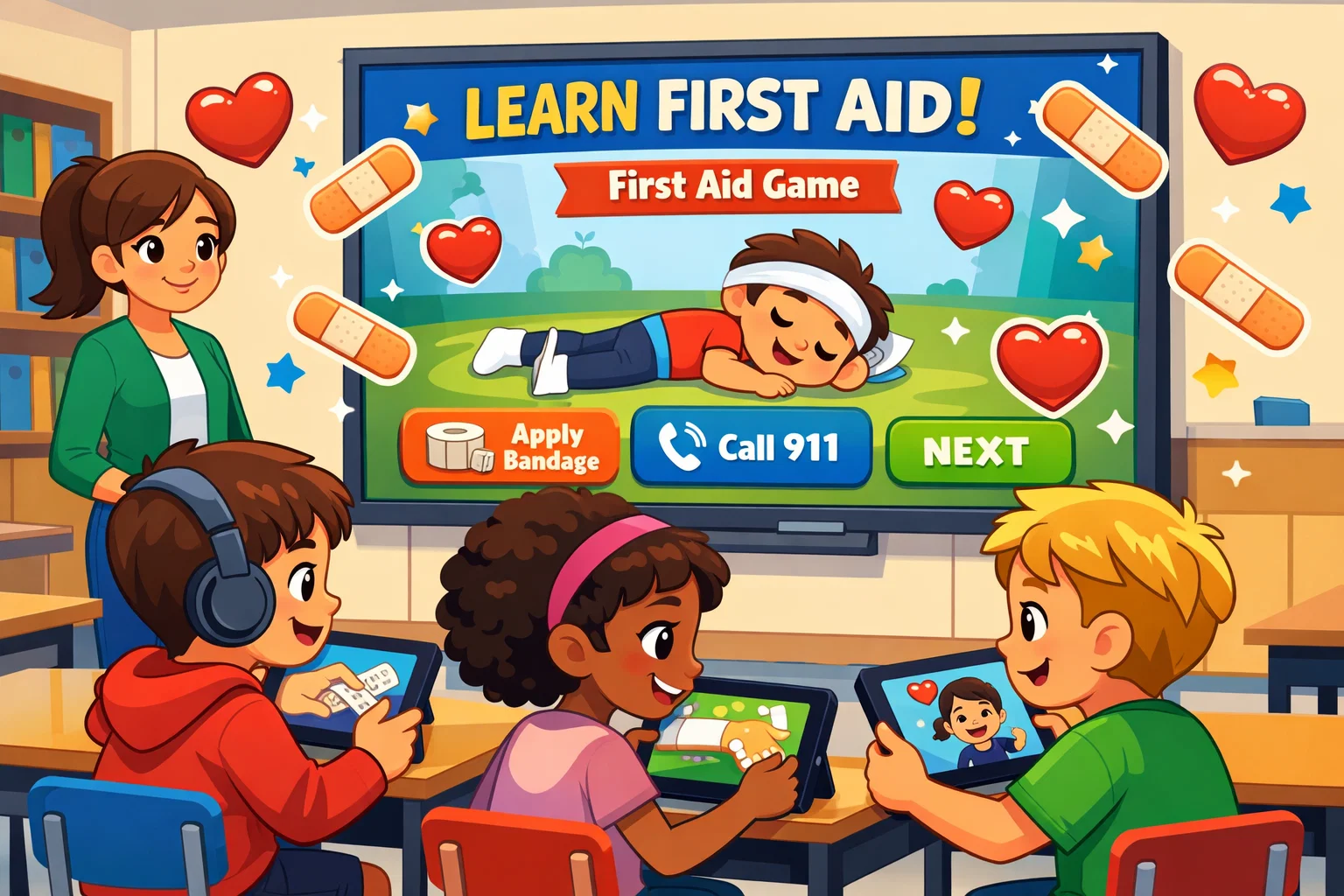
In the modern age, screen time can be educational. Several reputable organizations offer digital first aid lessons.
- Interactive Videos: Platforms like the Red Cross website often have animated “Choose Your Own Adventure” videos where kids decide what the character should do next.
- Educational Apps: Apps like “Monster First Aid” or those by St John Ambulance use gamification to reinforce CPR rhythms and emergency numbers.
- Printable Worksheets: Websites like Twinkl offer mazes where the goal is to get the ambulance to the hospital.
First Aid Activities for Different Age Groups
| Age Group | Focus Area | Key Activity |
| Preschool (3-5) | Recognition & Calling | Memorizing 999 and knowing their home address. |
| Primary (6-11) | Practical Skills | Applying a bandage, using a kit, and role-playing. |
| Older Kids (12+) | Leadership & CPR | Learning basic CPR on mannequins and leading a “rescue” team. |
Tips for Teaching First Aid to Kids 💡
- Keep it Simple: Avoid medical jargon. Instead of “immobilize the fracture,” say “keep the arm very still like a statue.”
- Mix Play and Repetition: Kids might forget after one lesson. Revisit the first aid activities every few months to keep the skills sharp.
- Adult Supervision: Always ensure a responsible adult is present, especially when using tools like scissors or demonstrating how to lift the stretcher.
“First aid is not just a set of skills; it is an act of humanity.” — International Federation of Red Cross and Red Crescent Societies