

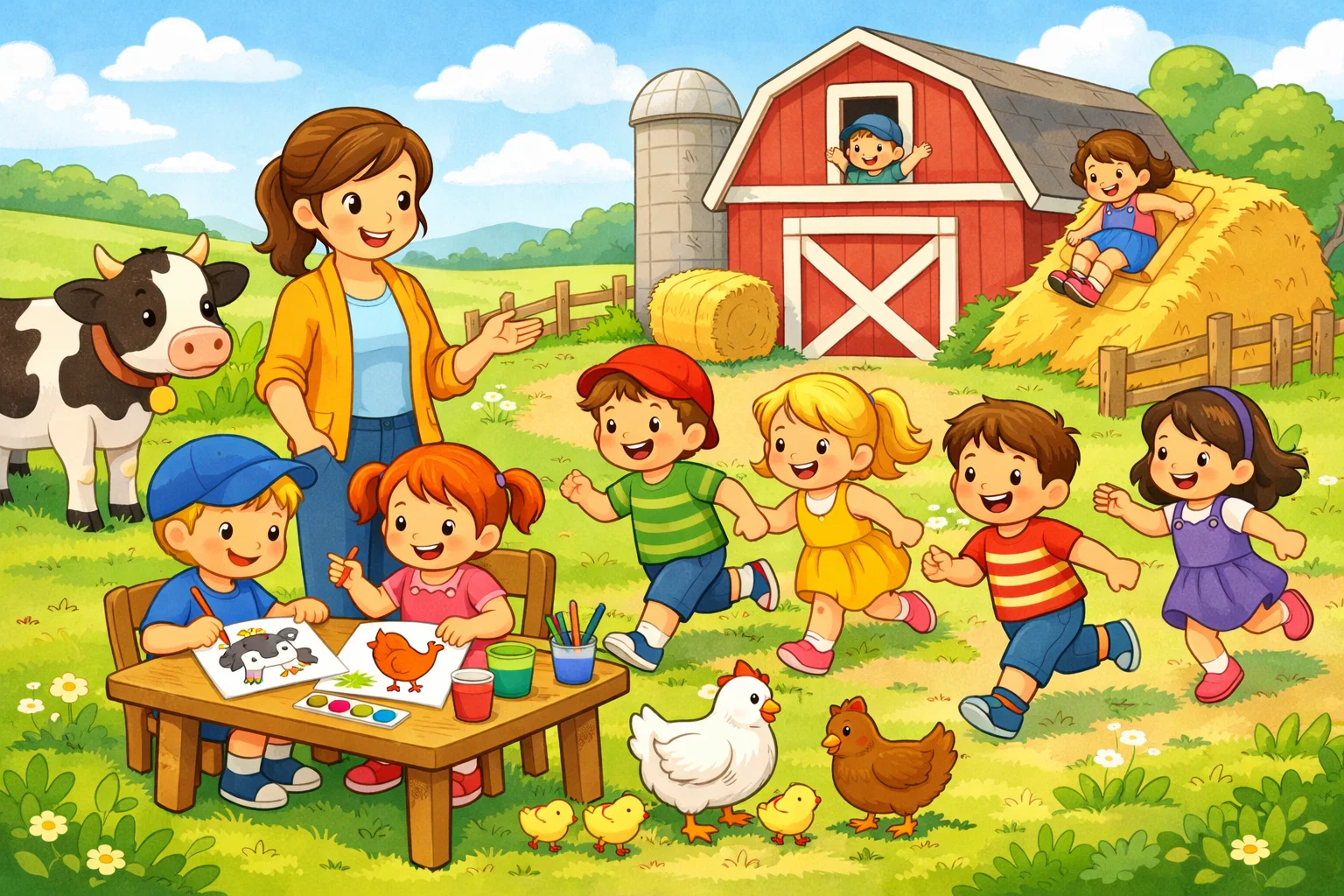
Exploring a farm theme connects young children with the rhythms of nature while supporting essential cognitive development. Introducing farm activities for kids offers more than entertainment; it provides a holistic approach to development, from motor skills to sensory awareness.
Whether you are seeking fun activities for the weekend or planning a preschool farm theme, balancing fun and learning helps younger children appreciate the natural world and the essential labor of agriculture.
A structured farm unit helps bridge the gap between abstract concepts and real-world experience. Engaging in farm-themed activities helps children categorize information effectively through animals and their habitats. This guide features the best farm activities for all ages, making the wonder of the countryside accessible to everyone.
Farm Arts and Crafts Activities For Kids

Creative expression serves as a vital way for kids to interpret and internalize the complex world around them. Engaging in farm art helps refine fine motor control – the small muscle movements in the hands and fingers – while allowing preschoolers to experiment with diverse media, weights, and textures. Process-oriented art plays an important role in early childhood development by supporting confidence and basic problem-solving skills. Engaging in farm crafts for kids is an excellent method to introduce sustainability, as many projects utilize raw or recycled materials found in a typical country kitchen.
Animal-Themed Paper Creations
Constructing a simple farm inhabitant using paper is a quintessential project that strengthens hand-eye coordination and the ability to follow multi-step directions.
- Paper Plate Cows: By adding black construction paper spots and a pink snout to a white plate, children practice symmetry and spatial awareness.
- Cotton Ball Sheep: This fun sheep project is perfect for exploring softness. Gluing wool-like fibers onto a pre-drawn silhouette helps with tactile discrimination.
- Accordion Chickens: Folding yellow paper strips to create springy legs is an excellent way to boost bilateral coordination.
- Paper Bag Puppets: Once these farm crafts are complete, they become tools for storytelling, helping children practice social-emotional skills through puppet play and vocal exploration.
Handprint and Footprint Masterpieces
Using the body as a printing tool is a perfect entry point into creative expression for toddlers, as it emphasizes the sensory feeling of the medium. Farm animal activities involving paint allow children to visualize the scale of their own bodies relative to the creatures they are depicting.
- Handprint Hens: Fingers act as vibrant plumage, helping children identify different colors and patterns while feeling the cool texture of the paint. Let the kids choose their own colors to encourage a sense of agency.
- Footprint Carrots: This is a great way for kids to depict root vegetables, introducing the concept of how food grows underground, often hidden from initial view.
- Fingerprint Pigs: Using pink non-toxic paint to populate a brown “muddy” scene is an adorable farm project that builds precision and the pincer grasp.
- Stamp Art: Using cut vegetables like potatoes or sponges to create farmyard shapes helps children explore basic geometry and the effects of pressure.
Repurposed Material Projects
Sustainable farm-themed crafts teach children the value of repurposing everyday items, fostering a mindset of environmental stewardship from a young age.
- Egg Carton Critters: Individual cups can be painted and transformed into hens, ducks, or even small troughs for a miniature play farm.
- Cardboard Box Barn: Transforming a large cardboard box into a bright red barn allows kids to create their own large-scale immersive play environment for dramatic play farm scenarios.
- Toilet Paper Roll Horses: These cylinders are ideal for creating standing livestock, which kids can make with just a bit of paint and yarn for the mane.
- Milk Carton Feeders: Converting old cartons into bird feeders helps children understand the interconnectedness of homestead life and local wildlife. This craft is perfect for discussing the ecosystem of a rural ranch.
Mixed Media Homestead Collages
A collage is an incredibly effective way for kids to explore depth, layering, and material properties. By providing real straw, dried corn, and felt scraps, you encourage a multi-sensory approach. This farm art technique ensures that the final piece is rich in texture and visual interest. When kids can create a sprawling rural landscape by farm using various natural materials, they learn that artistic boundaries are not limited to pens and pencils.
Farm Activities and Movement Games
Physical exertion is central to the agrarian lifestyle, and incorporating movement into learning is a core tenet of the kinesthetic learning style. Active fun farm activities mimic the daily movements of a producer, promoting cardiovascular health and gross motor mastery.
Outdoor Group Contests
When you gather the children in a large open space, these fun and engaging group contests promote social cooperation and healthy competition:
- Wheelbarrow Races: One child supports the legs of another, mimicking the transport of heavy supplies. This builds significant upper body and core strength, reflecting the physical nature of farm work.
- Duck, Duck, Goose: A classic favourite that fits naturally into a farm theme that encourages quick reaction times, social turn-taking, and listening skills.
- Egg and Spoon Race: This is a fun and learning exercise in balance and patience, teaching children to move with grace and focus to protect their “harvest.”
Animal Mimicry and Motion Tasks
Activities that involve imitation are highly engaging and help children develop an understanding of different species’ physical traits.
- Gallop like a pony: Focuses on rhythmic hopping and lower body coordination.
- Waddle like a duck: Enhances core stability and low-center-of-gravity balance.
- Scurry like a mouse: Improves agility and fast-twitch muscle response.
- Leap like a frog: A fun animal way to practice explosive vertical jumps and landing safely on two feet.
Traditional Favorites with a Rural Twist
You can easily create a fun variation of traditional pastimes to suit your specific farm theme ideas:
- Barnyard Charades: A non-verbal way for kids to demonstrate their knowledge of creature behaviors and movements.
- Pin the Tail on the Donkey: A timeless farm animal play session that helps with spatial orientation and following directions.
- Musical Bales: Use cushions or mats as “bales of hay” while playing various farm songs, encouraging children to listen for the music to stop.
Indoor Play for Rainy Days
If a trip to a local farm isn’t possible due to weather, these interior movements keep the agricultural spirit alive:
- “The Farmer Says”: A localized version of “Simon Says” focusing on daily chores like “gathering eggs” or “milking the cow.”
- Barnyard Scavenger Hunt: Hide different farm figurines or printable farm animal cards around the room. This is perfect for preschoolers to develop visual scanning skills and persistence.
Tactile Discovery: Homestead Sensory Experiences
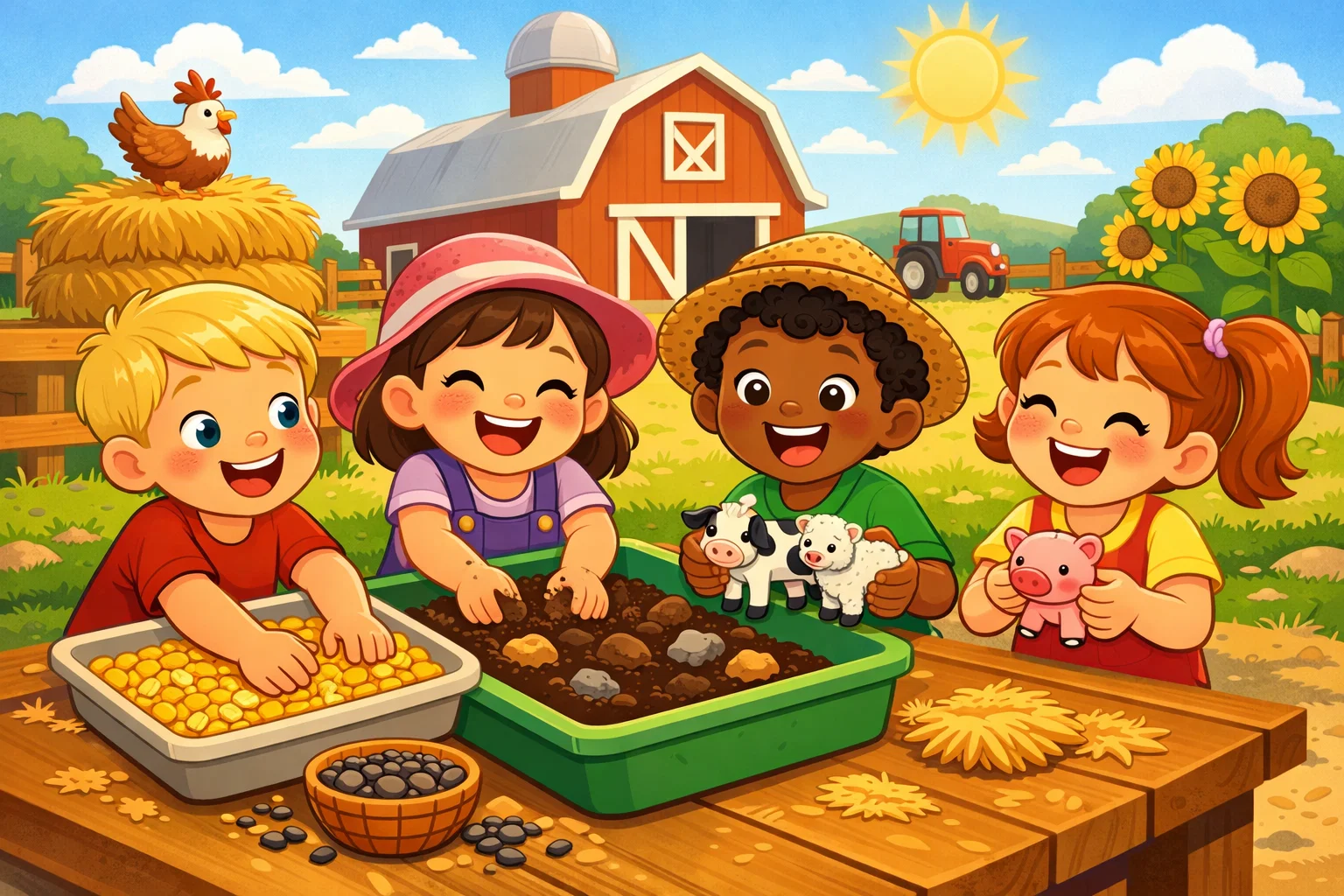
Sensory exploration is more than just entertainment; it provides essential input for the nervous system, helping children regulate their emotions and focus their attention. By manipulating raw materials, little ones ground themselves in the present moment through tactile exploration.
Interactive Discovery Bins
A farm sensory bin is a cornerstone of the preschool and kindergarten curriculum. Use a base of dried corn kernels, black beans, or split peas (with close supervision for younger children) to represent different pastures. Let the kids incorporate:
- Small shovels, sieves, and miniature tractors to practice the mechanics of excavation.
- A matching game featuring different farm animals hidden within the base material.
- Small buckets and funnels to practice the mathematical concepts of volume and weight within the farm sensory setup.
Messy Play and Barnyard Textures
Getting hands “dirty” is a vital part of the fun for most youngsters, as it desensitizes them to different textures and helps them learn about the farm environment.
- Muddy Swine Wash: Use chocolate pudding or “Oobleck” as mud and let the little ones scrub plastic figurines clean in warm soapy water. Kids will enjoy the contrast between the sticky “mud” and the clean water.
- Shaving Cream Sheep: This adorable farm activity involves covering a tray in white foam to represent woolly coats.
- Straw Exploration: Simply touching and sorting real hay or straw is a simple farm sensory way to introduce natural fibers and their unique earthy scents.
Mess-Free Sensory Options
For a tidier experience for the kids, seal green hair gel and printable farm animal tokens inside a sturdy plastic bag. This allows for a way for kids to explore fluid dynamics and animal placement without any mess. This setup is perfect for toddlers who may still be in the “mouthing” phase of development. It is fun for kids of all ages to see the animals “swim” through the green gel meadow.
Agricultural STEM and Nature Science
The rural homestead is essentially a massive, living laboratory. Integrating a farm unit into your curriculum provides endless opportunities for early science, technology, engineering, and mathematics. Understanding farm life requires an appreciation for the biological and chemical processes that allow plants and animals to thrive.
Growing Cycles and Observation
Observing the transformation of a dormant seed into a living plant is a great way for kids to understand biology and the passage of time.
- Bean Sprouting: Use a clear jar with wet paper towels to let the children see roots and stems emerge daily.
- Soil Analysis: Use clear cups to demonstrate how different earth types – clay, sand, and silt – behave when wet and dry. This is a foundational part of bringing the farm to life through observation.
Simple Biological Experiments
- Dancing Corn: Use the chemical reaction between vinegar and baking soda to lift kernels in a jar through carbon dioxide bubbles. This is a fun way to introduce basic chemistry.
- Butter-Making Science: Shaking heavy cream until it separates into solid butter and liquid buttermilk is a physical science lesson that is fun and easy to perform.
- Egg Osmosis: Soaking an egg in vinegar to dissolve the shell is a fascinating experience for the kids that teaches them about semi-permeable membranes. These simple farm science experiments make the invisible visible.
Agrarian Mathematics
- Counting Sheep: Use white cotton balls to represent livestock in numbered “pens.” This farm-themed approach makes abstract numbers more concrete and visual.
- Egg Sorting: Categorizing plastic eggs by farm color, size, or weight is a perfect for preschoolers math activity.
- Animal Matching: Use a free printable set of farm animals and their babies to teach biological logic and the concept of growth cycles.
Literacy and Barnyard Vocabulary

Integrating language arts into your theme ideas builds essential vocabulary and sets the stage for early reading success by connecting words to real-world objects.
Worksheets and Visual Aids
High-quality resources, such as a free printable farm animal packet, can reinforce concepts learned during hands-on play.
- Tracing the letter “F” for “Farmer” or “T” for “Tractor” to build phonological awareness.
- Engaging with free farm word searches or “seek and find” puzzles to improve visual tracking and attention to detail.
- Labeling the different parts of a barn to understand architectural terms.
Farm Themed Role-Play
Reading classics like “The Little Red Hen” and then setting up a dramatic play farm helps children with reading comprehension. Children love to recount the events of a story using their own words, which builds narrative confidence. Using printable farm animal masks to act out scenes allows them to inhabit different perspectives and practice oral language skills.
Phonics and Themed Games
Attach letters to craft sticks and place them in a “field” of brown playdough or kinetic sand. Ask the child to “harvest” the letter that corresponds to a specific fun animal sound, such as “C” for cow or “P” for pig. This craft stick method is a fun way to practice phonics in a low-pressure, playful environment.
Imaginative Play and Homestead Roles
Imaginative play allows children to step into the roles of the farmer, the caregiver, and the provider, which is essential for developing empathy.
Rural Market Centers
Setting up a “Farmer’s Market” allows children to handle farm food and practice real-world social skills. In this environment, children love to:
- Weigh wooden produce on scales, introducing the concept of mass.
- Practice social interactions while “selling” goods to their peers or parents.
- Wear aprons and hats to feel like they are truly living the farmyard life, fostering a sense of identity and responsibility.
Miniature World Creation
A farm small world involves using miniature figurines and natural materials like twigs and pebbles to build a tiny homestead. Incorporating farm animal play dough exploration allows children to leave “tracks” in the dough, which is a fun way to observe patterns and footprints.
Songs, Rhymes, and Country Music
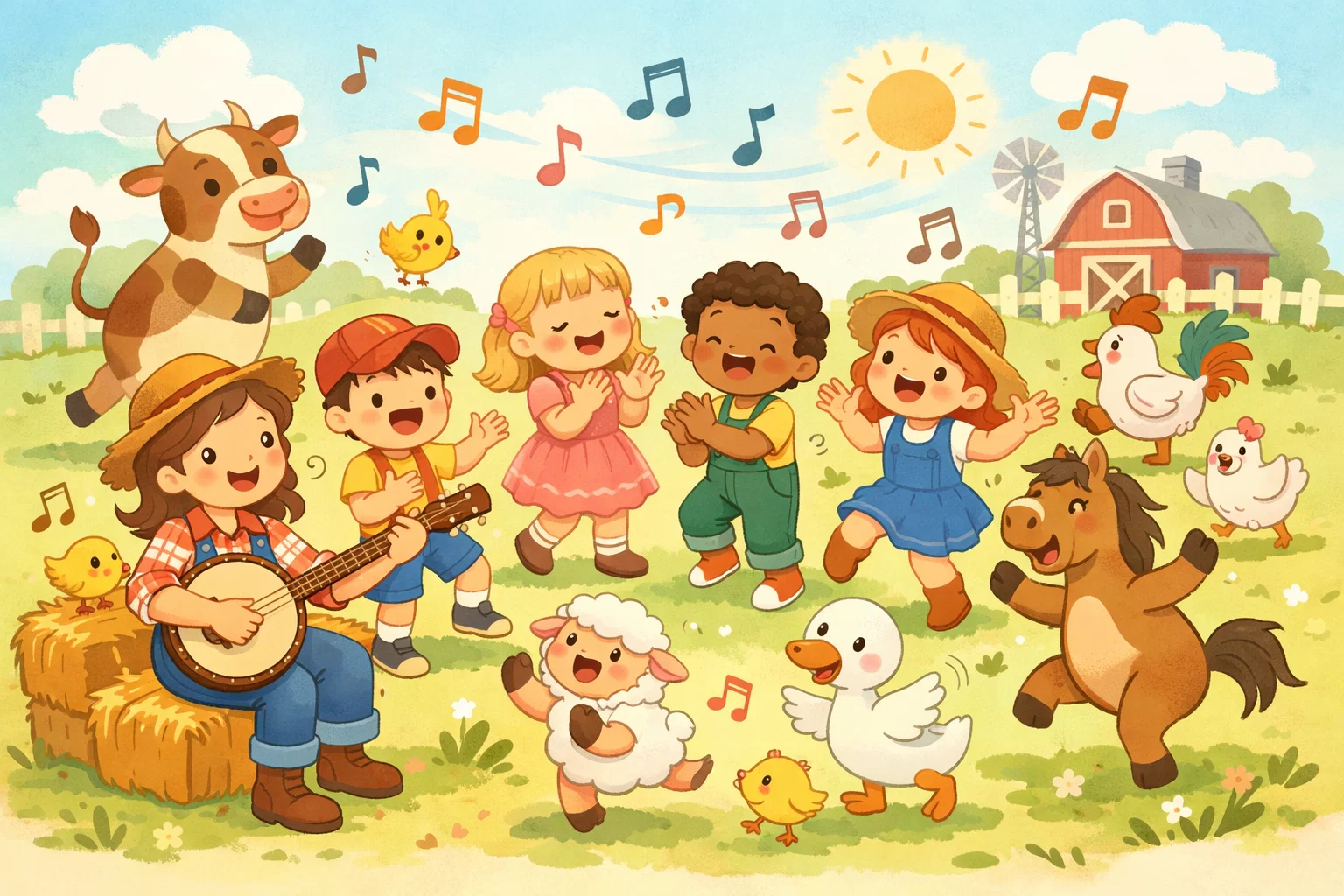
Music is a fun and easy way to improve memory, auditory discrimination, and the ability to follow a steady beat. It is a vital part of any preschool farm theme.
Timeless Rhythms
The most recognizable tune is undoubtedly “Old MacDonald Had a Farm”. You can enhance the session by:
- Holding up a printable farm animal on a craft stick as each new verse begins.
- Encouraging children to choose which inhabitant makes the next sound, giving them a sense of agency and participation in the farm songs.
Action-Based Melodies
Songs that involve tractors or hens promote rhythmic coordination and gross motor control. This is a fun and engaging way to keep the energy high during transitions between different preschool activities. It is simply part of the fun of the agricultural topic.
Nutrition and Harvest Kitchen Tasks
Understanding the origin of our nutrition is a key benefit of an agrarian theme, helping children make healthier choices as they grow.
Simple Homestead Snacks
- Haystacks: Combining butterscotch chips and chow mein noodles creates a delicious snack that mimics a field of harvested hay.
- Mud Cups: Using chocolate pudding and cookie crumbs is an adorable farm treat that kids can make themselves with minimal supervision.
Edible Farm Crafts
Kids will enjoy creating “Apple Pigs” or “Cheese Stick Cows.” This craft is perfect for a healthy snack time that remains on topic and encourages children to interact with their food in a positive, creative way. Allowing little ones to wash vegetables or shuck corn provides a hands-on experience for the kids that makes them more likely to try healthy farm food.
Real-World Rural Experiences

Nothing replaces the educational impact of a physical trip to the farm, where the smells, sounds, and scale of agriculture become real.
Educational Field Trips
Seeing different farm animals in their natural habitat provides a sensory richness that books cannot match. It is a profound experience for the kids to hear the actual lowing of cattle or feel the coarse texture of real grain in their hands.
Home Gardening
If a working farm is not nearby, start a window-sill herb garden or a small raised bed. This simple farm approach teaches patience, responsibility, and the basic needs of living things as children watch their crops grow from seed to table. It’s a great way for kids to understand the work involved in production.
Developmental Focus by Age Group
| Age Group | Developmental Focus | Recommended Activity |
| Toddlers | Sensory & Motor | Farm sensory play with large, safe objects |
| Preschoolers | Imagination & Logic | Farm animal charades & animal sorting |
| Early Elementary | Science & Literacy | Farm unit research, observation journals, and gardening projects |
Activities for the Youngest
Focus on simple farm concepts like animal sounds and tactile textures. Toddlers thrive on the repetitive nature of a farm sensory bin. Keep these activities for kids short, safe, and highly interactive to suit their attention spans.
Tasks for Preschool Learners
Preschool farm activities should involve more complex sorting and dramatic play. Preschoolers are ready for more complex farm activities that challenge their imagination, such as building an extensive craft stick farm animals collection to house in their cardboard barns.
Projects for Older Children
Elementary kids can manage a comprehensive farm themed project, such as mapping out a homestead or learning about the complex biology of farm animals and their babies. They can also begin to understand the economics of a local farm.
Implementation Tips
Preparation Checklist
- Art Kit: Paper plates, craft stick packs, non-toxic glue, and googly eyes.
- Sensory Base: Dried corn, beans, or straw for the farm sensory bin.
- Learning Tools: Free printable farm animal masks, matching cards, and themed storybooks.
Safety and Supervision
Always supervise farm activities for kids, particularly when using small items like corn kernels. Ensure all farm sensory materials are non-toxic and always check for food allergies before any kitchen-based fun ideas.
Merging Play and Education
The best farm activities are those that feel like a game but impart a valuable lesson. When you let the kids take the lead in their play farm, you will see their understanding of biology and community expand exponentially. Using preschool farm theme activities ensures every area of development is addressed.