

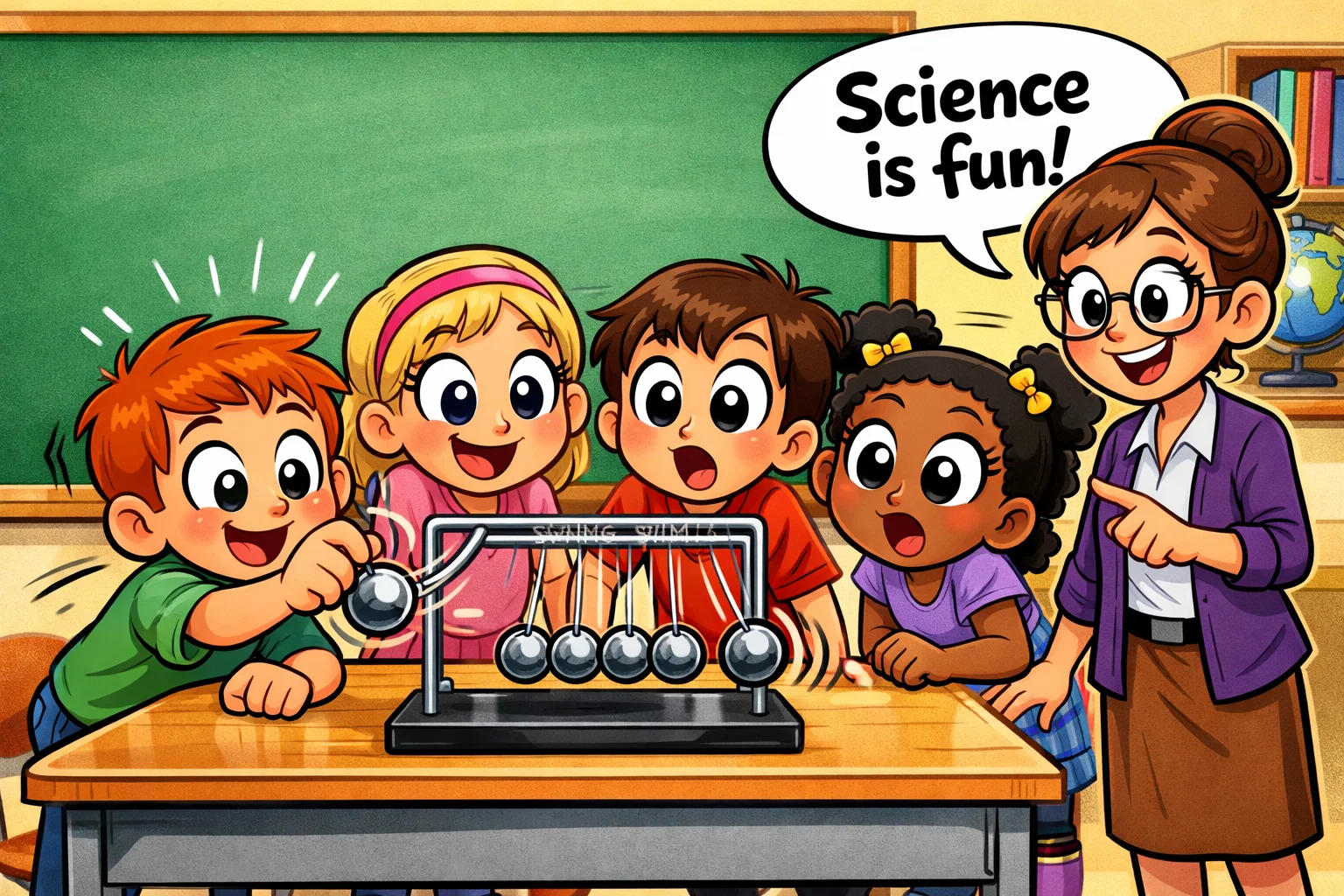
Bringing science to life through a hands-on experiment is one of the most effective ways to help kids grasp how an object interacts with its environment. At its core, studying energy is about observing how things move, heat up, or light up. Whether it is a ball bouncing across a floor or a simple circuit powering a small bulb, the transition of power from one state to another is a constant, fascinating process that defines our physical world.
By engaging in these activities, children move beyond abstract definitions and begin to see science as a set of predictable rules. This guide provides a detailed roadmap for exploring these concepts safely at home or in the classroom, ensuring that young learners develop a robust foundation in physics and thermodynamics.
Energy Transfer Science Definitions
To begin any scientific journey, it is essential to establish a common vocabulary. In the world of physics, power is often described as the ability to do work. It is not a physical object you can hold, but rather a property that an object possesses.
Kinetic and Potential Energy Basics
The relationship between potential and kinetic capacity is the heartbeat of mechanical science. Potential power is stored, often dependent on the position of an object. For instance, a marble sitting at the top of a steep ramp has high potential because of its height.
Once that marble is released and begins to roll, that stored potential is converted into kinetic energy — the motion. The faster the object moves, the more kinetic force it carries. Interestingly, mathematical modeling shows that kinetic energy involves both mass and the square of velocity, which suggests why faster-moving objects have such a significant impact during collisions.
Law of Conservation of Energy
One of the most vital pillars of science is the Law of Conservation of Energy. This principle states that power is neither created nor destroyed; it merely changes form or is transported between systems. When a kid performs an experiment, they aren’t “making” power. Instead, they are witnessing it move from a battery to a light or from a stretched rubber band to a flying paper airplane. Understanding this “closed loop” helps students track the flow through any natural or designed system with precision.
Difference Between Heat and Temperature
While people often use these terms interchangeably, they represent different concepts in science. Temperature is a measurement of the average kinetic power of the particles within an object. In contrast, heat is the actual transfer of thermal capacity from a warmer object to a cooler one. This flow continues until both items reach thermal equilibrium, meaning they are at the same temperature.
Scientific Principles of Energy Transformation
Energy manifests in multiple ways, including sound, light, and thermal forms. Transformation occurs when power changes from one of these types to another. For example, in a toaster, electrical energy transforms into thermal capacity and light. Identifying these transitions allows kids to map out the “story” of movement as it moves through various devices.
Simple Energy Transfers Involving Motion

Mechanical energy is often the most accessible entry point for kids because they can physically see the results of the transfer.
Swinging Pendulum Experiment
The swinging pendulum is a classic demonstration of power “trading places.” You can set this up by tying a weighted object, like a large nut or a heavy bead, to a string.
- Pull the weight back to a specific height (increasing potential power).
- Release it and watch it swing.
- Observe how it reaches maximum speed at the lowest point (maximum kinetic capacity).
Looping Loop Physics
Constructing a “loop-the-loop” using flexible track or pool noodles split in half allows kids to explore the limits of power. The challenge is determining how high the starting point must be to ensure the marble has enough kinetic potential to overcome gravity at the top of the loop.
Physics Laws of Mechanical Motion
In these motion-based systems, friction acts as an “invisible brake.” As surfaces rub together, some kinetic power is converted into heat and sound. This explains why a marble eventually stops; the force hasn’t disappeared, but it has transferred into the track and the air as thermal energy.
Hands-On Thermal Energy Experiments

Thermal power transfer, or heat flow, occurs whenever a temperature differential exists. Heat spontaneously moves from areas of higher temperature (fast particles) to lower temperature (slow particles).
Greenhouse Effect Climate Change Jar Experiment
This experiment demonstrates radiation and heat trapping.
- Materials: Two glass jars, two thermometers, and a plastic bag.
- Process: Place a thermometer in each jar. Cover one jar with a plastic bag (sealed tightly) and leave the other open. Place both in direct sunlight.
- Observation: The sealed jar will reach a higher temperature because the plastic allows solar radiation in but prevents the warmed air from escaping through convection.
Convection Currents Water Experiment
Convection involves the transfer of heat through the movement of a fluid like water or air.
- Process: Fill a clear container with room-temperature water. Drop a blue ice cube (made with food coloring) at one end and a drop of red food coloring in a bit of warm water at the other.
- Observation: You will see the red (warm) water rise and the blue (cold) water sink, creating a visible current.
Principles of Thermodynamics and Heat Flow
At the microscopic level, higher-energy molecules collide with their lower-energy neighbors, transferring kinetic capacity. This is conduction. A tile floor feels colder than a rug because tile has higher thermal conductivity — it pulls heat away from your feet faster than the rug does, even if both are at the same room temperature.
Energy Transferred Through Balls

Using a ball is a perfect way to demonstrate how an object stores and releases power through impact.
Transfer of Energy Ball Bounce Experiment
Compare different types of balls (tennis, golf, rubber). Drop them from the same height and measure how high they bounce back.
- The Goal: Determine which material is best at retaining power and which loses the most to sound and heat upon impact.
Elastic Energy Storage Mechanics
When a ball hits the floor, it compresses slightly. In that split second, kinetic capacity is converted into elastic potential power. As the ball returns to its original shape, it pushes against the floor, converting that potential back into motion.
Conservation of Momentum Principles
If you drop a small ball (like a bouncy ball) directly on top of a larger ball (like a basketball), the small ball will fly much higher than its original drop height. This is because the larger ball transfers its momentum and energy to the smaller object.
Energy Transferred Electrically
Electrochemistry allows kids to see how chemical reactions can produce a flow of electrons.
Lemon Battery Electric Current Experiment
A lemon battery is a classic middle-school STEM project using redox (oxidation-reduction) reactions.
- Experimental Setup: Insert a galvanized zinc nail (anode) and a copper coin (cathode) into a lemon. Connect them with alligator clips to a low-voltage LED.
- The Logic: Citric acid acts as the electrolyte. Zinc loses electrons (oxidation), and copper attracts them.
| Component | Role | Chemical Process | Observation |
| Zinc (Anode) | Electron Giver | Oxidation | Zinc dissolves slowly into acid |
| Copper (Cathode) | Electron Taker | Reduction | Hydrogen bubbles may form |
| Lemon Juice | Electrolyte | Ion Transport | Balances the internal circuit |
| Alligator Clips | External Circuit | Electron Path | Powers the LED |
Heating With Friction Experiment
Rub your hands together quickly. The mechanical power of your movement is transferred into thermal capacity through friction. This is a simple, no-cost way to show that power transfer is happening all around us.
Measuring Energy Transfer Efficiency
Not all power transfer is “useful.” In a lemon battery, if the electrodes touch, a short circuit occurs, and the power is lost as internal heat rather than powering the light. Efficiency is the ratio of useful output to the total input.
Laws of Electromagnetism and Resistance
Resistance is the “friction” of the electrical world. If a wire is too thin or too long, it resists the flow of electrons, converting more electrical power into heat.
Safe Conduct of Science Experiments
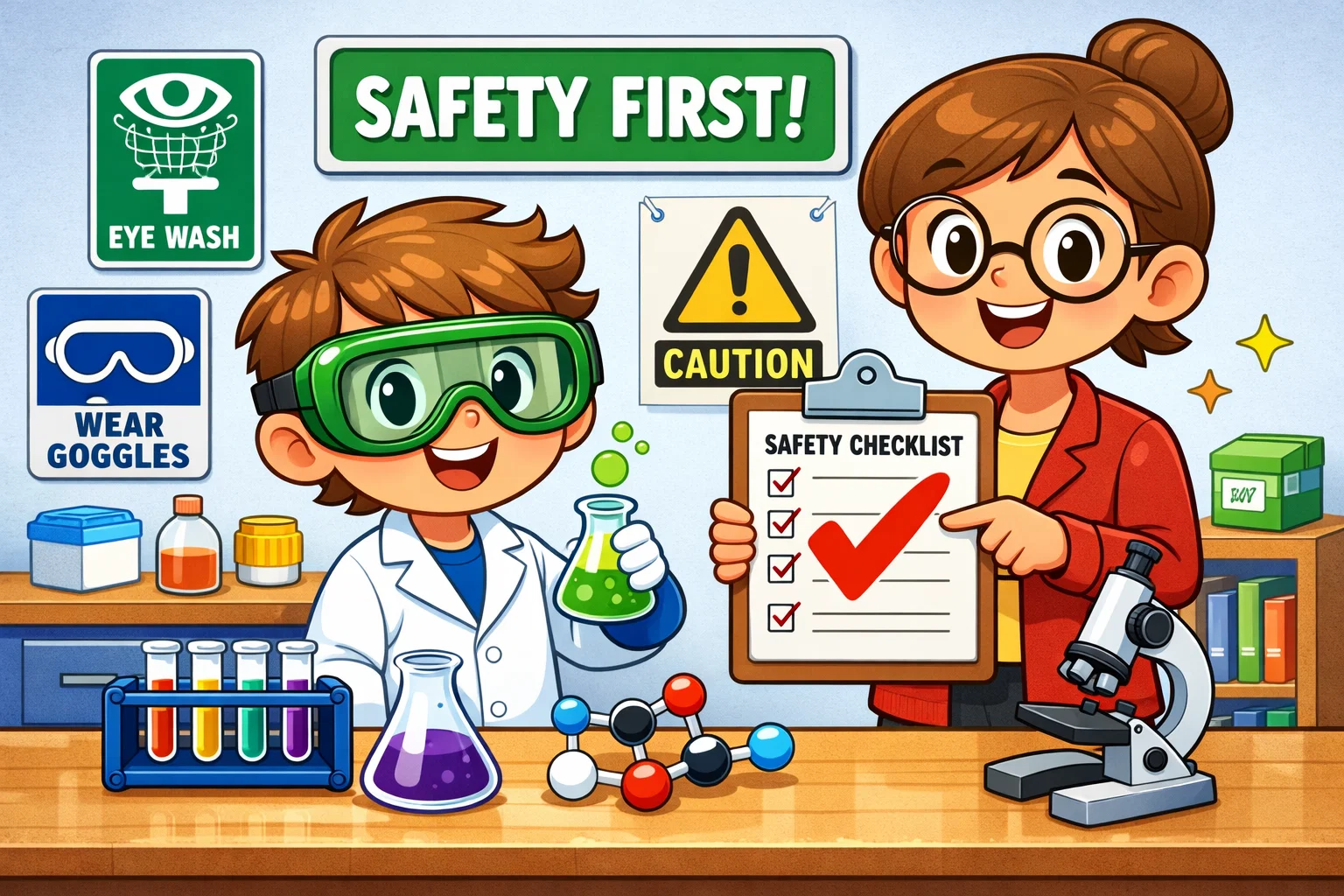
Safety is not a one-time instruction but a constant requirement. Dr. Kenneth Roy, a safety consultant, stresses that safety must be reinforced every time students engage in lab work.
Adult Supervision Requirements
An adult should always be present, especially when using sharp tools (like cutting the lemon) or handling hot water. The “Duty of Care” suggests that adults must model appropriate behavior and provide constant supervision to prevent unreasonable risk.
Protective Gear and Workspace Setup
- PPE: Wear safety goggles when dealing with liquids or small flying objects (like snapping rubber bands).
- Clothing: Tie back long hair and avoid loose sleeves that could catch on equipment.
- Footwear: Open-toed sandals are generally prohibited during lab activities.
Proper Handling of Materials
Mercury thermometers are strictly forbidden; use alcohol-spirit or digital versions instead. Also, remember that “science food” is not for eating. A lemon used for a battery is contaminated with dissolved metals and should never be consumed.
Emergency Procedures for Home Labs
Keep a first-aid kit nearby and ensure the workspace is near a sink for quick rinsing if any substance gets on the skin. All electrical outlets should be GFCI-protected, particularly when working near water.
Impact of Inquiry-Based Learning on Science Proficiency
The necessity of these hands-on activities is backed by recent educational data. According to the 2024 NAEP Science Assessment Findings, there has been a notable decline in science proficiency among 8th graders, with scores returning to 2009 levels. Experts suggest this decline is closely tied to a reduction in inquiry-based, active learning. A 2024 Engageli Active Learning Impact Study found that high-engagement active learning environments generated 13 times more learner talk time, 16 times more nonverbal engagement, and up to 54% higher test scores than traditional lecture-based sessions, indicating substantially better knowledge retention.
| Achievement Level | 2019 (%) | 2024 (%) | Shift |
| Below NAEP Basic | 33 | 38 | +5% Increase |
| At or Above Proficient | 35 | 31 | -4% Decrease |