

The age of nine marks a key stage in “middle childhood,” when children move beyond concrete thinking, begin understanding more abstract ideas, and strengthen their social and problem-solving skills. This makes it an ideal time to introduce engaging educational activities that support cognitive growth and spark a genuine love of learning. Blending academic content with hands-on, playful experiences helps keep them motivated and makes each project feel like an adventure.
This guide offers a practical set of activities designed for children aged 9–10, integrating literacy, math, and STEAM into everyday routines at home, school, and during holidays. With options ranging from board games and outdoor exploration to creative projects and community involvement, it aims to help children build essential skills while enjoying the learning process.
Home Learning Plan for 9 Year Olds: Structure and Engagement
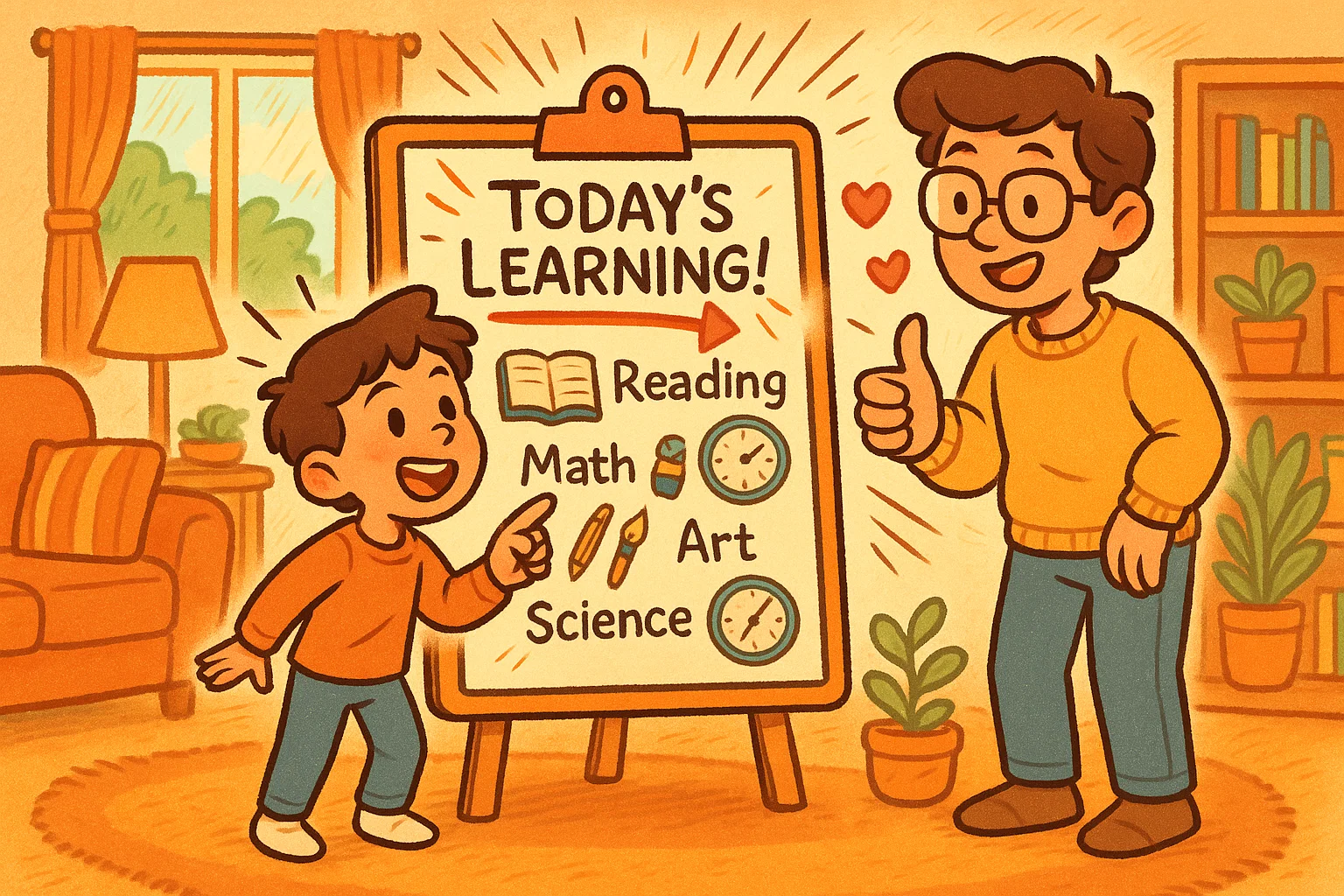
Establishing a structured yet flexible home-learning plan is crucial for this age group. Nine-year-olds thrive on routine, as it provides both security and independence, but they also need variety to stay engaged. A successful plan should not aim to replicate a school day; instead, it should create balanced opportunities for academic practice, creative expression, and physical activity. The goal is to make learning an enjoyable part of daily life by shifting from heavily text-based tasks to more interactive and hands-on activities.
A well-rounded plan for nine-year-olds should include a balance of the following components:
- Core Subject Blocks: Dedicated time for math and literacy delivered through engaging tasks such as logic puzzles or creative writing.
- Creative and Skill-Based Projects: Arts and crafts, building, music, or cooking to support fine motor skills and spark creativity.
- Physical Activity and Outdoor Time: Essential for developing motor skills and reducing stress.
- Choice-Based Learning: Time for children to choose activities based on their interests, which boosts intrinsic motivation.
Daily Learning Schedule Ideas
You don’t need a minute-by-minute timetable. Instead, think in flexible blocks that alternate focused work with movement. At this age, attention spans are growing, but academic tasks should still be mixed with physical breaks.
| Time Block | Focus Area | Recommended Activity Duration | Example Activities |
| Morning Focus | Literacy & Critical Thinking | 45-60 minutes | Independent reading, creative writing prompts, or short discussions about a book’s theme using resources like Oxford Owl. |
| Mid-Morning Break | Physical & Sensory | 30 minutes | Outdoor play; bike riding; building a fort; hopscotch. |
| Late Morning Math/STEM | Math & Logic | 45-60 minutes | Word problems; Sudoku; building challenges; hands-on science experiments. |
| Afternoon Projects | Creativity & Skills | 60-90 minutes | Arts and crafts projects; coding activities; baking (applying measurement); practicing a new language with a digital tool. |
| Evening Connection | Social & Review | 20 minutes | Playing a board game (like Chess or Settlers of Catan); discussing the day’s learning; reading aloud together. |
Weekly Activity Rotation
To prevent burnout and ensure a broad spectrum of skill development, rotate specific, deep-dive activities throughout the week. This makes the activities at home feel new and exciting.
- Monday: Maker Monday (Engineering/Tech). Focus on hands-on tasks such as building a straw bridge or assembling a simple circuit using safe starter kits.
- Tuesday: Thematic Tuesday (Science/Nature). Conduct hands-on science experiments using everyday household items, like making a baking soda volcano or a simple water filtration system. Explore the outdoors for a nature walk and log observations.
- Wednesday: World Wednesday (History/Culture/Language). Research a local landmark or learn about different cultures. Practice language learning with an app like Duolingo or watch a short youtube video in another language.
- Thursday: Thinking Thursday (Logic/Math). Challenge them with logic games and puzzles. Introduce simple financial literacy skills such as budgeting for a pretend trip.
- Friday: Fine Arts Friday (Creative Expression). Dedicate the time to arts and crafts using various craft materials, such as clay sculpting, painting, or starting a scrapbooking project.
Printable and Digital Resources
While hands-on activities are essential, digital tools can add structure and help track progress. Create a simple weekly checklist or use free online planners to stay organized. Platforms like Oxford Owl offer free e-books and math resources to support learning. Short practice sessions using educational apps—such as Quick Maths or vocabulary-building tools—help reinforce skills through repeated, low-pressure practice.
Support Child Development at Age 9
The brain of a nine-year-old is undergoing major development. Children begin to think more logically, handle abstract ideas, and understand different viewpoints—key foundations for empathy and social growth. Their desire for mastery becomes stronger, particularly in areas they find interesting. This aligns with Erik Erikson’s “Industry vs. Inferiority” stage, where children develop confidence through competence and meaningful challenges.
Core Skills at Age 9
When planning activities, it helps to target key developmental areas:
- Cognitive Development: Longer attention spans, more complex problem-solving, improved abstract reasoning, and stronger memory and strategy skills.
- Social and Emotional Development: Deeper peer relationships, more cooperative play, clearer sense of fairness, and better ability to express complex emotions.
- Academic Skills: Growing fluency in reading and writing, ability to handle fractions and decimals, and increased curiosity about how things work.
- Physical Development: More refined fine-motor control, better hand-eye coordination, and greater stamina for physical activities.
Activity Types That Build These Skills
Choosing the right activities can act as targeted practice for developing key skills.
- Memory and Logic: Puzzles, Sudoku, and strategic board games such as chess or logic-based card games.
- Creativity and Expression: Multi-step arts and crafts projects, model building, or creative writing prompts like Story Cubes.
- Fine Motor Skills and Math: Threading, sewing, detailed model construction, or baking with measuring tools.
How Parents Can Help at Home
Your role transitions from being a director to a mentor. Your guidance should help kids find their own path to the solution.
- Encouragement of Effort: Always praise the effort and perseverance (“You worked so hard on figuring out that math problem!”) rather than just the outcome or innate talent. This reinforces a growth mindset.
- Structured Choices: Offer two or three pre-vetted activity ideas and let your child choose. This gives them a sense of control and ownership over their learning. For example: “Would you like to build the circuit kit or start the papier-mâché project today?”
- Step-by-Step Guidance: When a task is overwhelming, break it down. Use the KWL chart (Know, Want to know, Learned) to approach a new topic. For a complex science and technology project, help them map out the steps before they begin.
STEAM Projects for 9 Year Olds: Sparking Curiosity
STEAM (Science, Technology, Engineering, Art, and Math) projects are arguably the best way to make learning relevant and fun and educational for this age group. They naturally combine academic concepts into hands-on, problem-solving tasks that directly support cognitive development and critical thinking and problem-solving skills. The iterative process of testing, failing, and trying again teaches valuable resilience.
Easy DIY STEAM Tasks
You don’t need expensive equipment. Many effective hands-on science experiments use everyday household items.
- Kitchen Chemistry: Create a homemade lava lamp using oil, water, food colouring, and an antacid tablet. This teaches density and chemical reactions.
- Simple Machines/Engineering Challenge: Challenge your child to design and build a simple pulley system to lift a small object (like a toy car) off the ground using string, paper clips, and cardboard rolls. This directly teaches basic physics and fosters critical thinking.
- Crystal Growing: Dissolve borax in hot water and suspend pipe cleaners in the solution overnight. Observing the crystals form is a great way for kids to learn about supersaturated solutions and crystallization.
At-Home Robotics and Coding Kits
Digital literacy is an essential life skill. Coding activities at age 9 should focus on visual, block-based programming to teach foundational logic without the frustration of complex syntax.
- Block-Based Coding: Programs like Scratch (free from MIT) allow kids to create their own fun games, interactive stories, and animations by snapping coding blocks together. This is a brilliant way to engage kids and develop computational thinking.
- Starter Robotics: Simple, affordable kits like Snap Circuits (which involves snapping components together to create working electronic circuits) or entry-level robots like Botley or Codey Rocky are excellent activities that support the introduction of technology and basic engineering principles.
Art-Based Science Exploration
Art and science are deeply interconnected. Use creative projects to explore scientific concepts.
- Geometry in Design: Use a compass and ruler to create intricate geometric patterns (math art), like mandalas or tessellations. This visually reinforces concepts of symmetry, angles, and precise measurement.
- Light and Colour: Use prisms or a glass of water in sunlight to observe how white light breaks into a spectrum. Follow this up with an arts and crafts project where they mix primary paint colours to create secondary and tertiary hues, directly demonstrating colour theory.
Activity Kits and Subscription Boxes
Subscription boxes offer a convenient, curated approach to delivering engaging educational activities for kids right to your door. They provide high-quality materials and clear instructions, reducing the planning effort required from parents.
STEM Subscription Options
These boxes are specifically designed to help develop a child’s critical thinking and problem-solving skills through monthly projects.
| Box Example | Primary Focus | Key Skills Developed |
| KiwiCo (Tinker Crate) | Engineering, Physics, Design | Following multi-step instructions, hypothesis testing, spatial reasoning, problem-solving skills. |
| Groovy Lab in a Box | Science and Technology | Scientific method, hands-on experimentation, documentation, independent learning. |
| MEL Science | Chemistry, AR Integration | Safe chemistry experiments (with VR/AR app support), understanding of molecular structures. |
Craft and Creativity Boxes
These kits encourage the kids to express their imagination while still targeting specific developmental areas. They often help develop fine motor skills necessary for legible writing letters and detailed work.
- Weaving and Knitting Kits: Excellent for focus, pattern recognition, and fine motor skills.
- Model Building: Complex wooden or plastic models (like historic ships or simple machines) that require patience, reading diagrams, and precision.
Global Culture and Geography Boxes
These boxes are an engaging way to engage kids in humanities, language learning, and cultural awareness.
- Little Passports: Sends packages focused on different countries, often including souvenirs, activity booklets, and hands-on crafts to learn about different global traditions. This sparks curiosity about the wider world and encourages further research.
Popular Educational Activities for Age 9
A range of activities ensures that you tap into all facets of a child’s intelligence. For children aged 9, the complexity of activities include more structured rules and strategic depth, shifting from purely imaginative play to rule-based educational games.
Competitive Sports
Team sports are vital for social development, teamwork, coordination, and learning to manage strong emotions.
- Suitable Sports: Soccer, basketball, competitive swimming, and martial arts.
- Skill Benefit: They teach discipline, the importance of practice, accepting a loss graciously, and effective communication (social skills) under pressure.
Advanced Arts and Crafts
Move beyond simple colouring to projects that require planning and multi-step execution.
- Activities like: Sewing (learning basic stitches to make a simple item like a pouch), working with polymer clay for detailed sculpting, or model-building from kits (cars, planes, architecture). These all dramatically help develop fine motor skills.
Science Projects
Focus on inquiry-based learning. Hands-on science experiments that help children learn through observation are best.
- Physics: Build a simple circuit board with a battery, wires, and light bulb to explore electricity.
- Biology: Start a community garden plot or simple herb garden to track plant growth and learn about ecosystems.
- The Oxford Owl website, while primarily a reading resource, often links to great cross-curricular resources for simple, verifiable hands-on science experiments.
Reading Challenges
Reading remains the cornerstone of all academic success. Encourage reading for pleasure and information.
- Reading Challenge Ideas: Set a themed reading goal (e.g., “Read 5 books set in different countries” or “Read a biography of an important inventor”). Create a cozy reading nook. The goal is to spark their curiosity and make reading a desirable activity.
Basic Coding Activities
Beyond apps, move to more goal-oriented coding tasks.
Activities include: Programming a simple maze game or a digital greeting card using Scratch or similar block-based coding platforms. This is a highly fun and engaging way to introduce logic.
Clubs and Group Activities
Extracurriculars are essential for social development and finding peer groups with shared interests.
Group Games: Chess club, robotics league, drama club, or language learning groups. These activities help children collaborate and compete respectfully.
Logic Games and Puzzles
Activity Ideas: Introduce logic puzzles like Mastermind or fun games like Rush Hour or Code Breaker. Board games like Ticket to Ride or Carcassonne require multi-step strategy and planning.
Outdoor Exploration Tasks
Nature provides limitless opportunities to learn new things.
Activities include: Treasure hunts based on map coordinates (using a simple compass or a hand-drawn map), geocaching, or becoming a “nature detective” to identify local flora and fauna. These activities help develop spatial reasoning and observational skills.
Cooking and Baking Tasks
This is a fantastic application of math and sequencing.
Tasks: Start with simple, child-friendly recipes like cookies or simple breads. Have the child read the recipe, measure all ingredients (practicing fractions and measurement conversions), and follow the sequential steps. They learn to solve problems when things don’t go exactly to plan.
Hobbies and Mini Projects
Encourage them to commit to a long-term interest.
Activities like: Collecting (and researching) coins/stamps, learning basic photography (taking photos of nature or family events), or planning a simple community garden project from start to finish.
Indoor Activities for Rainy Days
Rainy days are perfect for diving into deep, long-form indoor tasks that still require movement and critical thought. These activities at home combine fun and learning activities with necessary shelter.
DIY Science Indoors
Safe Experiments: Building a simple LEGO catapult to explore trajectory and force; constructing a tower out of index cards and tape to see whose design can hold the most weight (engineering challenge).
Creative Activities for Limited Space
Activities like: Drawing in 3D perspective, making stop-motion animation videos using their toys (and a free smartphone app), or a family drawing game where one person starts a picture and the next person adds to it without seeing the first person’s work (fun and engaging educational activities).
Quiet Time Activities
Nine-year-olds need to learn self-regulation and downtime.
Mindfulness and Journaling: Encourage keeping a gratitude journal or a creative writing journal. Introduce simple mindfulness exercises, like a short guided meditation (easily found on a youtube video or app) or focusing on drawing while listening to classical music. Puzzles and quiet reading are also excellent.
Outdoor Educational Activities
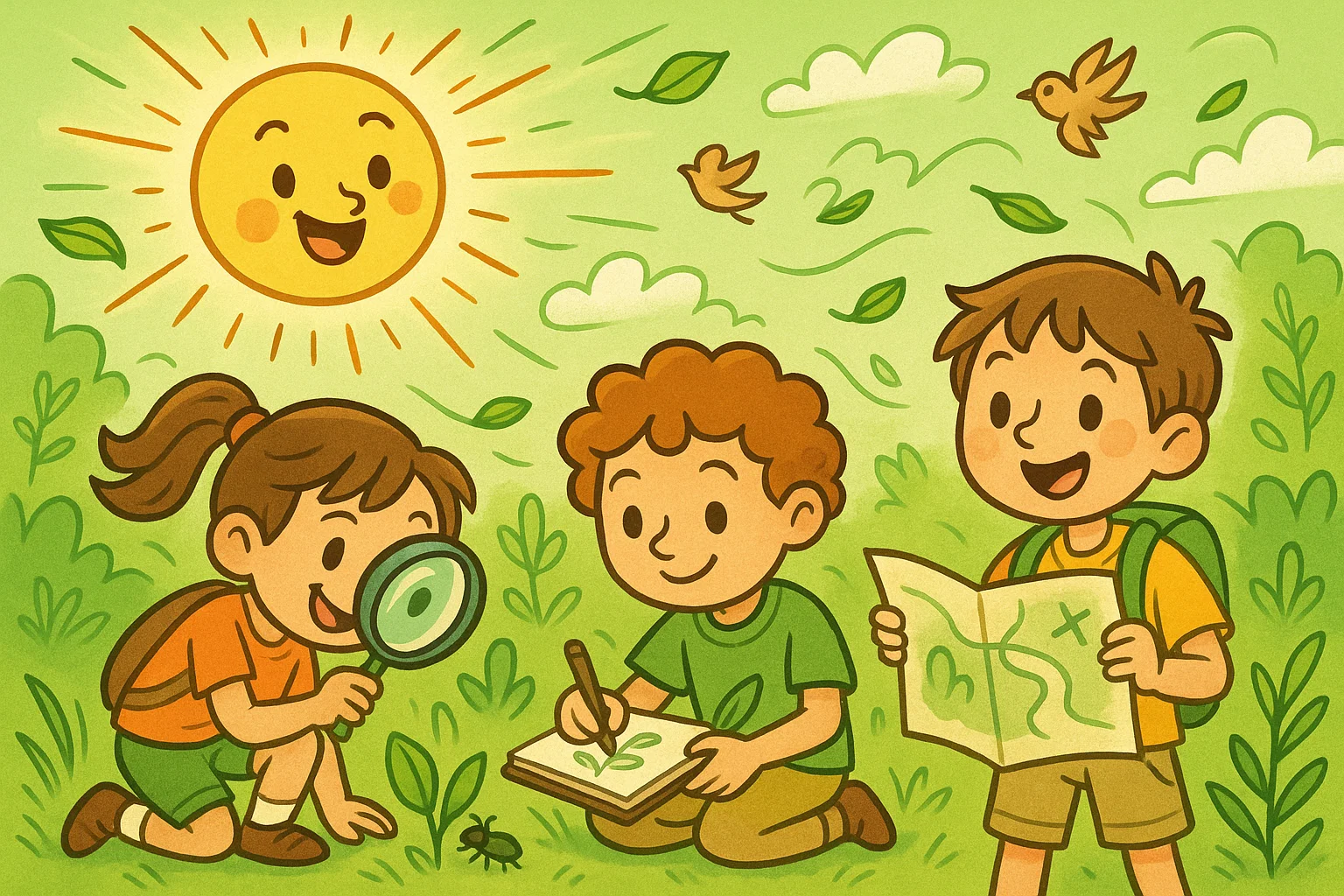
The benefits of outdoor learning extend far beyond physical development—it boosts concentration, reduces stress, and provides a real-world classroom.
Nature-Based Tasks
Activities that promote: Bug identification using a field guide; creating a nature-based scavenger hunt for a sibling or friend; setting up a simple weather log to track rainfall and temperature for a week.
Adventure and Exploration
Navigation Skills: Teach them to read a map. Use a local park map for a treasure hunt or practice following basic compass directions to find a hidden object. This is a foundational skill development activity.
Outdoor Sports and Movement Games
Coordination and Teamwork-Focused Activities: Try a family game of T-ball or Frisbee Golf. Games such as hopscotch or a more complex version of “Red Light, Green Light” are great for coordination and rule-following.
Cultural and Community Activities
Fostering an understanding of community and culture helps social development and broadens a child’s perspective.
Museum Visits and Exhibits
Learning Tasks: Before visiting a museum, ask your child to choose two things they want to learn about. During the visit, give them a simple notepad to be an “exhibit designer,” where they draw their favourite piece and write letters about why it’s important. This turns a passive visit into interactive learning.
Community Service for Kids
Age-Appropriate Volunteering: Activities help to build empathy and a sense of responsibility. Ideas include writing letters or drawing cards for residents at a local retirement home, helping with a park clean-up, or collecting canned goods for a food bank.
Exploring Local Culture and Traditions
Activities that support: Researching the history of your local landmark; attending a cultural festival or public performance; interviewing a grandparent or older neighbour about what life was like when they were nine.
Creative Expression for Age 9

Self-expression is critical for emotional development and confidence.
Creative Writing Tasks
- Story Prompts: Give them a challenging prompt, such as, “Write a story from the perspective of the family pet” or “What happens when a new element is discovered in the periodic table?”
- Journaling: Encourage a personal journal for emotional processing or a “Book of Ideas” to collect sketches and inventions.
Drama and Theatre Activities
- Role-Play Ideas: Role-play a historical event, or a simple scenario that requires conflict resolution (e.g., sharing a disputed toy). This helps children learn to see things from other perspectives and practice social skills.
- Mini-Performances: Encourage your child and their friends to put on a short play or talent show at home, which help develop confidence and teamwork.
Multimedia Projects
- Photography/Video: Teach them basic video editing using a free app to create a short “documentary” about a favourite pet or a hands-on science experiment. This introduces technical skills and sequential planning.
Digital Learning and Apps for Kids
Digital tools, when used thoughtfully, can be a highly fun and educational way to engage kids and supplement their learning.
Best Educational Apps
The best educational apps provide a fun and engaging way to practice core skills.
| App Focus | Recommended App Examples | Age Groups Suitability |
| Math & Logic | Quick Maths, Prodigy Math Game | Children aged 7-12 |
| Coding & STEM | ScratchJr (simple), Kodable, Tynker | Children aged 7+ |
| Language Learning | Duolingo (especially the Duolingo Kids version), Memrise | Children aged 8+ |
| Reading & Literacy | Oxford Owl (for e-books), Epic! | Children aged 7-12 |
Safe Screen Time Rules
It’s crucial to treat screen time as a tool, not a default activity.
Guidelines: Adhere to time limits (e.g., no more than 60-90 minutes of purely recreational screen time per day for this age group). Use a family contract to clearly define “educational screen time” versus “recreational screen time.” Ensure devices are used in a common area.
How to Combine Digital and Offline Tasks
Blended Activities: Have your child use a search engine or youtube video to find a recipe, then perform the cooking and baking tasks hands-on. Or, research a historical figure online, and then use arts and crafts to create a costume or model of a famous invention by that person.
Parental Tips for Activity Planning
Your approach as a parent is just as important as the activity itself. Your support determines whether the activities help build a resilient, curious learner.
How to Motivate Children
- Strategies for Engagement: Allow your child to lead the learning when possible. Ask, “What do you want to learn new things about today?”
- Praise and Recognition: Focus on the process. Instead of “You’re smart,” say, “I noticed you didn’t give up when that tower kept falling; that’s great perseverance!”
- Choice-Based Learning: Offering choices maintains a sense of autonomy, which is critical at age nine. This way to engage kids minimizes power struggles and maximizes buy-in.
Activities That Build Critical Thinking
Critical thinking and problem-solving skills are best built through open-ended tasks where there isn’t one right answer.
- Design Challenges: “Design a house that can withstand a simulated earthquake (shaking a table).” “How would you solve the problem of plastic waste in our local park?” Encourage the kids to ask “Why?” and “What if?”
- Logic Games: Board games like Mastermind or educational games that involve strategy, prediction, and deductive reasoning are excellent. Activities like creating a mini escape room at home requires them to solve problems sequentially.
Supporting Emotional Well-Being Through Play
Play is not a luxury; it’s a necessity for emotional development.
- Stress Reduction: Fun games, especially active and cooperative ones, release physical tension and reduce stress related to school or social pressure.
- Boosting Confidence: Activities that promote mastery, like learning a challenging arts and crafts skill or successfully completing hands-on science experiments, provide genuine feelings of accomplishment, boosting their self-esteem. Group games that require teamwork teach negotiation and compromise, which are vital social skills.
By weaving together structured lessons, interest-led projects, and diverse fun and engaging educational activities, you are giving your 9-year-old the tools not just to succeed in school, but to embrace the world with curiosity and confidence.